Claude's Latest Model to be Released Tomorrow, Anthropic Turns Model Launches into an IPO Language

marsbitXuất bản vào 2026-06-09Cập nhật gần nhất vào 2026-06-09

Tóm tắt

Anthropic is positioning itself for an IPO, transitioning from a "safe AI lab" to a company speaking the language of public markets. Recent signals include a near-trillion-dollar valuation, confidential S-1 filing, high revenue run-rate, and rumors of the upcoming Claude 5 model. The market is eagerly trading on the Claude 5 (or "Fable 5") rumors, seeing the potential release as a key piece of Anthropic's IPO narrative—proof of its continued innovation. However, public investors will look beyond raw model capability to scrutinize sustainable revenue, cost structure, and profitability. A differentiator for Anthropic is its work on advanced, controlled models like Mythos and Project Glasswing, focused on high-value security tasks. This supports a premium enterprise and safety story but also brings heightened regulatory and dual-use risk disclosure pressures for its IPO. Ultimately, the S-1 filing, not model rumors, will reveal the substance. The market will judge Anthropic based on concrete metrics: revenue quality, customer concentration, cost control, and whether it can be framed as a scalable AI software platform versus a capital-intensive infrastructure player.

TL;DR

The recent market inclusion of Anthropic in the same trading chart is not an isolated event but a set of signals: a nearly one-trillion-dollar post-money valuation, confidential S-1 filing, rapidly growing revenue run-rate, and rumors surrounding Claude 5.

For investors, the meaning of these signals is straightforward. AI frontier labs are no longer proving themselves solely with papers, model rankings, and product reputation. They are starting to explain how much they are worth in a language the public market can understand. Model capabilities, enterprise adoption, revenue quality, compute costs, and risk disclosure are all being placed into a single pricing framework.

There is currently no official announcement, product page, or model card from Anthropic confirming Claude Fable 5. Statements about it sharing an underlying architecture with Mythos, adding safety guardrails, and improving long-context and complex task capabilities should still be considered rumors or market expectations. What's truly worth discussing is not what Fable 5 has already proven, but why an unconfirmed new model is being incorporated into Anthropic's IPO narrative ahead of time.

Anthropic Enters IPO Preparation Phase

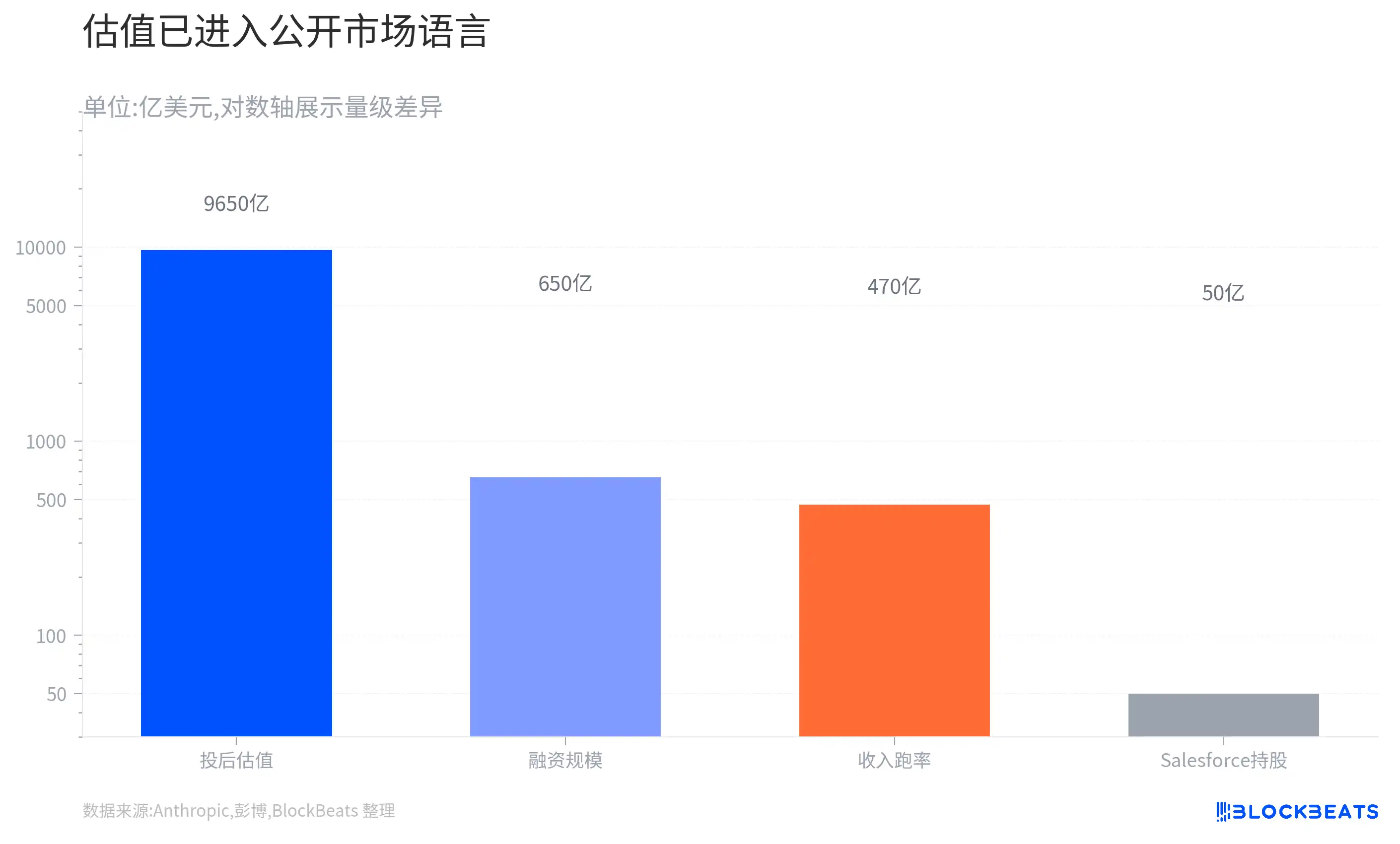
Anthropic's timeline is dense enough. On May 28, the company announced the completion of a $650 billion Series H financing, with a post-money valuation reaching $9.65 trillion, and stated that its run-rate revenue had exceeded $470 billion earlier that month. On June 1, Anthropic further confirmed it had confidentially filed a draft Form S-1 with the SEC for a planned IPO. The number of shares to be offered and the price range have not been determined, and the listing remains subject to SEC review, market conditions, and other factors.
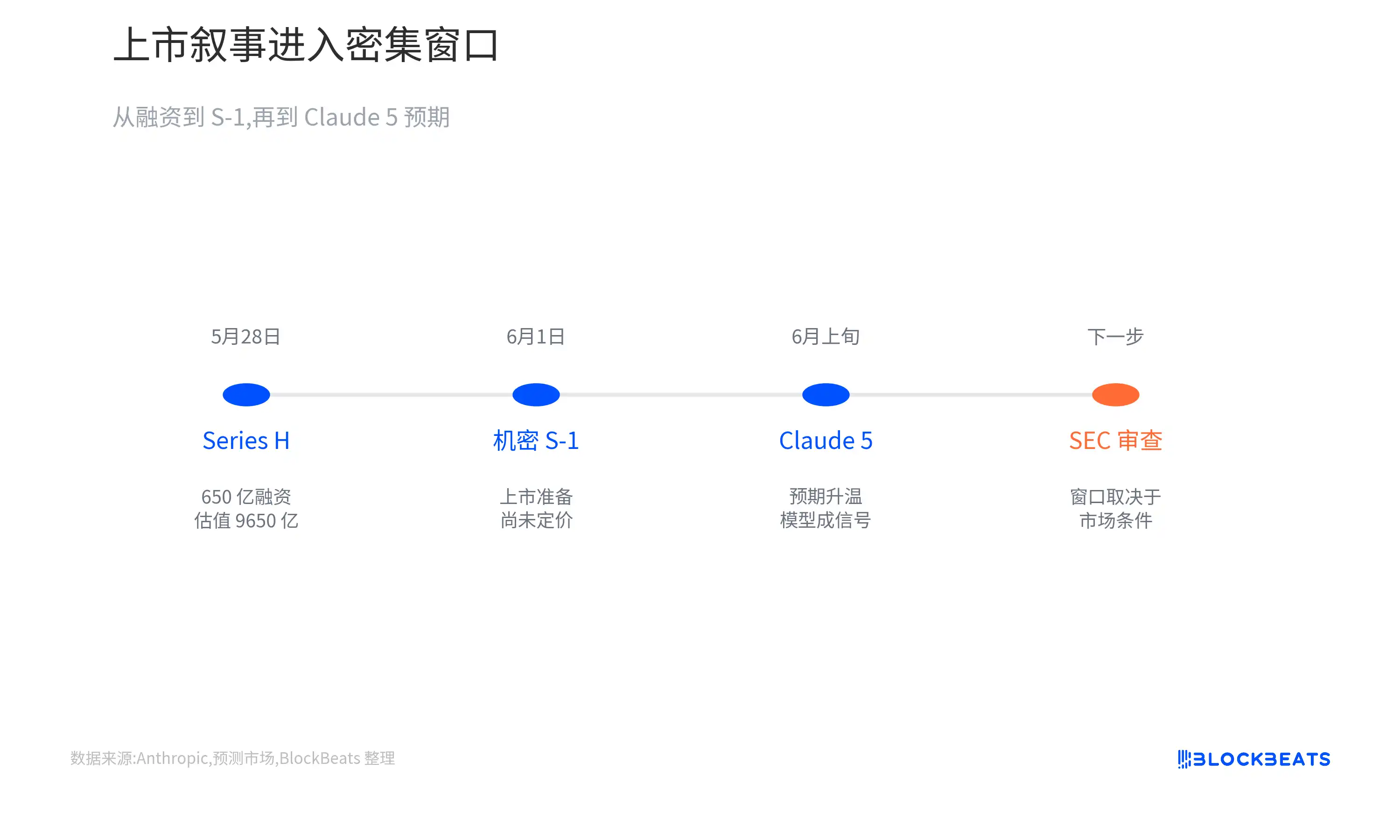
This changes Anthropic's position in the market. It is no longer just the "safe model company" alongside OpenAI but an ultra-large AI platform candidate preparing for the public market. The private market can pay for future imagination, and the public market will also pay for the future, but it demands that companies break down that imagination into more verifiable metrics.

These metrics include whether revenue sources are stable, customers are concentrated, compute costs are controllable, model leadership is sustainable, and regulatory risks are disclosable and manageable. For frontier model companies, this transition is harder than for traditional software companies.

When traditional SaaS companies go public, investors typically look at ARR, net retention rate, gross margin, sales efficiency, and customer structure. Frontier model companies also need to answer these questions but additionally face training and inference costs, model iteration speed, safety incidents, cloud provider dependency, and chip cycles. The stronger the model, the greater the revenue potential, but also the heavier the cost and regulatory variables.

This is also what makes Anthropic special at this moment. Its high valuation cannot be supported solely by "Claude is smarter." It needs a more complete story: sustained progress in model capabilities, enterprise customers willing to pay, a sufficiently large revenue run-rate, a safety positioning that unlocks high-value scenarios, and an available capital market window. The amplification of the Claude 5 rumors is precisely because it appears to be the next piece of the puzzle in this story.
Fable 5 Rumors Being Traded in Advance

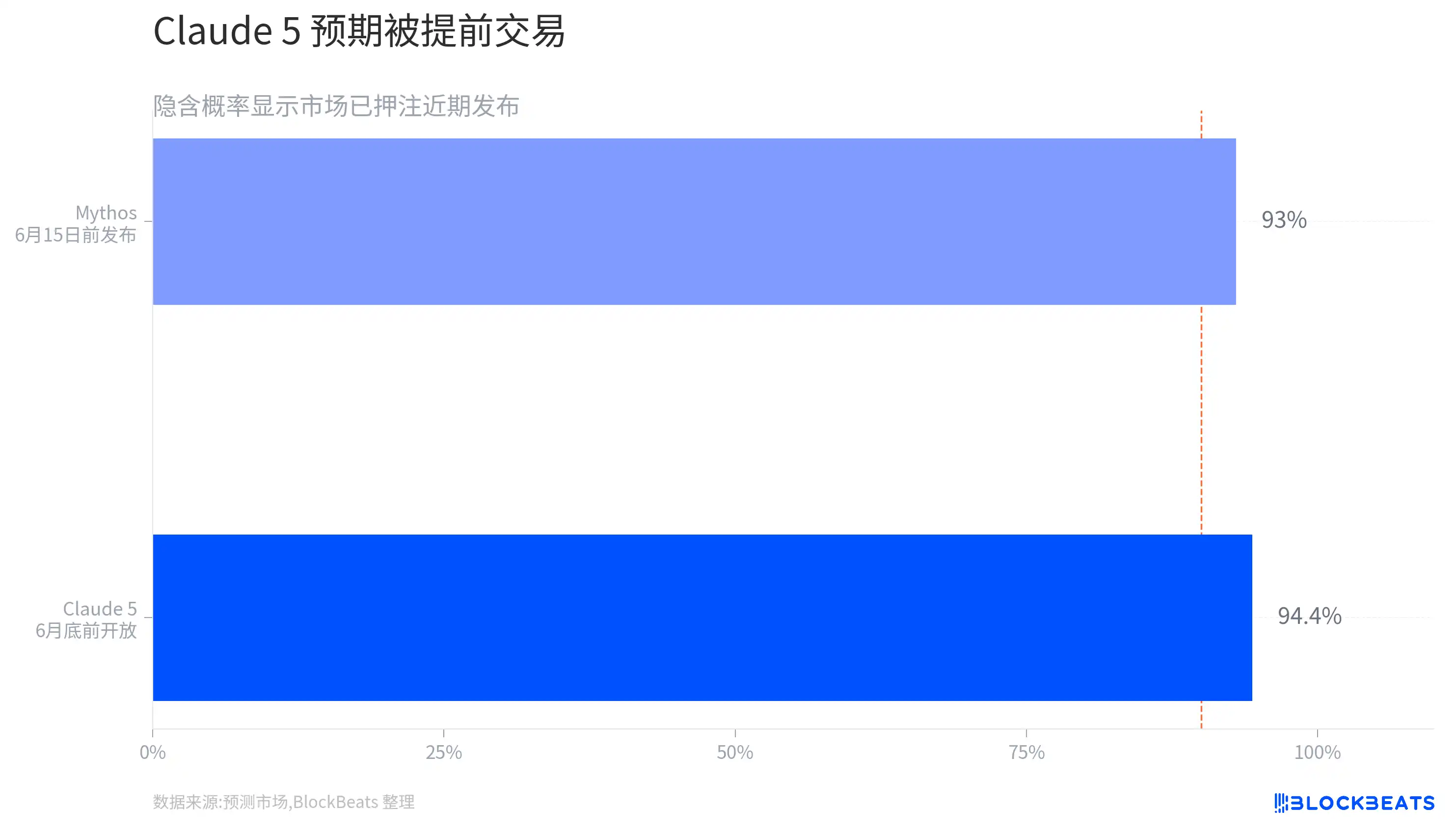
If Anthropic were simply releasing a new model in a routine manner, the market likely wouldn't be this excited. The amplification of the Claude 5 rumors is precisely because it coincides with a critical IPO juncture. Financing, valuation, S-1 filing, layered with heavyweight model leaks perfectly form a narrative the capital market loves to hear: the company proves with concrete action just before its IPO that it remains firmly at the forefront of capability iteration.

Prediction markets have already opened betting on "whether Claude 5 will be publicly available by June 30, 2026." The current market price reflects the traders' implied probability. While public information cannot yet fully confirm the specific timeline previously circulated, it's clear: the prediction market is already pricing a near-term release of Claude 5, and the price is not low.

This expectation carries inherent information. The market directly translates "product cadence" into "valuation narrative": if Anthropic can indeed consistently roll out stronger models, its nearly trillion-dollar post-money valuation with a high revenue run-rate will be interpreted as a natural outcome of rapid platform capability expansion; conversely, if the model cadence noticeably slows, then the near-trillion valuation would have to rely more heavily on the quality and certainty of existing revenue to sustain itself.

This trading method is not unfamiliar. Consumer internet companies emphasize user growth and retention before IPO, cloud companies highlight large customers and net expansion rates, chip companies talk about orders and capacity. AI model companies don't yet have a fully mature public market template, so model releases themselves become a visible signal. It is both a product update and a capability showcase, impacting developers and enterprise clients while also shaping investor imagination about the next phase of revenue growth.

But the impact of a model release on valuation is not linear. A stronger model can bring higher API call volumes, larger enterprise contracts, and stronger customer stickiness, but also potentially higher inference costs, more complex safety reviews, and heavier infrastructure investment. The public market ultimately won't just ask "Is it the strongest?" but also "How much compute is consumed per dollar earned?" "Can gross margins improve?" "Will safety boundaries limit commercialization speed?"

Mythos Provides Imagination, But Also Brings Disclosure Pressure

The more differentiated part of Anthropic's current narrative is not "another chatbot model," but the controlled frontier capabilities represented by Mythos and Project Glasswing.

According to official Anthropic disclosures, Claude Mythos Preview is a general, unreleased frontier model that will not be made broadly available. Project Glasswing is oriented towards defensive security work, where collaborative partners gain controlled access for use in critical software security, zero-day vulnerability discovery and remediation, among other scenarios. Anthropic also disclosed that the project has already discovered a significant number of zero-day vulnerabilities and committed to up to $1 billion in usage credits and $4 million in open-source security donations.
This provides Anthropic with a valuation story different from that of a regular consumer chatbot. It can position itself as a foundational model supplier entering complex tasks, high-value enterprise workflows, and safety-critical scenarios. For the public market, this is easier to map to large customer budgets than "users like to chat," and it's also easier to explain why enterprises are willing to pay a premium for more reliable, safer models.

If there is indeed a technical link between a future Fable 5 and Mythos, with the former offering stricter guardrails to a broader user base, it would create a narrative path in theory: the most frontier capabilities are first validated in a controlled environment, then partially productized in a safer form. This path aligns with Anthropic's long-emphasized safety positioning and fits the demand of enterprise clients for controlled AI.

But the same dynamic pushes Anthropic towards greater regulatory pressure. Cybersecurity capabilities have a dual-use (civilian-military) nature. Models that can find and fix vulnerabilities could also be misused in attack chains. Mythos's controlled release already indicates such capabilities cannot simply be fully released. If future, more general models are interpreted by the market as "trickled-down Mythos capabilities," the company must more clearly explain safety guardrails, access restrictions, misuse monitoring, and liability boundaries.

These contents will enter the S-1 risk disclosures. Public market investors won't only care about how powerful the model is, but also whether that power brings additional regulatory costs, national security reviews, reputational risks, and potential liabilities. For an AI company with a post-money valuation nearing one trillion dollars, a major safety incident could be more than just a product mishap; it could be a systemic variable affecting the listing timeline and valuation multiples.

What's Next is the S-1, Not New Rumors

For Anthropic, what is most likely overestimated by the market right now is not model capability, but the relationship between model capability and valuation.

Discussions about Fable 5, Claude 5, and even Mythos can indeed boost market sentiment. A stronger model means higher customer attention, stronger developer interest, and means Anthropic can continue to maintain its presence in the frontier model competition. But these factors are essentially growth expectations. They can explain why the market is willing to trade the future in advance, but they are insufficient alone to prove that the nearly trillion-dollar valuation has been validated by reality.

Once truly in the public market, investor concerns will quickly become specific. How much of that over $470 billion revenue run-rate can ultimately convert into sustainable, auditable revenue? Is enterprise customer growth coming from long-term deployments or pilot phases? What proportion of revenue comes from top customers? What roles do strategic partners and cloud channels like Amazon and Alphabet play? More importantly, while model inference volumes grow rapidly, can training and inference costs be continuously reduced to support margin improvement?

These metrics ultimately determine not just the growth rate, but how the market defines Anthropic.
If the company can persistently lower unit costs, increase customer stickiness, and build a broader software ecosystem around its models, then investors are more willing to view it as the next-generation AI software platform. If revenue growth is consistently accompanied by massive compute investment and expanding capital expenditures, then the market is more likely to categorize it as a high-growth, high-consumption AI infrastructure company. Both narratives can support high valuations, but they correspond to different valuation multiples and risk tolerances.

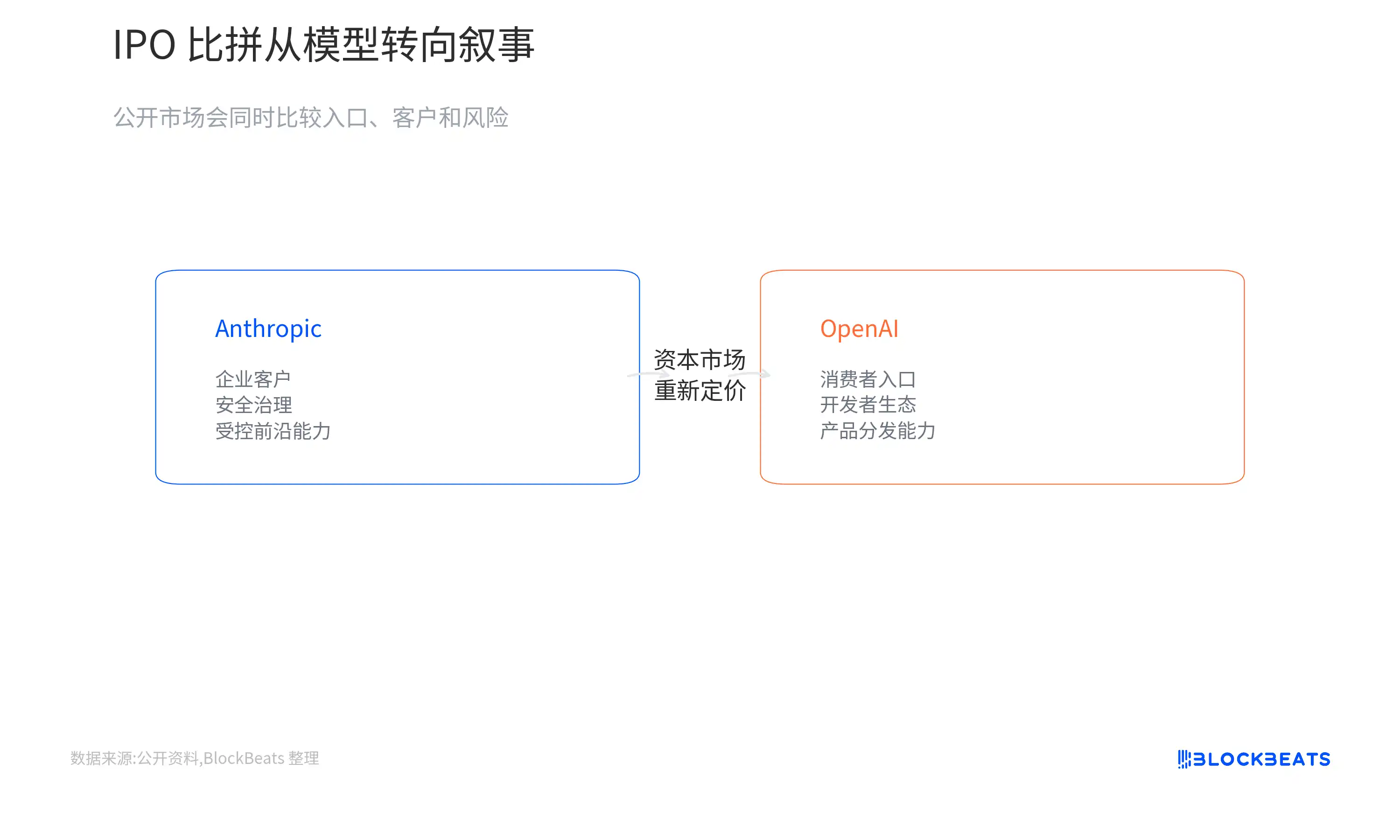
OpenAI's presence will make this comparison more apparent, but the two don't necessarily constitute a simple zero-sum competition. OpenAI possesses stronger consumer touchpoints and ecosystem influence, while Anthropic has built a more distinct enterprise, safety, and governance narrative. What the future public market will truly compare might not be who releases a certain model first, but who can more stably convert model capabilities into revenue growth and explain the future to investors with lower uncertainty.


Câu hỏi Liên quan

QAccording to the article, what is the new 'language' that Anthropic is starting to speak when communicating its value?

AThe article states that Anthropic is beginning to communicate its value using the 'language' understood by the public market. This involves framing its worth through measurable financial indicators like model capabilities, enterprise adoption, revenue quality, computing costs, and risk disclosures, moving beyond just research papers and product reputation.

QWhat specific event marked Anthropic's official entry into the IPO preparation stage, as detailed in the text?

AAnthropic officially entered the IPO preparation stage on June 1, when it confirmed it had confidentially submitted a draft Form S-1 to the SEC, with the actual IPO contingent on regulatory review and market conditions.

QWhy does the article suggest the Claude 5 (Fable 5) rumors are being amplified by the market at this specific time?

AThe article suggests the Claude 5 rumors are being amplified because they coincide perfectly with Anthropic's key IPO milestones. The timing creates a compelling narrative for investors: the company is demonstrating it remains at the forefront of AI capability just before going public, thereby validating its high valuation and growth story.

QWhat differentiated valuation story does the 'Mythos' model and Project Glasswing provide for Anthropic, according to the analysis?

AMythos and Project Glasswing provide Anthropic with a differentiated valuation story focused on controlled, high-value enterprise and security-critical applications. This positions Anthropic not just as a consumer chatbot provider, but as a supplier of foundational models for complex tasks, high-value enterprise workflows, and cybersecurity (like zero-day vulnerability discovery), which is easier to map to large enterprise budgets and justifies premium pricing for safer, more reliable models.

QWhat does the article identify as the more critical factor for public market investors to assess about Anthropic's future, beyond just new model releases?

ABeyond new model releases, the article identifies the more critical factor for public market investors as understanding how Anthropic's model capabilities translate into sustainable, verifiable financial performance. Key concerns include the sustainability and auditability of its $47B+ revenue run-rate, customer concentration, the role of strategic partners, and most importantly, whether training and inference costs can decrease to support improved profit margins, which will define the company as either a next-gen AI software platform or a high-growth, high-burn infrastructure company.

Nội dung Liên quan

Claude Mythos bị đóng cửa, cho tôi thấy cái giá thực sự của việc thuê trí tuệ nhân tạo

Dự án Mythos của Claude bị đóng cửa đột ngột đã phơi bày rủi ro cốt lõi khi doanh nghiệp phụ thuộc hoàn toàn vào nền tảng AI của bên thứ ba: việc thiếu kiểm soát và quyền sở hữu trí tuệ. Bài viết so sánh việc sử dụng API độc quyền như "thuê nhà" – tiện lợi ban đầu nhưng dễ bị tổn thương trước các thay đổi về giá, điều khoản hoặc quyết định đóng cửa từ nhà cung cấp. Giải pháp thay thế được đề xuất là "sở hữu trí tuệ" thông qua các mô hình mã nguồn mở. Các công ty có thể bắt đầu từ một mô hình nguồn mở mạnh, tinh chỉnh nó bằng dữ liệu, quy trình và chuyên môn nghiệp vụ riêng, biến nó thành tài sản độc nhất phục vụ mục tiêu kinh doanh cụ thể. Cách tiếp cận này không chỉ về chi phí thấp hơn mà còn về khả năng kiểm soát, bảo vệ doanh nghiệp khỏi những biến động bên ngoài. Tương lai của AI không nằm ở một mô hình đơn lẻ, mà ở nhiều "mặt trận" khác nhau: mô hình độc quyền, mô hình được tùy chỉnh sâu, mô hình chuyên biệt và hệ thống định tuyến thông minh. Công ty thành công sẽ là những người biến trí tuệ nhân tạo thành lợi thế cạnh tranh riêng biệt và bền vững.

marsbit27 phút trước

Claude Mythos bị đóng cửa, cho tôi thấy cái giá thực sự của việc thuê trí tuệ nhân tạo

marsbit27 phút trước

Tiger Research: Dự trữ Bitcoin Chiến lược của Hoa Kỳ, thị trường nên vui mừng hay thất vọng?

Bài viết của Tiger Research phân tích tiến trình pháp lý liên quan đến việc Mỹ xây dựng dự trữ Bitcoin chiến lược, từ các dự luật ban đầu đến văn bản hiện tại có triển vọng thông qua cao nhất là Đạo luật Thúc đẩy Hưu trí và Tiền tệ Hoa Kỳ (ARMA). Trọng tâm là sự thay đổi đáng kể: từ Dự luật BITCOIN năm 2024 yêu cầu mua 1 triệu BTC trong 5 năm, các đề xuất sau đó đã nhượng bộ thực tế chính trị. Lệnh hành pháp của cựu Tổng thống Trump tháng 3/2025 chỉ cam kết không bán số Bitcoin hiện có (khoảng 190.000 BTC thu giữ được), không yêu cầu mua mới, khiến giá Bitcoin giảm 5.7%. ARMA, được đưa ra năm 2026, tiếp tục xu hướng này. Nó hợp nhất và cấm bán số Bitcoin của chính phủ ít nhất 20 năm, nhưng hoàn toàn không có điều khoản bắt buộc mua thêm. Điều này giúp nó giành được sự ủng hộ liên đảng và tăng cơ hội thông qua, nhưng cũng đồng nghĩa tác động thị trường ngắn hạn rất hạn chế vì không tạo ra nhu cầu mới. Tuy nhiên, bài viết nhận định ARMA có thể là bước đệm chiến lược. Nếu được thông qua, việc thiết lập vị thế pháp lý cho Bitcoin như một tài sản dự trữ quốc gia có thể mở đường cho các cuộc thảo luận về nghĩa vụ mua bắt buộc trong tương lai, mang lại tác động tích cực dài hạn cho thị trường.

marsbit30 phút trước

Tiger Research: Dự trữ Bitcoin Chiến lược của Hoa Kỳ, thị trường nên vui mừng hay thất vọng?

marsbit30 phút trước

Làm thẻ U nhận hội viên Claude, Plasma U Card - Tính toán chi phí và lợi ích ra sao?

**Tóm tắt: Plasma U Card - Tiện ích AI và Lợi ích Khóa Token XPL** Plasma vừa ra mắt hệ thống thẻ Visa ba cấp (Lite, Core, Platinum) cho phép thanh toán bằng stablecoin. Bên cạnh hoàn tiền cơ bản (2-4%), điểm thu hút chính là các đặc quyền AI: Core cung cấp hoàn tiền 5% cho chi tiêu AI và ChatGPT Go, trong khi Platinum (yêu cầu khóa 100,000 XPL) cung cấp hoàn tiền 10% AI cùng gói đăng ký Claude Pro và ChatGPT Plus. Cấp Lite (miễn phí) phù hợp để dùng thử. Cấp Core (phí $120/năm hoặc khóa 10,000 XPL) có lợi thế nếu người dùng chi khoảng $200/tháng cho AI. Cấp Platinum nhắm đến người dùng nặng AI và du lịch, nhưng việc khóa số XPL lớn trị giá ~$8,800 (tính theo giá tại thời điểm bài viết) trong 12 tháng đi kèm rủi ro biến động giá. Về tác động đến token XPL, chương trình thẻ tạo lý do nắm giữ mới ngoài việc sử dụng gas trên mạng Plasma, giúp giảm nguồn cung lưu hành. Tuy nhiên, phần thưởng hoàn tiền được phát bằng XPL có thể tạo áp lực bán. Dù có thể hỗ trợ cấu trúc lưu hành, hệ thống này khó có thể một mình hấp thụ hoàn toàn lượng token được mở khóa từ team và nhà đầu tư trong tương lai. Thử nghiệm này đưa tài sản on-chain đến với chi tiêu hàng ngày, nhưng thành công lâu dài phụ thuộc vào trải nghiệm người dùng thực tế và tần suất sử dụng.

Foresight News31 phút trước

Làm thẻ U nhận hội viên Claude, Plasma U Card - Tính toán chi phí và lợi ích ra sao?

Foresight News31 phút trước

Giao dịch

Giao ngay
Hợp đồng Tương lai

Bài viết Nổi bật

AGENT S là gì

Agent S: Tương Lai của Tương Tác Tự Động trong Web3 Giới thiệu Trong bối cảnh không ngừng phát triển của Web3 và tiền điện tử, các đổi mới đang liên tục định nghĩa lại cách mà cá nhân tương tác với các nền tảng kỹ thuật số. Một dự án tiên phong như vậy, Agent S, hứa hẹn sẽ cách mạng hóa tương tác giữa con người và máy tính thông qua khung tác nhân mở của nó. Bằng cách mở đường cho các tương tác tự động, Agent S nhằm đơn giản hóa các nhiệm vụ phức tạp, cung cấp các ứng dụng chuyển đổi trong trí tuệ nhân tạo (AI). Cuộc khám phá chi tiết này sẽ đi sâu vào những phức tạp của dự án, các tính năng độc đáo của nó và những tác động đối với lĩnh vực tiền điện tử. Agent S là gì? Agent S đứng vững như một khung tác nhân mở đột phá, được thiết kế đặc biệt để giải quyết ba thách thức cơ bản trong việc tự động hóa các nhiệm vụ máy tính: Thu thập Kiến thức Cụ thể theo Miền: Khung này học một cách thông minh từ nhiều nguồn kiến thức bên ngoài và kinh nghiệm nội bộ. Cách tiếp cận kép này giúp nó xây dựng một kho lưu trữ phong phú về kiến thức cụ thể theo miền, nâng cao hiệu suất của nó trong việc thực hiện nhiệm vụ. Lập Kế Hoạch Qua Các Tầm Nhìn Nhiệm Vụ Dài Hạn: Agent S sử dụng lập kế hoạch phân cấp tăng cường kinh nghiệm, một cách tiếp cận chiến lược giúp phân chia và thực hiện các nhiệm vụ phức tạp một cách hiệu quả. Tính năng này nâng cao đáng kể khả năng quản lý nhiều nhiệm vụ con một cách hiệu quả và hiệu suất. Xử Lý Các Giao Diện Động, Không Đều: Dự án giới thiệu Giao Diện Tác Nhân-Máy Tính (ACI), một giải pháp đổi mới giúp nâng cao tương tác giữa các tác nhân và người dùng. Sử dụng các Mô Hình Ngôn Ngữ Lớn Đa Phương Thức (MLLMs), Agent S có thể điều hướng và thao tác các giao diện người dùng đồ họa đa dạng một cách liền mạch. Thông qua những tính năng tiên phong này, Agent S cung cấp một khung vững chắc giải quyết các phức tạp liên quan đến việc tự động hóa tương tác giữa con người với máy móc, mở ra nhiều ứng dụng trong AI và hơn thế nữa. Ai là Người Tạo ra Agent S? Mặc dù khái niệm về Agent S là hoàn toàn đổi mới, thông tin cụ thể về người sáng lập vẫn còn mơ hồ. Người sáng lập hiện vẫn chưa được biết đến, điều này làm nổi bật giai đoạn sơ khai của dự án hoặc sự lựa chọn chiến lược để giữ kín các thành viên sáng lập. Bất chấp sự ẩn danh, sự chú ý vẫn tập trung vào khả năng và tiềm năng của khung này. Ai là Các Nhà Đầu Tư của Agent S? Vì Agent S còn tương đối mới trong hệ sinh thái mã hóa, thông tin chi tiết về các nhà đầu tư và những người tài trợ tài chính của nó không được ghi chép rõ ràng. Sự thiếu vắng thông tin công khai về các nền tảng đầu tư hoặc tổ chức hỗ trợ dự án dấy lên câu hỏi về cấu trúc tài trợ và lộ trình phát triển của nó. Hiểu biết về sự hỗ trợ là rất quan trọng để đánh giá tính bền vững và tác động tiềm năng của dự án. Agent S Hoạt Động Như Thế Nào? Tại cốt lõi của Agent S là công nghệ tiên tiến cho phép nó hoạt động hiệu quả trong nhiều bối cảnh khác nhau. Mô hình hoạt động của nó được xây dựng xung quanh một số tính năng chính: Tương Tác Giống Như Con Người: Khung này cung cấp lập kế hoạch AI tiên tiến, cố gắng làm cho các tương tác với máy tính trở nên trực quan hơn. Bằng cách bắt chước hành vi của con người trong việc thực hiện nhiệm vụ, nó hứa hẹn nâng cao trải nghiệm người dùng. Ký Ức Tường Thuật: Được sử dụng để tận dụng các trải nghiệm cấp cao, Agent S sử dụng ký ức tường thuật để theo dõi lịch sử nhiệm vụ, từ đó nâng cao quy trình ra quyết định của nó. Ký Ức Tình Huống: Tính năng này cung cấp cho người dùng hướng dẫn từng bước, cho phép khung này cung cấp hỗ trợ theo ngữ cảnh khi các nhiệm vụ diễn ra. Hỗ Trợ OpenACI: Với khả năng chạy cục bộ, Agent S cho phép người dùng duy trì quyền kiểm soát đối với các tương tác và quy trình làm việc của họ, phù hợp với tinh thần phi tập trung của Web3. Tích Hợp Dễ Dàng với Các API Bên Ngoài: Tính linh hoạt và khả năng tương thích với nhiều nền tảng AI khác nhau đảm bảo rằng Agent S có thể hòa nhập liền mạch vào các hệ sinh thái công nghệ hiện có, làm cho nó trở thành lựa chọn hấp dẫn cho các nhà phát triển và tổ chức. Những chức năng này cùng nhau góp phần vào vị trí độc đáo của Agent S trong không gian tiền điện tử, khi nó tự động hóa các nhiệm vụ phức tạp, nhiều bước với sự can thiệp tối thiểu của con người. Khi dự án phát triển, các ứng dụng tiềm năng của nó trong Web3 có thể định nghĩa lại cách mà các tương tác kỹ thuật số diễn ra. Thời Gian Phát Triển của Agent S Sự phát triển và các cột mốc của Agent S có thể được tóm tắt trong một dòng thời gian nêu bật các sự kiện quan trọng của nó: 27 tháng 9, 2024: Khái niệm về Agent S được ra mắt trong một bài nghiên cứu toàn diện mang tên “Một Khung Tác Nhân Mở Sử Dụng Máy Tính Như Một Con Người,” trình bày nền tảng cho dự án. 10 tháng 10, 2024: Bài nghiên cứu được công bố công khai trên arXiv, cung cấp một cái nhìn sâu sắc về khung và đánh giá hiệu suất của nó dựa trên tiêu chuẩn OSWorld. 12 tháng 10, 2024: Một video trình bày được phát hành, cung cấp cái nhìn trực quan về khả năng và tính năng của Agent S, thu hút thêm sự quan tâm từ người dùng và nhà đầu tư tiềm năng. Những dấu mốc trong dòng thời gian không chỉ minh họa sự tiến bộ của Agent S mà còn chỉ ra cam kết của nó đối với sự minh bạch và sự tham gia của cộng đồng. Những Điểm Chính Về Agent S Khi khung Agent S tiếp tục phát triển, một số thuộc tính chính nổi bật, nhấn mạnh tính đổi mới và tiềm năng của nó: Khung Đổi Mới: Được thiết kế để cung cấp cách sử dụng máy tính trực quan giống như tương tác của con người, Agent S mang đến một cách tiếp cận mới cho việc tự động hóa nhiệm vụ. Tương Tác Tự Động: Khả năng tương tác tự động với máy tính thông qua GUI đánh dấu một bước tiến tới các giải pháp tính toán thông minh và hiệu quả hơn. Tự Động Hóa Nhiệm Vụ Phức Tạp: Với phương pháp mạnh mẽ của nó, nó có thể tự động hóa các nhiệm vụ phức tạp, nhiều bước, làm cho các quy trình nhanh hơn và ít sai sót hơn. Cải Tiến Liên Tục: Các cơ chế học tập cho phép Agent S cải thiện từ các trải nghiệm trước đó, liên tục nâng cao hiệu suất và hiệu quả của nó. Tính Linh Hoạt: Khả năng thích ứng của nó trên các môi trường hoạt động khác nhau như OSWorld và WindowsAgentArena đảm bảo rằng nó có thể phục vụ một loạt các ứng dụng rộng rãi. Khi Agent S định vị mình trong bối cảnh Web3 và tiền điện tử, tiềm năng của nó để nâng cao khả năng tương tác và tự động hóa quy trình đánh dấu một bước tiến quan trọng trong công nghệ AI. Thông qua khung đổi mới của mình, Agent S minh họa cho tương lai của các tương tác kỹ thuật số, hứa hẹn một trải nghiệm liền mạch và hiệu quả hơn cho người dùng trên nhiều ngành công nghiệp khác nhau. Kết luận Agent S đại diện cho một bước nhảy vọt táo bạo trong sự kết hợp giữa AI và Web3, với khả năng định nghĩa lại cách chúng ta tương tác với công nghệ. Mặc dù vẫn còn ở giai đoạn đầu, những khả năng cho ứng dụng của nó là rộng lớn và hấp dẫn. Thông qua khung toàn diện của mình giải quyết các thách thức quan trọng, Agent S nhằm đưa các tương tác tự động lên hàng đầu trong trải nghiệm kỹ thuật số. Khi chúng ta tiến sâu hơn vào các lĩnh vực tiền điện tử và phi tập trung, các dự án như Agent S chắc chắn sẽ đóng một vai trò quan trọng trong việc định hình tương lai của công nghệ và sự hợp tác giữa con người với máy tính.

Tổng lượt xem 868Xuất bản vào 2025.01.14Cập nhật vào 2025.01.14

AGENT S là gì

Làm thế nào để Mua S

Chào mừng bạn đến với HTX.com! Chúng tôi đã làm cho mua Sonic (S) trở nên đơn giản và thuận tiện. Làm theo hướng dẫn từng bước của chúng tôi để bắt đầu hành trình tiền kỹ thuật số của bạn.Bước 1: Tạo Tài khoản HTX của BạnSử dụng email hoặc số điện thoại của bạn để đăng ký tài khoản miễn phí trên HTX. Trải nghiệm hành trình đăng ký không rắc rối và mở khóa tất cả tính năng. Nhận Tài khoản của tôiBước 2: Truy cập Mua Crypto và Chọn Phương thức Thanh toán của BạnThẻ Tín dụng/Ghi nợ: Sử dụng Visa hoặc Mastercard của bạn để mua Sonic (S) ngay lập tức.Số dư: Sử dụng tiền từ số dư tài khoản HTX của bạn để giao dịch liền mạch.Bên thứ ba: Chúng tôi đã thêm những phương thức thanh toán phổ biến như Google Pay và Apple Pay để nâng cao sự tiện lợi.P2P: Giao dịch trực tiếp với người dùng khác trên HTX.Thị trường mua bán phi tập trung (OTC): Chúng tôi cung cấp những dịch vụ được thiết kế riêng và tỷ giá hối đoái cạnh tranh cho nhà giao dịch.Bước 3: Lưu trữ Sonic (S) của BạnSau khi mua Sonic (S), lưu trữ trong tài khoản HTX của bạn. Ngoài ra, bạn có thể gửi đi nơi khác qua chuyển khoản blockchain hoặc sử dụng để giao dịch những tiền kỹ thuật số khác.Bước 4: Giao dịch Sonic (S)Giao dịch Sonic (S) dễ dàng trên thị trường giao ngay của HTX. Chỉ cần truy cập vào tài khoản của bạn, chọn cặp giao dịch, thực hiện giao dịch và theo dõi trong thời gian thực. Chúng tôi cung cấp trải nghiệm thân thiện với người dùng cho cả người mới bắt đầu và người giao dịch dày dạn kinh nghiệm.

Tổng lượt xem 1.6kXuất bản vào 2025.01.15Cập nhật vào 2026.06.02

Làm thế nào để Mua S

Thảo luận

Chào mừng đến với Cộng đồng HTX. Tại đây, bạn có thể được thông báo về những phát triển nền tảng mới nhất và có quyền truy cập vào thông tin chuyên sâu về thị trường. Ý kiến ​​của người dùng về giá của S (S) được trình bày dưới đây.

活动图片