AMD Stock Price Forecast 2026 to 2030: Wall Street Signals a Major $657 Target!

marsbitXuất bản vào 2026-06-02Cập nhật gần nhất vào 2026-06-02

Tóm tắt

AMD's stock has seen a dramatic rally, rising over 130% year-to-date to around $510 as of mid-2026. This surge is driven by a fundamental shift in the company's business, with its Data Center segment now the core contributor, posting a record $5.8 billion in Q1 2026 revenue (up 57% YoY) and exceeding 50% of total revenue for the first time. CEO Dr. Lisa Su raised the long-term server CPU Total Addressable Market (TAM) forecast to over $120 billion annually by 2030. Analyst sentiment is bullish. The consensus rating is a "Strong Buy" with a 12-month average price target of $472.17, though several firms have recently set higher targets, with Barclays issuing a street-high target of $665. Long-term models project a 2030 price range of approximately $493 to $822, with a baseline scenario near $657, anchored to AMD's expanded TAM guidance. Key growth catalysts include strong demand for EPYC server CPUs and Instinct AI GPUs, partnerships with OpenAI and Meta, and the upcoming MI450 series and Helios rack-scale platform. However, significant risks remain, including a high forward P/E ratio exceeding 169x and increased competition, notably from NVIDIA's planned entry into the server CPU market. Investors must weigh the strong execution and growth trajectory against these substantial valuation and competitive pressures.

AMD has delivered one of the most dramatic stock performances in the semiconductor industry in recent years.

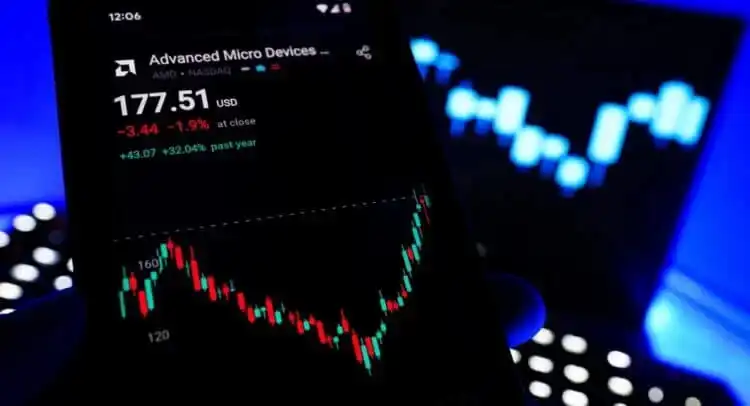
As of June 2026, the stock has surged over 130% year-to-date, trading near $510, with its 52-week range fully illustrating the scale of this turnaround—climbing from a low of $108.62 to a high of $527.20.

Such a robust rally raises a central question for investors searching for "AMD stock price forecast": Has the best of the move already been priced in, or does Wall Street still see substantial upside potential ahead?

This article will answer directly, citing specific numbers from analyst consensus data and AMD's official forward-looking guidance.

Key Takeaways

  • AMD's stock price has risen over 130% year-to-date as of June 2026, trading near $510, with a 52-week range from a low of $108.62 to a high of $527.20.
  • Q1 2026 revenue reached $10.3 billion, up 38% year-over-year, with the Data Center segment growing 57% to $5.8 billion—the first time in AMD's history that Data Center contributed more than half of total revenue.
  • AMD CEO Dr. Lisa Su revised the server CPU Total Addressable Market (TAM) forecast from $60 billion annually to over $120 billion by 2030 during the Q1 earnings call, calling this shift a "structural transformation for our business."
  • S&P Global Market Intelligence's consensus rating, aggregating 51 analysts, is a "Strong Buy," with a 12-month average price target of $472.17; the highest Wall Street target reached $665 following a Barclays upgrade on June 1, 2026.
  • Long-term analyst models forecast AMD's stock price could range between $493 and $822 by 2030, with a base-case mean near $657, anchored to AMD's official $120 billion server CPU market prediction.
  • A P/E ratio exceeding 169x and NVIDIA's announced entry into the server CPU market are two specific risks investors must seriously weigh before taking any action.

The Driver Behind AMD's AI Wave

AMD's powerful 2026 rebound is not built on narrative alone.

It reflects a genuine structural transformation at the company's core—understanding this shift is the starting point for evaluating any credible AMD stock price forecast.

In short: AMD crossed a critical threshold in 2026—Data Center is no longer just a growth story adjacent to the core business.

Data Center is now the core business itself.

A $5.8B Quarter: AMD Data Center Sets a New Record

According to the Q1 2026 earnings press release from AMD's official Investor Relations page, AMD reported Q1 2026 revenue of $10.3 billion, up 38% year-over-year, beating analyst expectations of approximately $9.9 billion.

Non-GAAP EPS was $1.37, a 43% increase from the prior year, exceeding the Wall Street consensus estimate of $1.27 by $0.10.

While the overall beat was strong, that wasn't the most critical part.

The Data Center segment generated record revenue of $5.8 billion in Q1 2026, a 57% year-over-year increase, primarily driven by enterprise and hyperscale cloud provider demand for AMD EPYC server CPUs and Instinct AI GPUs.

Lisa Su informed investors on the Q1 2026 earnings call: "These results mark a definitive inflection point in our growth trajectory and a fundamental transformation in the structure of our business."

AMD's Q1 free cash flow also hit a quarterly record of $2.6 billion, more than triple the prior year's figure. This number is crucial as it indicates the AI infrastructure cycle is translating into real profitability, not just top-line momentum.

AMD Instinct GPU Lineup and What Q2 2026 Guidance Signals

Management expects Q2 2026 revenue of approximately $11.2 billion, representing 46% year-over-year growth, with the midpoint about $700 million above prior market expectations.

This guidance gap is significant: AMD isn't just clearing a low bar; it's continuously raising the bar as AI infrastructure demand accelerates.

During the same earnings call, Lisa Su also raised AMD's long-term server CPU TAM forecast from about $60 billion annually (growing 18% per year) to over $120 billion (growing over 35% per year) by 2030.

This isn't a tactical adjustment; it's a structural growth thesis that changes how analysts model AMD's long-term revenue ceiling.

AMD also has clear GPU deployment partnerships with OpenAI and Meta, both anchored by multi-gigawatt Instinct GPU commitments, extending revenue visibility into the second half of 2026 and beyond.

The MI450 series, expected to ramp in larger volumes in H2 2026, and the Helios rack-scale platform are the next concrete catalysts institutional investors are closely watching.

AMD Stock Price Forecast: Analyst Targets from Now to 2030

This is the part most investors want to know: the specific numbers.

It's worth noting upfront that AMD's stock price has surpassed many analysts' average targets following the post-Q1 surge—this means the consensus reflects a coverage group still catching up to the move, not an impenetrable ceiling.

AMD Stock Price Forecast: 2026 Wall Street Analyst Consensus

According to S&P Global Market Intelligence, aggregating 51 analyst ratings, AMD holds a "Strong Buy" consensus rating as of mid-2026, with a 12-month average price target of $472.17.

The current highest single-stock target on Wall Street is $665, set by Barclays analyst Tom O'Malley on June 1, 2026, implying roughly 30% potential upside from AMD's current ~$510 stock price.

TradingView's aggregated consensus price target from 58 underwriters is $481.22; as of early June 2026, the highest single-stock targets on Wall Street—including Barclays' $665, Mizuho's $615, and TD Cowen's $600—reflect a consensus rapidly moving upward.

Bernstein upgraded AMD to "Outperform" with a $525 price target, citing its model forecasting EPS exceeding $14 in 2027 and nearing $20 in 2028.

Evercore ISI's AMD price target is $579, making it one of the most bullish institutional investors on AMD within weeks of the Q1 2026 earnings report.

According to TIKR's post-earnings analyst report tracking, over 20 brokerages raised their AMD price targets after the Q1 earnings release.

This breadth is significant: when over 20 institutions reassess in sync, it represents a shift in the broader institutional consensus, not just amplification of a few bullish voices.

AMD 2030 Stock Price Forecast: What Long-Term Models Say

For investors with a time horizon beyond 12 months, the picture is deliberately broader—five-year stock models carry inherent uncertainty, and AMD's 2030 range candidly reflects that.

24/7 Wall St.'s proprietary forecasting model projects an average AMD stock price around $657 by 2030, with a potential range from approximately $493 to $822, depending on AMD's execution of its AI and Data Center roadmap.

The base-case scenario (near $657) assumes AMD successfully ramps the MI450 series and Helios rack-scale platform, expands gross margins as the Data Center mix grows, and maintains the revenue momentum demonstrated in Q1 and Q2 earnings.

The bullish scenario (near the upper end around $822) requires AMD to secure more hyperscale cloud provider rack-scale orders, normalize its China revenue base, and maintain competitive positioning against a fast-moving NVIDIA product roadmap.

The conservative floor (around $493) reflects a scenario where the macro environment slows enterprise IT budgets, export controls tighten further, or NVIDIA more aggressively consolidates AI accelerator market share than current analyst models assume.

The most important anchoring data for any AMD 2030 stock price forecast comes from AMD management itself: Lisa Su's revised server CPU TAM to over $120 billion annually by 2030 is the structural revenue ceiling long-term models are based upon.

If AMD can capture a meaningful share of this market at current gross margin levels, the EPS growth trajectories underpinning Bernstein's and Evercore ISI's price targets carry considerable credibility.
AMD Stock: Bull and Bear Case

Any complete AMD stock price forecast must candidly examine both sides of the trade.

Here lies the real tension.

AMD Bull Case: How MI450, OpenAI, and Meta Could Drive the Next Leg Up

The structural bull case begins with a Data Center segment showing no signs of stalling.

AMD Data Center revenue grew 57% year-over-year in Q1 2026, and Q2 guidance implies 46% year-over-year growth, with management explicitly stating on the earnings call that key customer forecasts for MI450 and Helios rack-scale platforms now exceed AMD's initial plans.

The GPU partnerships with OpenAI and Meta—both anchored by 6-gigawatt Instinct GPU deployment agreements—extend revenue visibility into the second half of 2026 and beyond.

AMD's quarterly free cash flow also hit a record $2.566 billion, giving the company the financial strength to invest in next-generation chip development without relying on external capital.

Bernstein's price target model, forecasting EPS over $14 in 2027 and near $20 in 2028, is predicated on AMD's Data Center AI revenue beginning to compound at scale—a scenario receiving positive reinforcement from Q1 numbers.

If AMD executes the MI450 ramp successfully and generates "tens of billions" of dollars in annual Data Center AI revenue by 2027, as management guided on the Q1 call, the current distribution of analyst price targets could very well shift significantly upward again.

AMD Bear Case: 169x P/E, NVIDIA's CPU Move, and Why Timing is Everything

Valuation is the most immediate headwind, and worth stating upfront.

At the current stock price around $510, AMD's P/E ratio exceeds 169x, leaving virtually no room for execution missteps, guidance revisions, or a deterioration in AI capex cycles from its largest partners.

On the competition front, Wolfe Research noted in late May 2026 that NVIDIA is actively planning to enter the discrete server CPU market—which would pit it directly against AMD's fastest-growing business segment, the very category Lisa Su's $120 billion TAM target relies on.

TSMC's advanced node capacity remains a physical constraint, limiting AMD's ability to rapidly scale Instinct GPU shipments even with strong hyperscale cloud demand signals.

China export control risks also haven't disappeared.

Any tightening of semiconductor trade restrictions would slice into AMD's international revenue base, requiring significant guidance cuts to reflect reality—and at a 169x P/E, any downward revision carries an outsized downside risk for the stock price.

Wall Street's consensus forecast for AMD stock is "Buy," but the valuation premium embedded in that consensus demands near-flawless quarterly execution from the company.

Frequently Asked Questions

What is the AMD stock price forecast for 2026?

According to the consensus aggregated by S&P Global Market Intelligence from 51 analysts, as of mid-2026, the 12-month average AMD price target is $472.17, with the highest target at $625.

What is the AMD stock price forecast for 2030?

24/7 Wall St.'s long-term model forecasts a core AMD stock price prediction of approximately $657 for 2030, with a potential range of $493 to $822, depending on AI execution progress and competitive dynamics.

What are analyst price targets for AMD in 2026?

Notable AMD price targets to watch include Bernstein's $525, Evercore ISI's $579, and a high target of $625, all citing accelerating Data Center revenue and MI450 GPU ramp as justification.

What is the AMD stock price forecast for tomorrow?

Short-term AMD stock price forecasts are highly uncertain—AMD's recent average daily volatility is around 5%, making any single-day prediction highly speculative and should not be used for trading decisions.

What is AMD's future stock price forecast based on its own guidance?

AMD CEO Lisa Su expects the server CPU market to exceed $120 billion annually by 2030, serving as the primary growth foundation upon which long-term AMD future stock price prediction models are built.
Conclusion

AMD's transformation from a PC-era chipmaker into a data-center-centric semiconductor company is no longer just a proposition—it's showing up in the quarterly revenue numbers.

Data Center segment growth of 57% year-over-year, Q2 2026 revenue guidance of $11.2 billion, record free cash flow of $2.566 billion, and recent analyst AMD price targets ranging from $472 to $665, with Barclays setting a new Wall Street high on June 1, 2026.

That said, a P/E ratio above 169x and an increasingly competitive landscape mean the margin of safety is quite thin—any investor acting on an AMD stock price forecast should weigh these risks with equal seriousness.


Câu hỏi Liên quan

QWhat is the analyst consensus rating and average 12-month target price for AMD as of mid-2026, according to the article?

AAccording to S&P Global Market Intelligence, AMD has a 'Strong Buy' consensus rating from 51 analysts, with an average 12-month target price of $472.17.

QWhat key milestone did AMD's Data Center segment achieve in Q1 2026, and what was its revenue?

AIn Q1 2026, AMD's Data Center segment revenue exceeded 50% of total company revenue for the first time, generating $5.8 billion, which represents a 57% year-over-year increase.

QWhat is the primary long-term anchor for AMD's 2030 stock price predictions mentioned in the article?

AThe primary anchor is CEO Dr. Lisa Su's revised projection that the server CPU Total Addressable Market (TAM) will exceed $120 billion annually by 2030, up from a previous estimate of about $60 billion.

QWhat are the main bearish (or risk) arguments for AMD stock presented in the article?

AThe main bearish arguments are: 1) A high forward P/E ratio exceeding 169x, leaving little room for execution errors. 2) Increased competition, notably from NVIDIA's reported plans to enter the discrete server CPU market. 3) Potential constraints from TSMC's advanced node capacity and risks from tighter export controls to China.

QWhat is the long-term price prediction range for AMD stock by 2030 according to the 24/7 Wall St. model cited?

AThe 24/7 Wall St. model predicts an average AMD stock price of approximately $657 by 2030, with a potential range from around $493 to $822, depending on execution of its AI roadmap and competitive dynamics.

Nội dung Liên quan

Hard Ke phát hành độc quyền | Công ty trí tuệ cụ thể hóa đại dương 'World Sailing Intelligence' huy động được vốn kỷ lục 10 tỷ NDT, được Zhu Xiaohu, Temasek rót vốn

Tập đoàn thông minh thể thân đại dương "Shihang Intelligent" vừa hoàn thành vòng tài trợ Series A với số tiền kỷ lục hơn 10 tỷ nhân dân tệ, trở thành vòng tài trợ đơn lẻ lớn nhất trong lĩnh vực robot biển toàn cầu. Vòng tài trợ này có sự tham gia của các nhà đầu tư như Shanghe Momentum Fund, Vertex Growth của Singapore, công ty niêm yết Dayang Electric Motor, cùng với sự đầu tư tiếp tục từ các cổ đông cũ như Qiming Venture Capital, China Growth Capital và Changshi Capital. Người sáng lập kiêm CEO của Shihang Intelligent, Chen Xiaobo (sinh năm 1989), là cựu sinh viên Đại học Kỹ thuật Cáp Nhĩ Tân, có kinh nghiệm lâu năm trong lĩnh vực robot dưới nước và từng nhận Giải thưởng Tiến bộ Khoa học Công nghệ Quốc phòng khi mới 28 tuổi. Công ty cho biết, số tiền tài trợ sẽ được sử dụng để phát triển công nghệ cốt lõi, mở rộng thị trường toàn cầu và xây dựng hệ sinh thái chuỗi cung ứng, thúc đẩy ứng dụng quy mô lớn của robot biển trong các môi trường dưới nước phức tạp. Các robot của Shihang có khả năng hoạt động ở độ sâu từ 0 đến 10.000 mét và đã được ứng dụng trong các lĩnh vực như làm sạch tàu, an ninh dưới nước, điện gió biển, trang trại biển và kiểm tra đáy biển. Chỉ trong nửa đầu năm 2026, công ty đã nhận được đơn đặt hàng trị giá hơn 10 tỷ nhân dân tệ. Vào tháng 4 năm nay, Shihang Intelligent đã ra mắt mô hình lớn thể thân đại dương "Cangqiong CEORION". Mô hình này tích hợp nhận thức môi trường, hiểu nhiệm vụ và tạo hành động vào một kiến trúc duy nhất, được đào tạo dựa trên dữ liệu từ hàng triệu giờ hoạt động thương mại. Nó có thể bao phủ 12 loại nhiệm vụ dưới nước chính mà không cần chuyển đổi giữa các mô hình khác nhau. Trong các bài kiểm tra mô phỏng, tỷ lệ thành công nhiệm vụ của "Cangqiong CEORION" vượt quá 90%. Mô hình này cũng có khả năng thích ứng với các môi trường chưa từng gặp với tỷ lệ trên 70%, và đã giảm 80% tỷ lệ tai nạn va chạm nhờ mô-đun suy luận vật lý tích hợp. Gần đây, Shihang Intelligent cũng đã được chọn tham gia Kế hoạch Kiểm tra và Làm sạch Thân tàu Dưới nước Quốc gia của Cơ quan Hàng hải và Cảng biển Singapore, trở thành đối tác công nghệ cốt lõi của dự án cấp quốc gia này.

marsbit17 phút trước

Hard Ke phát hành độc quyền | Công ty trí tuệ cụ thể hóa đại dương 'World Sailing Intelligence' huy động được vốn kỷ lục 10 tỷ NDT, được Zhu Xiaohu, Temasek rót vốn

marsbit17 phút trước

3 tháng, 35 tỷ, các nhà đầu tư tranh giành OpenAI của thế giới vật lý

Một cảnh tượng quen thuộc lại xuất hiện. Công ty Công nghệ Giga Perspective (còn gọi là Cực Giai Thị Giới) mới đây đã công bố hoàn thành vòng gọi vốn B2 trị giá 10 tỷ nhân dân tệ, nâng tổng số vốn huy động được trong 3 tháng lên 35 tỷ nhân dân tệ. Điều này đánh dấu sự tin tưởng mạnh mẽ từ các nhà đầu tư vào lĩnh vực AGI vật lý (Trí tuệ nhân tạo phổ quát trong thế giới vật lý). Công ty do Tiến sĩ Hoàng Quan, một tiến sĩ 9x từ Đại học Thanh Hoa, dẫn dắt. Ông có kinh nghiệm nghiên cứu và công nghiệp phong phú. Đội ngũ lãnh đạo được coi là "đội hình mơ ước" trong lĩnh vực này. Chìa khóa công nghệ của Cực Giai Thị Giới là "Hệ thống Song Kim tự tháp" (Thuật toán và Dữ liệu) xoay quanh mô hình thế giới (World Model). Họ đã phát triển hai hệ thống mô hình cốt lõi: - **Mô hình Hành động Thế giới (World Action Model):** Chuyển đổi hiểu biết của mô hình thế giới thành chiến lược hành động cho robot. Các phiên bản như GigaBrain-0 và GigaBrain-0.5M đã đạt thành tích cao trong các đánh giá toàn cầu. - **Mô hình Sinh thành Thế giới (World Generation Model):** Hiểu, mô phỏng và tạo ra thế giới vật lý để cung cấp dữ liệu và tham số huấn luyện. GigaWorld-1 và DriveDreamer (mô hình thế giới cho xe tự hành) là những ví dụ nổi bật. Công ty tin rằng thời khắc "GPT-3" của AGI vật lý sắp đến. Họ dự kiến phát hành GigaBrain-1 trong quý III/2026, hướng tới các bước đột phá về hiểu biết thị giác nguyên bản, lập kế hoạch cấp cao bằng ngôn ngữ và căn chỉnh quy luật vật lý. Về mặt thương mại hóa, Cực Giai Thị Giới theo đuổi chiến lược song song: - **Thị trường Cá nhân (C-end):** Ra mắt thương hiệu con "Thập Quang SeeLight" và robot hình người đa năng "Thập Quang S1" cho gia đình, đã nhận được hàng trăm đơn đặt hàng thực tế. - **Thị trường Doanh nghiệp (B-end):** Giới thiệu robot đa năng Maker H01 cho sản xuất công nghiệp, hợp tác với các công ty như FAW Mold và Alibaba Cloud. Họ đã ký kết kế hoạch triển khai 1000 robot tại Vô Tích trong 3 năm tới, đánh dấu bước tiến vào giai đoạn sản xuất quy mô lớn. Mô hình thế giới DriveDreamer cho xe tự hành cũng đã hợp tác với hơn 30 OEM và công ty hàng đầu. Tầm nhìn cuối cùng của công ty là thời đại AGI vật lý phục vụ mọi người, bắt đầu từ từng hộ gia đình, thông qua việc nâng cao năng suất vật lý và định hình lại lối sống.

marsbit43 phút trước

3 tháng, 35 tỷ, các nhà đầu tư tranh giành OpenAI của thế giới vật lý

marsbit43 phút trước

Mối liên hệ giữa Hoàng Trinh làm Pinduoduo và blockchain là gì?

Tác giả phân tích mối liên hệ giữa người sáng lập Pinduoduo Hoàng Tranh và công nghệ blockchain thông qua bài viết "Đảo Ngược Chủ Nghĩa Tư Bản" của ông. Bài viết chỉ ra rằng logic cốt lõi của Pinduoduo thực chất là một mô hình kinh doanh dựa trên "sự không chắc chắn". Hoàng Tranh cho rằng người giàu tích lũy tài sản bằng cách gánh chịu rủi ro thay cho người khác. Pinduoduo, thông qua các hình thức như mua sắm nhóm và khuyến mãi thời gian giới hạn, tập hợp lượng lớn nhu cầu cá nhân để tạo ra một đơn hàng xác định, giúp nhà máy giảm thiểu rủi ro tồn kho. Đổi lại, nhà máy giảm giá, tạo thành cơ chế "bảo hiểm ngược" khiến dòng tiền chảy ngược về phía người tiêu dùng. Tuy nhiên, điểm then chốt là lời hứa của một cá nhân thiếu độ tin cậy. Gần cuối bài, Hoàng Tranh tự đặt câu hỏi: phải chăng blockchain được sinh ra cho mô hình "bảo hiểm ngược" này? Ông nhận thấy blockchain, với hợp đồng thông minh và cơ chế phi tập trung, có thể giải quyết vấn đề này: biến lời hứa mua hàng thành cam kết có chi phí răn đe nếu vi phạm, có thể định giá và đáng tin cậy, từ đó thay thế sự tin cậy dựa trên con người bằng sự tin cậy dựa trên quy tắc. Bài viết còn so sánh hai con đường tạo ra sự chắc chắn: Con đường của Pinduoduo dùng quy mô để san bằng rủi ro, trong khi con đường của Bitcoin (đại diện cho blockchain) dùng các quy tắc mã hóa bất biến để loại bỏ sự can thiệp chủ quan. Cả hai đều phải trả giá, một bên hy sinh một phần tự do cá nhân, một bên hy sinh tính linh hoạt của quy tắc.

链捕手2 giờ trước

Mối liên hệ giữa Hoàng Trinh làm Pinduoduo và blockchain là gì?

链捕手2 giờ trước

Vị đại gia lưu trữ xây dựng nên vạn ức giang sơn, rốt cuộc không thành tỷ phú

Tập đoàn Trường Tân (Changxin) sắp lên sàn STAR Market với kỳ vọng định giá có thể vượt một nghìn tỷ NDT, thậm chí hai nghìn tỷ. Tuy nhiên, "linh hồn" của công ty, Chu Nhất Minh, chỉ sở hữu dưới 3% cổ phần (gián tiếp), khó có thể trở thành tỷ phú hàng đầu dù công ty đạt định giá cao. Bài viết phân tích con đường phát triển của GigaDevice (兆易创新), do Chu Nhất Minh sáng lập, được coi là "Tiền truyện của Trường Tân". Với vốn ban đầu ít ỏi, GigaDevice đã phát triển chiến lược "nhặt lộc" (捡漏) trong kẽ hở thị trường, tận dụng cơ hội khi các gã khổng lồ quốc tế rút lui khỏi các phân khúc bộ nhớ cũ như NOR Flash, SLC NAND và DRAM lợi thế. Công ty đa dạng hóa từ bộ nhớ sang vi điều khiển (MCU), cảm biến và chip analog, tạo thành bốn trụ cột sản phẩm, trong đó bộ nhớ và MCU vẫn chiếm đa số doanh thu. GigaDevice thể hiện là một cổ phiếu chất lượng trong ngành bộ nhớ có tính chu kỳ cao. Công ty duy trì biên lợi nhuận gộp ổn định trên 40%, kiểm soát tốt tỷ lệ chi phí và luôn có lợi nhuận hoạt động dương. Tuy lợi nhuận ròng biến động theo chu kỳ ngành, công ty đã phục hồi mạnh mẽ vào năm 2025 và quý I/2026. Tuy nhiên, bài viết chỉ ra rằng mô hình Fabless (không sở hữu nhà máy) của GigaDevice là một hạn chế trong ngành bộ nhớ, nơi mô hình IDM (tích hợp dọc) và khả năng mở rộng sản xuất ngược chu kỳ thường là chìa khóa để tồn tại và chiến thắng. Để giải quyết vấn đề này, năm 2016, Chu Nhất Minh hợp tác với chính quyền Hợp Phì thành lập Trường Tân Khoa Kỹ (Changxin), một công ty IDM chuyên về DRAM với vốn đầu tư cực lớn. Chu Nhất Minh đã có những cam kết mạnh mẽ như không nhận lương cho đến khi công ty có lãi và chia sẻ lợi ích cổ phần, giúp thu hút đầu tư mạo hiểm từ nhà nước và ngân hàng. Đầu tư vào cơ sở vật chất, thiết bị của Trường Tân thậm chí đã vượt qua Tập đoàn BYD. Kết luận, dù có thể tạo ra những công ty trị giá nghìn tỷ, nhưng do cơ cấu sở hữu cổ phần và mô hình kinh doanh, Chu Nhất Minh khó lòng lọt vào danh sách những người giàu nhất.

marsbit2 giờ trước

Vị đại gia lưu trữ xây dựng nên vạn ức giang sơn, rốt cuộc không thành tỷ phú

marsbit2 giờ trước

Lỗ Hổng Quản Trị Token Of Power Làm Thất Thoát 1.58 Triệu Đô WETH, TRM Cảnh Báo

Công ty phân tích blockchain TRM Labs đã báo cáo một vụ khai thác lỗ hổng quản trị trong giao thức Token of Power, dẫn đến thiệt hại khoảng 1,58 triệu USD giá trị WETH. Theo phân tích, kẻ tấn công lợi dụng điểm yếu trong thiết lập DAO Aragon của giao thức: việc không có timelock (khóa thời gian). Điều này cho phép chúng đề xuất, bỏ phiếu và thực thi một hành động quản trị độc hại chỉ trong một khối duy nhất. Được tài trợ ban đầu bằng 662 ETH rút từ Tornado Cash, kẻ tấn công đã mua đủ token TOP để giành quyền biểu quyết đa số, đúc mới 10 tỷ TOP, rồi hoán đổi số token này lấy WETH thông qua một pool Balancer trước khi chuyển tiền trở lại Tornado Cash. Sự kiện này là một minh chứng rõ ràng về rủi ro bảo mật từ thiết kế quản trị. Timelock có vai trò quan trọng trong việc tạo ra khoảng thời gian phản ứng cho cộng đồng trước khi một đề xuất được thực thi. Vụ việc cũng nhắc nhở người dùng DeFi rằng rủi ro không chỉ nằm ở lỗi mã hợp đồng thông minh, mà còn ở các tham số quản trị, kiểm soát kho bạc và ngưỡng biểu quyết. Cộng đồng hiện đang theo dõi động thái tiếp theo của số tiền bị đánh cắp và các thông tin khắc phục từ giao thức, Aragon hoặc các nhà cung cấp thanh khoản bị ảnh hưởng. Báo cáo dựa trên thông tin từ báo cáo bảo mật on-chain của TRM Labs.

bitcoinist4 giờ trước

Lỗ Hổng Quản Trị Token Of Power Làm Thất Thoát 1.58 Triệu Đô WETH, TRM Cảnh Báo

bitcoinist4 giờ trước

Giao dịch

Giao ngay
Hợp đồng Tương lai

Bài viết Nổi bật

Làm thế nào để Mua ONE

Chào mừng bạn đến với HTX.com! Chúng tôi đã làm cho mua Harmony (ONE) trở nên đơn giản và thuận tiện. Làm theo hướng dẫn từng bước của chúng tôi để bắt đầu hành trình tiền kỹ thuật số của bạn.Bước 1: Tạo Tài khoản HTX của BạnSử dụng email hoặc số điện thoại của bạn để đăng ký tài khoản miễn phí trên HTX. Trải nghiệm hành trình đăng ký không rắc rối và mở khóa tất cả tính năng. Nhận Tài khoản của tôiBước 2: Truy cập Mua Crypto và Chọn Phương thức Thanh toán của BạnThẻ Tín dụng/Ghi nợ: Sử dụng Visa hoặc Mastercard của bạn để mua Harmony (ONE) ngay lập tức.Số dư: Sử dụng tiền từ số dư tài khoản HTX của bạn để giao dịch liền mạch.Bên thứ ba: Chúng tôi đã thêm những phương thức thanh toán phổ biến như Google Pay và Apple Pay để nâng cao sự tiện lợi.P2P: Giao dịch trực tiếp với người dùng khác trên HTX.Thị trường mua bán phi tập trung (OTC): Chúng tôi cung cấp những dịch vụ được thiết kế riêng và tỷ giá hối đoái cạnh tranh cho nhà giao dịch.Bước 3: Lưu trữ Harmony (ONE) của BạnSau khi mua Harmony (ONE), lưu trữ trong tài khoản HTX của bạn. Ngoài ra, bạn có thể gửi đi nơi khác qua chuyển khoản blockchain hoặc sử dụng để giao dịch những tiền kỹ thuật số khác.Bước 4: Giao dịch Harmony (ONE)Giao dịch Harmony (ONE) dễ dàng trên thị trường giao ngay của HTX. Chỉ cần truy cập vào tài khoản của bạn, chọn cặp giao dịch, thực hiện giao dịch và theo dõi trong thời gian thực. Chúng tôi cung cấp trải nghiệm thân thiện với người dùng cho cả người mới bắt đầu và người giao dịch dày dạn kinh nghiệm.

Tổng lượt xem 553Xuất bản vào 2024.12.12Cập nhật vào 2026.06.02

Làm thế nào để Mua ONE

Thảo luận

Chào mừng đến với Cộng đồng HTX. Tại đây, bạn có thể được thông báo về những phát triển nền tảng mới nhất và có quyền truy cập vào thông tin chuyên sâu về thị trường. Ý kiến ​​của người dùng về giá của ONE (ONE) được trình bày dưới đây.

活动图片