Why Did OpenAI Decide to Make a Phone? ChatGPT Is Taking the Permissions Apple Won't Give

marsbitXuất bản vào 2026-05-18Cập nhật gần nhất vào 2026-05-18

Tóm tắt

The article discusses OpenAI's surprising move into developing its own AI-powered smartphone, reportedly targeting a 2027 launch. Initially driven by faith that superior AI models alone would secure its dominance—evidenced by ChatGPT's viral success—OpenAI now faces a strategic pivot. Key challenges include slower-than-expected revenue growth and competition from rivals like Anthropic's Claude Code, which successfully monetized a specific, high-value user base (developers) by deeply integrating into workflows. OpenAI recognizes that for ChatGPT to evolve from a conversational tool into a true "AI Agent" that completes tasks (e.g., booking travel, managing files), it needs direct system-level permissions and a default user interface. Currently, as a service integrated into platforms like Apple's iOS and Microsoft's Windows, ChatGPT lacks the necessary access and control ("sovereignty") over hardware, data, and user interactions. Building its own device is seen as a way to give ChatGPT its "first body"—a dedicated terminal where it can operate with full autonomy, bypassing the limitations imposed by partner ecosystems. This shift underscores a broader realization: in the AI Agent era, owning the end-user device and experience is critical to capturing value and maintaining competitive advantage, even if it means directly competing with former allies like Apple.

This summer, Musk is going to do something unprecedented in history. Taking a large language model company and packing it into a rocket company, then taking them public together.

The last thing OpenAI should do right now is probably make a phone. But Sam Altman doesn't seem to think so.

In the first quarter of this year, OpenAI's revenue and user growth both fell short of expectations. Its rival Anthropic, with Claude Code, snatched away the group most willing to pay. Following this script, OpenAI should now be consolidating, focusing, and first proving it can make money, gearing up for an IPO by the end of this year or early next.

But the supply chain tells a different story. It's going to challenge the world's most mature, most closed, and most profitable consumer electronics category: the iPhone.
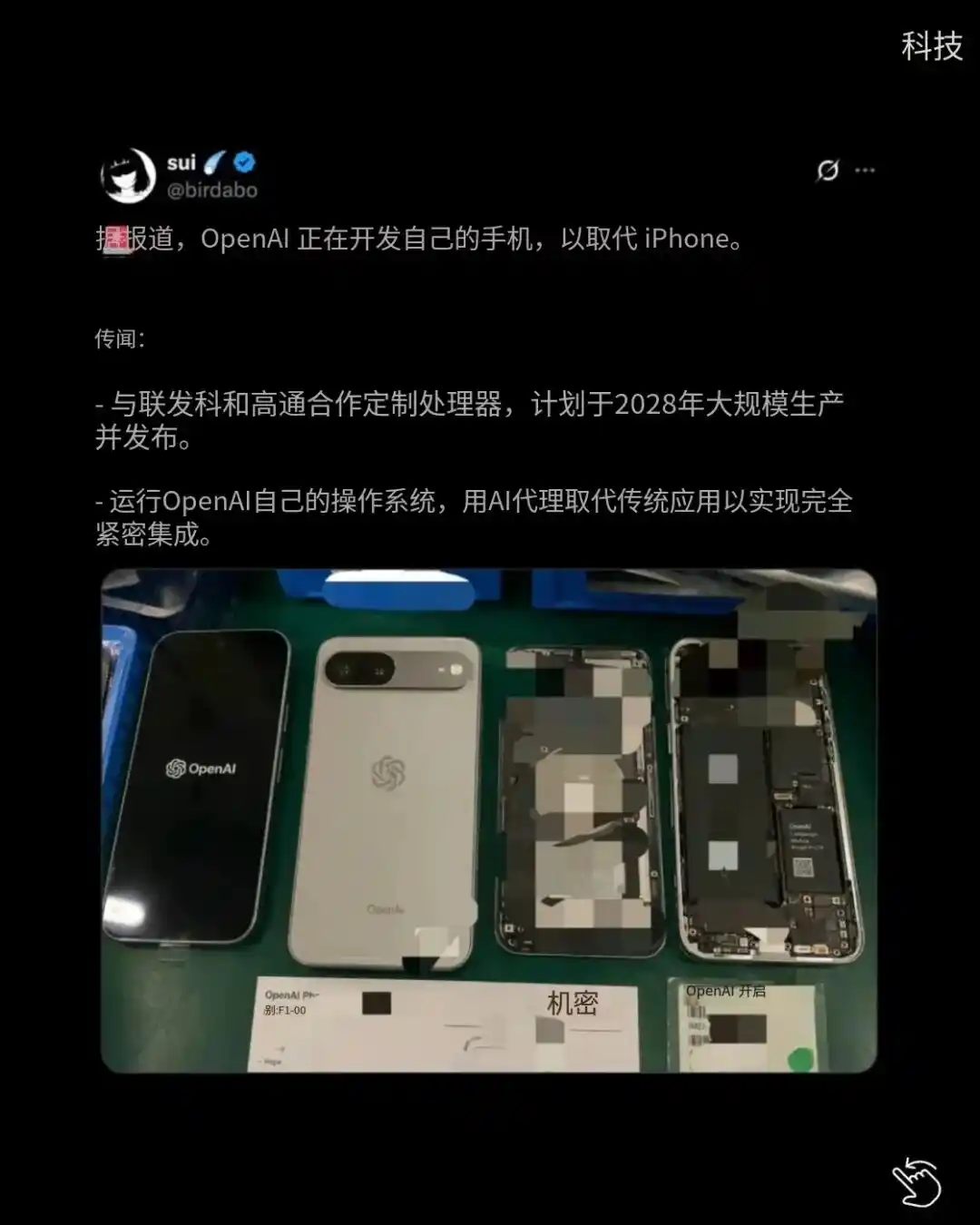
According to leaks, OpenAI is accelerating development of its first AI Agent phone, with mass production as early as the first half of 2027 and a target of shipping 30 million units over the next two years.

Is it crazy?

Probably not. OpenAI has likely already seen a more dangerous problem clearly: ChatGPT is smart, but it doesn't have hands.

It can answer you, but it has a hard time completing tasks for you. It lives in other people's systems—Apple's, Microsoft's, operating systems, browsers—so it can't get the real permissions.

What we want to discuss next isn't why OpenAI wants to build a phone. It's how this company came to realize, step by step, that without its own terminal device, ChatGPT can never truly break free.

ChatGPT's Success is Also a Form of Path Dependency

In April 2026, SpaceX secured an option: it could acquire Cursor for up to $60 billion later in the year.

OpenAI's initial belief wasn't in phones, browsers, or any particular App. It believed in the model—or more precisely, in intelligence itself.

In its worldview, as long as the model is powerful enough, the entry point, product, and business model will all be pushed forward by intelligence.

This wasn't just talk. In 2020, OpenAI published the later frequently cited Scaling Laws paper, establishing a relatively optimistic belief: by scaling up the model, data, and compute together, intelligence would improve in a predictable way.

In other words, the most important thing wasn't to grab an entry point first, but to make the model even stronger. With strong enough intelligence, the world would naturally make way.

This belief was realized on November 30, 2022.
That day ChatGPT launched. It had no flashy interface, no hardware, no platform pre-installation, just an input box on a webpage. But it gave ordinary people an experience they'd never had before: you type a sentence, and it replies like a human.

The awe wasn't just that AI could talk, but that it had barely relied on any traditional entry point. No phone manufacturers pushed it, no operating system placed it in a prominent spot; users found it themselves.

Two months, 100 million monthly active users—the fastest-growing consumer application in human history.

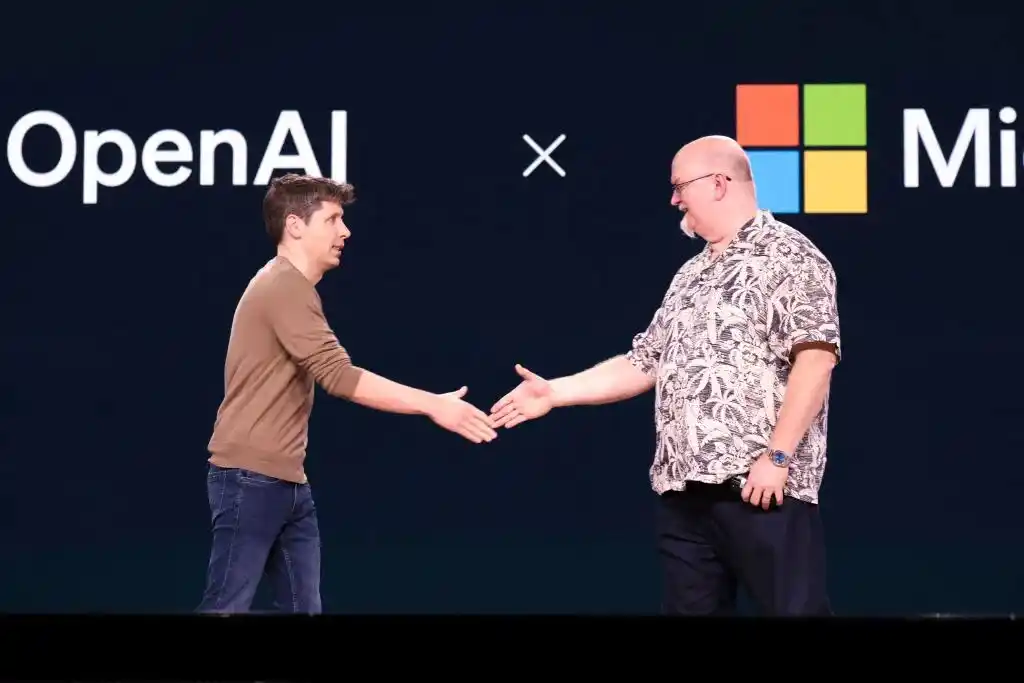
OpenAI seemed to be right. Microsoft immediately doubled down, embedding its capabilities into Copilot, Office, and Bing; Apple also integrated ChatGPT into Apple Intelligence at WWDC 2024.

At that moment, OpenAI stood at the center of the era. The strongest model, the most users, the deepest partnerships.

But that's precisely where the problems started.

ChatGPT's success was too dazzling. So dazzling that it easily made OpenAI believe: the model itself is the entry point. It didn't need to own a phone first, nor control an operating system first—if the intelligence was impressive enough, users would come find it.

The real cracks that emerged later also started here.

Claude Code Rewrote the Rules of Monetization

The first crack came from Anthropic.

In May 2025, it released Claude Code. No flashy demo, no blockbuster launch event. This product simply entered developers' terminals, codebases, and Git workflows, helping engineers get the job done.

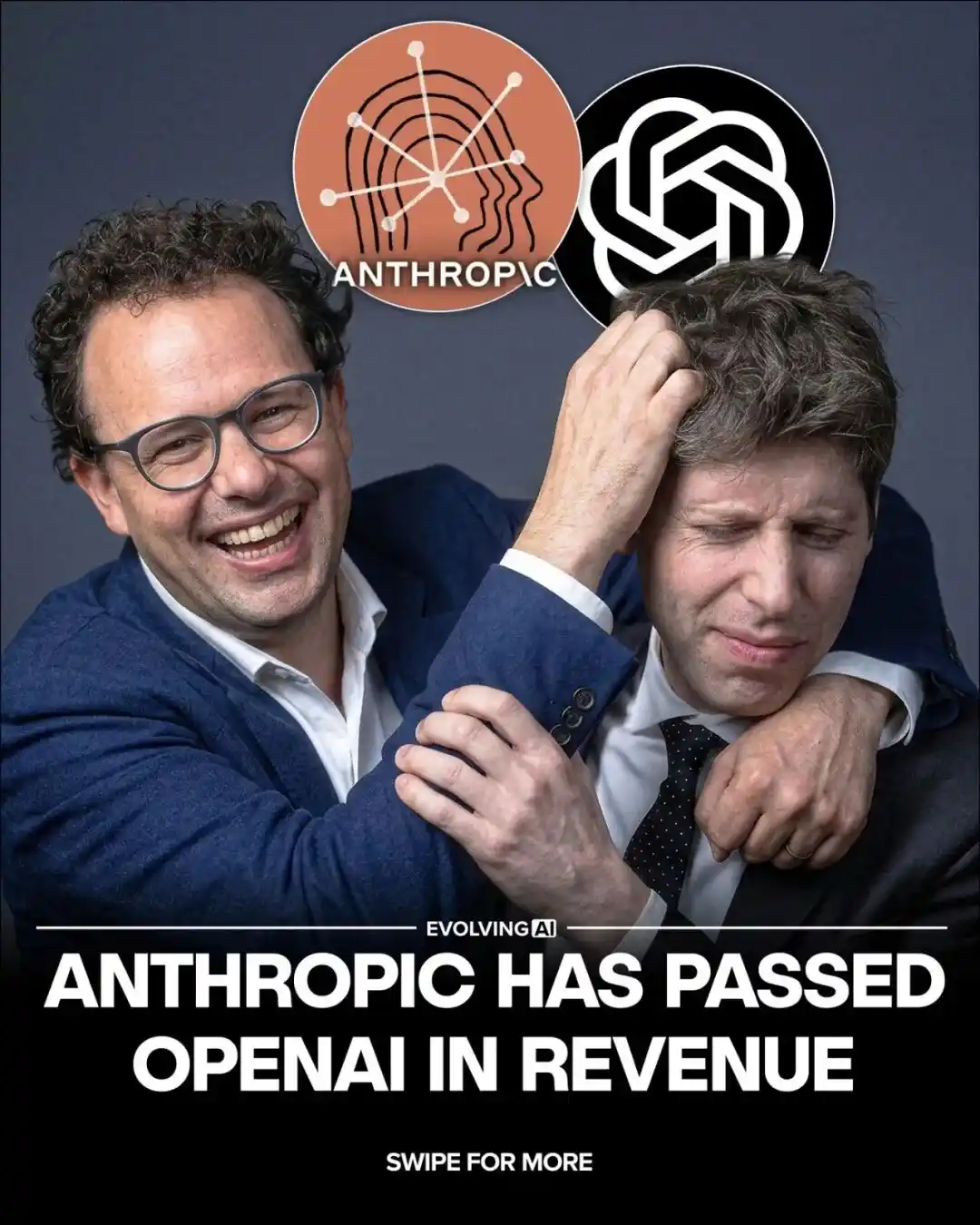
Six months after launch, Claude Code reached a $1 billion annual run rate; in less than a year, over $2.5 billion. By April 2026, Anthropic's overall annualized revenue crossed $30 billion.

Meanwhile, OpenAI was at $2 billion monthly revenue, or roughly $24 billion annualized.

Anthropic achieved higher revenue with far fewer users than ChatGPT. This is what OpenAI should truly be worried about.

The reason is simple—it captured a group of people most willing to pay.

The question is, why was OpenAI a step slower?

Not because it couldn't see Agents. It was because ChatGPT's success was too dazzling, so dazzling that OpenAI continued moving forward with its original inertia: make a stronger model, expand the user base, find the next universal entry point.

So over these past two years, you've seen OpenAI attempt many 0-to-1 projects—GPT Store, Sora, Operator, Deep Research—all born from this line of thinking. They collectively point to one judgment: as long as the model is strong enough, new products, new entry points, new business models will naturally emerge.
But Anthropic chose a different path. It didn't first create a super entry point for everyone. Instead, it nailed Claude Code into developers' workflows, repeatedly polishing one thing—letting AI finish the job.

This is where OpenAI was slow. It wasn't that it didn't make new products, but that it didn't immediately take a high-paying-use-case scenario from 1 to 100.

Sora is a classic example. It stunned the world upon release, but video generation consumed vast amounts of compute, and user retention and the business model weren't clear enough. When OpenAI later shut down Sora, it was, in a sense, a pruning—it began to realize that creating a stunning AI demo and penetrating a high-value workflow are two different things.

Model capabilities can create highlights, but commercial efficiency comes from consistently delivering results.

At this point, OpenAI finally realized: Agent isn't an add-on feature; it's the core of the next phase of AI commercialization. ChatGPT can't just prove it's smart; it must prove it can complete tasks for users.

But when it truly starts taking over tasks, what it hits isn't the ceiling of model capability, but the ceiling of permissions.

900 Million Users, How to Turn Them into Money

OpenAI is, of course, catching up. In May 2025, it launched Codex, directly responding to Claude Code. By April 2026, Codex reached 3 million weekly active users.

But in the coding battle, OpenAI will find it hard to win back in the short term—Anthropic has already captured the mindshare for coding Agents, leaving the follower to play catch-up.

This is also why OpenAI began reallocating resources: shifting attention from projects that easily create hype but struggle to achieve commercial closure, towards Agents, the enterprise market, and more fundamental research.

But what it really needs to look at is its bigger card—900 million weekly active users.

These people aren't programmers; they won't pay for code. But they all have needs: writing emails, making proposals, researching, booking travel, shopping, organizing files.

If ChatGPT can evolve from a "conversational" entry point to a "task-completing" entry point, that would be OpenAI's true commercial capability.

Imagine this scenario: you want to buy a plane ticket, tell ChatGPT the time, budget, preferences. It searches flights, compares prices, checks hotels for you, and finally gives you a confirmation button.

At that moment, part of Ctrip's value is bypassed. Price comparison, ad slots, commissions, user decision influence—all would be redistributed. Buying insurance, paying credit card bills, settling utility bills follow the same logic. As long as the Agent can complete tasks for you, OpenAI has a chance to take a cut of every transaction commission, every advertising influence within.

This is where the true value of 900 million users lies—ChatGPT no longer just answers questions, but starts taking over task and transaction entry points.

But once AI starts handling tasks, it's no longer just a model in a chatbox. It needs to know where you are, see what's happening on your screen, and access your files, calendar, emails, and payments.

The problem thus shifts from "Is the model strong enough?" to "Who has the permissions?"

And permissions are precisely what OpenAI lacks.

ChatGPT Lives in Someone Else's House

OpenAI initially thought partnerships could solve the entry point problem. Apple gave it the iPhone, Microsoft gave it Office, Windows, and enterprise customers. At the time, this looked like a victory for OpenAI's faith in models.

But with the advent of the Agent era, the problem changed.

In Apple's world, ChatGPT is an external expert that gets called upon. It can answer questions, but it cannot truly take over the screen, camera, notifications, payments, and files—Apple won't hand over these permissions. Otherwise, the iPhone's "soul" would no longer belong to Apple.

It's similar with Microsoft. In the past, OpenAI provided the model, and Microsoft was responsible for integrating AI into entry points like Office. But when OpenAI itself started making Codex and enterprise Agents, it stepped onto Microsoft's turf—Agents inherently enter workflows, write code, process files, and complete tasks for employees, which is exactly the core of Microsoft's sovereignty.

So, the relationship between OpenAI and Microsoft hasn't broken immediately, but the boundaries have shifted. In April 2026, the two parties renegotiated their agreement, with Microsoft's exclusive licensing becoming non-exclusive, allowing OpenAI to serve customers on any cloud.

The meaning of this is clear: OpenAI doesn't want to be just a supplier within the Microsoft ecosystem. It wants to face customers itself, deliver Agents itself, and capture entry points itself.

At this point, its relationships with Apple and Microsoft become delicate. Because what an Agent needs isn't a showcase spot, but the default entry point, system permissions, and the intelligent terminal the user interacts with first every day.

These things, Apple won't give, and Microsoft won't either. They can't.

Ultimately, ChatGPT is strong, but it always lives in someone else's house—Apple's house, Microsoft's house, the browser's house, the operating system's house. It can be called upon, integrated, and be a great supplier, but it can't decide when it appears, nor what permissions it gets.

And the phone is the one closest to its resource endowment. 900 million weekly active users are already willing to hand questions to ChatGPT—migrating this mindset to a device is a shorter path than building an operating system or a browser from scratch.

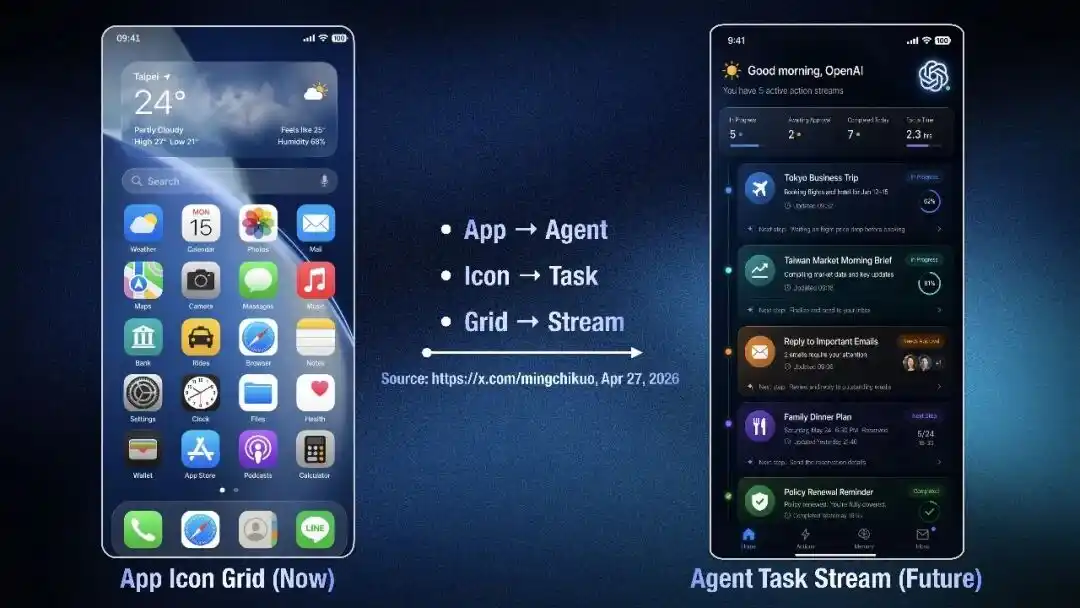
It's not trying to make another iPhone filled with Apps, but a phone dedicated to Agents—a body that allows ChatGPT to see, call upon, and execute tasks.
This is also why in May 2025, OpenAI spent approximately $6.5 billion to acquire Jony Ive's hardware company. This person is the industrial designer of the original iPhone, one of the most important figures beside Steve Jobs. OpenAI sought him not just to make a beautiful piece of hardware, but to redefine personal devices for the AI era.

Returning to the opening question: why would a large language model company make a phone?

What OpenAI wants isn't a phone; it's sovereignty.

It wants to find a default entry point that belongs to ChatGPT itself. But making a phone essentially pushes OpenAI into direct opposition with Apple. In the past, Apple could treat ChatGPT as a supplier; if OpenAI truly makes a phone for the AI era, it's no longer a supplier but a competitor to Apple for personal entry points.

Looking back over these past few years, OpenAI's story has actually undergone a reversal.

It once believed that if the model was strong enough, the world would actively reorganize itself around intelligence. ChatGPT's explosion did prove this—it had no hardware, no pre-installation, just a webpage input box, and pulled hundreds of millions of users into the AI era.

But when the Agent era arrived, OpenAI found it still lacked the most crucial thing: sovereignty.

ChatGPT's success was a victory, but also a form of path dependency. It made OpenAI believe for too long that the model itself was the answer. It wasn't until Claude Code reached a $2.5 billion annual run rate, and until Apple and Microsoft were unwilling to hand over system permissions, that OpenAI realized: no matter how strong the model is, it still needs to capture the entry point, permissions, and tasks.

So, when OpenAI makes a phone, what it truly wants to make isn't a phone; it's ChatGPT's first body.

This article is from the WeChat public account "Pixel 301", author: Pixel 301

Câu hỏi Liên quan

QWhat is the primary reason OpenAI is reportedly developing an AI phone, according to the article?

ATo gain sovereign control over a default entry point and system permissions for ChatGPT, allowing it to function as a true AI Agent that can execute tasks, rather than relying on other platforms like Apple or Microsoft which limit its access.

QWhat key competitor move exposed a flaw in OpenAI's growth strategy, and how did it outperform ChatGPT financially?

AAnthropic's release of Claude Code targeted the high-paying developer workflow, generating $25 billion in annualized revenue within a year by focusing on completing tasks, while OpenAI, with more users, had lower annualized revenue of about $240 billion, highlighting that user scale doesn't automatically translate to commercial efficiency in specific high-value workflows.

QWhat strategic shift did OpenAI's acquisition of Jony Ive's hardware firm represent?

AIt represented a move beyond being just a model provider to aiming to redefine personal AI devices. OpenAI sought Ive's expertise to build not just a smartphone, but a dedicated 'body' or terminal for its AI Agent, ChatGPT, to have its own sovereign interface.

QHow did the success of ChatGPT create a 'path dependency' or strategic blind spot for OpenAI?

AChatGPT's viral, hardware-independent success led OpenAI to believe that superior model intelligence alone was sufficient to attract users and define new entry points. This made them slower to prioritize developing deep, commercially closed-loop Agent capabilities for specific high-value tasks, as demonstrated by Anthropic.

QWhy can't partnerships with Apple or Microsoft solve OpenAI's need for system-level permissions in the Agent era?

ABecause neither Apple nor Microsoft will relinquish core system permissions (like screen control, notifications, payments, or deep file access) to an external AI. These permissions define platform sovereignty. For OpenAI's ChatGPT to act as a true task-executing Agent, it needs these permissions, which requires its own controlled hardware entry point.

Nội dung Liên quan

Kraken Lên Kế Hoạch Cung Cấp Hợp Đồng Tương Lai Vĩnh Viễn Được CFTC Quy Định Cho Nhà Giao Dịch Chuyên Nghiệp Hoa Kỳ

Kraken đang chuẩn bị ra mắt hợp đồng tương lai vĩnh viễn được CFTC quản lý cho các nhà giao dịch chuyên nghiệp đủ điều kiện tại Hoa Kỳ. Sản phẩm sẽ được cung cấp thông qua sàn phái sinh Bitnomial mà Kraken đã mua lại và dự kiến tích hợp vào nền tảng Kraken Pro. Hợp đồng tương lai vĩnh viễn là sản phẩm phái sinh crypto lớn toàn cầu, cho phép giao dịch không ngày đáo hạn. Tại Mỹ, các hạn chế quy định trước đây khiến nhà giao dịch có ít lựa chọn trong nước. Động thái của Kraken nhằm thu hẹp khoảng cách này, cung cấp một con đường được quản lý để tiếp cận sản phẩm chi phối khối lượng giao dịch crypto ở nước ngoài. Việc ra mắt sẽ tập trung vào các nhà giao dịch chuyên nghiệp đủ điều kiện. Các yếu tố cần theo dõi bao gồm điều khoản về tính đủ điều kiện, thiết kế hợp đồng, tài sản được hỗ trợ và quan trọng nhất là thanh khoản khi ra mắt. Thành công của sản phẩm có thể mở đường cho nhiều sản phẩm tương lai vĩnh viễn được quản lý khác tại thị trường Mỹ, đưa sản phẩm phái sinh chủ chốt này tiến gần hơn đến cơ sở hạ tầng thị trường nội địa được quản lý.

bitcoinist2 giờ trước

Kraken Lên Kế Hoạch Cung Cấp Hợp Đồng Tương Lai Vĩnh Viễn Được CFTC Quy Định Cho Nhà Giao Dịch Chuyên Nghiệp Hoa Kỳ

bitcoinist2 giờ trước

Sự Ra Mắt Của Warsh: Chủ Tịch Fed Hiểu Crypto Nhất Lịch Sử Sẽ Mang Đến Bất Ngờ Hay Cú Sốc Cho Thị Trường?

Tân Chủ tịch Cục Dự trữ Liên bang Kevin Warsh, người được mệnh danh là chủ tịch FED "hiểu rõ về Crypto nhất trong lịch sử", sắp có buổi họp báo chính sách đầu tiên trong bối cảnh thử thách ba mặt: lạm phát quay trở lại, áp lực giảm lãi suất từ Tổng thống Trump và kỳ vọng thị trường về việc tăng lãi suất. Khác với người tiền nhiệm, Warsh có cái nhìn sâu sắc về tài sản số, từng coi Bitcoin như "cảnh sát tốt cho chính sách" và nhấn mạnh giá trị sản xuất của ngành công nghiệp blockchain. Tuy nhiên, ông cũng nổi tiếng là người theo chủ nghĩa diều hâu về lạm phát. Sự kết hợp giữa "lãi suất chặt chẽ" và "quy định thân thiện" từ ông có thể trở thành yếu tố cốt lõi định giá tài sản mã hóa. Bài viết phân tích tác động từ ba khía cạnh: 1. **Chuyển đổi khuôn mẫu kỳ vọng quy định:** Từ phòng thủ sang tích hợp và đổi mới, có thể thúc đẩy các khung pháp lý rõ ràng hơn, hỗ trợ ổn định do khu vực tư nhân phát hành. 2. **Định giá lại lộ trình lãi suất và phần bù rủi ro:** Một chủ tịch hiểu biết và giao tiếp rõ ràng có thể giảm bớt phí bảo hiểm bất định, có lợi về cấu trúc cho thị trường. 3. **Tái phân bổ dòng vốn toàn cầu:** Kinh nghiệm đầu tư cá nhân của Warsh truyền tải tín hiệu về sự chấp nhận chính thống, có thể thúc đẩy các quỹ thể chế truyền thống phân bổ tài sản số. Hai kịch bản chính được đưa ra: * **Ngạc nhiên thú vị:** Nếu Warsh thể hiện thái độ ôn hòa và công nhận giá trị của tài sản số, thị trường có thể được tiếp thêm sức mạnh. * **Cú sốc:** Nếu ông phát tín hiệu tăng lãi suất mạnh mẽ, tài sản rủi ro, bao gồm crypto, có thể chịu áp lực bán. Mặc dù Warsh đã bán các khoản nắm giữ liên quan đến crypto để tuân thủ quy tắc đạo đức, nhưng sự hiểu biết thực sự của ông về công nghệ blockchain được kỳ vọng sẽ đặt nền tảng cho việc chính thống hóa tài sản số về lâu dài, vượt ra ngoài các phản ứng thị trường ngắn hạn.

marsbit3 giờ trước

Sự Ra Mắt Của Warsh: Chủ Tịch Fed Hiểu Crypto Nhất Lịch Sử Sẽ Mang Đến Bất Ngờ Hay Cú Sốc Cho Thị Trường?

marsbit3 giờ trước

XRP Ledger Ra Mắt Rebrand XRPLd Cùng Với Bản Nâng Cấp Phiên Bản 3.2.0

Phiên bản 3.2.0 của XRP Ledger đã chính thức ra mắt, đánh dấu một bước nâng cấp quan trọng cho cơ sở hạ tầng blockchain cốt lõi. Lần này, các nhà phát triển đã đổi tên phần mềm vận hành mạng từ "rippled" thành "xrpld" để phù hợp hơn với toàn bộ hệ sinh thái của dự án. Bản cập nhật tập trung chủ yếu vào các cải tiến back-end và hiệu suất thay vì tính năng người dùng mới. Các tối ưu hóa bộ nhớ được giới thiệu có khả năng tiết kiệm tới 40% lượng bộ nhớ máy chủ, đồng thời chuẩn bị kiến trúc phần mềm cho việc mở rộng quy mô trong tương lai. Về mặt bảo mật, bản sửa đổi `fixCleanup3_2_0` mang lại nhiều cải thiện cho các mô-đun như kho lưu ký tài sản đơn, giao thức cho vay, sàn giao dịch phi tập trung và mã thông báo đa năng. Các kiểm tra bất biến mới được thêm vào để đảm bảo tính toàn vẹn của sổ cái khi tài khoản bị xóa. Một khả năng mới cho nhà phát triển là ứng dụng có thể truy xuất thông tin định nghĩa giao thức và máy chủ XRP Ledger mà không cần kết nối trực tiếp, hỗ trợ đáng kể việc phát triển ví, công cụ khám phá chuỗi khối và API. Các thay đổi về khả năng mở rộng và ổn định bao gồm kích thước khối có thể cấu hình, hỗ trợ lưu trữ cơ sở dữ liệu hiệu quả qua nuDB, và việc hỗ trợ máy chủ gRPC cho TLS/mutual TLS trở thành tùy chọn. Cổng kết nối ngang hàng mặc định cũng được đổi từ 51235 sang 2459. Các tính năng kiểm tra bất biến giao dịch tạm thời bị vô hiệu hóa trong phiên bản 3.2.0 do ảnh hưởng đến hiệu suất, nhưng không gây rủi ro bảo mật.

TheNewsCrypto3 giờ trước

XRP Ledger Ra Mắt Rebrand XRPLd Cùng Với Bản Nâng Cấp Phiên Bản 3.2.0

TheNewsCrypto3 giờ trước

AGI không phải là điểm kết thúc, nghiên cứu mới của DeepMind: Hướng tới ASI, tiến bộ AI thực sự mới chỉ bắt đầu

DeepMind mới đây công bố nghiên cứu cho rằng AGI (Trí tuệ nhân tạo phổ quát) không phải là điểm cuối. AI sẽ tiếp tục phát triển vượt qua khả năng của các nhóm chuyên gia con người hàng đầu, hướng tới ASI (Trí tuệ siêu nhân tạo). Báo cáo phân biệt ba khái niệm: AGI (năng lực nhận thức tương đương mức trung bình của con người), ASI (vượt trội con người trong hầu hết lĩnh vực quan tâm), và UAI (giới hạn lý thuyết tối thượng). Nghiên cứu đề xuất bốn con đường tiềm năng để chuyển từ AGI sang ASI: 1. Mở rộng quy mô tính toán, mô hình và dữ liệu. 2. Tiến hóa thuật toán, có thể thay đổi mô hình mới. 3. Tự cải thiện đệ quy, tạo phản hồi tích cực. 4. Điều phối đa tác tử và trí tuệ tập thể. Đồng thời, báo cáo chỉ ra sáu điểm nghẽn chính: giới hạn dữ liệu chất lượng cao, áp lực tài nguyên và kinh tế, hạn chế của mô hình mạng nơ-ron hiện tại, nghiên cứu ngày càng khó khăn, rào cản trừu tượng, cùng các vấn đề quản lý và phản ứng xã hội. Khi AI vượt con người, các phương pháp đánh giá truyền thống sẽ mất ý nghĩa. Cần xây dựng hệ thống đánh giá mới cho thời kỳ hậu AGI. ASI không phải là hệ thống toàn năng, vẫn chịu ràng buộc bởi các quy luật vật lý, độ phức tạp tính toán, dữ liệu, tài nguyên và tốc độ phản hồi thực tế. Tương lai phát triển của AI vẫn chứa nhiều bất định, đòi hỏi một nỗ lực liên ngành quy mô lớn để theo dõi và ứng phó.

marsbit4 giờ trước

AGI không phải là điểm kết thúc, nghiên cứu mới của DeepMind: Hướng tới ASI, tiến bộ AI thực sự mới chỉ bắt đầu

marsbit4 giờ trước

Kraken Ra Mắt Hợp Đồng Perpetual Trước IPO Cho OpenAI Và Anthropic Với Đòn Bẩy Lên Đến 5x

Kraken đã ra mắt hợp đồng tương lai vĩnh viễn (perps) tiền IPO cho hai công ty trí tuệ nhân tạo hàng đầu là OpenAI và Anthropic. Các hợp đồng này cho phép các nhà giao dịch đủ điều kiện mở vị thế mua (long) hoặc bán (short) đối với các công ty tư nhân được theo dõi sát sao này trước khi họ lên sàn chứng khoán, với đòn bẩy lên tới 5x. Sản phẩm này đánh dấu một bước tiến trong việc mở rộng cơ sở hạ tầng phái sinh tiền mã hóa sang các tài sản ngoài chuỗi, cung cấp cho các nhà giao dịch một cách tiếp cận thay thế để có thể tiếp xúc với các công ty tư nhân vốn thường khó tiếp cận. Tuy nhiên, hợp đồng tiền IPO có những rủi ro đặc thù. Khác với các hợp đồng vĩnh viễn cho tiền mã hóa có giá cả minh bạch, định giá công ty tư nhân phụ thuộc vào nhiều yếu tố như các vòng gọi vốn, giao dịch thứ cấp và kỳ vọng về thời điểm IPO. Điều này khiến việc định giá và quản lý rủi ro trở nên phức tạp hơn. Việc sử dụng đòn bẩy cao có thể khuếch đại lợi nhuận nhưng cũng làm gia tăng đáng kể rủi ro thua lỗ và thanh lý. Do đó, các nhà giao dịch cần hiểu rõ bản chất của sản phẩm mới và các rủi ro độc đáo của thị trường tư nhân trước khi tham gia.

bitcoinist4 giờ trước

Kraken Ra Mắt Hợp Đồng Perpetual Trước IPO Cho OpenAI Và Anthropic Với Đòn Bẩy Lên Đến 5x

bitcoinist4 giờ trước

Giao dịch

Giao ngay
Hợp đồng Tương lai

Bài viết Nổi bật

Làm thế nào để Mua LA

Chào mừng bạn đến với HTX.com! Chúng tôi đã làm cho mua Lagrange (LA) trở nên đơn giản và thuận tiện. Làm theo hướng dẫn từng bước của chúng tôi để bắt đầu hành trình tiền kỹ thuật số của bạn.Bước 1: Tạo Tài khoản HTX của BạnSử dụng email hoặc số điện thoại của bạn để đăng ký tài khoản miễn phí trên HTX. Trải nghiệm hành trình đăng ký không rắc rối và mở khóa tất cả tính năng. Nhận Tài khoản của tôiBước 2: Truy cập Mua Crypto và Chọn Phương thức Thanh toán của BạnThẻ Tín dụng/Ghi nợ: Sử dụng Visa hoặc Mastercard của bạn để mua Lagrange (LA) ngay lập tức.Số dư: Sử dụng tiền từ số dư tài khoản HTX của bạn để giao dịch liền mạch.Bên thứ ba: Chúng tôi đã thêm những phương thức thanh toán phổ biến như Google Pay và Apple Pay để nâng cao sự tiện lợi.P2P: Giao dịch trực tiếp với người dùng khác trên HTX.Thị trường mua bán phi tập trung (OTC): Chúng tôi cung cấp những dịch vụ được thiết kế riêng và tỷ giá hối đoái cạnh tranh cho nhà giao dịch.Bước 3: Lưu trữ Lagrange (LA) của BạnSau khi mua Lagrange (LA), lưu trữ trong tài khoản HTX của bạn. Ngoài ra, bạn có thể gửi đi nơi khác qua chuyển khoản blockchain hoặc sử dụng để giao dịch những tiền kỹ thuật số khác.Bước 4: Giao dịch Lagrange (LA)Giao dịch Lagrange (LA) dễ dàng trên thị trường giao ngay của HTX. Chỉ cần truy cập vào tài khoản của bạn, chọn cặp giao dịch, thực hiện giao dịch và theo dõi trong thời gian thực. Chúng tôi cung cấp trải nghiệm thân thiện với người dùng cho cả người mới bắt đầu và người giao dịch dày dạn kinh nghiệm.

Tổng lượt xem 474Xuất bản vào 2025.06.04Cập nhật vào 2026.06.02

Làm thế nào để Mua LA

Thảo luận

Chào mừng đến với Cộng đồng HTX. Tại đây, bạn có thể được thông báo về những phát triển nền tảng mới nhất và có quyền truy cập vào thông tin chuyên sâu về thị trường. Ý kiến ​​của người dùng về giá của LA (LA) được trình bày dưới đây.

活动图片













