
World Cup Approaches, Prediction Markets Face a Major Test

marsbitXuất bản vào 2026-05-15Cập nhật gần nhất vào 2026-05-15

Tóm tắt

The 2026 FIFA World Cup represents a major public test for sports prediction markets like Polymarket and Kalshi, which have grown significantly by offering tradable markets on event outcomes. This global event, hosted by the US, Canada, and Mexico, concentrates risks related to sports integrity, cross-border operations, and gambling ecosystems. A key concern is the potential for insider trading on non-public information (e.g., injuries, lineups), which could be exploited in granular prediction markets. FIFA's choice of its official prediction market partner, ADI Predictstreet, has raised significant doubts. The platform, relatively unknown, has faced scrutiny over the integrity of its executives—including past insider trading allegations and associations with a major EU corruption scandal—its rapid licensing in Gibraltar, and the fact its product was not yet live at the time of the announcement. This partnership begins with a "trust deficit." FIFA itself carries historical corruption baggage, and its deepening ties with betting and data industries fuel concerns about maintaining sporting integrity. While FIFA has established monitoring systems, their effectiveness against potential insider trading across decentralized global prediction markets remains unproven. Major US-based prediction platforms have updated rules to prohibit trading based on confidential information. However, the World Cup's complex ecosystem of federations, teams, and officials makes enforcement far mor...

Author: Zen, PANews

In recent years, prediction market platforms led by Polymarket and Kalshi have turned political, macroeconomic, crypto, entertainment, and sports events into tradable markets. Users express probabilistic judgments and earn profits by buying and selling event outcomes. Especially after entering the sports arena, these platforms have seen substantial and sustained growth in trading volume, making sports a pillar of their revenue structure.

In this major sports year, particularly the 2026 FIFA World Cup—co-hosted by the USA, Canada, and Mexico, and expanded for the first time to 48 teams—will represent the most significant public stress test for sports prediction markets to date. It compresses sports competition, cross-border event organization, the betting ecosystem, and global user traffic into a single market scenario, significantly amplifying both risk dimensions and external scrutiny.

In such a high-density, globalized, cross-jurisdictional sporting event, the combination of insiders and tradable prediction markets means that any information asymmetry regarding injuries, starting lineups, referees, or even internal governance could be rapidly converted into pricing advantages.

In this sense, the 2026 World Cup is not only an opportunity for prediction markets to compete for sports traffic but also a public examination of their ability to safeguard sports integrity.

From Obscurity to the World Cup Spotlight: FIFA's Prediction Market Partner Faces Multiple Queries

In April of this year, FIFA (Fédération Internationale de Football Association) announced its official prediction market partner for the 2026 World Cup. Surprisingly, the brand announced was neither Polymarket nor Kalshi, but a little-known platform—ADI Predictstreet.

Just as people were wondering who ADI Predictstreet was, this company placed at the center of the world's largest sporting event began to face public skepticism due to the negative history of its executives, the speed of its licensing, and the immaturity of its product.

The first layer of controversy surrounding Predictstreet involves executive integrity. When ADI Predict Street was announced as FIFA's betting partner, the company's Chief Council Member, Ajay Bhatia, represented the company on stage. He was photographed with FIFA President Gianni Infantino, both holding up a jersey bearing the ADI Predict Street logo.
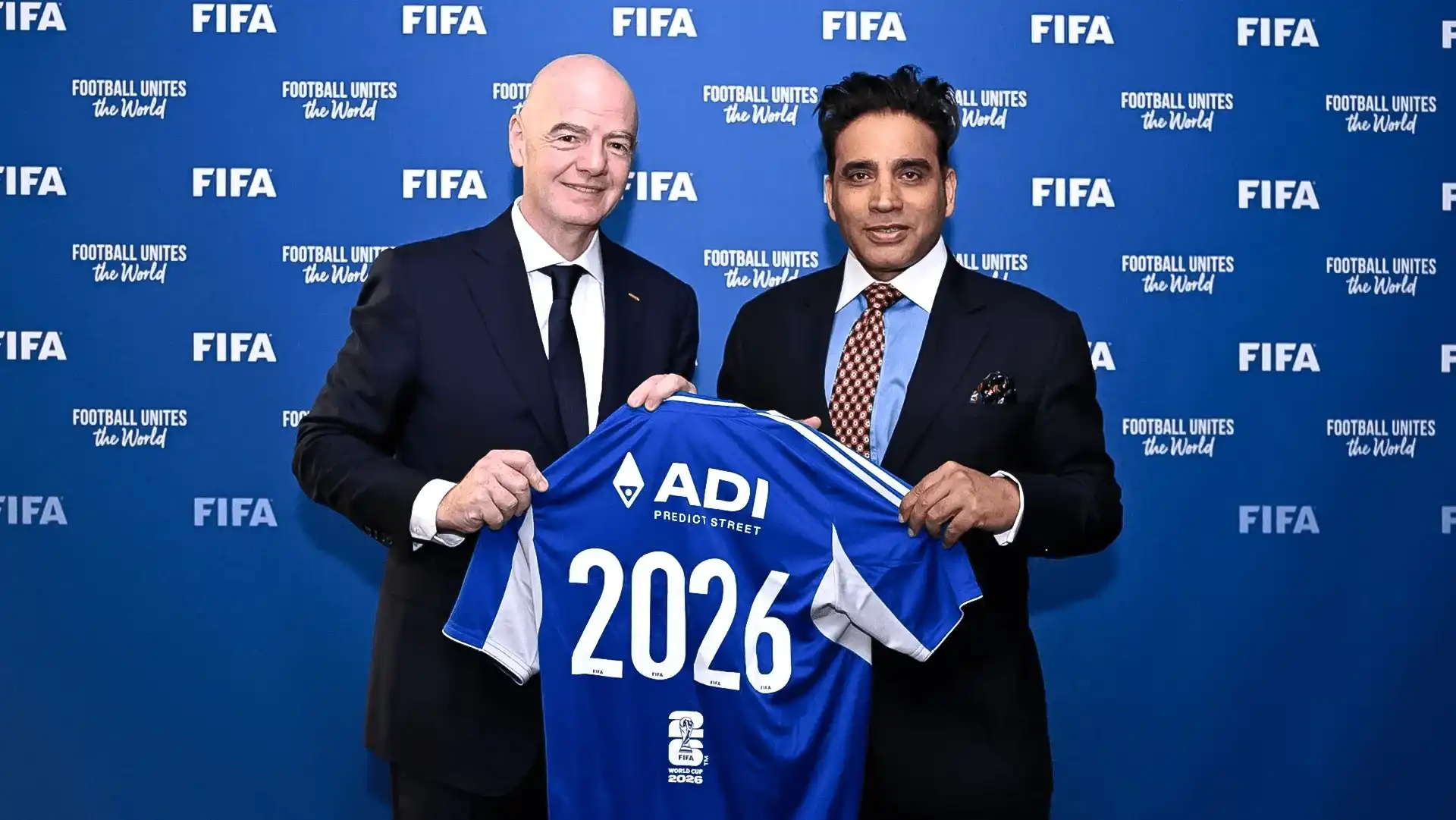
FIFA President Gianni Infantino (left) and Ajay Bhatia (right)

Bhatia is the CEO and Managing Director of QuantLase Lab, a subsidiary of IHC (International Holding Company), which is chaired by a member of the Abu Dhabi royal family and Vice President of the UAE. On the other hand, ADI Predictstreet falls under Finstreet, which is a subsidiary of Sirius International Holding, which is also part of IHC.

According to Norwegian football news outlet Josimar, Bhatia was embroiled in an insider trading scandal in 2025. He was accused of purchasing shares in the Indian energy giant Adani Group before IHC publicly announced it would invest in it. The case was settled for approximately $150,000 in September 2025, with Bhatia not admitting guilt.

Shortly after Josimar disclosed Bhatia's past, ADI Predictstreet announced that Dimitrios Psarrakis would assume the role of CEO. However, Psarrakis's resume also appears questionable. He previously served as an assistant to former European Parliament Vice President Eva Kaili, who was a central figure in the European Parliament's Qatar corruption scandal (also known as Qatargate).

Former European Parliament Vice President Eva Kaili (left) and ADI Predictstreet CEO Dimitrios Psarrakis (right)

Kaili allegedly accepted benefits from Qatar and Morocco in exchange for promoting their interests within the EU. While the legal and ethical risks associated with Kaili cannot be directly equated to Psarrakis, his professional connection to a figure at the heart of a scandal is sufficient to raise questions about reputation and due diligence.

Beyond executive credibility issues, the speed at which ADI Predictstreet obtained its license is also noteworthy. Just days before being announced as the official prediction market partner for the 2026 World Cup, ADI Predictstreet announced it had secured a license in Gibraltar. Officials claimed the approval speed "set a record" and that the entire process was very rigorous.

However, although the ADI Predictstreet website domain was registered in January and it obtained its license by the end of March, its actual product is still not live. The real-money trading experience remains unknown. As the official prediction market platform FIFA has thrust into the World Cup spotlight, the outside world still cannot assess whether its actual trade matching, settlement, risk control, anti-manipulation, and user protection mechanisms have undergone stress testing.

Therefore, with these multiple layers of uncertainty, the World Cup's partnership with ADI Predictstreet began with a deficit of trust.

FIFA's Historical Baggage and Gamblification Controversy

Beyond the questionable credibility of the ADI Predictstreet platform, FIFA itself, often criticized for corruption, struggles to gain inherent trust in this matter.

In 2015, the U.S. Department of Justice brought widespread corruption charges against numerous FIFA officials and sports marketing executives. Then-U.S. Attorney General Loretta Lynch described the corruption as "rampant, systemic, and deep-rooted." This historical backdrop makes it difficult for FIFA to convince the public through official statements alone in any cooperation involving betting, data, or prediction markets.

In recent years, FIFA's ties to the betting and data industries have also deepened, fueling concerns about match integrity at a similar pace.

Shortly before the 2022 Qatar World Cup, FIFA struck a deal with betting operator Betano; the following year, FIFA signed an agreement with New Zealand lottery company TAB for the Women's World Cup; in early 2026, FIFA commercialized its streaming platform FIFA+ through a deal with data company Stats Perform, bringing more lower-tier matches into the betting market.
From a commercial perspective, this can be interpreted as FIFA developing its data assets and fan engagement. But from a sports integrity viewpoint, it also means the World Cup is being embedded deeper into the betting and trading ecosystem. As the event becomes increasingly enamored with the commercial value brought by this ecosystem, a major question arises: can it remain sufficiently independent to control risks?

In response, FIFA has taken some measures to address betting-related threats. In 2024, FIFA relocated its legal department and integrity unit to Miami (resulting in the loss of many experienced staff) and also formed an integrity task force, with members including institutions like Interpol, the U.S. Federal Bureau of Investigation, and representatives from the betting industry.

In February 2026, FIFA announced that U.S.-based integrity and compliance monitoring company IC360 would join this task force and use its ProhiBet software to monitor betting-related threats, including whether players and match officials bet on their own games.

However, this mechanism seems more like a screening tool for regulated markets rather than a complete defense line covering the global betting and prediction market risks of the World Cup. For an event involving parties worldwide and extremely long information chains, truly dangerous insider trading often doesn't occur in the places most visible to regulators.

Insider Trading Concerns Rise, Prediction Market Leaders Tighten Rules

Traditional betting monitoring typically relies on information sharing between betting companies, data providers, leagues, and regulators. Prediction markets, however, may involve crypto wallets, offshore platforms, cross-border accounts, proxy trading, and decentralized settlement. Even if official partner platforms are regulated, other platforms may still open World Cup markets outside FIFA's official system.

If anomalous trading occurs on non-partner platforms, among non-U.S. users, via crypto wallets, or through proxy accounts, it remains an unproven question whether FIFA's traditional integrity tools can penetrate these layers.

In sports prediction markets, risks of insider manipulation for outcomes like World Cup winner, group stage advancement, or a team's progression are typically low, as they are difficult for a single participant to manipulate.

But more micro and granular markets are entirely different. Whether a specific player starts, a player is injured, a red card occurs in a match, a team gets a penalty, a specific referee officiates, or a VAR controversy happens—these events are more susceptible to influence by a few insiders and easier to price based on non-public information.

The U.S. Commodity Futures Trading Commission (CFTC), as the sole regulator of prediction markets, recognized this early. One of its key guidelines for sports prediction markets is to remind regulated exchanges to focus on contracts related to individual player performance, prop bets, and micro-markets vulnerable to manipulation. The CFTC also encourages platforms to share data with sports leagues and strengthen contract settlement and market surveillance.

In response, prediction market platforms in the U.S. have adapted their management. Following Congressional pushes to limit prediction market legislation, Kalshi and Polymarket quickly updated their rules. Kalshi stated it would prohibit sports personnel from trading contracts related to areas they participate in or are employed in. Polymarket also updated its rules, banning users from trading contracts if they possess confidential information or can influence the event outcome.

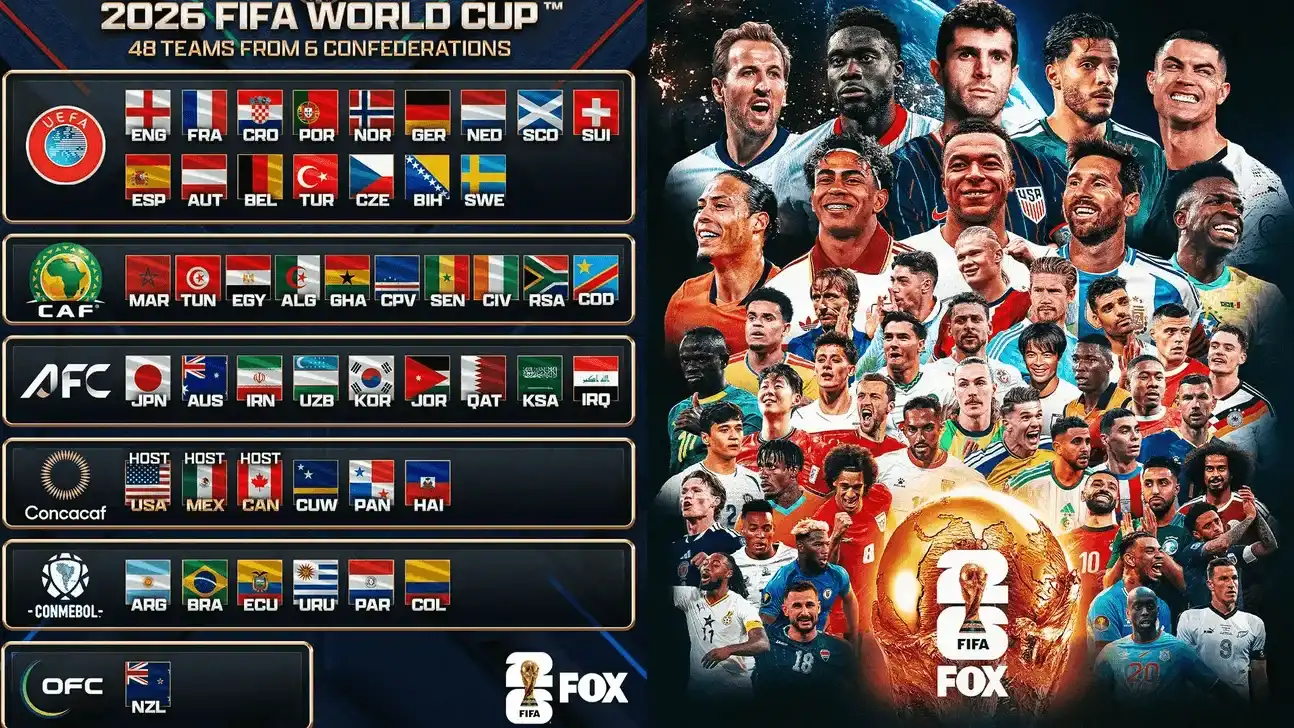
However, the complexity of the World Cup far exceeds that of a single U.S. professional league. Leagues like the NBA and MLB have clear league, team, player union, referee, and official data structures. The World Cup involves a vast array of entities: FIFA, six continental confederations, 48 national teams, clubs, agents, medical teams, referee committees, broadcasters, and data suppliers. Who qualifies as an "insider," how to identify them, and whether they can trade via family, friends, proxy wallets, or third-party accounts? These questions are much harder to answer in the World Cup context.
Furthermore, prediction markets face not just sports integrity issues but also global regulatory legitimacy. In April this year, the Brazilian government blocked 27 prediction market platforms and tightened derivatives rules, prohibiting derivatives based on sports, online games, politics, elections, culture, and social outcomes. Dozens of other countries also reject the argument that "event contracts are not gambling."

In such a climate, FIFA's choice of a platform riddled with question marks and with a product not fully validated as its official World Cup prediction market partner has itself pushed the sports integrity issue to the forefront ahead of time.

Of course, the 2026 World Cup will not determine the survival of prediction markets, but it will likely define the boundaries of their mainstream integration into the global sports industry: will they become a regulated event-trading infrastructure, or just another gambling risk entry point amplified by global sports traffic?


Câu hỏi Liên quan

QAccording to the article, what are the main controversies surrounding ADI Predictstreet, the official FIFA 2026 World Cup prediction market partner?

AThe main controversies are: 1) Questionable integrity of its high-level executives, including allegations of insider trading and associations with the 'Qatargate' European Parliament corruption scandal. 2) The extremely fast speed at which it obtained its Gibraltar license. 3) The fact that its actual product was not yet live at the time of the announcement, raising doubts about its transaction, settlement, risk control, and user protection mechanisms.

QWhy is the 2026 FIFA World Cup considered a major stress test for prediction markets?

AThe 2026 World Cup, as a high-density, global, cross-jurisdictional mega-sports event, compresses sports competition, cross-border organization, the gambling ecosystem, and global user traffic into a single market scenario. This significantly amplifies the risk dimensions and external scrutiny. Any information advantage held by insiders regarding injuries, lineups, referees, or internal governance could be rapidly converted into pricing advantages in a tradeable prediction market, posing a severe test to the market's ability to maintain sports integrity.

QWhat specific types of World Cup prediction markets are considered most vulnerable to insider manipulation, according to the article?

AMicroscopic and granular markets are most vulnerable. These include events such as whether a specific player will start, whether a player will be injured, whether a red card will be issued in a match, whether a team will get a penalty kick, which referee will officiate, or whether a VAR controversy will occur. These events are more easily influenced by a small number of insiders and can be priced ahead of time using non-public information.

QWhat actions have established prediction market platforms like Kalshi and Polymarket taken to address integrity concerns related to sports events?

AFollowing legislative pressure in the U.S., these platforms have updated their rules. Kalshi stated it will prohibit sports-related personnel from trading contracts in the fields they participate in or are employed by. Polymarket also updated its rules to prohibit users from trading contracts related to an event if they possess confidential information or are capable of influencing the event's outcome.

QWhat historical and recent factors contribute to skepticism about FIFA's ability to ensure integrity in its dealings with betting and prediction markets?

AHistorical factors include the widespread, systemic, and deep-rooted corruption scandal within FIFA exposed by the U.S. Department of Justice in 2015. Recent factors include FIFA's deepening ties with the betting and data industry (e.g., partnerships with Betano, TAB, Stats Perform), which increasingly embeds events like the World Cup into the gambling and trading ecosystem. This commercial focus raises questions about FIFA's independence and ability to control integrity risks effectively.

Nội dung Liên quan

Chính phủ Mỹ cấm mô hình Anthropic, hoàn toàn không phải vì 'vượt rào'

Tuần trước, Bộ Thương mại Hoa Kỳ đã ra lệnh cho Anthropic ngừng cung cấp hai mô hình AI mạnh nhất là Fable 5 và Mythos 5, viện dẫn lo ngại an ninh quốc gia. Dù Anthropic ban đầu suy đoán lý do liên quan đến việc bỏ qua "hàng rào an toàn" của mô hình, nhiều chi tiết mới cho thấy động cơ thực sự có thể là sự trả đũa từ chính quyền Trump sau mối quan hệ rạn nứt với công ty, chứ không phải vấn đề kỹ thuật. Lệnh cấm, được ban hành nhanh chóng và đơn phương mà không cần phê chuẩn của tòa án, buộc Anthropic phải gỡ toàn bộ sản phẩm. Các chuyên gia an ninh mạng, như Katie Moussouris, chỉ ra rằng lỗ hổng được báo cáo trong nghiên cứu của Anthropic là rất nhỏ và không đáng để áp dụng biện pháp kiểm soát xuất khẩu nghiêm ngặt như vậy. Bà cùng hàng chục chuyên gia khác kêu gọi thu hồi lệnh này, cảnh báo việc tước đi công cụ AI tiên tiến khỏi các chuyên gia phòng thủ mạng Mỹ là nguy hiểm. Hành động của chính phủ được nhận định là thiếu cân nhắc, có thể làm giảm niềm tin của các quốc gia khác vào tính ổn định của AI Mỹ và tạo ra tiền lệ đáng lo ngại về việc chính phủ can thiệp vào hoạt động của công ty công nghệ. Sự việc này được xem như một hồi chuông cảnh báo cho toàn bộ ngành công nghệ Mỹ về quyền lực mà chính phủ có thể sử dụng để đóng cửa sản phẩm của họ.

marsbit8 phút trước

Chính phủ Mỹ cấm mô hình Anthropic, hoàn toàn không phải vì 'vượt rào'

marsbit8 phút trước

Ray Dalio: Thị trường tăng giá AI tiếp tục tăng tốc, nhà đầu tư nên All In hay thoát vốn rút lui?

Bài viết thảo luận về cách nhà đầu tư nên tiếp cận thị trường tài chính hiện nay, đặc biệt trong bối cảnh AI đang thúc đẩy sự tăng trưởng mạnh mẽ nhưng cũng làm gia tăng mức độ tập trung rủi ro. Ray Dalio chỉ ra rằng, mặc dù công nghệ mang tính cách mạng, nhưng cổ phiếu trong ngành không phải lúc nào cũng hấp dẫn. Lịch sử cho thấy các công ty công nghệ lớn như Microsoft hay Apple cũng từng trải qua những đợt điều chỉnh mạnh. Cốt lõi bài viết nhấn mạnh vào sự nguy hiểm của việc đầu tư tập trung vào một số ít cổ phiếu AI khi thị trường đang ở trạng thái kích thích, định giá cao và chứa đựng nhiều bất ổn như cạnh tranh gia tăng, rủi ro địa chính trị, chính sách thuế và khả năng bị công nghệ mới lật đổ. Thay vì đặt cược lớn, Dalio khuyên các nhà đầu tư nên áp dụng triết lý "đa dạng hóa" – xây dựng một danh mục gồm khoảng 15 khoản đầu tư chất lượng, có mối tương quan thấp và được cân bằng rủi ro. Ông lập luận rằng một danh mục đa dạng hóa tốt sẽ mang lại tỷ lệ lợi nhuận/rủi ro vượt trội về mặt toán học so với một khoản đầu tư tập trung. Điều quan trọng là nhận thức được những gì mình không biết, và không nên nhầm lẫn giữa sự phấn khích với công nghệ mới với sự hấp dẫn thực sự của cổ phiếu. Trong môi trường hiện tại, việc tránh tập trung và duy trì đa dạng hóa được xem là cách tiếp cận khôn ngoan nhất.

marsbit10 phút trước

Ray Dalio: Thị trường tăng giá AI tiếp tục tăng tốc, nhà đầu tư nên All In hay thoát vốn rút lui?

marsbit10 phút trước

World Cup mới đá được vài ngày, AI dự đoán đã có mô hình trở thành 'thần', có mô hình 'đắm thuyền'

Giải đấu World Cup mới chỉ bắt đầu được vài ngày, nhưng các mô hình AI dự đoán kết quả bóng đá đã cho thấy sự khác biệt rõ rệt: có mô hình tỏ ra "thần thánh", có mô hình lại "lật kèo". Nơi sôi động nhất không chỉ là trên sân cỏ. Khi thị trường dự đoán World Cup nóng lên, người dùng ngày càng sử dụng tiền thật để giao dịch các sự kiện dự đoán như đội thắng, tỷ số, bàn thắng hay thẻ đỏ. Trong bối cảnh này, các mô hình AI lớn như Qwen (Thiên Vấn), ChatGPT, Gemini, Claude, DeepSeek và Copilot đã thường xuyên được đưa vào hỗ trợ phân tích, cung cấp thêm một lớp tham khảo bên cạnh tỷ lệ cược và dữ liệu đội bóng. Kết quả những trận đầu tiên đã cho thấy sự khác biệt: * **Qwen (Thiên Vấn)** gây ấn tượng mạnh ngay ngày khai mạc, dự đoán chính xác tỷ số 2-0 của Mexico thắng Nam Phi và 2-1 của Hàn Quốc thắng Cộng hòa Séc, đồng thời cảnh báo được nguy cơ nhận thẻ đỏ. * **Copilot** có những dự đoán tỷ số chính xác đáng chú ý (Mexico 2-0 Nam Phi, Hàn Quốc 2-1 CH Séc, Brazil 1-1 Morocco) nhưng cũng "lật kèo" ở một số trận, đặc biệt là các trận có kết quả lạc hướng so với sức mạnh trên giấy tờ như Úc thắng Thổ Nhĩ Kỳ hay Nhật Bản cầm hòa Hà Lan. * **ChatGPT** thể hiện khả năng phân tích toàn diện với các lý do chi tiết (như lợi thế sân nhà, độ cao, phong độ) và cũng đoán đúng một số tỷ số, nhưng có vẻ vẫn thiên về các đội cửa trên và chưa thực sự nhạy bén trong việc phát hiện các khả năng gây bất ngờ. * Các mô hình khác như **Gemini, Grok, Claude** cũng được thử nghiệm cho cùng một trận đấu và đưa ra các kịch bản tỷ số khác nhau, cho thấy sự đa dạng trong cách tiếp cận. Tóm lại, với số lượng mẫu dự đoán có thể kiểm chứng còn hạn chế, chưa thể kết luận mô hình nào "hiểu bóng đá" nhất. Tuy nhiên, AI đã chứng minh có thể trở thành một công cụ tham khảo hữu ích cho người tham gia thị trường dự đoán, dù vẫn còn rất xa để được coi là câu trả lời chuẩn mực. Khả năng nắm bắt các chi tiết cụ thể (tỷ số, thẻ đỏ, diễn biến trận đấu) và dự cảm về các kết quả bất ngờ vẫn là thách thức lớn với các mô hình hiện tại.

marsbit12 phút trước

World Cup mới đá được vài ngày, AI dự đoán đã có mô hình trở thành 'thần', có mô hình 'đắm thuyền'

marsbit12 phút trước

SpaceX không trúng phiếu? Vậy thì hãy xem toàn bộ chuỗi cung ứng của SpaceX

Bài viết phân tích chuỗi cung ứng của SpaceX sau khi công ty này lên sàn, gợi ý rằng cơ hội đầu tư tiềm năng nằm ở các nhà cung cấp hơn là bản thân SpaceX. Tác giả so sánh với các "siêu đầu cuối" như Apple, Tesla hay NVIDIA, nơi lợi nhuận lớn thường đến từ việc cung cấp cho họ. Chuỗi cung ứng SpaceX được chia thành ba loại: 1. **Không thể thay thế trong ngắn hạn:** Bao gồm NVIDIA (GPU cho siêu máy tính), Eutelsat (phổ tần vệ tinh), Filtronic (bộ khuếch đại tín hiệu), Materion (kim loại beryllium hiếm) và STMicroelectronics (chip cho ăng-ten). 2. **Có thể thay thế nhưng chi phí cao:** Ví dụ như Honeywell (hệ thống điều khiển chuyến bay), Carpenter Technology (hợp kim thép đặc biệt), Hexcel (sợi carbon) và Linde (khí công nghiệp). 3. **Sản xuất ổn định với chi phí thấp:** Tập trung vào các linh kiện cần số lượng cực lớn như thiết bị đầu cuối Starlink, với các nhà cung cấp chính từ Đài Loan và Trung Quốc (như Wistron NeWeb, Xinwei Communication, Parker Aerospace, Western Material, Yingliu). Lý do để quan tâm hiện tại: khối lượng mua hàng của SpaceX đang tăng mạnh (kế hoạch 100 vụ phóng/năm, 30 triệu thiết bị Starlink), dữ liệu tài chính đã minh bạch hơn nhờ IPO, và giai đoạn này tương tự chuỗi cung ứng Tesla/Apple những năm đầu - thời điểm đơn hàng bắt đầu tăng vọt. Bài viết kết luận rằng khi SpaceX tăng tốc, các đơn đặt hàng ổn định cho nhà cung cấp sẽ tồn tại bất kể biến động cổ phiếu, tạo ra một cách tiếp cận đầu tư khác biệt.

marsbit29 phút trước

SpaceX không trúng phiếu? Vậy thì hãy xem toàn bộ chuỗi cung ứng của SpaceX

marsbit29 phút trước

Giao dịch

Giao ngay
Hợp đồng Tương lai

Bài viết Nổi bật

Làm thế nào để Mua ZEN

Chào mừng bạn đến với HTX.com! Chúng tôi đã làm cho mua Horizen (ZEN) trở nên đơn giản và thuận tiện. Làm theo hướng dẫn từng bước của chúng tôi để bắt đầu hành trình tiền kỹ thuật số của bạn.Bước 1: Tạo Tài khoản HTX của BạnSử dụng email hoặc số điện thoại của bạn để đăng ký tài khoản miễn phí trên HTX. Trải nghiệm hành trình đăng ký không rắc rối và mở khóa tất cả tính năng. Nhận Tài khoản của tôiBước 2: Truy cập Mua Crypto và Chọn Phương thức Thanh toán của BạnThẻ Tín dụng/Ghi nợ: Sử dụng Visa hoặc Mastercard của bạn để mua Horizen (ZEN) ngay lập tức.Số dư: Sử dụng tiền từ số dư tài khoản HTX của bạn để giao dịch liền mạch.Bên thứ ba: Chúng tôi đã thêm những phương thức thanh toán phổ biến như Google Pay và Apple Pay để nâng cao sự tiện lợi.P2P: Giao dịch trực tiếp với người dùng khác trên HTX.Thị trường mua bán phi tập trung (OTC): Chúng tôi cung cấp những dịch vụ được thiết kế riêng và tỷ giá hối đoái cạnh tranh cho nhà giao dịch.Bước 3: Lưu trữ Horizen (ZEN) của BạnSau khi mua Horizen (ZEN), lưu trữ trong tài khoản HTX của bạn. Ngoài ra, bạn có thể gửi đi nơi khác qua chuyển khoản blockchain hoặc sử dụng để giao dịch những tiền kỹ thuật số khác.Bước 4: Giao dịch Horizen (ZEN)Giao dịch Horizen (ZEN) dễ dàng trên thị trường giao ngay của HTX. Chỉ cần truy cập vào tài khoản của bạn, chọn cặp giao dịch, thực hiện giao dịch và theo dõi trong thời gian thực. Chúng tôi cung cấp trải nghiệm thân thiện với người dùng cho cả người mới bắt đầu và người giao dịch dày dạn kinh nghiệm.

Tổng lượt xem 321Xuất bản vào 2024.12.12Cập nhật vào 2026.06.02

Làm thế nào để Mua ZEN

Thảo luận

Chào mừng đến với Cộng đồng HTX. Tại đây, bạn có thể được thông báo về những phát triển nền tảng mới nhất và có quyền truy cập vào thông tin chuyên sâu về thị trường. Ý kiến ​​của người dùng về giá của ZEN (ZEN) được trình bày dưới đây.

活动图片