Trump Executed 3,600 Stock Trades in Q1, Bought Nvidia, Dell, Then Made a 'Stock Tip,' Sparking Conflict-of-Interest Controversy

marsbitXuất bản vào 2026-05-15Cập nhật gần nhất vào 2026-05-15

Tóm tắt

Former President Donald Trump executed 3,642 individual stock trades in Q1 2026, averaging about 60 trades per day, according to a recent OGE 278-T disclosure. This breaks from the modern presidential tradition of using blind trusts. The filings reveal Trump sold large positions in Amazon, Meta, and Microsoft while making significant new purchases in AI and semiconductor firms like NVIDIA, Broadcom, and Intel. Notably, he bought $1-5 million worth of Dell stock on February 10. Three months later, on May 8, he publicly urged Americans to "buy Dell" at a White House event; the stock has since risen 96%. His Intel purchases began in early March, after which the stock surged 150%. The U.S. government had taken a 9.9% stake in Intel in August 2025. These transactions, occurring close to related policy actions or public endorsements, have ignited significant controversy over potential conflicts of interest. While the White House maintains full compliance with the STOCK Act, critics highlight the unprecedented scale of trading and the timing coinciding with his official duties and donors' interests.

Author: Claude, Deep Chao TechFlow

Deep Chao Introduction: Trump's newly disclosed OGE 278-T form shows he executed 3,642 stock trades in Q1 2026, averaging about 60 trades per day, breaking the precedent of using a "blind trust" set by presidents since Lyndon Johnson.

The disclosure reveals that after buying $1 million to $5 million worth of Dell stock on February 10th, Trump publicly urged people on May 8th at the White House to "go buy Dell," following which the stock surged 96%. Multiple trades, including those in Nvidia and Intel, occurred ahead of related policy moves, rapidly fueling a conflict-of-interest controversy.

Trump's personal stock trading record is becoming one of the most contentious documents in Washington.

According to Benzinga, documents released this week by the Office of Government Ethics (OGE) show Trump executed 3,642 securities transactions in Q1 2026, averaging about 58 per day. The 113-page OGE 278-T form was signed by Trump on May 8th, delivered to the OGE on May 12th, and had "Filer paid late fee" handwritten on the cover page, indicating it exceeded the 30- to 45-day filing window stipulated by federal regulations.

This trading frequency breaks the nearly continuous blind trust arrangement precedent since Lyndon Johnson. Most former U.S. presidents placed personal assets in qualified blind trusts to limit conflicts of interest; Carter even liquidated his peanut farm, Obama held Treasury bonds and index funds, and Biden also employed a blind trust arrangement during his term.

Massively Sold Tech Giants, Heavily Bet on AI Chip Supply Chain

Disclosure documents show Trump significantly reduced holdings in Amazon, Meta, and Microsoft in Q1, all falling within the highest valuation bracket of $5 million to $25 million. However, while selling heavily, Trump maintained exposure to these three companies through smaller purchases.

More notably are the new positions. Trump established new positions in the $1 million to $5 million range in Nvidia (NVDA), Broadcom (AVGO), Synopsys (SNPS), Cadence Design Systems (CDNS), and Texas Instruments (TXN), covering almost every core segment of the U.S. AI chip supply chain. Large buys also appeared in Apple, Oracle, ServiceNow, Adobe, and Workday within the same range.
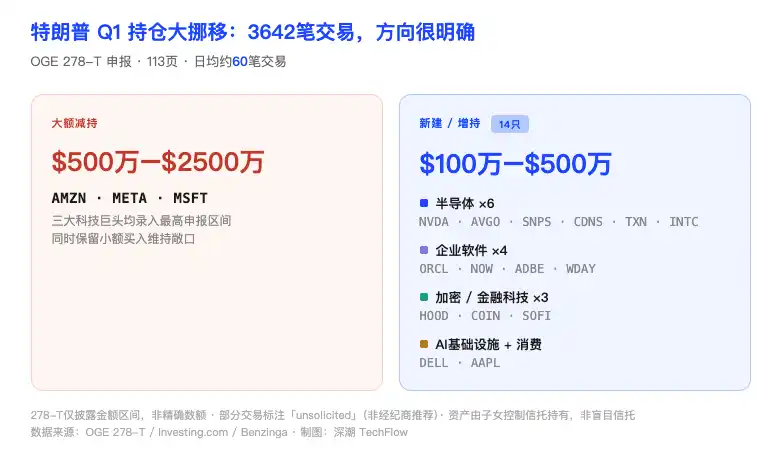
The semiconductor holdings closely align with the White House's policy direction of boosting domestic chip production capacity. According to Quiver Quantitative analysis, the purchase of Nvidia occurred before CEO Jensen Huang accompanied Trump on a visit to China, a trip expected to involve discussions on AI chip exports and semiconductor policy.

White House "Stock Tip" Three Months After Buying Dell, Stock Up 96%

The focus of the conflict-of-interest controversy centers on Dell.

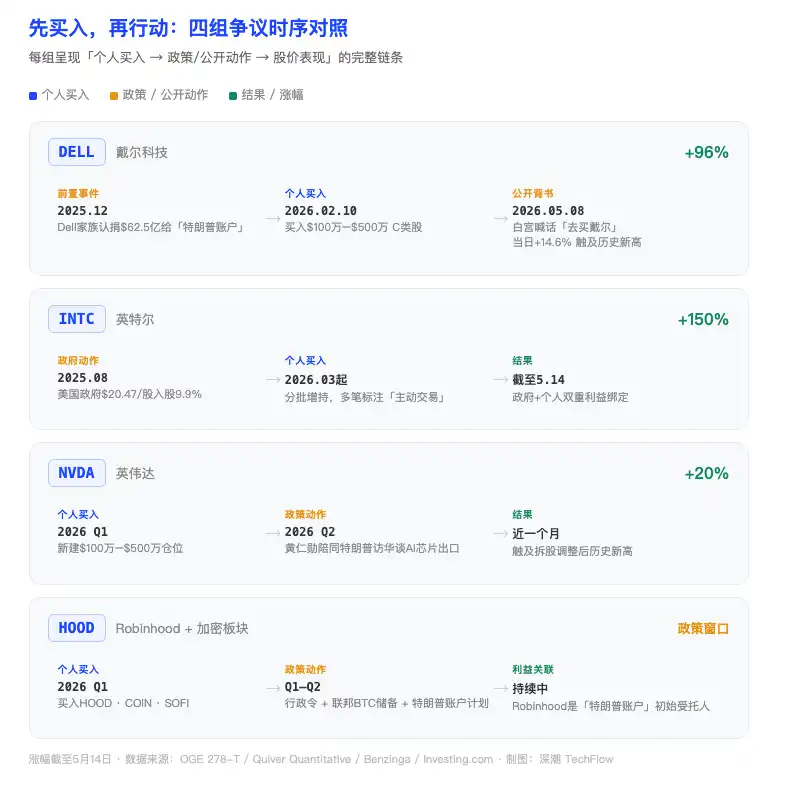
Documents show Trump bought $1 million to $5 million worth of Dell Technologies Class C stock on February 10, 2026. Three months later, at a Mother's Day event on May 8th, Trump thanked Michael Dell and Susan Dell by name at the White House and made the remark that sparked an uproar to those present—telling Americans to "go buy Dell."

That day, Dell's stock price surged as much as 14.6%, hitting a record high of $263.99. From Trump's purchase to the present, Dell's stock price has risen 96% cumulatively.

Another detail in the timeline intensified the controversy. On December 2, 2025, Michael Dell and Susan Dell pledged $6.25 billion to the "Trump Accounts," one of the largest private donations in recent years to a signature project of a sitting president. The White House has not responded to whether there was coordination between the President's public endorsement and the Dell family's donation.

Intel Shares Soar 150% After Purchase, Government Holds 9.9% Stake

Intel's trades are also worth examining.

Trump began buying Intel in batches starting in early March 2026, with several trades marked as "unsolicited," meaning not broker-recommended. Since the initial purchase on March 2nd, Intel's stock price has risen 150%.

Prior to this, the U.S. government purchased 433.3 million shares of Intel in August 2025 at $20.47 per share, giving it a 9.9% stake. In other words, Trump was buying Intel stock in the open market in his personal capacity while, in his presidential role, promoting government investment in Intel.

Additionally, purchases of Coinbase, Robinhood, and SoFi occurred during a period of active government promotion of crypto-friendly policies, including executive orders, a federal bitcoin reserve, and the "Trump Accounts" retirement plan. Robinhood is the initial trustee for that plan.
Non-Blind Trust Sparks Constitutional Debate, White House Claims Compliance

Critics view the alignment of these trading timelines as posing a conflict-of-interest risk. The White House argues that the filings fully comply with the STOCK Act's requirements.

Trump's assets are held in trusts controlled by his children, but the latest documents show numerous trades were executed by brokers acting as agents. The documents do not specify exactly which accounts hold the trading positions nor who gave the trading instructions.

An OGE spokesperson declined to comment on whether the trades reflect Trump's direct trading activity or operations through managed accounts, stating only that "the OGE is committed to transparency and citizen oversight of government."

According to Quiver Quantitative analysis, to their knowledge, this is the first time Trump has actively traded individual stocks while in office. The conservative, bond-heavy portfolio seen in previous 278-T filings has been completely overturned.


Câu hỏi Liên quan

QWhat is the primary controversy surrounding Donald Trump's stock trades in Q1 2026 as detailed in the article?

AThe primary controversy is the potential conflict of interest, as Trump conducted numerous personal stock trades (3642 in total) while in office, a break from the tradition of modern presidents using blind trusts. Specific concerns include his purchase of Dell stock followed by a public endorsement to "buy Dell" from the White House, and trades in companies like Nvidia and Intel that coincided with or preceded related government policy actions.

QHow did Donald Trump's investment activity in Dell become a focal point of the conflict-of-interest allegations?

ATrump purchased between $1 million and $5 million worth of Dell stock on February 10, 2026. Three months later, on May 8, he publicly told attendees at a White House event to "go buy Dell." Following this endorsement, Dell's stock price surged, having already risen 96% from his purchase date. This sequence created the appearance of using his presidential platform to influence a stock in which he held a significant personal financial stake.

QWhat significant change does the article note in Trump's investment strategy during his presidency compared to his previous disclosures?

AThe article notes a dramatic shift from a conservative, bond-heavy portfolio in his previous financial disclosures to an active trading strategy focused on individual stocks, particularly within the AI chip and technology sectors. This represents his first known period of active individual stock trading while in office.

QAccording to the article, what action did the US government take regarding Intel before Trump's personal stock purchases?

AIn August 2025, the US government purchased 433.3 million shares of Intel at $20.47 per share, acquiring a 9.9% stake in the company. Trump subsequently began personally buying Intel stock in March 2026.

QHow has the White House responded to criticism about the timing of Trump's stock trades?

AThe White House has defended the transactions, stating that the financial disclosures are fully compliant with the requirements of the STOCK Act. However, it has not commented on whether there was any coordination between the president's public endorsements and related stock trades or political donations.

Nội dung Liên quan

Anthropic Ra Mắt "Cẩm Nang Người Sáng Lập": Tái Cấu Trúc Toàn Bộ 4 Giai Đoạn Khởi Nghiệp Bằng AI

Anthropic đã công bố "Sổ tay Người sáng lập: Xây dựng Startup Bản địa AI", định hình lại tư duy khởi nghiệp trong kỷ nguyên AI. Sổ tay mô tả startup AI-native là một loại hình mới, được vận hành bởi AI ngay từ đầu, không chỉ là doanh nghiệp truyền thống thêm vài công cụ AI. Vai trò người sáng lập chuyển từ thực thi sang chỉ huy: thiết kế giải pháp, ra quyết định chiến lược và giao các nhiệm vụ lặp lại cho AI Agent. Anthropic giới thiệu ba công cụ Claude: Claude Chat (đối thoại, nghiên cứu), Claude Code (lập trình) và Claude Cowork (tự động hóa quy trình). Hành trình khởi nghiệp được chia thành 4 giai đoạn với hướng dẫn ứng dụng AI: 1. **Giai đoạn Ý tưởng:** Xác thực vấn đề thực tế. Dùng AI như "luật sư quỷ" để thách thức giả định, nghiên cứu thị trường và phân tích đối thủ. 2. **Giai đoạn MVP:** Thu thập bằng chứng về giải pháp. Dùng AI để lập trình có cấu trúc, tự động hóa phản hồi người dùng, tránh nợ kỹ thuật. 3. **Giai đoạn Ra mắt:** Tập trung vào tăng trưởng và vận hành. Xây dựng "hệ điều hành" bằng AI để tự động hóa CRM, marketing, kiểm tra hệ thống, giúp nhà sáng lập tập trung vào quyết định quan trọng. 4. **Giai đoạn Mở rộng:** Đảm bảo tính bền vững. AI giúp tối ưu hóa quy mô, cá nhân hóa marketing, củng cố lợi thế cạnh tranh, cho phép nhóm nhỏ đạt hiệu suất cao. Thông điệp cốt lõi: Trong thời đại AI, rào cản không còn là "có thể xây dựng không?" mà là "có nên xây dựng không?". Lợi thế cạnh tranh quay trở lại với khả năng thấu hiểu vấn đề, phán đoán thương mại và sự sâu sắc trong tầm nhìn.

marsbit24 phút trước

Anthropic Ra Mắt "Cẩm Nang Người Sáng Lập": Tái Cấu Trúc Toàn Bộ 4 Giai Đoạn Khởi Nghiệp Bằng AI

marsbit24 phút trước

Tám bộ mạnh tay xử lý các công ty chứng khoán xuyên biên giới, nhìn nhận thế nào?

Các cơ quan quản lý Trung Quốc, đứng đầu là Ủy ban Chứng khoán (CSRC), đã ra tay mạnh mẽ với các công ty chứng khoán xuyên biên giới hoạt động trái phép tại thị trường nội địa. Ngày 22/5/2026, tám bộ ngành ban hành kế hoạch tổng thể để thanh tra, xử lý các hoạt động kinh doanh chứng khoán, hàng hóa tương lai và quỹ xuyên biên giới bất hợp pháp. Đồng thời, CSRC thông báo xử phạt hành chính đối với ba công ty môi giới internet là Futu, Tiger Brokers và Longbridge, đề xuất tịch thu toàn bộ lợi nhuận bất hợp pháp và áp dụng hình phạt nặng. Hành động này nhằm chấm dứt hoàn toàn thời đại "lái xe không bằng" của các công ty chứng khoán nước ngoài chưa được cấp phép tại Trung Quốc, dựa trên nguyên tắc pháp lý cốt lõi về "kinh doanh có giấy phép và quản lý theo khu vực pháp lý". Các công ty như Futu và Tiger bị cáo buộc cung cấp dịch vụ toàn diện (tiếp thị, mở tài khoản, xử lý lệnh) cho nhà đầu tư trong nước mà không có giấy phép cần thiết từ CSRC. Động thái quyết liệt của cơ quan quản lý xuất phát từ nhiều mối lo ngại: * **An ninh tài chính quốc gia:** Các kênh xuyên biên giới bất hợp pháp tạo ra "lối thoát vốn" ngoài tầm kiểm soát, với quy mô ước tính lên tới hàng nghìn tỷ NDT, có thể làm suy yếu hiệu quả chính sách tiền tệ, gây áp lực lên tỷ giá hối đoái và dự trữ ngoại hối. * **Bảo vệ nhà đầu tư:** Nhà đầu tư trong nước giao dịch thông qua các nền tảng nước ngoài không được bảo vệ bởi luật pháp Trung Quốc, đối mặt với rủi ro cao trong tranh chấp, đóng băng tài khoản và mất an toàn dữ liệu cá nhân. * **Thúc đẩy kênh hợp pháp:** Mục tiêu là dòng vốn sẽ chuyển hướng sang các kênh hợp pháp được kiểm soát như QDII và Stock Connect, tạo điều kiện cho việc mở cửa có trật tự và quản lý rủi ro tốt hơn. Hậu quả trước mắt là rất nặng nề. Cổ phiếu của Futu và Tiger lao dốc mạnh trên thị trường Mỹ. Ba công ty bị xử phạt cùng các công ty môi giới nhỏ khác ước tính có khoảng 900.000 - 950.000 khách hàng nội địa có tài sản, với tổng tài sản xuyên biên giới từ 2500 - 2800 tỷ NDT. Các khách hàng hiện hữu này sẽ phải thanh lý vị thế trong vòng 2 năm (chỉ được bán, không được mua mới), dự kiến sẽ tạo ra áp lực bán kéo dài lên các cổ phiếu Hồng Kông và cổ phiếu Trung Quốc niêm yết tại Mỹ (Chinese ADRs), đặc biệt là ở các lĩnh vực công nghệ, internet. Về phía thị trường Trung Quốc: * **Khe hở đầu tư:** Nhu cầu đầu tư xuyên biên giới khổng lồ có thể dồn vào kênh QDII vốn đã khan hiếm hạn ngạch, dẫn đến tình trạng phí bảo hiểm (premium) cao kéo dài cho các quỹ ETF QDII phổ biến. * **Dòng vốn quay về:** Một phần vốn có thể chảy ngược lại thị trường A-shares, tập trung vào các lĩnh vực công nghệ cao như AI, chất bán dẫn, có nguy cơ đẩy định giá các lĩnh vực vốn đã cao này lên mức bong bóng. Tóm lại, cuộc đàn áp này là một biện pháp hệ thống nhằm chuẩn hóa trật tự thị trường, ngăn chặn rủi ro tài chính và bảo vệ nhà đầu tư. Nó nhấn mạnh rằng tuân thủ quy định là yêu cầu tối thiểu để tồn tại, đồng thời khuyến khích các nhà đầu tư sử dụng các kênh hợp pháp được bảo vệ bởi pháp luật trong nước.

链捕手24 phút trước

Tám bộ mạnh tay xử lý các công ty chứng khoán xuyên biên giới, nhìn nhận thế nào?

链捕手24 phút trước

General Tensor và Talisman Hợp Lực Xây Dựng Hệ Thống Tài Chính Cho AI Phi Tập Trung

General Tensor và Talisman Wallet đã công bố một đối tác chiến lược lớn nhằm đơn giản hóa cách người dùng và tổ chức tương tác với Bittensor, đồng thời đặt nền móng cho một cơ sở hạ tầng tài chính "sẵn sàng cho tác nhân AI". Sự hợp tác kết hợp công nghệ ví và đa chữ ký của Talisman với hoạt động validator, cơ sở hạ tầng khai thác, mạng con và nền tảng giao dịch của General Tensor. Talisman, hiện bảo mật khoảng 2 tỷ USD tài sản xuyên chuỗi với một nửa kết nối với hệ sinh thái Bittensor, cung cấp các giải pháp bảo mật cấp tổ chức như Signet. Trong khi đó, General Tensor tập trung vào tích hợp dọc trong hệ sinh thái Bittensor, bao gồm việc mua lại nền tảng giao dịch Backprop Finance. Hợp tác này nhằm thu hẹp khoảng cách giữa ý định ở cấp độ ví và việc thực thi trên mạng, tạo đường dẫn liền mạch cho việc lưu ký, giao dịch, đặt cọc và tương tác với các mạng con. Nó cũng phản ánh sự quan tâm ngày càng tinh vi của các tổ chức đối với AI phi tập trung, không chỉ dừng ở đầu cơ token mà còn ở việc tiếp xúc với cơ sở hạ tầng hoạt động. General Tensor gần đây đã huy động vốn từ các nhà đầu tư như Digital Currency Group và một công ty được Goldman Sachs hậu thuẫn.

TheNewsCrypto1 giờ trước

General Tensor và Talisman Hợp Lực Xây Dựng Hệ Thống Tài Chính Cho AI Phi Tập Trung

TheNewsCrypto1 giờ trước

Giao dịch

Giao ngay
Hợp đồng Tương lai
活动图片