5 in a row! Here’s why monthly perp volumes have been falling since October

ambcryptoXuất bản vào 2026-04-07Cập nhật gần nhất vào 2026-04-07

Tóm tắt

Perpetual trading volumes on decentralized exchanges have declined for five consecutive months, falling nearly 50% from a peak of $1.36 trillion in October 2025 to $699 billion by March 2026. This drop reflects ongoing bear market conditions and cautious trader sentiment following last year's market crash, which erased nearly $1 trillion in value. Open interest also declined by 50% from pre-October levels, indicating reduced speculative activity. While the decline highlights persistent bearish pressure, it also suggests traders are recalibrating risk more strategically. This measured behavior helps stabilize markets, reduce volatility, and may lay a stronger foundation for crypto's next rally.

In crypto trading, market crashes leave marks that investors don’t forget.

Looking back at Q4 last year, things were rough across the board; spot trading and even long-term HODLing all took a hit. Crypto markets lost nearly $1 trillion, triggering massive liquidity sweeps, forcing deleveraging, and sending shocks across the market, which left investors cautious and their sentiment fragile for months.

Fast forward to now, that wave of volatility hasn’t fully disappeared. Data from DeFiLlama shows that perpetual volumes across major DEX chains have been on a steady decline for five consecutive months. From a peak of $1.36 trillion in October 2025, volumes slid all the way down to $699 billion by March 2026.
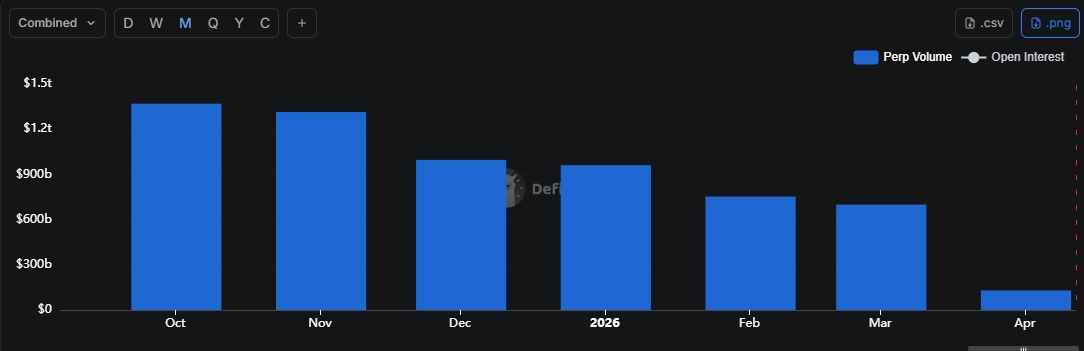
Source: DeFiLlama

Technically speaking, traders wiped out nearly half of last quarter’s perp volume. For context, perp volume measures the total value of all perpetual contract trades happening on decentralized exchanges. It’s basically a snapshot of how actively traders are betting on short- and long-term price moves in crypto.

And let’s be real, anything involving “bets” is pure speculation. In a bull market, that speculative capital acts like rocket fuel, pushing rallies higher and giving momentum to the market. But since the October crash, crypto still sits about 40% below pre-crash levels, showing how much ground the market has yet to cover.

So what do we make of falling perp volume in a bear market? Could it be a healthy sign that traders are stepping back and markets are consolidating, or is it a warning that liquidity is drying up?

Falling perp volumes highlight lingering bear market pressure in crypto

Unlike spot trading, speculative trading is highly sensitive to macro conditions.

In other words, traders in perpetual markets don’t just react to crypto-specific news. Instead, they watch the broader financial landscape closely. Global market shifts, interest rate changes, and even geopolitical events can quickly influence their positions. In this context, that nearly 50% wipeout of perp volume really highlights the bearish setup the market is facing right now.

Adding to that, Coinglass data shows that open interest (OI) across all crypto assets combined has also dropped 50% from the $200 billion pre-October levels. For context, open interest is basically the total value of all “outstanding” contracts that haven’t been settled yet, showing how much capital traders have at risk.
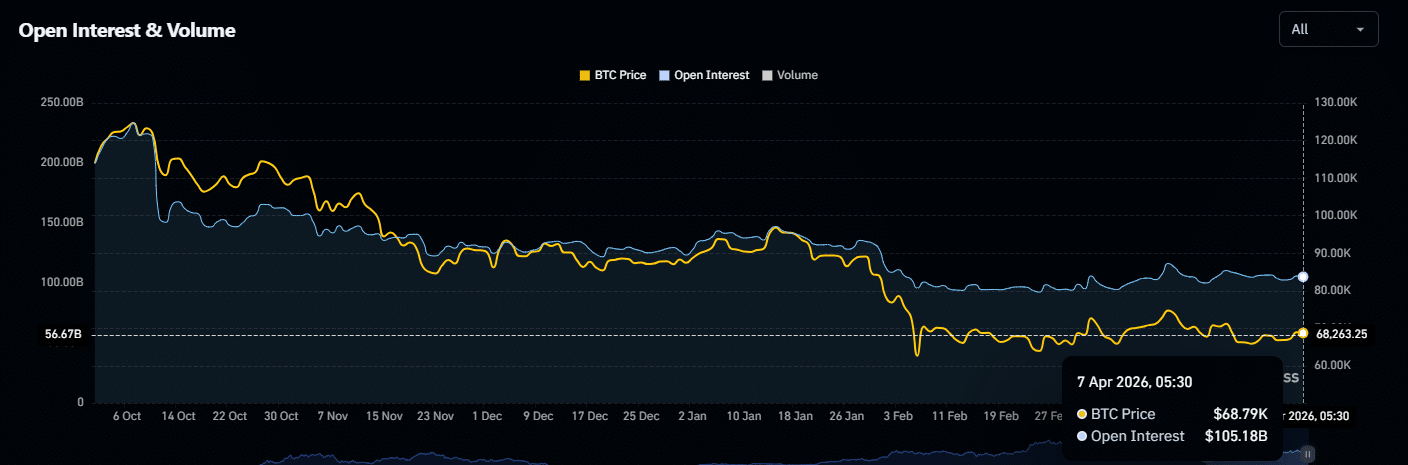
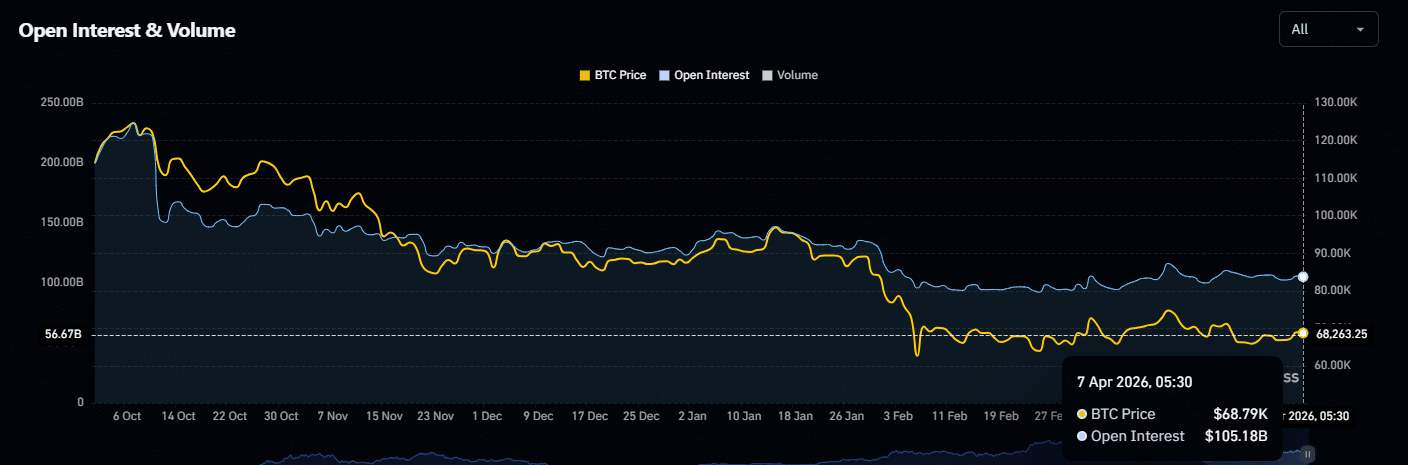
Source: Coinglass

Taken together, the drop in perp volume and open interest tells a clear story: crypto traders are actively recalibrating risk and waiting for clearer signals before jumping back in. In a bear market, that’s actually a bullish sign. It indicates that traders aren’t blindly chasing moves. Instead, they’re letting the market settle, which helps reduce the risk of sudden swings and wild volatility.

At the same time, the scars from the October crash haven’t fully healed.

Still, traders are taking notes from past shocks, pulling back when risk is high, and redeploying capital more strategically. As a result, the market may look quiet on the surface, yet behind the scenes, this cautious behavior is quietly building a stronger foundation for crypto’s next move.


Final Summary

  • Perp volume and open interest are down nearly 50%, reflecting traders’ caution and a still-bearish market setup.
  • Measured trading behavior in a bear market helps stabilize liquidity, limit volatility, and lay the groundwork for the next crypto rally.

Câu hỏi Liên quan

QWhat has been the trend in monthly perpetual trading volumes on major DEX chains since October 2025, according to DeFiLlama data?

APerpetual trading volumes have been on a steady decline for five consecutive months, falling from a peak of $1.36 trillion in October 2025 to $699 billion by March 2026.

QWhat does the combined drop in perp volume and open interest indicate about current trader behavior?

AThe drop indicates that crypto traders are actively recalibrating risk and waiting for clearer signals before jumping back in, showing caution and a more strategic deployment of capital.

QHow does speculative trading in perpetual markets differ from spot trading in terms of market sensitivity?

ASpeculative trading is highly sensitive to macro conditions, meaning traders react to global market shifts, interest rate changes, and geopolitical events, not just crypto-specific news.

QWhat is the significance of falling perp volume in a bear market, according to the article?

AIn a bear market, falling perp volume can be a bullish sign as it indicates traders are not blindly chasing moves, which helps reduce the risk of sudden swings and builds a stronger foundation for the next market move.

QBy what percentage did the crypto market drop from its pre-crash levels following the October crash?

AThe crypto market still sits about 40% below pre-crash levels.

Nội dung Liên quan

Triển Khai GHO Gốc Trên Arbitrum Của Aave Đẩy Mạnh Thanh Khoản Stablecoin Vào Lớp 2

Aave DAO đã phê duyệt việc triển khai stablecoin GHO bản địa trên mạng Arbitrum. Động thái này nhằm mục đích tăng cường thanh khoản cho stablecoin trong một trong những hệ sinh thái layer-2 sôi động nhất của Ethereum, đồng thời mở rộng tính hữu dụng và phân phối của GHO vượt ra ngoài thị trường ban đầu. Việc triển khai trực tiếp trên Arbitrum có ý nghĩa quan trọng vì stablecoin phát huy giá trị cao nhất tại những nơi người dùng thường xuyên giao dịch, vay mượn và di chuyển vốn. Sự kiện này cũng nhấn mạnh rằng cạnh tranh stablecoin không chỉ diễn ra giữa các tổ chức phát hành, mà còn ở các chiến lược triển khai trên nhiều chuỗi khối. Tài sản nào dễ sử dụng xuyên chuỗi nhất sẽ có cơ hội thành công cao hơn. Đối với thị trường, thông tin này nên được xem xét dưới góc độ thanh khoản và phân phối thay vì một tín hiệu giá cụ thể. Điều quan trọng tiếp theo là theo dõi khả năng triển khai theo sau và các phản ứng từ thị trường, bao gồm các đề xuất quản trị mới, dữ liệu on-chain và hành vi của các tổ chức lớn, để xác định liệu đây có trở thành một xu hướng lâu dài hay chỉ là một cập nhật đơn lẻ.

bitcoinist5 phút trước

Triển Khai GHO Gốc Trên Arbitrum Của Aave Đẩy Mạnh Thanh Khoản Stablecoin Vào Lớp 2

bitcoinist5 phút trước

Solana đứng trước sức ép: Động thái chuyển 10 triệu đô la SOL của Pump.fun châm ngòi tranh luận về Q3 NÀY

Đối với mạng Layer 1 như Solana, hoạt động giá không chỉ dựa trên kỹ thuật. Câu chuyện tăng trưởng của Solana gắn liền với hiệu suất của các ứng dụng trong hệ sinh thái, thúc đẩy nhu cầu mạng và doanh thu. Gần đây, nền tảng Pump.fun một lần nữa thu hút sự chú ý khi bán thêm 122.498 SOL, trị giá 10,08 triệu USD, nâng tổng lượng SOL đã bán lên 4,6 triệu SOL (794,8 triệu USD). Điều này làm dấy lên cuộc tranh luận về việc Pump.fun có đang "rút giá trị" khỏi hệ sinh thái Solana thay vì tái đầu tư. Một mặt, sự phát triển của Pump.fun cho thấy sức mạnh của mạng Solana, với khối lượng giao dịch spot hàng ngày đạt khoảng 725 triệu USD và hơn 517.000 ví tương tác. Tuy nhiên, áp lực bán từ các đợt bán SOL của Pump.fun, cùng với tâm lý thận trọng trên thị trường, đang thử thách các yếu tố cơ bản của Solana. Dù hoạt động mạng mạnh mẽ, SOL vẫn vật lộn để vượt qua mức kháng cự quan trọng quanh 100 USD, với ngưỡng 80 USD hiện là một trở ngại lớn. Câu hỏi then chốt cho quý III là liệu sự tăng trưởng của mạng và hoạt động on-chain có tạo đủ nhu cầu để đẩy SOL vượt qua các mức kháng cự then chốt hay không. Nếu không, sự suy yếu có thể mở rộng ra ngoài khía cạnh kỹ thuật, tạo nên một bối cảnh đầy thách thức hơn.

ambcrypto3 giờ trước

Solana đứng trước sức ép: Động thái chuyển 10 triệu đô la SOL của Pump.fun châm ngòi tranh luận về Q3 NÀY

ambcrypto3 giờ trước

Swift sẵn sàng cho các thử nghiệm thanh toán token hóa thực tế với sổ cái blockchain cùng 17 ngân hàng toàn cầu

Swift đã chuyển sổ cái dựa trên blockchain từ giai đoạn phát triển sang triển khai thực tế. 17 ngân hàng toàn cầu trên sáu châu lục đang chuẩn bị thí điểm thanh toán xuyên biên giới bằng cách sử dụng tiền gửi được mã hóa (tokenized deposits). Đây là trường hợp sử dụng trực tiếp đầu tiên của Swift cho sổ cái này, cho phép các ngân hàng tham gia cung cấp thanh toán xuyên biên giới 24/7 trong khi vẫn tiếp tục quyết toán giao dịch thông qua cơ sở hạ tầng tài chính hiện có. Sáng kiến này được thiết kế để cải thiện tính linh hoạt thanh toán và quản lý thanh khoản mà không thay đổi các khuôn khổ tuân thủ, quản lý rủi ro và kiểm soát vốn có của hệ thống ngân hàng toàn cầu. Nó đánh dấu xu hướng áp dụng ngày càng tăng của các tổ chức vào công nghệ tài sản kỹ thuật số được quản lý, thay vì các mạng lưới thanh toán blockchain công cộng. Không giống nhiều sáng kiến thanh toán blockchain tập trung vào stablecoin công cộng, nền tảng của Swift được xây dựng xung quanh tiền gửi được mã hóa do ngân hàng phát hành, vẫn nằm trên sổ cái riêng của các ngân hàng tham gia. Sổ cái chung kết nối các hệ thống này, cho phép các tổ chức phối hợp thanh toán xuyên biên giới theo thời gian thực trong khi vẫn dựa trên các đường quyết toán và khuôn khổ quy định hiện có.

ambcrypto4 giờ trước

Swift sẵn sàng cho các thử nghiệm thanh toán token hóa thực tế với sổ cái blockchain cùng 17 ngân hàng toàn cầu

ambcrypto4 giờ trước

Giao dịch

Giao ngay
活动图片