Vietnam Crypto Payments Field Report: From Street Stalls to Coffee Shops

比推Xuất bản vào 2025-12-22Cập nhật gần nhất vào 2025-12-22

Tóm tắt

Vietnam, a top-ranked country in global crypto adoption, presents a fascinating case study in real-world use of digital currencies. This on-the-ground exploration reveals a complex ecosystem where crypto payment adoption is both emerging and encountering hurdles. The author's experience began when a spa owner in Nha Trang offered a discount for cash over credit card payments, citing high fees and tax implications. This preference for cash hinted at a potential openness to dollar-denominated stablecoins like USDT. Subsequent testing showed that using a crypto wallet (Bitget Wallet) for everyday purchases—from ride-hailing and street food to massages—was often seamless, thanks to widespread acceptance of the VietQR system. The experience was described as nearly equivalent to using Alipay. However, a failed payment at a seafood restaurant exposed a critical vulnerability. A transaction from the crypto wallet showed as completed on-chain but failed to register on the merchant’s older, non-standard QR system, highlighting compatibility issues and the "last mile" problem for crypto payments. Public perception also varies greatly. In northern cities like Hanoi, crypto is often viewed negatively, associated with money laundering and gambling. This contrasts sharply with the vibrant, tech-savvy crypto culture observed in the south, particularly in Ho Chi Minh City, where young people in cafes are seen trading on Binance or even writing Solidity code. This creates a "Vietnamese cry...

Author: Joe Zhou, Foresight News

Original Title: I Bought Seafood with USDT in Vietnam: Has Web3 Truly Achieved Mass Adoption?


Vietnam, a fascinating country repeatedly mentioned in countless Web3 research reports.

It boasts one of the world's youngest population structures, an extremely high mobile internet penetration rate, and a financial vitality that grows almost wildly. In the "Global Cryptocurrency Adoption Index" released by Chainalysis, Vietnam has consistently ranked at the top or near the top for many years.

As a long-time observer of the crypto industry, I have always wanted to figure out one question: when grand concepts like "crypto payments," "stablecoins," and "Mass Adoption" written in PPTs and research reports are actually deployed into the streets and alleys of Vietnam, what kind of chemical reaction will occur?

At the end of 2025, I set foot on this land. During my two weeks in Vietnam, I did not visit high-end exchanges or attend industry cocktail parties filled with clinking glasses. Instead, I acted as an ordinary tourist, taking taxis, getting massages, and eating at street stalls.

I recorded five small incidents from my journey. They may not represent the full picture, but they are the most authentic slices of Vietnam's current Web3 landscape.

One: 'No International Credit Cards, Cash and USDT Only'

At a SPA shop in Nha Trang, Vietnam, our group of 12 spent $320. When settling the bill, the merchant stated bluntly: a 10% discount for cash payment, full price for Visa or Mastercard.

I was initially displeased, as carrying large amounts of Vietnamese dong cash is inconvenient, and I suspected the owner might be "ripping off" familiar customers. But the owner's patient explanation cleared up my misunderstanding.

In Vietnam, international credit card fees are high, typically 3% or more. More importantly, using a card means funds enter the banking system, requiring additional tax payments, while cash can avoid these. From a very pragmatic small business owner's perspective, she explained her difficulties.

In the end, we paid with $300 cash. The owner paid less tax, and we saved dozens of dollars—a win-win. Of course, the losers were the credit card organizations and banks, the "middlemen."
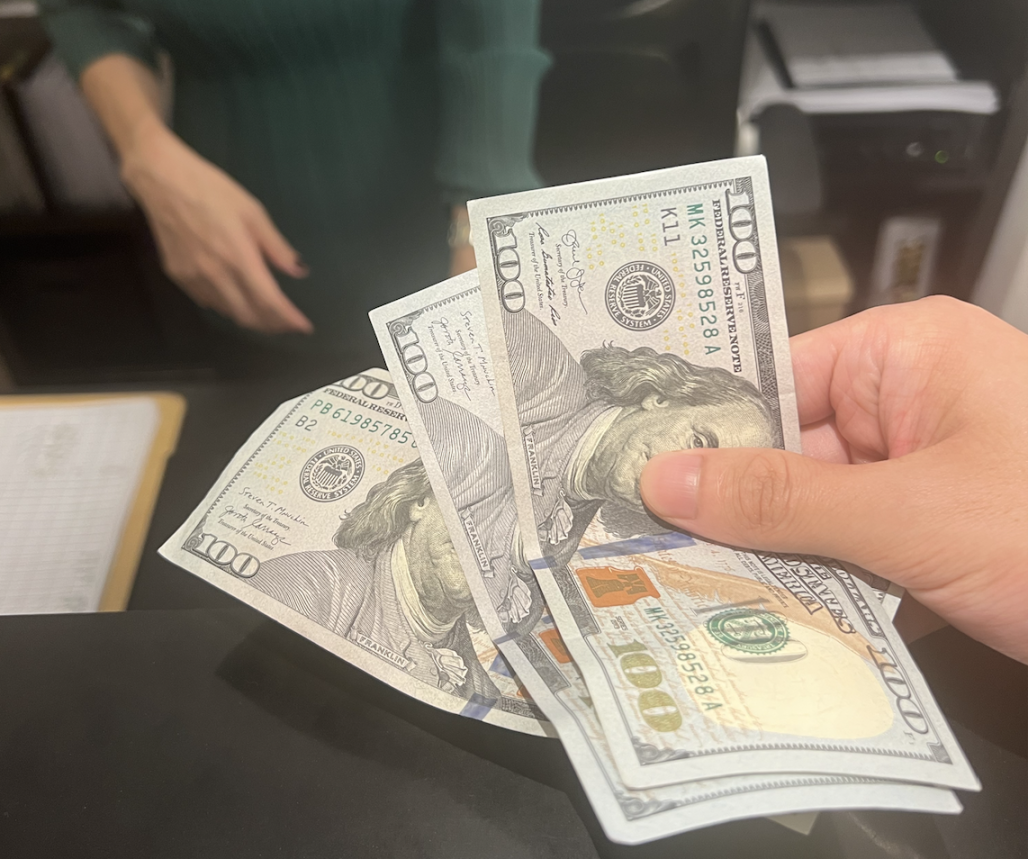
Caption: The author paying with US dollar cash

This deeply resonated with me: the global credit card payment system has long been monopolized by a few giants, not only charging a 3% "toll" per transaction but also imposing ATM withdrawal fees as high as 4% or more. For merchants, this is not just a financial cost but also a compliance cost.

Since merchants have a natural preference for "US dollars," theoretically, their acceptance of "digital dollars" (stablecoins) is also worth anticipating—as long as the payment tool can help them solve the "last mile" problem, instantly converting USDT into the Vietnamese dong they need.

With this verification logic, I began my subsequent experience with crypto payments in Vietnam.

Two: Vietnam's Stablecoin Payments, the Dawn of Mass Adoption Emerges

When Vietnamese merchants accept US dollar bills, are they ready to accept US dollar stablecoins?

During the next leg of the journey, I deliberately tried to live solely using Bitget Wallet. Grab rides, buying pho at street stalls, SPA massages, seafood dinners... I was surprised to find that as long as the merchant had a VietQR (Vietnam's universal payment QR code), I could basically use the wallet to scan and pay directly, with funds converted and arriving in real-time. And VietQR can be seen almost everywhere in Vietnam.

I use the word "basically" because I discovered a significant bug in crypto payments, which will be mentioned in Chapter Three.
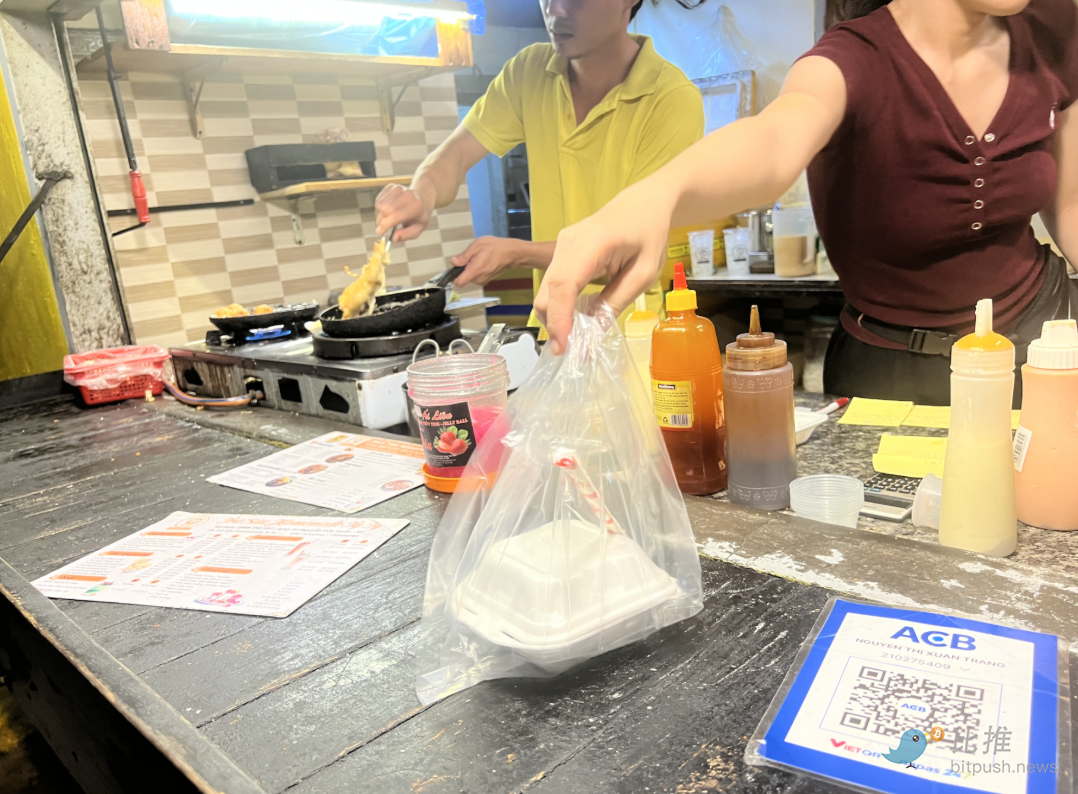
Caption: VietQR (bottom right corner) ubiquitous throughout Vietnam's streets and alleys, can be scanned directly for payment using Bitget Wallet

It's no exaggeration to say that in Vietnam, the experience of crypto payment is infinitely close to that of Alipay.

Although I had heard about it before, the shock of experiencing it firsthand was still strong. Crypto wallets like Bitget Wallet have underlying access to aggregated payment networks like Aeon Pay, which transforms cryptocurrency from a "speculative asset" into real "purchasing power," directly reaching tens of millions of merchants in Vietnam and surrounding countries.

Of course, all this smooth experience is built on Vietnam having a highly unified and popular QR code payment system (VietQR). It is the infrastructure, while crypto payment is the new blood running on it.

However, frequent use finally made me realize that Bitget Wallet scan-to-pay is not omnipotent. I really did find a bug once.

Three: A Failed Crypto Payment Revealed the 'Real-World Bug' to Me

On December 20, 2025, I dined again at the famous restaurant Moc Seafood in Nha Trang. The first two times I used cash and a credit card respectively; the third time, I decided to challenge myself to pay using Bitget Wallet.

However, this "challenge" failed.

The reason was that the store presented not a standard VietQR aggregated code, but a printed QR code from an internal bank or old system. My wallet scanned the code and showed a successful deduction, but after the on-chain funds were transferred, the store side had no voice broadcast or receipt notification for a long time.

The other party also demonstrated to me that when she used her mobile phone to pay, she received the money arrival notification immediately.

Caption: The author's attempt at crypto payment failed, but the staff completed it smoothly using a local bank scan

The store owner helplessly showed me their verification method: scanning with a local financial App, instant arrival.

The loss of these few dollars was the "tuition fee" I paid for this experience. This small episode made me realize that the "last mile" of crypto payments in the real world is still fragile. The lack of compatibility protocols, confirmation delays on the merchant side, and the cognitive time difference between the user side's "deduction equals success" and the merchant side's "arrival counts" are all pits that must be filled on the road to Mass Adoption.

Four: In the Minds of Ordinary People, Cryptocurrency is Still 'Grey'

The commercialization of technology depends not only on the maturity of the code but also on cultural acceptance.

Although Vietnam has an extremely young population, in the general public's eyes, Crypto's image is not glorious, especially in northern cities of Vietnam, where this situation is more obvious. The author spoke with several locals in Hanoi—including currency exchangers, motorbike taxi drivers, and university students—and their first reaction to cryptocurrency was surprisingly consistent: money laundering tool, grey industry, gambling.

In their view, this is not some "future of the internet" or "future of finance," but a means to evade regulation.

On the bustling streets of Hanoi and Nha Trang, the author could hardly find any Bitcoin ATMs or offline OTC exchange shops. This creates a strong visual contrast with places like Hong Kong, Japan, or Georgia—where the neon signs of Crypto Exchanges have long openly occupied the C位 (center stage) of commercial streets.

On one hand, it ranks first globally in on-chain data; on the other hand, it's hard to find in the physical world. This complete disconnect between online and offline vividly演绎 (dramatizes) a kind of "Vietnamese crypto fold."

Five: In the Driver's Car, I Found a Binance Cap

An accidental discovery tore open a corner of Vietnam's crypto world.

During a Grab ride, my colleague敏锐地 (sharply) noticed that this young driver had a cap with the Binance logo casually placed on his dashboard. Seeing we noticed, the driver grinned and skillfully took out his phone, showing us the Binance App he was running.

This scene made me realize that cryptocurrency in this country is not just an underground undercurrent; it is permeating ordinary people's lives in a highly vital way. Multiple public data show that over 20 million people in Vietnam hold or have used digital assets, and a large proportion of Vietnam's population is young (e.g., the 10-24 age group accounts for a significant share of the total population), which significantly promotes the acceptance of digital assets and the formation of Web3 usage habits.

This penetration shows an interesting "North-South difference" geographically.

A university student in Hanoi, Vietnam, told me that the north and south of Vietnam have截然不同的 (distinctly different) views on money: people in the north, represented by the capital Hanoi, are conservative,倾向于 (inclined towards) saving, preparing for rainy days; while people in the south, led by the economic center Ho Chi Minh City, are deeply influenced by Western business culture, accustomed to spending in advance, and have an extremely high acceptance of new things.

This also explains why the vast majority of Chinese Web3 practitioners—whether media, VCs, or blockchain game developers—mostly choose to settle in Ho Chi Minh City among Vietnamese cities.

Here, low labor costs collide with the high returns of the crypto economy, making Vietnam a heaven for geographical arbitrage in "play-to-earn" mining. Many young people are ordinary office workers during the day and turn into "gold-mining worker ants" on the chain at night.

If the fourth point of the travelogue showed me the "prejudice" of the public in northern Vietnamese cities towards cryptocurrency, then on the streets of Ho Chi Minh City, my friends described to me the "enthusiasm" for cryptocurrency in this country.

Vietnam has a strong coffee culture, and in those crowded Highlands Coffee or The Coffee House shops, my friend witnessed an extremely hardcore scene: on the screens of rows of young people tapping on laptops, not all were games or social software; frequently, Binance's K-line charts, or even the black window of a Solidity code editor, were seen.

Data doesn't lie. According to Chainalysis's "Global Cryptocurrency Adoption Index," Vietnam has consistently ranked at the top or near the top for many years. It has the perfect "golden population structure," tens of millions of young people渴望 (yearning for) class leapfrogging, proficient in digital technology, and unlike the older generation, they do not迷信 (blindly believe in) the traditional banking system.

This gives Vietnam a wonderful sense of "folding":

On the street, a motorbike taxi driver might tell you Crypto is a "money laundering tool"; but in a café at the end of the alley, a young developer might be building the next Axie Infinity (a phenomenal Web3 game born in Vietnam).

This bottom-up vitality is perhaps the most authentic底色 (background color) of Vietnam's Web3. There are no高大上的 (high-end) financial centers here, but every crowded coffee shop could be a Web3 node; every Grab穿梭 (shuttling) through the rainstorm might have a young person waiting for the Bitcoin bull market in the driver's seat.

Conclusion: Searching for the Next Decade's 'Alpha'

These five small incidents are just the tip of the iceberg of my observations of Vietnam.

The chapters of the journey are far from over. Next, I will delve into the "Southern Economic Heart" Ho Chi Minh City, climb the highlands of "Vietnam's Dali" Da Lat, traverse the coastal hub Da Nang, and finally arrive at Phu Quoc Island in the south.

Having traveled to dozens of countries and after repeated exchanges with multiple friends who have long been deeply involved locally and with Vietnamese locals, I am increasingly convinced of one judgment: in the next decade, Vietnam will be one of the world's most promising economies, perhaps even the most promising. The young population structure, continuously restless desire for upward mobility, and a relatively open social attitude towards foreign things together constitute a rare soil, and these are the best soil for nurturing new technologies.

I will continue to walk on this hot land and surrounding countries, not just as a tourist, but as an observer, to explore the real growth state of Web3 in Southeast Asia.

Please stay tuned, our exploration continues.


Twitter:https://twitter.com/BitpushNewsCN

Bitpush TG Discussion Group:https://t.me/BitPushCommunity

Bitpush TG Subscription: https://t.me/bitpush

Original link:https://www.bitpush.news/articles/7597600

Câu hỏi Liên quan

QWhat is the main reason why some Vietnamese merchants prefer cash payments over international credit cards, according to the author's experience at a spa in Nha Trang?

AMerchants prefer cash because international credit cards incur high transaction fees (around 3% or more) and require funds to go through the banking system, which subjects them to additional taxes. Cash payments allow them to avoid these costs.

QWhat payment infrastructure in Vietnam enables the widespread use of crypto wallets like Bitget Wallet for everyday transactions?

AVietQR, a unified and highly普及的二维码支付系统 (QR code payment system) found almost everywhere in Vietnam, allows crypto wallets to scan and make payments directly, with funds converted and arriving in real-time.

QWhat was the 'bug' or issue the author encountered when trying to use crypto payment at the Moc Seafood restaurant?

AThe payment failed because the restaurant used a non-standard, older printed QR code from a bank's internal system. The author's wallet showed the transaction as successful, but the merchant did not receive a notification or the funds, highlighting a compatibility and confirmation delay issue.

QHow does the general public in northern Vietnam, such as in Hanoi, typically view cryptocurrencies, based on the author's conversations?

AIn northern cities like Hanoi, the general public often views cryptocurrencies negatively, associating them with money laundering, gray market activities, and gambling, rather than as a technological or financial innovation.

QWhat demographic and cultural factors make Vietnam, particularly Ho Chi Minh City, a fertile ground for Web3 and crypto adoption according to the article?

AVietnam has a very young population structure, high mobile internet penetration, and a strong desire for upward mobility. Southern cities like Ho Chi Minh City have a culture more influenced by Western business practices, with higher acceptance of new technologies and consumerism, making them hubs for crypto activity and development.

Nội dung Liên quan

Khi cả người bán xẻng cũng phải đi vay tiền mua xẻng: Khu vực AI trên thị trường chứng khoán Mỹ bốc hơi hàng nghìn tỷ USD trong một tuần, thị trường bắt đầu định giá 'hóa đơn' của AI

Tuần qua, thị trường chứng khoán Mỹ chứng kiến sự sụt giảm mạnh của cổ phiếu AI, với tổng vốn hóa bốc hơi hàng nghìn tỷ USD. Các báo cáo tài chính kỷ lục từ Broadcom và Oracle không cứu nổi giá cổ phiếu, bởi thị trường đang chuyển trọng tâm định giá từ báo cáo kết quả kinh doanh sang dòng tiền và cân đối kế toán. Broadcom dự báo doanh thu chip AI quý tới thấp hơn kỳ vọng, còn Oracle công bố kế hoạch huy động thêm 40 tỷ USD bất chấp dòng tiền tự do âm. Ngày 5/6, chỉ số Nasdaq lao dốc 4% do lo ngại về lãi suất và luân chuyển vốn khỏi các cổ phiếu tăng trưởng định giá cao. Điểm chung: chi phí vốn cho cơ sở hạ tầng AI đang tăng vọt, buộc cả những công ty dồi dào tiền mặt như Alphabet cũng phải huy động vốn cổ phần quy mô lớn. Một chuỗi tài trợ đang hình thành, từ các gã khổng lồ công nghệ, nhà cung cấp chip đến các phòng thí nghiệm AI như OpenAI và Anthropic - những đơn vị cuối cùng chưa có lãi và cũng đang tìm kiếm vốn. Thị trường bắt đầu đặt câu hỏi về tính bền vững của mô hình tăng trưởng dựa vào đòn bẩy tài chính này, khi hóa đơn cho cuộc đua AI ngày càng lớn và rủi ro tập trung vào một số ít công ty.

marsbit8 phút trước

Khi cả người bán xẻng cũng phải đi vay tiền mua xẻng: Khu vực AI trên thị trường chứng khoán Mỹ bốc hơi hàng nghìn tỷ USD trong một tuần, thị trường bắt đầu định giá 'hóa đơn' của AI

marsbit8 phút trước

Đã hứa một năm IPO sôi động cho crypto? Nửa năm chỉ có một công ty lên sàn, và đã giảm 70%

Tác giả: Claude, Deep Tide TechFlow Năm 2026 được kỳ vọng là năm bùng nổ IPO trong lĩnh vực tiền mã hóa, nhưng thực tế lại hoàn toàn trái ngược. Trong khi SpaceX chuẩn bị cho đợt IPO lớn nhất lịch sử với định giá 1,75 nghìn tỷ USD, thì đường ống IPO của các công ty crypto lại đóng băng hoàn toàn. Tính đến nay, BitGo là công ty crypto bản địa duy nhất lên sàn trong năm (NYSE vào 22/1). Tuy nhiên, cổ phiếu BTGO đã giảm khoảng 70% so với giá phát hành, trở thành một tín hiệu cảnh báo cho thị trường. Các ứng viên IPO khác đều gặp trục trặc: Kraken đã tạm dừng kế hoạch sau khi định giá sụt 33%, Consensys (công ty mẹ của MetaMask) hoãn đến mùa thu, còn Bitpanda có nguy cơ lỡ hạn lên sàn tại Frankfurt vào nửa đầu năm. Nguyên nhân chính đến từ sự thu hút thanh khoản khổng lồ từ đợt IPO của SpaceX, cộng với việc thị trường crypto suy yếu (Bitcoin giảm xuống dưới 61.500 USD). Các công ty crypto đang chạy đua với thời gian trước cuộc bầu cử giữa kỳ tháng 11 tại Mỹ, sự kiện có thể thay đổi môi trường pháp lý. Tuy nhiên, với hiệu suất kém của BitGo và điều kiện thị trường khó khăn, làn sóng IPO crypto kỳ vọng có lẽ sẽ chỉ thực sự quay trở lại sau sự kiện chính trị này. Tương lai gần phụ thuộc vào việc Kraken có khởi động lại kế hoạch, Consensys có nộp hồ sơ vào mùa thu hay không, và liệu đợt chào bán SpaceX có kéo theo dòng tiền quay trở lại thị trường rộng hơn hay không.

marsbit27 phút trước

Đã hứa một năm IPO sôi động cho crypto? Nửa năm chỉ có một công ty lên sàn, và đã giảm 70%

marsbit27 phút trước

Sau “Nhà máy AI” của Elon Musk và Jensen Huang, một cuộc “Chiến tranh cướp nước ngọt” không khói súng đã bắt đầu

Bạn có thể không tưởng tượng được, mỗi khi bạn yêu cầu ChatGPT viết một báo cáo tuần 100 từ, hoặc để Claude sửa vài dòng code, khoảng 500ml nước ngọt tinh khiết (tương đương một chai Nông Phu Sơn Tuyền) sẽ bốc hơi từ các đường ống làm mát ở đâu đó trên Trái đất. Trong hai năm qua, cuộc chạy đua vũ trang AI luôn bị gắn chặt trong vòng lặp logic "chip, sức mạnh tính toán và điện hạt nhân". Tuy nhiên, mọi người dường như đều lãng quên một giới hạn vật lý cơ bản và lạnh lùng nhất: những bộ não silicon nóng bỏng này cần uống nước, và là nước ngọt mà con người phụ thuộc để sinh tồn. Báo cáo mới nhất của Đại học Liên Hợp Quốc (UNU) về chi phí môi trường AI toàn cầu đã vạch trần sự thật: đến năm 2030, lượng nước tiêu thụ hàng năm của cơ sở hạ tầng AI toàn cầu sẽ đạt mức kinh ngạc 9,3 nghìn tỷ lít, đủ để đáp ứng nhu cầu nước sinh hoạt cơ bản của 1,3 tỷ dân trên Trái đất trong một năm. Một cuộc "chiến tranh cướp đoạt nước ngọt" do Physical AI và sức mạnh tính toán mô hình lớn thúc đẩy đã chính thức bắt đầu vào mùa hè năm 2026. Tại sao các mô hình AI lớn lại trở thành "quái vật hút nước"? Câu trả lời nằm ở kiến trúc tản nhiệt của trung tâm dữ liệu. Hơn 70% trung tâm dữ liệu toàn cầu sử dụng "hệ thống làm mát bay hơi", tiêu thụ một lượng lớn nước ngọt, với khoảng 80% bốc hơi vào khí quyển và không thể tái tuần hoàn tại chỗ. Các báo cáo cho thấy chỉ việc "huấn luyện" GPT-4 một lần đã tiêu thụ khoảng 600 triệu lít nước tinh khiết. Lượng nước tiêu thụ hàng năm của Google đã vượt quá 81 tỷ gallon, trong khi của Microsoft tại các khu vực trọng điểm huấn luyện mô hình lớn cũng tăng gần gấp đôi trong ba năm qua. Xung đột gay gắt nhất của cuộc "chiến tranh nước ngọt" này xảy ra tại Memphis, Tennessee, Mỹ. Năm 2024, để huấn luyện mô hình lớn Grok, đội ngũ xAI của Elon Musk đã xây dựng siêu máy tính Colossus ở Memphis trong 122 ngày. Để vận hành cỗ máy khổng lồ này, cần rút tới 1 triệu gallon nước uống của cư dân từ tầng chứa nước ngầm địa phương mỗi ngày, dẫn đến phản ứng dữ dội từ cộng đồng. Đối mặt với khủng hoảng, Musk và Jensen Huang buộc phải thỏa hiệp, công bố xây dựng một nhà máy xử lý nước tái chế. Sự kiện "Watergate" ở Memphis đã trở thành một bước ngoặt, chứng minh rằng từ năm 2026, nút thắt cổ chai cuối cùng hạn chế tốc độ mở rộng AI không còn là công suất của TSMC hay tiền tệ, mà là "quyền tiếp cận nguồn nước" được chính quyền địa phương phê duyệt. Trước những cuộc biểu tình ngày càng tăng và hạn hán nghiêm trọng, các CEO công nghệ bắt đầu kể những "câu chuyện mới". Tại hội nghị Microsoft Build 2026, CEO Satya Nadella tuyên bố về "cuộc cách mạng không nước", cho biết các trung tâm dữ liệu siêu lớn mới nhất đã loại bỏ hoàn toàn làm mát bay hơi và chuyển sang sử dụng hệ thống "làm lạnh vòng lặp kín không nước". Tuy nhiên, các chuyên gia chỉ ra rằng hệ thống vòng lặp kín làm tăng mức tiêu thụ điện từ 20% đến 30%, và dấu chân nước gián tiếp từ việc sản xuất điện thậm chí còn lớn hơn. Trong bối cảnh này, ngành công nghiệp AI Trung Quốc cần cảnh giác và tìm kiếm lộ trình đột phá. Giải pháp nằm ở việc bố trí sức mạnh tính toán theo địa lý, chẳng hạn như chính sách "Đông số Tây toán", đặt các phòng máy huấn luyện quy mô lớn cần nước lạnh ở những khu vực như Quý Châu, Nội Mông. Điểm đột phá công nghệ cốt lõi là tái cấu trúc sức mạnh tính toán hỗn hợp "tiểu não ở rìa, đại não trên đám mây". Các nhà sản xuất robot thông minh và thiết bị gia đình thông minh Trung Quốc đang thúc đẩy nghiên cứu và phát triển chip tối ưu hóa cho thiết bị đầu cuối. Nếu 90% vấn đề tương tác vật lý có thể được giải quyết tại chỗ bằng chip biên công suất thấp và mô hình thế giới nhẹ, thay vì gửi lệnh đa phương thức tiêu tốn nhiều năng lượng lên đám mây, chúng ta có thể cắt giảm 90% mức tiêu thụ nước và điện của AI. Cuộc "chiến tranh cướp đoạt nước ngọt" mà Musk và Huang đang đối mặt đang buộc AI toàn cầu phải từ bỏ lớp vỏ nông nổi. Liệu AI là bậc thang đưa nền văn minh nhân loại lên tầm cao mới, hay là một quái vật silicon cuối cùng sẽ tranh giành những giọt nước tinh khiết cuối cùng của Trái đất với con người? Mùa hè năm 2026, câu trả lời đang trở nên rõ ràng hơn cùng với hơi nước bốc lên đó.

marsbit1 giờ trước

Sau “Nhà máy AI” của Elon Musk và Jensen Huang, một cuộc “Chiến tranh cướp nước ngọt” không khói súng đã bắt đầu

marsbit1 giờ trước

AGI chỉ còn một bước nữa

Tháng 4/2024, Anthropic công bố mô hình Mythos cực mạnh, phát hiện hơn 10.000 lỗ hổng bảo mật cho 50 khách hàng doanh nghiệp, gây chấn động. Do lo ngại bị lạm dụng, nó đã không được công khai. Đến tối qua, Anthropic chính thức ra mắt Fable 5 - phiên bản đã được "cắt giảm chức năng" của Mythos 5 với bộ phân loại an toàn, trong khi Mythos 5 gốc chỉ dành cho khoảng 200 tổ chức được kiểm duyệt khắt khe. Fable 5 thể hiện sức mạnh đáng kinh ngạc. Trên bảng xếp hạng lập trình SWE-Bench Pro, nó đạt 80.3%, vượt xa GPT-5.5 (58.6%) và Gemini 3.1 Pro (54.2%). Trong thử nghiệm thực tế tại Stripe, nó tự động di chuyển 50 triệu dòng mã lịch sử chỉ trong một ngày. Mô hình này thể hiện "khả năng ủy thác tầm xa" thực sự, có thể tự lập kế hoạch con, điều phối công cụ và tự sửa lỗi, đánh dấu một bước tiến lớn so với các mô hình chỉ biết "phản hồi" trước đây. Từ góc độ hẹp, Fable 5 thực sự đã đạt được AGI (Trí tuệ nhân tạo phổ quát) trong lĩnh vực kinh tế số. Theo tiêu chuẩn 5 cấp độ AI của OpenAI, Fable 5 đã đứng vững ở cấp độ 3 (Trí tuệ) và đang khám phá cấp độ 4 (Đổi mới). Tốc độ cập nhật của Anthropic ngày càng nhanh, với việc nâng cấp từ Opus 4.8 lên Fable 5 chỉ mất 11 ngày. Dự đoán cấp độ 4 sẽ đạt được trong năm nay, và cấp độ 5 (Tổ chức) có thể chỉ còn 18-24 tháng nữa. Tuy nhiên, sức mạnh đi kèm rủi ro. Báo cáo đánh giá cho thấy Mythos 5 đạt cấp độ CB-1, có khả năng hướng dẫn tổng hợp vũ khí sinh hóa và tạo kịch bản tấn công khai thác lỗ hổng zero-day chỉ trong vài giây. Để giảm thiểu rủi ro, Anthropic đã áp dụng hai cơ chế an toàn chính cho Fable 5: 1) Cơ chế định tuyến giảm cấp lặng lẽ, chuyển hướng các truy vấn nguy hiểm sang Opus 4.8; 2) Chính sách lưu giữ dữ liệu 30 ngày bắt buộc để phát hiện lạm dụng. Về giá, Fable 5 có mức phí cao: 10 USD/triệu token đầu vào và 50 USD/triệu token đầu ra, biến nó thành một "mặt hàng xa xỉ" đối với người dùng cá nhân. Tuy nhiên, các doanh nghiệp sẵn sàng trả phí cao vì lợi nhuận và nhu cầu phòng thủ an ninh mạng. Động thái này đánh dấu sự phân hóa thị trường AI: các mô hình đỉnh cao phục vụ B2B và nghiên cứu, trong khi các mô hình rẻ hơn cạnh tranh ở thị trường tiêu dùng. Sự xuất hiện của Fable 5/Mythos 5 báo hiệu kỷ nguyên AI trưởng thành, nơi trí tuệ đỉnh cao trở thành tài nguyên chiến lược, thúc đẩy bùng nổ năng suất nhưng cũng mang đến những thách thức cho thị trường lao động truyền thống.

marsbit1 giờ trước

AGI chỉ còn một bước nữa

marsbit1 giờ trước

Phục Hồi Tính Riêng Tư Trong Crypto: ZCASH (ZEC) Thực Hiện Động Thái Sau Cú Sụp Giảm 50%

Zcash (ZEC) đang nỗ lực khôi phục niềm tin vào mạng lưới tập trung vào quyền riêng tư của mình sau một đợt bán tháo mạnh khiến giá giảm hơn 50%. Sự sụt giảm này được kích hoạt bởi phát hiện về một lỗ hổng nghiêm trọng trong mạch proof zero-knowledge Orchard, có khả năng cho phép tạo ra token ZEC giả mạo. Các nhà phát triển đã nhanh chóng vá lỗ hổng, giúp giá ZEC phục hồi khoảng 70%. Tuy nhiên, do tính chất bảo mật của Orchard, không thể xác minh liệu có đồng ZEC giả nào đã được tạo ra trước đó hay không. Để giải quyết vấn đề này và khôi phục khả năng xác minh nguồi cung lưu hành, một đề xuất mới có tên Ironwood đã được đưa ra bởi Shielded Labs, Zcash Foundation và các đối tác. Mục tiêu chính của Ironwood là trao cho mỗi người dùng khả năng tự xác minh tính toàn vẹn của nguồi cung ZEC. Đề xuất này sẽ chặn các giao dịch tạo coin mới trong pool Orchard và thiết lập một cơ chế "cửa quay" để kiểm soát dòng tiền ra. Hệ thống này cũng có thể cung cấp bằng chứng về việc lỗ hổng có từng bị khai thác hay không, đồng thời vô hiệu hóa bất kỳ đồng ZEC giả mạo nào nếu chúng cố gắng rời khỏi pool.

bitcoinist1 giờ trước

Phục Hồi Tính Riêng Tư Trong Crypto: ZCASH (ZEC) Thực Hiện Động Thái Sau Cú Sụp Giảm 50%

bitcoinist1 giờ trước

Giao dịch

Giao ngay
Hợp đồng Tương lai

Bài viết Nổi bật

Làm thế nào để Mua JOE

Chào mừng bạn đến với HTX.com! Chúng tôi đã làm cho mua TraderJoe (JOE) trở nên đơn giản và thuận tiện. Làm theo hướng dẫn từng bước của chúng tôi để bắt đầu hành trình tiền kỹ thuật số của bạn.Bước 1: Tạo Tài khoản HTX của BạnSử dụng email hoặc số điện thoại của bạn để đăng ký tài khoản miễn phí trên HTX. Trải nghiệm hành trình đăng ký không rắc rối và mở khóa tất cả tính năng. Nhận Tài khoản của tôiBước 2: Truy cập Mua Crypto và Chọn Phương thức Thanh toán của BạnThẻ Tín dụng/Ghi nợ: Sử dụng Visa hoặc Mastercard của bạn để mua TraderJoe (JOE) ngay lập tức.Số dư: Sử dụng tiền từ số dư tài khoản HTX của bạn để giao dịch liền mạch.Bên thứ ba: Chúng tôi đã thêm những phương thức thanh toán phổ biến như Google Pay và Apple Pay để nâng cao sự tiện lợi.P2P: Giao dịch trực tiếp với người dùng khác trên HTX.Thị trường mua bán phi tập trung (OTC): Chúng tôi cung cấp những dịch vụ được thiết kế riêng và tỷ giá hối đoái cạnh tranh cho nhà giao dịch.Bước 3: Lưu trữ TraderJoe (JOE) của BạnSau khi mua TraderJoe (JOE), lưu trữ trong tài khoản HTX của bạn. Ngoài ra, bạn có thể gửi đi nơi khác qua chuyển khoản blockchain hoặc sử dụng để giao dịch những tiền kỹ thuật số khác.Bước 4: Giao dịch TraderJoe (JOE)Giao dịch TraderJoe (JOE) dễ dàng trên thị trường giao ngay của HTX. Chỉ cần truy cập vào tài khoản của bạn, chọn cặp giao dịch, thực hiện giao dịch và theo dõi trong thời gian thực. Chúng tôi cung cấp trải nghiệm thân thiện với người dùng cho cả người mới bắt đầu và người giao dịch dày dạn kinh nghiệm.

Tổng lượt xem 250Xuất bản vào 2024.12.11Cập nhật vào 2026.06.02

Làm thế nào để Mua JOE

Thảo luận

Chào mừng đến với Cộng đồng HTX. Tại đây, bạn có thể được thông báo về những phát triển nền tảng mới nhất và có quyền truy cập vào thông tin chuyên sâu về thị trường. Ý kiến ​​của người dùng về giá của JOE (JOE) được trình bày dưới đây.

活动图片