2 Days, 20x: A Quick Look at the Automated Market Making Mechanism of the New Gem Snowball

深潮Xuất bản vào 2025-12-22Cập nhật gần nhất vào 2025-12-22

Tóm tắt

Snowball, a new meme token launched on pump.fun on December 18, gained significant traction in the English-speaking crypto community by introducing an automated market-making mechanism designed to create a self-sustaining "snowball effect." Unlike typical meme coins where creators take a fee (usually 0.5%-1%) from each transaction, Snowball redirects 100% of this fee to an on-chain bot. This bot uses accumulated funds to buy back tokens, add liquidity to the pool, and burn a small portion of tokens periodically. The goal is to create continuous buy pressure and improve trading depth, theoretically allowing the token to grow organically through increased trading activity. Within four days, Snowball reached a $10 million market cap with over 7,000 holders and relatively decentralized ownership. However, the mechanism relies heavily on sustained trading volume to fuel the buyback bot. In a cold market with low on-chain activity, this "flywheel" could reverse if new buyers diminish. While the structure reduces developer exit risk, it doesn’t eliminate other meme coin dangers like large holder dumps or narrative fatigue. Similar projects like FIREBALL are emerging, indicating interest in "mechanism-driven memes," but past examples like OlympusDAO and Safemoon show that mechanisms alone don’t guarantee long-term value. Snowball remains primarily a meme experiment—interesting, but high-risk.

The crypto market in December is as cold as the weather.

On-chain transactions have been dormant for a long time, and new narratives are hard to come by. Just look at the drama and gossip in the Chinese CT (Crypto Twitter) space these past few days, and you'll know hardly anyone is playing in this market anymore.

But the English-speaking community has been discussing something new.

A meme coin called Snowball launched on pump.fun on December 18th. In four days, its market cap surged to $10 million and is still hitting new highs; yet it's barely mentioned in Chinese circles.
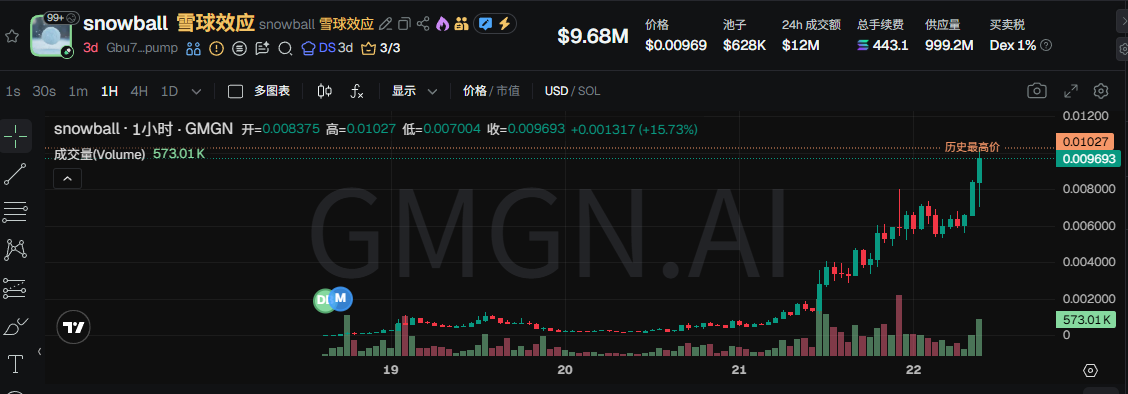
In the current environment, devoid of new narratives and where even memes are considered unplayable, this is one of the few things that catches the eye and shows some localized wealth effect.

And the name Snowball itself tells the story it wants to convey:

A mechanism that allows the token to "roll and grow larger by itself."

Turning Transaction Fees into Buy Pressure, Rolling the Snowball for Market Making

To understand what Snowball is doing, you first need to know how tokens on pump.fun typically make money.

On pump.fun, anyone can create a token in minutes. The token creator can set a "creator fee," essentially taking a cut of every transaction into their own wallet, usually between 0.5% and 1%.

This money could theoretically be used for community building or marketing, but in practice, most Devs choose to: accumulate enough and then run.

This is part of the typical life cycle of a shitcoin. Launch, pump, harvest fees, rug. Investors aren't betting on the token itself, but on the developer's conscience.

Snowball's approach is to not take this creator fee money.

To be precise, 100% of the creator fees do not go into anyone's wallet but are automatically transferred to an on-chain market-making bot.

This bot performs three actions at regular intervals:

First, it uses the accumulated funds to buy tokens on the market, creating buy-side support;

Second, it adds the bought tokens and the corresponding SOL to the liquidity pool, improving trading depth;

Third, it burns 0.1% of the tokens with each operation, creating deflation.
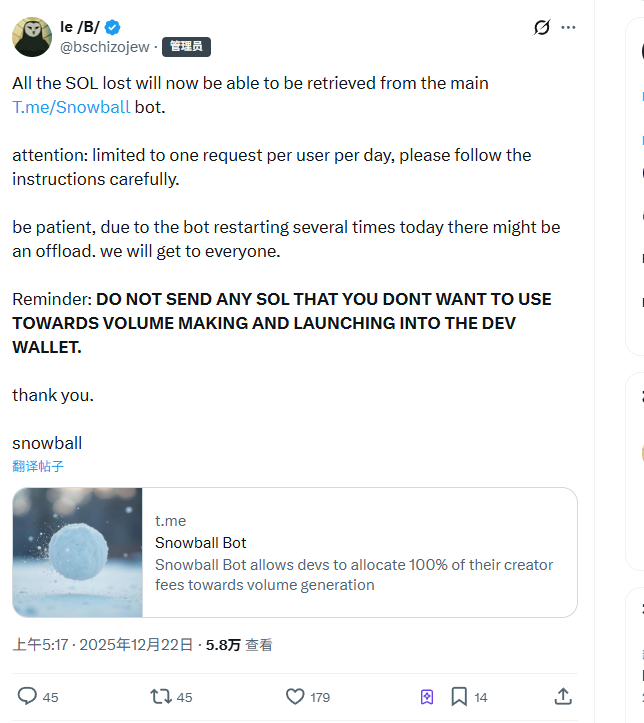
Additionally, the percentage taken as the creator fee is not fixed; it fluctuates between 0.05% and 0.95% based on market cap.

It takes a higher percentage when the market cap is low, allowing the bot to accumulate ammunition faster; it reduces the fee when the market cap is high, decreasing transaction friction.

In one sentence, the logic of this mechanism is: every time you trade, a portion of the money automatically becomes buy pressure and liquidity, instead of going into the developer's pocket.

Therefore, it's easy to understand this snowball effect:

Transactions generate fees → Fees become buy pressure → Buy pressure pushes the price up → Higher price attracts more transactions → More fees... theoretically, it can roll on its own.

On-Chain Data Situation

Now that we've covered the mechanism, let's look at the on-chain data.

Snowball launched on December 18th, so it's been four days now. Its market cap grew from zero to $10 million, with a 24-hour trading volume exceeding $11 million.

For a shitcoin on pump.fun, these results mean it's already one of the longer-lasting ones in the current environment.

In terms of token distribution, there are currently 7,270 holder addresses. The top ten holders combined hold about 20% of the total supply, with the largest single holder holding 4.65%.
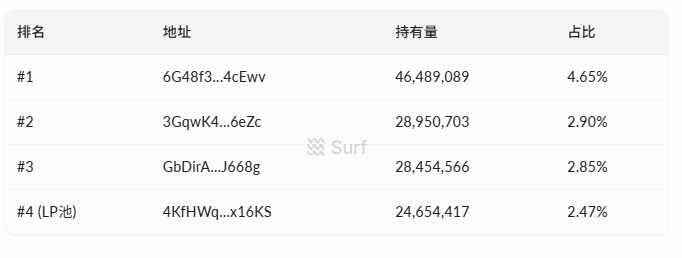
(Data source: surf.ai)

There's no address holding 20-30% of the supply; the distribution is relatively decentralized.

Regarding trading data, there have been over 58,000 cumulative transactions since launch, with 33,000 buys and 24,000 sells. The total buy volume is $4.4 million, and sell volume is $4.3 million, resulting in a net inflow of about $100,000. Buying and selling are basically balanced, with no one-sided selling pressure.

The liquidity pool holds about $380,000, half in tokens and half in SOL. For a market cap of this size, the depth isn't very thick, and large orders would still experience significant slippage.

Another notable point is that Bybit Alpha announced listing the token less than 96 hours after launch, which to some extent confirms the short-term hype.

Perpetual Motion Meets a Cold Market

Looking around, you can see the English community's discussion about Snowball mainly focuses on the mechanism itself. Supporters' logic is straightforward:

This is the first meme coin that locks 100% of the creator fees into the protocol; developers can't take the money and run, making it structurally safer than other shitcoins, at least.

The Dev is also playing into this narrative. The developer wallet, market-making bot wallet, and transaction logs are all public, emphasizing "verifiable on-chain."

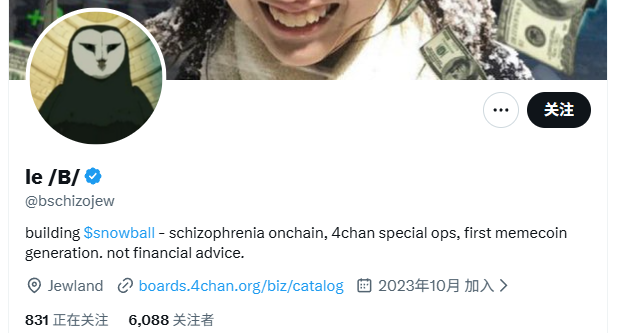
@bschizojew labels himself as "on-chain schizophrenia, 4chan special forces, first-generation meme coin veteran," radiating a self-deprecating degen vibe that really appeals to the crypto-native community.
But a safe mechanism and making money are two different things.

The snowball effect relies on the premise that there is sufficient trading volume to continuously generate fees to feed the bot for buybacks. More trades mean more ammunition for the bot, stronger buy pressure, higher prices, attracting more people to trade...

This is the ideal state for any meme coin's so-called buyback flywheel to spin up in a bull market.

The problem is, the flywheel needs external momentum to start.

What is the current crypto market environment? On-chain activity is sluggish, overall meme coin hype is down, and there's simply less capital willing to chase shitcoins. In this context, if new buy pressure doesn't keep up and trading volume shrinks, the fees the bot receives will become less and less, buyback strength weakens, price support falters, and trading willingness declines further.

The flywheel can spin forward, but it can also spin in reverse.

A more realistic problem is that the mechanism solves only one risk point—"developers taking money and running"—but meme coins face far more risks than that.

Whales dumping, insufficient liquidity, narratives going out of style—if any of these happen, 100% fee buybacks can only do so much.

Everyone is tired of being rugged. As one Chinese crypto brother aptly summarized:

Play if you want, but don't get in over your head.

More Than One Snowball Rolling

Snowball isn't the only project telling this automated market-making story.

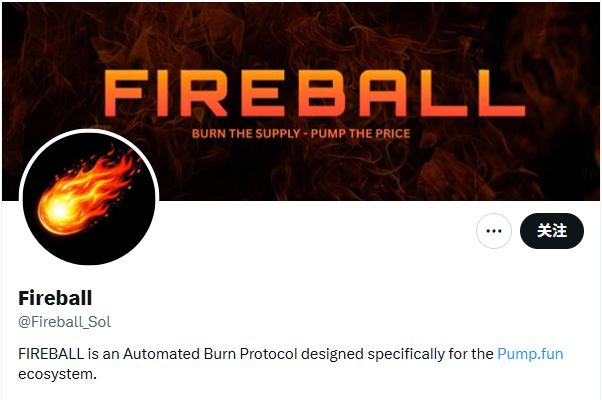
Within the pump.fun ecosystem, a token called FIREBALL is doing something similar: automatic buybacks and burns, packaged as a protocol other tokens can plug into. But its market cap is much smaller than Snowball's.
This shows the market is currently responsive to the direction of "mechanism-based meme coins."

The traditional玩法 (playbook) of shilling, pumping, and community hype is finding it harder to attract capital. Using mechanism design to tell a "structurally safe" story might be one of meme coins' latest tricks.

That said, artificially creating a specific mechanism isn't a new玩法 (play) either.

OlympusDAO's (3,3) in 2021 was the most classic case, packaging a staking mechanism with game theory, telling the story "if everyone holds, we all profit together." It reached a peak market cap of several billion dollars. The ending, as everyone knows, was a death spiral, dropping over 90%.

Even earlier, there was Safemoon's玩法 of "taxing every transaction and distributing it to holders," also a narrative of mechanism innovation, which ended with the SEC suing and the founders charged with fraud.

A mechanism can be a great narrative hook, capable of gathering capital and attention in the short term, but the mechanism itself does not create value.

When external capital stops flowing in, even the most精巧 (ingenious) flywheel will stop.

Finally, let's recap what this little gem is actually doing:

Turning the meme coin's creator fees into an "automated market-making bot." The mechanism itself isn't complicated, and the problem it solves is very clear: preventing developers from directly taking the money and running.

Developers not being able to rug doesn't mean you'll make money.

If after reading this you find the mechanism interesting and want to participate, remember one thing: it is first and foremost a meme coin, and only secondly an experiment with a new mechanism.


Tiền kỹ thuật số thịnh hành

Câu hỏi Liên quan

QWhat is the core mechanism that makes Snowball different from typical meme coins on pump.fun?

ASnowball's core mechanism is that 100% of the creator fees from each transaction are automatically sent to an on-chain market-making bot instead of going to the developer's wallet. This bot uses the accumulated funds to buy back tokens, add liquidity to the pool, and burn a small portion of tokens, creating a self-sustaining 'snowball effect' of buying pressure and liquidity growth.

QHow does the 'snowball effect' theoretically work in this token's economic model?

AThe 'snowball effect' works through a feedback loop: transactions generate fees → fees are used by the bot to buy tokens and add liquidity → buying pressure pushes the price higher → higher prices attract more traders and transactions → which generates more fees for the bot to continue the cycle.

QWhat are some of the risks or limitations of Snowball's automatic market-making mechanism?

AThe mechanism relies on sustained trading volume to generate fees for the bot. If new buyers dry up and trading volume decreases, the bot's buying power weakens, potentially leading to a downward spiral. It also doesn't protect against other risks like large holders dumping, liquidity issues, or narrative fatigue.

QHow does the creator fee percentage in Snowball adjust, and why?

AThe creator fee percentage in Snowball fluctuates between 0.05% and 0.95% based on market capitalization. It charges a higher percentage when the market cap is low to allow the bot to accumulate funds faster, and a lower percentage when the market cap is high to reduce transaction friction for traders.

QWhat precedent exists in crypto for 'mechanism-driven' tokens like Snowball, and what were their outcomes?

APrecedents include OlympusDAO's (3,3) staking mechanism, which collapsed after reaching a multi-billion dollar valuation, and Safemoon's transaction tax redistribution model, which ended with fraud charges from the SEC. These show that while mechanisms can drive short-term hype, they don't create inherent value and often fail when external capital stops flowing in.

Nội dung Liên quan

Việc Giảm Mạnh STRC Của Strategy Cho Thấy Rủi Ro Đằng Sau Các Sản Phẩm Tín Dụng Liên Kết Bitcoin

Việc cổ phiếu ưu đãi STRC của Strategy (công ty mẹ của MicroStrategy) giao dịch giảm mạnh dưới mệnh giá 100 USD đã làm nổi bật rủi ro đằng sau các sản phẩm tín dụng gắn với Bitcoin. Dù CEO Matt Cole mô tả đây là đợt "thanh lọc đòn bẩy" do bán ép chứ không phải sự kiện vỡ nợ cơ bản, sự sụt giảm vẫn cho thấy mức độ nhanh chóng mà đòn bẩy có thể làm lộ ra điểm yếu trong các công cụ liên quan đến chiến lược kho bạc Bitcoin. Sự kiện này nhấn mạnh rằng các sản phẩm tín dụng Bitcoin mang rủi ro khác biệt so với nắm giữ BTC trực tiếp hoặc cổ phiếu phổ thông, đặc biệt khi nhà đầu tư sử dụng vay mượn. Nó cũng phản ánh sự phức tạp ngày càng tăng của thị trường tài chính hóa các kho bạc Bitcoin, nơi sự tương tác giữa cổ phiếu ưu đãi, cam kết cổ tức, đòn bẩy và biến động giá Bitcoin có thể dẫn đến bán ép trong điều kiện thanh khoản căng thẳng. Bài học chính là một lời cảnh báo về rủi ro đòn bẩy và tính dễ tổn thương trong cấu trúc tài chính phức tạp, hơn là bằng chứng về khả năng trả nợ của công ty phát hành.

bitcoinist5 giờ trước

Việc Giảm Mạnh STRC Của Strategy Cho Thấy Rủi Ro Đằng Sau Các Sản Phẩm Tín Dụng Liên Kết Bitcoin

bitcoinist5 giờ trước

Tòa Án Tối Cao Australia Trao Thắng Lợi Lớn Cho ASIC Trong Vụ Án Sản Phẩm Yield Tiền Mã Hóa Block Earner

Tòa án Tối cao Úc đã phán quyết nhất trí ủng hộ Ủy ban Chứng khoán và Đầu tư Úc (ASIC) trong vụ kiện chống lại công ty Block Earner. Tòa án xác định sản phẩm "Earner" cố định lợi suất lịch sử của Block Earner là một sản phẩm tài chính và phái sinh, do đó yêu cầu công ty phải có Giấy phép Dịch vụ Tài chính Úc để cung cấp sản phẩm này. Vụ việc giờ sẽ được chuyển lại cho Tòa án Liên bang Toàn thể để xác định hình phạt. Phán quyết này rất quan trọng vì nó áp dụng luật dịch vụ tài chính truyền thống của Úc vào một sản phẩm tiền mã hóa hứa hẹn lợi suất. Nó thiết lập một tiền lệ rõ ràng rằng các sản phẩm cung cấp lợi nhuận có cấu trúc hoặc có đặc điểm kinh tế giống phái sinh có thể phải đáp ứng các yêu cầu cấp phép, bất kể được gắn nhãn là gì. Mặc dù sản phẩm "Earner" cụ thể này không còn được cung cấp, phán quyết cung cấp cho ASIC cơ sở pháp lý vững chắc cho các hành động tương tự trong tương lai, phù hợp với xu hướng toàn cầu của các cơ quan quản lý trong việc đưa các sản phẩm tiền mã hóa vào khuôn khổ quy định hiện hành. Đối với các công ty tiền mã hóa, bài học là cần xem xét kỹ lưỡng bản chất kinh tế của sản phẩm. Đối với người tiêu dùng, phán quyết nhắc nhở rằng các sản phẩm sinh lợi tiềm ẩn rủi ro và khác biệt so với việc nắm giữ tiền mã hóa thông thường. Phán quyết này vạch ra một ranh giới quy định rõ ràng hơn cho ngành công nghiệp tiền mã hóa tại Úc.

bitcoinist8 giờ trước

Tòa Án Tối Cao Australia Trao Thắng Lợi Lớn Cho ASIC Trong Vụ Án Sản Phẩm Yield Tiền Mã Hóa Block Earner

bitcoinist8 giờ trước

Blockchain.com Mở Rộng Truy Cập Cổ Phiếu Token Hóa Thông Qua Ondo Finance

Blockchain.com đã mở rộng khả năng tiếp cận cổ phiếu và ETF được mã hóa (tokenized) của Hoa Kỳ thông qua ví tiền điện tử của mình, nhờ vào quan hệ đối tác với Ondo Finance. Động thái này mang các tài sản trong thế giới thực được quản lý vào giao diện quen thuộc dành cho người dùng tiền điện tử đủ điều kiện, cho phép họ nắm giữ các sản phẩm truyền thống như cổ phiếu bên cạnh stablecoin và công cụ DeFi. Ondo Finance, một tên tuổi nổi bật trong thị trường tài sản thực được mã hóa (RWA), đóng vai trò trung tâm bằng cách cung cấp các sản phẩm tài chính quen thuộc dưới dạng token. Sự hợp tác này giải quyết thách thức về phân phối, đưa các tài sản được mã hóa trực tiếp đến người dùng ví tiền điện tử hiện có. Một khía cạnh quan trọng là mục tiêu phục vụ người dùng bên ngoài Hoa Kỳ, nơi việc tiếp cận thị trường vốn Mỹ có thể bị hạn chế. Giải pháp này cung cấp một lựa chọn thay thế mang tính bản địa hóa cho tiền điện tử, tích hợp vào cơ sở hạ tầng tài chính mà người dùng toàn cầu đã quen thuộc. Bối cảnh thị trường RWA đang trở nên cạnh tranh hơn, với nhiều nền tảng tranh giành để trở thành cổng kết nối chính cho tài sản truyền thống được mã hóa. Blockchain.com và Ondo đặt cược rằng việc tích hợp liền mạch vào ví tiền điện tử có thể cung cấp trải nghiệm đơn giản và đáng tin cậy, giúp thu hẹp khoảng cách so với các sản phẩm môi giới truyền thống.

bitcoinist10 giờ trước

Blockchain.com Mở Rộng Truy Cập Cổ Phiếu Token Hóa Thông Qua Ondo Finance

bitcoinist10 giờ trước

CPU trở lại bàn đàm phán, một vở kịch "thăng tiến" trị giá 1700 tỷ USD bắt đầu

CPU đang trở lại trung tâm sân khấu trong kỷ nguyên AI, dẫn dắt một cơ hội thị trường trị giá 1700 tỷ USD vào năm 2030. Việc chuyển dịch từ huấn luyện sang suy luận (inference) và AI Agent đã làm thay đổi hoàn toàn vai trò của CPU. Trong các tác vụ Agent phức tạp, CPU hiện đảm nhận hơn 70% khối lượng công việc, xử lý luồng điều khiển, gọi công cụ và quản lý bộ nhớ (KV Cache). Tỷ lệ phối hợp GPU:CPU đang thu hẹp từ 1:8 xuống khoảng 1:4, thậm chí 1:1 trong một số trường hợp. Nhu cầu này dẫn đến việc thiếu hụt nguồn cung và lần tăng giá đầu tiên sau hơn một thập kỷ cho server CPU của Intel và AMD, với mức tăng 10-15%. Thị trường CPU server dự kiến tăng từ khoảng 300 tỷ USD năm 2025 lên 1700 tỷ USD vào năm 2030, được thúc đẩy bởi ba phân khúc: điện toán đám mây truyền thống, CPU head-node cho cụm AI và CPU node độc lập cho Agent – một thị trường hoàn toàn mới. NVIDIA cũng đã tham gia cuộc chơi với CPU Vera dựa trên kiến trúc ARM, nhấn mạnh tầm quan trọng chiến lược của CPU. Tại Trung Quốc, các công ty như Hygon (Hải Quang) và Huawei đang nắm bắt cơ hội từ làn sóng nhu cầu này và chương trình thay thế nhập khẩu (xinchuang), với hệ sinh thái phần mềm đang trưởng thành nhanh chóng.

marsbit10 giờ trước

CPU trở lại bàn đàm phán, một vở kịch "thăng tiến" trị giá 1700 tỷ USD bắt đầu

marsbit10 giờ trước

TechFlow Tình Báo: Giám đốc AI của AMD công khai chỉ trích Claude Code 'ngày càng ngốc nghếch và lười biếng', Trump tuyên bố eo biển Hormuz sẽ ngừng bắn toàn diện nhưng vẫn còn 80 quả thủy lôi chờ dọn

TechFlow Intelligence: Tóm tắt tin tức công nghệ & tài chính ngày... * **AI & Mô hình lớn:** Giám đốc AI của AMD chỉ trích Claude Code trở nên "kém thông minh và lười biếng". Z.AI (Trung Quốc) ra mắt GLM-5.2, tuyên bố ngang bằng Claude Opus mà không dùng chip NVIDIA. SK Telecom (Hàn Quốc) bị điều tra về chuyển giao công nghệ với Anthropic. DeepSeek gây sốt trên Zhihu với tính năng đa phương tiện mới. Gemini bị chỉ trích trên Reddit vì đưa lời khuyên sai trong tình huống lừa đảo. * **Chip & Phần cứng:** MIT tự viết hệ điều hành để nghiên cứu chip. Mỹ cáo buộc máy quang khắc EUV tối tân của ASML có thể đã tới Trung Quốc, ASML phủ nhận. Amazon đàm phán bán chip AI tự thiết kế ra bên ngoài. iPhone phiên bản kỷ niệm 20 năm của Apple dự kiến dùng quy trình N2P độc quyền từ TSMC. * **An ninh & Công ty:** Phát hiện 10.000 kho GitHub phân phối phần mềm độc hại. Apple vá lỗ hổng nghe lén nghiêm trọng trên tai nghe Beats. Nhiều kỹ sư Amazon bị điều tra nội bộ vì chỉ trích việc mở rộng trung tâm dữ liệu AI. Microsoft và Amazon có thể đối mặt với điều tra chống độc quyền khắt khe từ EU. * **Web3 / Crypto:** 0G Labs đạt cột mốc 100 tỷ token suy luận AI phi tập trung. Sàn Hàn Quốc Bithumb niêm yết RE, trong khi Upbit hủy niêm yết KERNEL. * **Thị trường & Địa chính trị:** Cổ phiếu bán dẫn Mỹ tăng mạnh, Intel tăng 10.6%, trong khi SpaceX giảm. Eo biển Hormuz chính thức mở cửa theo thỏa thuận Mỹ-Iran, nhưng hiệp hội vận tải dầu cảnh báo vẫn còn khoảng 80 quả thủy lôi trong luồng chính. Gần 80 tàu chở dầu chờ tín hiệu an toàn để xuất phát. Iran hoãn chuyến công du tới Thụy Sĩ, làm dấy lên nghi ngờ về tiến trình hòa bình.

marsbit10 giờ trước

TechFlow Tình Báo: Giám đốc AI của AMD công khai chỉ trích Claude Code 'ngày càng ngốc nghếch và lười biếng', Trump tuyên bố eo biển Hormuz sẽ ngừng bắn toàn diện nhưng vẫn còn 80 quả thủy lôi chờ dọn

marsbit10 giờ trước

Giao dịch

Giao ngay
Hợp đồng Tương lai

Bài viết Nổi bật

Làm thế nào để Mua QUICK

Chào mừng bạn đến với HTX.com! Chúng tôi đã làm cho mua Quickswap (QUICK) trở nên đơn giản và thuận tiện. Làm theo hướng dẫn từng bước của chúng tôi để bắt đầu hành trình tiền kỹ thuật số của bạn.Bước 1: Tạo Tài khoản HTX của BạnSử dụng email hoặc số điện thoại của bạn để đăng ký tài khoản miễn phí trên HTX. Trải nghiệm hành trình đăng ký không rắc rối và mở khóa tất cả tính năng. Nhận Tài khoản của tôiBước 2: Truy cập Mua Crypto và Chọn Phương thức Thanh toán của BạnThẻ Tín dụng/Ghi nợ: Sử dụng Visa hoặc Mastercard của bạn để mua Quickswap (QUICK) ngay lập tức.Số dư: Sử dụng tiền từ số dư tài khoản HTX của bạn để giao dịch liền mạch.Bên thứ ba: Chúng tôi đã thêm những phương thức thanh toán phổ biến như Google Pay và Apple Pay để nâng cao sự tiện lợi.P2P: Giao dịch trực tiếp với người dùng khác trên HTX.Thị trường mua bán phi tập trung (OTC): Chúng tôi cung cấp những dịch vụ được thiết kế riêng và tỷ giá hối đoái cạnh tranh cho nhà giao dịch.Bước 3: Lưu trữ Quickswap (QUICK) của BạnSau khi mua Quickswap (QUICK), lưu trữ trong tài khoản HTX của bạn. Ngoài ra, bạn có thể gửi đi nơi khác qua chuyển khoản blockchain hoặc sử dụng để giao dịch những tiền kỹ thuật số khác.Bước 4: Giao dịch Quickswap (QUICK)Giao dịch Quickswap (QUICK) dễ dàng trên thị trường giao ngay của HTX. Chỉ cần truy cập vào tài khoản của bạn, chọn cặp giao dịch, thực hiện giao dịch và theo dõi trong thời gian thực. Chúng tôi cung cấp trải nghiệm thân thiện với người dùng cho cả người mới bắt đầu và người giao dịch dày dạn kinh nghiệm.

Tổng lượt xem 287Xuất bản vào 2024.12.11Cập nhật vào 2026.06.02

Làm thế nào để Mua QUICK

Thảo luận

Chào mừng đến với Cộng đồng HTX. Tại đây, bạn có thể được thông báo về những phát triển nền tảng mới nhất và có quyền truy cập vào thông tin chuyên sâu về thị trường. Ý kiến ​​của người dùng về giá của QUICK (QUICK) được trình bày dưới đây.

活动图片