1. Introduction:
The importance of fashion and our digital self
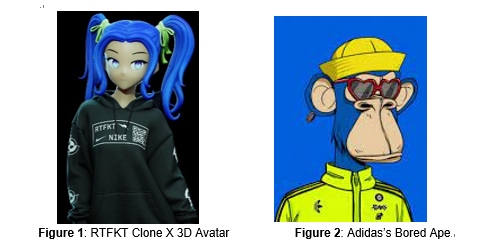
Digital identities are becoming as important as your real-world identity, with people spending more time online. According to Gartner, 25% of people will spend at least an hour per day in the Metaverse by 2026. When mass adoption of the metaverse does happen, everyone will need a digital avatar to play, work and live in the metaverse. Our digital avatar’s appearance will become our core identity online and the primary way for people to see us in the metaverse.
The co-founder of Coinbase Fred Ehrsam once said: “Imagine you live on the internet. The way the world primarily knows you is not through your face or your clothes—it’s through your digital avatar.” If digital avatars indeed become the core identity of everyone, digital fashion products will be in demand as much in the metaverse as in the real world. Fashion is a way to express one's culture, personality, and values, and most importantly, a way for digital avatars to stand out in the metaverse.
The Utility of Digital Fashion
According to the founder of RTFKT, digital fashion products help solve a major issue for luxury fashion goods today: “Buyers want to show off their purchases, but don’t want it to get damaged so they refrain from wearing it.” Physical products face depreciation, tear-and-wear, and storage restrictions, while digital products are evergreen and not limited by physical boundaries. Moreover, consumers do not have to bear the hassles of fitting, shipping and storage when attire products are digital.
2. How do NFTs change the Fashion Industry?
2.1 New Categories of Fashion Products
NFTs enable companies to produce new categories of fashion products and expand beyond physical boundaries. Unlike traditional fashion companies that sell physical products, digital fashion companies may produce digital-first or digital-only products. Physical products will not be necessary, instead, they become an unlockable equivalent of a digital fashion NFT. Rather than designing and producing physical products, virtual brands focus on rendering 3D digital collectibles and avatars and building digital experiences. We can divide fashion-related NFTs products into four main categories.
Hybrid NFT Products (Digital X Physical)
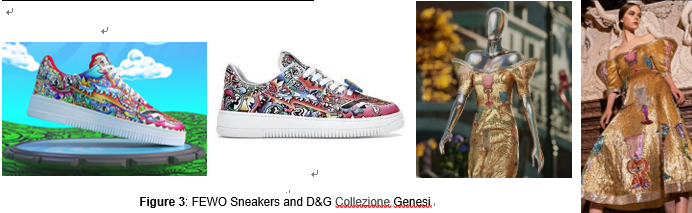
Hybrid NFT products bundle physical and digital products together and are sold as an NFT to the public. Consumers who own the NFT have the right to claim a physical version later, as well as the right to trade on secondary marketplaces to another buyer. Figure 4 shows the digital and the physical products of the FEWO sneakers made by RTKFT and the D&G NFT apparel collection that auctioned for US$6.12 million. Holders of the FEWO sneakers NFT are also able to wear and interact with the digital sneakers using AR filters on Instagram and Snapchat.
Hybrid products tend to be more exclusive and expensive compared with other fashion NFTs. The total supply of FEWO sneakers was limited to 909 with the mint price at US$5,000. The D&G collection comprises 9 items, and each was auctioned for 100+ ETH.
Branded NFT Collectibles
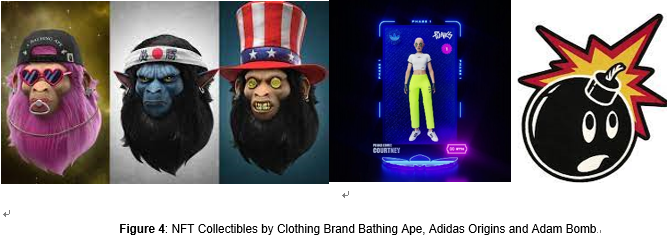
Many fashion brands have released NFT collectibles that work similarly as a digital membership card. They use NFTs as a marketing tool to acquire new customers and establish their brand presence in the Web3 space. Figure 5 shows digital collectibles made by Bathing Ape, Adidas, and Adam bomb. They share similar utilities such as granting holders exclusive physical and digital products, airdrops, and experiences. Creating a sense of exclusivity and community for their holders are the main goals behind these NFT collectibles.
NFT Derivatives/Re-skins
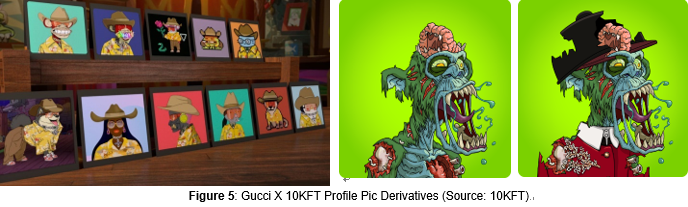
These projects specialize in utilizing existing IP from other NFT projects such as Bored Apes, CryptoToadz and Cool Cats, and redesigning them in a fashionable way. The most popular project for NFT derivatives is by Gucci X 10KFT, as shown in Figure 5. The project team supports 11 different profile picture collections, whose holders could purchase a 10KFT mint pass for 1ETH to connect their wallets and create a new ERC-721 token derivative art for their profile picture.
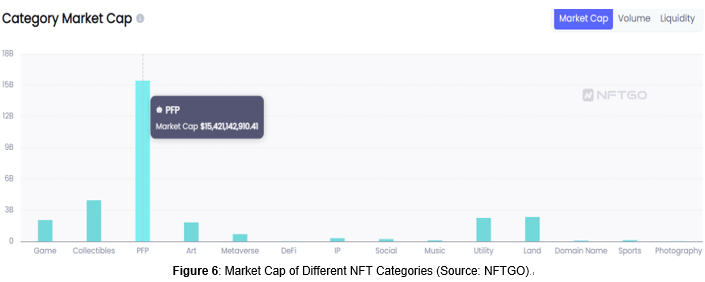
According to NFT.GO as shown in Figure 6, Profile Pic (PFP) NFTs currently have the largest market cap in the NFT market. The popularity of profile pic avatars indicates an immense potential for the PFP derivative NFT market.
Metaverse Fashion
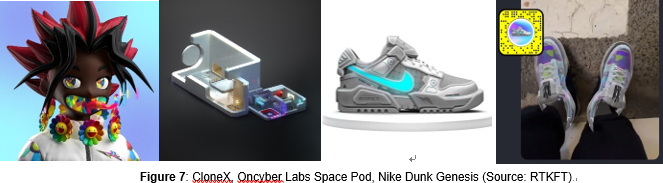
Metaverse fashion products are digital-only products that are designed to be used virtually. According to Dress X founder, “the goal of fashion is to post a photo on social media, digital fashion gets users quickly to the end goal, all without ever actually purchasing a physical fashion item.” Rather than designing and producing physical products, metaverse fashion brands focus on rendering 3D digital collectibles models and building digital experiences. Figure 7 shows the products created by digital fashion company RTFKT which include Nike sneakers, 3D avatar models, virtual display rooms and AR filters. The goal of RTFKT is to use game engines and augmented reality to create digital sneakers and artifacts that can be used in the metaverse.
2.2 New Channels of Marketing
Channels of Communication
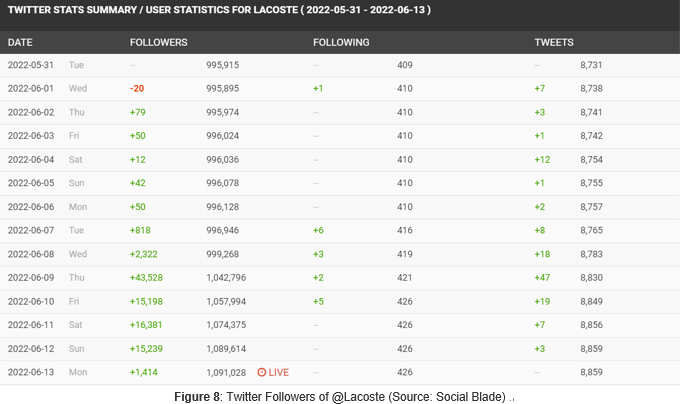
Advertising in Web3 is a marketer’s dream due to social media platforms such as Discord and Twitter. Twitter has been the most popular communications platform for Web3 projects. Figure 9 shows the Twitter follower count for clothing brand Lacoste before and after its NFT collectible announcement. This highlights the level of attention clothing brands will receive if they announce plans to launch NFTs; there are many people buying into these collectibles purely for the NFT behind it, regardless of the brand.
Wallet Addresses
Not only do marketers get to use Twitter and Discord for community building and promoting products at a low-cost basis, they also have access to the public wallet addresses of all their NFT holders. As all information is available on the blockchain, marketers can use their holders’ wallet addresses to understand their preferences, spending patterns and consumption levels. Marketers can use Etherscan to analyze users’ wallet transactions history, token holdings and Dapp usage, and target their audiences for different campaigns. For example, this may include selecting wallets that have transaction histories before a certain date, for a campaign that rewards early supporters of the brand. There is a considerable amount of information that can be extracted from an individual’s blockchain address.
Airdrops
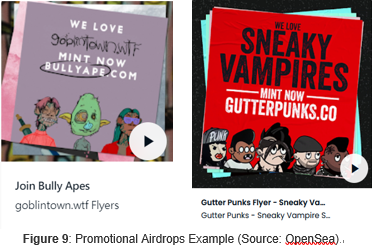
Wallet addresses function similarly to email addresses that are open to everyone. Instead of giving out emails, SMS messages and even flyers, brands can simply airdrop promotional NFTs directly into your ETH address to promote their collection. Figure 9 shows examples of promotional airdrops, which were sent to wallet addresses of those who held similar categories of NFTs. Links and further details can be found in the description sections of these NFTs.
2.3 Change in Revenue Model
Profit-First Revenue Model
Like many other Web3 projects, NFT fashion projects benefit from the “Profit First, Deliver Later” revenue model. The digital-first model allows projects to raise funds first by releasing NFTs before building and delivering the project. This way, brands can sell products with completed digital designs and then worry about the production process after they are sold to the public as NFTs. Moreover, the total supply of products is predetermined during public minting, allowing brands to accurately manage their supply and avoid unnecessary inventory costs.
A limited supply of products creates exclusivity, and the idea of being able to own one out of 1,000 or 10,000 products is often persuasive enough for consumers in the NFT space to mint unfinished products. The sale of the first virtual sneakers collection RTFKT raised US$3.1 million in seven minutes. However, the physical products and AR filters related to the virtual sneakers were unfinished at the time of mint, but buyers bought them anyway due to the exclusivity factor and FOMO (Fear of Missing Out). Sneaker holders were eventually able to start claiming their physical shoes six weeks after the initial public sale.
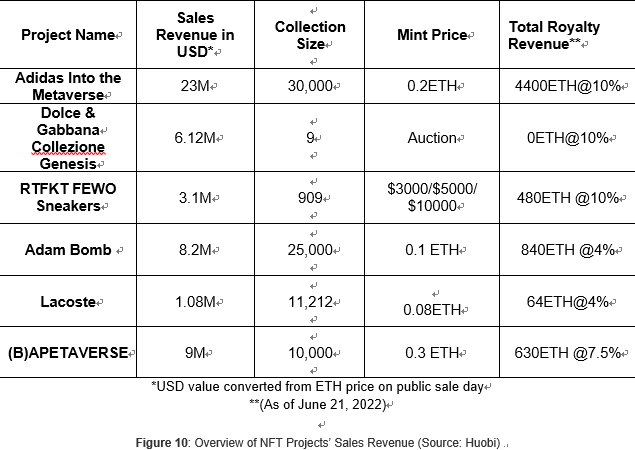
The overview of the revenue for the most popular NFT projects in Figure 10 shows how lucrative selling NFT products can be, and the premium customers are willing to pay. Every single collection was sold out within a day and generated millions in revenue.
Currently, most projects are sold in ETH, which led to large USD variations for the sale revenues of these projects. For instance, Adam bomb was released when ETH was priced at around US$3,000, causing its revenue per unit to be double that of the Lacoste NFT collectibles, which were released when ETH was priced at around US$1,200.
The most popular category of fashion products that brands are releasing right now is digital collectibles. These collectibles act as membership passes that grant exclusive access to products and experiences. The reason for their popularity is that instead of fashion apparel, they come in the form of collectibles such as figurines, or generative PFPs, therefore requiring less effort in designing and rendering.
2.4 Secondary Resale, Authenticity and Traceability
Digital X physical hybrid products in the form of NFTs allow luxury brands and designers to earn royalties from secondary re-sales perpetually using smart contracts. Unlike traditional fashion products in which brands and designers make one-off revenue from the initial sale, NFTs allow producers to also benefit from the secondary resale market. A good example of a successful hybrid NFT product is the FEWO sneakers collection, where all 909 NFT sneakers were sold in seven mins for US$3.1 million. Each sneakers NFT allows one physical version to be claimed, and owners are able to trade their NFTs freely on NFT marketplaces at a 10% creator’s fee, which has generated 480 ETH for RTFKT in secondary sales to date.
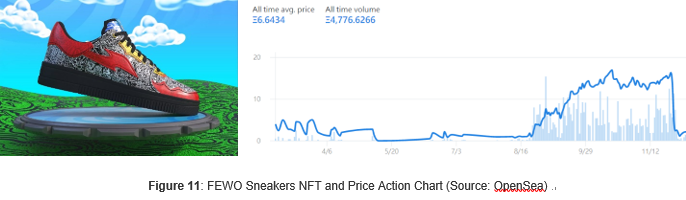
The secondary resale value also provides a more accurate valuation of highly desired products. Brands such as Rolex and Hermes are always sold out and under-priced in terms of products. Popular models of Rolex have a mark-up price of more than 100% in the secondary markets. If these watches were sold in the form of hybrid NFTs, each transaction would have generated 5% to 10% in royalties to Rolex and its watch designers. Moreover, NFT holders would also benefit from the liquidity and price transparency of the NFT marketplaces. The global second-hand apparel resale market is estimated to be worth US$96 billion in 2021, highlighting the potential of hybrid NFT apparel products.
Authenticity
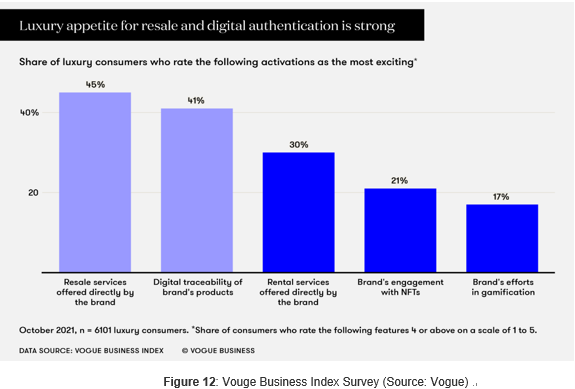
Moreover, NFTs provide traceability and authenticity that protect buyers and sellers in the secondary marketplace. According to the Harvard Business Review, fake luxury goods account for 60% of the US$4.5 trillion total global trade in counterfeit goods in 2019. As shown in Figure 12, according to a survey by Vogue, luxury consumers find resale services and the digital traceability of products offered directly by the brand the most exciting innovations they look forward to. NFTs guarantee product authenticity through token ID identification and smart contracts.
2.5 Change in Product Description
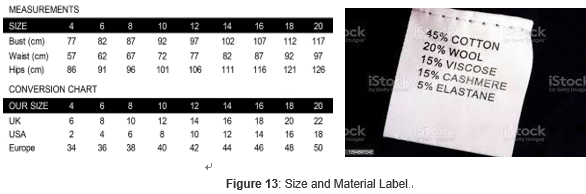
Interoperability and properties will be analogous to the “size chart” and “material” labels of digital outfits. Instead of information about sizes and materials, digital outfits will have information on interoperability and property traits. The interoperability label will contain information about the list of metaverses and games that support the NFT. Items with high interoperability can be used by avatars across various metaverses and games. The properties label will contain information about the list of traits the NFT has and their rarity. Examples of properties labels are shown in Figure 14.
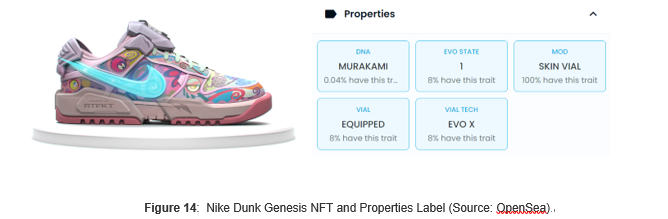
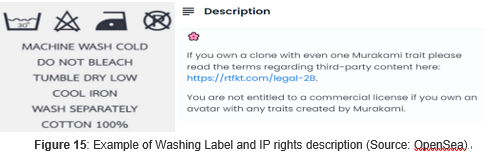
IP rights related to fashion NFTs may be complicated for consumers to understand, and
there is a need for simplification. Similar to washing labels shown in Figure 7, IP rights labels
should tell you what you can or cannot do to your apparel. Universal symbols regarding IP rights
should be developed in the fashion industry to help inform consumers. At the moment, NFTs’ IP
rights are written in complicated legal language and hidden in lengthy legal documents, which
are both confusing and time-consuming for the average consumer to understand. For example,
RTFKT grants Clone X Avatars NFT holders a “limited, personal, non-exclusive, worldwide”
commercial license. However, the license does not apply to avatars with traits created by
Murakami.
2.6 Change in Community Engagement and Membership Management
NFTs function as a social token that helps consumers of fashion brands to easily connect with each other through holders-only Discord groups or communities. According to Shopify, the ability to own tradable NFTs of their favourite fashion brand gives consumers financial incentives to commit to community building and become brand ambassadors.
Exclusivity
NFTs change the membership/loyalty programs of fashion brands. Traditional fashion brands like Bathing Ape and Adam Bomb offer NFT collectibles which function like a membership card/pass that unlocks exclusive experiences. For example, some of the benefits of owning a Bathing Ape NFT include free exclusive merchandise, reward programs, airdrops and even holder-exclusive stores. Adam Bomb NFT holders benefit from holders-only events, T-shirts, and fast checkout at their warehouse sales. These exclusive events and merchandise claims could last for months or years, and therefore encourage NFT-holders to stay engaged in the long term.
Shopify and Token-gated ecommerce
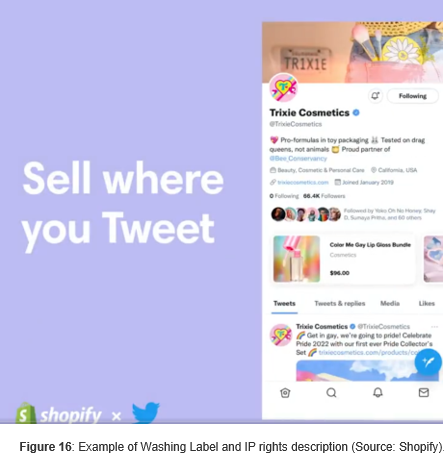
In June 2022, Shopify announced the launch of token-gated storefronts for NFT communities, where token holders can connect their wallets for exclusive shopping experiences, discounts, and merchandise. Token-gated e-commerce would be a step up to better reward member loyalty and highlight their importance. Moreover, Shopify is embedding storefronts inside Twitter community pages. As shown in Figure 16, Shopify has collaborated with Twitter to allow products to be directly displayed on profile pages, bridging communities closer to their brands’ online storefronts.
2.7 Change in Production Process
The launch of digital fashion products through a public sale of NFTs is a type of Direct-To-Consumers (DTC) business model that saves costs and time spent on third parties. Sales and transactions can be automated by smart contracts on the blockchain, saving fashion brands hundreds of thousands of dollars in setting up IT infrastructure for online shopping and retail experiences for physical shopping.
The average lead time for the apparel industry tends to be around 30 to 90 days. Producing digital products can shorten this period significantly as designers can skip the time needed for sample production and material sourcing. A digital showroom innovation campaign by Tommy Hilfiger was able to reduce the brand’s lead time by six weeks, and reduce sample production waste by 80%.
3. Concluding thoughts

We are in an incredibly early stage of using NFTs in fashion products and the potential is limitless. At the moment, only 17% of the fashion brands in the Vogue Business Index have either explored or included NFTs in their products. In the future, we are likely to see more categories of products that integrate NFT technology. When it comes to fashion NFTs, no matter what category of product it is, these six core values should be considered:
Identity
Holders can customize their digital avatar/profile pic through various NFT fashion attires and skins, hence creating their personal IP and digital identity in Web3. It is important for people to express themselves online through digital fashion and avatars.
Interactivity
Holders can interact with their digital apparel in games or metaverses. Fashion NFTs supporting AR filters plays a key role in bridging virtual fashion attires to the physical world.
Authenticity
Holders can verify and view the ownership history of their products on the blockchain, making sure that the NFTs they own are authentic and protecting consumers from counterfeit goods.
Tradability
Holders can trade the NFTs at a low transaction and royalty fee across various marketplaces. The supply of specific NFT collections should be fixed to ensure exclusivity and that their value will not be diluted due to infinite supplies. Brands and designers should benefit from secondary re-sale through the creator fee embedded into the NFT smart contract.
Exclusivity
Fashion NFTs should be about exclusivity, rewarding holders with exclusive experiences, merchandise, and discounts, etc.
Community
Holders have channels and community groups to socialize with one another, and communicate with project team members.