315 Exposes AI Poisoning: A Business from Putian to Silicon Valley

marsbitXuất bản vào 2026-03-16Cập nhật gần nhất vào 2026-03-16

Tóm tắt

China's 315 Gala exposed "AI poisoning" through a practice called Generative Engine Optimization (GEO), where companies pay to manipulate AI recommendations. A case study featured a fictitious smartwatch with absurd features being promoted via auto-generated articles, which were then ranked highly by AI models within hours. This mirrors the early days of Search Engine Optimization (SEO), where paid rankings, notably by莆田系 hospitals on Baidu, dominated search results. While regulation later mandated "ad" labels, user trust in top results persisted. Now, with AI as the new information gateway, GEO has emerged as SEO's successor. The market quickly capitalized on GEO. BlueFocus invested millions in a GEO firm, triggering a stock surge and significant executive stock sales, despite the actual GEO market remaining relatively small. Simultaneously, OpenAI announced ads in ChatGPT for free users, separating responses from sponsored content—a move expected to generate $17 billion annually. This highlights a key contrast: unapproved GEO content is "poisoning," while platform-approved ads are "commercialization." The core issue remains: users inherently trust top AI responses, often unaware they can be bought. As GEO evolves rapidly, the article warns: answers may be free, but critical thinking shouldn’t be outsourced.

Author: David, Deep Tide TechFlow

Last night, 315 exposed a business based on GEO.

Full name is Generative Engine Optimization, which you can understand as:

Paying to have AI say nice things about you.

How is it done?

Brands want AI to prioritize them when consumers ask for recommendations. So they find GEO service providers, who mass-publish promotional soft articles online. After AI crawls and captures this content, it treats it as real information and recommends it to users.

A CCTV reporter used a software called "Liqing GEO," which can be bought on Taobao.

The reporter fabricated a smart wristband and made up several outrageous product features, such as "quantum entanglement sensing" and "black hole-level battery life." The software automatically generated over a dozen promotional soft articles and published them online.
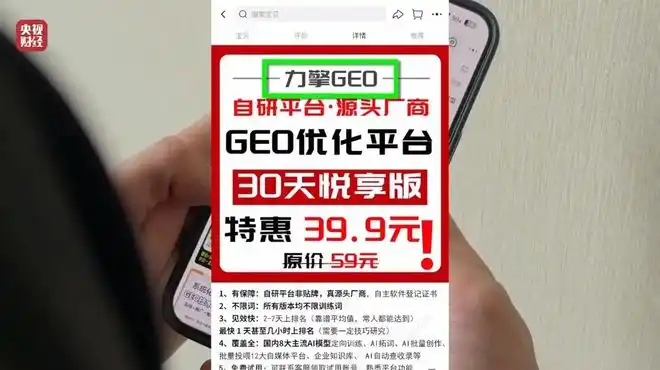
Two hours later, the reporter asked an AI: "Can you recommend a smart health wristband for me?"

The AI ranked this non-existent wristband at the top of the recommendation list.

The company behind this software is called Beijing Lisi Culture Media, a one-person company with zero employees enrolled in social insurance for years.

A tool made by such a company managed to deceive mainstream domestic AI models in just two hours.

315 exposed AI poisoning, but this business might be much bigger than a Taobao software.

SEO, the Putian Past

First of all, this is nothing new.

In 2008, CCTV's "News 30 Minutes" exposed Baidu's paid ranking over two consecutive days. Paying money could get your website to the top of search results, even if it was for fake medicine.

Back then, this business was called SEO, Search Engine Optimization.

The biggest buyers were Putian-based private hospitals. In 2013, the Putian system spent 12 billion yuan on Baidu advertising, accounting for nearly half of Baidu's total ad revenue.

Many unqualified medical institutions used SEO to push themselves to the first page of Baidu search results, appearing alongside top-tier hospitals, making it hard for ordinary people to tell the difference.

It wasn't until the 2016 Wei Zexi incident, where a university student died after seeking treatment at a Putian hospital that ranked high in search results, that regulators legislated to clarify: paid search is advertising.
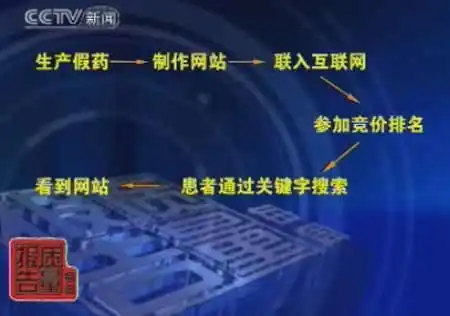
But this didn't kill the business. It just set the rules, turning it from a gray market activity into a legitimate business. The Putian system still buys rankings, but now there's a small label next to the result: "Ad."

But even with the label, people who would click still click.

The fundamental problem with search engines was never whether they were labeled, but that users inherently trust the top results.

Now people have moved from search engines to AI, thinking AI is more objective and can't be polluted by paid rankings. But whoever controls the gateway to information distribution can sell rankings.

The gateway has changed, SEO has changed a letter to become GEO, but the logic of selling rankings hasn't changed one bit.

What has changed is the price.

GEO, Loved by the Capital Market

Businesses that can't be killed are the ones the capital market loves most.

In September 2025, BlueFocus, China's largest marketing communication company, invested tens of millions of yuan in a GEO company called PureblueAI Qinglan.

Qinglan helps real brands optimize their ranking and recommendation rate in AI search results. Clients include Ant Group, Tencent Cloud, and Volvo.

The products are real, the company is real, and their work involves helping AI understand brand information more accurately.

This is completely different from the AI poisoning exposed by 315 involving Liqing. Liqing fabricated products, parameters, and used false information to deceive AI; Qinglan uses real brand content to adapt to AI's recommendation logic.

But from AI's perspective, the technical path for both things is the same: both involve publishing content online for AI to crawl.

AI can't distinguish between marketing and fabrication. This is the most ambiguous aspect of the GEO business.

When BlueFocus invested in Qinglan, GEO was just an industry term within marketing circles. Three months later, it became a stock market concept.

At the end of December 2025, BlueFocus's stock price hit the daily limit up.

Brokerages began holding intensive conference calls to interpret GEO, with research reports defining it as "the next generation traffic entrance in the AI era." Capital flooded in, not only buying BlueFocus but also driving up stocks of any company related to digital marketing and AI concepts. BlueFocus rose 132% in 9 trading days, and a batch of follower concept stocks also doubled.
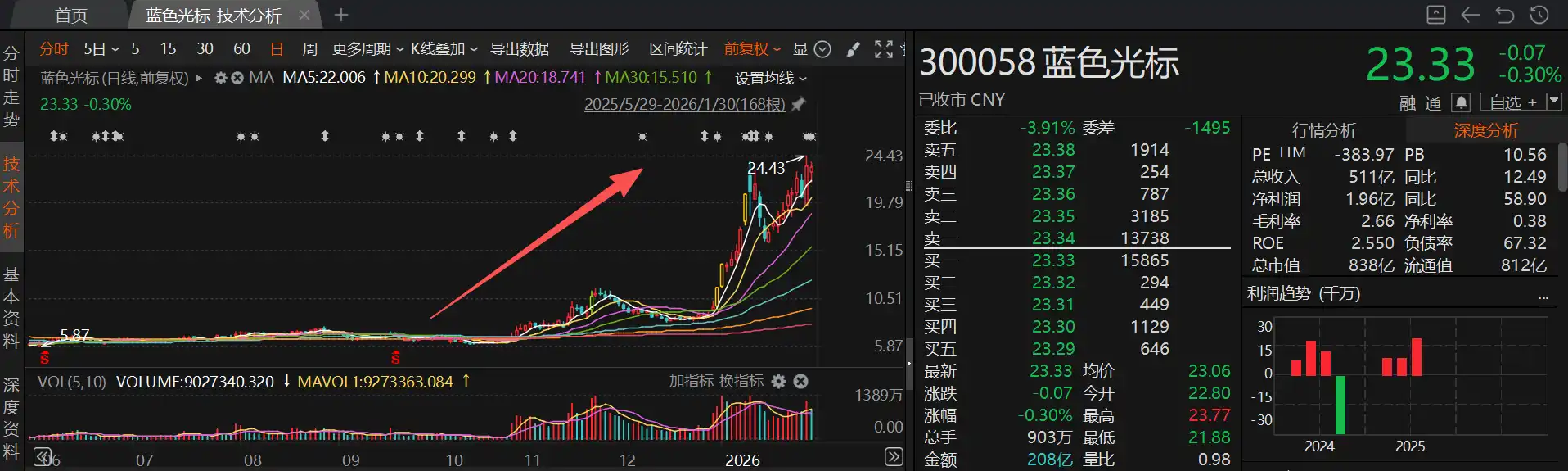
Image source: Cailian Press

After the surge, these companies issued risk warnings:

GEO business has no revenue and has no significant impact on the company's operations. BlueFocus also admitted that AI-driven revenue accounts for a very small proportion of overall revenue.

The implication is that while the stock price more than doubled, the GEO business itself hasn't made much money yet.

At the end of January, BlueFocus's stock price rose from 9.6 yuan to 23.3 yuan, a 143% increase in a month. Right then, Chairman Zhao Wenquan announced a plan to sell up to 20 million shares. Based on the stock price at the time, this would cash out approximately 467 million yuan.

Public research reports show that last year, the entire domestic GEO industry's market size was about 2.9 billion yuan. The increase in market capitalization of BlueFocus's stock alone in one month far exceeded this number.

315 exposed Liqing system's AI poisoning, costing a few hundred yuan. But the GEO concept made a round in the A-share market, earning billions.

Whether it's poisoning or not is debatable, but the money made is real.

315 Calls it Poisoning, Silicon Valley Calls it Commercialization

In January this year, OpenAI announced on its official blog: ChatGPT will start selling ads.

Free users and $8-per-month Go users will see ads; paid subscription premium users are unaffected.

On February 9th, ads officially launched. Some ads appear at the bottom of ChatGPT's answers, marked with a small word: Sponsored. The first batch of advertisers includes Ford, Adobe, Target, Best Buy...

You ask ChatGPT what car is good to buy, it gives you an answer, and below the answer hangs a sponsored link from Ford.

OpenAI made it clear: ads will not influence the content of ChatGPT's answers. The answer is the answer, the ad is the ad, they are separate.

Does that sound familiar?

Baidu said the same thing back in the day. Paid ranking is paid ranking, organic search is organic search, they are separate. Later, the top five search results were all ads.

OpenAI expects ads to help it double its consumer-side annual revenue to $17 billion. ChatGPT has over 800 million weekly active users, 95% of whom are free users, all potential audiences for ads.
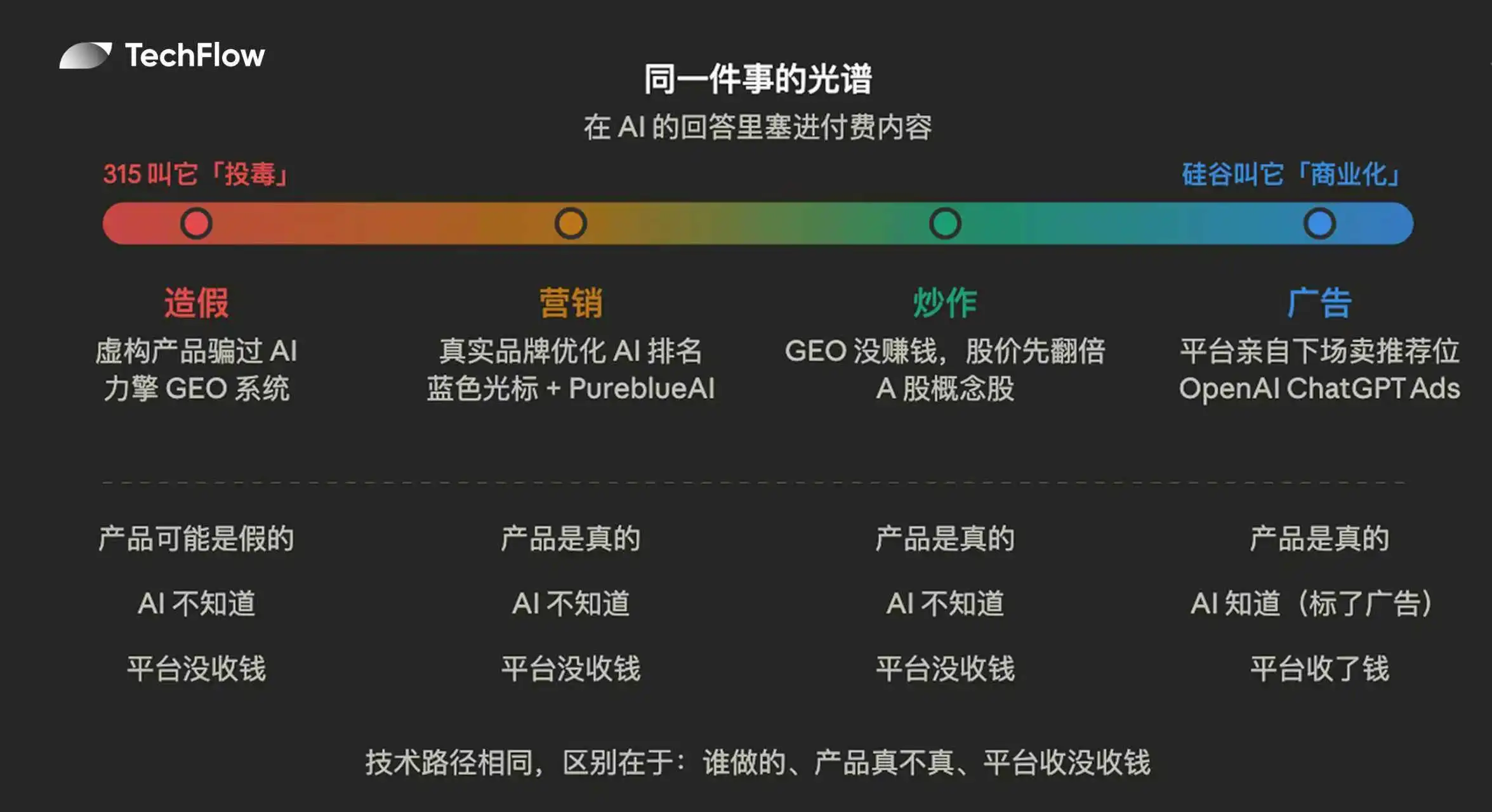
Looking back now at the industrial chain exposed by 315: Liqing floods AI with soft articles, making AI recommend non-existent products. OpenAI places sponsored content below the AI's answers, making AI recommend products that paid.

One didn't notify the platform, it's poisoning. One signed a contract with the platform, it's commercialization.

For the user, what's the difference?

One is inside the answer, one is below the answer. One has no label, one has a label saying "Ad".

315 caught Liqing for a few hundred yuan, A-shares hyped the GEO concept for billions, OpenAI plans to make $17 billion a year from this.

The same thing, its nature changes from poisoning to commercialization, and the price increases tens of thousands of times.

In November 2023, researchers from the Indian Institute of Technology Delhi and Princeton University published a paper on arXiv titled "GEO: Generative Engine Optimization".

This was the first formal academic definition of this concept.

From the paper's publication to the 315 exposure, just over two years. In between, it went through gray market activities, financing, concept stock surges, chairman cashing out, AI platforms personally entering to sell ads...

The path SEO took twenty years ago, GEO completed in two years.

The difference is, back then it took several years to learn not to fully trust search engine results; now AI is still in its trust红利期 (trust bonus period), most people haven't realized yet that AI's answers can also be bought.

However, this红利期 might not last too long. Next time you ask AI what's worth buying, remember to think for an extra second:

The answer can be free, but the brain cannot be outsourced.

Tiền kỹ thuật số thịnh hành

Câu hỏi Liên quan

QWhat is GEO (Generative Engine Optimization) as described in the article?

AGEO (Generative Engine Optimization) is a practice where brands pay to have AI systems prioritize and recommend their products or services. It involves publishing promotional soft articles online, which AI models then crawl and treat as authentic information, leading to biased recommendations for users.

QHow did the CCTV 315 exposure demonstrate the potential harm of GEO?

AThe CCTV 315 exposure demonstrated GEO's harm by showing how a fictional smart bracelet with absurd features, like 'quantum entanglement sensing,' was promoted using the 'Liqing GEO' software. Within two hours, major AI models in China recommended this non-existent product, highlighting how easily AI can be misled by manipulated content.

QWhat historical precedent does the article draw between GEO and SEO?

AThe article draws a parallel between GEO and SEO (Search Engine Optimization), noting that SEO allowed businesses, like Putian-based hospitals in China, to pay for top search rankings on platforms like Baidu. This often led to unqualified or fraudulent services being promoted, similar to how GEO now manipulates AI recommendations.

QHow did the GEO concept impact the stock market, particularly for companies like BlueFocus?

AThe GEO concept caused a significant stock market surge, with BlueFocus's stock price rising 132% in nine days after investing in a GEO company. This sparked a broader rally in AI and digital marketing stocks, even though many companies admitted GEO had minimal actual revenue impact, leading to substantial market speculation and insider selling.

QWhat is the key difference between the GEO 'poisoning' exposed by CCTV and OpenAI's approach to advertising in ChatGPT?

AThe key difference is legitimacy: GEO 'poisoning' involves third parties secretly feeding AI with fake content to manipulate recommendations, while OpenAI's advertising is a transparent, platform-sanctioned商业化 (commercialization) where sponsored content is clearly marked and separated from AI responses, though both aim to influence user choices through paid promotion.

Nội dung Liên quan

Tại sao Bitcoin duy trì mức 64.000 USD sau lần tạm dừng cứng rắn của Fed

Bitcoin duy trì quanh mức 64.000 USD sau cuộc họp của Fed. Dù Fed giữ lãi suất trong khoảng 3,50–3,75%, ba thành viên ủy ban đã bỏ phiếu ủng hộ tăng lãi suất, gửi đi tín hiệu chính sách thắt chặt hơn dự kiến. Bitcoin phản ứng biến động nhưng cuối cùng ổn định quanh 64.000 USD, với vùng hỗ trợ 63.000–63.500 USD và kháng cự ở 66.000 USD. ETF Bitcoin ghi nhận dòng vốn ròng chảy vào 32,1 triệu USD, chấm dứt chuỗi rút tiền, trong khi ETF Ethereum tiếp tục thất thoát 18,65 triệu USD. Điều này cho thấy sự luân chuyển vốn sang Bitcoin giữa bối cảnh bất ổn vĩ mô. Ethereum giao dịch quanh 1.900 USD, áp lực bán tăng nhưng mạng lưới vẫn mạnh với lượng ETH chờ staking cao. Các altcoin khác di chuyển không đồng nhất. Về pháp lý, dự luật CLARITY Act bị trì hoãn đến sau kỳ nghỉ tháng 8 của Thượng viện Mỹ, khiến thị trường thận trọng hơn về khả năng thông qua vào năm 2026. Tóm lại, thị trường tiền mã hóa đang trong trạng thái chờ đợi, với Bitcoin thể hiện sự kiên cường nhờ dòng vốn ETF. Các nhà đầu tư trung hạn cần theo dõi khả năng giữ trên 63.000 USD của Bitcoin, mức 1.860 USD của Ethereum và dòng vốn thể chế để tìm tín hiệu cho sự phục hồi trong nửa cuối năm 2026.

cryptonews.ru1 giờ trước

Tại sao Bitcoin duy trì mức 64.000 USD sau lần tạm dừng cứng rắn của Fed

cryptonews.ru1 giờ trước

Parker Lewis Lý Giải Tại Sao Bitcoin Vẫn Là Đồng Tiền Tốt Nhất

Nhà phân tích Bitcoin uy tín Parker Lewis chỉ trích mạnh mẽ các chiến lược tiếp thị của các công ty tự xưng là kho bạc tiền mã hóa. Ông cho rằng việc các công ty này huy động vốn thông qua việc bán "tín dụng số" dưới dạng cổ phiếu ưu đãi vĩnh viễn đã làm sai lệch bản chất của tiền mã hóa đầu tiên. Lewis nhấn mạnh Bitcoin không có lợi suất định sẵn, và việc hứa hẹn cổ tức thường xuyên là một trò chơi rủi ro cao, dựa chủ yếu vào việc thu hút nhà đầu tư mới trên thị trường tăng trưởng. Ông dẫn chứng sự chênh lệch lớn giữa thị trường tín dụng toàn cầu (300 nghìn tỷ USD) và thị trường cổ phiếu ưu đãi vĩnh viễn (1 nghìn tỷ USD) để chứng minh rủi ro của các công cụ phái sinh này, thường được chuyển cho các nhà đầu tư nhỏ lẻ. Lewis bác bỏ quan điểm cho rằng Bitcoin quá biến động, lập luận rằng biến động là hệ quả tự nhiên của việc chấp nhận một loại tài sản mới. Với nguồn cung cứng và không co giãn, mỗi làn sóng người dùng mới sẽ dẫn đến biến động giá mạnh. Thay vì mua cổ phiếu phái sinh của các công ty như MicroStrategy, ông khuyên nên mua Bitcoin trực tiếp, vì điều này an toàn hơn về mặt toán học so với việc giao tiền cho các nhà quản lý tập đoàn. Việc chuyển hướng sang các công cụ phái sinh làm mất tập trung vào mối đe dọa thực sự: sự mất giá nhanh chóng của tiền pháp định. Lewis đưa ra "Chỉ số thịt bò" của riêng mình, cho thấy mức lạm phát tiêu dùng thực tế khoảng 12-13% mỗi năm, cao hơn nhiều so với số liệu chính thức. Ông kết luận rằng chiến lược tài chính an toàn và hiệu quả nhất trong bối cảnh lạm phát toàn cầu là sở hữu trực tiếp Bitcoin và tự kiểm soát khóa riêng tư, thay vì theo đuổi lợi nhuận đầy rủi ro từ cổ phiếu kho bạc tiền mã hóa.

cryptonews.ru1 giờ trước

Parker Lewis Lý Giải Tại Sao Bitcoin Vẫn Là Đồng Tiền Tốt Nhất

cryptonews.ru1 giờ trước

Bắt giữ các thành viên trong âm mưu lừa đảo với XRP, chiếm đoạt 9 triệu đô la từ 71 nhà đầu tư

Vào ngày 30/7, Cảnh sát Thủ đô Seoul thông báo đã bắt giữ ba nghi phạm trong một vụ lừa đảo đầu tư liên quan đến tiền điện tử XRP. Nhóm này bị cáo buộc vận hành nền tảng đầu tư gian lận Fxrpntwork.com, thu hút 71 nhà đầu tư chuyển khoảng 3,4 triệu đô la XRP trong một tuần (từ 16-23/10) trước khi đóng cửa trang web và biến mất. Các nghi phạm quảng bá trang web thông qua blog, bài báo trực tuyến và video YouTube, hứa hẹn bảo toàn vốn gốc và lợi nhuận hàng tháng từ 1,5% đến 1,8%. Họ hướng dẫn nạn nhân chuyển XRP từ các sàn giao dịch Hàn Quốc qua nền tảng nước ngoài rồi vào ví do nhóm kiểm soát. Cảnh sát Seoul cảnh báo các nhà đầu tư cần kiểm tra kỹ nguồn thông tin chính thức trước khi chuyển tiền. Các đối tượng đã sao chép thương hiệu của Flare Network và FXRP để tạo vẻ ngoài hợp pháp. Ripple và Interpol cảnh báo đây là thủ đoạn phổ biến, với các mạng lưới tội phạm xuyên quốc gia ngày càng có tổ chức. Việc hứa hẹn lợi nhuận đảm bảo vẫn là dấu hiệu phổ biến của lừa đảo tiền điện tử. Hai nghi phạm 29 tuổi đã bị bắt, một người 34 tuổi khác bị đề nghị truy tố, và một nghi phạm 29 tuổi khác đang bị truy nã ở nước ngoài với thông báo đỏ của Interpol. Cảnh sát cũng đã phong tỏa tài sản ảo trị giá 17,3 tỷ won và đang điều tra các chuyển khoản liên quan trị giá 27,3 tỷ won để xác định thêm nạn nhân và đồng phạm.

cryptonews.ru1 giờ trước

Bắt giữ các thành viên trong âm mưu lừa đảo với XRP, chiếm đoạt 9 triệu đô la từ 71 nhà đầu tư

cryptonews.ru1 giờ trước

Giao dịch

Giao ngay

Bài viết Nổi bật

Làm thế nào để Mua NIGHT

Chào mừng bạn đến với HTX.com! Chúng tôi đã làm cho mua Midnight (NIGHT) trở nên đơn giản và thuận tiện. Làm theo hướng dẫn từng bước của chúng tôi để bắt đầu hành trình tiền kỹ thuật số của bạn.Bước 1: Tạo Tài khoản HTX của BạnSử dụng email hoặc số điện thoại của bạn để đăng ký tài khoản miễn phí trên HTX. Trải nghiệm hành trình đăng ký không rắc rối và mở khóa tất cả tính năng. Nhận Tài khoản của tôiBước 2: Truy cập Mua Crypto và Chọn Phương thức Thanh toán của BạnThẻ Tín dụng/Ghi nợ: Sử dụng Visa hoặc Mastercard của bạn để mua Midnight (NIGHT) ngay lập tức.Số dư: Sử dụng tiền từ số dư tài khoản HTX của bạn để giao dịch liền mạch.Bên thứ ba: Chúng tôi đã thêm những phương thức thanh toán phổ biến như Google Pay và Apple Pay để nâng cao sự tiện lợi.P2P: Giao dịch trực tiếp với người dùng khác trên HTX.Thị trường mua bán phi tập trung (OTC): Chúng tôi cung cấp những dịch vụ được thiết kế riêng và tỷ giá hối đoái cạnh tranh cho nhà giao dịch.Bước 3: Lưu trữ Midnight (NIGHT) của BạnSau khi mua Midnight (NIGHT), lưu trữ trong tài khoản HTX của bạn. Ngoài ra, bạn có thể gửi đi nơi khác qua chuyển khoản blockchain hoặc sử dụng để giao dịch những tiền kỹ thuật số khác.Bước 4: Giao dịch Midnight (NIGHT)Giao dịch Midnight (NIGHT) dễ dàng trên thị trường giao ngay của HTX. Chỉ cần truy cập vào tài khoản của bạn, chọn cặp giao dịch, thực hiện giao dịch và theo dõi trong thời gian thực. Chúng tôi cung cấp trải nghiệm thân thiện với người dùng cho cả người mới bắt đầu và người giao dịch dày dạn kinh nghiệm.

Tổng lượt xem 519Xuất bản vào 2025.12.08Cập nhật vào 2026.06.02

Làm thế nào để Mua NIGHT

Thảo luận

Chào mừng đến với Cộng đồng HTX. Tại đây, bạn có thể được thông báo về những phát triển nền tảng mới nhất và có quyền truy cập vào thông tin chuyên sâu về thị trường. Ý kiến ​​của người dùng về giá của NIGHT (NIGHT) được trình bày dưới đây.

活动图片













