With the US, Asia and MENA accelerating, Switzerland must balance stability and innovation or risk fading in the global fintech race.
Last week crypto and Web3’s most influential figures gathered at the CV Summit in Zurich, Switzerland. At the summit, known as Switzerland’s most reputable fintech event, a variety of important topics were addressed, but perhaps none more critical than the “the Valley of Crypto” potentially “on the brink of losing its status as a global Web3 hub.” The stark warning comes from Ilya Volkov, CEO and co-founder of YouHodler, who also serves as a board member of Switzerland’s Crypto Valley Association.
With Asia’s Token2049 in Singapore happening now and Dubai’s rapid rise, a global shift is taking shape. Will Switzerland continue to innovate and dominate, or will other regions take the reins as the new global crypto hub?
Switzerland’s Crypto Valley: How It Became The Global Web3 Hub
Switzerland’s Crypto Valley emerged in the mid-2010s as one of the world’s first purpose-built hubs for blockchain and digital asset innovation. Centered in Zug, it quickly earned the nickname “Crypto Valley” by combining Switzerland’s reputation for financial stability with its signature open regulatory attitude.
From its inception in 2015 to 2021, regulators were heavily involved in shaping the ecosystem. As Dr. Mattia Rattaggi and Hans Kuhn reflected during the CV Summit panel, Switzerland struck a delicate balance in those formative years. Bold experimentation was encouraged while paying close attention to governance was paramount to avoid unacceptable risk. This combination of pragmatism and foresight gave Crypto Valley credibility at a time when most jurisdictions were still hesitant to engage with cryptocurrencies.

Today, that credibility is reinforced by Switzerland’s dense network of industry associations. Jérôme Bailly of the Crypto Valley Association (CVA) and Adriano Bertini of the Bitcoin Association Switzerland (BAS) both underlined how the Valley thrives not just on companies, but on cooperation between associations.
The benefits of belonging to the Valley extend well beyond branding. Companies gain access to a globally recognized ecosystem that signals credibility to investors, partners, and regulators. This fosters knowledge-sharing, talent recruitment, and capital flows that would be difficult to replicate elsewhere. For founders and innovators, being part of Crypto Valley meant instant legitimacy and a platform that connects them to the broader global conversation.
Yet, while Zug and Switzerland pioneered this model, other regions are now racing to replicate and surpass it. Singapore and Hong Kong have positioned themselves as gateways to Asia’s massive digital economy, while Dubai and Abu Dhabi have leveraged capital inflows and regulatory agility to attract global talent. The very ecosystem that once made Switzerland unique has inspired challengers abroad—forcing Crypto Valley to ask whether it can still stay ahead in the race for global Web3 dominance.
The Global Web3 Race: Competing Crypto Hubs Emerge
From Washington to Zug, from Singapore to Dubai, global hubs are vying to set the rules, attract talent, and capture capital flows. Each region brings its own distinct strengths—and its own vulnerabilities. The question is no longer who is in the game, but who will lead it.
United States: The Incumbent Power
The United States remains the world’s financial heavyweight, backed by deep capital markets and the supremacy of its tech giants. Names like VISA, Mastercard, Google, Coinbase, Kraken, and OpenAI aptly illustrate the breadth of American influence across both finance and digital innovation.
Yet, despite this strength, the US suffers from several challenges and hurdles. Regulatory uncertainty and the aggressive posture of agencies like the SEC have created an environment where innovation often feels under siege. High-profile lawsuits and uneven enforcement have left entrepreneurs questioning whether the US truly offers a safe home for Web3 projects.
As Hans Kuhn noted during the CV Summit, the central question lingers: Is the highly welcome shift of US policy in crypto matters really long-term, or will this policy be rolled back by the next administration?
European Union & Switzerland: At a Crossroads
The situation across Europe is quite different than in the US. Switzerland, long celebrated for its financial strength and as an early pioneer in crypto regulation, now faces the risk of stagnation. Industry experts, including CVA Board Member Ilya Volkov, openly question whether the country has become “a victim of its own success.”
Meanwhile, the European Union has moved forward with its Markets in Crypto-Assets (MiCA) framework. To some, MiCA represents a potential blueprint for regulatory clarity. To others, including Adriano Bertini and Mattia Rattaggi, it risks suffocating innovation before it scales.
“MiCA does not seem to have been drafted with consumer protection, and small businesses in mind,” explained Adriano Bertini. “It seems instead to dramatically raise entry barriers and costs for small ventures to the benefit of large incumbent financial institutions. Thus increasing centralisation and systemic risk in the European crypto market,” he added.
“While I commend the attempt of the E.U. to create a workable framework for entities operating in crypto markets, the regulation lacks clarity and technical depth in critical aspects, with some key definitions being too broad (e.g. crypto custodian). The result is a regulation that penalises new ventures in Europe, and their abilities to thrive in an industry that is globally ever growing in size and scope. We look forward to European regulators engaging industry experts to improve the regulatory framework and build more sensible regulation more aligned with the needs of consumers and the market as a whole,” Bertini concluded.
“When I read the first proposals back in 2020 it appeared to me that the nature and extent of the proposed requirements raised an issue of adequacy vis-à-vis the reality of an industry that was and still is to a larger extent constituted by projects and micro firms, and not by SMEs able to tackle the requirements.” Mattia Rattaggi added.
Asia: Momentum Continues to Build
While the West wrestles with figuring out regulation, Asia is capitalizing on clarity and ambition. Singapore and Hong Kong have emerged as leading gateways into the region’s digital economy, while Thailand and Vietnam are quietly building grassroots adoption at scale.
The ongoing Token2049 conference in Singapore underscores Asia’s momentum, rivaling the scale of leading Western events and attracting global investors, builders, and policymakers. As Jérôme Bailly observed, the region benefits from three critical advantages: government support, regulatory certainty, and a population primed for rapid digital adoption. Together, these factors make Asia one of the most formidable challengers to Switzerland’s early lead.
MENA: The Dark Horse Challenger
While Asia grabs headlines, the Middle East and North Africa (MENA) region is rapidly positioning itself as a global contender. Cities like Dubai, Abu Dhabi, Riyadh, and Manama (Bahrain) are competing aggressively to attract fintech talent, capital, and infrastructure.
Ilya Volkov highlighted the region’s “huge and rapid growth” as a sign that MENA should not be dismissed. With vast capital reserves and a strategic geographic position bridging East and West, the Gulf states are well placed to play a central role in the next phase of Web3 development.
Addressing Switzerland’s Challenges
Despite its role as a Web3 pioneer, Switzerland now finds itself at a critical crossroads. The anxiety within the industry was captured in the 12-point manifesto published in May by CVA, BAS, and SBF—a collective call for policymakers to restore the country’s balance between stability and innovation. The message was clear: Switzerland risks slipping from leadership if it overregulates while ignoring the broader need to foster sustained growth.
As experts stated during the session: “We drifted into micromanagement of small risks. We have to restore the balance—few strong rules for management of big risks, and freedom to innovate by taking on small ones,”. This cautionary tale resonates with founders and investors who fear that excessive oversight will choke off necessary experimentation.
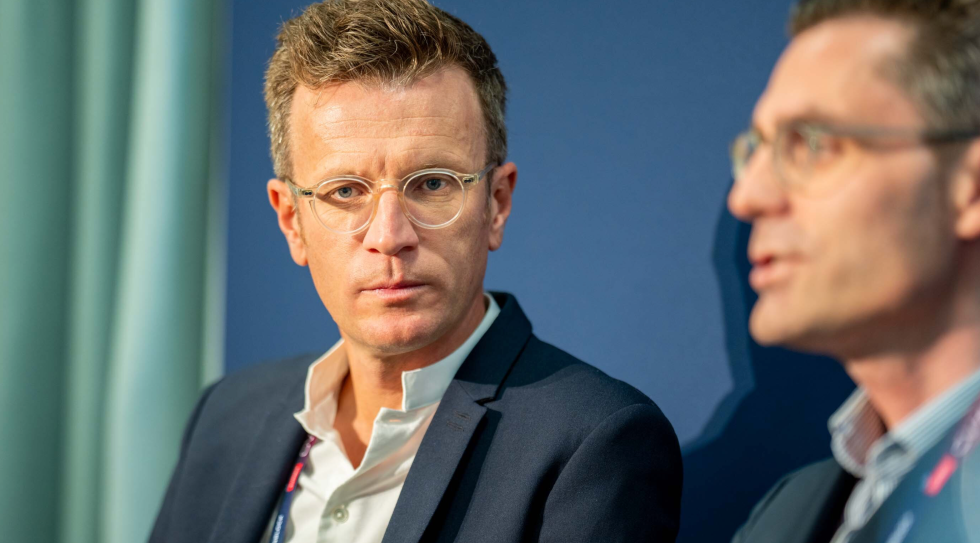
Stablecoins and central bank digital currencies (CBDCs) represent another area of contention. As Hans Kuhn and Adriano Bertini noted, Switzerland faces a choice between maintaining its pragmatic, market-led model or aligning with more rigid global approaches. Too much divergence could isolate the country, but too much similarity could dilute its competitive edge.
Here, associations like CVA, BAS, and SBF play a crucial role: setting principles and advocating for sensible regulation while ensuring the creative energy of the ecosystem is not stifled. Their ability to maintain this balance will determine whether Crypto Valley remains a beacon or becomes a relic.
Looking Ahead: What’s Next for Crypto Valley?
What will Crypto Valley become over the next 15 years? Mattia Rattaggi suggested that the very term “Crypto Valley” might soon feel too narrow, as blockchain, Web3, and AI converge into a broader technology ecosystem. The Valley’s strength lies not in a single industry label, but in its ability to evolve alongside innovation.
Hans Kuhn pointed to Switzerland’s banking sector as both an anchor and a test. Can it embrace digital assets as a complement to its legacy strengths, or will it remain a drag on innovation?
Adriano Bertini and Jérôme Bailly emphasized that the future is not just blockchain, but the integration of Web3 with emerging technologies like AI coupled with improvements in cryptography research that provide privacy enhancing tools to the benefit of consumers. This unique convergence could provide Switzerland with a new edge.
“Switzerland’s strengths, stability and trust, built over centuries—are our edge,” Jerome Bailly stated. “Keep a few strong rules for the big risks and stop micromanaging the small ones. Say ‘yes’ to responsible innovation with clear rules, bank participation at scale, and the courage to ship,” he added.
Conclusion
The Crypto Valley Summit left participants with a sobering question, posed by Ilya Volkov: Can Switzerland keep its Web3 crown?
Asia and MENA’s rise deserves respect rather than rejection. Their rapid growth reflects ambition, clarity, talent and capital flows that cannot be ignored. “But Switzerland has to understand its unique role—offering credibility, neutrality, and a legacy of financial trust,” said Ilya Volkov.
The global race for fintech dominance is no longer a debate—it is a reality. Switzerland must decide whether to lead, follow, or be left behind.

Related Posts