XRP–ISO 20022 Narrative Is A ‘Complete Charade,’ Warns Ex-Ripple Developer

bitcoinistXuất bản vào 2025-08-13Cập nhật gần nhất vào 2025-08-13

Tóm tắt

A fresh flare-up over XRP’s oft-repeated “ISO 20022 compliance” claim is forcing a basic but consequential distinction back into view:...

Trusted Editorial content, reviewed by leading industry experts and seasoned editors. Ad Disclosure

A fresh flare-up over XRP’s oft-repeated “ISO 20022 compliance” claim is forcing a basic but consequential distinction back into view: Ripple, the private company that builds enterprise payment software, is not the XRP Ledger, the open, decentralized network that settles XRP transactions. The latest round was ignited by investor Jake Claver, who asserted that “before any other cryptocurrency, XRP prioritized… ISO 20022 compliance,” adding that “the network processes more than $434 billion in transactions every day,” and casting ISO 20022 as the bridge that will let Ripple “tokenize and transfer massive volumes of assets” across banking rails. Claver’s post went viral. It also drew a categorical rebuttal from Matt Hamilton, Ripple’s former Director of Developer Relations.

XRP–ISO 20022 Claims Debunked

Hamilton did not mince words. “XRP did not prioritise ISO20022 whatsoever. There is literally nothing in the XRP Ledger codebase or network that has anything at all to do with ISO20022. It has been entirely a charade perpetuated by scammers like yourself,” he wrote on August 12. The stark phrasing reprises a line he has taken for years against the meme of “ISO-compliant coins,” arguing that ISO 20022 is a financial messaging standard used by institutions—not a property a token can possess.

The pushback did not stop there. After another account claimed that “to be able to initiate [ISO 20022], [cryptocurrencies] need to have an API and only selected few have that API ready,” Hamilton agreed with the premise about messaging but drew the same boundary line: “Correct. And the XRP Ledger does not have that API.” When a separate user argued that Ripple is a member of the ISO 20022 standards community and uses the format on RippleNet, “primarily for ODL,” Hamilton replied that such interoperability belongs to Ripple’s software stack, not to the ledger itself: “RippleNet can work with ISO20022 compliant messages. But the XRP Ledger has no such functionality.”

Claver subsequently acknowledged that “the post should have said ‘Ripple’ in the first sentence,” accepting the core correction while defending the broader thesis that ISO 20022-aligned infrastructure can funnel value into crypto settlement layers. Hamilton wasn’t persuaded: “Replace ‘XRP’ with ‘Ripple’ and the tweet makes even less sense,” he countered, objecting to the leap from enterprise messaging alignment to claims about tokenization and XRP’s role by default.

Underneath the social-media heat is a definitional point the industry has struggled to communicate. ISO 20022 is an international methodology and data dictionary for financial messages—think payments, securities, trade, FX—that enables richer, structured, machine-readable payloads across banks and market infrastructures. It standardizes how messages are modeled and carried, not how value is represented on a blockchain. That is why standards bodies and market infrastructures—SWIFT for cross-border payments, central banks for high-value domestic rails—speak about ISO 20022 in terms of message schemas, migration timelines, and coexistence windows, not tokens.

That context also explains why Ripple’s corporate announcements reference ISO 20022 at the network-integration layer. Ripple joined the ISO 20022 Registration Management Group in 2020, billing itself as the first DLT-focused participant and positioning RippleNet’s single API and data model to interoperate with banks’ ISO-native flows. None of that turns  the asset into an “ISO-compliant coin,” because compliance, in this domain, attaches to message formats, systems integration, and operational processes.

None of this means XRP cannot be used in workflows that originate from ISO 20022-formatted instructions. Hamilton himself has repeatedly said anyone can make payments on the ledger, and that RippleNet can translate ISO 20022 messages into whatever internal calls are needed to orchestrate settlement, including ODL-style flows that source and settle liquidity with the token. What he objects to is the rhetorical shortcut that collapses corporate messaging compliance into token-level attributes, particularly when it is leveraged to imply privileged regulatory status or inevitable valuation upside.

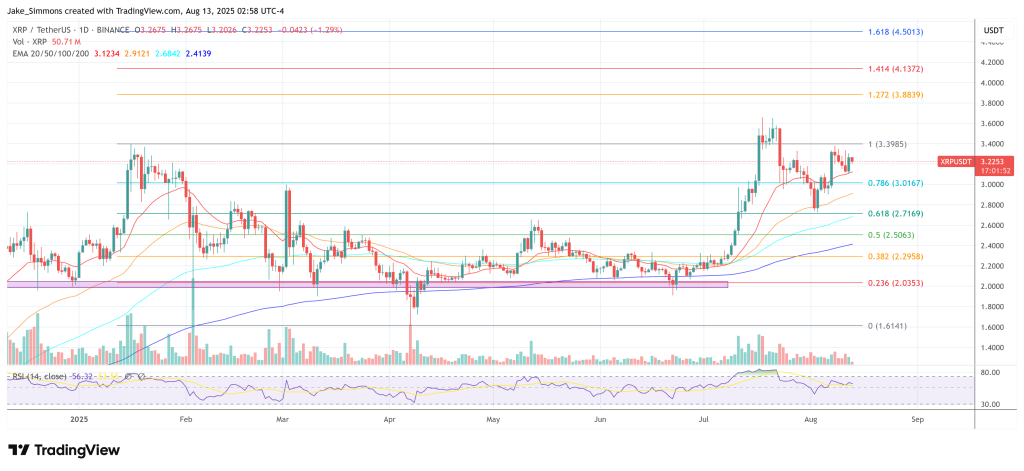
At press time, XRP traded at $3.22.
XRP price
XRP bounces from the EMA20, 1-day chart | Source: XRPUSDT on TradingView.com
Featured image created with DALL.E, chart from TradingView.com
Editorial Process for bitcoinist is centered on delivering thoroughly researched, accurate, and unbiased content. We uphold strict sourcing standards, and each page undergoes diligent review by our team of top technology experts and seasoned editors. This process ensures the integrity, relevance, and value of our content for our readers.

Jake Simmons has been a Bitcoin enthusiast since 2016. Ever since he heard about Bitcoin, he has been studying the topic every day and trying to share his knowledge with others. His goal is to contribute to Bitcoin's financial revolution, which will replace the fiat money system. Besides BTC and crypto, Jake studied Business Informatics at a university. After graduation in 2017, he has been working in the blockchain and crypto sector. You can follow Jake on Twitter at @realJakeSimmons.

Nội dung Liên quan

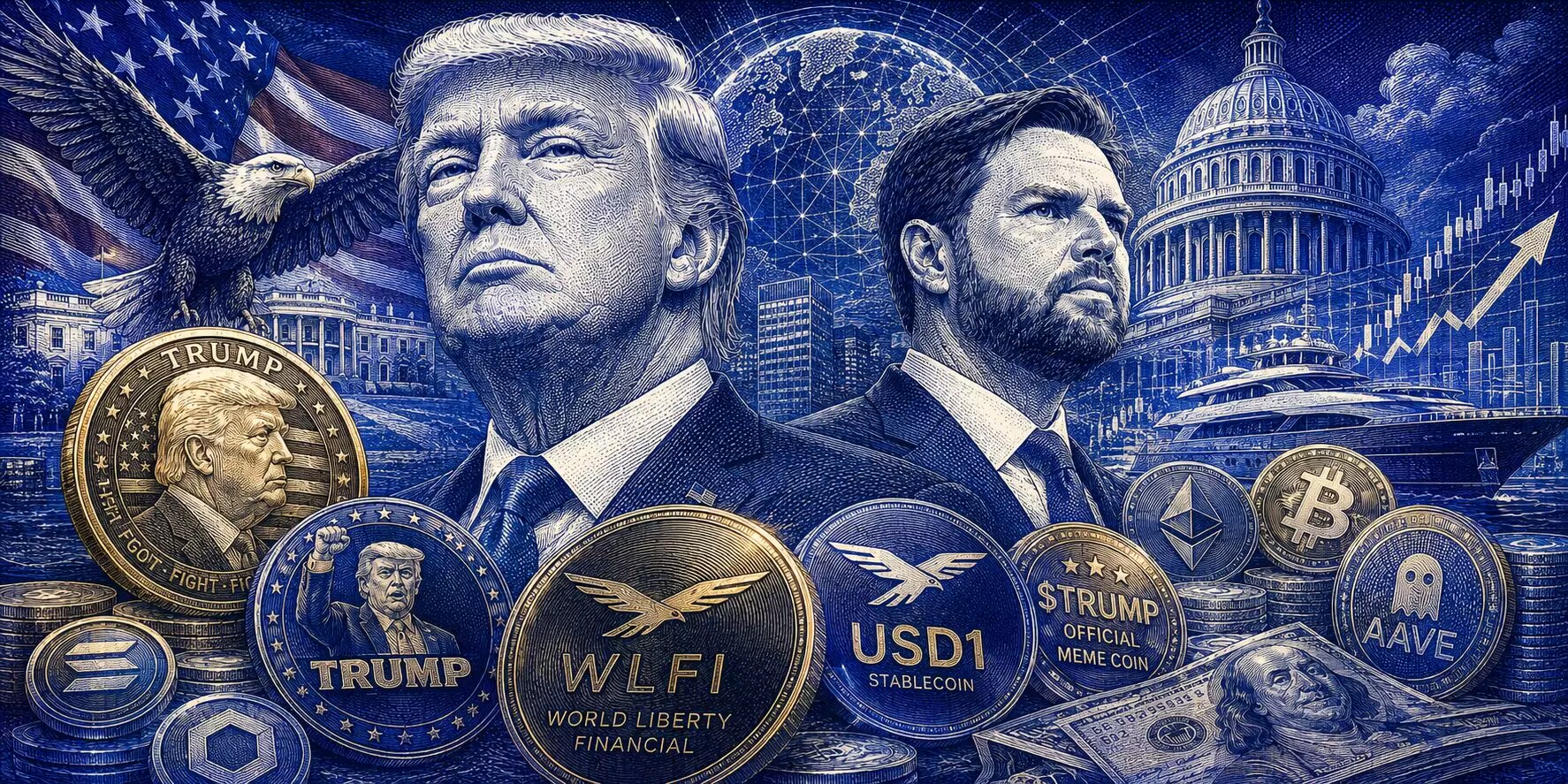
Báo cáo tài chính 25 năm của Trump: Gia đình thu hơn 1 tỷ USD mỗi năm từ tiền điện tử, trong khi các nhà đầu tư nhỏ lẻ vẫn thua lỗ trên $TRUMP

Theo báo cáo tiết lộ tài chính năm 2025, các doanh nghiệp crypto liên quan đến gia đình cựu Tổng thống Trump đã thu về gần 12 tỷ USD, vượt xa nhiều danh mục bất động sản lâu năm. Nguồn thu chính đến từ hai nơi: World Liberty Financial kiếm được hơn 5 tỷ USD từ việc bán token quản trị và các sản phẩm mới, trong khi CIC Digital thu khoảng 6.35 tỷ USD tiền bản quyền từ meme coin $TRUMP. Tuy nhiên, trong khi Trump thu lợi lớn, nhiều nhà đầu tư nhỏ lẻ phải chịu thua lỗ. Giá token $TRUMP đã giảm từ mức đỉnh 74 USD xuống còn 1.68 USD, và token của World Liberty Financial cũng mất khoảng 80% giá trị kể từ khi giao dịch. Sự trỗi dậy của mảng kinh doanh crypto này diễn ra trong bối cảnh chính quyền Trump nới lỏng các quy định đối với ngành công nghiệp tiền số. Báo cáo cũng làm dấy lên các câu hỏi về xung đột lợi ích tiềm tàng, liên quan đến hàng loạt dự án bất động sản ở nước ngoài mang lại hàng triệu USD phí cho Trump khi ông tại nhiệm. Dù Nhà Trắng phủ nhận mọi xung đột, các giao dịch này vẫn tiếp tục được giám sát chặt chẽ.

marsbit44 phút trước

Báo cáo tài chính 25 năm của Trump: Gia đình thu hơn 1 tỷ USD mỗi năm từ tiền điện tử, trong khi các nhà đầu tư nhỏ lẻ vẫn thua lỗ trên $TRUMP

marsbit44 phút trước

Từ 'Phân cụm địa chỉ' đến 'Tiêu chuẩn bằng chứng': Tại sao Chainalysis muốn định nghĩa lại việc truy vết blockchain?

Vào cuối tháng 6 năm 2026, Chainalysis đã công bố một khung dữ liệu mang tên "Blockchain Tracing Ontology", nhằm thiết lập một hệ thống mô tả dữ liệu thống nhất hơn cho phân tích blockchain. Không giống như một thuật toán mới, đề xuất này tập trung vào việc tạo ra một "ngôn ngữ chung" để chuẩn hóa cách biểu đạt kết quả phân tích, giúp quá trình này minh bạch, có thể kiểm chứng và tái lập hơn. Vấn đề lâu nay là các công ty phân tích khác nhau thường đưa ra kết quả khác nhau cho cùng một địa chỉ do thiếu tiêu chuẩn chung, đặc biệt gây tranh cãi trong điều tra tư pháp hay chống rửa tiền. Chainalysis đề xuất chuyển từ mô hình "Cluster" (cụm địa chỉ) đơn giản sang cấu trúc phân lớp chi tiết hơn: Entity (thực thể) -> Wallet (ví) -> Wallet Segment (phân đoạn ví) -> Address (địa chỉ). Điều này phản ánh chính xác hơn cách quản lý ví phức tạp của các tổ chức lớn. Quan trọng hơn, Ontology nhấn mạnh vào tính minh bạch của quá trình suy luận, không chỉ kết quả cuối cùng. Mỗi kết luận cần đi kèm bằng chứng (Evidence) cụ thể (mẫu giao dịch, thông tin công khai...) và mức độ tin cậy (Confidence), giải thích rõ "tại sao" lại có nhận định đó. Cách tiếp cận này đáp ứng tốt hơn yêu cầu về tính có thể kiểm chứng của bằng chứng tư pháp, như đã thấy trong vụ án Bitcoin Fog. Chainalysis cũng nhấn mạnh rằng phân tích on-chain tự nó không thể nhận dạng danh tính thực; nó chỉ cung cấp suy luận về mối quan hệ giữa các địa chỉ và dòng tiền. Danh tính thực sự cần được xác định thông qua bằng chứng off-chain như thông tin KYC. Về lâu dài, đề xuất này đánh dấu bước chuyển của ngành từ "dựa trên kinh nghiệm" sang "dựa trên tiêu chuẩn". Nếu được chấp nhận rộng rãi, nó có thể tạo ra một nền tảng dữ liệu thống nhất, giảm chi phí giao tiếp và nâng cao độ tin cậy cho hoạt động giám sát, điều tra xuyên biên giới. Giá trị cạnh tranh trong tương lai sẽ không chỉ nằm ở độ chính xác thuật toán, mà còn ở khả năng giải thích, chất lượng dữ liệu và độ tin cậy của bằng chứng.

marsbit1 giờ trước

Từ 'Phân cụm địa chỉ' đến 'Tiêu chuẩn bằng chứng': Tại sao Chainalysis muốn định nghĩa lại việc truy vết blockchain?

marsbit1 giờ trước

Bản Nano Banana phiên bản video đã ra mắt: Tích hợp kiến thức thế giới của Gemini, tạo ảnh bản gốc chỉ mất 4 giây

Google đã chính thức ra mắt hai mô hình AI đa phương thức mới: Gemini Omni Flash và Nano Banana 2 Lite. Gemini Omni Flash là một mô hình tạo video có khả năng chỉnh sửa video thông qua hội thoại tự nhiên, kết hợp đầu vào đa phương thức (văn bản, hình ảnh, video) và sử dụng kiến thức thế giới của Gemini để xây dựng video chân thực. Mô hình này hiện hỗ trợ tạo video 10 giây với chi phí 0,10 USD mỗi giây đầu ra. Nano Banana 2 Lite (hay gemini-3.1-flash-lite-image) là phiên bản hình ảnh nhanh và tiết kiệm chi phí. Nó có thể tạo hình ảnh độ phân giải 1K chỉ trong khoảng 4 giây với giá khoảng 0,034 USD mỗi hình, giữ lại khả năng kết xuất văn bản xuất sắc. Điểm đáng chú ý là hai mô hình này có thể được kết hợp để tạo ra quy trình làm việc liền mạch: tạo hình ảnh nhanh chóng với Nano Banana 2 Lite, sau đó sử dụng hình ảnh đó làm tài liệu tham chiếu để Gemini Omni Flash tạo ra video động. Google đã minh họa tiềm năng này qua các ứng dụng demo như du lịch ảo (Anywhere), thiết kế nội thất (Space Lift) và tạo nội dung tiếp thị thương mại điện tử (Omni Product Studio). Những phát triển này cho thấy chiến lược của Google là tập trung vào việc áp dụng AI đa phương thức vào các ngành dọc cụ thể như thương mại điện tử, quảng cáo và sáng tạo nội dung, tận dụng lợi thế hệ sinh thái Android để thúc đẩy thương mại hóa.

marsbit1 giờ trước

Bản Nano Banana phiên bản video đã ra mắt: Tích hợp kiến thức thế giới của Gemini, tạo ảnh bản gốc chỉ mất 4 giây

marsbit1 giờ trước

Giao dịch

Giao ngay
活动图片