Abstract
Epic Games recently announced a partnership with Gala Games to launch their first blockchain game, Grit, on the Epic Games Store. This will be the first-ever triple-A blockchain game to be launched on a major game publishing platform. With Epic Games Store’s 56M+ userbase and influence in the gaming space, this launch could be a mass onboarding event to draw in many gamers from Web2 to Web3.
This report discusses the significance of Grit’s launch in the blockchain gaming space and the reasons why blockchain games have not reached mass adoption, as well as the benefits of a free-to-play-to-earn model and the attitudes of major game publishing platforms toward blockchain games.
With only 35M monthly unique active wallets, it is obvious that blockchain games are still a niche video game genre that mainly consists of crypto-native players. We have concluded that blockchain games’ speculative nature, high upfront investment costs, poor production quality, and security concerns were the main reasons why they have yet to go mainstream.
Most large game publishers such as Steam, Electronic Arts (EA), and Activision have taken a cautious and passive stance toward including blockchain in their games. At the moment, Epic Games and Ubisoft are the only publishers actively exploring blockchain games. They will be the early pioneers of blockchain gaming who will lead the way in Triple-A blockchain game development for other game publishers.
Grit – Gala Games X Epic Games
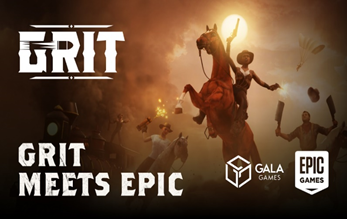
Figure 1: Grit Game (Source: Gala Games)
Grit is marketed as a Triple-A free-to-play-to-earn multiplayer game. With its theme set in the Wild West, players compete in a battle-royale game as cowboys and earn scores based on their skills. The game is developed by Gala Games and is built on Unreal Engine. It includes NFT assets such as in-game generative avatars and horses, which unlocks more earning potential. At present, Gala games is selling 10,000 NFT gunslinger boxes that unlock a Generative Hero on its official site. The NFTs are ERC-1151 and ERC 721 tokens on the Ethereum network. The launch of Grit possibly marks the beginning of the mass adoption of blockchain games. With 62 million monthly active users on the Epic Games Store, Grit has the potential to bring blockchain games to the masses.
Why the Launch of Grit is a Big Deal for the GameFi Space
As the first-ever blockchain game launched on a major game platform, Grit has the potential to kickstart the adoption of blockchain games on major gaming platforms. Traditional gaming platforms have taken a conservative stance regarding blockchain games and NFTs. Steam, the leading PC gaming platform, and a rival of Epic Games Store has barred all blockchain games since October 2021. According to Steam’s founder Gabe, the volatility of cryptocurrencies and the bad actors behind NFTs were the reasons behind its decision. He believed that the space is filled with people ripping off players with NFTs or fraudulent transactions such as money laundering schemes. If Grit’s free-to-play-to-earn model and NFT strategy turn out to be sustainable and beneficial to its players, it is likely that Steam and other major platforms will consider including GameFi games on their platforms. Exposure to major publishing platforms is crucial for blockchain games to become mainstream.
The Popularity of Blockchain Games vs Traditional Games
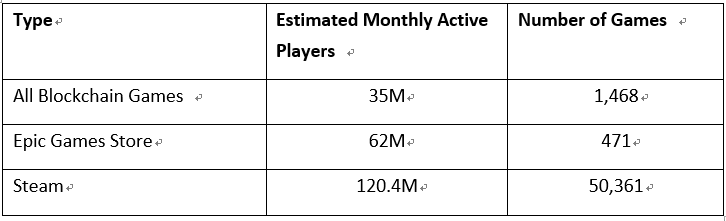
Figure 2: Active Player of GameFi vs Traditional Games
Although we have seen the explosive growth of GameFi and the huge success of play-to-earn games last summer, the player base for blockchain games is still relatively small compared with traditional games. Looking at Figure 2, the number of monthly active users on Epic Games store is roughly 1.7x the number of active players of all blockchain games.
Current State of Blockchain Games
GameFi and the concept of play-to-earn gained popularity last summer but failed to maintain their rapid growth. Figure 2 shows the overall trend in the number of unique active players.
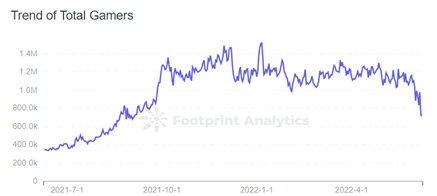
Figure 3: Trend of daily active players (Source: Footprint Analytics )
We can see that total daily GameFi players peaked in December 2021 and remained stable until recently in June. Excluding June, daily active players stayed above 1 million in the past 6 months. In the month of June, the number of daily active players plummeted 30% mainly due to the 50% crash in total market capitalization of all game tokens in May.
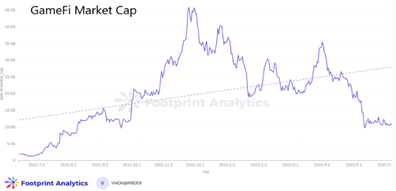
Figure 4: Total market capitalization of all game tokens (Source: Footprint Analytics)
As earning game tokens is the main incentive for players to keep playing blockchain games, a plunge in token prices has led to the exit of many players due to lower earnings.
Why Blockchain Games Have Yet to Go Mainstream
As seen in Figure 2, the number of daily GameFi players has been slowly declining since peaking last year. The main factors preventing mass adoption of blockchain games were the flaws behind the highly speculative pay-to-play-to-earn game model and the technology risks surrounding blockchain. As a result, gamers often associate blockchain games with Ponzi schemes and scams.
First, play-to-earn games usually have a high barrier to entry. Most play-to-earn games require a hefty upfront investment in NFTs. For example, the cost of assembling a team in Axie Infinity to start playing was around US$600 in October last year. This put off many gamers, especially the large numbers of under-18 players which make up 58% of the gaming population. A traditional Triple-A multiplayer game on PC costs up to around US$60, and moreover, most games are free to play. Players associate upfront investment costs with returns on investment (ROI). As a result, players care about ROI more than the gaming experience, and gaming has become a chore for them. Therefore, as shown in Figure 3, the 50% crash in the total market cap of all game tokens has led to a significant drop in daily active players in June.
Second, blockchain games are poorly made, and many lack sustainable gameplay. Instead of focusing on gameplay and graphics, economic incentives have become the priority of both players and developers. The GameFi space needs Triple-A games made by major game studios with rich narratives, playability, and good-looking graphics to become mainstream.
Finally, major game publishing platforms are still staying away from blockchains games as the GameFi space is plagued with fraudulent behaviors and exploits. As mentioned earlier in this report, Steam banned all blockchain games on its platform due to the technical risks and fraud associated with blockchain. In late March 2022, Axie Infinity was hacked for a combined value of US$600 million, of which US$400 million belonged to its players. Steam’s stance against blockchain-enabled games is justified, as it is ill-advised for major gaming platforms to risk their reputations by exposing their customers to immature blockchain technologies.
Potential of the Free-to-Play-to-Earn Model
At present, most multiplayer games in the traditional gaming space are in the free-to-play category. Looking at Figure 4, four out of the give most played multiplayer games are free-to-play and have high revenues. All these games have a similar revenue model: selling cosmetic items such as skins and avatars that have no impact on gameplay. Blockchain game developers should consider following the current free-to-play model and create free blockchains games that have entertainment appeal, so that financial incentives are a bonus rather than a necessity.
A free-to-play-to-earn game model will be more inclusive and sustainable. An option to play at no cost lets players avoid speculative Ponzi-like games where early players/investors profit by selling NFTs to new players who enter later in the game. NFT in-game assets should be optional and provide social utilities such as cosmetic customization, rather than performance utilities that encourage pay-to-win and unfair gameplay. The price of in-game tokens and NFTs assets should not have a large impact on the playability of the blockchain game itself.
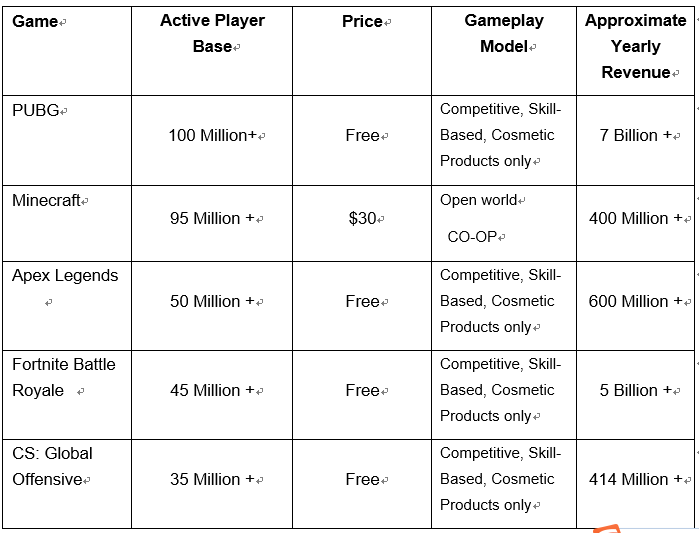
Figure 5: Top 5 Most Played Multiplayer Games (Source: SportsBrowser, Huobi Research)
Concluding Thoughts
If Grit’s free-to-play-to-earn model and gameplay prove to be attractive enough for traditional gamers on the Epic Games Store, it is likely that free-to-play-to-earn will become the dominant GameFi model to be published on major multiplayer gaming platforms. Free-to-play blockchain multiplayer games are the quickest way to achieve mass adoption, giving Web2 gamers a chance to try blockchain-enabled games with no financial commitments.
Mass adoption of blockchain games will happen when blockchain games dissociate themselves from pay-to-earn, Ponzi-like game models and prove themselves to be a safe technology that can be implemented into games. Major game studios and publishers will play an important role in building a safe environment for blockchain gaming and setting the standard for blockchain games.
Figure 5 shows a list of the major online game publishers and their current stance on blockchain gaming. At the moment, only Ubisoft and Epics games have taken action on blockchain gaming. It seems that most major game publishers are still taking a wait-and-see attitude and have been cautious about including blockchain elements in their flagship games. Mass adoption of blockchain gaming will happen surely but slowly, and early adopters like Ubisoft and Epic Games will be pioneers that help to build the foundation of the Triple-A blockchain gaming era.
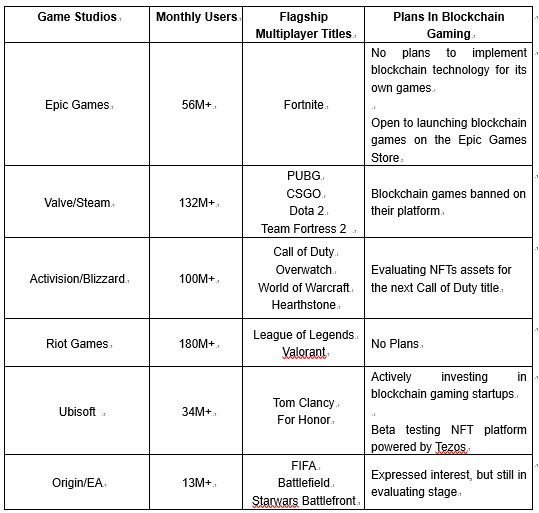
Figure 6: Overview of Major Multiplayer Game Publishers’ Plans on Blockchain Gaming
About Huobi Research Institute
Huobi Blockchain Application Research Institute (referred to as "Huobi Research Institute") was established in April 2016. Since March 2018, it has been committed to comprehensively expanding the research and exploration of various fields of blockchain. As the research object, the research goal is to accelerate the research and development of blockchain technology, promote the application of blockchain industry, and promote the ecological optimization of the blockchain industry. The main research content includes industry trends, technology paths, application innovations in the blockchain field, Model exploration, etc. Based on the principles of public welfare, rigor and innovation, Huobi Research Institute will carry out extensive and in-depth cooperation with governments, enterprises, universities and other institutions through various forms to build a research platform covering the complete industrial chain of the blockchain. Industry professionals provide a solid theoretical basis and trend judgments to promote the healthy and sustainable development of the entire blockchain industry.
Official website:
https://research.huobi.com/
Consulting email:
research@huobi.com
Twitter: @Huobi_Research
https://twitter.com/Huobi_Research
Medium: Huobi Research
https://medium.com/huobi-research
Disclaimer
1. The author of this report and his organization do not have any relationship that affects the objectivity, independence, and fairness of the report with other third parties involved in this report.
2. The information and data cited in this report are from compliance channels. The sources of the information and data are considered reliable by the author, and necessary verifications have been made for their authenticity, accuracy and completeness, but the author makes no guarantee for their authenticity, accuracy or completeness.
3. The content of the report is for reference only, and the facts and opinions in the report do not constitute business, investment and other related recommendations. The author does not assume any responsibility for the losses caused by the use of the contents of this report, unless clearly stipulated by laws and regulations. Readers should not only make business and investment decisions based on this report, nor should they lose their ability to make independent judgments based on this report.
4. The information, opinions and inferences contained in this report only reflect the judgments of the researchers on the date of finalizing this report. In the future, based on industry changes and data and information updates, there is the possibility of updates of opinions and judgments.
5. The copyright of this report is only owned by Huobi Blockchain Research Institute. If you need to quote the content of this report, please indicate the source. If you need a large amount of reference, please inform in advance (see "About Huobi Blockchain Research Institute" for contact information) and use it within the allowed scope. Under no circumstances shall this report be quoted, deleted or modified contrary to the original intent.