The reference exchange rate is for reference only and is not locked in. The final rate will be determined by the actual execution price.
Real-Time GAS Stats
The live price of GAS (GAS) is $1.17 USD and its current market capitalization is $-- USD.
Get real-time GAS/USD updates on HTX. Stay informed with the latest data and market trends to make smart trading decisions. HTX, your trusted source for accurate cryptocurrency price information.
GAS Key Stats
24h Volume (USD)
$--
Price Change Today
--
Circulating Supply (GAS)
65.09M
Sign up and trade to win rewards worth up to 1,500 USDT.Join Now
GAS Price Performance
Track GAS price movements with chart views spanning 1 day, 30 days, 60 days, 90 days, 1 year, and the period since it was listed on HTX.View more data for the GAS prices
Time
Change
Change%
Highest Price
Lowest Price
No data
GAS Market Information
Get the latest GAS price details on HTX: 24-hour high and low, all-time high (ATH), and daily price change percentage.
24h Low
$0
24h High
$0
All-Time High
$0
Market Cap
$0.00
24h Volume (USD)
$--
Circulating Supply
--
What is GAS?
NEO has two native tokens, NEO (abbreviated symbol NEO) and NeoGas (abbreviated symbol GAS).GAS is the fuel token for the realization of NEO network resource control, with a maximum total limit of 100 million. The NEO network charges for the operation and storage of tokens and smart contracts, thereby creating economic incentives for bookkeepers and preventing the abuse of resources. The minimum unit of GAS is 0.00000001.
Based on the historical performance of GAS, our prediction tool estimates that the price of GAS (GAS) could reach -- by --.
Predicted GAS Price in --
Our most recent forecast indicates the price of GAS (GAS) will increase to -- by --, with a price change of --% and a cumulative ROI of approximately --%.
Buy your first GAS on HTXSign Up
GAS FAQs
What is the GAS (GAS) price today?
The current price of GAS (GAS) is $1.17 USD.
What is the GAS (GAS) market cap?
The current market capitalization of GAS (GAS) is $0.00 USD, calculated by multiplying its circulating supply by its current price.
What is the GAS (GAS) circulating supply?
The current circulating supply of GAS (GAS) is -- GAS.
What is the GAS (GAS) all-time high?
As of 2026-08-21, the all-time high of GAS (GAS) is $0 USD.
What is the GAS (GAS) 24h trading volume?
The 24-hour trading volume of GAS (GAS) is -- USD on HTX.
Can I buy GAS (GAS) on HTX?
Yes, HTX offers industry-leading trading fees and deep liquidity, ensuring a smooth and secure GAS (GAS) purchase experience.
Sui blockchain developer Mysten Labs has deployed testnet update v1.74.1, introducing protocol version 128. The primary outcome of this upgrade is a significant reduction in transaction gas costs for users and developers operating on the testnet. These optimizations are designed to enhance network performance and scalability in preparation for a future mainnet deployment.
It is crucial to note that these changes are currently confined to the testnet environment. The development provides a concrete, source-verified data point regarding ongoing protocol improvements. For market participants, this represents a confirmed technical advancement to consider, though it should be weighed alongside broader market factors and does not in itself guarantee specific price movements. The story highlights a focus on foundational development amid typical market volatility.
BNB Chain is collaborating with stablecoin issuers to enable gas-free stablecoin transfers, aiming to address a key friction point that hinders the everyday use of crypto payments. The initiative seeks to simplify the user experience, as the need for a native token to pay transaction fees can be confusing for newcomers and make small transfers impractical compared to traditional fintech apps.
Stablecoins are widely used for purposes like remittances and payments, but complex blockchain interfaces often create technical barriers. By subsidizing gas fees, BNB Chain hopes to make stablecoin transactions feel more familiar and seamless, similar to conventional payment apps. This move is also seen as a competitive strategy to retain and grow its large retail user base amid rivalry from other networks like Ethereum, TRON, and Solana.
A central challenge is the sustainability of the gas subsidy model, which requires a long-term funding solution to avoid being merely a short-term marketing campaign. If successfully maintained, the program could significantly influence user behavior. Ultimately, this focus on stablecoin payments represents a shift toward practical, user-friendly utility in the crypto space, offering an improvement that everyday users can directly appreciate.
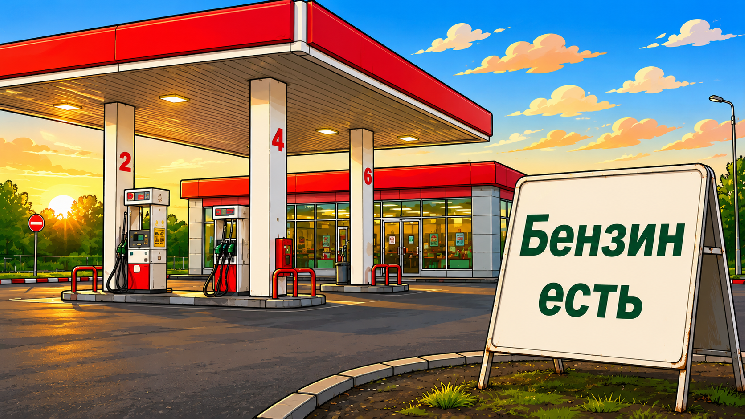
Russia's fuel crisis is showing signs of abating. Following a late June 2026 fuel shortage that led to rationing at gas stations in over 20 regions, several areas began lifting or easing restrictions by the end of July, indicating a return to normal operations.
Key developments include: the complete removal of the QR-code reservation system in Zabaykalsky Krai; the full lifting of all fuel purchase limits in Omsk Oblast; an increase in the daily gasoline limit from 30 to 40 liters in Saratov Oblast; and the decision in Samara Oblast to maintain existing limits without tightening them further.
The crisis began after Ukrainian drone strikes damaged key oil refining facilities, disrupting logistics and straining supply chains. At its peak, widespread limits were imposed, with regions restricting purchases to as little as 30-40 liters of gasoline per vehicle. Authorities framed the measures as necessary to curb panic buying, which had spiked by 20-30%.
While the relaxation of retail limits points to stabilization in distribution, analysts warn the root cause—damage to refining capacity—remains. Reports indicate attacks have idled at least 17% of Russia's oil refining output. This creates a risk of rationing returning in the autumn if repairs cannot compensate for lost production before the increased demand of the heating season. The sustainability of the current recovery remains uncertain.
The article "Helium, Naphtha, Photoresist: The Three Achilles' Heels of Semiconductor Fabs" analyzes a hypothetical 2026 supply crisis triggered by geopolitical conflict in the Middle East, focusing on three critical materials for semiconductor manufacturing: helium, naphtha, and photoresist.
A key attack on a Qatari LNG facility and the blockade of the Strait of Hormuz threaten the global supply of helium (a byproduct of LNG) and naphtha (a petroleum product). This creates a triple threat of shortages that could halt chip production. Helium is essential, particularly for precise wafer temperature control in dry etching processes; a shortage would cause an immediate "instant failure" in these steps. Naphtha is the foundational raw material for numerous equipment consumables and, crucially, for photoresist chemicals. Japan dominates the photoresist market, relying on a single key supplier for intermediates.
The analysis shows the impacts would differ. The tiny fraction of global naphtha used for semiconductors (under 0.1%) makes securing supply for photoresist relatively easier. Helium is the greater vulnerability. Qatar supplies about one-third of the world's helium, exceeding the total annual consumption of the semiconductor industry (21-24% of global supply). While short-term buffers like corporate reserves, recycling, and prioritization (e.g., cutting balloon use first) can delay the crisis, helium cannot be stored long-term due to boil-off. Fabs typically hold only days to weeks of inventory.
The consequences would be severe and tiered. Advanced logic nodes (e.g., 2nm, 3nm) using complex processes like GAA would be hit hardest, potentially stopping within three months. Mature nodes for automotive and power semiconductors would also eventually halt (within 6-12 months), which could be catastrophic for the auto industry due to stringent certification requirements. The crisis would unfold not as a sudden global stop, but through a sequence of allocation, severe price spikes, reduced output of low-margin products, and partial fab shutdowns by region and company if the shortage persists beyond a year.
Weekend Market Observations: Indices Show Strength, Natural Gas Surges
Key regional developments centered on Iran. Iran and Oman indicated negotiations over reopening a key shipping channel are nearing completion, with Oman calling for a halt to military actions to facilitate an agreement. However, talks are stalled as Iran has raised its demands, linking Strait reopening to conditions like US sanctions relief, troop withdrawal, and war reparations—terms previously associated with nuclear talks. Iran's Revolutionary Guard stated it will maintain control until all demands are met. In response, the US administration has adopted a lower-key approach, describing a state of "semi-negotiations" while observing Iran's economic pressures.
Amid this, reported attacks on a Saudi refinery and an Emirati vessel added to regional tensions.
**Crude Oil & Indices:** Crude oil (CL) experienced volatility, initially dipping on comments from Iran's president before recovering. Prices later rose toward $79 after the US signaled a shift toward economic pressure over military escalation. Major equity indices (SP500, XYZ100) posted modest gains (0.13%, 0.22% respectively), demonstrating resilience despite rising oil prices.
**Individual Stocks:** The market saw mixed sector performance. Memory stocks were divided (Micron up, SK Hynix down). The optical communications sector was strongest, with MRVL and LITE both gaining around 2.4%. Crypto-related stocks rebounded in pre-market trading after an early dip, closing higher.
**Commodity Futures:** Precious and industrial metals (gold, silver, copper) advanced over the weekend, with futures showing V-shaped recoveries. The standout performer was natural gas, surging 3.10% at the open. The primary driver is a forecast for sustained hotter weather into mid-August across the southern and eastern US, boosting power generation demand. This is compounded by tighter supply margins due to pipeline maintenance, a slight dip in dry gas production, and high utilization of LNG export terminals.
marsbit10天前
Threads
Welcome to the HTX Community. Here, you can stay informed about the latest platform developments and gain access to professional market insights. Users' opinions on the price of GAS (GAS) are presented below.
Related Questions
Welcome to the Crypto FAQ. Users' questions and answers on GAS (GAS) are presented below.