era

Caldera (ERA) Surge

ERA Surge History

Over the past year, ERA has recorded a 24h gain of 5% a total of 23 times, 10% a total of 5 times, and 20% a total of 1 times.

Live ERA Chart (ERA/USD)

Last Updated:

  • 1H
  • 24H
  • 1W
  • 1M
  • 1Y
  • All
No data

ERA 24h Surge History (>5%)

Track ERA price movements and major surge events on HTX, with the latest 10 records.View more data for the ERA prices

DateCryptoOccurrence #Price24h Change
2026/08/05Caldera (ERA)23$0.0702+5.56%
2026/07/30Caldera (ERA)22$0.07+6.38%
2026/07/20Caldera (ERA)21$0.1007+62.42%
2026/07/01Caldera (ERA)20$0.0968+12.04%
2026/06/30Caldera (ERA)19$0.0863+9.52%
2026/05/24Caldera (ERA)18$0.1424+11.6%
2026/05/09Caldera (ERA)17$0.1509+5.6%
2026/04/05Caldera (ERA)16$0.1325+8.52%
2026/02/11Caldera (ERA)15$0.1572+5.86%
2026/01/29Caldera (ERA)14$0.2045+7.46%

ERA 24h Surge History (>10%)

Track ERA price movements and major surge events on HTX, with the latest 10 records.View more data for the ERA prices

DateCryptoOccurrence #Price24h Change
2026/07/20Caldera (ERA)5$0.1007+62.42%
2026/07/01Caldera (ERA)4$0.0968+12.04%
2026/05/24Caldera (ERA)3$0.1424+11.6%
2025/11/04Caldera (ERA)2$0.2787+17.05%
2025/10/11Caldera (ERA)1$0.4222+10.15%

ERA 24h Surge History (>20%)

Track ERA price movements and major surge events on HTX, with the latest 10 records.View more data for the ERA prices

DateCryptoOccurrence #Price24h Change
2026/07/20Caldera (ERA)1$0.1007+62.42%

Articles

In the Era of MiCA, Why is the EU CASP License Becoming Increasingly Important?

In the MiCA era, the EU's Crypto-Asset Service Provider (CASP) license is becoming increasingly crucial, especially after the transitional period ends on July 1, 2026. Post-deadline, crypto service providers operating under old national frameworks must either secure MiCA authorization or exit the EU market, rendering the previous model of using a single member state's VASP registration for pan-European operations obsolete. The CASP license fundamentally changes the regulatory landscape by shifting from a fragmented, nation-by-nation registration system to a unified "passporting" regime. Authorized in one member state, a CASP can provide its licensed services across the EU, offering greater legal clarity and operational efficiency compared to the past. MiCA defines CASP authorization based on specific service types, such as custody, trading platform operation, exchange, and transfer of crypto-assets. The scope of authorization is determined by actual business functions, not self-selection, with corresponding prudential requirements like capital adequacy. Banks and institutional clients increasingly value CASP status as it provides a verifiable, standardized framework for due diligence, accessible through ESMA's public registers. The regulation significantly limits the "reverse solicitation" exception for non-EU firms. Active marketing or outreach to EU clients generally necessitates a CASP license, moving away from reliance on offshore entities. It's important to note that a CASP license is not a universal permit; it covers crypto-asset services but does not automatically authorize traditional financial activities like payment services (governed by PSD2) or dealing in financial instruments (governed by MiFID II). A complete crypto-fiat payment solution often requires both a CASP and a licensed payment institution. Priority candidates for pursuing a CASP license include: 1) Platforms with the EU as a primary long-term market; 2) Projects seeking partnerships with EU banks or large institutions; and 3) Groups aiming to consolidate cross-border operations under one regulated entity. In contrast, early-stage projects without concrete EU plans may find the process premature. Ultimately, the growing importance of the CASP stems from the end of regulatory ambiguity in Europe. It has evolved from a consideration to a fundamental requirement for market access, client trust, and sustainable operations within the EU's now-harmonized crypto regulatory framework.

In the Era of MiCA, Why is the EU CASP License Becoming Increasingly Important? - marsbit

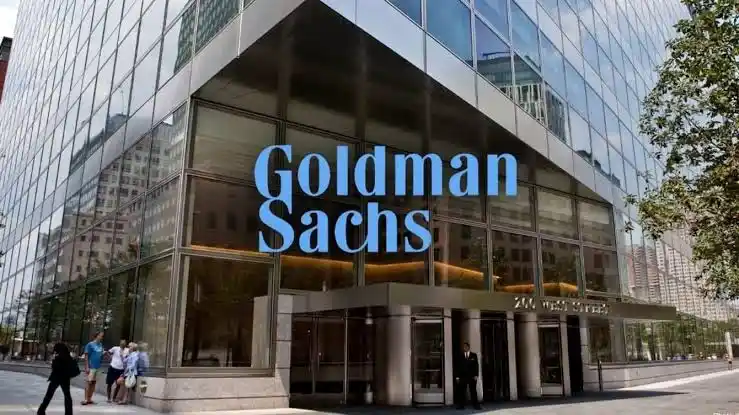
Goldman Sachs Acquires NEOS for $2.25 Billion: Bitcoin Officially Enters the 'Income Era'

Goldman Sachs acquired NEOS Investments for up to $2.25 billion, bringing a key product—the NEOS Bitcoin High Income ETF (BTCI)—into its portfolio. BTCI, with over $1.1 billion in assets, employs a covered call strategy on Bitcoin ETP holdings to generate high-yield monthly income, touting a 27% annualized yield. This yield stems from selling call options, capitalizing on Bitcoin's high volatility for premium income. However, the strategy carries significant risks: it caps upside potential during bull markets, has underperformed Bitcoin spot returns (with a -2% annualized return since late 2024), suffers from substantial net asset value erosion (near 50% peak-to-trough), and its distributions are largely classified as return of capital. The fund's true forward yield is closer to 7.8%, far below its advertised rate. The acquisition is part of Goldman's strategic push into the booming derivatives-based income ETF market, following its purchase of Innovator Capital. It targets investors, particularly retirees, seeking reliable monthly cash flow over high growth. This move signifies a rapid financialization of Bitcoin, transforming it from a tradable asset into an income-generating one within traditional finance. Yet, it raises questions about Bitcoin's core identity, as large-scale adoption of such strategies could permanently alter its market volatility and decentralized ethos.

Goldman Sachs Acquires NEOS for $2.25 Billion: Bitcoin Officially Enters the 'Income Era' - marsbit

Bitwise CIO Declares: "A New Era is Beginning in Crypto," Citing Six Altcoins as Examples! Here are the Details

Matt Hogan, Chief Investment Officer of Bitwise, declares the start of a "new era" in cryptocurrencies, driven by a shift towards revenue and income generation. He argues that the value of altcoins will increasingly be assessed based on their ability to generate yield, similar to stocks and bonds, and that many are currently undervalued as investors haven't fully priced in this change. In this new paradigm, projects will strengthen the link between network usage and token value by reinvesting profits into tokenomics through mechanisms like buybacks and burns. Hogan highlights several projects he believes exemplify this trend, including HyperLiquid ($HYPE), Uniswap ($UNI), Aave ($AAVE), and Pump.Fun in the DeFi sector, as well as layer-1 blockchains Aptos (APT) and Solana. He notes these projects already direct fees to token buybacks or burns, but the market impact is yet to be fully realized. Hogan predicts DeFi applications and layer-1 networks will generate significantly more revenue in the next 12-24 months. He suggests that a stronger alignment between project income and token value could lead to substantial price appreciation—potentially doubling or more—for some crypto assets as the market adapts.

Bitwise CIO Declares: "A New Era is Beginning in Crypto," Citing Six Altcoins as Examples! Here are the Details - cryptonews.ru

The Era of Easy Gains in AI Ends: 13F Rebalancing Map Points the Way – The Latest 13F Reveals Where Top Institutions' Money is Flowing

The era of easy AI profits is ending, as evidenced by the latest 13F filings from major institutions for Q2 2026. These reports, which are delayed by over 45 days, reveal a significant shift in strategy: capital is moving from a broad "AI frenzy" towards assets with strong cash flows, tangible technology, and durable competitive advantages. Key institutional moves highlight this trend. Temasek increased stakes in SpaceX (representing next-gen infrastructure), Alphabet (for its AI infrastructure and cash flow), and semiconductor equipment giant ASML. Baillie Gifford made SpaceX its top holding. Berkshire Hathaway ended its passive stance with a major $10 billion purchase of Alphabet, while Bridgewater maintains significant positions in tech giants but with a balanced, macro-aware approach. Notably, asset manager JingLin dramatically reduced overall exposure by 43%, completely exiting Nvidia and Meta, and pivoting towards semiconductor equipment and optical communication stocks like ASML and Applied Materials. The analysis reveals several key conclusions: 1. **Alphabet is becoming a consensus holding**, valued for its blend of AI infrastructure, stable cash flows, and reasonable valuation. 2. **Nvidia remains core but faces scrutiny**; its future depends on sustaining growth and justifying its valuation. 3. **Capital is flowing upstream** into semiconductor equipment and hardware (e.g., ASML, AMAT), focusing on the "bottlenecks" of AI compute. 4. **SpaceX represents a new theme** in next-generation infrastructure, attracting long-term capital. The article warns against common mistakes when interpreting 13Fs: treating them as real-time trading signals, focusing only on *what* was bought and not *how much*, and ignoring the different investment styles of the reporting funds. Instead, investors should use a disciplined five-step framework: analyze the overall portfolio structure, focus on marginal changes (new adds/sells), identify sector/theme migrations, look for consensus or divergence among multiple funds, and finally, independently verify the current price, valuation, and fundamentals. In essence, 13Fs provide valuable footprints and research clues left by sophisticated investors, but they are not a substitute for one's own analysis and investment thesis.

The Era of Easy Gains in AI Ends: 13F Rebalancing Map Points the Way – The Latest 13F Reveals Where Top Institutions' Money is Flowing - marsbit

BitMEX: The End of an Era

This guest post by Peter Wilkinson, CEO of BitMEX, reflects on the rise and fall of the cryptocurrency exchange. Recruited from traditional finance, Wilkinson was struck by BitMEX's intense, mission-driven culture, contrasting with the conservatism of TradFi. The company was known for its innovative perpetual swap and a vibrant office environment. However, a pivotal U.S. legal case in 2020, coinciding with the implementation of KYC procedures, triggered significant user attrition and halted new product development like Bitcoin-based swaps. While the company maintained a strong internal culture and an impeccable security record—never losing client funds to hacks—it failed to adapt to market evolution. Competitors copied its products, and BitMEX was late to expand into spot trading, staking, and stablecoins like USDT. Ultimately, focused narrowly on derivatives, it lost market share. Wilkinson concludes with pride in BitMEX's legacy, particularly its role in popularizing the perpetual swap, now a cornerstone of crypto trading, and its unwavering commitment to client fund safety throughout its 11-year history.

BitMEX: The End of an Era - cryptonews.ru

Recommendations

ctr
CitreaCTR
wstusdt
wrapped stUSDTWSTUSDT
apr
CapricornAPR
ctx
Cryptex FinanceCTX
audio
AudiusAUDIO
comp
CompoundCOMP
mantra
MantraMANTRA
waxl
AxelarWAXL
bill
Billions NetworkBILL
pyth
PYTH (Pyth)PYTH
rune
THORChainRUNE
velodrome
Velodrome FinanceVELODROME
brev
BrevisBREV
cake
PancakeSwapCAKE
dos
DAPPOSDOS
jst
JUSTJST
sun
SUNSUN
zbt
ZerobaseZBT
twt
Trust WalletTWT
reef
ReefREEF
lista
Lista DAOLISTA
avax
AvalancheAVAX
zkc
BoundlessZKC
re
ReRE
era
CalderaERA
aster
AsterASTER
carv
CarvCARV
banana
Banana GunBANANA
knc
Kyber NetworkKNC
btt
BitTorrentBTT
btw
BitwayBTW
cfg
CentrifugeCFG
rlc
iExecRLC
sushi
SushiSUSHI
hana
HANA NetworkHANA
pendle
PendlePENDLE
orbs
Orbs Network ORBS
kaito
KaitoKAITO
order
OrderlyORDER
sd
Stader LabsSD
chip
USD.AICHIP
sfp
SafePalSFP
dia
DIADIA
jup
JupiterJUP
ach
Alchemy PayACH
api3
API3API3
bmt
BubblemapsBMT
red
RedStoneRED
prove
SuccinctPROVE
soph
SophonSOPH
avail
AvailAVAIL
dao
DAO MakerDAO
lit
LighterLIT
acx
Across ProtocolACX
woo
WOOWOO
auction
AuctionAUCTION
layer
SolayerLAYER
badger
Badger DAOBADGER
nes
NesaNES
elf
aelfELF
req
Request NetworkREQ
cetus
Cetus ProtocolCETUS
trb
Tellor TributesTRB
opg
OpenGradientOPG
opn
OpinionOPN
sxt
Space and TimeSXT
mln
MelonMLN
ondo
OndoFinanceONDO
spk
SparkSPK
waves
WavesWAVES
dbr
deBridgeDBR
night
MidnightNIGHT
me
Magic EdenME
trx
TRONTRX
nft
AINFTNFT
eul
Euler FinanceEUL
hsk
HashKey Platform TokenHSK
kava
KavaKAVA
osmo
OsmosisOSMO
sqd
SubsquidSQD
safe
SafeSAFE
ava
TravalaAVA
es
EclipseES
bard
LombardBARD
scrt
Secret NetworkSCRT
gwei
ETHGasGWEI
avl
AvalonAVL
usde
USDEUSDE
usdd
USDDUSDD
plume
Plume NetworkPLUME
synd
SyndicateSYND
xch
Chia NetworkXCH
win
WINkLinkWIN
sent
SentientSENT
theta
ThetaTHETA
solv
Solv ProtocolSOLV
steth
Lido Staked ETHSTETH
fhe
Mind NetworkFHE
inj
InjectiveINJ
towns
TOWNSTOWNS
wan
WanchainWAN
crv
Curve DAO TokenCRV
grt
The GraphGRT
dydx
dYdXDYDX
cbk
CobakCBK
krrx
KyrrexKRRX
rpl
Rocket poolRPL
uni
UniswapUNI
zama
ZAMAZAMA
inx
InfinexINX
ldo
LidoLDO
xdc
XDC NetworkXDC
link
ChainLinkLINK
bone
ShibaSwap BoneBONE
obt
Orbiter FinanceOBT
enso
ensoENSO
well
Moonwell ArtemisWELL
bio
BIO ProtocolBIO
anime
AnimecoinANIME
nil
NillionNIL
newt
Newton ProtocolNEWT
ctc
CreditcoinCTC
rad
RadicleRAD
skr
SeekerSKR
syrup
Maple FinanceSYRUP