Zcash Founder Talks Privacy, Artificial Intelligence, and How ZEC Can Become 'Encrypted Bitcoin'

marsbitОпубліковано о 2026-01-29Востаннє оновлено о 2026-01-29

Анотація

Zcash founder Zuko discusses the current state of the crypto movement, privacy challenges in the AI era, and ZEC's potential as "encrypted Bitcoin." He reflects on whether crypto is repeating Linux's path—achieving technical success but failing to empower ordinary users. Zuko emphasizes that while crypto has advanced cryptography, especially zero-knowledge proofs, poor user experience remains a major barrier to mainstream adoption, citing Moxie Marlinspike's critique that tools must adapt to users, not vice versa. In the AI age, privacy becomes a survival necessity, not just a feature. Zuko argues that AI can easily de-anonymize transparent blockchain transactions, making privacy coins like ZEC essential. He introduces the concept of "value at rest"—holding assets without immediate intent to use them—as a way to blind AI surveillance, calling it a "privacy option." Zcash’s governance, including its controversial development fund, is highlighted as an ongoing experiment. The "encrypted Bitcoin" meme symbolizes ZEC’s role in combining Bitcoin’s scarcity with native privacy. Zuko concludes by urging users to hold ZEC to protect their financial sovereignty and support a future where privacy is accessible to all.

Written by: Bankless

Compiled by: Plain Language Blockchain
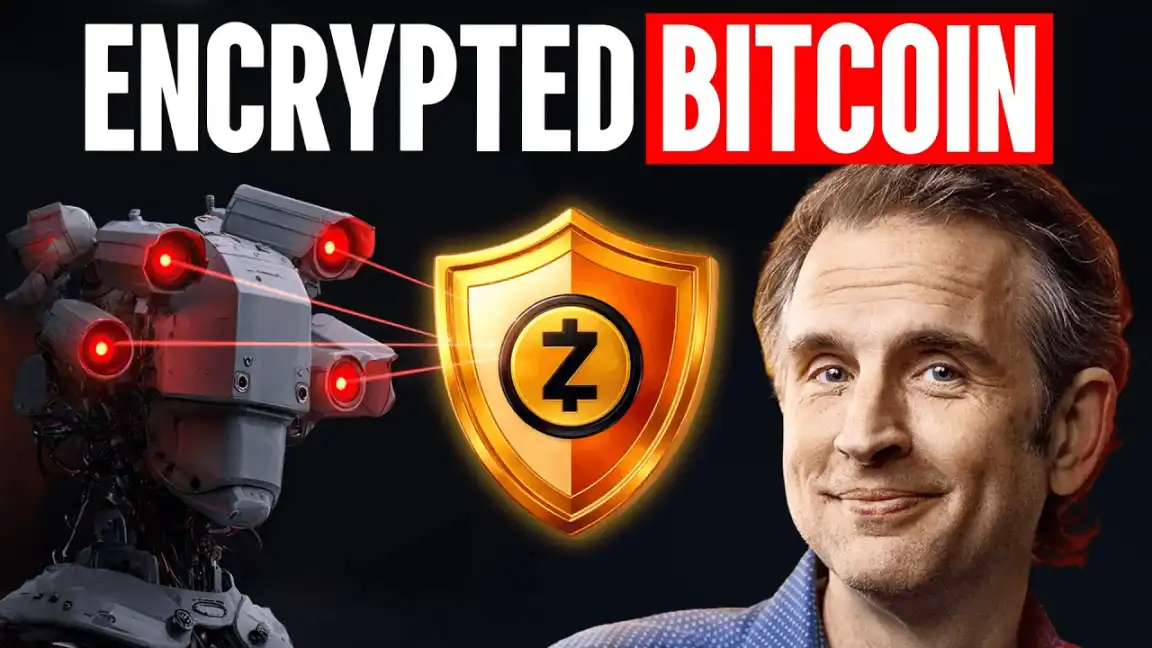
More than a decade after the birth of cryptocurrency, we are standing at a subtle crossroads: on one hand, there is the full involvement of Wall Street capital and the rapid evolution of the underlying technology; on the other hand, the original Cypherpunk ideals are struggling under complex user experience and regulatory pressure.

In this interview, Zcash founder and pioneer in the field of cryptographic privacy, Zuko, shares his profound insights into the industry's current state. He not only reflects on whether the crypto movement is repeating the mistakes of Linux but also delves into how, in an era of rampant AI computing power, privacy is evolving from a 'technical feature' to a 'survival option.'

By deconstructing Moxie's user experience logic and analyzing the Zcash governance experiment, Zuko paints a future picture that goes beyond mere financial speculation and returns to digital sovereignty. This is not just a conversation about technology but also a metaphysical discussion about how human civilization can maintain free will in a high-pressure surveillance environment.

I. Reflection on the Current State of the Crypto Movement: Are We Repeating Linux's Mistakes?

Host: Zuko, welcome back to Bankless. You have been deeply involved in the crypto industry for over a decade, building Zcash for 13 years. Looking back from the vantage point of 2026, do you think our crypto movement has achieved its original goals? Have we succeeded?

Zuko: To be honest, that's a leading question, and you probably weren't expecting a positive answer. Hearing you ask that actually makes me feel a bit frustrated and pessimistic. It reminds me of the history of Linux. Back then, Linux was a great movement aimed at empowering ordinary people and liberating technological barriers. But looking at the current landscape, it has largely become the underlying software that Google uses to run its servers.

Host: It sounds like the idealism of the Linux movement has faded.

Zuko: Because it didn't truly help ordinary users, nor did it scale to a level that could benefit the masses. While software engineers are still passionate about using it, for non-professionals, Linux today has not substantially improved their digital lives. If we let this trend continue, cryptocurrency in 15 years might be the same: only a few giant financial institutions use blockchain to optimize costs, while 99.9% of ordinary people do not gain real power or benefit from this technology. That would be a terrible outcome.

Host: So what do you think is the real progress we've made in the past decade?

Zuko: I am a technologist. What I am most pleased about is that cryptocurrency has funded a large number of top-tier cryptographic technologies. For example, the zero-knowledge proof (ZKP) pioneered by Zcash was later pushed into deeper realms by the Ethereum ecosystem. Without the funding and organizational forms provided by cryptocurrency, DARPA, universities, or giant corporations would never have developed these achievements in the past decade.

Host: So in your view, the advancement of cryptography is the biggest victory, not the current market size?

Zuko: Yes. But this is actually 'faint praise.' It's like we improved the Linux kernel but didn't really make the world a better place.

Host: Some would argue that price charts and Wall Street's entry are victories. For example, Bitcoin has become digital gold not controlled by governments, or the ETFs and RWA (Real World Asset Tokenization) promoted by Larry Fink.

Zuko: I see these as ways to improve Wall Street. If it improves the lives of ordinary people in a way I care about, that's good, but such signs are not obvious yet.

II. The Bottleneck of User Experience (UX): Why Does Moxie's Critique Still Ring Loud?

Host: What important parts of the crypto space do you think we have neglected?

Zuko: Absolutely the user experience part of the Cypherpunk vision. I often cite the views of Moxie Marlinspike (founder of Signal). He pointed out that the Cypherpunk dream is stuck because there is a fatal flaw in their logic. Their method is: Step one, make tools that work well for themselves; Step two, teach the rest of the world to become like them.

Host: This 'elitist' path is indeed difficult to popularize.

Zuko: Moxie said this will never succeed. You must provide people with tools that suit their current situation without forcing them to change. If you cover less than a hundred million users, you are wasting your time because you are not influencing the world. The current crypto industry is repeating this mistake: we build complex systems that protect freedom, privacy, and autonomous choice, and then expect ordinary people to learn how to use them.

Host: So cognitive load becomes the biggest obstacle.

Zuko: Exactly. If the cognitive load is close to zero, that is good user experience. I remember Brian Armstrong once told me his strategy for dealing with regulation: have at least a hundred million users. This is exactly the same logic as Moxie's.

Host: From a long-term perspective, Ethereum is trying to expand beyond decentralized finance into areas like decentralized identity, computing, and AI. How far do you think this Cypherpunk vision can go?

Zuko: I hope it goes all the way because it concerns whether our descendants can grow up in a more stable, civilized society. Signal's success inspired me. Signal's philosophy is that the user interface (UX) should reflect the underlying reality. If you are chatting with software that is not encrypted, an honest UI should display the avatars of you, your friend, the company CEO, and the system administrator in the chat box.

Host: That sounds very intuitive and startling.

Zuko: If the CIA is listening, their avatar should also appear. Signal just corrects this 'honesty.' Current social platforms, like Twitter or Telegram, are actually 'honeypots.' If you are chatting with five friends in a Telegram group, since it is not end-to-end encrypted by default, Pavel Durov's face should actually appear in the chat box. People need privacy, and it is technically possible; the key is whether we can provide an interactive experience that is not inferior to that of Silicon Valley giants.

III. The Privacy Paradox in the AI Era: When Algorithms Can Read Your Financial Intent

Host: Are you optimistic about the future? Especially now that AI is changing everything.

Zuko: I am optimistic. Although AI might make installing and configuring Linux simple and solve the UX problem, AI also brings new risks.

Host: You mean AI's manipulation of information?

Zuko: There was a case a few days ago where a user asked ChatGPT to proofread a tutorial. The tutorial involved how to use a burner phone service to protect personal information. ChatGPT, besides proofreading, proactively deleted all content about burner phones and cryptocurrency, reasoning that these tools 'could be used for abuse and scams.'

Host: That is indeed very dystopian.

Zuko: This is the nightmare scenario where AI does not provide what you want. Most current AIs follow the Web2 business model: relying on advertising and user lock-in. When AI deeply integrates your email, calendar, and financial data, it can not only predict your behavior but also guide your intent.

Host: So what different solution can cryptocurrency provide?

Zuko: Cryptocurrency provides a new funding model. Although it is still experimental, it tries to break away from the extractive logic of Web2. We need to establish a positive cycle of 'pay-to-use + open competition + no capture.'

Host: Zcash's recent price performance has been very impressive. Does this also indicate a shift in market sentiment?

Zuko: Yes. This kind of large-scale price signal is hard to fake; it proves that people truly care about privacy. As AI tools can easily correlate on-chain addresses, the originally transparent ledger becomes extremely dangerous. People are beginning to realize that privacy is not an 'optional feature' but a survival necessity.

IV. The Metaphysics of Value Storage: Privacy Options and the Mystery of 'Value at Rest'

Host: There are many misconceptions about privacy protection. People often understand privacy as 'cutting the link during the transfer process,' similar to the concept of a mixer.

Zuko: This is exactly what I want to correct. Many people try to transfer from Ethereum to a new address, thinking they are safe after some operations in between. But in the AI era, this kind of 'value in flight' can hardly achieve true privacy. AI can easily see through your disguise by correlating your intent and signals at both ends.

Host: So what should the correct logic be?

Zuko: You can only get privacy from 'value at rest.' I have a somewhat metaphysical view: if you hold ETH and plan to transfer it, your intent is clear, and AI can read it. But if you choose to convert some assets into ZEC for long-term holding without a clear next step, AI is blinded.

Host: Because the act of holding itself severs the continuity of intent.

Zuko: Exactly. This is the 'privacy option.' You don't need to hold it forever, but you need to hold it without the intent of future use. Just like your checking account, you don't spend it all the time; you maintain a certain balance. From an adversarial information theory perspective, it is reasonable to keep 1-2 months of living expenses in a privacy pool.

Host: The example you mentioned earlier about the Zashi wallet and Near Intents integration seems to demonstrate the practicality of this 'static privacy.'

Zuko: That example really struck me. When I needed to pay for Proton Mail anonymously, I didn't need to ask the other party to accept Zcash. I just scanned the code in the Zashi wallet and completed the payment through Near Intents. To the outside world, it was just an ordinary transfer, while the source of my assets and personal information remained in the privacy pool. This is the power of UX-first design.

V. Zcash's Governance Experiment: Dev Fund, Cross-link, and the 'Encrypted Bitcoin' Debate

Host: Let's talk about Zcash's governance. Zcash has a famous 'Dev Fund' mechanism, which is considered blasphemy in the Bitcoin community.

Zuko: Zcash imitates Bitcoin's 21 million total supply and halving mechanism, but the difference is that we allocate 20% of the new coin output to the development fund. As the price of ZEC rises, the size of this fund increases significantly, providing ample fuel for the continuous development of the protocol and avoiding the 'death spiral' many projects fall into during bear markets.

Host: But this mechanism has also caused a lot of controversy, especially regarding power distribution.

Zuko: Indeed. Zcash's social contract undergoes major discussions every four years. We have evolved from funding the founding team to funding non-profit organizations, and now to being controlled by committees and token voting. As an experiment, I am happy to see it trying different models.

Host: There has been a lot of discussion recently about the meme 'Encrypted Bitcoin.' What do you think of this label?

Zuko: I really like this meme. The fewer words, the more powerful.

Host: But some are concerned that the Cross-link mechanism you are advancing (adding Staking on top of mining) will破坏 the pure PoW image of Bitcoin.

Zuko: I am trying a 'jiu-jitsu' style response. Cross-link is not about becoming PoS but about strengthening the sustainability and credibility of the 21 million cap. Whether Bitcoin's 21 million cap can be maintained in the long run is actually opaque because when the block reward approaches zero, it remains unknown whether security can be sustained by fees alone.

Host: And Zcash is trying to solve the dual problems of privacy and long-term security at the protocol level.

Zuko: Yes. Because of Ethereum's underlying design issues, it is difficult to add a privacy layer without leaking information; it's like putting a band-aid on a leaking boat bottom. Zcash was born to make privacy a native property of the blockchain.

Host: Zuko, thank you for sharing today. Your adherence to Cypherpunk values is admirable.

Zuko: Thank you. Finally, I want to say to the listeners: go convert the value equivalent to your checking account amount into ZEC and deposit it into your privacy wallet. You are not only protecting yourself but also contributing to building a better future. Let's 'Zodle' together (Zcash community slang for holding).

Host: Go Zodle, folks. Of course, this is not financial advice; the crypto market carries huge risks, so proceed with caution.

Through this in-depth conversation with Zuko, it is not difficult to see that the true value of cryptocurrency does not lie in how much settlement cost it can save for Wall Street, but in whether it can build an indestructible firewall for individuals in the digital age. In today's world where AI algorithms are increasingly sophisticated and can easily 'read minds' and correlate transaction intent, privacy is no longer a paranoia of a few geeks but a basic tool for protecting personal choice.

The logic of 'value at rest privacy' represented by Zcash challenges the outdated notion of privacy as an intermediate process in transfers, elevating it to a 'privacy option.' Although there are still many challenges in user experience and governance paths, as Zuko emphasizes, the Cypherpunk vision will only truly be realized when the cognitive load of privacy tools is reduced to zero and they can serve hundreds of millions of ordinary users.

In this new frontier built by code, 'Zodling' is not just a way to store wealth but also a silent vote for digital sovereignty.


Трендові криптовалюти

Пов'язані питання

QWhat is Zuko's main concern about the current trajectory of the cryptocurrency movement, and what historical parallel does he draw?

AZuko is concerned that cryptocurrency is following the same path as Linux, where a movement meant to empower ordinary people becomes co-opted by large institutions. He fears that in 15 years, a few giant financial firms will use blockchain to optimize their costs, while 99.9% of ordinary people will not gain any real power or benefit from the technology.

QAccording to Zuko, what is the fatal flaw in the Cypherpunk approach to achieving mass adoption of privacy tools?

AThe fatal flaw is an elitist logic that involves first building tools that work for themselves and then expecting the rest of the world to become like them and learn how to use those complex systems. Zuko, citing Moxie Marlinspike, argues this will never work; tools must be built to fit people's current situation without forcing them to change, and must have a cognitive load of zero to achieve good user experience (UX).

QHow does Zuko define the concept of 'privacy as a survival option' in the age of AI?

AZuko argues that in the AI age, privacy is no longer an optional feature but a survival necessity. As AI tools can easily correlate on-chain addresses and predict user intent from transparent ledgers, the ability to maintain financial privacy becomes critical for protecting individual autonomy and freedom from manipulation.

QWhat is the key difference between achieving privacy for value in flight versus value at rest, according to Zuko's 'metaphysical' view?

AZuko states that privacy for 'value in flight' (assets being transferred) is nearly impossible against AI, which can correlate intent from both ends of a transaction. True privacy can only be achieved with 'value at rest'—holding an asset like ZEC with no immediate intent to use it. This creates a 'privacy option' by blinding AI to the user's future financial intentions.

QWhat is the purpose of the Zcash Development Fund, and how does Zuko defend the proposed Cross-link mechanism against criticism?

AThe Zcash Development Fund allocates 20% of new coin issuance to fund ongoing protocol development, preventing a 'death spiral' of underfunding during bear markets. Zuko defends the Cross-link mechanism (adding staking to mining) not as a move away from Proof-of-Work purity, but as a way to reinforce the long-term sustainability and credibility of Zcash's 21 million coin supply cap, which he argues is more transparent than Bitcoin's uncertain security model when block rewards diminish.

Пов'язані матеріали

7 Months After the Collapse of Huiwang, Southeast Asia's Escrow Platforms Undergo a Major Reshuffle

Following the collapse of Huione Pay—dubbed the "Alipay of Southeast Asia"—seven months ago, the region's underground financial guarantee platform sector is undergoing a significant reshuffle. This power vacuum has been swiftly filled by emerging platforms such as XinBi, Tiger/Navigator, JinBei (renamed JinBo), Dali/Tiancheng, and FullyLight. These platforms, operating largely via Telegram and offering services like escrow for illicit transactions, have absorbed the vast user base and markets left behind by Huione. While positioning themselves as "trust intermediaries," their primary clientele consists of networks involved in online scams, money laundering, illegal gambling, and even human trafficking. For instance, the Tiger/Navigator platform explicitly provides "escrow" services for kidnapping-for-ransom operations ("强押车交易"). Data underscores the immense scale: Huione alone processed over $103 billion in cryptocurrency payments and facilitated over $31 billion through its escrow market before its downfall, linking it to Cambodia's notorious Prince Group. Since its collapse, competitors have seen explosive growth. For example, the XinBi platform has accumulated over $1.6 billion in total USDT revenue, while platforms like NewPay, OkPay (under Dali), and FullyLight Wallet collectively processed over $4.8 billion in USDT in a single year. This ecosystem thrives in regions like Cambodia and Myanmar, where regulatory gaps allow these platforms to act as critical financial infrastructure for sprawling cybercrime industries, from scam compounds to online casinos. The article concludes that the moniker "Southeast Asian Alipay" is a misnomer, obscuring the platforms' fundamental role in enabling serious criminal enterprises rather than representing legitimate financial innovation.

Odaily星球日报20 хв тому

7 Months After the Collapse of Huiwang, Southeast Asia's Escrow Platforms Undergo a Major Reshuffle

Odaily星球日报20 хв тому

The Changing Landscape: What Are Crypto VCs Experiencing?

Title: The Shifting Landscape of Crypto Venture Capital The era of dedicated crypto venture capital funds is undergoing a significant transformation. Once essential for navigating the sector's complexity and high risk, these specialized funds are now facing an identity crisis as the market matures. This shift mirrors historical patterns in other specialized investment classes like cleantech and SPACs, where initial information advantages dissipate as technologies become mainstream and integrated into existing industry frameworks. The article argues that crypto is reaching a critical inflection point, transitioning from a "building phase" to an "integration phase." Major players like Stripe, BlackRock, and Visa now engage with crypto not for its novel mechanics but as a foundational financial infrastructure. Their needs—regulatory compliance, banking partnerships, distribution channels—align with traditional fintech, a domain easily understood by large, generalist funds like Sequoia and Founders Fund. This evolution creates a "barbell effect" within the VC landscape. On one end are massive, diversified platforms that can incorporate crypto as one vertical among many. On the other are small, nimble funds focused on niche, experimental projects. The middle ground—medium-sized dedicated crypto funds—is being squeezed out. Their typical fund size makes it impossible to generate sufficient returns solely from early-stage crypto bets, yet they cannot compete with giants for later-stage deals. Consequently, leading crypto-native firms like Paradigm and Framework Ventures are expanding into AI, robotics, and other sectors, driven partly by LP pressure for better returns amid a broader VC DPI crisis. Others, like Dragonfly and a16z, have narrowed their crypto focus predominantly to financial infrastructure like stablecoins, reframing the sector's core narrative. For crypto entrepreneurs, this consolidation presents challenges. While generalist funds offer larger checks and broader resources, crypto projects now compete fiercely with AI for attention and capital within these firms. Furthermore, the long-term, non-commercial foundational work that built the ecosystem—funded by dedicated crypto VCs—is less likely to attract generalist capital focused on direct returns. The conclusion is that "crypto investor" as a standalone category is becoming obsolete, akin to "internet investor." Crypto is becoming a baseline infrastructure layer. The future will see a barbell structure: large-scale growth financing handled by generalist funds, while pioneering, speculative projects are funded by small, specialized vehicles. The dedicated crypto funds of the 2017-2021 boom, which incubated core infrastructure, are giving way to this new, bifurcated reality.

Foresight News37 хв тому

The Changing Landscape: What Are Crypto VCs Experiencing?

Foresight News37 хв тому

As Consensus Accelerates, What Are Young Investors Betting On?

Title: As Consensus Forms Faster, What Are Young Investors Betting On? In the rapid evolution of tech investment, a new generation of young investors is navigating a landscape where AI, robotics, commercial aerospace, and quantum computing are advancing simultaneously. Traditional investment logic based on financial models is giving way to a need for deep technical understanding and the ability to act before industry consensus forms. An analysis of trends from the "WAIC FUTURE TECH" list of young investment leaders reveals key shifts in focus. The first major trend is the movement of AI from the digital screen into the physical world. Investment is shifting from large language models and chatbots towards embodied AI, robotics, AI hardware, and edge computing. While demonstrations generate excitement, the real challenge lies in achieving scalable, reliable, and cost-effective delivery in complex real-world environments like factories and logistics. Success depends not just on algorithms but on the integration of sensors, actuators, and control systems. Second, the competitive focus for large models is moving beyond raw capability toward building an "intelligence flywheel." The goal is to create self-reinforcing systems where user interaction generates data, improving the model, which in turn enhances the user experience and attracts more engagement. Companies that successfully embed AI into workflows to create these closed-loop systems can build lasting value that isn't easily erased by the next model upgrade. Third, facing a potential bottleneck in high-quality human-generated data, investors are looking at new underlying technologies. Reinforcement learning and self-play, as demonstrated by AlphaGo Zero, offer paths for AI to generate its own experience. Scientific foundation models, which aim to build general AI capabilities for fields like life sciences and materials discovery, represent a non-consensus direction that could unlock new frontiers of knowledge and data. Finally, in deep-tech areas like quantum computing, commercial aerospace, and space-based infrastructure, patient capital is essential. These fields have long, uncertain development and validation cycles involving complex engineering, supply chains, and regulations. Investment here requires a long-term view, focusing on foundational team capabilities and the eventual emergence of market demand, even if commercial returns are distant. Collectively, these trends illustrate how young investors are adapting to a new era. They are learning to make earlier, technically-informed judgments, balance hype with real-world viability, and provide the patient capital needed to build the deep-tech foundations of the future.

marsbit1 год тому

As Consensus Accelerates, What Are Young Investors Betting On?

marsbit1 год тому

Торгівля

Спот

Популярні статті

Як купити ZEC

Ласкаво просимо до HTX.com! Ми зробили покупку Zcash (ZEC) простою та зручною. Дотримуйтесь нашої покрокової інструкції, щоб розпочати свою криптовалютну подорож.Крок 1: Створіть обліковий запис на HTXВикористовуйте свою електронну пошту або номер телефону, щоб зареєструвати обліковий запис на HTX безплатно. Пройдіть безпроблемну реєстрацію й отримайте доступ до всіх функцій.ЗареєструватисьКрок 2: Перейдіть до розділу Купити крипту і виберіть спосіб оплатиКредитна/дебетова картка: використовуйте вашу картку Visa або Mastercard, щоб миттєво купити Zcash (ZEC).Баланс: використовуйте кошти з балансу вашого рахунку HTX для безперешкодної торгівлі.Треті особи: ми додали популярні способи оплати, такі як Google Pay та Apple Pay, щоб підвищити зручність.P2P: Торгуйте безпосередньо з іншими користувачами на HTX.Позабіржова торгівля (OTC): ми пропонуємо індивідуальні послуги та конкурентні обмінні курси для трейдерів.Крок 3: Зберігайте свої Zcash (ZEC)Після придбання Zcash (ZEC) збережіть його у своєму обліковому записі на HTX. Крім того, ви можете відправити його в інше місце за допомогою блокчейн-переказу або використовувати його для торгівлі іншими криптовалютами.Крок 4: Торгівля Zcash (ZEC)Легко торгуйте Zcash (ZEC) на спотовому ринку HTX. Просто увійдіть до свого облікового запису, виберіть торгову пару, укладайте угоди та спостерігайте за ними в режимі реального часу. Ми пропонуємо зручний досвід як для початківців, так і для досвідчених трейдерів.

589 переглядів усьогоОпубліковано 2024.12.12Оновлено 2026.06.02

Як купити ZEC

Обговорення

Ласкаво просимо до спільноти HTX. Тут ви можете бути в курсі останніх подій розвитку платформи та отримати доступ до професійної ринкової інформації. Нижче представлені думки користувачів щодо ціни ZEC (ZEC).

活动图片












