XRP Ledger Gets AI Security Upgrade As Ripple Prepares For Bigger Growth

bitcoinistОпубліковано о 2026-03-28Востаннє оновлено о 2026-03-28

Анотація

Ripple is implementing a major structural shift in how security is handled on the XRP Ledger (XRPL), tying its next phase of security work directly to its ambitions in global payments and tokenized assets. The overhaul integrates AI-assisted testing, a dedicated red team, stricter amendment reviews, and a broader modernization of the codebase. AI is being used to proactively discover vulnerabilities, shift from reactive debugging, and simulate complex edge cases at scale. The red team has already uncovered over 10 bugs. RippleX team emphasized that resilience must be a process of continuous hardening. Governance around network amendments will also be formalized with multiple audits and clearer readiness criteria. The next XRPL release will focus solely on bug fixes and improvements, prioritizing security and reliability over new features as the ledger aims for institutional-grade growth.

Ripple says it is overhauling how security is handled on the XRP Ledger, adding AI-assisted testing, a dedicated red team, stricter amendment review standards, and a broader push to modernize parts of the codebase. Notably, Ripple is explicitly tying XRPL’s next phase of security work to its ambitions in global payments, tokenized assets, and institutional financial infrastructure.

In its March 26 blog post, Ripple framed the initiative less as a narrow tooling upgrade and more as a structural shift in how XRPL is maintained. Senior Director of Engineering at RippleX Ayo Akinyele wrote that XRPL has been running since 2012 and, over that period, has processed more than 100 million ledgers, facilitated over 3 billion transactions, and secured billions in value transfer. That operating history, Ripple argued, is both a strength and a complication: a long-lived production codebase carries legacy assumptions, older design decisions, and engineering patterns that may no longer match the demands of a larger, more complex network.

The company’s core argument is that AI changes the security equation by making it easier to explore edge cases and hidden failure modes at scale. “AI allows us to shift from reactive debugging to proactive, systematic discovery of vulnerabilities, strengthening the ledger faster and with greater confidence than ever before,” Akinyele wrote. He added that for XRPL, resilience “must be continuous: not a one-time validation, but an ongoing process of hardening, testing and improving as XRPL evolves.”

Ripple broke the plan into several layers. It said AI is being integrated across the software development lifecycle through adversarial code scanning, AI-assisted reviews on every pull request, threat modeling, attack-surface mapping, and simulations of edge cases and stress scenarios that would be difficult to generate manually. The company also said it has established a dedicated AI-assisted red team focused on how XRPL features interact in real-world conditions, especially where legacy logic meets newer functionality.

That red-team effort is already producing findings, according to Ripple and developers involved in the initiative. In the blog post, Ripple said the team has uncovered “10+ bugs,” with only low-severity issues disclosed publicly so far and all findings being prioritized for fixes. In a separate X post, Mayukha Vadari said the effort had already been “incredibly fruitful,” adding that the team had found “a number of bugs across a range of severities.” She described the project as “exactly the kind of continuous, adversarial push XRPL needs as it continues to grow.”

Ripple is also using the moment to address broader code quality issues that sit above any single bug. The post says many problems in long-lived systems stem from structural weaknesses such as limited type safety, inconsistent feature interactions, weak invariant enforcement, and assumptions that are either undocumented or not enforced. The implication is that Ripple is not only trying to catch vulnerabilities earlier, but to reduce the conditions that allow classes of vulnerabilities to recur.

Another major part of the announcement is governance around amendments. Ripple said significant changes will face multiple independent security audits, expanded bug bounty incentives, more attackathons, and clearer readiness criteria before activation. It also said those criteria will be defined and published with the XRPL Foundation, signaling an attempt to formalize the security bar for network changes rather than evaluate them on a looser, case-by-case basis.

Notably, Ripple also highlighted that the next XRPL release will focus on bug fixes and improvements without introducing new features, a choice that suggests hardening the stack is taking priority over shipping more functionality. As XRPL pushes deeper into tokenized assets, payments, and institutional DeFi, Ripple is making the case that the next stage of growth depends less on novelty and more on whether the ledger can keep raising its reliability threshold in public.

At press time, XRP traded at $1.33.
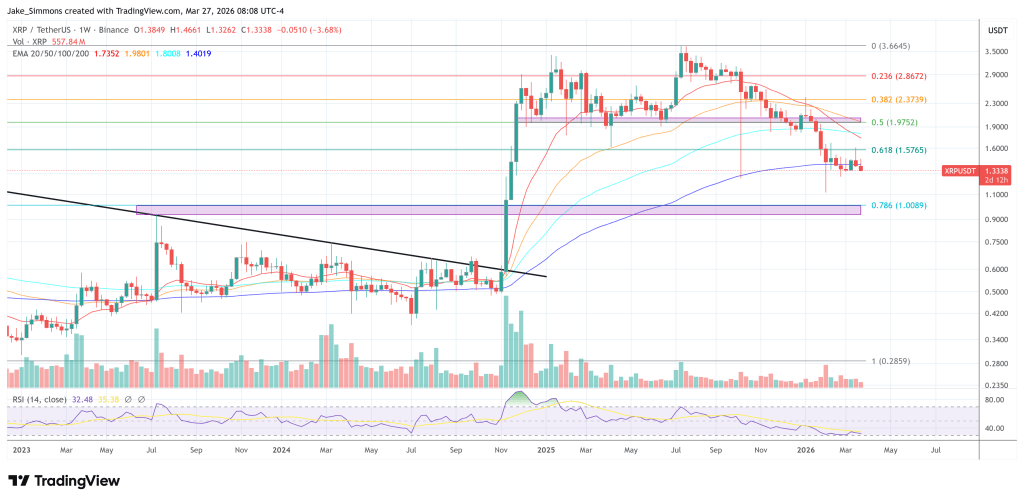
XRP falls below the 200-week EMA again, 1-week chart | Source: XRPUSDT on TradingView.com

Пов'язані питання

QWhat are the key components of Ripple's security upgrade for the XRP Ledger?

ARipple's security upgrade includes AI-assisted testing, a dedicated red team, stricter amendment review standards, adversarial code scanning, AI-assisted reviews on every pull request, threat modeling, attack-surface mapping, and simulations of edge cases and stress scenarios.

QHow does Ripple claim AI will change the security approach for XRPL?

ARipple claims AI changes the security equation by shifting from reactive debugging to proactive, systematic discovery of vulnerabilities, allowing them to explore edge cases and hidden failure modes at scale, thereby strengthening the ledger faster and with greater confidence.

QWhat has the dedicated AI-assisted red team already discovered according to the announcement?

AThe dedicated AI-assisted red team has uncovered over 10 bugs, with only low-severity issues disclosed publicly so far. The findings are described as 'incredibly fruitful,' including a number of bugs across a range of severities.

QWhat is the focus of the next XRPL release as mentioned in the blog post?

AThe next XRPL release will focus on bug fixes and improvements without introducing new features, indicating that hardening the stack and improving reliability is taking priority over adding more functionality.

QHow is Ripple changing the governance process for significant amendments to the XRPL?

ASignificant amendments will now face multiple independent security audits, expanded bug bounty incentives, more attackathons, and clearer readiness criteria before activation. These criteria will be defined and published with the XRPL Foundation to formalize the security bar for network changes.

Пов'язані матеріали

Fei-Fei Li's Team Clarifies the Concept of 'World Models', Sora Merely a Renderer

"World Models" has become a widely used yet confusing term in AI. To address this, a team led by Fei-Fei Li and World Labs proposed a functional taxonomy based on the Partially Observable Markov Decision Process framework. This taxonomy categorizes systems called "world models" into three distinct projections: Renderers, Simulators, and Planners. Renderers, like OpenAI's Sora and other video generation models, focus on producing photorealistic visual outputs for human perception. They prioritize visual fidelity over physical accuracy. Simulators, such as NVIDIA Omniverse, aim to compute precise future environmental states for computational tasks like engineering analysis or digital twins. Planners, like Vision-Language-Action models, take in observations and goals to output executable actions for robots or agents. The article clarifies that most current "world models," including Sora, are primarily Renderers. They generate convincing visuals but lack the core ability to simulate state transitions based on actions, a key requirement for a true world model in classic reinforcement learning definitions. This conceptual confusion has practical implications, leading to potential misalignment in technology selection, investment, and public understanding of AI capabilities. Clear categorization is crucial. It helps enterprises avoid costly mistakes (e.g., using a renderer for robot training), allows investors to accurately assess markets, and enables researchers to build comparable benchmarks. While future systems may integrate these functions, recognizing current boundaries is essential for honest assessment and progress.

marsbit1 год тому

Fei-Fei Li's Team Clarifies the Concept of 'World Models', Sora Merely a Renderer

marsbit1 год тому

Bloomberg Uncovered: How Do China's Wealthy Circumvent the Annual $50,000 Limit to Transfer Assets?

**Summary: How Wealthy Chinese Circumvent $50,000 Annual Foreign Exchange Limits** Despite China's strict capital controls, including an annual $50,000 per person foreign exchange quota, an estimated $150 billion in funds still leaves the country annually via various gray and underground channels. This report outlines the evolution of China's "capital wall" and the methods used to bypass it. **The Evolving Capital Controls:** * **Foundation (1994):** The system of "current account convertibility with strict capital account controls" was established. * **Quota Set (2007):** The $50,000 individual annual forex purchase limit was formalized. * **Crackdown Begins (2015-2017):** Following market volatility, enforcement tightened. Banks were required to scrutinize transactions, and channels like using UnionPay cards for Hong Kong insurance premiums or buying overseas property were blocked. * **Digital & Legal Upgrades (2024-2026):** Enhanced algorithms now flag suspicious patterns (e.g., "smurfing"). The Common Reporting Standard (CRS) provides Chinese tax authorities with data on citizens' offshore accounts. Unlicensed cross-border brokers have been targeted. **Five Primary Methods for Moving Capital:** 1. **Underground Banking / "Hawala" (Duiqiao):** The largest-scale method. No money crosses borders. Clients pay RMB to a domestic account; an overseas associate deposits equivalent foreign currency into the client's offshore account. Risks include high fees, account freezes, and legal penalties. 2. **"Smurfing" or "Ant Moving":** Using multiple individuals' $50,000 quotas to pool funds for one offshore recipient. Increasingly detected by anti-money laundering algorithms. 3. **Trade Invoice Manipulation:** Businesses over-invoice imports or under-invoice exports via offshore shell companies, creating a pretext to transfer excess funds abroad under the guise of trade. 4. **Channel Migration:** After a crackdown on internet brokers, funds flow toward more compliant but costly channels like major banks' cross-border wealth management services or Qualified Domestic Institutional Investor (QDII) quotas. 5. **Structural Arrangements:** High-net-worth individuals use complex, high-cost legal structures involving offshore trusts, insurance, and investment migration programs to transfer asset ownership. **Regulatory Response: Focusing on People, Not Just Money** The current strategy extends oversight from enterprises to **individual residents**. Tools like CRS allow retroactive visibility into offshore assets. Cryptocurrencies, once seen as a potential loophole, are now actively monitored and prosecuted as an illegal channel. The underlying driver remains: with significant wealth concentrated among millions of affluent households seeking diversification amid domestic economic shifts, the incentive to move assets offshore persists despite regulatory barriers.

marsbit1 год тому

Bloomberg Uncovered: How Do China's Wealthy Circumvent the Annual $50,000 Limit to Transfer Assets?

marsbit1 год тому

Торгівля

Спот
Ф'ючерси

Популярні статті

Що таке XRP 2.0

XRP 2.0: Нова межа в світі криптовалют Вступ до XRP 2.0 У постійно змінюючомуся світі криптовалют нові проекти постійно з'являються, змагаючись за увагу та прийняття. Однією з таких обіцяючих ініціатив є XRP 2.0, новий криптовалютний проект, що має на меті використання сучасних технологій блокчейн та надійних методів шифрування. Хоча назва нагадує про XRP від Ripple, важливо зазначити, що XRP 2.0 функціонує автономно, концентруючи увагу на підвищенні безпеки транзакцій, конфіденційності та масштабованості. Оскільки цифровий фінансовий ландшафт все більше приймає децентралізовані рішення, XRP 2.0 прагне значно сприяти веб3 та загальному розширенню крипто проектів. Що таке XRP 2.0? У своїй основі XRP 2.0 є криптовалютним проектом, що має на меті створення безпечної та децентралізованої екосистеми цифрової валюти. Його фундаментальна технологія інтегрує складні принципи блокчейну з передовими техніками шифрування. Загальною метою XRP 2.0 є встановлення себе як надійної та ефективної платформи, що дозволяє швидко виконувати транзакції, при цьому надаючи пріоритет підвищеним захистам конфіденційності для своїх користувачів. Проект позиціонується як рішення багатьох обмежень, з якими стикаються існуючі криптовалюти, пропонуючи систему, яка може обробляти вищий обсяг транзакцій з покращеною швидкістю та конфіденційністю. Ця універсальність позиціонує XRP 2.0 як значного гравця на ринку, наповненому різними цифровими валютами. Хто творець XRP 2.0? Особистість творця XRP 2.0 була позначена як «Вілбур». Проте, вичерпні деталі про Вілбура або пов'язану з ним організацію залишаються недоступними. Анонімність багатьох творців криптовалют не є незвичним явищем в індустрії, часто запроваджена для збереження певного рівня конфіденційності та безпеки. Хто інвестори XRP 2.0? На даний момент конкретна інформація про інвестиційні фонди або організації, що підтримують XRP 2.0, не є публічно доступною. У секторі криптовалют підтримка від визнаних інвесторів може значно вплинути на кредитоспроможність і успіх проекту, але прозорість щодо фінансових підтримувачів XRP 2.0 не була встановлена. Як працює XRP 2.0? XRP 2.0 вирізняється використанням комбінації технології блокчейн та просунутих алгоритмів шифрування, що забезпечують безпечні та децентралізовані транзакції. Його інноваційна структура включає унікальні функції, спрямовані на залучення користувачів та розширення функціональності за межами традиційних транзакцій криптовалюти. Серед цих функцій, XRP 2.0 включає можливості на базі ШІ, такі як текст в зображення та текст в мову. Ці нововведення розроблені для покращення інтерактивного досвіду для користувачів, сприяючи ширшій застосовності в різних секторах. Завдяки поєднанню технологічних досягнень з орієнтованим на користувача дизайном, XRP 2.0 прагне привернути увагу різноманітних осіб і підприємств, які шукають способи інтеграції рішень криптовалют у свої операційні структури. Хронологія XRP 2.0 Розуміння XRP 2.0 вимагає вивчення основних етапів, які визначили його подорож до теперішнього часу: 23 липня 2023 року: XRP 2.0 представлено як новий криптовалютний проект, що має на меті революціонізувати безпечні та децентралізовані можливості транзакцій у галузі блокчейн. 8 вересня 2023 року: Запускається інший проект, XRP20, що відзначає виникнення токена ERC-20 на блокчейні Ethereum, який не пов'язаний з XRP 2.0. 13 листопада 2023 року: XRP Ledger зазнає значного оновлення з виходом програмного забезпечення rippled server версії 2.0.0. Важливо зазначити, що цей розвиток не пов'язаний з криптовалютним проектом XRP 2.0. Ключові моменти про XRP 2.0 Щоб узагальнити суть XRP 2.0, кілька критично важливих факторів emerge: Унікальні функції: Включення функцій, таких як текст в зображення і текст в мову на базі ШІ, ще більше розширює потенційні застосування XRP 2.0. Технологія блокчейн: Архітектура використовує сучасні механізми блокчейн і протоколи шифрування, забезпечуючи безпечне та децентралізоване середовище для транзакцій. Масштабованість і конфіденційність: XRP 2.0 надає пріоритет підвищеним захистам конфіденційності в процесах транзакцій і масштабованості, необхідній для задоволення зростаючої бази користувачів. Відсутність зв'язку з Ripple: Важливо, що, незважаючи на свою назву, XRP 2.0 не має жодної прив'язки чи співпраці з XRP від Ripple, що відрізняє його операційну структуру та цілі в рамках криптовалютної екосистеми. Висновок XRP 2.0 представляє амбітну ініціативу у світі криптовалют, прагнучи запропонувати поєднання безпеки, конфіденційності та ефективності у цифрових транзакціях. Інтегруючи складні технології та дружні до користувача функції, проект ставить за мету розширити горизонти того, що криптовалюта може досягти в сучасній цифровій економіці. Хоча анонімність його творця та відсутність розкритих інвесторів можуть викликати запитання у деяких, фокус XRP 2.0 на передових функціональностях і децентралізації підвищує його привабливість на дедалі більшому ринку криптовалют. Оскільки ландшафт криптовалют продовжує еволюціонувати, XRP 2.0 може ще стати важливим гравцем у розширенні безпечних і масштабованих рішень блокчейн.

162 переглядів усьогоОпубліковано 2024.04.05Оновлено 2024.12.03

Що таке XRP 2.0

Як купити XRP

Ласкаво просимо до HTX.com! Ми зробили покупку XRP (XRP) простою та зручною. Дотримуйтесь нашої покрокової інструкції, щоб розпочати свою криптовалютну подорож.Крок 1: Створіть обліковий запис на HTXВикористовуйте свою електронну пошту або номер телефону, щоб зареєструвати обліковий запис на HTX безплатно. Пройдіть безпроблемну реєстрацію й отримайте доступ до всіх функцій.ЗареєструватисьКрок 2: Перейдіть до розділу Купити крипту і виберіть спосіб оплатиКредитна/дебетова картка: використовуйте вашу картку Visa або Mastercard, щоб миттєво купити XRP (XRP).Баланс: використовуйте кошти з балансу вашого рахунку HTX для безперешкодної торгівлі.Треті особи: ми додали популярні способи оплати, такі як Google Pay та Apple Pay, щоб підвищити зручність.P2P: Торгуйте безпосередньо з іншими користувачами на HTX.Позабіржова торгівля (OTC): ми пропонуємо індивідуальні послуги та конкурентні обмінні курси для трейдерів.Крок 3: Зберігайте свої XRP (XRP)Після придбання XRP (XRP) збережіть його у своєму обліковому записі на HTX. Крім того, ви можете відправити його в інше місце за допомогою блокчейн-переказу або використовувати його для торгівлі іншими криптовалютами.Крок 4: Торгівля XRP (XRP)Легко торгуйте XRP (XRP) на спотовому ринку HTX. Просто увійдіть до свого облікового запису, виберіть торгову пару, укладайте угоди та спостерігайте за ними в режимі реального часу. Ми пропонуємо зручний досвід як для початківців, так і для досвідчених трейдерів.

1.5k переглядів усьогоОпубліковано 2024.12.10Оновлено 2026.06.02

Як купити XRP

Обговорення

Ласкаво просимо до спільноти HTX. Тут ви можете бути в курсі останніх подій розвитку платформи та отримати доступ до професійної ринкової інформації. Нижче представлені думки користувачів щодо ціни XRP (XRP).

活动图片