XRP, HBAR, And Litecoin: Pundit Highlights Coins To Watch In 2026

bitcoinistОпубліковано о 2026-01-27Востаннє оновлено о 2026-01-27

Анотація

Discussions continue on which cryptocurrencies might outperform Bitcoin by 2026. According to crypto commentator X Finance Bull, XRP, HBAR, and Litecoin are key coins to watch. XRP and Hedera (HBAR) are highlighted for their growing role in financial infrastructure, moving beyond speculation to become foundational blockchain networks. Litecoin is noted for its optional privacy features, placing it in the underappreciated privacy-assets category alongside Monero. The commentary also points to XRP Ledger's low, predictable fees and deflationary token burn as advantages for institutional adoption. Other important themes for 2026 include tokenization platforms, with Ethereum and Solana leading, and the expanding stablecoin market.

Discussions are still rampant about which cryptocurrencies could outperform Bitcoin as the entire industry looks ahead to what 2026 has to offer. According to a recent commentary on X, X Finance Bull noted that XRP, HBAR, and Litecoin are a few cryptocurrencies that can outpace Bitcoin.

The crypto commentator pushed back against claims that XRP and Hedera have lost relevance, arguing instead that both are increasingly positioned as foundational blockchain infrastructure. These are based on recent events that have seen both the XRP Ledger and Hedera leading crypto enterprise infrastructure.

XRP, HBAR, And Litecoin Are Coins To Watch In 2026

According to the commentary shared by X Finance Bull, XRP, Hedera, and Litecoin are a few of the top cryptocurrency ecosystems to watch in 2026. Notably, the crypto commentator grouped XRP and Hedera (HBAR) in the same group to watch due to their growing presence in financial infrastructure. This means these two cryptocurrencies are increasingly leaving the realm of pure speculative assets and are now being considered as important players in financial rails.

Based on this, investors can expect upside divergence from Bitcoin in 2026 as these coins start to go on bullish momentum on their own. This view is based on the investor outlook shown in the image below, which identifies financial infrastructure as an important area of focus for 2026. XRP and HBAR anchor the infrastructure structure, while Litecoin is in the privacy-assets category.

Litecoin’s optional privacy features place it alongside established privacy-focused networks like Monero and Canton. As it stands, you can easily argue that privacy assets are currently underappreciated, especially now that regulatory clarity and digital payments growth are bringing attention to data protection. Based on this context, Litecoin is another top coin to look forward to upside divergence from Bitcoin in 2026.

Interestingly, tokenization platforms and stablecoins are other important themes for 2026. Ethereum and Solana are the primary networks for tokenized assets, while newer platforms such as Sui, Sei, and Injective are beginning to see higher adoption. At the same time, stablecoin supply has grown to over $300 billion, with USDT, USDC, USDE, and RLUSD expanding due to maturing payments infrastructure around stablecoins.

XRP Ledger’s Institutional Appeal

X Finance Bull supported his XRP outlook in a separate post by pointing to the XRP Ledger’s cost structure. The Ledger charges just 0.00001 XRP per transaction, and this places total daily fees across the entire network at around 650 XRP. Furthermore, the Ledger has maintained low and predictable fees since 2012, even during periods of heavy activity, which is in contrast to Ethereum’s variable gas fees and Bitcoin’s congestion pricing.

All transaction fees generated by the Ledger are permanently burned, and this adds a deflationary element to the network. According to the crypto commentator, this combination of speed, low cost, and reliability is what makes its infrastructure the best for long-term institutional use.

XRP trading at $1.88 on the 1D chart | Source: XRPUSDT on Tradingview.com

Трендові криптовалюти

Пов'язані питання

QAccording to the article, which three cryptocurrencies does the pundit highlight as ones to watch in 2026?

AThe pundit highlights XRP, HBAR (Hedera), and Litecoin as the top cryptocurrencies to watch in 2026.

QWhat is the primary reason XRP and HBAR are grouped together as important assets for the future?

AXRP and HBAR are grouped together due to their growing presence and role as foundational blockchain infrastructure, particularly in financial infrastructure, moving beyond pure speculative assets.

QWhy is Litecoin considered a coin to watch, and what category is it placed in?

ALitecoin is considered a coin to watch due to its optional privacy features, which place it in the privacy-assets category alongside networks like Monero. It is seen as underappreciated in the context of growing regulatory clarity and digital payments.

QWhat does the article cite as a key feature of the XRP Ledger that makes it appealing for institutional use?

AThe article cites the XRP Ledger's extremely low and predictable transaction cost of 0.00001 XRP per transaction, its reliability even during heavy activity, and its deflationary fee-burning mechanism as key features for long-term institutional use.

QBesides the three main coins, what are two other important themes for 2026 mentioned in the commentary?

AThe two other important themes for 2026 are tokenization platforms, with Ethereum and Solana as primary networks, and the growth of stablecoins, whose supply has surpassed $300 billion.

Пов'язані матеріали

In-depth: The Foreign Guest Genspark

The article "The Foreign Guest: Genspark" investigates the identity and business practices of AI startup Genspark, which presents itself as a Palo Alto-based "AI Costco" offering a subscription bundle of over 70 models and numerous AI agent tools. Despite its official Silicon Valley narrative, Genspark's founding team has deep roots in Chinese tech giant Baidu, a history systematically downplayed in its branding. The company actively cultivates an image as an elite US firm, heavily publicizing partnerships and endorsements from OpenAI, Anthropic, and Microsoft, while distancing itself from the Chinese AI community and obscuring its connections to Chinese investors and open-weight models (like those from DeepSeek, Moonshot AI, and MiniMax) that power its services. Genspark's core strategy involves rapidly cloning and integrating successful AI product concepts (e.g., from Perplexity, Manus, Plaud) into its unified platform, supported by aggressive marketing, including Super Bowl ads and paid native content in publications like The Wall Street Journal. Critically, the article suggests a significant portion of its engineering and product development is conducted by a team in Beijing, operating outside its official US corporate structure. This duality allows Genspark to leverage Chinese talent and models for efficiency and cost reduction while constructing a public facade as a purely American success story. The piece concludes that Genspark's most effective agent is its own corporate identity, meticulously engineered to obscure its Chinese underpinnings and be perceived solely as a Silicon Valley company.

marsbit42 хв тому

In-depth: The Foreign Guest Genspark

marsbit42 хв тому

Debate: Korean Workers Fear Unemployment, While Musk Envisions a Society 'Without Work'?

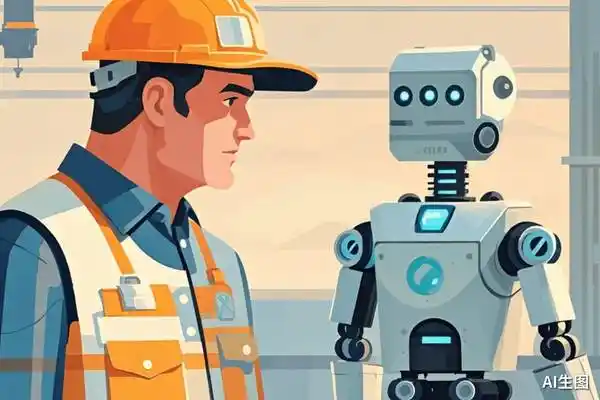
While South Korean auto workers fear job losses from robotics, Elon Musk envisions a future where AI and robots render most work optional. This article explores the growing tension between immediate anxieties over automation and long-term visions of a post-work society. The piece begins with recent strikes at Hyundai's Korean plants, where unions, amid standard wage negotiations, also sought job guarantees against advancing robotics—specifically mentioning Boston Dynamics' Atlas. This reflects how anxiety about technological displacement is emerging even before robots are fully capable of replacing skilled labor on assembly lines. The author argues that while current robotics still struggle with the nuanced, experiential knowledge of veteran workers, the *perception* of imminent replacement is fueling social conflict prematurely. This modern "Luddite" sentiment is compared to the 19th-century English textile workers who smashed machines. Historically, Luddites weren't simply anti-technology; they were protesting the rapid devaluation of their skills and the unequal distribution of productivity gains. Similarly, today's workers ask who will bear the cost of transition and share in the new wealth created by machines. In contrast, figures like Elon Musk propose an optimistic endpoint: with AI and robotics driving extreme abundance, the link between work and survival could break. He suggests concepts like "Universal High Income" could allow society to share the technological bounty, transforming work from a necessity into a choice. The core challenge, however, lies in the transition. The author notes that technology's benefits diffuse slowly, while its disruptive costs—job losses, skill obsolescence—can be concentrated and immediate. The risk is a painful interim period where productivity gains are captured by a few before new social contracts, safety nets, and retraining systems are established. The conclusion calls for proactive governance. Just as past industrial revolutions gave rise to labor standards and social safety nets, the robotics era needs its own frameworks. These should address job transition support, distribution of productivity gains, safety liability, and ethical deployment. Embracing such "constraints" is not opposition to progress but a necessary step to ensure technology benefits society broadly. The discussion sparked by Hyundai's workers, therefore, is not premature but essential.

marsbit55 хв тому

Debate: Korean Workers Fear Unemployment, While Musk Envisions a Society 'Without Work'?

marsbit55 хв тому

Торгівля

Спот

Популярні статті

Як купити HBAR

Ласкаво просимо до HTX.com! Ми зробили покупку Hedera Hashgraph (HBAR) простою та зручною. Дотримуйтесь нашої покрокової інструкції, щоб розпочати свою криптовалютну подорож.Крок 1: Створіть обліковий запис на HTXВикористовуйте свою електронну пошту або номер телефону, щоб зареєструвати обліковий запис на HTX безплатно. Пройдіть безпроблемну реєстрацію й отримайте доступ до всіх функцій.ЗареєструватисьКрок 2: Перейдіть до розділу Купити крипту і виберіть спосіб оплатиКредитна/дебетова картка: використовуйте вашу картку Visa або Mastercard, щоб миттєво купити Hedera Hashgraph (HBAR).Баланс: використовуйте кошти з балансу вашого рахунку HTX для безперешкодної торгівлі.Треті особи: ми додали популярні способи оплати, такі як Google Pay та Apple Pay, щоб підвищити зручність.P2P: Торгуйте безпосередньо з іншими користувачами на HTX.Позабіржова торгівля (OTC): ми пропонуємо індивідуальні послуги та конкурентні обмінні курси для трейдерів.Крок 3: Зберігайте свої Hedera Hashgraph (HBAR)Після придбання Hedera Hashgraph (HBAR) збережіть його у своєму обліковому записі на HTX. Крім того, ви можете відправити його в інше місце за допомогою блокчейн-переказу або використовувати його для торгівлі іншими криптовалютами.Крок 4: Торгівля Hedera Hashgraph (HBAR)Легко торгуйте Hedera Hashgraph (HBAR) на спотовому ринку HTX. Просто увійдіть до свого облікового запису, виберіть торгову пару, укладайте угоди та спостерігайте за ними в режимі реального часу. Ми пропонуємо зручний досвід як для початківців, так і для досвідчених трейдерів.

313 переглядів усьогоОпубліковано 2024.12.11Оновлено 2026.06.02

Як купити HBAR

Обговорення

Ласкаво просимо до спільноти HTX. Тут ви можете бути в курсі останніх подій розвитку платформи та отримати доступ до професійної ринкової інформації. Нижче представлені думки користувачів щодо ціни HBAR (HBAR).

活动图片