Xinjiang's Computing Power Resurges, Then Gets Cleared Out Within 48 Hours: What Exactly Happened to the Bitcoin Network This Time?

marsbitОпубліковано о 2025-12-16Востаннє оновлено о 2025-12-16

Анотація

On December 16, Bitcoin network hashrate dropped sharply within 48 hours, widely attributed to the concentrated shutdown and clearance of mining facilities in Xinjiang. Estimates suggest between 200,000 to 400,000 mining machines went offline, causing a hashrate decline of nearly 30%, from around 1200 EH/s to approximately 836 EH/s at its lowest. The resurgence of mining in Xinjiang was driven by three factors: surplus energy capacity and low electricity prices, underutilized data center infrastructure seeking revenue, and shorter ROI periods for miners amid rising Bitcoin prices. Despite China’s clear policy against cryptocurrency mining—classifying it as an obsolete industry—mining resurfaced periodically due to economic pressures and infrastructure availability. The recent crackdown was swift and severe, following a multi-department regulatory meeting emphasizing continued strict oversight of crypto-related activities, including anti-money laundering and cross-border capital risks. The concentrated nature of mining operations in specific regions meant that regulatory actions led to large-scale, simultaneous shutdowns. Short-term impacts include disrupted cash flows for miners and potential market volatility due to heightened policy sensitivity. In the medium term, the Bitcoin network will adjust mining difficulty, and hashrate is likely to migrate to other regions. The event underscores that mining in China remains a high-risk, grey-area activity driven by economic ince...

On December 16th, Beijing time, the Bitcoin network suddenly slammed on the brakes. The hashrate curve showed a significant drop within two days, and the mining community's explanation was highly consistent: concentrated shutdowns occurred at multiple mining farms in Xinjiang, with some equipment being confiscated or cleared out, leading to a sudden "chunk" of the total network hashrate being pulled away. The market's debate wasn't about whether the shutdowns happened, but about the actual scale—rumored figures ranged from over 200,000 to 400,000 units.
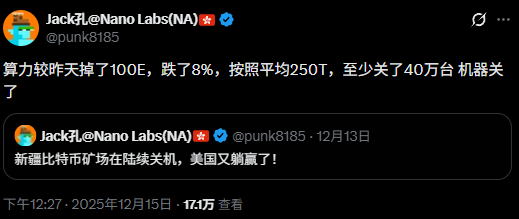
The most commonly cited estimate comes from an engineer's algorithm in the mining circle: roughly calculated based on contemporary mainstay machines at about 250 TH/s each, if 400,000 units were successively powered down, the corresponding hashrate gap would be enough to cause a drop on the order of hundreds of EH/s for the entire network. Some put the more aggressive hashrate point more bluntly: the total hashrate once dropped from nearly 1200 EH/s to around 836.75 EH/s, a decline of nearly 30%. Different platforms and different calibers don't completely agree on the "lowest point," but one fact is hard to ignore: this isn't the fluctuation of a few mining farms "turning off a few rows of cabinets," but a widespread concentrated shutdown.

What's truly worth追问 is the two halves of this story: Why did mining in Xinjiang resurge under the ban? And why did the clearance come so quickly and so fiercely?


Why Did Mining in Xinjiang Come Back?

The underlying driving force behind the "resurgence" of Xinjiang's computing power wasn't a sudden policy shift, but three real-world pressures being squeezed into the same outlet.

The first pressure comes from the energy structure. Xinjiang has large-scale power supply and industrial power distribution systems. During certain periods and in some regions, the marginal value of power consumption is not very high. For transmission channels, dispatch, and demand-side承接 capacity, this is a long-term tug-of-war: electricity can be generated, but it can't always be sold in an "ideal way." For asset owners, the most painful thing isn't low electricity prices, but electricity that can't be sold; for miners, this恰恰 constitutes an energy洼地—as long as they can get electricity, they can directly convert it into cash flow.

The second pressure comes from data center facilities and infrastructure. The rapid expansion of data centers across various regions in recent years has left a large amount of存量 capacity where "power is already connected, and facilities are already built." The AI narrative is hot, but AI isn't a case of having a data center就能赚钱: it requires compute cards, big clients, and long-term stable load. The reality is, some data centers haven't secured enough AI orders nor enough compute card resources; equipment sitting idle for a day means real losses from depreciation. Thus, some asset owners see "filling load" as a rigid demand—in the gray area, mining happens to be the easiest application to deploy for filling capacity: it doesn't挑剔 clients or business models, it runs as long as there's power, cooling, and an internet connection.

The third pressure comes from the temptation of ROI and the supply chain. When Bitcoin's price rises, the payback period for miners is significantly compressed; faced with the诱惑 of "breaking even in about six months," many people treat the risks in the gray area as a cost rather than a red line. More crucially, the miner supply chain hasn't disappeared: machines can be bought, transported, and installed, giving the gray area resurgence the physical conditions.

The result of these three pressures converging is a shadow resurgence: local assets (power + facilities) need cash flow, miners need low-cost electricity, the supply chain can deliver the equipment, so Xinjiang once again becomes a magnet for computing power. It's not a gathering place for miner sentiment, but a place where an energy洼地 and an infrastructure洼地 overlap.

This also explains a seemingly contradictory phenomenon: the ban never disappeared, but mining still periodically surfaces. It's not because the red line loosened, but because the constraints of real-world assets never stop: electricity, facilities, power distribution, depreciation, cash flow—all force participants to repeatedly test the boundaries.


Is Mining Illegal in China: An Eliminated Item Doesn't Equal a Criminal Crime, But the Red Line Persists

In China, the policy positioning of mining is not an encouraged industry, but an item that must be rectified and pushed for exit. The relevant authorities' rectification documents core requirements are to strictly prohibit new additions, properly handle existing stock, promote orderly exit, and explicitly list virtual currency mining as an eliminated industry, while also emphasizing precise identification through methods like abnormal electricity consumption monitoring and park inspections, and prohibiting mining under the name of data centers.

Looking at real-world governance methods, it's more like a combination of administrative and energy-side measures: differentiated electricity prices or punitive fees, cancellation of preferential policies, cessation of fiscal and financial support, restrictions on power connection and participation in the electricity market, etc. Therefore, the direct consequences for many mining farms when handled are often power cuts, clearance, back payment of electricity fees, and cancellation of policy benefits—this is not the same as legal operation, but it also doesn't equate to "mining itself必然触犯刑法" (necessarily violating criminal law).

What truly escalates the risk are usually actions附带 to mining: electricity theft, illegal power supply, fraudulently claiming subsidies, obtaining support funds under the guise of supercomputing centers or data centers, illegal fundraising, money laundering channels, etc. Once these issues are triggered, it quickly moves from industrial rectification into the realm of public security or criminal law.

At the same time, financial regulation has maintained a tougher stance on virtual currency-related businesses, continuously emphasizing the crackdown on illegal activities related to virtual currency and focusing on anti-money laundering and cross-border capital risks. Putting these two lines together, one can understand why such clearance actions happen repeatedly: mining has long been within the red line of rectification, and once the enforcement end tightens its口径, the power switch is faster than any announcement.


Why Did This Clearance Come So Fiercely

The speed and force of the clearance often depend on two things: whether the signals are unified, and whether the leverage points are clear.
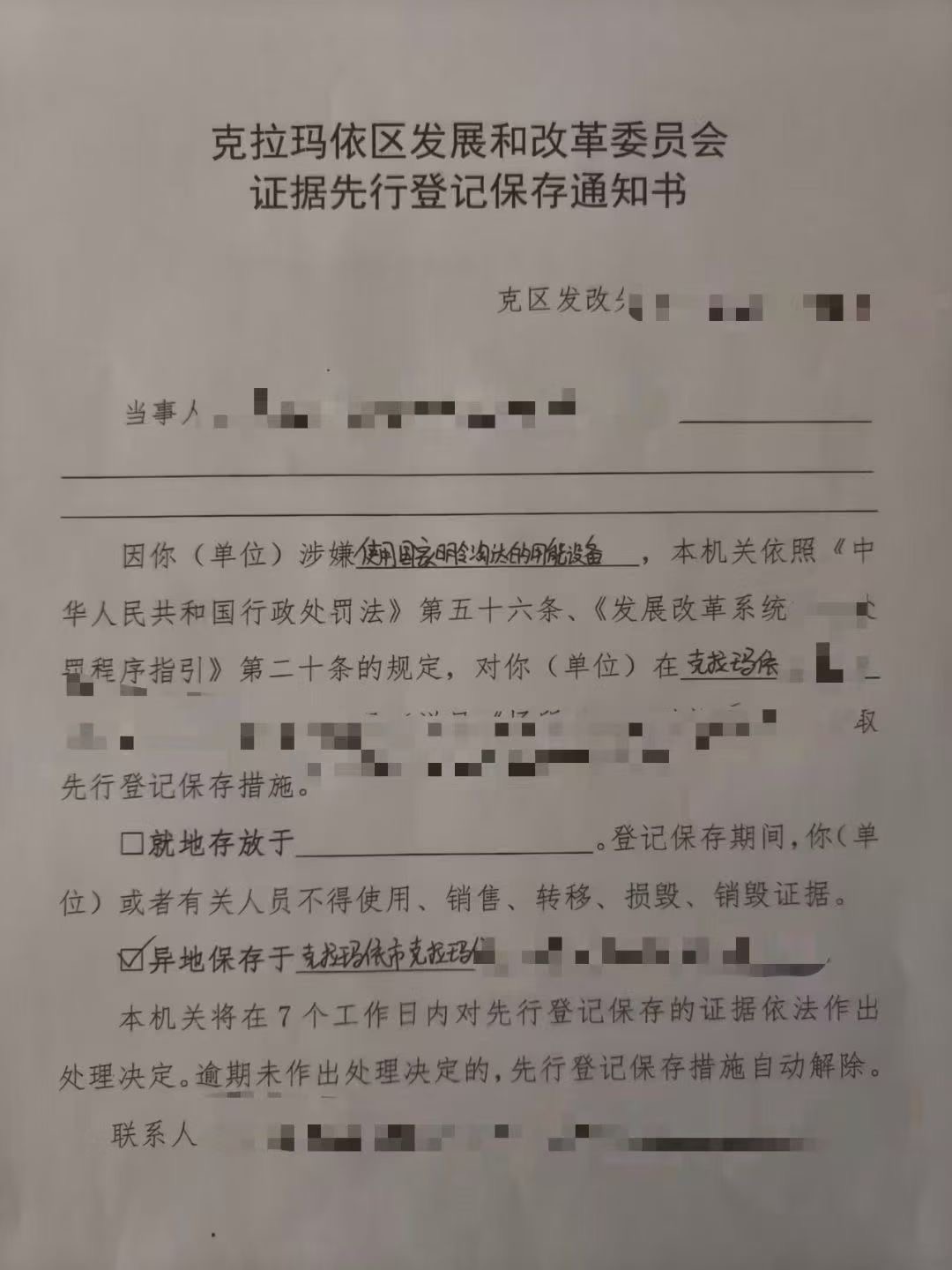
A coordination mechanism meeting led by the central bank with participation from multiple departments in late November was seen as an important node by the mining circle. It released not emotion, but a unification of enforcement port口径: continue to maintain high pressure on virtual currency-related activities, strengthen the narrative on anti-money laundering and cross-border capital risks, and bring issues like stablecoins into a more stringent regulatory view. For gray area industries, this meant "the scope of being watched expanded," and more importantly, local systems knew what to check next, how to check it, who would lead, and who would cooperate.

At the same time, mining in China has long been handled within an industrial policy framework, not just a financial regulatory framework. It is classified as an eliminated industry, with common governance methods including differentiated electricity prices, punitive fees, park inspections, abnormal electricity consumption monitoring, etc. A more realistic risk point is: simply running hashrate might be treated as an eliminated industry, but once it involves electricity theft, fraudulently claiming subsidies, or obtaining support funds under the name of other projects, the nature quickly turns from gray to accountable black.

Therefore, when systems like development and reform, energy, power, and parks start to联动, the clearance often presents a "sudden" feeling: it was running yesterday, but today there's a collective shutdown. To the outside world, this is news; to miners, it's the power switch, and the power switch never needs an advance announcement.


Why Did the Hashrate Drop So Dramatically: Concentrated Power Cuts Get "Amplified" on the Curve

The dramatic drop in hashrate isn't核心ly about "number jitter," but about "concentrated power cuts." After entering the ZH era, the total network hashrate fluctuates daily, but most fluctuations are like ocean waves: rising and falling, looking back it's just noise. This time was more like pulling out a beam—a阶梯式 (stepped) plunge occurring in a short time, combined with highly consistent on-the-ground information from the mining circle pointing to concentrated shutdowns in Xinjiang. This combination is what made the market treat it as a hard event, not normal jitter.
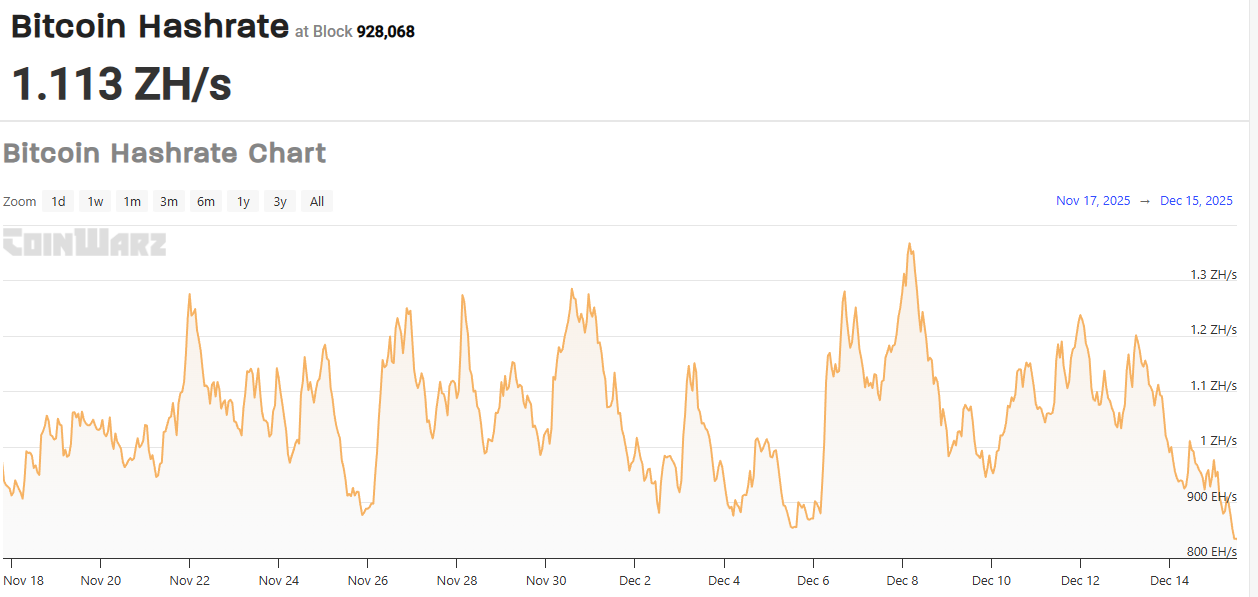
More crucial is the structure. When the resurgence happens in a concentrated form of "few regions + few parks + few data centers," its advantage is fast expansion, its disadvantage is fragility: once the switch is pulled, what drops isn't sporadic mining farms, but an entire chunk of hashrate coming loose together. In other words, the market isn't debating whether the hashrate is an estimate, but reading one thing: what was cut off this time was likely a highly concentrated hashrate pool.

There's another layer of perceptual amplification. Hashrate is estimated based on block production speed: when large-scale shutdowns happen in a short period, the block interval first becomes unstable, and short-term estimates are more prone to exaggerated spikes and deep pits; once the difficulty completes its self-healing in subsequent adjustment cycles, the curve will slowly smooth out. Therefore, this "seemingly scary" plunge is essentially the immediate projection of a regional concentrated shutdown on the network level—it's not a false alarm, but an amplification effect brought by concentration.


What Happens After the Clearance: Miners Hurt Most, Market Most Sensitive, Hashrate Will Continue Migrating

The short-term impact will first land on miner cash flow. Machines being confiscated or shut down means the payback period is instantly interrupted; hosting providers and the power side will become more cautious, and the costs of relocation, restarting, and finding new sockets will increase sharply. These costs will ultimately manifest in two ways: some miners are forced to exit, while other miners raise their risk premium, only willing to restart under higher profit expectations.

At the market level, the most common说法 is that miners will sell coins. This conclusion doesn't always hold directly: whether it's a集中处置 (concentrated disposal), what the disposal path is, whether it enters the secondary market, how long it drags on—all depend on the specific execution method. But the clearance will form a clear signal in sentiment: the policy risk premium is back. Especially in a phase already marked by increased volatility, any news带有 (carrying) the color of concentrated clearance will be amplified, becoming an amplifier for price fluctuations.

In the medium term, the Bitcoin network will use difficulty adjustment to self-heal: after the hashrate declines, block production slows, then the difficulty下调 (drops), short-term收益 (profits) improve for the remaining miners, and hashrate will regrow elsewhere. The protocol doesn't care about Xinjiang or Texas, it only cares about producing a block on average every ten minutes. But for Chinese miners, this means the next migration will be more dispersed, more hidden, more socket-based.

The significance of this clearance in Xinjiang isn't whether the lowest point was exactly 836.75 or some other number, but that it laid bare the true structure of the shadow resurgence: this wasn't an above-board industrial recovery, but a gray area arbitrage driven by electricity, facilities, depreciation, and cash flow. Arbitrage is fast, of course, but when the switch falls, it's equally fast.


Пов'язані питання

QWhat caused the sudden drop in Bitcoin's network hashrate in mid-December?

AThe sudden drop in Bitcoin's network hashrate was caused by the concentrated shutdown of mining operations in Xinjiang, with reports of between 200,000 to 400,000 mining machines being powered down or seized within 48 hours.

QWhat were the three main pressures that led to the resurgence of mining in Xinjiang despite the ban?

AThe three main pressures were: 1) The region's energy structure, where excess electricity created a low-cost 'energy洼地' (energy洼地); 2) Underutilized data center infrastructure seeking any revenue-generating load; and 3) The tempting return-on-investment cycle for miners when Bitcoin's price rises, making the risk seem worth the cost.

QIs cryptocurrency mining illegal in China according to the article?

ACryptocurrency mining is not classified as a criminal offense per se, but it is explicitly listed as an industry that must be eliminated and phased out. The primary enforcement measures are administrative and energy-based, such as punitive electricity pricing, power cuts, and revoking policy benefits, rather than direct criminal charges, unless it involves ancillary illegal acts like electricity theft or fraud.

QWhy did the crackdown and shutdown of mines happen so quickly and forcefully?

AThe crackdown was swift and forceful due to a unified signal from a high-level multi-departmental coordination meeting led by the central bank, which mandated continued high-pressure scrutiny on virtual currency activities. This provided clear guidance for local authorities in energy, development, and industrial parks to act in concert, leading to coordinated power cuts without prior warning.

QWhat is the expected medium-term impact on the Bitcoin network after this crackdown?

AThe medium-term impact is that the Bitcoin network will self-correct through a difficulty adjustment, making mining more profitable for remaining miners and causing the hashrate to regrow in other regions. For Chinese miners, this will lead to more dispersed, hidden, and 'socketized' mining operations in the future.

Пов'язані матеріали

Goldman Sachs Bows Down, Bitcoin Finally Breaks Through the Gates of Wall Street

Wall Street giants, including Goldman Sachs, Morgan Stanley, Charles Schwab, and the New York Stock Exchange, have reversed their long-standing opposition to Bitcoin and are now actively embracing it. After years of dismissing Bitcoin as a scam, a bubble, or a tool for illicit activities, these institutions are launching Bitcoin ETFs, enabling spot trading, and building dedicated crypto infrastructure. Goldman Sachs, which once called Bitcoin a "fraud tool," is now offering Bitcoin ETFs. Morgan Stanley, which internally banned the term "cryptocurrency," has launched its largest-ever ETF backed by Bitcoin. Charles Schwab has opened spot crypto trading for its retail clients, integrating Bitcoin alongside traditional assets. The NYSE is building robust infrastructure to support digital assets, signaling a long-term commitment. This dramatic shift is driven not by a change in ideology but by economic necessity. As Bitcoin repeatedly survived market crashes and grew into a multi-trillion-dollar asset class, ignoring it became too costly. Wall Street’s business model relies on capturing fees, and Bitcoin’s rise represented a massive wealth transfer occurring outside their ecosystem. The fear of missing out (FOMO) and client demand forced these institutions to capitulate. The article frames this as a historic surrender to Bitcoin’s mathematical inevitability. Unlike the trust-based traditional financial system, Bitcoin operates on decentralized, transparent, and unchangeable rules. Its scarcity and resilience make it a hedge against fiat currency devaluation and systemic risk. The narrative has flipped: not holding Bitcoin is now seen as the greater risk. The author concludes that Bitcoin has not been co-opted by Wall Street; instead, it has co-opted Wall Street, marking a fundamental shift in the global financial architecture.

marsbit32 хв тому

Goldman Sachs Bows Down, Bitcoin Finally Breaks Through the Gates of Wall Street

marsbit32 хв тому

Торгівля

Спот
Ф'ючерси

Популярні статті

Що таке $S$

Розуміння SPERO: Комплексний огляд Вступ до SPERO Оскільки ландшафт інновацій продовжує еволюціонувати, виникнення технологій web3 та криптовалютних проектів відіграє ключову роль у формуванні цифрового майбутнього. Один з проектів, який привернув увагу в цій динамічній сфері, — це SPERO, позначений як SPERO,$$s$. Ця стаття має на меті зібрати та представити детальну інформацію про SPERO, щоб допомогти ентузіастам та інвесторам зрозуміти його основи, цілі та інновації в рамках web3 та крипто-сектору. Що таке SPERO,$$s$? SPERO,$$s$ — це унікальний проект у криптопросторі, який прагне використати принципи децентралізації та технології блокчейн для створення екосистеми, що сприяє залученню, корисності та фінансовій інклюзії. Проект розроблений для полегшення взаємодії між користувачами новими способами, надаючи їм інноваційні фінансові рішення та послуги. У своїй основі SPERO,$$s$ прагне надати можливості індивідам, забезпечуючи інструменти та платформи, які покращують користувацький досвід у криптовалютному просторі. Це включає в себе можливість більш гнучких методів транзакцій, сприяння ініціативам, що підтримуються спільнотою, та створення шляхів для фінансових можливостей через децентралізовані додатки (dApps). Основна концепція SPERO,$$s$ обертається навколо інклюзивності, прагнучи зменшити розриви в традиційній фінансовій системі, використовуючи переваги технології блокчейн. Хто є творцем SPERO,$$s$? Особистість творця SPERO,$$s$ залишається дещо невідомою, оскільки є обмежені публічно доступні ресурси, що надають детальну інформацію про його засновників. Ця відсутність прозорості може бути наслідком зобов'язання проекту до децентралізації — етики, яку багато проектів web3 поділяють, ставлячи колективні внески вище за індивідуальне визнання. Зосереджуючи обговорення навколо спільноти та її колективних цілей, SPERO,$$s$ втілює суть наділення без виділення конкретних осіб. Таким чином, розуміння етики та місії SPERO є більш важливим, ніж ідентифікація єдиного творця. Хто є інвесторами SPERO,$$s$? SPERO,$$s$ підтримується різноманітними інвесторами, починаючи від венчурних капіталістів до ангельських інвесторів, які прагнуть сприяти інноваціям у крипто-секторі. Зосередження цих інвесторів зазвичай узгоджується з місією SPERO — пріоритет надається проектам, які обіцяють технологічний прогрес у суспільстві, фінансову інклюзію та децентралізоване управління. Ці інвесторські фонди зазвичай зацікавлені в проектах, які не лише пропонують інноваційні продукти, але й позитивно впливають на спільноту блокчейн та її екосистеми. Підтримка з боку цих інвесторів підкріплює SPERO,$$s$ як значного конкурента в швидко змінюваній сфері крипто-проектів. Як працює SPERO,$$s$? SPERO,$$s$ використовує багатогранну структуру, яка відрізняє його від традиційних криптовалютних проектів. Ось деякі ключові особливості, які підкреслюють його унікальність та інноваційність: Децентралізоване управління: SPERO,$$s$ інтегрує моделі децентралізованого управління, надаючи користувачам можливість активно брати участь у процесах прийняття рішень щодо майбутнього проекту. Цей підхід сприяє відчуттю власності та відповідальності серед членів спільноти. Корисність токена: SPERO,$$s$ використовує свій власний криптовалютний токен, розроблений для виконання різних функцій в екосистемі. Ці токени дозволяють здійснювати транзакції, отримувати винагороди та полегшувати послуги, що пропонуються на платформі, підвищуючи загальну залученість та корисність. Шарова архітектура: Технічна архітектура SPERO,$$s$ підтримує модульність та масштабованість, що дозволяє безперешкодно інтегрувати додаткові функції та додатки в міру розвитку проекту. Ця адаптивність є надзвичайно важливою для збереження актуальності в постійно змінюваному крипто-ландшафті. Залучення спільноти: Проект підкреслює ініціативи, що підтримуються спільнотою, використовуючи механізми, які стимулюють співпрацю та зворотний зв'язок. Підтримуючи сильну спільноту, SPERO,$$s$ може краще задовольняти потреби користувачів та адаптуватися до ринкових тенденцій. Фокус на інклюзію: Пропонуючи низькі комісії за транзакції та зручні інтерфейси, SPERO,$$s$ прагне залучити різноманітну базу користувачів, включаючи осіб, які раніше не брали участі в крипто-просторі. Це зобов'язання до інклюзії узгоджується з його загальною місією наділення через доступність. Хронологія SPERO,$$s$ Розуміння історії проекту надає важливі уявлення про його розвиток та етапи. Нижче наведено пропоновану хронологію, що відображає значні події в еволюції SPERO,$$s$: Етап концептуалізації та ідеації: Початкові ідеї, що стали основою SPERO,$$s$, були сформовані, тісно пов'язані з принципами децентралізації та фокусом на спільноті в індустрії блокчейн. Запуск білого паперу проекту: Після концептуального етапу був випущений комплексний білий папір, що детально описує бачення, цілі та технологічну інфраструктуру SPERO,$$s$, щоб залучити інтерес та зворотний зв'язок від спільноти. Створення спільноти та ранні залучення: Активні зусилля були спрямовані на створення спільноти ранніх прихильників та потенційних інвесторів, що полегшило обговорення цілей проекту та отримання підтримки. Подія генерації токенів: SPERO,$$s$ провів подію генерації токенів (TGE) для розподілу своїх рідних токенів серед ранніх прихильників та встановлення початкової ліквідності в екосистемі. Запуск початкового dApp: Перший децентралізований додаток (dApp), пов'язаний з SPERO,$$s$, став доступним, дозволяючи користувачам взаємодіяти з основними функціями платформи. Постійний розвиток та партнерства: Безперервні оновлення та вдосконалення пропозицій проекту, включаючи стратегічні партнерства з іншими учасниками блокчейн-простору, сформували SPERO,$$s$ у конкурентоспроможного та еволюціонуючого гравця на крипто-ринку. Висновок SPERO,$$s$ є свідченням потенціалу web3 та криптовалют для революціонізації фінансових систем та наділення індивідів. Завдяки зобов'язанню до децентралізованого управління, залучення спільноти та інноваційно спроектованих функцій, він прокладає шлях до більш інклюзивного фінансового ландшафту. Як і з будь-якими інвестиціями в швидко змінюваному крипто-просторі, потенційним інвесторам та користувачам рекомендується ретельно досліджувати та обдумано взаємодіяти з поточними подіями в SPERO,$$s$. Проект демонструє інноваційний дух крипто-індустрії, запрошуючи до подальшого дослідження його численних можливостей. Хоча подорож SPERO,$$s$ ще триває, його основні принципи можуть справді вплинути на майбутнє того, як ми взаємодіємо з технологією, фінансами та один з одним у взаємопов'язаних цифрових екосистемах.

73 переглядів усьогоОпубліковано 2024.12.17Оновлено 2024.12.17

Що таке $S$

Що таке AGENT S

Агент S: Майбутнє автономної взаємодії в Web3 Вступ У постійно змінюваному ландшафті Web3 та криптовалюти інновації постійно переосмислюють, як люди взаємодіють з цифровими платформами. Один з таких новаторських проектів, Агент S, обіцяє революціонізувати взаємодію людини з комп'ютером через свою відкриту агентну структуру. Прокладаючи шлях для автономних взаємодій, Агент S прагне спростити складні завдання, пропонуючи трансформаційні застосування в штучному інтелекті (ШІ). Це детальне дослідження заглиблюється в складності проекту, його унікальні особливості та наслідки для сфери криптовалюти. Що таке Агент S? Агент S є революційною відкритою агентною структурою, спеціально розробленою для вирішення трьох основних викликів в автоматизації комп'ютерних завдань: Набуття специфічних знань у галузі: Структура інтелектуально навчається з різних зовнішніх джерел знань та внутрішнього досвіду. Цей подвійний підхід дозволяє їй створити багатий репозиторій специфічних знань у галузі, покращуючи її продуктивність у виконанні завдань. Планування на довгих горизонтах завдань: Агент S використовує планування з підкріпленням досвіду, стратегічний підхід, який полегшує ефективний розподіл та виконання складних завдань. Ця функція значно підвищує її здатність ефективно та результативно управляти кількома підзавданнями. Обробка динамічних, неоднорідних інтерфейсів: Проект представляє Інтерфейс Агент-Комп'ютер (ACI), інноваційне рішення, яке покращує взаємодію між агентами та користувачами. Використовуючи багатомодальні великі мовні моделі (MLLMs), Агент S може безперешкодно орієнтуватися та маніпулювати різноманітними графічними інтерфейсами користувача. Завдяки цим новаторським функціям Агент S надає надійну структуру, яка вирішує складнощі, пов'язані з автоматизацією людської взаємодії з машинами, прокладаючи шлях для численних застосувань у ШІ та за його межами. Хто є творцем Агент S? Хоча концепція Агент S є фундаментально новаторською, конкретна інформація про його творця залишається невідомою. Творець наразі невідомий, що підкреслює або початкову стадію проекту, або стратегічний вибір зберегти засновників у таємниці. Незважаючи на анонімність, акцент залишається на можливостях та потенціалі структури. Хто є інвесторами Агент S? Оскільки Агент S є відносно новим у криптографічній екосистемі, детальна інформація про його інвесторів та фінансових спонсорів не задокументована. Відсутність публічно доступних відомостей про інвестиційні фонди або організації, що підтримують проект, викликає питання щодо його фінансової структури та дорожньої карти розвитку. Розуміння підтримки є критично важливим для оцінки стійкості проекту та потенційного впливу на ринок. Як працює Агент S? В основі Агент S лежить передова технологія, яка дозволяє йому ефективно функціонувати в різних умовах. Його операційна модель побудована навколо кількох ключових функцій: Взаємодія з комп'ютером, подібна до людської: Структура пропонує розширене планування ШІ, прагнучи зробити взаємодії з комп'ютерами більш інтуїтивними. Імітуючи людську поведінку при виконанні завдань, вона обіцяє підвищити досвід користувачів. Наративна пам'ять: Використовується для використання високорівневого досвіду, Агент S використовує наративну пам'ять для відстеження історій завдань, тим самим покращуючи свої процеси прийняття рішень. Епізодична пам'ять: Ця функція надає користувачам покрокові інструкції, дозволяючи структурі пропонувати контекстуальну підтримку в міру виконання завдань. Підтримка OpenACI: Завдяки можливості працювати локально, Агент S дозволяє користувачам зберігати контроль над своїми взаємодіями та робочими процесами, узгоджуючи з децентралізованою етикою Web3. Легка інтеграція з зовнішніми API: Його універсальність і сумісність з різними платформами ШІ забезпечують те, що Агент S може безперешкодно вписатися в існуючі технологічні екосистеми, роблячи його привабливим вибором для розробників та організацій. Ці функціональні можливості колективно сприяють унікальному положенню Агент S у крипто-просторі, оскільки він автоматизує складні, багатоступеневі завдання з мінімальним втручанням людини. У міру розвитку проекту його потенційні застосування в Web3 можуть переосмислити, як відбуваються цифрові взаємодії. Хронологія Агент S Розробка та етапи Агент S можуть бути узагальнені в хронології, яка підкреслює його значні події: 27 вересня 2024 року: Концепція Агент S була представлена в комплексній науковій статті під назвою “Відкрита агентна структура, яка використовує комп'ютери як людина”, що демонструє основи проекту. 10 жовтня 2024 року: Наукова стаття була опублікована на arXiv, пропонуючи детальне дослідження структури та її оцінки продуктивності на основі бенчмарку OSWorld. 12 жовтня 2024 року: Було випущено відеопрезентацію, що надає візуальне уявлення про можливості та особливості Агент S, ще більше залучаючи потенційних користувачів та інвесторів. Ці маркери в хронології не лише ілюструють прогрес Агент S, але й вказують на його прихильність до прозорості та залучення громади. Ключові моменти про Агент S У міру розвитку структури Агент S кілька ключових характеристик виділяються, підкреслюючи її новаторський характер та потенціал: Інноваційна структура: Розроблена для забезпечення інтуїтивного використання комп'ютерів, подібного до людської взаємодії, Агент S пропонує новий підхід до автоматизації завдань. Автономна взаємодія: Здатність автономно взаємодіяти з комп'ютерами через GUI означає стрибок до більш інтелектуальних та ефективних обчислювальних рішень. Автоматизація складних завдань: Завдяки своїй надійній методології він може автоматизувати складні, багатоступеневі завдання, роблячи процеси швидшими та менш схильними до помилок. Безперервне вдосконалення: Механізми навчання дозволяють Агенту S покращуватися на основі минулого досвіду, постійно підвищуючи свою продуктивність та ефективність. Універсальність: Його адаптивність до різних операційних середовищ, таких як OSWorld та WindowsAgentArena, забезпечує його здатність служити широкому спектру застосувань. Оскільки Агент S займає своє місце в ландшафті Web3 та криптовалюти, його потенціал покращити можливості взаємодії та автоматизувати процеси означає значний прогрес у технологіях ШІ. Завдяки своїй інноваційній структурі Агент S є прикладом майбутнього цифрових взаємодій, обіцяючи більш безперешкодний та ефективний досвід для користувачів у різних галузях. Висновок Агент S представляє собою сміливий крок вперед у поєднанні ШІ та Web3, з можливістю переосмислити, як ми взаємодіємо з технологією. Хоча проект все ще на ранніх стадіях, можливості для його застосування є величезними та переконливими. Завдяки своїй комплексній структурі, що вирішує критичні виклики, Агент S прагне вивести автономні взаємодії на передній план цифрового досвіду. У міру того, як ми заглиблюємося в сфери криптовалюти та децентралізації, проекти, подібні до Агент S, безсумнівно, відіграватимуть ключову роль у формуванні майбутнього технологій та співпраці людини з комп'ютером.

537 переглядів усьогоОпубліковано 2025.01.14Оновлено 2025.01.14

Що таке AGENT S

Як купити S

Ласкаво просимо до HTX.com! Ми зробили покупку Sonic (S) простою та зручною. Дотримуйтесь нашої покрокової інструкції, щоб розпочати свою криптовалютну подорож.Крок 1: Створіть обліковий запис на HTXВикористовуйте свою електронну пошту або номер телефону, щоб зареєструвати обліковий запис на HTX безплатно. Пройдіть безпроблемну реєстрацію й отримайте доступ до всіх функцій.ЗареєструватисьКрок 2: Перейдіть до розділу Купити крипту і виберіть спосіб оплатиКредитна/дебетова картка: використовуйте вашу картку Visa або Mastercard, щоб миттєво купити Sonic (S).Баланс: використовуйте кошти з балансу вашого рахунку HTX для безперешкодної торгівлі.Треті особи: ми додали популярні способи оплати, такі як Google Pay та Apple Pay, щоб підвищити зручність.P2P: Торгуйте безпосередньо з іншими користувачами на HTX.Позабіржова торгівля (OTC): ми пропонуємо індивідуальні послуги та конкурентні обмінні курси для трейдерів.Крок 3: Зберігайте свої Sonic (S)Після придбання Sonic (S) збережіть його у своєму обліковому записі на HTX. Крім того, ви можете відправити його в інше місце за допомогою блокчейн-переказу або використовувати його для торгівлі іншими криптовалютами.Крок 4: Торгівля Sonic (S)Легко торгуйте Sonic (S) на спотовому ринку HTX. Просто увійдіть до свого облікового запису, виберіть торгову пару, укладайте угоди та спостерігайте за ними в режимі реального часу. Ми пропонуємо зручний досвід як для початківців, так і для досвідчених трейдерів.

1.3k переглядів усьогоОпубліковано 2025.01.15Оновлено 2025.03.21

Як купити S

Обговорення

Ласкаво просимо до спільноти HTX. Тут ви можете бути в курсі останніх подій розвитку платформи та отримати доступ до професійної ринкової інформації. Нижче представлені думки користувачів щодо ціни S (S).

活动图片