Winner Takes All: First Bitcoin Spot ETF Liquidated, Survival of Smaller Players in Jeopardy

marsbitОпубліковано о 2026-08-05Востаннє оновлено о 2026-08-05

Анотація

**Summary:** On August 3rd, asset manager Hashdex announced the closure and liquidation of its Hashdex Bitcoin ETF (DEFI), the first U.S. spot Bitcoin ETF to be wound down. With assets of only $14.7 million, DEFI's annual fee revenue (~$36,700) was insufficient to cover operational costs estimated at $500k-$1M+. Its exit highlights the "winner-takes-most" dynamic in the competitive U.S. spot Bitcoin ETF market, where giants like BlackRock's IBIT ($47.25B) dominate. Despite a cumulative return of ~166% since inception, DEFI's small size, combined with Hashdex's relative lack of brand recognition and established U.S. distribution channels compared to Wall Street incumbents, made the fund unsustainable. Other smaller ETFs like WisdomTree's BTCW ($143M) also operate near the profitability threshold. The market remains highly concentrated, with the top five funds holding nearly all assets, putting pressure on smaller players to achieve scale or risk a similar fate.

Original author: Nicky, Foresight News

On August 3rd, asset management company Hashdex announced the closure and liquidation of its Hashdex Bitcoin ETF (NYSE Arca: DEFI), marking the first spot Bitcoin ETF to officially announce liquidation in the US market. As of July 30th, the fund's assets under management were approximately $14.7 million, holding about 225.58 Bitcoins. Hashdex stated that the closure decision was based on a comprehensive assessment of factors including assets under management, trading liquidity, operational costs, and investor interest.

According to the official announcement, the last trading day for DEFI shares will be August 17th. After this date, it will stop accepting creation orders from authorized participants and be delisted from NYSE Arca. Shareholders who still hold shares by the last trading day will receive a cash liquidation distribution, expected to be paid around August 28th.

DEFI was initially launched for trading in September 2022 as a Bitcoin futures ETF. It was the first Bitcoin futures ETF in the US registered solely under the Securities Act of 1933, launched by Hashdex in collaboration with Teucrium Trading and Victory Capital. In January 2024, the US Securities and Exchange Commission approved 11 spot Bitcoin ETF applications, including Hashdex's. In March of the same year, DEFI completed its transition from a futures strategy to a spot strategy, officially rebranded as the Hashdex Bitcoin ETF, with a fee rate set at 0.25%. Since its inception, the fund has delivered a cumulative performance of approximately 166%, but its asset size has remained chronically low, with a historical peak of only about $17.54 million before declining again.
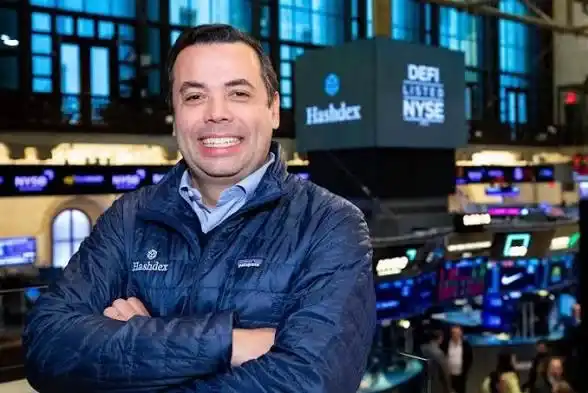
Marcelo Sampaio, Hashdex CEO (Image source: NYSE)

Hashdex is a global asset management company focused on crypto asset index investments, founded in 2018 in Rio de Janeiro, Brazil, by Marcelo Sampaio, Bruno Caratori, and others. In 2020, it partnered with Nasdaq to develop the Nasdaq CME Crypto Index. In 2021, it launched products like HASH11 in Brazil and later expanded to European and US markets. In February 2025, Hashdex launched the multi-asset crypto ETF NCIQ in the US, currently tracking seven crypto assets. As of July 28, 2026, Hashdex's global crypto index product assets under management exceeded $888 million, covering eight countries.

While closing DEFI, Hashdex continues to advance other product innovations. On July 24th, the company filed documents with the SEC announcing that its NCIQ has been approved to conduct staking activities with the crypto assets held by the fund, with Coinbase Cloud as the initial staking service provider. According to the distribution plan, staking net income equivalent to up to 25 basis points annualized of the net asset value per common share goes to the sponsor; any amount exceeding that is split 40% to the sponsor and 60% to the holders.
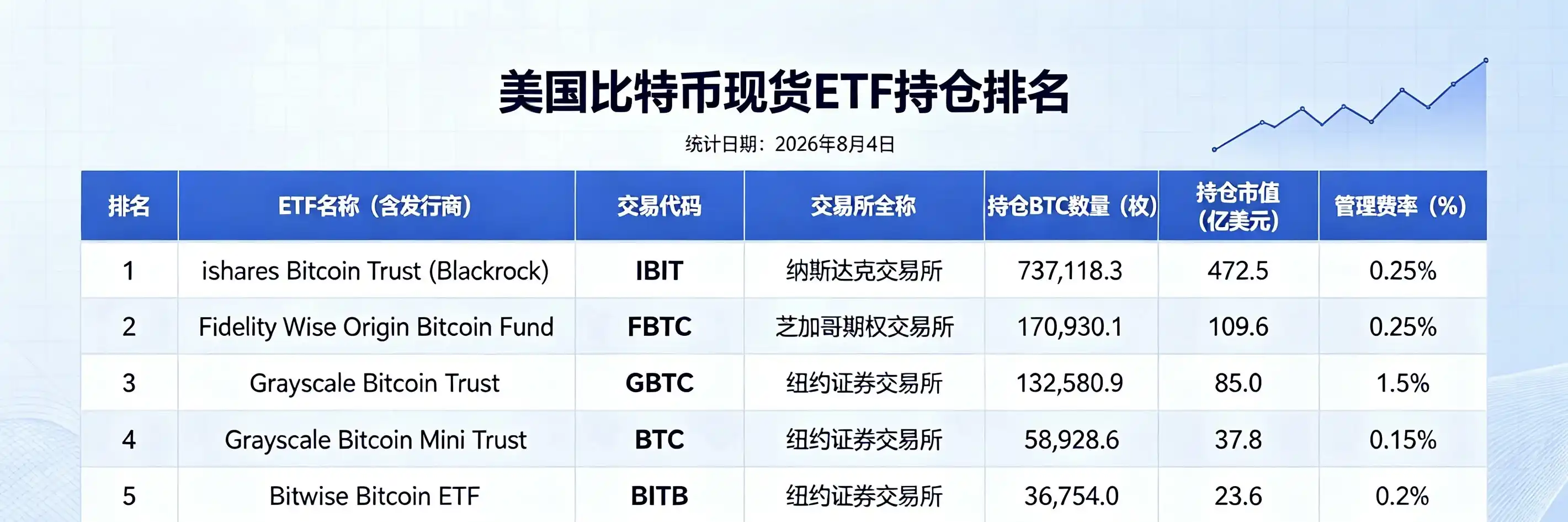
According to BitBo data, as of August 4th, there are 13 spot Bitcoin ETFs in the US market, collectively holding approximately 1.212 million Bitcoins, accounting for about 5.773% of the total Bitcoin supply, with a total size of about $77.7 billion. However, the fund distribution is extremely uneven. The top five products hold about $72.85 billion, occupying almost the entire market share.

BlackRock's iShares Bitcoin Trust (IBIT) holds about 737,000 Bitcoins, with a size of approximately $47.25 billion, accounting for over 60% of the total market size, with a fee rate of 0.25%. Fidelity Wise Origin Bitcoin Fund (FBTC) holds about 171,000 Bitcoins, with a size of about $10.96 billion, also with a 0.25% fee. Grayscale Bitcoin Trust (GBTC) holds about 133,000 Bitcoins, with a size of about $8.5 billion. Despite its high fee rate of 1.5% and persistent net outflows, it maintains its position as the third largest due to first-mover advantage and existing holdings. Grayscale's mini trust BTC holds about 59,000 Bitcoins, with a size of about $3.78 billion and a fee rate of only 0.15%, attracting significant funds transferred from GBTC.

Bitwise's BITB (0.2%), ARK 21Shares' ARKB (0.21%), and VanEck's HODL (0.25%) have sizes ranging from $1 billion to $2.4 billion, forming the middle tier. Morgan Stanley's MSBT holds about 6,231 Bitcoins, with a size of about $399 million, marking the first Bitcoin ETP directly held by a Wall Street investment bank. Valkyrie's BRRR, Franklin's EZBC, and Invesco's BTCO have sizes between $340 million and $380 million. WisdomTree's BTCW is about $143 million. In contrast, Hashdex's DEFI holds only about 225.6 Bitcoins, with a size of about $14.46 million, ranking at the bottom.

Management Fee Ledger: Annual Revenue Hardly Covers Operating Costs

The core revenue for ETF issuers comes from management fees, accrued daily as a percentage of the fund's assets under management. Taking DEFI as an example, with a fee rate of 0.25% and assets of $14.7 million, the annual management fee revenue is only about $36,700. Even at its peak size of $17.54 million, the annual revenue was less than $44,000. The fixed operating costs for a Bitcoin spot ETF include custody fees (Bitcoin custody requires qualified custodians like Coinbase, typically charging several basis points of assets plus a fixed fee), legal compliance and auditing (SEC periodic reporting, AML reviews, annual audits, etc., with annual expenditures in the hundreds of thousands of dollars range), market making and liquidity management (small ETFs need to pay higher incentives to maintain reasonable spreads), exchange listing annual fees, as well as director & officer liability insurance and administration. Industry estimates put the minimum annual operating cost for an ETF at $500,000 to over $1 million.

Even for ETFs with assets over $300 million like Valkyrie BRRR and Franklin EZBC, annual management fee revenue at the same fee rate is around $9 million, leaving profit room after subtracting operating costs. For WisdomTree BTCW below $150 million, annual management fee revenue is about $357,000, already at the breakeven edge. DEFI's annual revenue is only one-tenth of that, showing a clear operational deficit. With shares continuously shrinking and no new fund inflows, it is not commercially sustainable for the issuer to continue subsidizing operating expenses, making liquidation a rational choice.

Hashdex DEFI's exit is not just about size numbers; deeper reasons lie in the structural disadvantages of the issuer's origin and client acquisition capabilities in the US market. Hashdex originated in Rio de Janeiro, Brazil, and built strong brand recognition in Latin American and European markets. Its HASH11 once became Brazil's largest crypto index ETF. However, the US ETF market is dominated by Wall Street giants. Institutional investors place high importance on brand trust, capital strength, and trading depth when choosing products. When established institutions like BlackRock, Fidelity, and Morgan Stanley simultaneously launched similar products, fund managers tend to favor these long-term partners rather than issuers from emerging markets lacking a traditional asset management foundation in the US.

This gap is even more pronounced in customer acquisition costs. Leading issuers have vast existing client bases. BlackRock and Fidelity cross-sell to existing clients through their own platforms and channels like pensions, endowments, and family offices, with marginal customer acquisition costs being extremely low, almost zero. Grayscale has accumulated years of crypto-native investors. In contrast, Hashdex needed to build its brand from scratch in the US. Every step—participating in industry conferences, maintaining data terminal displays, sustaining market maker relationships—means high investment. At the same 0.25% fee level, a revenue gap tens of times larger means Hashdex cannot invest equivalent resources in marketing and investor education.

If Bitcoin prices continue to rise, DEFI's asset size could improve with market appreciation and new inflows, but structural challenges might not be fundamentally resolved. Assuming Bitcoin's rise pushes the size back to $50 million, annual management fee revenue could increase to $125,000, but the operational deficit would still exist. The true breakeven point requires assets exceeding $200 million, demanding a combined force of net investor inflows and price appreciation. However, in a highly concentrated competitive landscape, new funds continuously converge towards the top. BlackRock's IBIT has attracted tens of billions of dollars since listing. Small ETFs often only receive limited spillover even in a bull market. The fact that DEFI's size remained only $17.54 million during Bitcoin's peak in 2025 is proof; the bull market tailwind was insufficient to compensate for the shortcomings in client acquisition.

Besides Hashdex, Which Small ETFs Are in Danger?

As of August 4th, WisdomTree BTCW ($143 million), Invesco BTCO ($348 million), Franklin EZBC ($370 million), and Valkyrie BRRR ($377 million) are the four smallest funds. Among them, BTCW is closest to the safety margin. At a 0.25% fee rate, its annual management fee revenue is about $357,000. If the size continues to shrink, it might enter a loss-making zone. However, as an established ETF issuer, WisdomTree might continue its operation for strategic reasons like maintaining product line completeness. Invesco, Franklin, and Valkyrie have sizes around $350 million, with annual management fee revenue of about $870,000, facing little short-term survival pressure.

Prior to DEFI, there have been precedents of Bitcoin-related ETF closures in the US market, but they were all futures or other types. In January 2024, VanEck closed its Bitcoin futures ETF XBTF, which had a size of about $50 million at closure, as the company decided to concentrate resources after spot ETF approval. Earlier, in October 2022, Valkyrie's VBB was liquidated due to its small size of only about $570,000.


Трендові криптовалюти

Пов'язані питання

QWhich ETF is reported as the first spot Bitcoin ETF to be liquidated in the U.S. market, and what were the main reasons cited for its closure?

AThe first spot Bitcoin ETF to announce liquidation is the Hashdex Bitcoin ETF (DEFI). The closure decision was based on a comprehensive evaluation of factors including assets under management size, trading liquidity, operational costs, and investor interest.

QAccording to the article, what was the asset size of the Hashdex Bitcoin ETF (DEFI) before its liquidation and how does it rank among the U.S. spot Bitcoin ETFs?

AThe Hashdex Bitcoin ETF (DEFI) had assets under management of approximately $14.7 million as of July 30. With this size, it ranked last among all U.S. spot Bitcoin ETFs at the time.

QWhat are the key structural disadvantages, as outlined in the article, that made it difficult for Hashdex's DEFI ETF to compete in the U.S. market?

AKey structural disadvantages for Hashdex's DEFI included its origin as a non-U.S. firm (based in Brazil), which led to lower brand recognition and trust among U.S. institutional investors compared to established Wall Street giants like BlackRock and Fidelity. It also faced much higher customer acquisition costs from a near-zero base, unlike incumbents with vast existing client networks for low-cost cross-selling.

QWhat is the estimated annual operational cost for a Bitcoin spot ETF mentioned in the article, and why does this create a challenge for smaller funds?

AThe article states that the estimated minimum annual operational cost for a Bitcoin spot ETF is between $500,000 to over $1 million. This creates a major challenge for smaller funds because their management fee income, calculated as a percentage of their assets, often falls far short of covering these fixed costs, leading to unsustainable losses for the issuer.

QName at least two other small U.S. spot Bitcoin ETFs identified in the article as being in potentially precarious positions following DEFI's liquidation.

AFollowing DEFI's liquidation, the article identifies WisdomTree BTCW ($143 million), Invesco BTCO ($348 million), Franklin EZBC ($370 million), and Valkyrie BRRR ($377 million) as the smallest funds. Among these, WisdomTree's BTCW is noted as being closest to the profitability threshold due to its relatively lower asset size.

Пов'язані матеріали

Trading Volume Increased by 2.5x, Why Did Circle's Revenue Only Grow by 7%?

Circle's Q2 performance presents a seemingly contradictory picture: the transaction volume of its stablecoin USDC surged 151% year-over-year to $14.8 trillion, while its "Total Revenue & Reserve Revenue" grew by only 7% to $701 million. This discrepancy highlights the core of Circle's business model. Revenue is primarily driven not by transaction volume, but by the average amount of USDC in circulation and the yield generated from its reserves. Key points: 1. **Revenue Drivers:** Over 90% of revenue comes from "reserve income," which is a function of average USDC circulation (up 25% YoY) and the reserve yield (which fell by 66 basis points). The net effect was a mere ~5% increase in reserve income. 2. **Transaction vs. Revenue:** High transaction volume indicates robust usage of USDC for payments and settlements, but does not translate directly to revenue. It must first convert into a sustained, average circulating balance. 3. **Cost Structure:** After accounting for distribution and other costs, the metric "Revenue Less Direct Costs" (RLDC) grew faster than total revenue, with its margin improving. However, rising operating expenses (up 23% YoY) meant that Adjusted EBITDA growth was limited to 8%. 4. **New Initiatives:** Circle reported progress on new networks like the Circle Payments Network and upcoming products (Arc, Agent Stack), but these are currently measured by adoption metrics (e.g., transaction run-rate, number of services) rather than material revenue contribution this quarter. In summary, the financial results are determined by the interplay of USDC circulation, reserve yields, and cost structures, while high transaction volume signals underlying network strength that has not yet fully flowed through to the income statement.

marsbit9 хв тому

Trading Volume Increased by 2.5x, Why Did Circle's Revenue Only Grow by 7%?

marsbit9 хв тому

Samsung China, Another Step Back

Samsung China Takes Another Step Back Samsung Electronics is further retreating from the Chinese consumer market. Following the exit of its home appliance business in May, its mobile phone division is now reportedly scaling down. Stores with monthly sales below 300,000 RMB are being closed in several cities. Data shows Samsung's smartphone market share in China has plummeted to 0.1% in Q2 2026, a stark contrast to its 22% global leadership. The decline is attributed to intense competition from domestic brands offering better value, higher specs (like faster charging), and superior localization in software and services. Samsung's premium pricing and less adapted One UI system have struggled against rivals like Huawei, Xiaomi, and Honor. This consumer electronics retreat coincides with Samsung's record-breaking semiconductor profits, driven by the AI boom. In Q2 2026, the chip division contributed nearly all operating profit, while the mobile and home appliance unit posted its first-ever operating loss. Internal dynamics, like the chip division charging market prices to the mobile unit, have increased cost pressures. Samsung's strategy now appears to be a focused retreat towards the ultra-premium segment in China, similar to its global push in high-end foldables like the Galaxy Z Fold8. The company is likely to retain only key stores in major cities to serve a niche, high-end clientele. While its deep semiconductor reserves offer a cushion, this shift away from mass-market consumer electronics reduces business diversification. The move is pragmatic but signifies a fundamental transformation; Samsung is ceding mass-market influence and betting heavily on its semiconductor strength and a narrowed premium product focus.

marsbit14 хв тому

Samsung China, Another Step Back

marsbit14 хв тому

Helium, Naphtha, and Photoresist: The Three Critical Vulnerabilities of Semiconductor Fabs

The article "Helium, Naphtha, Photoresist: The Three Achilles' Heels of Semiconductor Fabs" analyzes a hypothetical 2026 supply crisis triggered by geopolitical conflict in the Middle East, focusing on three critical materials for semiconductor manufacturing: helium, naphtha, and photoresist. A key attack on a Qatari LNG facility and the blockade of the Strait of Hormuz threaten the global supply of helium (a byproduct of LNG) and naphtha (a petroleum product). This creates a triple threat of shortages that could halt chip production. Helium is essential, particularly for precise wafer temperature control in dry etching processes; a shortage would cause an immediate "instant failure" in these steps. Naphtha is the foundational raw material for numerous equipment consumables and, crucially, for photoresist chemicals. Japan dominates the photoresist market, relying on a single key supplier for intermediates. The analysis shows the impacts would differ. The tiny fraction of global naphtha used for semiconductors (under 0.1%) makes securing supply for photoresist relatively easier. Helium is the greater vulnerability. Qatar supplies about one-third of the world's helium, exceeding the total annual consumption of the semiconductor industry (21-24% of global supply). While short-term buffers like corporate reserves, recycling, and prioritization (e.g., cutting balloon use first) can delay the crisis, helium cannot be stored long-term due to boil-off. Fabs typically hold only days to weeks of inventory. The consequences would be severe and tiered. Advanced logic nodes (e.g., 2nm, 3nm) using complex processes like GAA would be hit hardest, potentially stopping within three months. Mature nodes for automotive and power semiconductors would also eventually halt (within 6-12 months), which could be catastrophic for the auto industry due to stringent certification requirements. The crisis would unfold not as a sudden global stop, but through a sequence of allocation, severe price spikes, reduced output of low-margin products, and partial fab shutdowns by region and company if the shortage persists beyond a year.

marsbit15 хв тому

Helium, Naphtha, and Photoresist: The Three Critical Vulnerabilities of Semiconductor Fabs

marsbit15 хв тому

Post-World Cup, HIP-4 Awaits Its ‘Election Day’

Following its significant success driven by World Cup trading, Hyperliquid's HIP-4 prediction market is now looking toward the upcoming US midterm elections as its next major opportunity. Initially viewed as an extension for hedging crypto positions, HIP-4 unexpectedly saw nearly 48% of its total volume come from sports markets, primarily the World Cup. However, activity plummeted over 90% after the tournament, highlighting the platform's heavy reliance on major real-world events. To address this dependency and enable continuous market creation, Hyperliquid launched a permissionless deployment feature for HIP-4 on its testnet on July 31. This new system allows approved third-party deployers to create markets using pre-approved templates, requiring a 500,000 HYPE stake and offering up to 50% of trading fees. The goal is to decentralize the sourcing of timely, high-interest markets. The imminent US midterm elections present a critical test case. While competitors like Polymarket and Kalshi already offer extensive political markets, HIP-4 currently has none. If the permissionless system launches on mainnet in time, deployers could build a comprehensive election trading suite. Missing this window would mean relying on manual validator creation again, forfeiting a chance to prove that external deployers can sustainably supply popular markets. The coming weeks will be crucial for HIP-4's evolution beyond sporadic event-driven spikes.

marsbit17 хв тому

Post-World Cup, HIP-4 Awaits Its ‘Election Day’

marsbit17 хв тому

Crypto finance company BIT predicts gold and bitcoin will rise together! Here are the details

Crypto finance company BIT (formerly Matrixport) forecasts that potential US dollar weakness and expectations of interest rate cuts could simultaneously support the prices of both Bitcoin and gold. Their analysis suggests that current macroeconomic conditions may positively impact both risk assets and the safe-haven gold. Technical indicators hint that gold may be forming a significant low and could be poised for a new upward trend, with Bitcoin likely to benefit from similar macro factors. BIT highlights that while markets expect the US Federal Reserve to hike rates twice this year, this scenario is not certain. If economic data differs, the Fed might not raise rates at all in 2023. Such a development could weaken the US dollar and strengthen market expectations for rate cuts. A weaker dollar is a traditional key support for gold prices, and Bitcoin has shown sensitivity to similar macro dynamics in recent years. Increased global liquidity and rate cut expectations could drive investors toward alternative assets. Market experts believe low interest rates enhance the appeal of both gold and Bitcoin, as they lower the opportunity cost of holding non-yielding assets and encourage their use as inflation hedges. However, analysts caution that monetary policy expectations can shift rapidly based on incoming economic data, particularly inflation, employment, and growth figures, which will remain crucial in determining the Fed's future actions. *This is not investment advice.

cryptonews.ru17 хв тому

Crypto finance company BIT predicts gold and bitcoin will rise together! Here are the details

cryptonews.ru17 хв тому

Торгівля

Спот

Популярні статті

Що таке BITCOIN

Розуміння HarryPotterObamaSonic10Inu (ERC-20) та його позиції у крипто-просторі Останніми роками ринок криптовалют спостерігав за зростанням популярності мем-коінів, які привертають інтерес не тільки трейдерів, але й тих, хто шукає спілкування та розважальну цінність. Серед цих унікальних токенів є HarryPotterObamaSonic10Inu (ERC-20), інтригуючий проект, що поєднує культурні посилання з тканинами криптовалюти. Ця стаття досліджує ключові аспекти HarryPotterObamaSonic10Inu, вивчаючи його механізми, спільноту та його взаємодію з ширшим крипто-ландшафтом. Що таке HarryPotterObamaSonic10Inu (ERC-20)? Як випливає з його назви, HarryPotterObamaSonic10Inu є мем-коіном, побудованим на блокчейні Ethereum, класифікованим за стандартом ERC-20. На відміну від традиційних криптовалют, які можуть підкреслювати практичну корисність або інвестиційний потенціал, цей токен процвітає завдяки розважальній цінності та силі своєї спільноти. Проект спрямований на створення середовища, де зацікавлені користувачі можуть об'єднуватися, ділитися ідеями та брати участь у заходах, натхненних різноманітними культурними явищами. Однією з примітних особливостей HarryPotterObamaSonic10Inu є нульовий податок на транзакції. Цей привабливий елемент має на меті заохочувати торгівлю та участь у спільноті, позбавлену додаткових витрат, які можуть відлякувати дрібних трейдерів. Загальна пропозиція монет становить один мільярд токенів, що позначає намір підтримувати суттєву циркуляцію в межах спільноти. Творець HarryPotterObamaSonic10Inu (ERC-20) Походження HarryPotterObamaSonic10Inu дещо окутане таємницею; деталі про творця залишаються невідомими. Розвиток цього токена позбавлений впізнаваної команди або чіткої стратегії, що не є рідкістю в секторі мем-коінів. Натомість проект виник органічно, а його розвиток значною мірою залежить від ентузіазму та участі його спільноти. Інвестори HarryPotterObamaSonic10Inu (ERC-20) Щодо зовнішніх інвестицій та підтримки, HarryPotterObamaSonic10Inu також залишається невизначеним. Токен не зазначає жодних відомих інвестиційних фондів або значної організаційної підтримки. Натомість життєва сила проекту полягає в його базовій спільноті, яка інформує про його зростання та стійкість через колективні дії та залученість у крипто-просторі. Як працює HarryPotterObamaSonic10Inu (ERC-20)? Як мем-коін, HarryPotterObamaSonic10Inu функціонує передусім поза традиційними рамками, що часто регулюють вартість активів. Є кілька відмінних аспектів, що визначають, як працює проект: Транзакції без податку: Завдяки відсутності податкових зборів на транзакції, користувачі можуть вільно купувати та продавати токен, не турбуючись про приховані витрати. Залучення спільноти: Проект процвітає завдяки взаємодії спільноти, використовуючи соціальні медіа для створення шуму та сприяння залученню. Обговорення, обмін контентом та залученість є ключовими елементами, що допомагають розширити його охоплення та зміцнити лояльність серед прихильників. Відсутність практичної корисності: Слід зазначити, що HarryPotterObamaSonic10Inu не пропонує конкретної корисності в рамках фінансової екосистеми. Натомість він класифікується як токен, що призначений в основному для розваги та спільнотних активностей. Культурне посилання: Токен кмітливо вплітає елементи популярної культури, щоб привернути інтерес, зв'язуючи з ентузіастами мемів та крипто-стежками. HarryPotterObamaSonic10Inu ілюструє, як мем-коіни функціонують інакше, ніж традиційні криптовалютні проекти, увійшовши на ринок як інноваційні соціальні конструкти, а не утилітарні активи. Хронологія HarryPotterObamaSonic10Inu (ERC-20) Історія HarryPotterObamaSonic10Inu відзначена кількома значними етапами: Створення: Токен виник з вірусного мему, захопивши уяву багатьох крипто-ентузіастів. Конкретні дати створення недоступні, що підкреслює його органічний розвиток. Лістинг на біржах: HarryPotterObamaSonic10Inu з'явився на різних біржах, дозволяючи зручніший доступ і торгівлю спільноти. Ініціативи залучення спільноти: Ведення діяльності, спрямованої на покращення взаємодії спільноти, включаючи конкурси, кампанії в соціальних мережах та створення контенту від фанатів та прихильників. Плани на майбутнє: Дорожня карта проекту включає запуск колекції NFT, мерчандайзинг та електронну комерцію, пов'язану з його культурними темами, що далі залучає спільноту та намагається додати більше вимірів до його екосистеми. Ключові моменти про HarryPotterObamaSonic10Inu (ERC-20) Спільнотний підхід: Проект надає пріоритет колективному внеску та креативності, забезпечуючи, щоб участь користувачів була в центрі його розвитку. Класифікація як мем-коін: Це є його епігенез розважальної криптовалюти, що відрізняється від традиційних інвестиційних інструментів. Жодного прямого відношення до Bitcoin: Незважаючи на схожість у назві, HarryPotterObamaSonic10Inu є відмінним і не має жодного зв’язку з Bitcoin або іншими усталеними криптовалютами. Зосередженість на співпраці: HarryPotterObamaSonic10Inu створено для того, щоб надати простір для співпраці та обміну історіями серед його власників, забезпечуючи шлях для творчості та спільного зв'язку. Перспективи на майбутнє: Амбіція розширитися за межі початкової концепції в NFT та мерчандайз відкриває шлях для проекту потенційно потрапити в більш мейнстрімні сфери цифрової культури. Оскільки мем-коіни продовжують захоплювати уяву спільноти криптовалют, HarryPotterObamaSonic10Inu (ERC-20) вирізняється своїми культурними зв'язками та орієнтованим на спільноту підходом. Хоча він може не відповідати типовій моделі утилітарного токена, його суть полягає в радощах і товариськості, що підтримуються серед його прихильників, підкреслюючи еволюційну природу криптовалют в усе більш цифрову епоху. Оскільки проект продовжує розвиватися, важливо спостерігати за тим, як динаміка спільноти вплине на його траєкторію в постійно змінюваному ландшафті технології блокчейн.

2.5k переглядів усьогоОпубліковано 2024.04.01Оновлено 2024.12.03

Що таке BITCOIN

Як купити BTC

Ласкаво просимо до HTX.com! Ми зробили покупку Bitcoin (BTC) простою та зручною. Дотримуйтесь нашої покрокової інструкції, щоб розпочати свою криптовалютну подорож.Крок 1: Створіть обліковий запис на HTXВикористовуйте свою електронну пошту або номер телефону, щоб зареєструвати обліковий запис на HTX безплатно. Пройдіть безпроблемну реєстрацію й отримайте доступ до всіх функцій.ЗареєструватисьКрок 2: Перейдіть до розділу Купити крипту і виберіть спосіб оплатиКредитна/дебетова картка: використовуйте вашу картку Visa або Mastercard, щоб миттєво купити Bitcoin (BTC).Баланс: використовуйте кошти з балансу вашого рахунку HTX для безперешкодної торгівлі.Треті особи: ми додали популярні способи оплати, такі як Google Pay та Apple Pay, щоб підвищити зручність.P2P: Торгуйте безпосередньо з іншими користувачами на HTX.Позабіржова торгівля (OTC): ми пропонуємо індивідуальні послуги та конкурентні обмінні курси для трейдерів.Крок 3: Зберігайте свої Bitcoin (BTC)Після придбання Bitcoin (BTC) збережіть його у своєму обліковому записі на HTX. Крім того, ви можете відправити його в інше місце за допомогою блокчейн-переказу або використовувати його для торгівлі іншими криптовалютами.Крок 4: Торгівля Bitcoin (BTC)Легко торгуйте Bitcoin (BTC) на спотовому ринку HTX. Просто увійдіть до свого облікового запису, виберіть торгову пару, укладайте угоди та спостерігайте за ними в режимі реального часу. Ми пропонуємо зручний досвід як для початківців, так і для досвідчених трейдерів.

5.3k переглядів усьогоОпубліковано 2024.12.12Оновлено 2026.06.02

Як купити BTC

Що таке $BITCOIN

ЦИФРОВЕ ЗОЛОТО ($BITCOIN): Комплексний аналіз Вступ до ЦИФРОВОГО ЗОЛОТА ($BITCOIN) ЦИФРОВЕ ЗОЛОТО ($BITCOIN) — це проект на основі блокчейну, що працює в мережі Solana, який має на меті поєднати характеристики традиційних дорогоцінних металів з інноваціями децентралізованих технологій. Хоча він має таку ж назву, як і Bitcoin, який часто називають “цифровим золотом” через його сприйняття як засобу збереження вартості, ЦИФРОВЕ ЗОЛОТО є окремим токеном, розробленим для створення унікальної екосистеми в ландшафті Web3. Його мета — позиціонувати себе як життєздатний альтернативний цифровий актив, хоча деталі щодо його застосувань і функціональностей все ще розробляються. Що таке ЦИФРОВЕ ЗОЛОТО ($BITCOIN)? ЦИФРОВЕ ЗОЛОТО ($BITCOIN) — це токен криптовалюти, спеціально розроблений для використання в блокчейні Solana. На відміну від Bitcoin, який виконує широко визнану роль зберігання вартості, цей токен, здається, зосереджується на більш широких застосуваннях і характеристиках. Помітні аспекти включають: Інфраструктура блокчейну: Токен побудований на блокчейні Solana, відомому своєю здатністю обробляти швидкі та низьковартісні транзакції. Динаміка постачання: ЦИФРОВЕ ЗОЛОТО має максимальне постачання, обмежене 100 квадрильйонами токенів (100P $BITCOIN), хоча деталі щодо його обігового постачання наразі не розголошуються. Утиліта: Хоча точні функціональності не викладені, є вказівки на те, що токен може бути використаний для різних застосувань, потенційно пов'язаних з децентралізованими додатками (dApps) або стратегіями токенізації активів. Хто є творцем ЦИФРОВОГО ЗОЛОТА ($BITCOIN)? На даний момент особа творців і команди розробників, що стоять за ЦИФРОВИМ ЗОЛОТОМ ($BITCOIN), залишається невідомою. Ця ситуація є типовою для багатьох інноваційних проектів у сфері блокчейну, особливо тих, що пов'язані з децентралізованими фінансами та феноменом мем-коінів. Хоча така анонімність може сприяти культурі, орієнтованій на спільноту, вона посилює занепокоєння щодо управління та підзвітності. Хто є інвесторами ЦИФРОВОГО ЗОЛОТА ($BITCOIN)? Доступна інформація вказує на те, що ЦИФРОВЕ ЗОЛОТО ($BITCOIN) не має жодних відомих інституційних спонсорів або помітних венчурних капіталовкладень. Проект, здається, працює за моделлю “рівний до рівного”, зосереджуючись на підтримці та прийнятті спільноти, а не на традиційних шляхах фінансування. Його активність і ліквідність переважно розташовані на децентралізованих біржах (DEX), таких як PumpSwap, а не на встановлених централізованих торгових платформах, що ще більше підкреслює його підхід знизу вгору. Як працює ЦИФРОВЕ ЗОЛОТО ($BITCOIN) Операційні механізми ЦИФРОВОГО ЗОЛОТА ($BITCOIN) можна детальніше розглянути на основі його дизайну блокчейну та характеристик мережі: Механізм консенсусу: Використовуючи унікальний proof-of-history (PoH) Solana в поєднанні з моделлю proof-of-stake (PoS), проект забезпечує ефективну валідацію транзакцій, що сприяє високій продуктивності мережі. Токеноміка: Хоча конкретні дефляційні механізми не були детально описані, велике максимальне постачання токенів вказує на те, що воно може задовольняти мікротранзакції або нішеві випадки використання, які ще потрібно визначити. Інтероперабельність: Існує потенціал для інтеграції з більш широкою екосистемою Solana, включаючи різні платформи децентралізованих фінансів (DeFi). Однак деталі щодо конкретних інтеграцій залишаються невизначеними. Хронологія ключових подій Ось хронологія, яка підкреслює значні віхи, пов'язані з ЦИФРОВИМ ЗОЛОТОМ ($BITCOIN): 2023: Початкове розгортання токена відбувається на блокчейні Solana, позначене його адресою контракту. 2024: ЦИФРОВЕ ЗОЛОТО набуває видимості, оскільки стає доступним для торгівлі на децентралізованих біржах, таких як PumpSwap, що дозволяє користувачам торгувати ним проти SOL. 2025: Проект спостерігає спорадичну торгову активність і потенційний інтерес до ініціатив, очолюваних спільнотою, хоча на даний момент не зафіксовано жодних значних партнерств або технічних досягнень. Критичний аналіз Сильні сторони Масштабованість: Основна інфраструктура Solana підтримує високі обсяги транзакцій, що може підвищити утиліту $BITCOIN у різних сценаріях транзакцій. Доступність: Потенційно низька торгова ціна за токен може привабити роздрібних інвесторів, сприяючи більш широкій участі завдяки можливостям дробового володіння. Ризики Відсутність прозорості: Відсутність публічно відомих спонсорів, розробників або процесу аудиту може викликати скептицизм щодо стійкості та надійності проекту. Волатильність ринку: Торгова активність сильно залежить від спекулятивної поведінки, що може призвести до значної волатильності цін і невизначеності для інвесторів. Висновок ЦИФРОВЕ ЗОЛОТО ($BITCOIN) постає як цікавій, але неоднозначний проект у швидко розвиваючійся екосистемі Solana. Хоча він намагається використати наратив “цифрового золота”, його відхід від встановленої ролі Bitcoin як засобу збереження вартості підкреслює необхідність чіткішого розмежування його передбачуваної утиліти та структури управління. Майбутнє прийняття та адаптація, ймовірно, залежатиме від вирішення поточної непрозорості та більш чіткого визначення його операційних та економічних стратегій. Примітка: Цей звіт охоплює синтезовану інформацію, доступну станом на жовтень 2023 року, і можуть відбутися події, що виходять за межі дослідницького періоду.

330 переглядів усьогоОпубліковано 2025.05.13Оновлено 2025.05.13

Що таке $BITCOIN

Обговорення

Ласкаво просимо до спільноти HTX. Тут ви можете бути в курсі останніх подій розвитку платформи та отримати доступ до професійної ринкової інформації. Нижче представлені думки користувачів щодо ціни BTC (BTC).

活动图片