Who Will Make Money in the Age of Agents?

链捕手Опубліковано о 2026-05-27Востаннє оновлено о 2026-05-27

Анотація

Who will capture value in an era where AI Agents become the primary blockchain users? Existing crypto value capture theories assume human users. "Fat Protocols" (2016) posited that protocols capture the most value as applications commoditize on open data, but this weakened as blockchain infrastructure proliferated and became interchangeable. The emerging "Fat Apps" theory argues applications capturing user relationships (like wallets and aggregators) win by controlling distribution and monetizing user flows. Agents fundamentally disrupt this logic. They don't value UX, brand, or convenience, bypassing the front-end moats of fat apps. This leads to several possible futures: 1. **"Headless" Apps**: Current app leaders (e.g., wallets) strip their front ends and become API infrastructure for Agents, preserving their value capture. 2. **Protocol Renaissance**: If integration is easy, Agents skip aggregators and interact directly with protocols, reviving the fat protocol thesis. 3. **Pricing Power Collapse**: Agents' rational, frictionless price shopping could commoditize the entire stack, compressing margins toward cost. Value flows to Agent owners or end-users. 4. **Unprecedented Activity**: Agents could enable entirely new, high-frequency economic activity (e.g., machine-to-machine commerce), expanding the total value pie. 5. **A New, Unnamed Model**: As with the internet's attention economy, a novel, unforeseen business model may emerge. Likely, human and Agent ecosyste...

Author: Jonah Burian

Compiled by: Jia Huan, ChainCatcher

Many speculate that the next billion blockchain users will be Agents. But few ask a further question: in that world, who will make money?

Every previous theory of value capture in crypto assumed the user was human. The "Fat Protocols" theory posited that protocols are best at monetizing human users.

The "Fat App" theory, which I explored with colleagues in "How to Capture Value" and "The Great Revaluation," argues that the application layer can do better. But Agents change the very nature of the user, and existing theories will be invalidated.

The Fat Protocols Theory

In 2016, @jmonegro proposed "Fat Protocols." For nearly a decade, it has been crypto's dominant theory of value capture.

The core idea: In the traditional internet, value aggregated at the application layer (@Google, @facebook), while underlying protocols (TCP/IP, HTTP) captured almost no value. The crypto world would completely reverse this. Blockchains share data publicly, so applications would gradually become commoditized.

And because using the network requires spending the protocol's token, the token would capture the resulting speculative value as usage grows. Every app's success would drive demand for the token. The underlying protocol would grow faster than any application built on it.
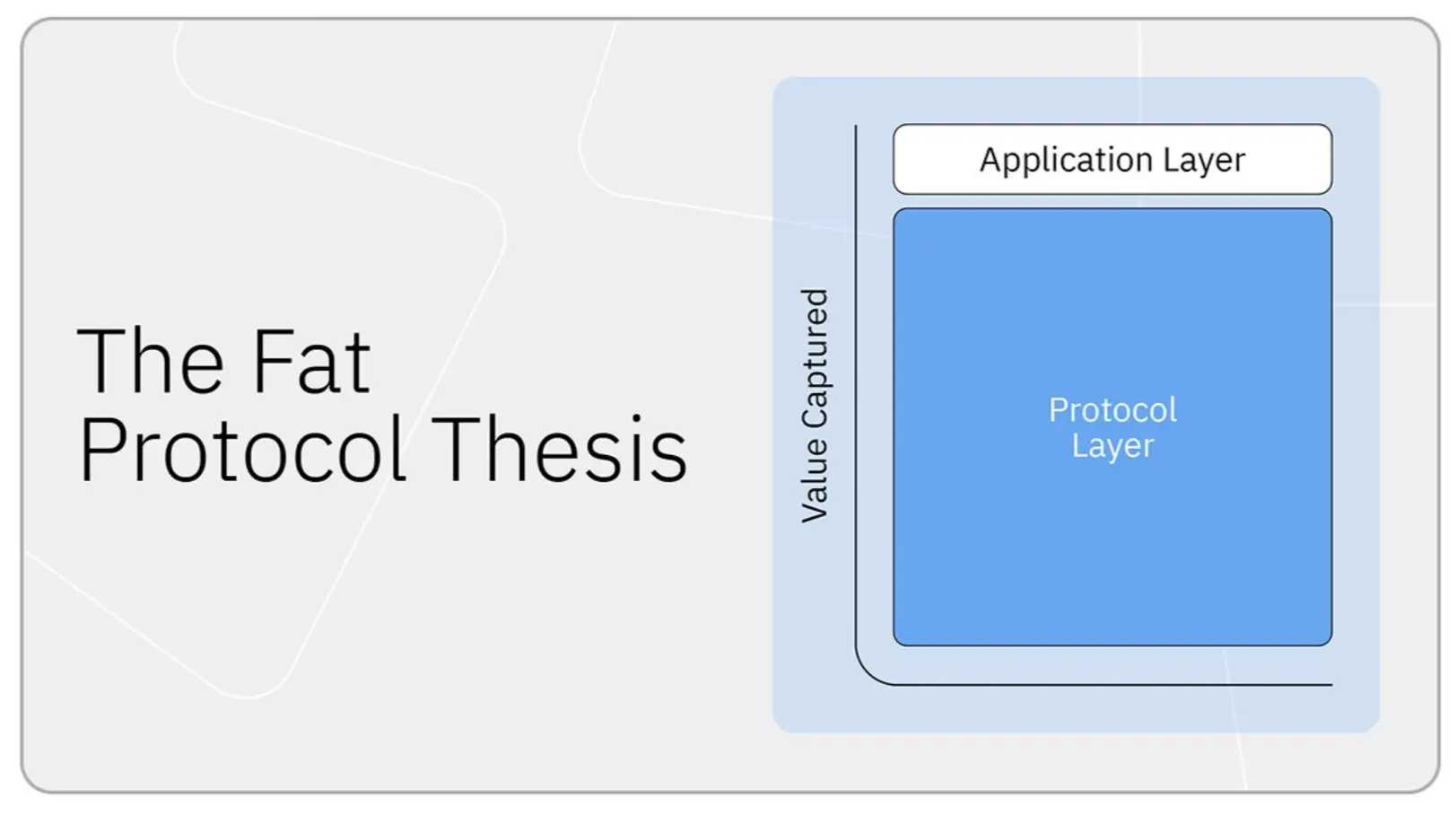
For years, this seemed correct. Bitcoin and Ethereum are worth far more than any company built on them.

This model works perfectly when the protocol itself is scarce, expensive to build, and hard to replace. In 2017, Bitcoin and Ethereum were very scarce; there weren't dozens of general-purpose L1s (Layer 1 networks) competing for the same workloads.

Block space was sufficiently constrained that owning the underlying asset felt like owning a piece of every app that needed it.

Today, reliable alternatives exist at every layer of the infrastructure stack: multiple high-throughput L1s, dozens of L2s, and modular settlement and data availability (DA) layers competing fiercely on price. Block space has shifted from constrained to abundant.

As bridges and aggregators make underlying chains nearly invisible to users, user switching costs have collapsed. Infrastructure has become interchangeable, and interchangeable commodities compete on price. The result: pricing power for protocols vanishes along with scarcity.

The Fat App Theory

By 2026, entities capturing most of the economic benefits were applications, not protocols: e.g., @phantom, @coinbase, @Polymarket, @Pumpfun.

In my view, the reason is that the most valuable asset in crypto is the user relationship.

If you control the user interface and transaction flow, you control distribution and can profit from almost any on-chain product a user touches: swaps, lending, staking, minting, and fiat on/off-ramps. This is probably also why funds are so obsessed with neobanks.
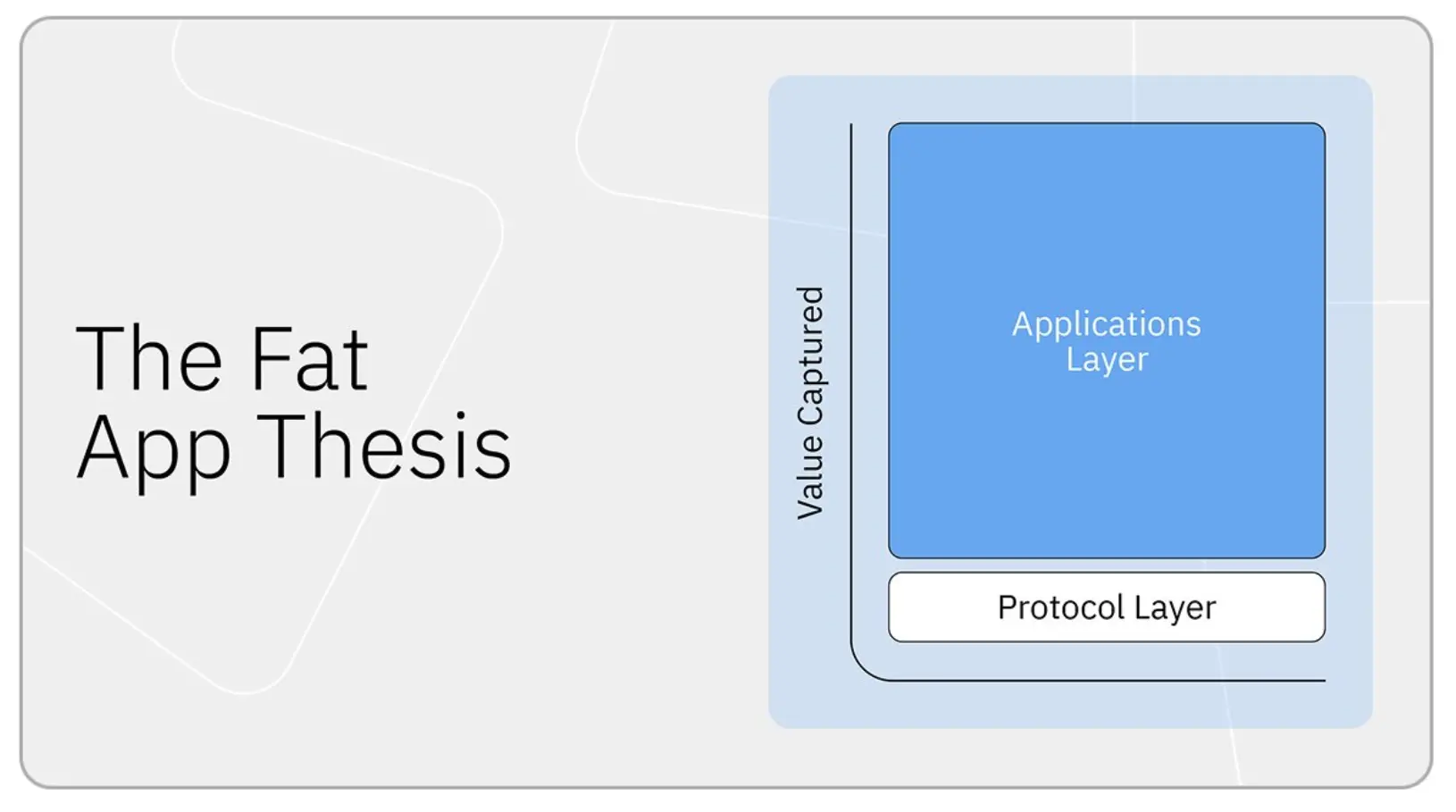
Apps also push infrastructure into a pure price war, compressing infrastructure margins to marginal cost. I documented this dynamic in "How to Capture Value." The same dynamic is playing out in stablecoins, which I've covered elsewhere.

Asset prices are reflecting this theory. Spencer and I called this shift "The Great Revaluation": in this cycle, value began aggregating at the layer that owns the user.

Why Agents Break This Logic

The Fat App theory assumes users are humans who value UX, brand, and convenience. But Agents don't care about these at all. They call APIs directly, have zero brand loyalty, and switch between platforms at zero cost.

When the user becomes software, owning the user relationship is no longer an impregnable moat. The entire Fat App theory's foundation—the frontend moat—is failing.

So who captures value in the age of Agents?
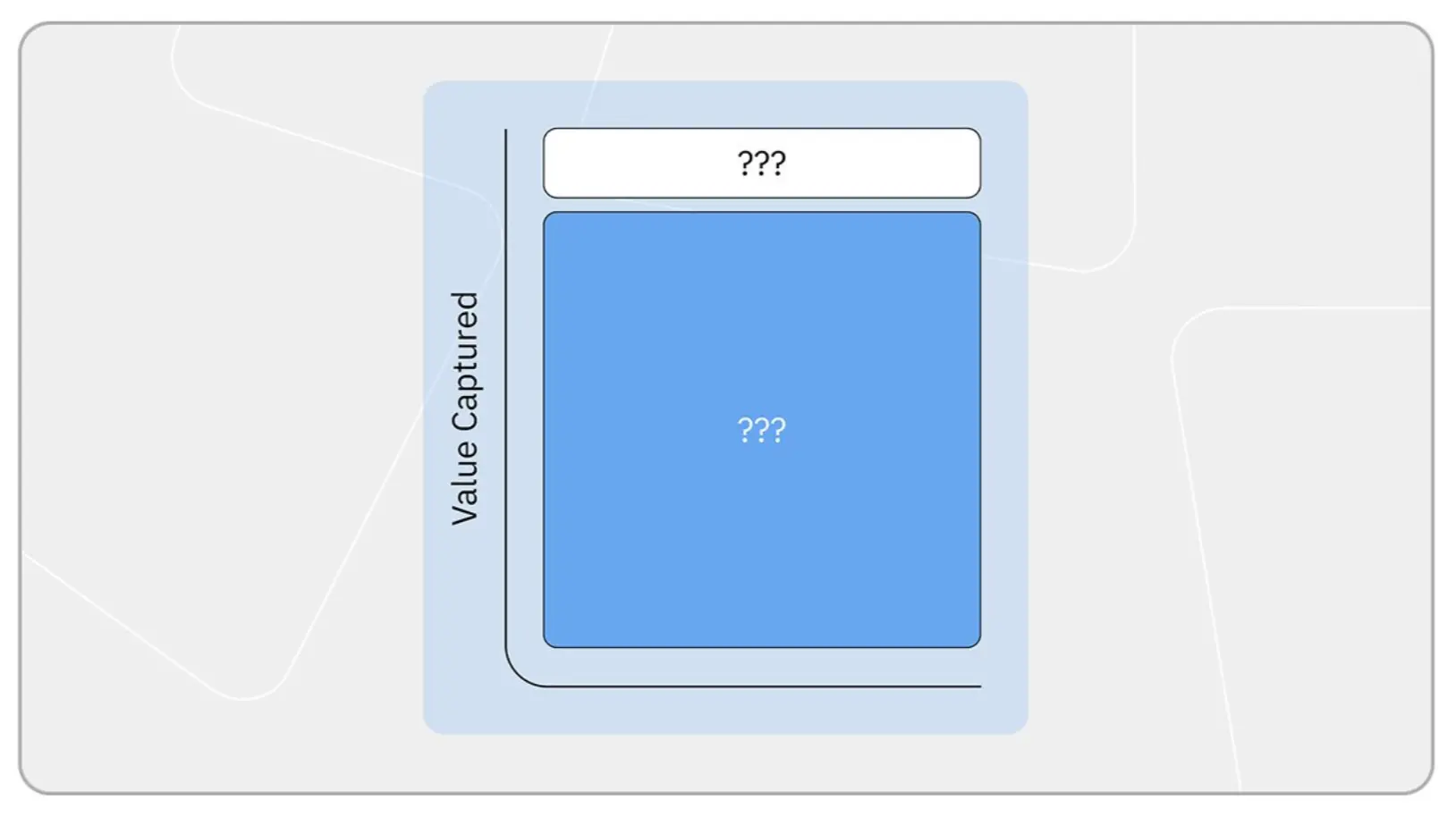
Apps Go 'Headless'

In one vision of the future, winners at the application layer maintain their lead by shedding their frontend interfaces (going 'headless').

Wallets and aggregators have already done the hardest work: integrations with dozens of protocols, routing logic, authentication, fiat on/off-ramp infrastructure.

The next logical step is to open this stack as an API for Agents, letting Agents route through them—just like humans route through @phantom or @JupiterExchange today.

In this world, the Fat App theory lives on. It just loses the frontend. Companies that won in the human era would transform into pure backend infrastructure for Agents. We already see legacy SaaS players like Salesforce moving in this direction.

A Protocol Renaissance

In another vision, Agents skip the middle layer entirely.

If integration becomes easy enough (well-documented APIs, standardized RPCs, predictable execution semantics), Agents have no real reason to pay an aggregator to do what they can do themselves. Aggregators' advantages in the human era were UX and dealing with routing complexity.

But Agents don't need UX, and routing is an engineering problem they're becoming increasingly good at solving.

If the world evolves this way, the Fat Protocols theory could see a renaissance.

Pricing Power Collapses Throughout the Stack

Perhaps Agents apply commoditizing pressure to every corner. They are perfectly rational, routing to the cheapest venue every time, with zero friction and zero loyalty.

Apps lose the ability to charge humans a UX premium. Aggregators and infrastructure also lose pricing power, because there is no inherent human inertia protecting them from price wars.

In this scenario, little profit is captured by anyone in the stack. Margins are forced toward marginal cost across the entire supply chain. Residual value accrues to the owners of the Agents or the ultimate users the Agents serve.

Crypto becomes a utility, and it's hard to make big money in utilities.

Agents Create Unprecedented Levels of Activity

A simple take on this: Agents do everything humans do, just faster and at greater scale. Even if margins are compressed, the overall pie grows.

I think there's a more interesting version.

Agents enable activity that was previously infeasible: e.g., continuously rebalancing portfolios for less than a penny in execution costs, machine-to-machine commerce between Agents, and entirely new markets that exist only because pricing and speed are beyond human tracking.

Current on-chain activity data doesn't show this because we assume a human is necessarily involved.

If this is the shift Agents bring, then the question changes from "How do we divide the existing pie?" to "How much new economic activity pours on-chain, and which layers are positioned to serve it?"

A Business Model That Hasn't Been Named Yet

In every cycle, we try to guess where value will flow and tend to think existing business models will extend into the future. This assumption usually makes us miss new models that haven't yet appeared.

When the internet was just being built, no one foresaw the attention economy. The idea that "slicing user attention and auctioning it to advertisers would become the dominant business model, and a single company could capture a significant share of global ad spend" was alien. It only seems inevitable in hindsight.

AI looks like one of the biggest technological disruptions in decades. In an Agent-dominated world, some value capture may flow to business models no one is even naming today. And the entities capturing it may not be those the market is currently focused on.

Key Points to Watch

The most likely outcome is not one system completely replacing another. For a long time, humans and Agents will coexist as crypto users, with vastly different maps of value capture.

As long as humans interact on-chain, the Fat App theory still applies: consumers willing to pay for UX, brand, and convenience will continue to pay premiums to apps owning those relationships. The layers involved in Agent transactions will be governed by a separate theory, regardless of which vision above materializes.

For builders, I think the question worth mulling over on the Agent side is: What actually makes an Agent come back to you instead of routing directly to the next cheapest alternative? UX might not be the answer. Liquidity, latency, settlement guarantees, etc., might be.


Пов'язані питання

QAccording to the article, what is the core challenge posed by the rise of Agents for existing value capture theories in crypto?

AAgents break existing value capture theories because they change the nature of the 'user.' Both the 'Fat Protocol' and 'Fat App' theories assume users are humans who care about UX, brand, and convenience. Agents, being software, do not care about these things; they directly call APIs, have no brand loyalty, and switch between platforms with zero cost. This nullifies the application layer's front-end moat, which is central to the Fat App theory.

QWhat are the three possible scenarios presented in the article for value capture in an Agent-dominated future?

AThe article outlines three potential scenarios: 1) 'Headless' Apps: Existing application winners strip away their front-end and serve Agents via APIs, preserving the Fat App logic in a backend form. 2) Protocol Resurgence: Agents skip middlemen entirely and interact directly with protocols, potentially reviving the Fat Protocol theory. 3) Pricing Power Collapse: The hyper-rationality and zero-switching-cost of Agents drive commodification pressure across the entire stack, compressing margins towards cost, with value flowing to Agent owners or end-users.

QHow does the article differentiate the 'Fat Protocol' and 'Fat App' theories in terms of who captures value?

AThe 'Fat Protocol' theory, dominant for nearly a decade, posits that value aggregates at the protocol layer (like Ethereum) because applications built on open, shared data become commoditized, and protocol token usage captures speculative value. In contrast, the emerging 'Fat App' theory argues that value accrues at the application layer (like wallets and exchanges) because the most valuable asset is the user relationship—controlling the interface and transaction flow grants control over distribution and monetization.

QWhat key advantage do Agents have over human users that could fundamentally alter the crypto economic landscape?

AAgents possess hyper-rationality and zero-friction switching. Unlike humans, they are not influenced by UX, brand loyalty, or convenience. They will always route transactions to the cheapest or most efficient option instantly and without hesitation. This removes the inertia that protects applications and aggregators from pure price competition, potentially forcing the commodification of services across the technology stack.

QAccording to the author, what should builders focus on to capture value from Agent users, since UX is not the answer?

AThe author suggests builders should focus on attributes that would make an Agent choose their service repeatedly over a cheaper alternative. The answer is likely not UX. Instead, competitive advantages could be built around factors like superior liquidity, lower latency, stronger settlement guarantees, or other performance and reliability metrics that matter to automated, efficiency-seeking software.

Пов'язані матеріали

Will the Next Crypto Bull Run Start with On-Chain Trading of SpaceX?

This article presents a scenario-based forecast for the crypto industry from 2026 to 2029, arguing that the next major cycle will be driven not by technological narratives but by legal access to real-world assets. The author predicts that by mid-2026, pre-IPO perpetual contracts for top private companies like SpaceX, OpenAI, and Anthropic on platforms like Hyperliquid will become the primary gateway for accessing quality assets, as most crypto-native tokens fail to capture real value. The much-hyped AI x Crypto intersection largely fails except for prediction markets, which thrive on betting on AI model supremacy. By 2027, public blockchain foundations are forced to choose between catering to retail speculation or building compliant infrastructure for institutions, with many opting for the latter. Growth in stablecoins and tokenized private credit/equity hits a "triple ceiling" due to regulatory and political uncertainty rather than market demand. The pivotal shift is forecast for 2028. A major liquidation event in pre-IPO perpetuals exposes the structural flaw of synthetic markets lacking a real underlying asset anchor. In response, regulatory changes finally allow the public solicitation of private securities resales to verified accredited investors. This creates a legitimate secondary market for real company equity, which then becomes the core asset class of the new bull market, relegating synthetic perps to a niche role. By 2029, the industry becomes "boring" but foundational. Tokens without claims on real cash flows or assets cease trading. Stablecoin growth is steady but politically capped. Crypto infrastructure fades from view as it gets absorbed into traditional finance backends. The article's central thesis is that the key bottleneck for crypto's next phase is legal and regulatory channels for real asset ownership, not technology.

marsbit19 хв тому

Will the Next Crypto Bull Run Start with On-Chain Trading of SpaceX?

marsbit19 хв тому

The Value Distribution of Stablecoins

**Summary: The Value Distribution of Stablecoins** The article argues that stablecoins are evolving from mere trading tools into broader channels for dollar access. It divides the stablecoin ecosystem into four layers to analyze how value is distributed: 1. **Issuance Layer:** Mints stablecoins, holds reserve assets, and captures the spread between reserve yield and user costs (e.g., Tether, Circle). This layer currently earns the largest profit margin. 2. **Infrastructure Layer:** Connects stablecoins to the traditional financial system, handling fiat on/off-ramps, banking integration, compliance (KYC/AML), and asset management (e.g., Bridge, BVNK). This is the "unglamorous" but critical work, building the essential bridges between crypto and real-world finance. 3. **Acquiring/Distribution Layer:** Integrates stablecoins into merchant systems, manages payment flows, and provides enterprise financial software (e.g., Stripe, Coinbase). They act as the access point for businesses. 4. **Application Layer:** The end-users and businesses that ultimately use stablecoins for payments, settlements, or as a store of value. They benefit from convenience but have little pricing power. The core thesis is that while the issuance layer currently dominates profits, the often-overlooked **infrastructure layer holds significant long-term potential**. The real challenge and barrier to mass adoption is not the on-chain transfer of stablecoins (which is simple), but the complex "last mile" integration into existing business workflows, banking systems, and regulatory frameworks across different countries. Companies in this layer are currently in a "land grab" phase, investing heavily to build networks, secure bank partnerships, and establish compliance pathways. While their position is currently pressured by the profitable issuers above and distribution platforms below, the article suggests that if stablecoins become a default financial rail for businesses, the infrastructure providers who have done the hard work of integration will ultimately gain strong pricing power and become entrenched, essential players.

marsbit7 год тому

The Value Distribution of Stablecoins

marsbit7 год тому

The Value Distribution of Stablecoins

The Value Distribution of Stablecoins The article argues that stablecoins are evolving from a mere trading tool into a broad "dollar channel." It analyzes the industry's value chain through four layers: 1. **Issuance Layer (e.g., Tether, Circle):** The top layer that mints stablecoins, holds reserve assets, and captures the thickest interest rate spread. 2. **Infrastructure Layer (e.g., Bridge, BVNK):** Connects stablecoins to the traditional financial system, handling critical but complex "dirty work" like fiat on/off-ramps, banking integration, compliance (KYC/AML), and cross-border settlement. 3. **Acquiring/Distribution Layer (e.g., Stripe, Coinbase):** Embeds stablecoins into merchant systems, manages payment flows, and integrates with enterprise software. 4. **Application Layer:** End-users and businesses that ultimately use stablecoins for payments, settlement, or storing value. The author posits that while the issuance layer currently captures the most profit, the most overlooked and potentially critical layer is infrastructure. The core challenge for stablecoin adoption isn't the on-chain transfer (which is simple), but bridging the gap between blockchain and the real-world financial system. This involves solving practical problems for businesses: fiat conversion, reconciliation, tax handling, and user onboarding. Infrastructure companies are currently in a difficult "land-grab" phase—building networks, securing banking relationships, and achieving compliance country-by-country. They face pressure from both the profitable issuance layer above and distribution platforms below. However, the author suggests this layer is building a crucial moat. Once stablecoins become a default business rail, the infrastructure players who have done the hard work of integration may gain significant, durable value and pricing power.

链捕手7 год тому

The Value Distribution of Stablecoins

链捕手7 год тому

Торгівля

Спот
Ф'ючерси
活动图片



