Wall Street's Most Mysterious Money Machine: Dumping Bitcoin at 10 AM Sharp Every Day

marsbitОпубліковано о 2026-02-26Востаннє оновлено о 2026-02-26

Анотація

A mysterious pattern dubbed the "Jane 10 AM Dump" has been observed in Bitcoin markets, where prices drop sharply each day at 10 AM EST, coinciding with the US stock market open. Traders and media, including ZeroHedge, point to Jane Street, a major market maker and large holder of BlackRock's Bitcoin ETF (IBIT), as the likely orchestrator—selling at 10 AM to then buy back at lower prices. This theory gained traction amid a lawsuit from Terraform Labs' bankruptcy estate. The suit alleges Jane Street used insider information to exit TerraUSD (UST) positions just before its May 2022 collapse, avoiding $40 billion in losses. Key to the case is a former Terra intern, Bryce Pratt, who joined Jane Street and allegedly ran a secret chat group ("Bryce's Secret") to funnel non-public information from Terraform insiders. The complaint details that Jane Street, which had a prior trading relationship with Terraform, withdrew 85 million UST from a liquidity pool minutes after Terraform secretly pulled 150 million UST—before public panic began. Chain analysis suggests Jane Street systematically reduced exposure pre-collapse. Further supporting the pattern of misconduct, India's regulator SEBI fined Jane Street a record $570 million for a "pump-and-dump" scheme manipulating banking index options, exploiting retail investors. While unproven, the cases depict Jane Street as a powerful, secretive firm adept at leveraging information advantages, now under scrutiny for practices that blur eth...

Once might be a coincidence, three times might be luck, but what about the 10th time?

Starting in the second half of 2025, some traders following Bitcoin's movements on Twitter noticed something strange. They reviewed the intraday charts from the past six months and grew increasingly suspicious: almost every day around 10 AM, just as the U.S. stock market opened and market sentiment was most active, Bitcoin would experience a sharp, clean drop, precisely erasing its earlier gains.

He posted this discovery on Twitter, and unexpectedly, the comments section exploded with others who had noticed the same thing: "I noticed it too," "It's been going on for months," "This is definitely not a coincidence."

Financial media outlet ZeroHedge was even more direct, tweeting one message after another since last July, pointing the finger squarely at one of the main market makers for the spot Bitcoin ETF: Jane Street. After the 10 AM dump, Jane Street quietly accumulates, holding over $2.5 billion in BlackRock's Bitcoin ETF, IBIT.
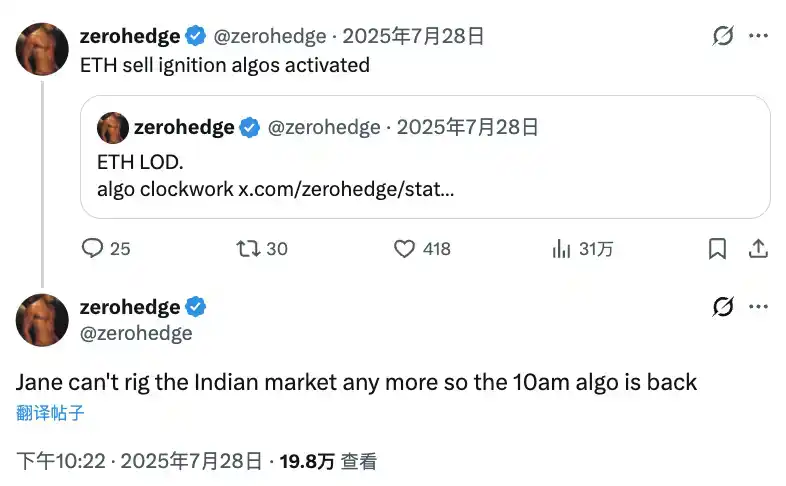

They even gave this phenomenon a name: the "Jane 10 AM Dump Strategy." And what recently brought this rumor back into widespread circulation was a lawsuit from Terra.

An Intern Named Bryce

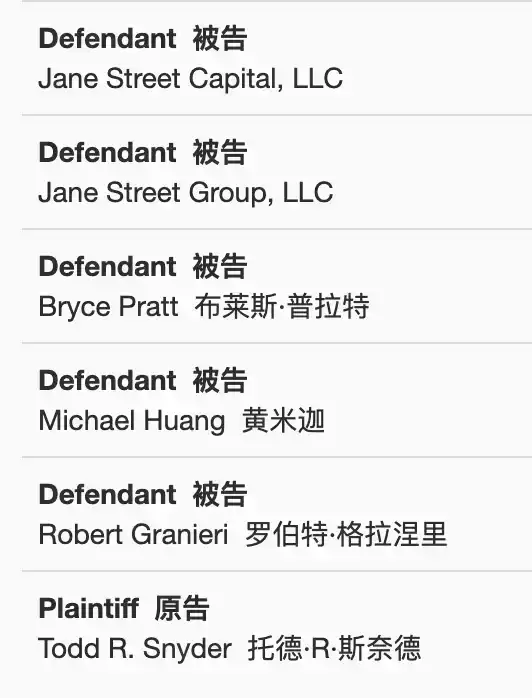
Recently, the bankruptcy administrator for Terraform Labs filed a lawsuit in court. The defendants are Jane Street, Jane Street's co-founder Robert Granieri, and two traders, Bryce Pratt and Michael Huang.
This is an extremely low-profile company on Wall Street. It never gives media interviews, never brags about its profits publicly, and for a long time, people outside the circle didn't even know it existed. But within the financial industry, the name Jane Street is almost universally known—it's an institution that has made tens of billions of dollars through quantitative trading and market making, with annual profit per employee unmatched anywhere else on Wall Street.

The core allegation in the lawsuit is, in essence, not complicated: on the eve of the collapse of UST (TerraUSD) in 2022, Jane Street used non-public information obtained from insiders to exit their positions early, quietly getting out unscathed before the entire $40 billion Terra ecosystem turned to dust.

And the starting point of this "insider information" trade was a young man named Bryce Pratt.

Bryce Pratt had previously interned at Terraform and later joined Jane Street. Under normal circumstances, a previous internship would be just an insignificant line on a resume. But the court complaint spends a full three pages, from page 29 to 31, describing him for one reason only: after leaving Terraform, he didn't really leave.

He created a private group chat, adding a Terraform software engineer and the head of business development. The group was named "Bryce's Secret."

The name was rather blunt, and rather bold. According to the lawsuit, the function of this group chat was to continuously funnel internal information from Terraform back to Jane Street. At the same time, Bryce also acted as a bridge, introducing Terraform's head of business development to the leader of Jane Street's "DeFi department," and the two sides began regular communications under the guise of "exploring strategic investment cooperation."

From the lawsuit's perspective, Jane Street effectively turned this communication channel into a backdoor for continuously obtaining material non-public information.

Jane and Terraform Have a Little-Known History

Rewind a bit further.

The relationship between Jane Street and Terraform didn't start with Bryce Pratt's group chat; it started earlier. In May 2021, during the first de-pegging of UST.

That time, UST briefly deviated from its dollar peg, causing panic throughout the Terra ecosystem. To stabilize the situation, Terraform Labs began contacting institutional trading partners for large-scale over-the-counter (OTC) arrangements. Jane Street was one of them.
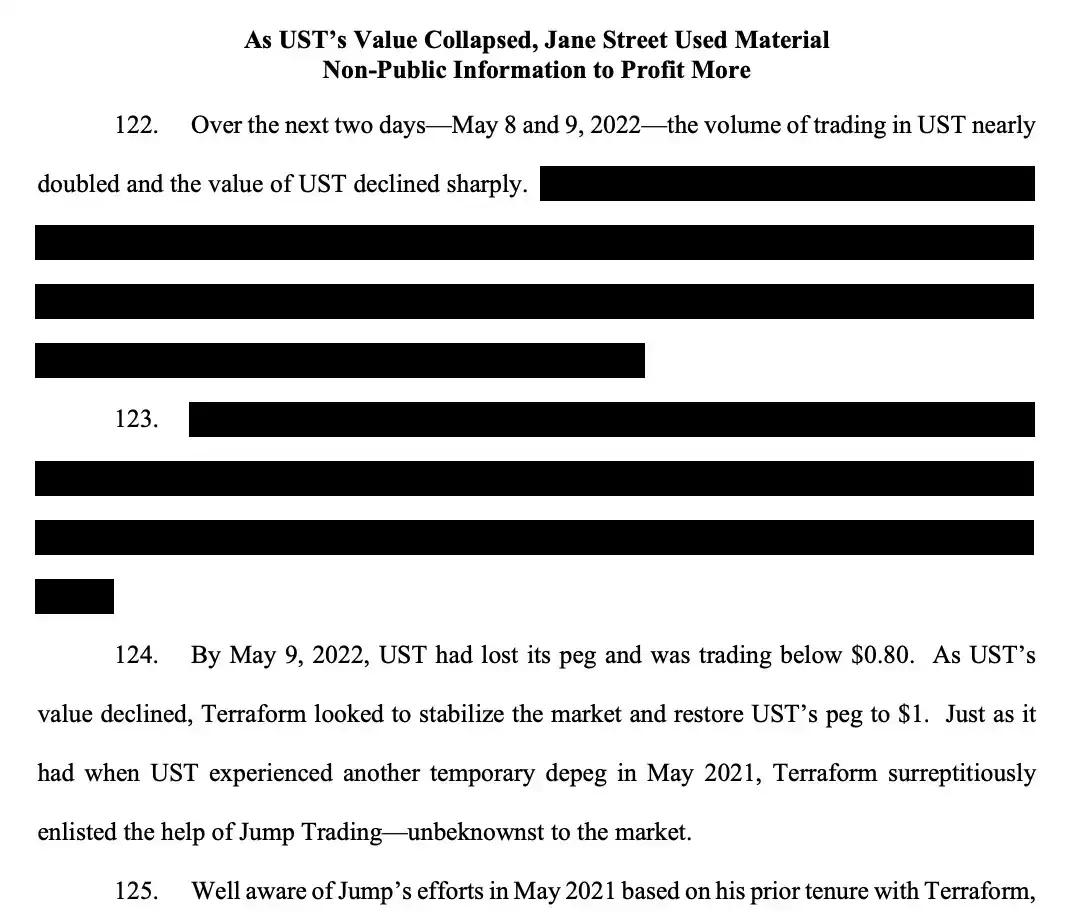
According to the lawsuit, in this relationship, Terraform provided Jane Street with large trading allocations for UST and Luna, and at certain stages offered discounts or structural incentives in exchange for their providing support during critical moments. These terms were never disclosed to the public.

This means the relationship between the two companies was not ordinary market trading from the start, but a contractual, interest-aligned bond. It is this layer of relationship that makes the insider trading allegations harder to dismiss legally—when you have a secret agreement with the other party and simultaneously hold their non-public internal information, any trade you make appears highly unusual.

Time moved to early 2022. On the surface, the Terra ecosystem was at its peak: the Luna Foundation Guard (LFG) had just been established, absorbing reserves of Luna worth approximately $5.5 billion, and used $3 billion to purchase other assets, presenting an image of an impregnable fortress. However, beneath this glossy surface, signs of trouble were emerging: deposit sizes on the Anchor protocol began to face pressure, UST's reliance on the peg rate intensified, and the rate of LFG's reserve consumption quietly accelerated.

Not many people knew this. But Jane Street happened to be one of them.

10 Minutes Before a $40 Billion Empire Collapsed

May 7, 2022, Eastern Time, 5:44 PM.

Terraform quietly withdrew 150 million TerraUSD from the Curve 3pool—a liquidity pool specifically for swapping dollar stablecoins. No announcement, no warning, no public statement.

This operation was completely unknown to the outside world at the time.

Yet, less than ten minutes after these funds were withdrawn, a wallet identified by on-chain analysts as associated with Jane Street withdrew 85 million TerraUSD from the same liquidity pool.

The lawsuit further alleges that Jane Street's unusual actions did not stop there. Before the de-pegging of UST became apparent and public panic began to spread, addresses associated with Jane Street had already systematically de-risked—large-scale selling of UST, adjusting related positions, reducing their net exposure to the Terra ecosystem to a minimum. Some specific figures are redacted in the lawsuit, usually indicating commercial confidentiality or evidence not yet public, but the fund flow trajectories tracked by on-chain analysts are sufficient to tell the story.

Meanwhile, Terraform and LFG were doing the exact opposite.

On May 7, Terraform bought over 250 million UST. On May 8, it bought another over 200 million. In the following days, cumulative purchases exceeded 1.9 billion UST, plus over 90 million Luna. As for LFG, by May 16, its UST holdings soared from about 700,000 to over 1.8 billion, an increase of over 1.7 billion; its Luna holdings surged from 1.7 million to over 222 million.

Another piece of evidence is a report published by on-chain data analysis firm Nansen on May 27, titled "On-Chain Forensics: Unraveling the Mystery of TerraUSD's Depegging." The report did not directly name Jane Street but detailed several wallets that played key roles during the de-pegging, including one later alleged to be associated with Jane Street. The report's conclusions were two-fold: first, these fund movements occurred before the market panic became apparent; second, there was a significant time gap between these operations and the publicly visible crash timeline.
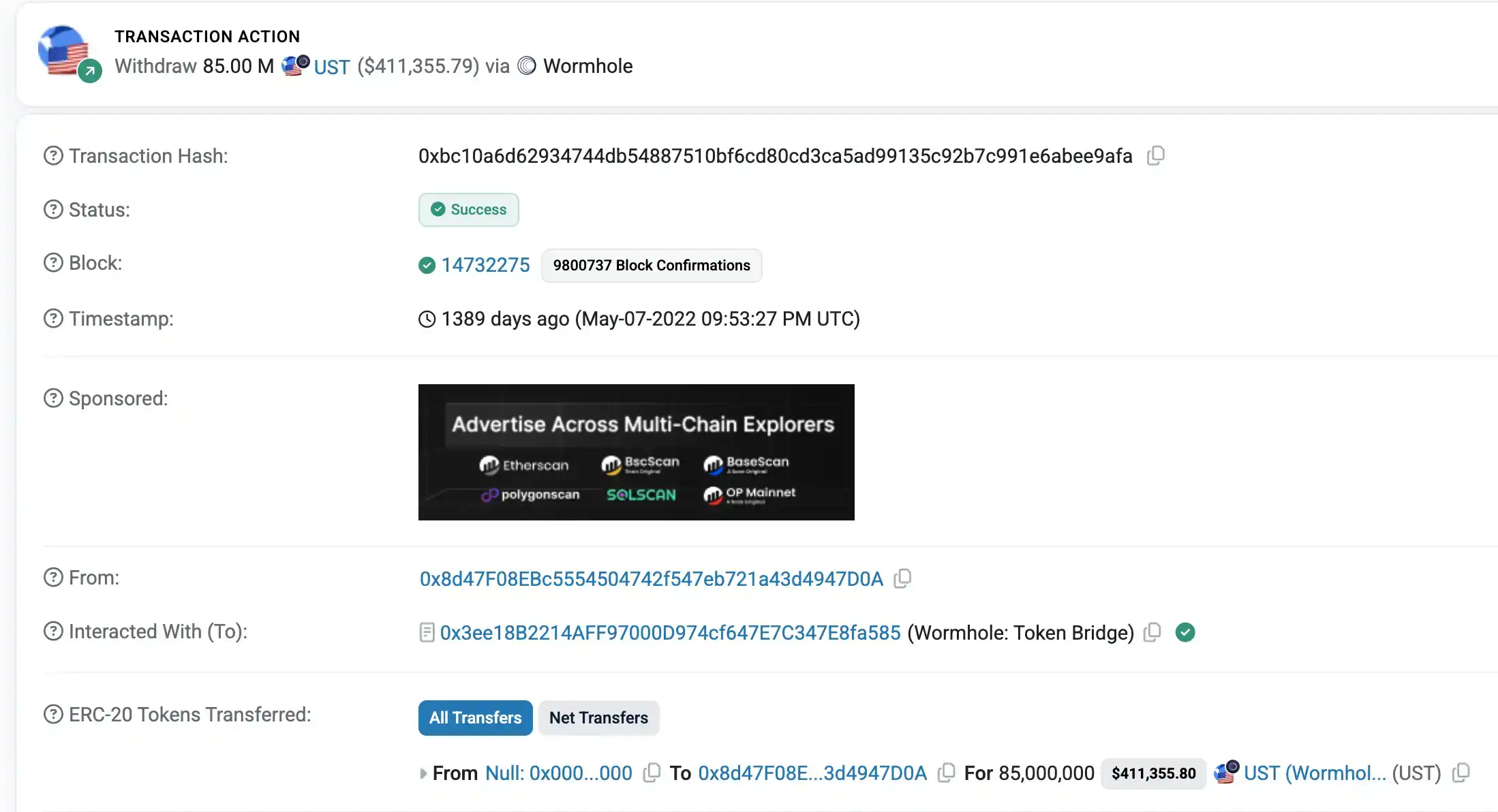
Suspected Jane Street-associated address withdrew 85 million TerraUSD

The lawsuit also mentions that after the trades on May 7 were completed, Jane Street did not stop. They allegedly continued to use confidential information obtained from Jump Trading to further trade TerraUSD and amplify their gains. Jump Trading had previously secretly agreed with Terraform to intervene and support the price, ultimately profiting billions from the collapse.

In India, They Did the Same Thing

Now, attentive researchers have noticed that after Jane Street was sued by Terra, the 10 AM dumps disappeared. This seems to further confirm the rumors of the "Jane 10 AM Dump Strategy."
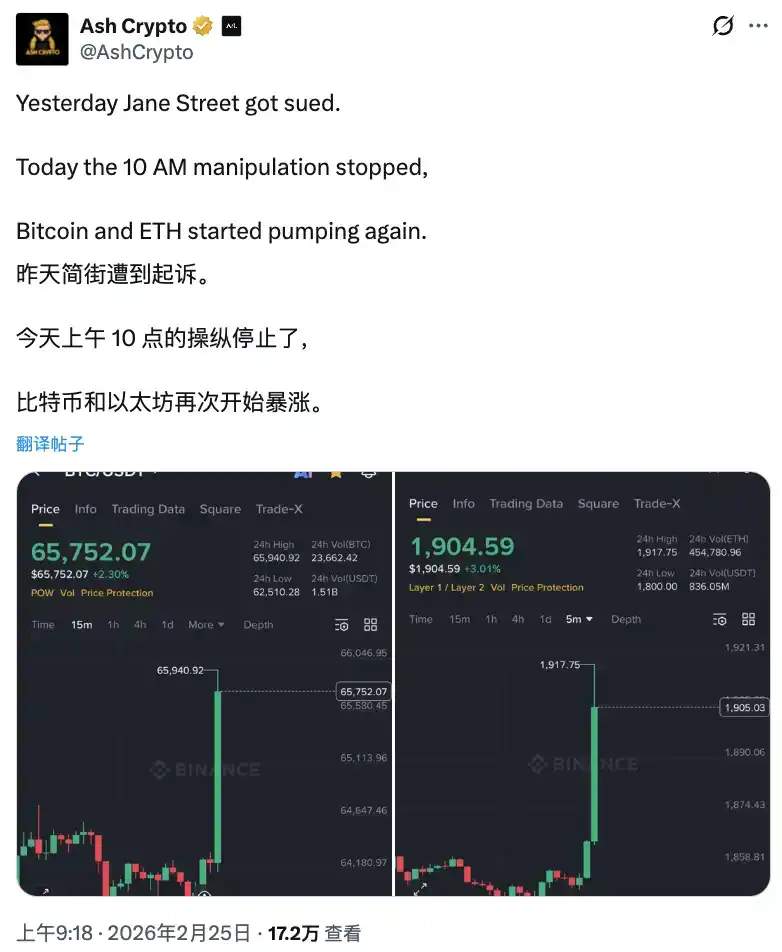
On the other side of the world in India, regulators had already formed their own judgment about Jane Street.

The Securities and Exchange Board of India (SEBI) issued a provisional order, 105 pages long, imposing a record fine of 48.43 billion rupees—approximately $570 million. This figure is unprecedented in Indian regulatory history, and SEBI's findings read remarkably similar to the allegations in the Terra Luna case.

SEBI believes Jane Street implemented a carefully designed "pump and dump" strategy in the Indian market.

The logic is as follows: First, use large-scale directional buy orders in the relatively illiquid spot and futures markets to artificially push the Nifty Bank Index (BANK NIFTY) up or down; after the price is pushed to the desired level, immediately execute reverse operations in the highly liquid options market, harvesting retail traders who followed the trend; finally, systematically dump the previously built spot positions, causing the index to fall back, rendering the options held by retail traders worthless, while the value of their own reverse positions soars.

SEBI's report cited a specific example: on January 17, 2024, Jane Street built a long position of approximately $67 million in just 8 minutes. Their trading volume was more than three times that of the market's second-largest participant, and this single buy order alone pushed the index up over 1%.

The regulator's wording was毫不客气 (unsparing),称 (calling) Jane Street's actions "trading to influence the price, not being guided by the price to trade," constituting a "deliberate, well-planned, sinister scheme and artifice" with the sole intention of misleading the market, particularly by exploiting the vast number of inexperienced retail participants.

Jane Street was for a long time a classic case of this narrative. The company is known for being extremely low-profile, never giving media interviews, never boasting to the outside world. It amassed astonishing wealth through quantitative trading and market making, achieving a near-mythical status within the circle. Every recruitment season, the salary figures it offers drive Wall Street's new graduates crazy, with competition as fierce as any top-tier institution.

However, starting from a certain point, the stories about this company began to become more complex.

In the Terra Luna case, it is accused of using insider information to escape early, completing its retreat while Terraform and LFG were desperately propping up the market with billions. In the Indian market, it was identified by regulators as systematically manipulating spot and derivative prices to harvest ordinary investors. Alameda Research—the core team behind FTX, which dragged the entire crypto industry into its darkest hour—had many members from Jane Street, and its founder, SBF, admitted that his market thinking framework was learned at Jane Street. Additionally, Jane Street is known for aggressively suing former employees, its维权 (rights protection/legal action) being notably vigorous even by Wall Street standards. An earlier investigative report even linked it to weapon procurement funds in a coup attempt in South Sudan, although the details remain disputed.

Information is power; information represents hierarchy.

Jane Street's "track record" seems to be more extensive than we imagined, and Jane Street's reputation has indeed taken a hit in recent years. Although the lawsuit against Jane Street has not yet reached a conclusion.

But for one company to appear in so many negative stories simultaneously, is itself a signal.

Пов'язані питання

QWhat is the 'Jane 10 a.m. Dump Strategy' mentioned in the article?

AThe 'Jane 10 a.m. Dump Strategy' refers to the alleged pattern where Jane Street, a major market maker, would consistently cause a sharp drop in Bitcoin's price around 10 a.m. EST, coinciding with the U.S. stock market opening, and then buy back the dip.

QWho is Bryce Pratt and what role did he play in the Terra lawsuit?

ABryce Pratt is a former intern at Terraform Labs who later joined Jane Street. The lawsuit alleges he created a private chat group called 'Bryce's Secret' with Terraform employees to funnel non-public internal information to Jane Street, which the firm then used to exit its positions before the UST collapse.

QWhat specific action did Jane Street allegedly take just before the UST collapse in May 2022?

AAccording to the lawsuit, within ten minutes of Terraform Labs secretly withdrawing 150 million UST from the Curve 3pool on May 7, 2022, a wallet linked to Jane Street withdrew 85 million UST from the same pool. Jane Street then systematically reduced its exposure to the Terra ecosystem before the public panic began.

QWhat was the outcome of the regulatory action against Jane Street in India?

AThe Securities and Exchange Board of India (SEBI) issued a record fine of approximately $570 million (48.43 billion rupees) against Jane Street. The regulator accused the firm of a 'pump and dump' scheme, manipulating the BANK NIFTY index through large directional trades in the spot market to profit from opposite positions in the options market, misleading retail investors.

QWhat is the broader implication of Jane Street's involvement in multiple high-profile incidents according to the article?

AThe article suggests that Jane Street's repeated involvement in controversies—including the Terra insider trading allegations, the Indian market manipulation case, its connection to FTX's Alameda Research, and its aggressive litigation against former employees—signals a pattern of behavior where the firm uses its access to information and market power to its advantage, often at the expense of other market participants.

Пов'язані матеріали

Why Hasn't the U.S. Seen the Rise of 'Huabei' or 'Jiebei'?

The article explores why the U.S. lacks large-scale consumer credit products like China's "Huabei" and "Jiebei," despite having a developed financial sector. Key reasons include: 1. **Structural Barriers**: A fragmented federal and state regulatory system, reinforced by post-2008 reforms like the Dodd-Frank Act, raises compliance costs and protects traditional banks, stifling fintech innovation. 2. **Credit Card Dominance**: Credit cards, used by 70-80% of adults, form a $1.28 trillion debt market with high APRs (avg. 22.3%). This system cross-subsidizes users who pay in full with those carrying balances, creating a predatory yet entrenched ecosystem. 3. **Data Privacy Laws**: Strict regulations (e.g., FCRA, CCPA) prevent tech giants from leveraging behavioral data for credit scoring, unlike in China where such data fuels fintech models. 4. **Capital Market Disincentives**: Wall Street penalizes tech firms entering finance due to lower valuations associated with heavy regulation and risk, as seen in Apple’s failure with Apple Card. 5. **Banking Oligopoly**: Major banks control consumer lending, leveraging lobbying power and consumer habits to maintain high-cost credit, while alternatives like payday loans (400% APR) or "unbanked" services remain niche or exploitative. Ultimately, regulatory, structural, and corporate interests collectively block the emergence of accessible, low-cost digital lending in the U.S.

Odaily星球日报1 год тому

Why Hasn't the U.S. Seen the Rise of 'Huabei' or 'Jiebei'?

Odaily星球日报1 год тому

Торгівля

Спот
Ф'ючерси

Популярні статті

Що таке $S$

Розуміння SPERO: Комплексний огляд Вступ до SPERO Оскільки ландшафт інновацій продовжує еволюціонувати, виникнення технологій web3 та криптовалютних проектів відіграє ключову роль у формуванні цифрового майбутнього. Один з проектів, який привернув увагу в цій динамічній сфері, — це SPERO, позначений як SPERO,$$s$. Ця стаття має на меті зібрати та представити детальну інформацію про SPERO, щоб допомогти ентузіастам та інвесторам зрозуміти його основи, цілі та інновації в рамках web3 та крипто-сектору. Що таке SPERO,$$s$? SPERO,$$s$ — це унікальний проект у криптопросторі, який прагне використати принципи децентралізації та технології блокчейн для створення екосистеми, що сприяє залученню, корисності та фінансовій інклюзії. Проект розроблений для полегшення взаємодії між користувачами новими способами, надаючи їм інноваційні фінансові рішення та послуги. У своїй основі SPERO,$$s$ прагне надати можливості індивідам, забезпечуючи інструменти та платформи, які покращують користувацький досвід у криптовалютному просторі. Це включає в себе можливість більш гнучких методів транзакцій, сприяння ініціативам, що підтримуються спільнотою, та створення шляхів для фінансових можливостей через децентралізовані додатки (dApps). Основна концепція SPERO,$$s$ обертається навколо інклюзивності, прагнучи зменшити розриви в традиційній фінансовій системі, використовуючи переваги технології блокчейн. Хто є творцем SPERO,$$s$? Особистість творця SPERO,$$s$ залишається дещо невідомою, оскільки є обмежені публічно доступні ресурси, що надають детальну інформацію про його засновників. Ця відсутність прозорості може бути наслідком зобов'язання проекту до децентралізації — етики, яку багато проектів web3 поділяють, ставлячи колективні внески вище за індивідуальне визнання. Зосереджуючи обговорення навколо спільноти та її колективних цілей, SPERO,$$s$ втілює суть наділення без виділення конкретних осіб. Таким чином, розуміння етики та місії SPERO є більш важливим, ніж ідентифікація єдиного творця. Хто є інвесторами SPERO,$$s$? SPERO,$$s$ підтримується різноманітними інвесторами, починаючи від венчурних капіталістів до ангельських інвесторів, які прагнуть сприяти інноваціям у крипто-секторі. Зосередження цих інвесторів зазвичай узгоджується з місією SPERO — пріоритет надається проектам, які обіцяють технологічний прогрес у суспільстві, фінансову інклюзію та децентралізоване управління. Ці інвесторські фонди зазвичай зацікавлені в проектах, які не лише пропонують інноваційні продукти, але й позитивно впливають на спільноту блокчейн та її екосистеми. Підтримка з боку цих інвесторів підкріплює SPERO,$$s$ як значного конкурента в швидко змінюваній сфері крипто-проектів. Як працює SPERO,$$s$? SPERO,$$s$ використовує багатогранну структуру, яка відрізняє його від традиційних криптовалютних проектів. Ось деякі ключові особливості, які підкреслюють його унікальність та інноваційність: Децентралізоване управління: SPERO,$$s$ інтегрує моделі децентралізованого управління, надаючи користувачам можливість активно брати участь у процесах прийняття рішень щодо майбутнього проекту. Цей підхід сприяє відчуттю власності та відповідальності серед членів спільноти. Корисність токена: SPERO,$$s$ використовує свій власний криптовалютний токен, розроблений для виконання різних функцій в екосистемі. Ці токени дозволяють здійснювати транзакції, отримувати винагороди та полегшувати послуги, що пропонуються на платформі, підвищуючи загальну залученість та корисність. Шарова архітектура: Технічна архітектура SPERO,$$s$ підтримує модульність та масштабованість, що дозволяє безперешкодно інтегрувати додаткові функції та додатки в міру розвитку проекту. Ця адаптивність є надзвичайно важливою для збереження актуальності в постійно змінюваному крипто-ландшафті. Залучення спільноти: Проект підкреслює ініціативи, що підтримуються спільнотою, використовуючи механізми, які стимулюють співпрацю та зворотний зв'язок. Підтримуючи сильну спільноту, SPERO,$$s$ може краще задовольняти потреби користувачів та адаптуватися до ринкових тенденцій. Фокус на інклюзію: Пропонуючи низькі комісії за транзакції та зручні інтерфейси, SPERO,$$s$ прагне залучити різноманітну базу користувачів, включаючи осіб, які раніше не брали участі в крипто-просторі. Це зобов'язання до інклюзії узгоджується з його загальною місією наділення через доступність. Хронологія SPERO,$$s$ Розуміння історії проекту надає важливі уявлення про його розвиток та етапи. Нижче наведено пропоновану хронологію, що відображає значні події в еволюції SPERO,$$s$: Етап концептуалізації та ідеації: Початкові ідеї, що стали основою SPERO,$$s$, були сформовані, тісно пов'язані з принципами децентралізації та фокусом на спільноті в індустрії блокчейн. Запуск білого паперу проекту: Після концептуального етапу був випущений комплексний білий папір, що детально описує бачення, цілі та технологічну інфраструктуру SPERO,$$s$, щоб залучити інтерес та зворотний зв'язок від спільноти. Створення спільноти та ранні залучення: Активні зусилля були спрямовані на створення спільноти ранніх прихильників та потенційних інвесторів, що полегшило обговорення цілей проекту та отримання підтримки. Подія генерації токенів: SPERO,$$s$ провів подію генерації токенів (TGE) для розподілу своїх рідних токенів серед ранніх прихильників та встановлення початкової ліквідності в екосистемі. Запуск початкового dApp: Перший децентралізований додаток (dApp), пов'язаний з SPERO,$$s$, став доступним, дозволяючи користувачам взаємодіяти з основними функціями платформи. Постійний розвиток та партнерства: Безперервні оновлення та вдосконалення пропозицій проекту, включаючи стратегічні партнерства з іншими учасниками блокчейн-простору, сформували SPERO,$$s$ у конкурентоспроможного та еволюціонуючого гравця на крипто-ринку. Висновок SPERO,$$s$ є свідченням потенціалу web3 та криптовалют для революціонізації фінансових систем та наділення індивідів. Завдяки зобов'язанню до децентралізованого управління, залучення спільноти та інноваційно спроектованих функцій, він прокладає шлях до більш інклюзивного фінансового ландшафту. Як і з будь-якими інвестиціями в швидко змінюваному крипто-просторі, потенційним інвесторам та користувачам рекомендується ретельно досліджувати та обдумано взаємодіяти з поточними подіями в SPERO,$$s$. Проект демонструє інноваційний дух крипто-індустрії, запрошуючи до подальшого дослідження його численних можливостей. Хоча подорож SPERO,$$s$ ще триває, його основні принципи можуть справді вплинути на майбутнє того, як ми взаємодіємо з технологією, фінансами та один з одним у взаємопов'язаних цифрових екосистемах.

73 переглядів усьогоОпубліковано 2024.12.17Оновлено 2024.12.17

Що таке $S$

Що таке AGENT S

Агент S: Майбутнє автономної взаємодії в Web3 Вступ У постійно змінюваному ландшафті Web3 та криптовалюти інновації постійно переосмислюють, як люди взаємодіють з цифровими платформами. Один з таких новаторських проектів, Агент S, обіцяє революціонізувати взаємодію людини з комп'ютером через свою відкриту агентну структуру. Прокладаючи шлях для автономних взаємодій, Агент S прагне спростити складні завдання, пропонуючи трансформаційні застосування в штучному інтелекті (ШІ). Це детальне дослідження заглиблюється в складності проекту, його унікальні особливості та наслідки для сфери криптовалюти. Що таке Агент S? Агент S є революційною відкритою агентною структурою, спеціально розробленою для вирішення трьох основних викликів в автоматизації комп'ютерних завдань: Набуття специфічних знань у галузі: Структура інтелектуально навчається з різних зовнішніх джерел знань та внутрішнього досвіду. Цей подвійний підхід дозволяє їй створити багатий репозиторій специфічних знань у галузі, покращуючи її продуктивність у виконанні завдань. Планування на довгих горизонтах завдань: Агент S використовує планування з підкріпленням досвіду, стратегічний підхід, який полегшує ефективний розподіл та виконання складних завдань. Ця функція значно підвищує її здатність ефективно та результативно управляти кількома підзавданнями. Обробка динамічних, неоднорідних інтерфейсів: Проект представляє Інтерфейс Агент-Комп'ютер (ACI), інноваційне рішення, яке покращує взаємодію між агентами та користувачами. Використовуючи багатомодальні великі мовні моделі (MLLMs), Агент S може безперешкодно орієнтуватися та маніпулювати різноманітними графічними інтерфейсами користувача. Завдяки цим новаторським функціям Агент S надає надійну структуру, яка вирішує складнощі, пов'язані з автоматизацією людської взаємодії з машинами, прокладаючи шлях для численних застосувань у ШІ та за його межами. Хто є творцем Агент S? Хоча концепція Агент S є фундаментально новаторською, конкретна інформація про його творця залишається невідомою. Творець наразі невідомий, що підкреслює або початкову стадію проекту, або стратегічний вибір зберегти засновників у таємниці. Незважаючи на анонімність, акцент залишається на можливостях та потенціалі структури. Хто є інвесторами Агент S? Оскільки Агент S є відносно новим у криптографічній екосистемі, детальна інформація про його інвесторів та фінансових спонсорів не задокументована. Відсутність публічно доступних відомостей про інвестиційні фонди або організації, що підтримують проект, викликає питання щодо його фінансової структури та дорожньої карти розвитку. Розуміння підтримки є критично важливим для оцінки стійкості проекту та потенційного впливу на ринок. Як працює Агент S? В основі Агент S лежить передова технологія, яка дозволяє йому ефективно функціонувати в різних умовах. Його операційна модель побудована навколо кількох ключових функцій: Взаємодія з комп'ютером, подібна до людської: Структура пропонує розширене планування ШІ, прагнучи зробити взаємодії з комп'ютерами більш інтуїтивними. Імітуючи людську поведінку при виконанні завдань, вона обіцяє підвищити досвід користувачів. Наративна пам'ять: Використовується для використання високорівневого досвіду, Агент S використовує наративну пам'ять для відстеження історій завдань, тим самим покращуючи свої процеси прийняття рішень. Епізодична пам'ять: Ця функція надає користувачам покрокові інструкції, дозволяючи структурі пропонувати контекстуальну підтримку в міру виконання завдань. Підтримка OpenACI: Завдяки можливості працювати локально, Агент S дозволяє користувачам зберігати контроль над своїми взаємодіями та робочими процесами, узгоджуючи з децентралізованою етикою Web3. Легка інтеграція з зовнішніми API: Його універсальність і сумісність з різними платформами ШІ забезпечують те, що Агент S може безперешкодно вписатися в існуючі технологічні екосистеми, роблячи його привабливим вибором для розробників та організацій. Ці функціональні можливості колективно сприяють унікальному положенню Агент S у крипто-просторі, оскільки він автоматизує складні, багатоступеневі завдання з мінімальним втручанням людини. У міру розвитку проекту його потенційні застосування в Web3 можуть переосмислити, як відбуваються цифрові взаємодії. Хронологія Агент S Розробка та етапи Агент S можуть бути узагальнені в хронології, яка підкреслює його значні події: 27 вересня 2024 року: Концепція Агент S була представлена в комплексній науковій статті під назвою “Відкрита агентна структура, яка використовує комп'ютери як людина”, що демонструє основи проекту. 10 жовтня 2024 року: Наукова стаття була опублікована на arXiv, пропонуючи детальне дослідження структури та її оцінки продуктивності на основі бенчмарку OSWorld. 12 жовтня 2024 року: Було випущено відеопрезентацію, що надає візуальне уявлення про можливості та особливості Агент S, ще більше залучаючи потенційних користувачів та інвесторів. Ці маркери в хронології не лише ілюструють прогрес Агент S, але й вказують на його прихильність до прозорості та залучення громади. Ключові моменти про Агент S У міру розвитку структури Агент S кілька ключових характеристик виділяються, підкреслюючи її новаторський характер та потенціал: Інноваційна структура: Розроблена для забезпечення інтуїтивного використання комп'ютерів, подібного до людської взаємодії, Агент S пропонує новий підхід до автоматизації завдань. Автономна взаємодія: Здатність автономно взаємодіяти з комп'ютерами через GUI означає стрибок до більш інтелектуальних та ефективних обчислювальних рішень. Автоматизація складних завдань: Завдяки своїй надійній методології він може автоматизувати складні, багатоступеневі завдання, роблячи процеси швидшими та менш схильними до помилок. Безперервне вдосконалення: Механізми навчання дозволяють Агенту S покращуватися на основі минулого досвіду, постійно підвищуючи свою продуктивність та ефективність. Універсальність: Його адаптивність до різних операційних середовищ, таких як OSWorld та WindowsAgentArena, забезпечує його здатність служити широкому спектру застосувань. Оскільки Агент S займає своє місце в ландшафті Web3 та криптовалюти, його потенціал покращити можливості взаємодії та автоматизувати процеси означає значний прогрес у технологіях ШІ. Завдяки своїй інноваційній структурі Агент S є прикладом майбутнього цифрових взаємодій, обіцяючи більш безперешкодний та ефективний досвід для користувачів у різних галузях. Висновок Агент S представляє собою сміливий крок вперед у поєднанні ШІ та Web3, з можливістю переосмислити, як ми взаємодіємо з технологією. Хоча проект все ще на ранніх стадіях, можливості для його застосування є величезними та переконливими. Завдяки своїй комплексній структурі, що вирішує критичні виклики, Агент S прагне вивести автономні взаємодії на передній план цифрового досвіду. У міру того, як ми заглиблюємося в сфери криптовалюти та децентралізації, проекти, подібні до Агент S, безсумнівно, відіграватимуть ключову роль у формуванні майбутнього технологій та співпраці людини з комп'ютером.

537 переглядів усьогоОпубліковано 2025.01.14Оновлено 2025.01.14

Що таке AGENT S

Як купити S

Ласкаво просимо до HTX.com! Ми зробили покупку Sonic (S) простою та зручною. Дотримуйтесь нашої покрокової інструкції, щоб розпочати свою криптовалютну подорож.Крок 1: Створіть обліковий запис на HTXВикористовуйте свою електронну пошту або номер телефону, щоб зареєструвати обліковий запис на HTX безплатно. Пройдіть безпроблемну реєстрацію й отримайте доступ до всіх функцій.ЗареєструватисьКрок 2: Перейдіть до розділу Купити крипту і виберіть спосіб оплатиКредитна/дебетова картка: використовуйте вашу картку Visa або Mastercard, щоб миттєво купити Sonic (S).Баланс: використовуйте кошти з балансу вашого рахунку HTX для безперешкодної торгівлі.Треті особи: ми додали популярні способи оплати, такі як Google Pay та Apple Pay, щоб підвищити зручність.P2P: Торгуйте безпосередньо з іншими користувачами на HTX.Позабіржова торгівля (OTC): ми пропонуємо індивідуальні послуги та конкурентні обмінні курси для трейдерів.Крок 3: Зберігайте свої Sonic (S)Після придбання Sonic (S) збережіть його у своєму обліковому записі на HTX. Крім того, ви можете відправити його в інше місце за допомогою блокчейн-переказу або використовувати його для торгівлі іншими криптовалютами.Крок 4: Торгівля Sonic (S)Легко торгуйте Sonic (S) на спотовому ринку HTX. Просто увійдіть до свого облікового запису, виберіть торгову пару, укладайте угоди та спостерігайте за ними в режимі реального часу. Ми пропонуємо зручний досвід як для початківців, так і для досвідчених трейдерів.

1.3k переглядів усьогоОпубліковано 2025.01.15Оновлено 2025.03.21

Як купити S

Обговорення

Ласкаво просимо до спільноти HTX. Тут ви можете бути в курсі останніх подій розвитку платформи та отримати доступ до професійної ринкової інформації. Нижче представлені думки користувачів щодо ціни S (S).

活动图片