US Debt Spiral Eyes $39T: Why Bitcoin Hyper ($HYPER) Is The Hedge to Watch

bitcoinistОпубліковано о 2026-02-10Востаннє оновлено о 2026-02-10

Анотація

The US national debt is projected to hit $39 trillion, accelerating concerns about currency debasement and driving investors toward Bitcoin as a hedge. However, the market is shifting from simply holding Bitcoin to seeking utility through Bitcoin Layer 2 solutions that unlock its dormant $1.7 trillion economy. Bitcoin Hyper ($HYPER) emerges as a key player by integrating the Solana Virtual Machine (SVM) with Bitcoin’s blockchain, enabling sub-second transaction speeds, smart contracts, and DeFi applications without sacrificing Bitcoin’s security. The project has raised over $31 million in its presale, attracting significant whale activity, including a $500,000 single transaction. This reflects growing smart money interest in Bitcoin-based infrastructure that offers both inflation protection and yield potential.

Trusted Editorial content, reviewed by leading industry experts and seasoned editors. Ad Disclosure

Quick Facts:

  • ➡️ With US national debt projected to hit $3T, the case for Bitcoin as a hedge against currency debasement is stronger than ever.
  • ➡️ The market is rotating from pure holding to ‘Bitcoin DeFi,’ seeking Layer 2s that unlock the $2T dormant $BTC economy.
  • ➡️ Bitcoin Hyper uses the Solana Virtual Machine (SVM) to bring sub-second transaction speeds and smart contracts to the Bitcoin network.
  • ➡️ Smart money is active, with over $31M raised in presale and significant whale buys, including a $500K single-transaction entry in mid-January.

The US national debt isn’t just growing. It’s accelerating at a pace that frankly defies logic.

With the ticker currently near the $39T milestone, the macro ground is shifting beneath investors’ feet.
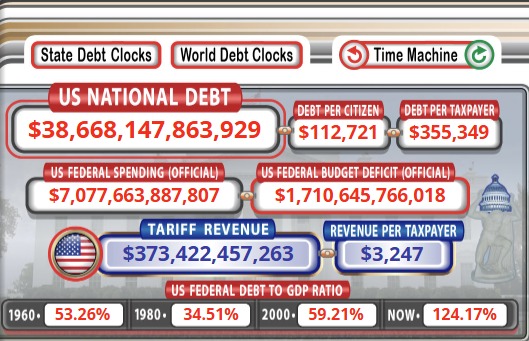
Source: US Debt Clock

Debt servicing costs are now consuming a terrifying slice of federal revenue, forcing the Federal Reserve into a corner where currency debasement looks like the only exit strategy.

For savvy market participants, the ‘debasement trade’ is no longer just a theory. Bitcoin ($BTC) hovering near $70,000 isn’t speculative frenzy, it’s a structural flight to safety.

But holding Bitcoin is only step one.

Smart money is looking beyond simple store-of-value plays to the infrastructure that unlocks Bitcoin’s dormant capital. If Bitcoin is the digital gold vault, the market is desperately seeking the high-speed rails to actually move that value.

This demand for utility on the world’s most secure blockchain is driving capital into Layer 2 solutions. While established players like Stacks laid the groundwork, a new contender, Bitcoin Hyper ($HYPER), is turning heads (and wallets) by integrating the Solana Virtual Machine (SVM) directly with Bitcoin’s settlement layer.

The premise is punchy: combine Bitcoin’s security with Solana’s speed to create a hedge that works as both a shield against inflation and a sword for yield.

Read more about $HYPER here.

Bitcoin Hyper Brings SVM Velocity to the $1.7t Bitcoin Economy

Here’s the friction in the current crypto ecosystem: usually, you have to choose. You get Bitcoin’s security or Solana’s speed, but rarely both.
Bitcoin Hyper ($HYPER) attacks this trade-off by operating as the first-ever Bitcoin Layer 2 with SVM integration.

That technical architecture matters. It allows developers to write smart contracts in Rust, the same language powering Solana’s high-performance dApps, while anchoring final settlement on the Bitcoin blockchain.

For the average user, this means transaction finality that feels instant (we’re talking sub-second) rather than the sluggish 10-minute block times of the Bitcoin mainnet. By using a decentralized canonical bridge, Bitcoin Hyper enables users to move $BTC into a high-speed execution environment.
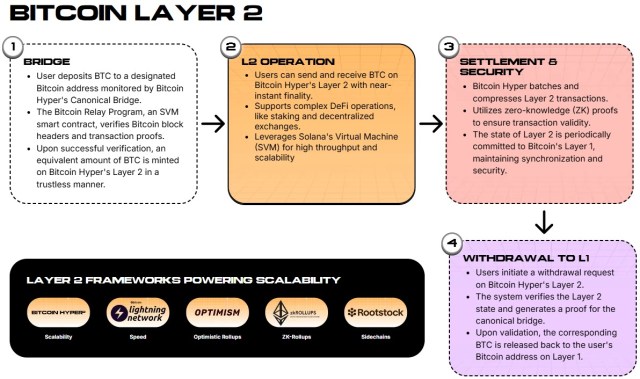
Suddenly, Bitcoin is usable for DeFi, gaming, and payments without the prohibitive fees associated with Ordinals or BRC-20 tokens.
The modular design, separating execution (SVM) from settlement (Bitcoin L1), mirrors the successful roadmap of Ethereum rollups. But there’s a key difference: it applies that logic to a market cap three times larger.

By solving the lack of programmability on Bitcoin, $HYPER positions itself not just as a token, but as essential infrastructure for the next cycle of institutional adoption.

You can buy $HYPER here.

Smart Money Rotation: Whales Target $31M Presale Milestone

Retail investors often chase green candles. Smart money? They front-run infrastructure shifts.

On-chain data surrounding the Bitcoin Hyper presale suggests a decisive move by high-net-worth wallets to secure early positions.

According to the official presale page, the project has already raised an impressive $31.3M. That figure underscores a significant market appetite for Bitcoin-native DeFi solutions.
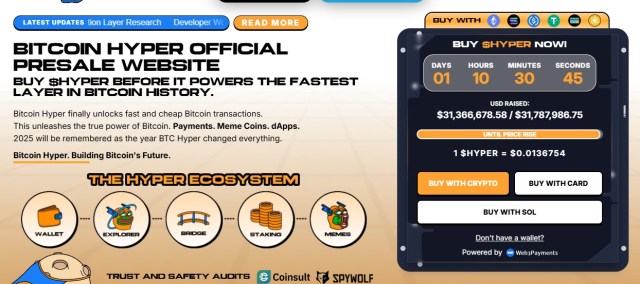
What stands out is the scale of individual allocations. Etherscan records reveal that three whale wallets have accumulated $1M+ in $HYPER tokens in recent transactions ($500K, $379.9K, $274K).

When sophisticated actors accumulate heavily during a presale phase, where the token is priced at a modest $0.0136754, it often signals a bet on a high multiple repricing once the token lists on major exchanges.

Investors are also drawn to the immediate utility of their capital. Unlike many ICOs that leave funds idle, Bitcoin Hyper offers immediate staking with high APY for presale participants. Coupled with a 7-day vesting period for stakers, the tokenomics reward conviction over speculation.

As the US debt clock ticks louder, the rotation into assets that offer both hard-money properties and high-growth potential is accelerating.

Buy your $HYPER today.

This article is for informational purposes only and does not constitute financial advice. Cryptocurrency investments, including presales and initial coin offerings, carry inherent risks and are subject to market volatility. Always conduct your own due diligence before investing.

Editorial Process for bitcoinist is centered on delivering thoroughly researched, accurate, and unbiased content. We uphold strict sourcing standards, and each page undergoes diligent review by our team of top technology experts and seasoned editors. This process ensures the integrity, relevance, and value of our content for our readers.

patrubogdan

Follow

Full Profile

Related Posts

Dogecoin Tries to Hold $0.09370 – Is 2026 the Doge Year or Will $MAXI Take Over?

Crypto Exchange Backpack Targets Token Launch Soon, as BMIC Fires Up Quantum Defense

Ethereum Foundation Backs SEAL Initiative as LiquidChain L3 Protocol Gains Traction

Vitalik Buterin Outlines Ethereum’s AI Future, While SUBBD Token Targets the Creator Economy

Binance Dominates Trump’s USD1 Supply as Bitcoin Hyper Breaks Records

Cathie Wood’s Ark Invest Buys More Bullish Assets Just Days After Last Purchase, While LiquidChain Turns Heads

Пов'язані питання

QWhat is the main argument presented in the article for investing in Bitcoin and related technologies like Bitcoin Hyper?

AThe main argument is that the rapidly accelerating US national debt, projected to hit $39 trillion, is forcing the Federal Reserve into currency debasement. This makes it a structural flight to safety, and while holding Bitcoin is a hedge, smart money is now moving into Bitcoin Layer 2 infrastructure like Bitcoin Hyper to unlock the dormant value of the $1.7T Bitcoin economy for yield and utility.

QWhat specific technological solution does Bitcoin Hyper ($HYPER) provide to the Bitcoin ecosystem?

ABitcoin Hyper is the first Bitcoin Layer 2 that integrates the Solana Virtual Machine (SVM). This allows it to bring sub-second transaction speeds and smart contract functionality (written in Rust) to the Bitcoin network, solving its lack of programmability and high fees while still using Bitcoin's blockchain for secure settlement.

QWhat evidence does the article provide to show 'smart money' or whale interest in the Bitcoin Hyper project?

AThe article cites that the project's presale has raised over $31 million. It also references on-chain data from Etherscan showing significant whale purchases, including specific single transactions of $500K, $379.9K, and $274K, indicating high-net-worth investors are accumulating the token early.

QAccording to the article, what is the current presale price of the $HYPER token and what benefit do presale participants get?

AThe current presale price of the $HYPER token is $0.0136754. Presale participants receive the immediate benefit of being able to stake their tokens for a high Annual Percentage Yield (APY).

QHow does the article characterize the current state of the US national debt and its implications?

AThe article characterizes the US national debt as accelerating at a pace that 'defies logic,' nearing $39 trillion. It states that debt servicing costs are consuming a 'terrifying slice of federal revenue,' which corners the Federal Reserve and makes currency debasement appear to be the only viable exit strategy.

Пов'язані матеріали

Lowering Expectations for BTC's Next Bull Market

The author, Alex Xu, explains his decision to significantly reduce his Bitcoin holdings (from full to ~30% of his portfolio) during the current bull cycle, citing a lowered long-term outlook for BTC's price appreciation in the next cycle. He outlines six key reasons for this reduced expectation: 1. **Diminished Growth Drivers:** The narrative of exponential user adoption has largely played out with institutional ETF adoption. The next major growth phase—adoption by sovereign national reserves or central banks—seems unlikely in the near future. 2. **Personal Opportunity Cost:** More attractive investment opportunities have emerged in other assets, such as undervalued companies. 3. **Industry-Wide Contraction:** The broader crypto industry is struggling, with most Web3 business models (SocialFi, GameFi, DePIN) failing. This overall萧条 (depression) reduces the fundamental demand and consensus for Bitcoin. 4. **Strain on Major Buyer:** MicroStrategy, a major corporate buyer of BTC, faces rising financing expenses for its debt, which could slow its purchasing rate and create significant marginal pressure on the market. 5. **Increased Competition from Gold:** The emergence of "tokenized gold" has closed the functional gap (portability, divisibility) between physical gold and Bitcoin, offering a strong competitor in the non-sovereign store-of-value space. 6. **Security Budget Concerns:** The block reward halving continues to exacerbate the long-standing issue of funding Bitcoin's network security, with new fee source explorations like Ordinals and L2s largely failing. The author's decision to hold a significant (though reduced) position reflects a cautious, not bearish, outlook. He remains open to increasing his exposure if the fundamental reasons for his skepticism change or if new positive catalysts emerge.

marsbit35 хв тому

Lowering Expectations for BTC's Next Bull Market

marsbit35 хв тому

Can Iran 'Control' the Strait of Hormuz?

Iran has announced a comprehensive plan to assert control over the strategic Strait of Hormuz, a critical global oil shipping chokepoint. The proposed measures include requiring all vessels to obtain Iranian permission for passage, imposing fees for security, environmental protection, and navigation management—preferably paid in Iranian rials—and absolutely banning Israeli ships. Vessels from countries deemed hostile by Iran’s top security bodies may also be barred. Analysts suggest Iran’s motives are multifaceted: increasing pressure on the U.S. and Israel by leveraging control over oil transit to influence global prices and inflation; creating a new revenue stream, potentially exceeding $7.7 billion annually, to counter Western sanctions and support postwar reconstruction; and using transit permissions as bargaining chips in future negotiations, notably with the U.S. However, the plan faces significant practical and diplomatic challenges. Enforcing comprehensive interception and fee collection in the busy waterway, patrolled by international military forces, would be difficult. The U.S. has already countering with a blockade of Iranian ports and threats to intercept any ship paying fees, potentially strangling Iran’s oil exports and fee revenue. Broad international opposition, led by European and Gulf states, and legal controversies further complicate implementation. The proposal may ultimately serve more as a negotiating tactic than a feasible policy, with its execution remaining highly uncertain.

marsbit1 год тому

Can Iran 'Control' the Strait of Hormuz?

marsbit1 год тому

Торгівля

Спот
Ф'ючерси
活动图片