Under the Curse of TGE Peaking, Which Tokens Defied the Trend and Rose?

比推Опубліковано о 2025-12-31Востаннє оновлено о 2025-12-31

Анотація

Amid the prevailing trend of tokens peaking at their Token Generation Event (TGE) and declining thereafter in 2025, a few exceptions managed to sustain price increases post-launch. Tokens like ASTER, FOLKS, AVICI, and SENTIS demonstrated resilience, driven by genuine buying support rather than temporary spikes. Key factors contributing to their success include fair token distribution (e.g., AVICI with 0% team allocation, SENTIS with activity-based emissions), reasonable initial valuations that allowed for market re-rating, observable product usage or adoption (such as Aster’s Perp volume and Avici’s real-world spending), transparent and linear unlock schedules, and strategic exchange listings that amplified rather than dictated performance. These tokens highlight a market shift towards valuing structural integrity—healthy circulation, fair launches, and tangible utility—over mere narrative potential, emphasizing survival through sound tokenomics and adoption in an increasingly competitive landscape.

Author: Stacy Muur

Compiled by: CryptoLeo

Original title: What Are the Characteristics and Commonalities of Tokens That Performed Well After TGE in 2025?


Last week, I compiled a research post by Solus Group titled "Over 80% of New Tokens Peak at TGE: The Root Cause and Cure for Web3's False Prosperity," which analyzed the post-TGE performance of 113 tokens in 2025. The vast majority of these tokens peaked at TGE, with their prices starting to decline the day after launch, despite having conditions such as high financing, community support, and exchange listings.

Today's shared article is from crypto researcher Stacy Muur, who compiled several tokens from 2025 that showed significant price increases compared to their TGE prices and analyzed what advantages/conditions these projects possessed. In contrast, the previous article presented a statistical result based on data, while this article focuses more on the projects themselves. In summary: In today's overly homogeneous and expanding crypto market, project tokens need to meet multiple conditions to survive/succeed in the market. Odaily Planet Daily has compiled it as follows:

If you've been keen on trading tokens that TGE'd in 2025, the results so far are clear: tokens are hot in the first week after launch, then gradually cool down, and finally, it's tacitly accepted that "the issuance price is the peak." Most newly launched tokens perform poorly, or even plummet, as the market always treats tokenomics and liquidity as fundamentals.
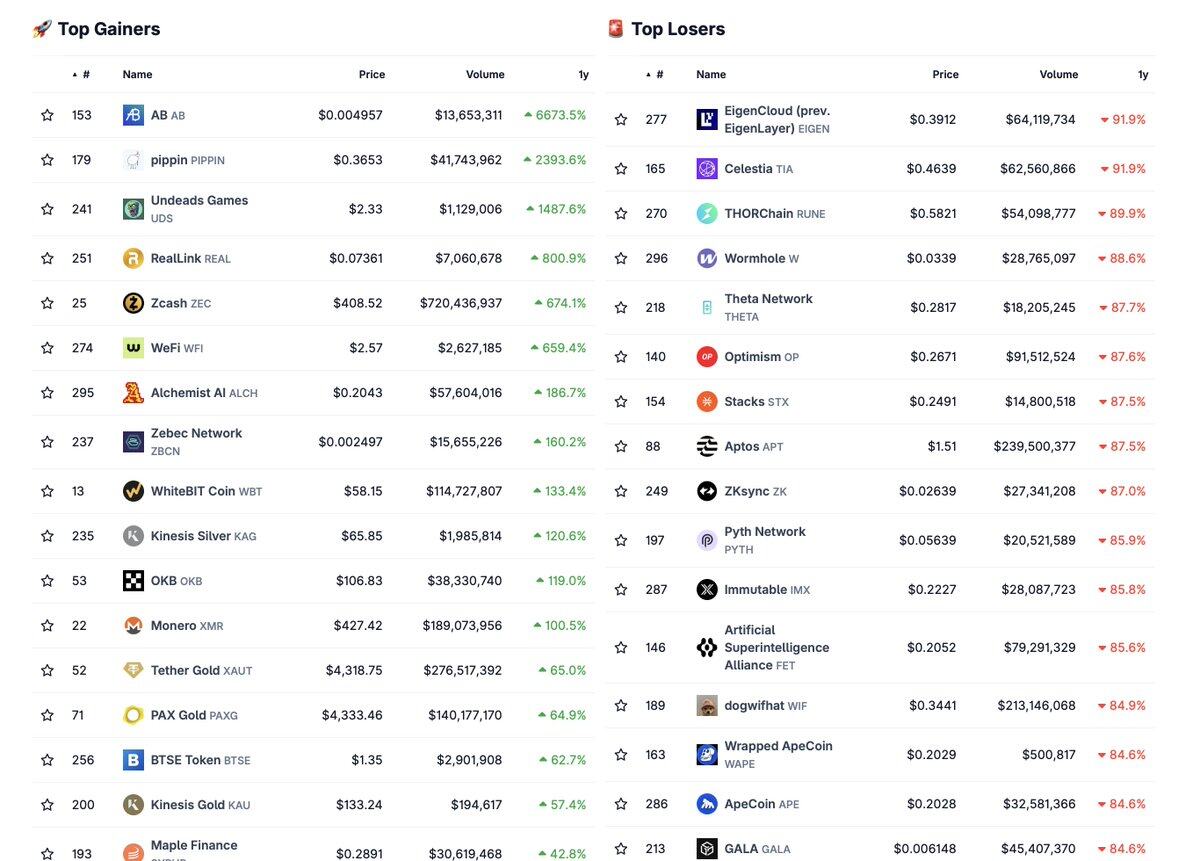
Despite this, a few tokens in 2025 maintained price increases relative to their TGE, not in the sense of "rebounding after a price crash" or "buying at the market bottom," but in a way that indicates genuine buying support.

Here are the truly rising tokens from 2025 TGE that I've compiled: ASTER, FOLKS, AVICI, and SENTIS (there are also some "barely passing" tokens like IRYS/FHE/CORN). They don't look exactly the same, but they all share certain characteristics.

The Best Rising Tokens from 2025 TGE

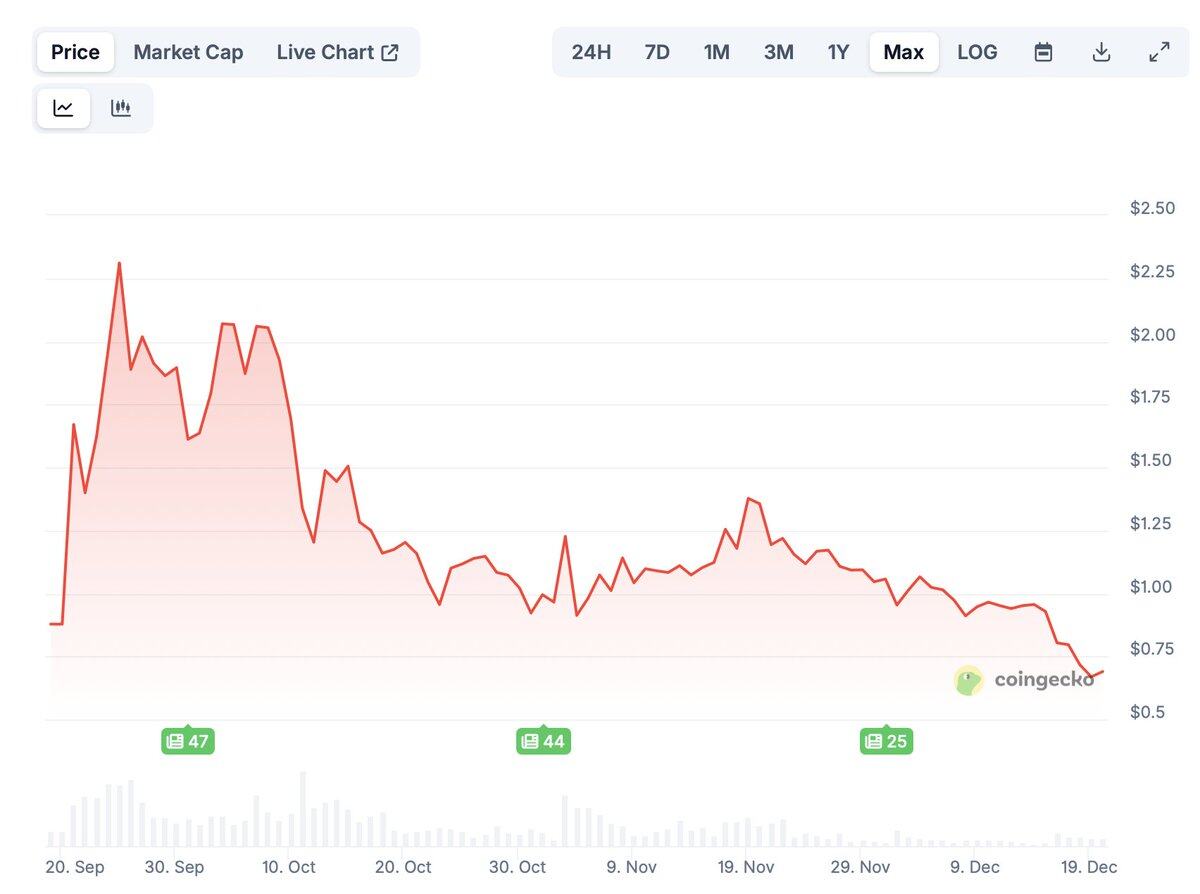
Aster is a typical example. ASTER got everything the project needed on its first day: major exchange listing, deep liquidity, and the widely accepted "Perp DEX" narrative. The story circulating throughout the year was basically: "Binance-backed Perp DEX with privacy features."

ASTER's price action was controversial (you could call it ZK-related, CZ shadow gaming, or simply better execution strategy). But nonetheless, it was one of the few projects that didn't experience an "immediate sell-off" at TGE.
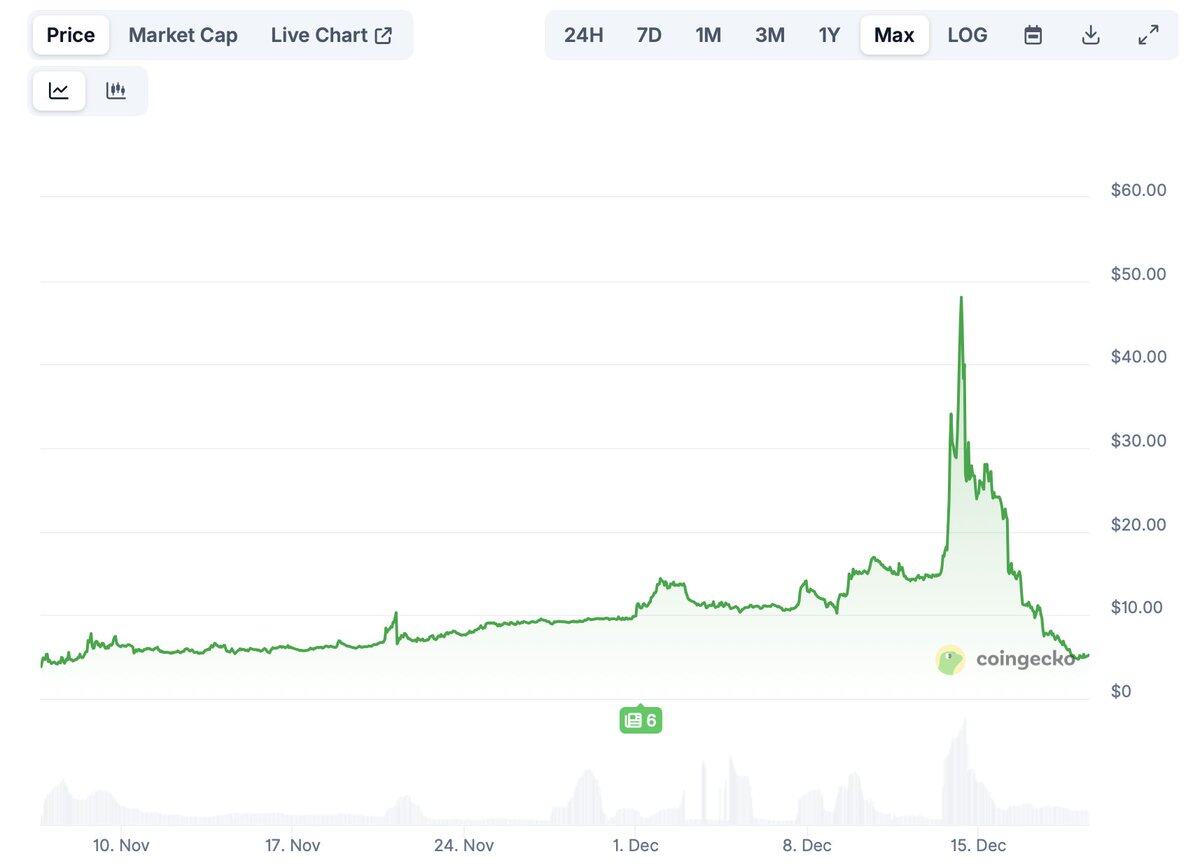
FOLKS is different: it's a lending token, seen as Alpha in "such a garbage year." The formula: "Binance and Kraken showed support from day one, cross-chain pools kept growing, no obvious massive unlock." The last point is very important. It performed well until the token unlock on December 15th.
AVICI is different from the first two. AVICI is on this list not because it has the most cutting-edge technology, but because it provided the clearest narrative for CT: "Fair launch, truly usable product." It emphasized not tokenomics but usage: "decent neobank app, Visa card, real spending." In a market flooded with endogenous "utility," AVICI was refreshing, both thinking outside the box and being practical. AVICI might be one of the best TGE tokens of the year.
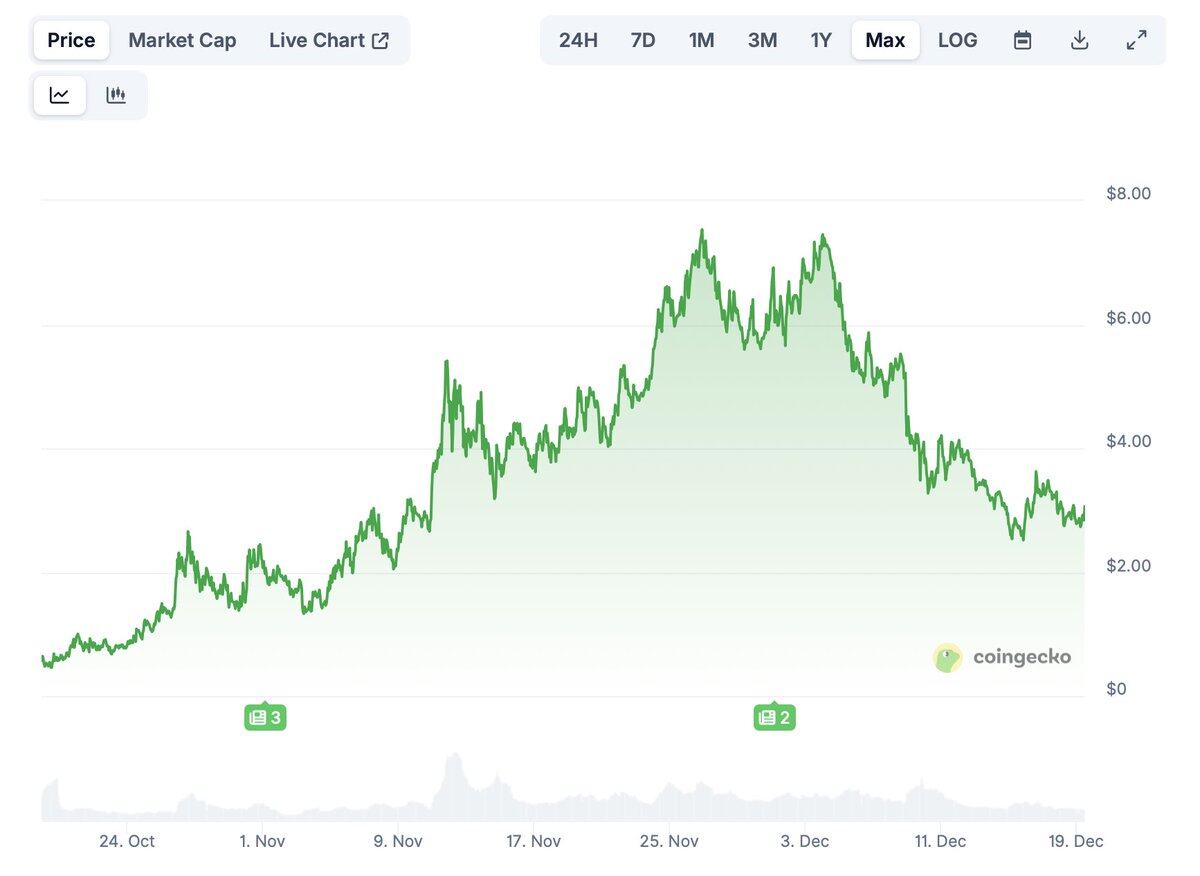
When Tokens Rise for a Reason, Their Prices Tend to Be More Stable

Looking now, the token with the strongest performance post-TGE is SENTIS. Its support points are simple and clear: AI Agent narrative + continuous incentive distribution + exchange listing. In CT, the dominant framework remains consistent: "AI Agent is the next DeFi automation layer," providing traders with a simple mental model as an anchor.

Mechanically, SENTIS doesn't rely on a one-time listing pump. The token's continuous distribution mechanism (tasks/retrodrop/participation rewards) maintains a steady level of user participation, which often translates into sustained spot demand as participants prepare for future distributions and ecosystem milestones. This dynamic can support the price even before more meaningful on-chain adoption appears.

"Barely Passing" Tokens

IRYS and FHE belong to the "AI infrastructure and private transactions" field: both benefited from the AI boom, stayed above their initial ranges, and both maintained sufficient liquidity to avoid a price crash. If these projects can translate their narratives into on-chain usage, they can survive. Relying solely on narrative support is not enough.

Then there's CORN. CORN isn't very volatile and is relatively stable compared to its peers, but CORN is more of a "structured product." In 2025, that's not a bad thing. When the market "punishes" overdevelopment, survivability becomes important.

What Characteristics Do the Well-Performing Tokens of 2025 Share?

Stripping away the narratives and vibes, some clear structural patterns emerge:

1. Token distribution is more important than hype

The strongest performing projects avoided large internal liquidity at TGE. AVICI (0% team allocation), SENTIS (activity-based emissions).

Lesson: At project launch, who holds the tokens is more important than who invested privately.

2. Reasonable launch valuation beats perfect token launch timing

Many of the best-performing tokens didn't launch at the peak of market hype, but at reasonable valuations, allowing the market to re-rate them upwards.

AVICI launched a working product with an FDV of around $3.5 million, offering asymmetric upside relative to FDV.

Lesson: Tokens that "grow into" their valuation perform better than those that start overvalued.

3. Project usage (or credible near-term usage) is reflected in the price

Aster's Perp trading volume, Folks' lending scale, Avici's credit card spending—these aren't just whitepaper promises but observable signals.

Sentis started early but also linked token emissions to on-chain activity, creating a feedback loop between usage and price.

Lesson: The market is now impatient. Utility > Vision.

4. Unlock structure > Unlock size

Linear and transparent token unlocks matter, as their dilution effect is digested by the market. For example, SENTIS releases tokens gradually through participation mechanisms.

Elsewhere, what destroys user confidence isn't dilution itself, but risky cliff unlocks.

Lesson: Predictable token unlocks are bearable; unexpected ones are not.

5. Exchange listing is necessary, but not sufficient

Almost every token had decent exchange access, but this alone doesn't determine anything. Listings amplify results: they help strong tokens accelerate upward, while weak tokens get sold off faster. AVICI's token performance wasn't that bad even without a Binance listing.

Lesson: Exchange liquidity is an accelerator, not a foundation.

Key Takeaways

Overall, the situation for 2025 TGE tokens marks a shift.

The market no longer rewards "potential" but instead rewards "structure":

- Healthy circulating supply

>- Fair token distribution

>- Reliable adoption

>- Controlled unlock mechanisms

The "rising tokens" of 2025 aren't perfect projects; they were just built to survive their launch. If 2024 was about narrative, then 2025 is about token design under pressure. And this is a lesson most projects haven't yet learned during their TGE.


Twitter:https://twitter.com/BitpushNewsCN

Bitpush TG Discussion Group:https://t.me/BitPushCommunity

Bitpush TG Subscription: https://t.me/bitpush

Original link:https://www.bitpush.news/articles/7599438

Пов'язані питання

QAccording to the article, what are the key characteristics of tokens that maintained a price increase after TGE in 2025?

AThe key characteristics are: healthy token distribution, fair token allocation, verifiable adoption or credible near-term usage, controlled and transparent unlock mechanisms, and reasonable initial valuations that allow for market re-rating.

QWhich token was cited as a prime example of a successful TGE due to its 'Perp DEX' narrative and exchange support?

AASTER was cited as the prime example, benefiting from the 'Binance-backed Perp DEX' narrative with privacy features.

QWhat was the unique approach of the AVICI token that contributed to its post-TGE success?

AAVICI's unique approach was a fair launch (0% team allocation), a focus on a real, usable product (a functional neobank app with a Visa card for real spending), and a low initial FDV that created asymmetric upside potential.

QHow did the token distribution model of SENTIS help support its price stability?

ASENTIS used a continuous distribution mechanism tied to on-chain activities (tasks, retrodrops, participation rewards), which created steady user engagement and translated into consistent spot demand in anticipation of future allocations.

QWhat is the main shift in the market's focus for evaluating new tokens in 2025, as described in the article's conclusion?

AThe market shifted from rewarding 'potential' and narrative' to rewarding 'structure,' which includes healthy circulation, fair distribution, reliable adoption, and controlled unlock mechanisms.

Пов'язані матеріали

Vitalik: We Need to Create Sanctuaries, Not Fight AI

In a recent interview, Vitalik Buterin, founder of Ethereum, addresses the central anxiety of the AI era. He argues the primary risk isn't AI's intelligence, but human passivity—ceding decisions, privacy, and agency to centralized systems or "super AIs" for a sense of "disempowering safety." His solution is not to fight AI, but to build "sanctuary technologies." These are optional, non-totalizing spaces that protect users while preserving their sovereignty and privacy. Ethereum is presented as a prime example, offering a parallel financial system one can freely choose, not a fix for the old one. Reflecting on his journey from a 19-year-old on "autopilot" to an active "pilot," Vitalik notes the world reinvents itself every 5-10 years. To keep up, individuals must actively pilot their lives, not be passive passengers. He stresses that active learning vastly outperforms passive learning, even with equal time invested. His practical advice for builders and individuals in the AI age includes: periodically forcing oneself to do tasks manually to keep the mind engaged; prioritizing active learning and verification over outsourcing answers; building tools that help retain human agency; not outsourcing all strategic thinking to AI; and preserving serendipity through real-world interactions. Ultimately, Buterin redefines Ethereum/crypto's role: not to win against or fix the old world, but to provide a free, optional alternative. The core message is that as AI grows more powerful, the truly scarce resource will be proactive humans who retain their sovereignty, privacy, and capacity for independent thought. The era demands not less tool use, but more intentional and active use of technology.

链捕手34 хв тому

Vitalik: We Need to Create Sanctuaries, Not Fight AI

链捕手34 хв тому

Conversation with Patagon Founder: Revealing the Inside Story of Anthropic's Secondary Market

**Summary: Inside Anthropic's Massive, Opaque Secondary Market** In a revealing interview, Patagon founder Dio Casares pulls back the curtain on the booming, high-risk secondary market for shares in companies like Anthropic. This private market, fueled by companies staying private longer and massive funding rounds, is estimated to involve hundreds of billions of dollars. Casares distinguishes between two types of "secondary" trading: 1. **Company-approved SPV (Special Purpose Vehicle) sales:** Where new capital flows into the company, often facilitated by select private equity firms. Anthropic supports this to manage liquidity and pre-IPO selling pressure. 2. **The "gray" market:** Platforms like Hive and Forge that match buyers and sellers, often creating pricing confusion and competing with official funding rounds. These intermediaries are widely disliked by companies. The market structure is complex and fragmented, relying heavily on personal connections. Brokers connect buyers and sellers, often layering multiple SPVs to pool capital, with single transaction fees as high as 10%. Strikingly, some finance professionals earn more from this trading than from their primary investment roles. **Key risks highlighted include:** * **High Fraud Rates:** An estimated 10-20% of transactions involve fake stock certificates or sellers who take payment without having the shares. * **Complex, Risky Structures:** Nested SPVs, "forward contracts" on employee equity, and tokenized private equity create layers of opacity. This is exemplified by a recent incident where an xAI employee's shares were revoked after an espionage allegation, leaving buyers empty-handed. * **Post-IPO "Settlement Hell":** After an IPO, delays in distributing shares through multiple SPV layers and decisions by fund managers to hold onto shares could trigger years of lawsuits as downstream investors are locked out. **For small investors** holding positions through tokenized vehicles or layered SPVs, it's often impossible to verify the underlying asset. Casares advises caution: if the investment feels wrong, consider exiting. As the private market now surpasses IPO fundraising, this "wild west" ecosystem faces a looming reckoning. While it will likely professionalize, the post-IPO period for a company like Anthropic could unleash a wave of disputes, exposing the vulnerabilities built into this frenzied, largely unregulated marketplace.

marsbit2 год тому

Conversation with Patagon Founder: Revealing the Inside Story of Anthropic's Secondary Market

marsbit2 год тому

Торгівля

Спот
Ф'ючерси
活动图片





