The Game of Giants, The Table for Newcomers: The 7 Hidden Cards of the Prediction Market in 2026

比推Опубліковано о 2026-02-12Востаннє оновлено о 2026-02-12

Анотація

By 2026, new players are expected to enter the prediction market space, competing with established platforms by leveraging seven key differentiators: product quality, market selection, capital efficiency, oracle reliability, liquidity provision, regulatory compliance, and strategic focus (vertical vs. horizontal integration). While leading platforms currently hold advantages in liquidity and regulation, they often suffer from technical debt and inflexibility. New entrants can differentiate through superior user experience, API stability, exclusive markets, yield-generating collateral, innovative oracle systems, and tailored regulatory approaches. Strategies may include embedding with major platforms like Robinhood, offering specialized markets, or building vertically integrated products. The competition mirrors earlier battles in NFTs and perpetual exchanges, where differentiation drove rapid market capture.

Author: Jake Nyquist, Founder of Hook Protocol

Compiled by: Blockchain Knight

Original Title: The Battle of Prediction Markets in 2026: 7 Differentiation Strategies for New Players to Break Through


By 2026, major institutions are launching new prediction markets.

From the competitive battles of NFTs and perpetual contract exchanges over the past five years, we have learned that differentiated products can quickly capture market share.

While existing leading platforms enjoy liquidity and regulatory advantages, they are burdened with heavy technical debt, making it difficult to respond flexibly to new players' challenges.

So how should newcomers compete? In my view, the differentiation in prediction markets revolves around seven key dimensions:

1. Product Quality

Founding teams can differentiate in areas such as front-end user experience, API stability, development documentation, market structure, and fee mechanisms.

Currently, many established platforms have obvious shortcomings: unreasonable tick sizes, opaque fee rules, slow and unstable APIs, and limited order types.

High-quality product experience, especially services for API-based programmatic traders, is itself a lasting core advantage, allowing them to hold their ground even against competitors with stronger channel capabilities.

2. Asset Categories and Market Selection

Currently, the trading volume in prediction markets is mainly concentrated in sports betting and crypto-native markets.
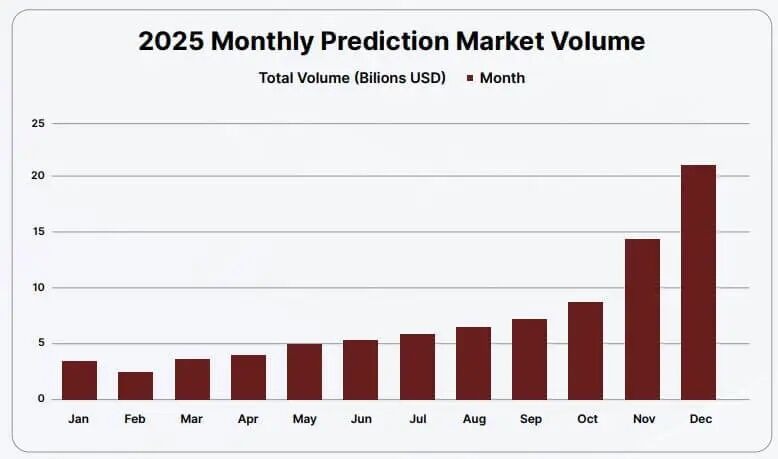
New exchanges can list exclusive markets that other platforms cannot offer. This advantage is further amplified when combined with a vertical strategy (point 7).

3. Capital Efficiency

Capital efficiency determines the effectiveness of traders' collateral usage. Currently, there are two core levers:

First, interest-bearing collateral: Instead of letting idle funds earn only treasury yields, offer higher returns, similar to Lighter supporting LP deposits as collateral or HyENA's USDC-margined perpetual contract model.

Second, margin mechanisms. Due to gap risk, the market generally underestimates the value of leverage in prediction markets, but platforms can offer limited leverage for continuous markets or implement portfolio margin for hedged positions.

Exchanges can also subsidize lending pools or act as market-making counterparties to internalize gap risk, rather than having them distributed among users.

4. Oracles and Market Settlement

Oracle reliability remains a systemic weakness in the industry. Settlement delays and incorrect results significantly amplify trading risks.

Beyond improving stability, platforms can implement innovative oracle mechanisms: human-machine hybrid systems, zero-knowledge proof-based solutions, AI-driven oracles like those from Context, etc., unlocking new markets that traditional oracles cannot support.

5. Liquidity Provision

Exchange survival depends on liquidity. Viable paths include: paying to onboard professional market makers, incentivizing ordinary users to provide liquidity with tokens, or adopting Hyperliquid's HLP aggregated liquidity model.
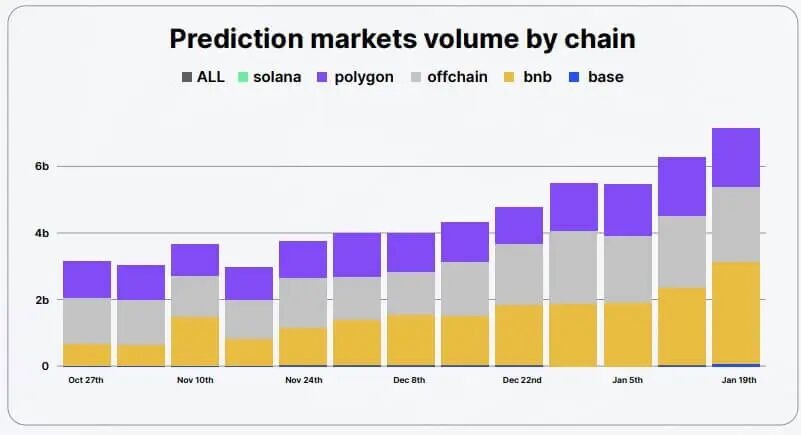
Some platforms can also completely internalize liquidity, emulating FTX's model of relying on Alameda as an internal trading team.

6. Regulatory Compliance

Kalshi, with its US regulatory license, has achieved embedded distribution through Robinhood and Coinbase, capturing retail traffic that Polymarket cannot reach.

There are still numerous jurisdictions and regulatory frameworks available for deployment. Compliant prediction markets can unlock similar channels, such as adapting to US state-level gambling regulations.

7. Vertical Strategy vs. Horizontal Strategy

Horizontal Strategy: Similar to Hyperliquid in the perpetual contracts space, focusing on building top-tier underlying trading infrastructure, inviting third parties to build front-ends and vertical scenarios, and encouraging ecosystem builders to add markets and develop revenue-generating front-ends (e.g., Phantom) through proposals.

Vertical Strategy: Exemplified by Lighter, controlling the front-end themselves, launching mobile apps, and creating a full-process user experience, focusing on integrated experience and direct user connection.

Polymarket's resistance to deep embedded partnerships versus Kalshi's open attitude is a clear reflection of the trade-offs between these two strategies.


Twitter:https://twitter.com/BitpushNewsCN

Bitpush TG Discussion Group:https://t.me/BitPushCommunity

Bitpush TG Subscription: https://t.me/bitpush

Original link:https://www.bitpush.news/articles/7611385

Пов'язані питання

QWhat are the seven key dimensions for differentiation in the prediction market competition according to the article?

AThe seven key dimensions are: 1. Product Quality, 2. Asset Categories and Market Selection, 3. Capital Efficiency, 4. Oracles and Market Settlement, 5. Liquidity Provision, 6. Regulatory Compliance, and 7. Vertical Strategy vs. Horizontal Strategy.

QHow can new prediction market exchanges gain an advantage in 'Asset Categories and Market Selection'?

ANew exchanges can list exclusive markets that other platforms cannot offer, and this advantage can be amplified when combined with a vertical domain strategy.

QWhat are the two main approaches to improving capital efficiency in prediction markets mentioned in the article?

AThe two main approaches are: 1. Interest-bearing collateral, which allows idle funds to earn higher yields, and 2. Margin mechanisms, such as offering limited leverage for continuous markets or portfolio margin for hedging positions.

QWhat role do oracles play in prediction markets, and what innovative solutions are suggested?

AOracles are crucial for reliable market settlement, and their failure can significantly increase trading risk. The article suggests innovative mechanisms like human-machine hybrid systems, zero-knowledge proof-based solutions, and AI-driven oracles to support new types of markets.

QWhat is the difference between a vertical strategy and a horizontal strategy in the context of prediction market platforms?

AA horizontal strategy focuses on building top-tier underlying trading infrastructure and allowing third parties to develop front-ends and vertical scenarios. A vertical strategy involves controlling the entire user experience, including the front-end and mobile applications, to provide an integrated experience directly to users.

Пов'язані матеріали

Will the Fed Definitely Raise Interest Rates in September? How Will Crypto and U.S. Stocks Withstand the Pressure?

The market's expectation for a September Fed rate hike surged dramatically in early August, jumping from under 50% to over 80% within a week. This shift followed a contentious July FOMC meeting, where a 9-3 vote to hold rates revealed growing dissent from hawkish members advocating for an immediate hike to combat persistent inflation. The primary catalyst for this repricing is rising oil prices, driven by renewed geopolitical tensions around the Strait of Hormuz, which threaten global supply. Energy costs directly influence inflation metrics, making the upcoming July CPI report (due August 12th) a critical data point. If it shows inflation reaccelerating, the probability of a September hike will solidify. For Bitcoin and crypto assets, this is typically bearish news. Bitcoin continues to behave as a high-beta, liquidity-sensitive risk asset. A rate hike raises the opportunity cost of holding non-yielding assets and could drive capital toward money markets, pressuring crypto prices in the short term. However, historical patterns suggest that if a hike is perceived as the end of a tightening cycle rather than the start, any negative price impact may be brief. U.S. stocks, particularly crypto-linked equities like Coinbase and growth-oriented tech stocks, are also vulnerable. Higher rates increase discount rates in valuation models, putting pressure on high-multiple companies. This coincides with a pivotal tech earnings season where investor focus has shifted from massive AI capital expenditure to tangible revenue and cash flow generation. Companies with negative cash flow and weak growth narratives could face heightened volatility if borrowing costs rise in September. In summary, a September Fed hike has evolved into a mainstream market scenario. Key factors to watch are oil prices, the July CPI report, and Fed communications, which will determine the final decision and its impact on volatile crypto and equity markets.

marsbit9 хв тому

Will the Fed Definitely Raise Interest Rates in September? How Will Crypto and U.S. Stocks Withstand the Pressure?

marsbit9 хв тому

A 'Overlooked' Market Event: Joint US-Japan-South Korea Intervention, Rare US Treasury Involvement, and Bessent's Quiet 'Market Rescue'?

Summary: The United States, Japan, and South Korea executed their largest coordinated foreign exchange intervention in nearly 30 years. The action targeted depreciation pressure on the Japanese yen and South Korean won. This move is seen as a significant effort by the US to stabilize the financial markets of its key allies and prevent the spillover of risks. Key details: * Japan reportedly intervened on July 30 using approximately 8.45 trillion yen (about $52.8 billion). South Korean authorities also intervened that day, selling dollars to support the won. * Notably, the US Treasury Department intervened directly in yen markets for the first time in roughly 30 years. The New York Fed, reportedly acting on behalf of the Treasury, sold euros to buy yen via Goldman Sachs and Morgan Stanley on July 31. Analysts view the use of the euro-yen pair as a way to alleviate yen pressure without adding selling pressure to the US dollar. * Prior to the action, the New York Fed conducted "rate checks" on both USD/JPY and EUR/JPY, a newer signaling tool that falls between verbal and physical intervention. The intervention is interpreted as going beyond traditional currency stabilization. Analysts, such as Michael Hartnett of Bank of America, suggest it resembles a "Price Keeping Operation" for the AI era. The core US objectives are perceived to be: 1. Preventing rapid yen depreciation from triggering a sharp rise in Japanese government bond yields. 2. Containing financial stress from spreading across Asian markets like South Korea and Japan. 3. Reducing the risk of disorderly capital flows impacting the US bond market. This coordinated action underscores the importance of Japan and South Korea as critical partners in the US semiconductor and AI supply chain. Stabilizing their financial markets is seen as vital to mitigating risks to the broader tech industry and the US market itself. The intervention coincides with market pressures, including the KOSDAQ index hitting a low since October 2022. While seen as a move to control volatility, some analysts caution it may not fundamentally reverse existing market trends.

marsbit13 хв тому

A 'Overlooked' Market Event: Joint US-Japan-South Korea Intervention, Rare US Treasury Involvement, and Bessent's Quiet 'Market Rescue'?

marsbit13 хв тому

Will the Federal Reserve Definitely Raise Interest Rates in September? How Will Cryptocurrencies and US Stocks Bear the Pressure?

In early August 2024, market expectations for a September Federal Reserve rate hike surged dramatically, from below 50% to over 80%, driven by renewed inflation concerns. This shift followed a contentious July FOMC meeting where a 9-3 vote to hold rates revealed a growing hawkish faction advocating for an immediate hike, citing prolonged above-target inflation. The key catalyst is escalating conflict near the Strait of Hormuz, which has pushed oil prices up approximately 20% in July, threatening to reignite inflation. The next critical data point is the July CPI report on August 12th; a hot reading could solidify hike expectations. For crypto assets, particularly Bitcoin, this represents near-term pressure. Bitcoin continues to exhibit high-beta, risk-on characteristics, making it sensitive to tightening liquidity and higher opportunity costs. However, historical precedent suggests that if a hike is perceived as the cycle's end rather than its start, the negative impact may be brief, with markets quickly pivoting to anticipate future rate cuts. U.S. stocks, especially crypto-linked equities like Coinbase and high-valuation tech stocks, face amplified volatility. Higher rates increase discount rates in valuation models, pressuring growth stocks. This coincides with a pivotal tech earnings season where investor focus has shifted from massive AI capital expenditures to demonstrable revenue and cash flow generation. Companies with negative cash flows and weak growth narratives could see severe pressure if a September hike materializes, as financing costs would rise. Key indicators to watch include oil prices, upcoming inflation data, and Fed commentary at events like the Jackson Hole symposium.

Odaily星球日报13 хв тому

Will the Federal Reserve Definitely Raise Interest Rates in September? How Will Cryptocurrencies and US Stocks Bear the Pressure?

Odaily星球日报13 хв тому

Торгівля

Спот
活动图片