The Future Outlook of Bitcoin

marsbitОпубліковано о 2026-08-09Востаннє оновлено о 2026-08-09

Анотація

Bitcoin: A Mid-2026 Perspective Bitcoin analyst Will Clemente assesses the asset's outlook, arguing that despite a challenging period, it now presents a compelling long-term value opportunity. The current bear market, while less severe in peak drawdown than 2022, has been difficult due to a lack of clear catalysts, underperformance versus assets like gold, and persistent ETF outflows. However, key negative pressures are showing signs of abating. Digital Asset Treasuries (DATs), a major source of sell pressure during the bull market, are slowing accumulation or shifting strategies. While quantum computing remains a long-term concern, its risk is likely significantly priced in at current levels. Fundamentally, the Bitcoin network remains decentralized and healthy, with a robust global node distribution. Although hash rate has declined as miners pivot to AI/HPC, the network's difficulty adjustment ensures security, and the resilience suggests a diverse, non-public mining base. Valuation metrics indicate Bitcoin is in deeply undervalued territory. It is consolidating near its 2021 highs, below the 200-week EMA, with weekly RSI showing a bullish divergence from oversold levels. The MVRV ratio is at historically low levels, signaling the market's aggregate cost basis is near the current price. Long-term holders have resumed accumulation, and trading volume across spot, ETF, and derivatives markets has dried up to multi-year lows. Implied volatility is cheap, and futures basis i...

Author:Will Clemente,Bitcoin On-chain Analyst

Compiled by: Jiahuan, ChainCatcher

Hope everyone had a good summer. It's been a while since I last wrote a long piece about Bitcoin. In this article, I want to consolidate my thoughts on this asset, as well as some ideas that have gradually taken shape in my mind recently, discussing how to view and allocate Bitcoin going forward.

Last year, I basically shifted my personal focus on markets to commodities. The reason was, it had become evident that the crypto market was facing a supply glut, which weighed heavily on the entire market.

Meanwhile, apart from niche areas like Hyperliquid, the industry lacked sufficient innovation, at least compared to the active performance of other markets. Consequently, there was also a lack of demand to digest the massive supply.

I originally thought there was a window for Bitcoin strength late last year: small-cap stocks were surging, and gold had just experienced a strong run. But Bitcoin basically only staged a failed breakout – just a few days before October 10th – which was very disappointing.

In January this year, due to market behavior resembling the previous bear market we experienced in 2022, I further reduced my remaining Bitcoin exposure.

Frankly, this has not been a pleasant year to focus on Bitcoin, or the crypto market at large. Judging solely by the percentage decline from highs, this cycle has been milder than the last one, but in many ways, this bear market might be even harder to endure than 2022.

At least in 2022, you could clearly point to reasons for the market decline: rising rates, the cleansing of leverage and fraud, and the FTX collapse. Then you could say: 'If these factors could change, and by late 2022 the scope for further deterioration was clearly smaller than for improvement, then Bitcoin was likely a good long-term buy.'

But today, there is no similar logic, with Digital Asset Treasuries (DATs) and quantum computing risk perhaps being the few exceptions – which will be discussed later and, in my view, are finally starting to show some signs of repair.

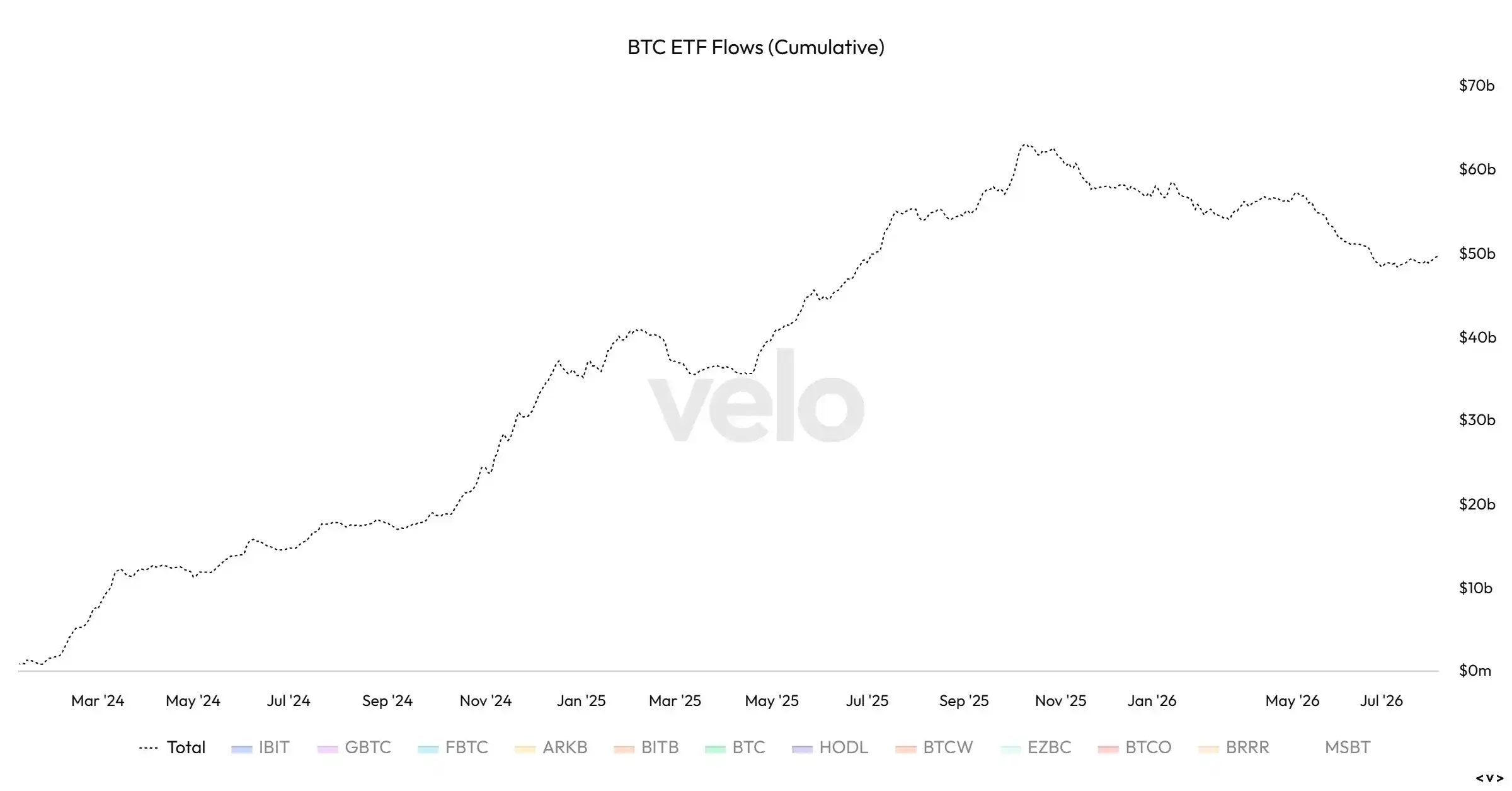
Bitcoin ETFs hold about $50 billion in assets. They set records for inflows at launch, only surpassed by memory ETFs earlier this year. Large financial institutions have also started launching related lending products.

Last year, driven by central bank reserve demand and the 'de-dollarization' narrative, gold performed exceptionally well; logically, that should have been Bitcoin's time to shine.

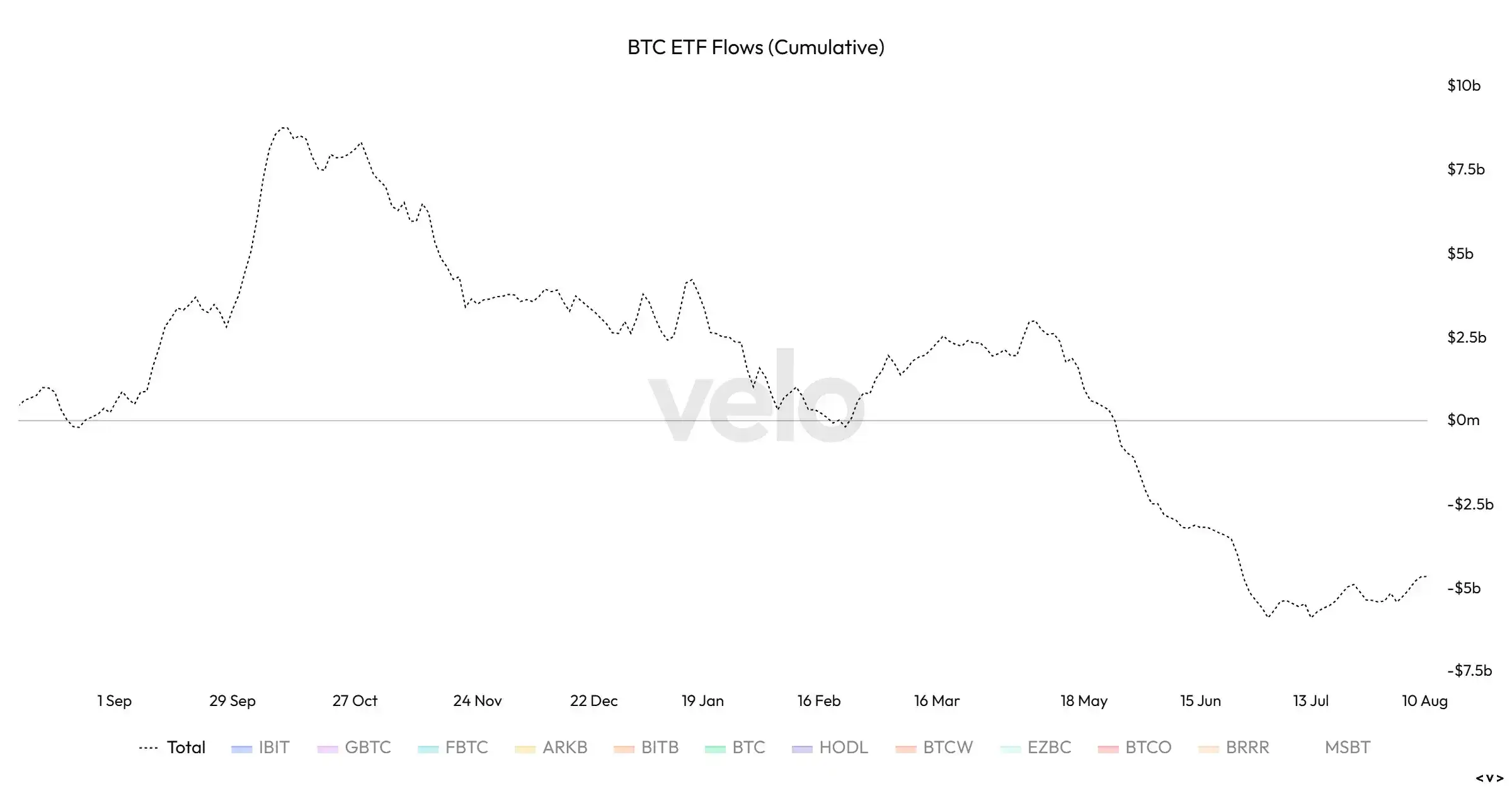
Now, almost any individual or institution wanting Bitcoin exposure has a channel to do so. It is precisely because of this that the contrast is particularly disappointing: Bitcoin ETFs have seen $5 billion in net outflows over the past year, while DRAM-related products attracted $10 billion in a month.
Network Health

When discussing Bitcoin's fundamentals, we are obviously not talking about traditional financial metrics, but observing the underlying state of the network itself. I won't go through every metric just for the sake of listing data, but there are two points I believe are truly important.

In an increasingly centralized world – state-led economies, state-influenced markets, combined with the possibly most powerful technological centralizing force we've ever seen from big tech – I truly believe 'decentralization' itself has value.

For those less familiar with Bitcoin's underlying mechanics, the network has both the widely known miners and nodes. Anyone can run a node. Nodes enforce rules and validate the network, while miners secure it through computational work backed by massive energy. Nodes are spread globally, and there are likely many more not easily tracked. The list below alone covers nearly 200 countries.
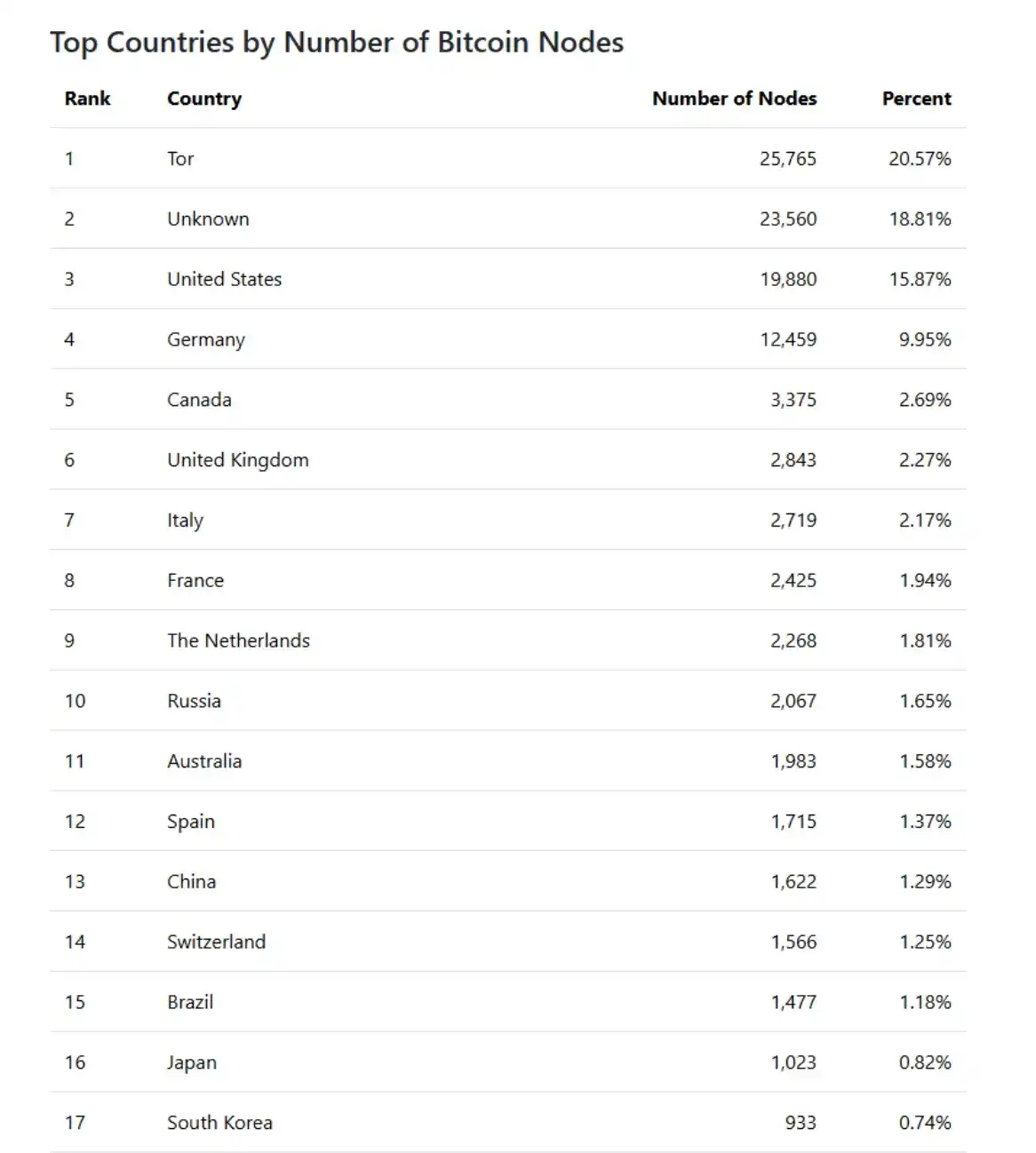
We can look at mining pools – though pools don't control individual miners within them – but it's difficult to track each independent miner like nodes. However, we can observe the total energy input supporting the network through hash rate.

From any perspective, Bitcoin's total network hash rate is declining. Post-2022, miner profit margins were squeezed due to increased competition and rising energy prices. More importantly, many miners began pivoting to Artificial Intelligence/High-Performance Computing (AI/HPC). So far, for public miners who have transitioned, this has proven a prudent business decision.

Bitcoin's performance lagged behind AI-related assets, while demand for computing power grew strongly, further reinforcing this trend. So, this can be interpreted both pessimistically and optimistically.

The pessimistic side: in terms of energy input securing the network, Bitcoin is technically less secure; meanwhile, as a digital commodity, the energy input value – i.e., the cost of production – supporting each unit of Bitcoin has also decreased.

It's worth noting, however, that the network itself is not in crisis due to its difficulty adjustment mechanism. The network automatically adjusts mining difficulty and reward conditions every two weeks based on hash rate levels. This mechanism incentivizes new miners to join and secure the network when competition decreases.

The optimistic side: despite almost every public miner we know pivoting to AI/HPC, the total hash rate has only retreated to mid-last-year levels. This suggests there may be more entities actually mining Bitcoin with access to cheap energy than some originally thought. Combined with node distribution data, the Bitcoin network remains decentralized and healthy.
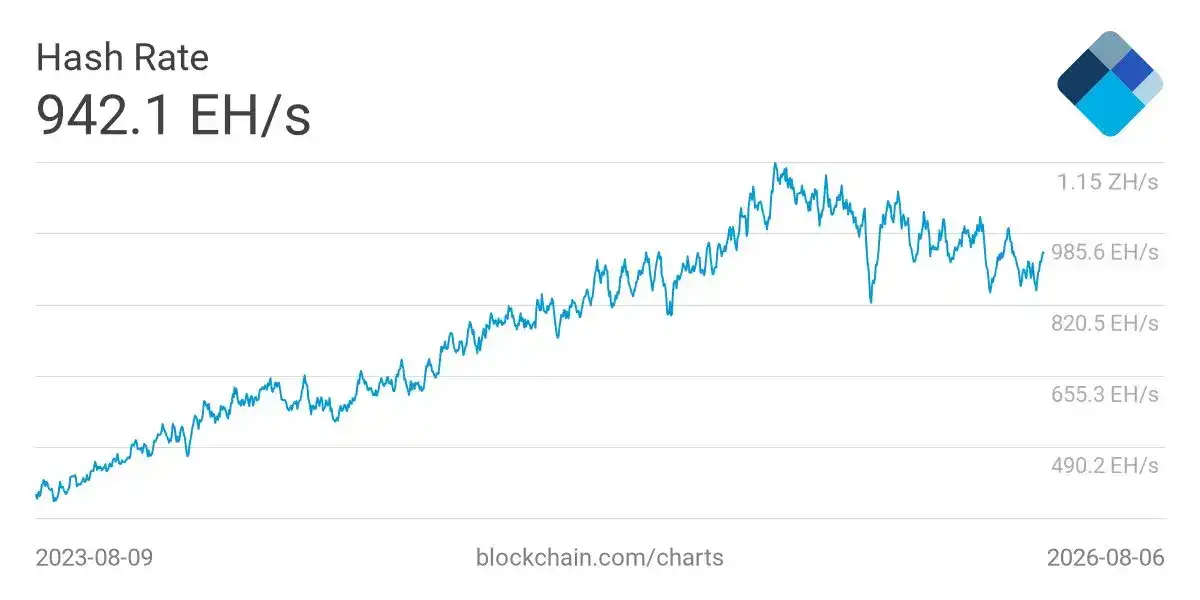
Overall, I think the Bitcoin network itself remains as decentralized and healthy as ever.

Valuation Methods and Current Metrics

Bitcoin obviously does not generate cash flows, but we can still compare its current valuation to historical market performance through several unique methods.

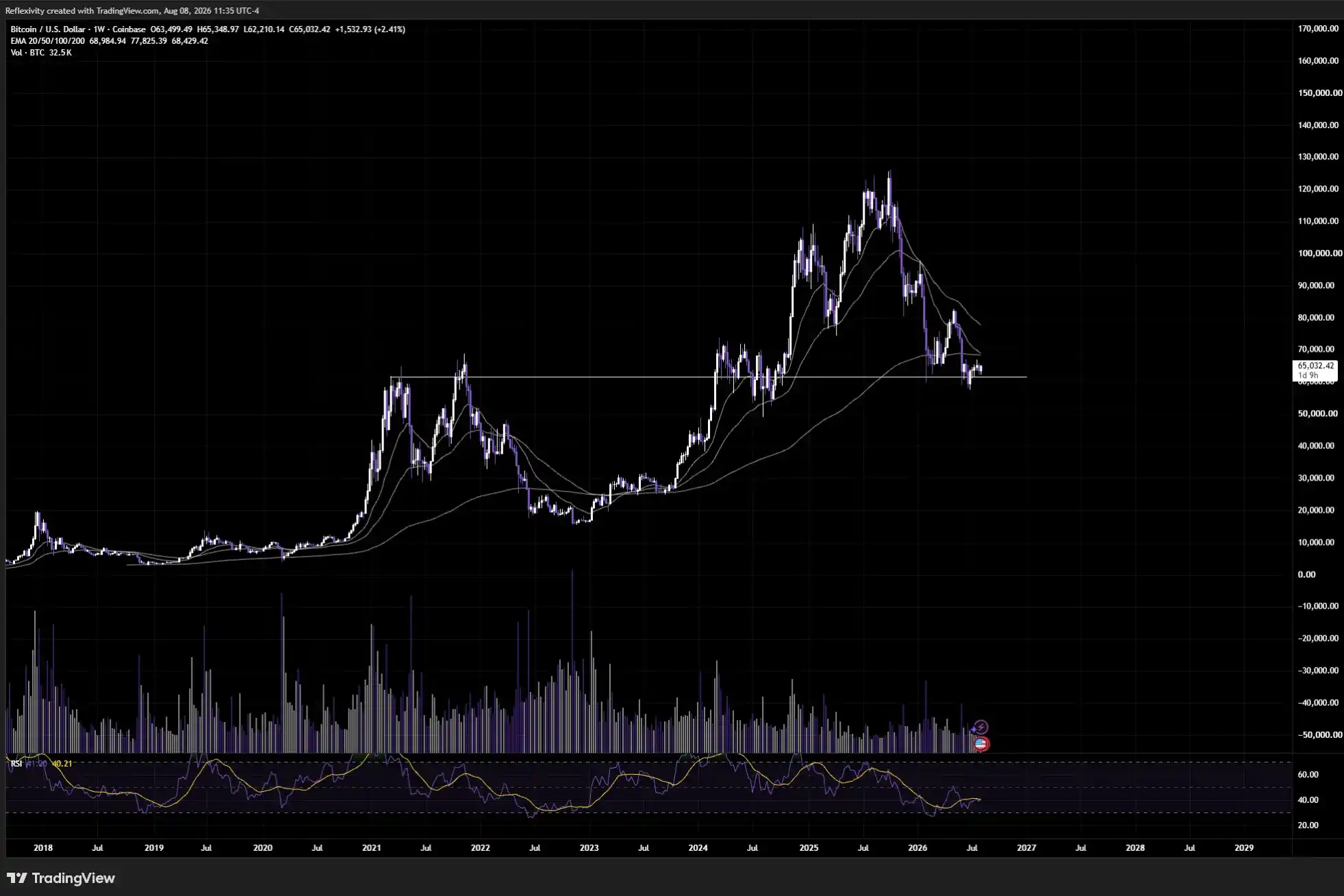
From a technical perspective, Bitcoin is currently consolidating near the 2021 all-time highs, slightly below the 200-week Exponential Moving Average (EMA). The weekly RSI is showing a bullish divergence emerging from oversold territory, with the last time reaching such oversold levels being at the depths of the previous bear market.

Historically, the 200-week moving average has been a decent basic threshold to start considering gradually accumulating Bitcoin spot positions.
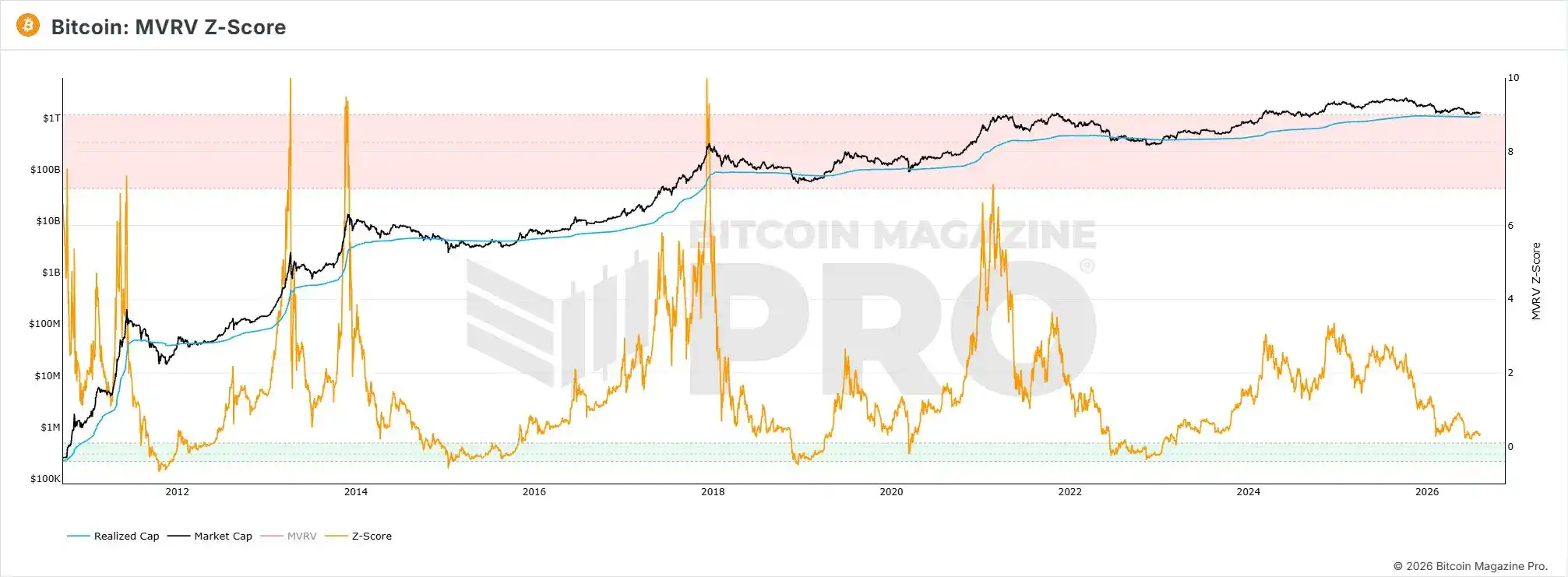
Among on-chain data-based valuation methods, one of the most effective metrics is the Market Value to Realized Value ratio (MVRV). It compares Bitcoin's current marginal trading price with the aggregated cost basis of the entire network; the latter is calculated based on the price when tokens last moved to a new wallet cluster.

When this ratio is high, it means the current marginal trading price is far above the network's average cost. There is a large amount of unrealized paper profit (PNL) in the market, giving many holders strong motivation to take profits.

When the ratio is below 0, it means that, on aggregate, market participants are sitting on paper losses. Historically, this has often marked a phase more suitable for accumulating positions.

You'll notice that in 2024–2025, this metric never truly reached the frenzied, blow-off top levels of the past. This reflects the gradual maturation of this asset class in recent years and the consequent contraction in volatility.

Considering that each bull market's metric peaks have been lower, and each bear market's deepest lows have been slightly higher, a reasonable conclusion might be that the market doesn't necessarily have to enter negative territory to bottom this time.

Buying the exact bottom is extremely difficult. The most important takeaway here is that Bitcoin is currently already in the lower historical valuation range.
Long-term holders also seem to be accumulating quite actively. After a period of distribution in mid-to-late 2025, they have resumed adding to their holdings, indicating they see value at current prices.
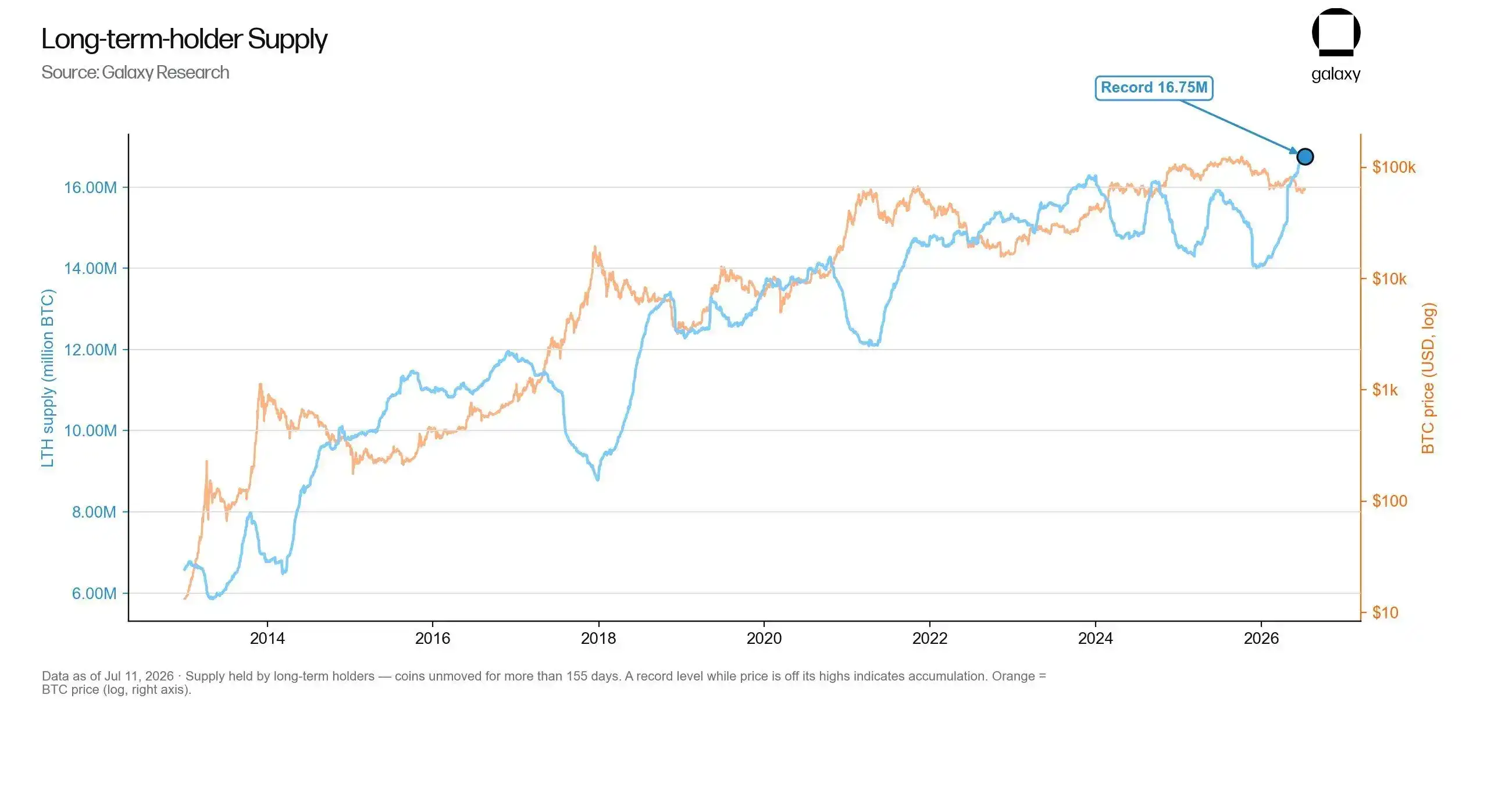
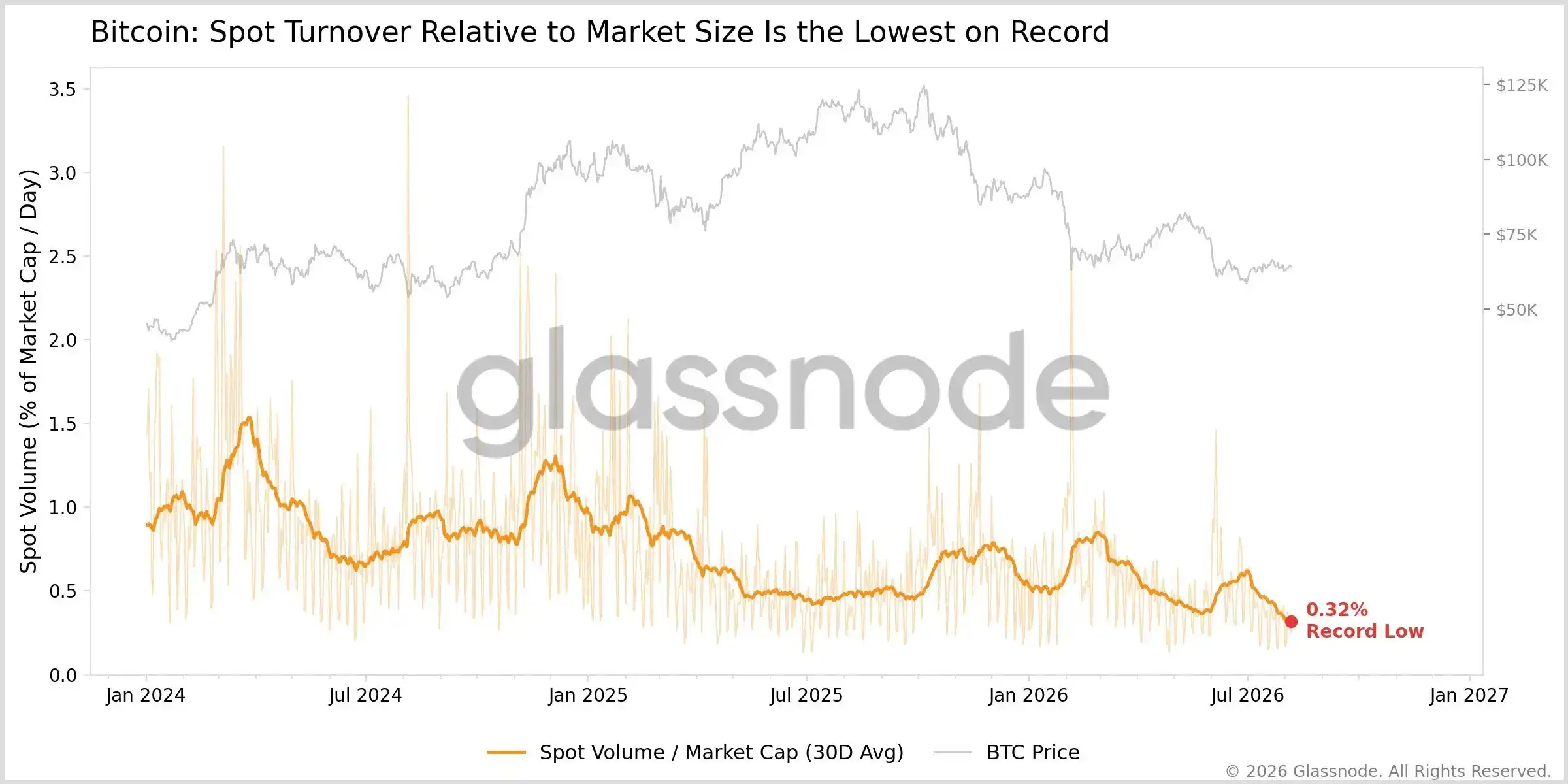
Trading volume has almost completely dried up. @n3ocortex made a great chart showing Bitcoin spot turnover relative to its market cap has fallen to historical lows. ETF and DAT trading volumes show a similar state.
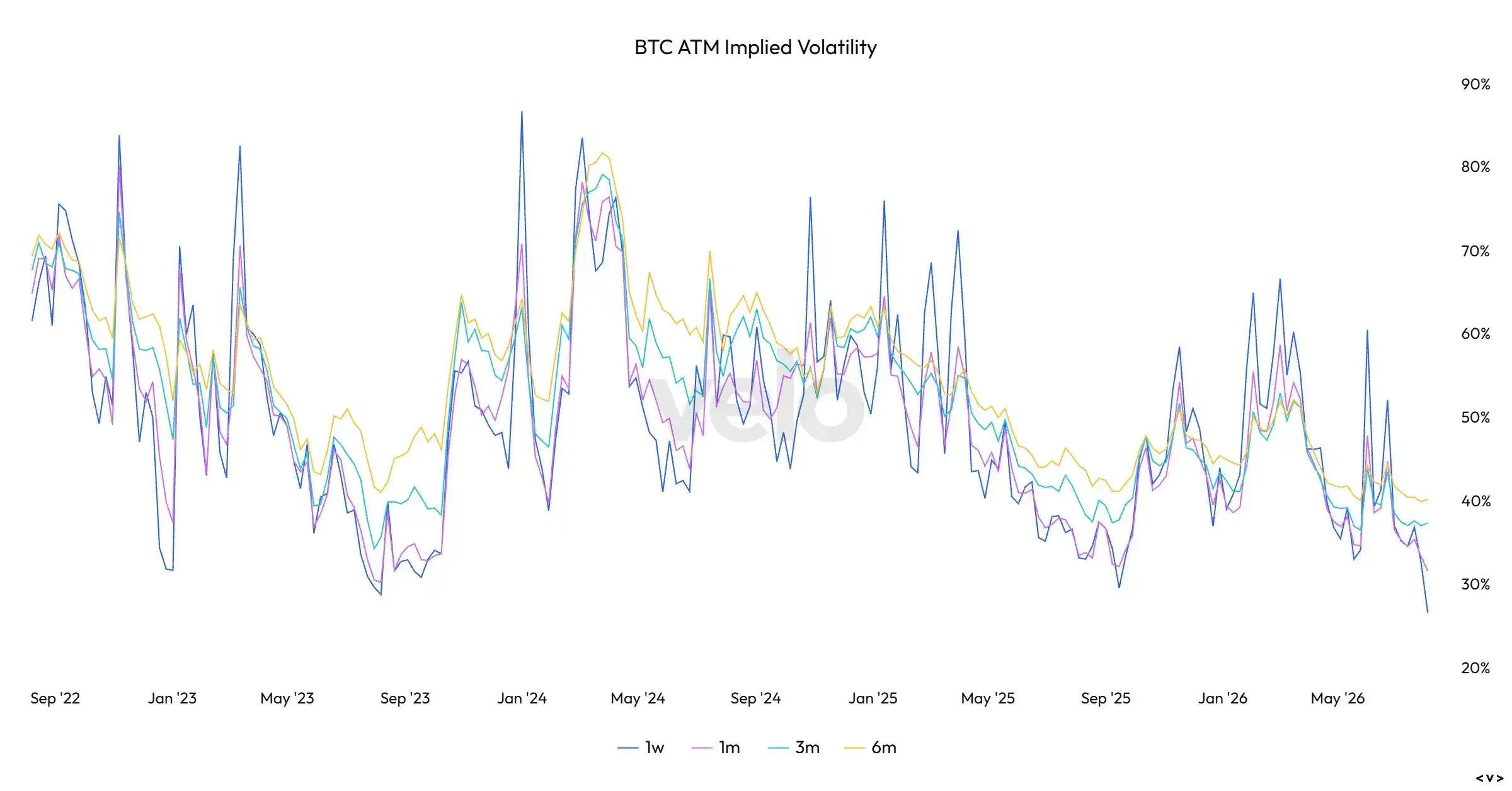
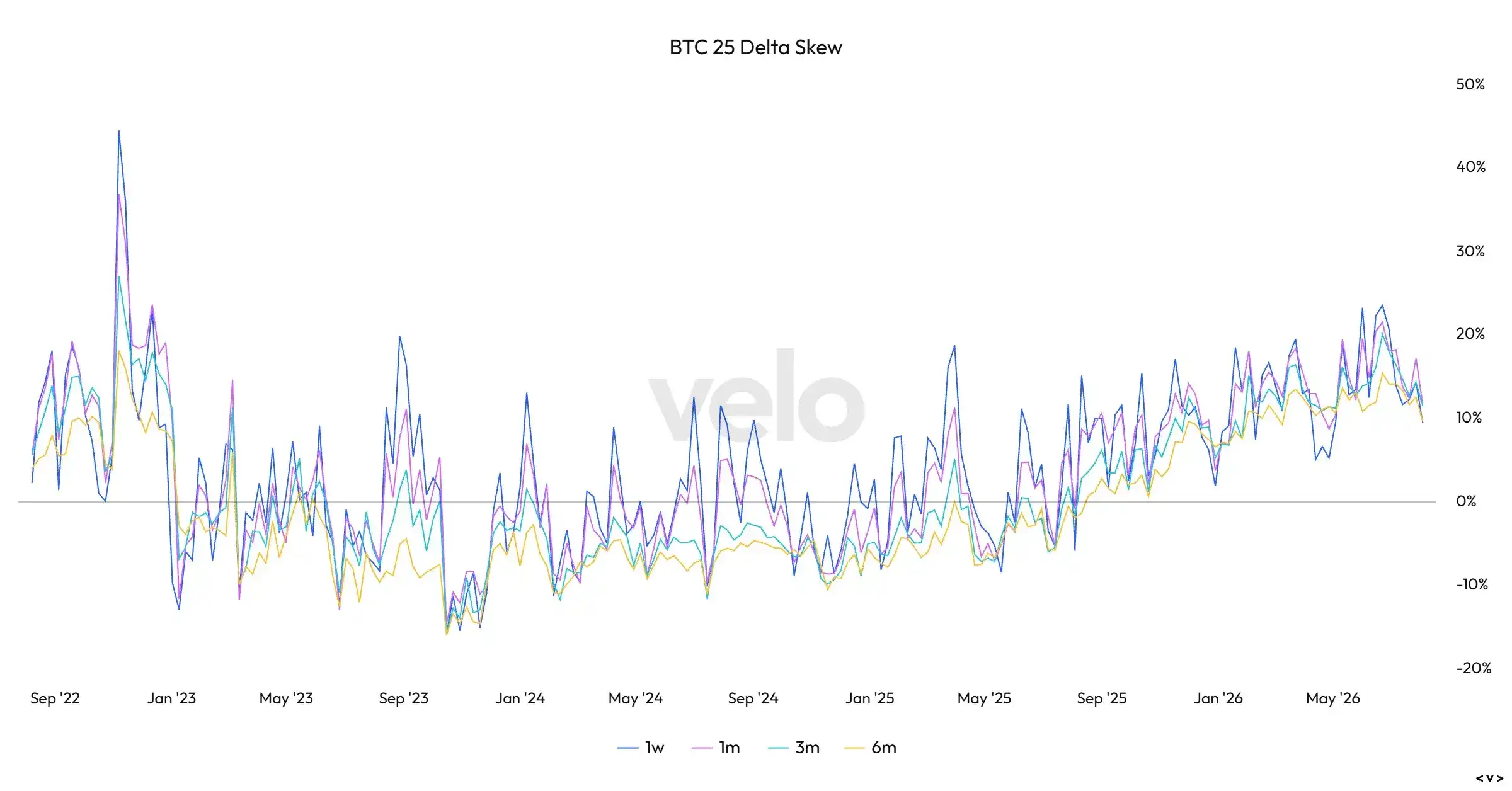
Near-term implied volatility in the options market has fallen to multi-year lows, meaning the market sees Bitcoin as 'dead money' with no near-term performance. Meanwhile, options skew data shows that over the past year, the only thing the market has been clearly interested in is buying more downside protection.
Finally, looking at the derivatives market: Bitcoin futures basis – the spread between futures contract prices and the Bitcoin spot price – has been declining for years, even struggling to reach levels comparable to US Treasury bill yields.

This indicates two things:

  1. Increasingly more funds are arbitraging Bitcoin futures basis;
  2. The market is not pricing in much of a premium for forward Bitcoin futures contracts relative to spot prices.
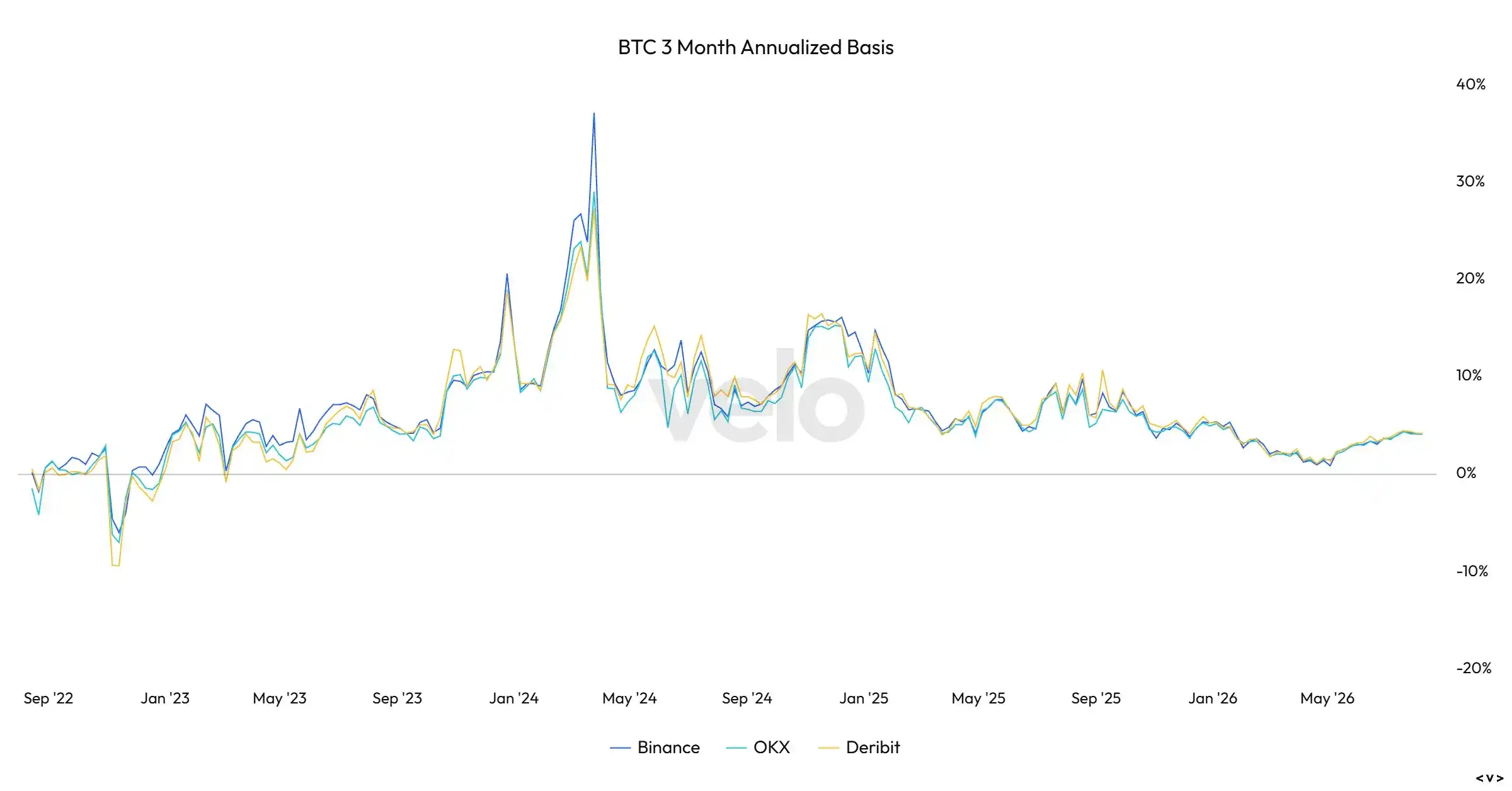
Putting these factors together, the objective picture is: the market is completely dead. Neither futures nor options traders are expressing bullish views, and they are pricing in continued flattening of Bitcoin volatility.

Meanwhile, multiple metrics show Bitcoin is entering deep value territory; long-term holders are accumulating again. This seems to contradict both trader sentiment and the trend of $5 billion in net outflows from Bitcoin ETFs over the past 52 weeks.

DATs and the Specter of 'Quantum Computing'

One of the biggest pressures on the market during the 2023–2025 bull run was Digital Asset Treasuries (DATs). At least in theory, the design logic of these vehicles was: to accumulate more Bitcoin by diluting common shareholders in a way that accretes per-share value, ultimately enhancing shareholder value.

However, after successes like Strategy and Japan's Metaplanet, competition intensified significantly as numerous similar companies emerged vying for return opportunities. Inflows into these vehicles were spread too thin, eventually leading to their narrowing premiums to Net Asset Value (NAV).

In recent months, we've seen multiple related news items: some treasuries have slowed their Bitcoin accumulation pace, some have started directly selling Bitcoin, and a few have even changed strategies altogether. I view these as positive signs of market self-repair.

Recently, even when Saylor announced selling Bitcoin, the price actually rose. According to information from Strategy's latest earnings call, the company is consolidating its capital structure and prioritizing STRC. This contrasts sharply with the previous pattern where 'announcing Bitcoin buys led to price declines.'

Looking ahead, I don't think DATs will exert the same degree of pressure on the market as they did 6–9 months ago, especially given Bitcoin is already down more than 50% from its highs.

I do believe quantum computing is a real concern, especially on a time horizon of five-plus years. In recent months, while assisting with investment analysis at STIX, I've interacted with a few quantum computing startups beginning to mature and spoken with people in the industry, giving me some understanding. Of course, I'm far from an expert.

My view is that this threat should be taken seriously. However, with Bitcoin at $60,000, down 50% from highs, and underperforming other assets, I think the current price has already priced in a significant portion of this risk.

From here on out, even in the most extreme doomsday scenarios, the direction of these widely discussed, publicly known concerns will likely only improve. The worse Bitcoin performs due to market concerns about quantum risk, the more incentive large holders, and institutions making money from Bitcoin trading, custody, and lending, have to push a cohort of developers to find and propose solutions.

This is similar to the ETF approval in the last cycle: the market trades ahead of the probability of the problem being solved. Therefore, once the risk is completely resolved, you cannot buy at extremely low prices anymore.

Potential Bullish Logic

Even if you think Bitcoin is probably now at a level suitable for long-term allocation, for medium-to-short-term capital allocators, opportunity cost remains an extremely important consideration: with a hot economy and truly worthwhile innovation opportunities for speculation and investment in the market, allocating capital to Bitcoin seems to miss out on a lot by comparison.

The core question that has persisted for months is: Since gold rose and high-beta stocks performed strongly this year without Bitcoin following, what would need to happen for Bitcoin to perform from now on?

As shown in previous charts, on-chain data indicates long-term holders are buying with considerable force. Meanwhile, DATs have seen capitulatory selling, and ETFs have brought significant net selling pressure.

Previous Bitcoin bear markets ended due to exhaustion of selling pressure, not necessarily requiring a catalyst that sparked massive new demand. At this point, if you were ever worried about DATs, quantum computing risks, or Bitcoin's underperformance, how many haven't sold and can continue selling at a pace exceeding the last 6–9 months?

Clearly, Bitcoin could still experience a sharp drop due to a sudden spike in asset correlation if macroeconomic or geopolitical turmoil occurs. But we are discussing a judgment on a higher time frame over the coming months.

I fully understand there is no clear catalyst currently. The 'Clarity' Act might be one, but I don't think it will significantly impact Bitcoin itself. However, market bottoms often look like this.

What you weigh is the probability of things getting worse relative to the expectations already priced into the current price. It's the opposite of judgment in a bull market: in a bull market, people assess the probability of reality being better than expected.

I'm not ruling out one last leg down sometime this year, but at this point, I think the market has priced in many of these risks over the past year.

A potential catalyst for Bitcoin could simply be stable, requirement-driven buying by large institutions. The initial Asset Under Management (AUM) growth of ETFs at launch was staggering, but we are long past the initial excitement phase. Since last October, total ETF AUM has been slowly declining.

One possible catalyst could be large asset management firms deciding to include a small, single-digit percentage Bitcoin allocation across their various investment portfolios. This would bring price-insensitive inflows to Bitcoin.

This might sound like clutching at straws for comfort, but Bitcoin's lack of clear correlation with multiple asset classes over the past year could indeed provide a reasonable basis for large management institutions, which often seek to diversify asset correlations and risk exposures, to allocate a small amount of Bitcoin.
Conclusion: How to Think About Allocation Going Forward

In short: I think Bitcoin is 'cheap,' though it could still take another leg down sometime this year. The network's fundamentals are broadly healthy. At this point, most risks have been priced in; those who would sell because of these risks have likely already sold. It's almost impossible to buy the exact bottom.

In my view, there are a few ways to allocate from here. Of course, this is not investment advice.

The simplest strategy is to consider gradually buying Bitcoin spot via dollar-cost averaging over the next few months. You could also wait for a final leg down or for the market to regain vitality and upward momentum before acting.

Another strategy is to start allocating now. Since implied volatility is very cheap, you can simultaneously use the options market to hedge against any final leg down that might shake you out of your position.

I haven't really pulled the trigger myself yet, but will likely start acting in some capacity soon.

I hope this article has provided some valuable thoughts and sparked discussion on how others are viewing these issues. Maybe the 'four-year cycle' proves we live in a simulation. Either way, the coming months look interesting for this orange coin.


Трендові криптовалюти

Пов'язані питання

QAccording to the article, what are the two major factors that have been depressing the Bitcoin market and are now showing signs of improvement?

AAccording to the article, the two major factors are the selling pressure from Digital Asset Treasuries (DATs) and the perceived risk from quantum computing. The author states that both of these issues are finally starting to show signs of being repaired.

QWhat does the author conclude about the current health of the Bitcoin network itself?

AThe author concludes that the Bitcoin network remains as distributed and healthy as it ever has been. While mining hash rate has declined, the network's difficulty adjustment mechanism keeps it secure, and a wide, global distribution of nodes shows its decentralized nature is intact.

QBased on the MVRV (Market Value to Realized Value) metric discussed, what is the key conclusion about Bitcoin's current valuation?

AThe key conclusion is that Bitcoin is currently in the lower end of its historical valuation range. The MVRV ratio indicates that the market is largely in an unrealized loss position, which historically has been a favorable zone for accumulation, even if it may not necessarily need to turn negative to find a bottom in this cycle.

QWhat is the current sentiment reflected in Bitcoin's derivatives markets (futures and options), as described in the article?

AThe derivatives markets reflect complete apathy. Futures basis (the premium of futures over spot) has been declining for years. Options implied volatility is at multi-year lows, and skew data shows the market's only consistent interest has been in buying downside protection. This indicates traders are not expressing bullish views and are pricing in continued low volatility.

QWhat is one potential catalyst for Bitcoin mentioned by the author that involves large institutional asset managers?

AOne potential catalyst is large asset management institutions deciding to add a small, single-digit percentage allocation of Bitcoin to their various investment portfolios. This would create price-insensitive inflows, as Bitcoin's lack of correlation with other assets over the past year could serve as a rationale for diversification.

Пов'язані матеріали

Grayscale Clarifies Whether the Cryptocurrency Market Growth-Promoting Clarity Act Will Be Passed This Year

Zach Pandl, the Research Director at Grayscale, stated that the passage of the CLARITY Act—legislation aimed at establishing a comprehensive regulatory framework for the crypto market in the U.S.—is unlikely to occur in Congress this year. According to Pandl, the Senate's tight schedule and the political climate in an election year make bipartisan agreement on the bill difficult. Pandl noted that the failure of the Clarity Act will not directly impact Bitcoin's role as a store of value, the operation of core blockchains, or the growth of stablecoin payments in the short term. The U.S. crypto sector has operated for nearly 17 years without such comprehensive market structure legislation. However, he warned that the absence of a clear regulatory framework could slow the influx of new investment and capital formation in the U.S. The proposed law aims to open new avenues for capital formation via blockchain, support the development of tokenized securities markets, and create a comprehensive oversight system for digital asset intermediaries, along with various consumer, investor, and software developer protections. Pandl believes federal regulators, particularly the SEC, will continue to fill regulatory gaps even without new legislation, issuing rules in areas like tokenized securities in the coming months. While significant progress has been made under the current administration regarding institutional custody, banking access, staking, and crypto ETPs, Pandl cautioned that without comprehensive market structure laws, much new investment and developer activity may shift outside the United States.

cryptonews.ru1 год тому

Grayscale Clarifies Whether the Cryptocurrency Market Growth-Promoting Clarity Act Will Be Passed This Year

cryptonews.ru1 год тому

Michael Saylor Identifies the Next Financial Opportunity Worth Billions

Michael Saylor, Executive Chairman of Strategy Inc. (Nasdaq: MSTR), identified digital credit as the next billion-dollar business opportunity in finance. In an August 7th post on X, he suggested entrepreneurs explore this category. Saylor's post included a chart showing the effective yields of four of Strategy's digital credit products as of 11:10 AM EDT. Leading was Stride Preferred Shares (STRD) with a 15.29% yield, followed by Stretch Preferred Shares (STRC) at 12.63%, Strike Preferred Shares (STRK) at 12.08%, and Strife Preferred Shares (STRF) at 10.38%. These preferred securities allow Strategy to raise capital from income-seeking investors, offering various dividend rates, risk levels, and positions in the company's capital structure. Strategy has developed a suite of preferred shares classified as digital credit instruments. For instance, the Stretch Preferred Shares (STRC) are perpetual, variable-rate securities. This approach applies established credit market structures to companies with digital asset-based balance sheets, connecting capital-seeking issuers with yield-seeking investors through Wall Street-like products. Saylor positioned these as a "digital credit stack," built upon but not backed by Strategy's bitcoin reserve, expanding the company's capital access while targeting yield-focused buyers. The billion-dollar potential lies in creating a scalable, replicable business model where issuers can raise capital via tailored income securities and investors can select products based on yield, risk, and capital priority. For Strategy, this model attracts capital from investors seeking income without direct bitcoin exposure, while the company maintains its broader bitcoin strategy. Growing dividend obligations have influenced how Strategy manages its bitcoin holdings and cash reserves, with the company selling some bitcoin to fund preferred share payments and build a USD reserve for liquidity.

cryptonews.ru1 год тому

Michael Saylor Identifies the Next Financial Opportunity Worth Billions

cryptonews.ru1 год тому

Торгівля

Спот

Популярні статті

Що таке BITCOIN

Розуміння HarryPotterObamaSonic10Inu (ERC-20) та його позиції у крипто-просторі Останніми роками ринок криптовалют спостерігав за зростанням популярності мем-коінів, які привертають інтерес не тільки трейдерів, але й тих, хто шукає спілкування та розважальну цінність. Серед цих унікальних токенів є HarryPotterObamaSonic10Inu (ERC-20), інтригуючий проект, що поєднує культурні посилання з тканинами криптовалюти. Ця стаття досліджує ключові аспекти HarryPotterObamaSonic10Inu, вивчаючи його механізми, спільноту та його взаємодію з ширшим крипто-ландшафтом. Що таке HarryPotterObamaSonic10Inu (ERC-20)? Як випливає з його назви, HarryPotterObamaSonic10Inu є мем-коіном, побудованим на блокчейні Ethereum, класифікованим за стандартом ERC-20. На відміну від традиційних криптовалют, які можуть підкреслювати практичну корисність або інвестиційний потенціал, цей токен процвітає завдяки розважальній цінності та силі своєї спільноти. Проект спрямований на створення середовища, де зацікавлені користувачі можуть об'єднуватися, ділитися ідеями та брати участь у заходах, натхненних різноманітними культурними явищами. Однією з примітних особливостей HarryPotterObamaSonic10Inu є нульовий податок на транзакції. Цей привабливий елемент має на меті заохочувати торгівлю та участь у спільноті, позбавлену додаткових витрат, які можуть відлякувати дрібних трейдерів. Загальна пропозиція монет становить один мільярд токенів, що позначає намір підтримувати суттєву циркуляцію в межах спільноти. Творець HarryPotterObamaSonic10Inu (ERC-20) Походження HarryPotterObamaSonic10Inu дещо окутане таємницею; деталі про творця залишаються невідомими. Розвиток цього токена позбавлений впізнаваної команди або чіткої стратегії, що не є рідкістю в секторі мем-коінів. Натомість проект виник органічно, а його розвиток значною мірою залежить від ентузіазму та участі його спільноти. Інвестори HarryPotterObamaSonic10Inu (ERC-20) Щодо зовнішніх інвестицій та підтримки, HarryPotterObamaSonic10Inu також залишається невизначеним. Токен не зазначає жодних відомих інвестиційних фондів або значної організаційної підтримки. Натомість життєва сила проекту полягає в його базовій спільноті, яка інформує про його зростання та стійкість через колективні дії та залученість у крипто-просторі. Як працює HarryPotterObamaSonic10Inu (ERC-20)? Як мем-коін, HarryPotterObamaSonic10Inu функціонує передусім поза традиційними рамками, що часто регулюють вартість активів. Є кілька відмінних аспектів, що визначають, як працює проект: Транзакції без податку: Завдяки відсутності податкових зборів на транзакції, користувачі можуть вільно купувати та продавати токен, не турбуючись про приховані витрати. Залучення спільноти: Проект процвітає завдяки взаємодії спільноти, використовуючи соціальні медіа для створення шуму та сприяння залученню. Обговорення, обмін контентом та залученість є ключовими елементами, що допомагають розширити його охоплення та зміцнити лояльність серед прихильників. Відсутність практичної корисності: Слід зазначити, що HarryPotterObamaSonic10Inu не пропонує конкретної корисності в рамках фінансової екосистеми. Натомість він класифікується як токен, що призначений в основному для розваги та спільнотних активностей. Культурне посилання: Токен кмітливо вплітає елементи популярної культури, щоб привернути інтерес, зв'язуючи з ентузіастами мемів та крипто-стежками. HarryPotterObamaSonic10Inu ілюструє, як мем-коіни функціонують інакше, ніж традиційні криптовалютні проекти, увійшовши на ринок як інноваційні соціальні конструкти, а не утилітарні активи. Хронологія HarryPotterObamaSonic10Inu (ERC-20) Історія HarryPotterObamaSonic10Inu відзначена кількома значними етапами: Створення: Токен виник з вірусного мему, захопивши уяву багатьох крипто-ентузіастів. Конкретні дати створення недоступні, що підкреслює його органічний розвиток. Лістинг на біржах: HarryPotterObamaSonic10Inu з'явився на різних біржах, дозволяючи зручніший доступ і торгівлю спільноти. Ініціативи залучення спільноти: Ведення діяльності, спрямованої на покращення взаємодії спільноти, включаючи конкурси, кампанії в соціальних мережах та створення контенту від фанатів та прихильників. Плани на майбутнє: Дорожня карта проекту включає запуск колекції NFT, мерчандайзинг та електронну комерцію, пов'язану з його культурними темами, що далі залучає спільноту та намагається додати більше вимірів до його екосистеми. Ключові моменти про HarryPotterObamaSonic10Inu (ERC-20) Спільнотний підхід: Проект надає пріоритет колективному внеску та креативності, забезпечуючи, щоб участь користувачів була в центрі його розвитку. Класифікація як мем-коін: Це є його епігенез розважальної криптовалюти, що відрізняється від традиційних інвестиційних інструментів. Жодного прямого відношення до Bitcoin: Незважаючи на схожість у назві, HarryPotterObamaSonic10Inu є відмінним і не має жодного зв’язку з Bitcoin або іншими усталеними криптовалютами. Зосередженість на співпраці: HarryPotterObamaSonic10Inu створено для того, щоб надати простір для співпраці та обміну історіями серед його власників, забезпечуючи шлях для творчості та спільного зв'язку. Перспективи на майбутнє: Амбіція розширитися за межі початкової концепції в NFT та мерчандайз відкриває шлях для проекту потенційно потрапити в більш мейнстрімні сфери цифрової культури. Оскільки мем-коіни продовжують захоплювати уяву спільноти криптовалют, HarryPotterObamaSonic10Inu (ERC-20) вирізняється своїми культурними зв'язками та орієнтованим на спільноту підходом. Хоча він може не відповідати типовій моделі утилітарного токена, його суть полягає в радощах і товариськості, що підтримуються серед його прихильників, підкреслюючи еволюційну природу криптовалют в усе більш цифрову епоху. Оскільки проект продовжує розвиватися, важливо спостерігати за тим, як динаміка спільноти вплине на його траєкторію в постійно змінюваному ландшафті технології блокчейн.

2.6k переглядів усьогоОпубліковано 2024.04.01Оновлено 2024.12.03

Що таке BITCOIN

Як купити BTC

Ласкаво просимо до HTX.com! Ми зробили покупку Bitcoin (BTC) простою та зручною. Дотримуйтесь нашої покрокової інструкції, щоб розпочати свою криптовалютну подорож.Крок 1: Створіть обліковий запис на HTXВикористовуйте свою електронну пошту або номер телефону, щоб зареєструвати обліковий запис на HTX безплатно. Пройдіть безпроблемну реєстрацію й отримайте доступ до всіх функцій.ЗареєструватисьКрок 2: Перейдіть до розділу Купити крипту і виберіть спосіб оплатиКредитна/дебетова картка: використовуйте вашу картку Visa або Mastercard, щоб миттєво купити Bitcoin (BTC).Баланс: використовуйте кошти з балансу вашого рахунку HTX для безперешкодної торгівлі.Треті особи: ми додали популярні способи оплати, такі як Google Pay та Apple Pay, щоб підвищити зручність.P2P: Торгуйте безпосередньо з іншими користувачами на HTX.Позабіржова торгівля (OTC): ми пропонуємо індивідуальні послуги та конкурентні обмінні курси для трейдерів.Крок 3: Зберігайте свої Bitcoin (BTC)Після придбання Bitcoin (BTC) збережіть його у своєму обліковому записі на HTX. Крім того, ви можете відправити його в інше місце за допомогою блокчейн-переказу або використовувати його для торгівлі іншими криптовалютами.Крок 4: Торгівля Bitcoin (BTC)Легко торгуйте Bitcoin (BTC) на спотовому ринку HTX. Просто увійдіть до свого облікового запису, виберіть торгову пару, укладайте угоди та спостерігайте за ними в режимі реального часу. Ми пропонуємо зручний досвід як для початківців, так і для досвідчених трейдерів.

5.4k переглядів усьогоОпубліковано 2024.12.12Оновлено 2026.06.02

Як купити BTC

Що таке $BITCOIN

ЦИФРОВЕ ЗОЛОТО ($BITCOIN): Комплексний аналіз Вступ до ЦИФРОВОГО ЗОЛОТА ($BITCOIN) ЦИФРОВЕ ЗОЛОТО ($BITCOIN) — це проект на основі блокчейну, що працює в мережі Solana, який має на меті поєднати характеристики традиційних дорогоцінних металів з інноваціями децентралізованих технологій. Хоча він має таку ж назву, як і Bitcoin, який часто називають “цифровим золотом” через його сприйняття як засобу збереження вартості, ЦИФРОВЕ ЗОЛОТО є окремим токеном, розробленим для створення унікальної екосистеми в ландшафті Web3. Його мета — позиціонувати себе як життєздатний альтернативний цифровий актив, хоча деталі щодо його застосувань і функціональностей все ще розробляються. Що таке ЦИФРОВЕ ЗОЛОТО ($BITCOIN)? ЦИФРОВЕ ЗОЛОТО ($BITCOIN) — це токен криптовалюти, спеціально розроблений для використання в блокчейні Solana. На відміну від Bitcoin, який виконує широко визнану роль зберігання вартості, цей токен, здається, зосереджується на більш широких застосуваннях і характеристиках. Помітні аспекти включають: Інфраструктура блокчейну: Токен побудований на блокчейні Solana, відомому своєю здатністю обробляти швидкі та низьковартісні транзакції. Динаміка постачання: ЦИФРОВЕ ЗОЛОТО має максимальне постачання, обмежене 100 квадрильйонами токенів (100P $BITCOIN), хоча деталі щодо його обігового постачання наразі не розголошуються. Утиліта: Хоча точні функціональності не викладені, є вказівки на те, що токен може бути використаний для різних застосувань, потенційно пов'язаних з децентралізованими додатками (dApps) або стратегіями токенізації активів. Хто є творцем ЦИФРОВОГО ЗОЛОТА ($BITCOIN)? На даний момент особа творців і команди розробників, що стоять за ЦИФРОВИМ ЗОЛОТОМ ($BITCOIN), залишається невідомою. Ця ситуація є типовою для багатьох інноваційних проектів у сфері блокчейну, особливо тих, що пов'язані з децентралізованими фінансами та феноменом мем-коінів. Хоча така анонімність може сприяти культурі, орієнтованій на спільноту, вона посилює занепокоєння щодо управління та підзвітності. Хто є інвесторами ЦИФРОВОГО ЗОЛОТА ($BITCOIN)? Доступна інформація вказує на те, що ЦИФРОВЕ ЗОЛОТО ($BITCOIN) не має жодних відомих інституційних спонсорів або помітних венчурних капіталовкладень. Проект, здається, працює за моделлю “рівний до рівного”, зосереджуючись на підтримці та прийнятті спільноти, а не на традиційних шляхах фінансування. Його активність і ліквідність переважно розташовані на децентралізованих біржах (DEX), таких як PumpSwap, а не на встановлених централізованих торгових платформах, що ще більше підкреслює його підхід знизу вгору. Як працює ЦИФРОВЕ ЗОЛОТО ($BITCOIN) Операційні механізми ЦИФРОВОГО ЗОЛОТА ($BITCOIN) можна детальніше розглянути на основі його дизайну блокчейну та характеристик мережі: Механізм консенсусу: Використовуючи унікальний proof-of-history (PoH) Solana в поєднанні з моделлю proof-of-stake (PoS), проект забезпечує ефективну валідацію транзакцій, що сприяє високій продуктивності мережі. Токеноміка: Хоча конкретні дефляційні механізми не були детально описані, велике максимальне постачання токенів вказує на те, що воно може задовольняти мікротранзакції або нішеві випадки використання, які ще потрібно визначити. Інтероперабельність: Існує потенціал для інтеграції з більш широкою екосистемою Solana, включаючи різні платформи децентралізованих фінансів (DeFi). Однак деталі щодо конкретних інтеграцій залишаються невизначеними. Хронологія ключових подій Ось хронологія, яка підкреслює значні віхи, пов'язані з ЦИФРОВИМ ЗОЛОТОМ ($BITCOIN): 2023: Початкове розгортання токена відбувається на блокчейні Solana, позначене його адресою контракту. 2024: ЦИФРОВЕ ЗОЛОТО набуває видимості, оскільки стає доступним для торгівлі на децентралізованих біржах, таких як PumpSwap, що дозволяє користувачам торгувати ним проти SOL. 2025: Проект спостерігає спорадичну торгову активність і потенційний інтерес до ініціатив, очолюваних спільнотою, хоча на даний момент не зафіксовано жодних значних партнерств або технічних досягнень. Критичний аналіз Сильні сторони Масштабованість: Основна інфраструктура Solana підтримує високі обсяги транзакцій, що може підвищити утиліту $BITCOIN у різних сценаріях транзакцій. Доступність: Потенційно низька торгова ціна за токен може привабити роздрібних інвесторів, сприяючи більш широкій участі завдяки можливостям дробового володіння. Ризики Відсутність прозорості: Відсутність публічно відомих спонсорів, розробників або процесу аудиту може викликати скептицизм щодо стійкості та надійності проекту. Волатильність ринку: Торгова активність сильно залежить від спекулятивної поведінки, що може призвести до значної волатильності цін і невизначеності для інвесторів. Висновок ЦИФРОВЕ ЗОЛОТО ($BITCOIN) постає як цікавій, але неоднозначний проект у швидко розвиваючійся екосистемі Solana. Хоча він намагається використати наратив “цифрового золота”, його відхід від встановленої ролі Bitcoin як засобу збереження вартості підкреслює необхідність чіткішого розмежування його передбачуваної утиліти та структури управління. Майбутнє прийняття та адаптація, ймовірно, залежатиме від вирішення поточної непрозорості та більш чіткого визначення його операційних та економічних стратегій. Примітка: Цей звіт охоплює синтезовану інформацію, доступну станом на жовтень 2023 року, і можуть відбутися події, що виходять за межі дослідницького періоду.

420 переглядів усьогоОпубліковано 2025.05.13Оновлено 2025.05.13

Що таке $BITCOIN

Обговорення

Ласкаво просимо до спільноти HTX. Тут ви можете бути в курсі останніх подій розвитку платформи та отримати доступ до професійної ринкової інформації. Нижче представлені думки користувачів щодо ціни BTC (BTC).

活动图片