The Biggest Trading Theme of 2026: A Trump Who Can't Afford to Lose, The End of the International Order

marsbitОпубліковано о 2026-01-12Востаннє оновлено о 2026-01-12

Анотація

In 2026, global markets face a paradigm shift driven by President Trump's political survival strategy ahead of the midterm elections. Facing a 20-point polling deficit, his administration is adopting aggressive deflationary measures—particularly by controlling energy resources to slash oil prices to $2.25 per gallon—to win the "affordability debate" and secure voter support. This includes leveraging Venezuela’s oil reserves, potentially crashing crude prices to $40–50, and undermining OPEC’s influence. Concurrently, Trump may deploy fiscal stimulus via "tariff rebates" of $2,000 for lower-income households, boosting consumer staples and reversing K-shaped economic trends. Geopolitically, these actions signal the end of the rules-based international order, elevating gold as a hedge and benefiting defense stocks, while emerging markets face heightened risk. The largest threat remains an AI-driven stock bubble; a 20–30% market correction could trigger recession and fiscal crisis, jeopardizing Trump’s re-election.

By: Xu Chao

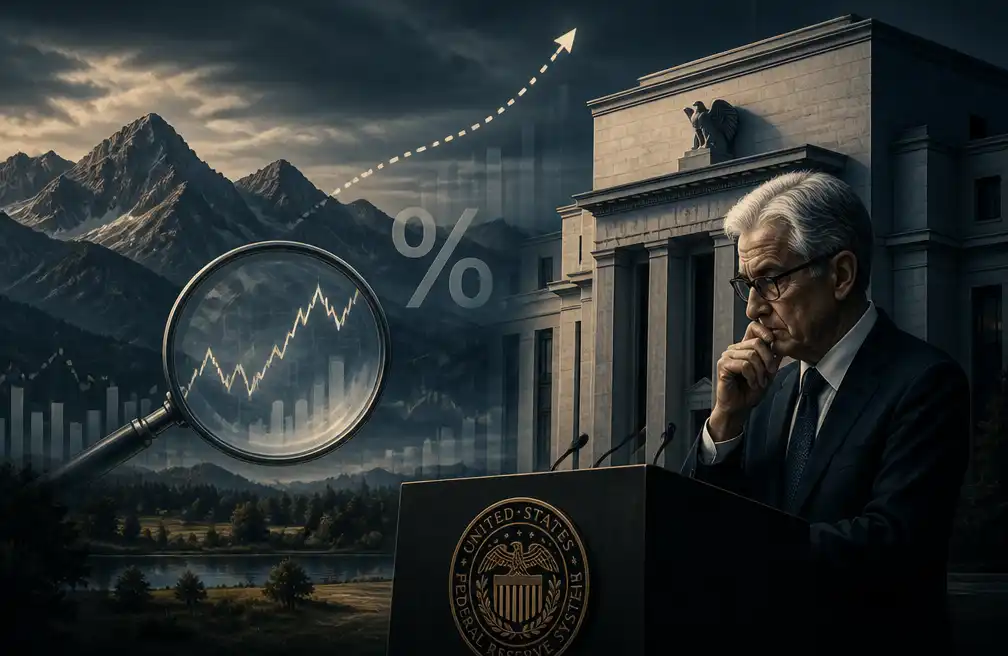
Entering 2026, the global macro market is undergoing a profound paradigm shift. Senior analyst David Woo believes that, facing immense pressure from the midterm elections, the Trump administration is demonstrating a determination to reverse the situation at all costs, which will reshape the global asset pricing logic from energy to gold.

David Woo stated that to compensate for a severe polling deficit and avoid losing its majority in Congress, the Trump administration's policy focus has fully shifted to winning the "affordability" debate. This means the ultimate trading theme of 2026 will shift from simple reflation to aggressive deflationary measures—particularly by forcefully controlling energy resources to drastically lower oil prices, aiming to bring gasoline prices below a key psychological threshold before the election. This strategy aims not only to curb inflation but also to secure votes by improving the cost of living for the middle class.

Trump's recent actions regarding Venezuela mark the substantive end of the post-war rules-based international order. This move is not driven by ideological considerations but by the desire to directly control energy resources, hoping to win the domestic "affordability argument" by significantly increasing supply. Trump's goal is to push gasoline prices down to $2.25 per gallon by the fall, which will cause severe shocks to the crude oil market, with prices expected to fall to the $40 to $50 range.

Woo warns that as the U.S. abandons its traditional role as guarantor of the international system, global geopolitical insecurity will rise sharply, providing strong support for gold and benefiting the defense industry. Conversely, emerging market stocks will face valuation reassessment risks, as the safety premium for smaller economies will vanish in an era of returning power politics.

The Midterm Election He Can't Afford to Lose

David Woo's analysis points out that the biggest backdrop for the 2026 macro narrative is the midterm elections. Although Trump dominated market trends in 2025, his approval rating currently hovers around only 40%, representing a massive deficit of about 20 percentage points compared to historical patterns. For Trump, if the Republican Party loses control of Congress in November, his second term will descend into an endless nightmare of subpoenas and impeachment.

Therefore, the political theme for 2026 is "throw the kitchen sink."

White House Chief of Staff Susie Wiles has clearly stated that Trump's campaign intensity in 2026 will be equivalent to that of the 2024 presidential election year. This political survival pressure will directly dominate U.S. economic and foreign policy decisions, forcing the administration to adopt unconventional means to please voters, with the core lever being addressing the cost-of-living crisis.

A new structural bull market. Simultaneously, the market must be wary of the upcoming massive fiscal stimulus. Trump is expected to use tariff revenue to issue cash checks to middle- and low-income groups, which will put new upward pressure on long-end Treasury yields, fundamentally changing the macro liquidity environment of 2026.

New Energy Strategy: The Political Calculus of Lowering Oil Prices

To win the "affordability" debate, the Trump administration's fastest and most direct method is to lower oil prices. David Woo stated that the fundamental motive behind recent U.S. actions targeting Venezuela is not ideological export but to directly control the country's oil resources (accounting for 18% of global proven reserves), thereby increasing supply and suppressing global oil prices.

The goal of this strategy is to reduce U.S. gasoline prices to around $2.25 per gallon by September or October.

For the market, this means one of the core trades for 2026 is shorting crude oil.

David Woo predicts that crude oil prices could fall to the high $40s or even $50 range by year-end. This geopolitical move will make OPEC the biggest loser, significantly weakening its market control, while oil-importing countries like India and Japan will benefit.

Tariff Rebates and the Reversal of the K-Shaped Economy

Beyond lowering oil prices, another potential major move is large-scale fiscal stimulus. David Woo predicts a 65% probability that Trump will launch a new round of stimulus before the midterm elections. The specific path involves using the huge tariff revenue collected last year to issue "tariff rebate" checks of $2,000 each to Americans with annual incomes below $75,000.

To ensure the bill passes Congress, Trump might bundle this rebate plan with an extension of Obamacare subsidies, which Democrats care about, and bypass Senate obstruction using a Reconciliation Bill. This strategy aims to transform the victims of the tariff war (consumers) into beneficiaries, achieving a "win-win" in both geopolitics and the domestic economy.

This targeted stimulus for middle- and low-income groups, combined with increased disposable income from lower oil prices, will benefit retailers serving mass consumption (Consumer Staples) and may reverse the current market consensus on the "K-shaped" economic recovery, potentially changing the situation where only the wealthy have prospered.

The End of the International Order and the Gold Bull Market

The radical geopolitical measures taken by the U.S. to control oil prices send a clear signal to the world: the rules-based international order has ended. David Woo believes that when the world's most powerful nation decides to act solely on might rather than rules, the international system that previously protected the interests of small countries ceases to exist.

This shift has profound implications for asset allocation:

Short Emerging Market Stocks: In the new order lacking rule-based protection, small countries face higher geopolitical risks, invalidating the traditional "convergence trade" logic.

Long Defense Sector: Security anxieties will force countries to significantly increase defense spending.

Long Gold: As the U.S. ceases to act as the benevolent guarantor of the international order, the credibility foundation of the U.S. dollar as a reserve currency is eroded. Against a backdrop of widening deficits and rising geopolitical realism, gold will become a key asset for hedging against a disordered world, with potential upside of over 10% even without a dollar collapse.

The Biggest Risk: Stock Market and AI Bubble

Although Trump is trying to win over voters with livelihood policies, the stock market remains his "Achilles' heel."

David Woo warns that current high U.S. stock valuations are nearing levels seen during the internet bubble, and capital gains tax is a significant source of federal tax revenue. A 20%-30% drop in the stock market would not only trigger an economic recession but also cause the fiscal deficit to deteriorate sharply.

The biggest risk point in the market currently is the bursting of the AI bubble. Wall Street widely expects AI-related capital expenditure to grow another 50% in 2026, but increasingly fierce model competition, hardware bottlenecks, and future return rate issues are making this consensus fragile. If tech giants (like Microsoft) show any signs of slowing growth in their earnings reports, and retail investors stop buying the dip, the market could face a sharp correction, thereby threatening Trump's re-election plans.


Трендові криптовалюти

Пов'язані питання

QAccording to David Woo, what is the ultimate trading theme for 2026 and what is its primary goal?

AThe ultimate trading theme for 2026 is shifting from reflation to aggressive deflationary measures, primarily by controlling energy resources to drastically lower oil prices. The primary goal is to win the 'affordability' debate by lowering gasoline prices to a key psychological level before the midterm elections, thereby securing votes.

QWhat specific action is cited as a sign of the end of the post-war rules-based international order, and what was its underlying motive?

AThe action cited is the Trump administration's move against Venezuela. Its underlying motive was not ideological but a pragmatic effort to directly control the country's substantial oil resources (18% of global proven reserves) in order to increase supply and lower global oil prices for domestic political gain.

QWhat are the three key asset allocation implications resulting from the end of the US-led international order, as outlined by David Woo?

AThe three key implications are: 1) Short emerging market equities, as small nations face higher geopolitical risk. 2) Long the defense sector, due to rising global security anxieties. 3) Long gold, as the dollar's reserve currency credibility is eroded, with potential for over 10% upside.

QWhat fiscal stimulus measure does David Woo predict has a 65% chance of being implemented before the midterms, and how would it work?

ADavid Woo predicts a 65% probability of a new stimulus package involving 'tariff rebate' checks. This would use revenue from previously imposed tariffs to send $2,000 checks to Americans earning under $75,000, potentially bundled with Obamacare subsidies to ensure passage through Congress.

QWhat does David Woo identify as the biggest risk to Trump's re-election plans and the market in 2026?

AThe biggest risk is a correction in the stock market, particularly the bursting of the AI bubble. High valuations, similar to the dot-com era, and a potential 20-30% drop could trigger a recession and worsen the fiscal deficit, threatening Trump's political survival.

Пов'язані матеріали

The Trillion-Dollar Credit Market Leveraged by Stablecoins, Stuck in Off-Chain Risk Control

**Stablecoins Fueling Trillion-Dollar Private Credit Market, Hampered by Off-Chain Risk Management** This article examines how interest-bearing stablecoins are replicating the business model of money market funds to democratize access to the $2 trillion private credit market, while highlighting the significant risks posed by inadequate off-chain risk controls. Historically, private credit investments had high minimums (e.g., $1 million+) due to costly due diligence and loan servicing. Stablecoins like Apollo's ACRED and Figure's YLDS are bridging this gap. They tokenize institutional credit funds, allowing small investors to gain exposure and enabling new functionalities like using these tokens as collateral in DeFi for leveraged yield. The on-chain private credit market has grown 15x in a year to $5.87 billion, yet remains a tiny fraction of the global total. However, the core challenge is not blockchain technology but managing the inherent risks of lending, which occur off-chain. The failure of Goldfinch, a pioneer in on-chain private credit, serves as a stark warning. It raised funds in crypto (USDC) to lend to small businesses in markets like Kenya and Nigeria. While smart contracts handled fund distribution, critical functions—local due diligence, monitoring loan use, and debt collection—relied on off-chain partners. A major breach, where a local partner misappropriated nearly 40% of funds, went undetected for months. When borrowers defaulted, crypto depositors had no effective legal recourse or means to seize assets, leaving $56 million trapped in non-performing loans with a projected 8-15 year recovery timeline. The article concludes that tokenization addresses only 10% of the credit business—the distribution. The remaining 90%—rigorous risk assessment and collection infrastructure—is expensive and localization-dependent. Without solving these fundamental off-chain challenges, the sector risks repeating Goldfinch's collapse.

Foresight News26 хв тому

The Trillion-Dollar Credit Market Leveraged by Stablecoins, Stuck in Off-Chain Risk Control

Foresight News26 хв тому

Solana Expands Validator Power With Launch of On-Chain Governance

Solana has formally launched its on-chain governance system, empowering token holders and validators with a more open and decentralized way to influence major protocol decisions. Governance debates and voting are now conducted entirely on-chain using the new Solana Governance Proposals (SGP) framework, supported by stake-weighted voting and cryptographic verification. Validators with at least 100,000 SOL in delegated stake can submit an SGP. To proceed to a formal vote, a proposal must first gain support from at least 15% of the network's total staked SOL, ensuring only ideas with significant backing move forward. SGPs serve a distinct purpose from the technical Solana Improvement Documents (SIMDs). While SIMDs focus on *how* to implement protocol upgrades, SGPs determine *whether* the broader ecosystem believes a proposal should proceed, via an on-chain, stake-weighted vote. This separation allows core developers to continue building effectively while reserving community-wide votes for impactful decisions. A key feature grants delegators greater control: they can now override their validator's governance vote. If a validator votes against a delegator's preference or abstains, the delegator can cast a vote directly using their own stake weight through Solana's governance portal. The voting process is secured using Merkle proofs to verify participant stakes against an on-chain consensus snapshot. With this implementation, Solana aims to broaden community participation in governance without hindering development, combining decentralized decision-making with efficient protocol evolution.

TheNewsCrypto56 хв тому

Solana Expands Validator Power With Launch of On-Chain Governance

TheNewsCrypto56 хв тому

Trillion-Won Bet on Semiconductors: Is South Korea Really Panicking This Time?

**Summary:** South Korea, traditionally adept at "counter-cyclical" investments during industry downturns, has launched an unprecedented trillion-dollar (approximately 6.4 trillion RMB) semiconductor investment plan during a current AI-driven boom. This shift signals deep strategic anxiety, driven by the rapid rise of China's memory chip challengers. The article traces this dynamic through the history of East Asian semiconductor competition. In the 1980s, Japan used a "national system + industrial capital" model to surpass the US in DRAM, only to be overtaken in the 1990s by South Korea employing the same aggressive, efficiency-focused tactics—most notably massive, loss-tolerant investments during downturns to crush competitors like Japan's Elpida. Now, China's memory giants, Yangtze Memory (YMTC) and ChangXin Memory Technologies (CXMT), are employing a strikingly similar playbook. Starting from near-zero a decade ago, they've used a combination of government-backed capital, strategic technology acquisition (e.g., CXMT leveraging Qimonda's legacy), and innovative architectural leaps (e.g., YMTC's Xtacking) to achieve rapid technological catch-up. Crucially, during the severe industry downturn of 2023, while Korean and US giants cut production, the Chinese firms expanded capacity and competed on price, rapidly gaining global market share (reaching ~11% in NAND and ~7.67% in DRAM by 2025). South Korea's current massive investment, therefore, is a defensive move born of fear. The historical pattern suggests that once a technological gap closes, scale and integrated supply chain advantages—areas where China holds significant potential—can determine the leader. Having used counter-cyclical strategies to become the incumbent, South Korea now faces the prospect of a formidable challenger using those very same tactics. This investment marks not just a bet on the AI cycle, but the opening chapter in a new battle for dominance in the memory industry.

marsbit1 год тому

Trillion-Won Bet on Semiconductors: Is South Korea Really Panicking This Time?

marsbit1 год тому

Торгівля

Спот

Популярні статті

Як купити ORDER

Ласкаво просимо до HTX.com! Ми зробили покупку Orderly (ORDER) простою та зручною. Дотримуйтесь нашої покрокової інструкції, щоб розпочати свою криптовалютну подорож.Крок 1: Створіть обліковий запис на HTXВикористовуйте свою електронну пошту або номер телефону, щоб зареєструвати обліковий запис на HTX безплатно. Пройдіть безпроблемну реєстрацію й отримайте доступ до всіх функцій.ЗареєструватисьКрок 2: Перейдіть до розділу Купити крипту і виберіть спосіб оплатиКредитна/дебетова картка: використовуйте вашу картку Visa або Mastercard, щоб миттєво купити Orderly (ORDER).Баланс: використовуйте кошти з балансу вашого рахунку HTX для безперешкодної торгівлі.Треті особи: ми додали популярні способи оплати, такі як Google Pay та Apple Pay, щоб підвищити зручність.P2P: Торгуйте безпосередньо з іншими користувачами на HTX.Позабіржова торгівля (OTC): ми пропонуємо індивідуальні послуги та конкурентні обмінні курси для трейдерів.Крок 3: Зберігайте свої Orderly (ORDER)Після придбання Orderly (ORDER) збережіть його у своєму обліковому записі на HTX. Крім того, ви можете відправити його в інше місце за допомогою блокчейн-переказу або використовувати його для торгівлі іншими криптовалютами.Крок 4: Торгівля Orderly (ORDER)Легко торгуйте Orderly (ORDER) на спотовому ринку HTX. Просто увійдіть до свого облікового запису, виберіть торгову пару, укладайте угоди та спостерігайте за ними в режимі реального часу. Ми пропонуємо зручний досвід як для початківців, так і для досвідчених трейдерів.

287 переглядів усьогоОпубліковано 2024.12.10Оновлено 2026.06.02

Як купити ORDER

Обговорення

Ласкаво просимо до спільноти HTX. Тут ви можете бути в курсі останніх подій розвитку платформи та отримати доступ до професійної ринкової інформації. Нижче представлені думки користувачів щодо ціни ORDER (ORDER).

活动图片