The Ansem Airdrop Brings Back the Celebrity Endorsement Effect: When the Market Is Stagnant, Smart Money Watches KOLs' Tweets

marsbitОпубліковано о 2026-07-01Востаннє оновлено о 2026-07-01

Анотація

In the recent crypto bear market, a narrative-driven surge has emerged within the Solana meme coin sector, highlighted by the explosive performance of $ANSEM (The Black Bull). The token, associated with prominent trader Ansem, soared nearly 19,878% in a week following his announcement of a community airdrop funded by his creator fees from Pump.fun. This move, emphasizing social engagement over traditional on-chain metrics, distributed millions of tokens to hundreds of wallets, though distribution appeared concentrated with a few wallets receiving substantial portions. The event signals a resurgence of influencer-driven market movements. Similarly, BitMEX co-founder Arthur Hayes boosted tokens like $CARDS and $SYN through public endorsements and analysis, leading to significant price rallies. These cases underscore a current market dynamic: with major narratives stagnant and limited new capital, attention and "smart money" are increasingly focused on signals from key opinion leaders (KOLs) to identify asymmetric opportunities, despite the inherent risks of speculation and potential market manipulation. The landscape suggests that while old strategies for evaluating such pumps remain relevant, the reduced competition for attention may make these localized trends critical for participants seeking alpha in a sideways market.

Author: Curry, Shenchao TechFlow
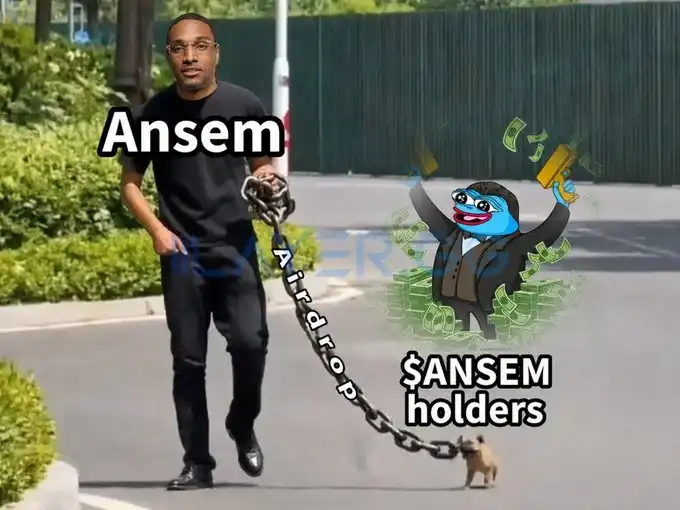
Image source: Layergg@layerggofficial

The crypto bear market doesn't mean there are no opportunities.

Over the past week, the meme coin market on Solana has seen another wave of narrative-driven price action.

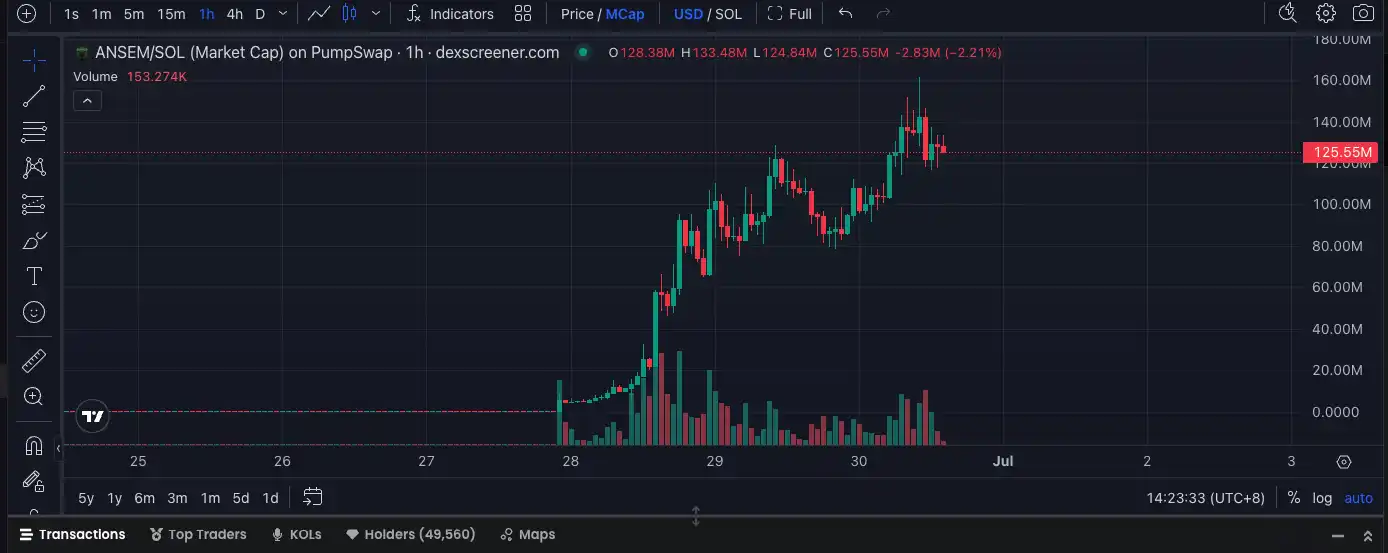
The token $ANSEM (The Black Bull), associated with well-known trader Ansem (@blknoiz06), recorded gains of nearly 19,878% within just 7 days, rising rapidly from very low levels to an all-time high of $0.121.

Around June 29th, the token price experienced several rapid surges, showing clear speculative fervor in the overall market.

This level of gain is uncommon in the current meme coin environment. According to public market data, $ANSEM's performance over 7 days far exceeded that of most other Solana meme coins during the same period, attracting significant short-term capital inflows. In terms of trading volume, the token's 24-hour turnover reached tens of millions of dollars during multiple periods, with liquidity improving rapidly.
Here, Ansem's public statements were a key catalyst for this price action.

Around June 27th, he stated on his social media account that he would conduct an airdrop of $Ansem tokens to the community. After the announcement, market sentiment heated up quickly, with related discussions spreading rapidly on crypto social platforms, driving up both the token price and trading activity simultaneously.

The familiar taste, the long-lost playbook, seems particularly effective in the current parched environment of the crypto market.

Is the Airdrop Another Party for the Few?

The core logic of Ansem's airdrop is: redistributing the creator fees he accumulated on the Pump.fun platform instead of keeping them for himself or using them for other purposes. He explicitly stated in the announcement that he would randomly select participants for airdrops every week.
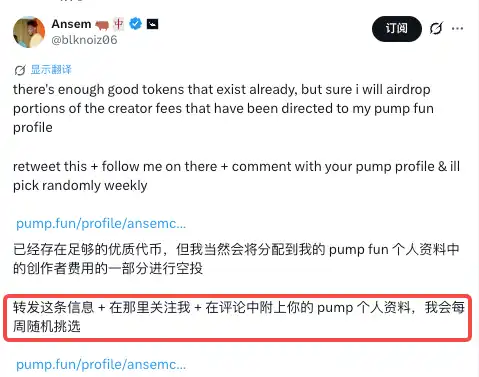
The participation rules for the airdrop are relatively simple and lean towards social engagement. Users need to retweet the relevant announcement post, follow Ansem's personal Pump.fun homepage (ansemconzimp), and include their Pump.fun address in a comment.

He then randomly selects winners for distribution each week. This mechanism differs from traditional project airdrop models based on holdings or on-chain activity, placing more emphasis on community participation and randomness, but also being more of a black box.

According to on-chain data tracking, as of June 29th, Ansem has distributed a total of approximately 67.38 million $ANSEM tokens through multiple airdrop rounds, involving 704 wallets, with a total value estimated between $7 million and $9 million (depending on the price at the time of each distribution).

Among these, the largest single airdrop was 10 million tokens, accounting for about 1% of the total supply, with a value once exceeding $1 million (based on valuations at the time).

Data from Dune Analytics and LayerGG shows that the current public airdrop distribution exhibits some concentration characteristics:

7 wallets received over $100,000 in value, 58 wallets are in the $10,000 to $100,000 range, 318 wallets received $1,000 to $10,000, and the remaining wallets mostly received smaller amounts.
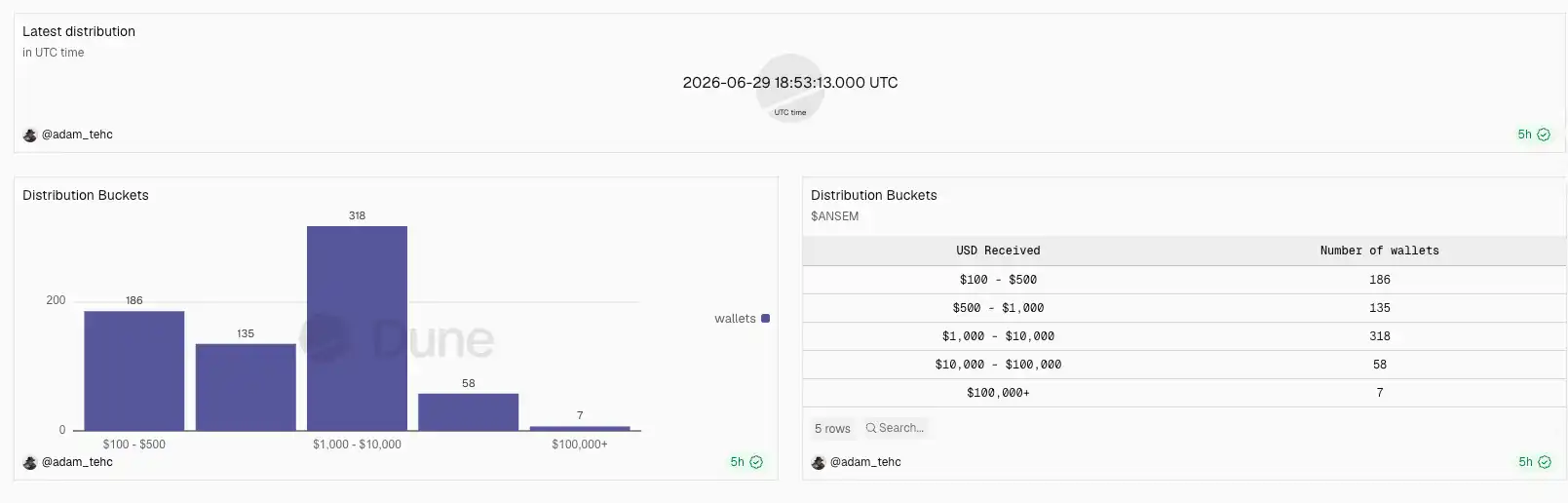
Some large recipient addresses have shown varying degrees of selling activity after receiving the airdrops, while the overall market has maintained high trading activity stimulated by the airdrop news.

Calculating based on the total airdrop amount and number of wallets, 7 wallets received about 75% of the total $ANSEM airdrop. Some community members have posted, suggesting this looks more like money laundering, and any sales from these top 7 wallets are likely either directly related to Ansem or involve accomplices.

Nevertheless, Ansem himself stated in a follow-up post that he would continue the airdrops as the market cap increases, with the goal of increasing the number of $ANSEM holders from the current ~25,000 to 1 million.

This further strengthened market expectations for continued airdrops, stimulating trading volume for the token.

A Mini-Season of Celebrity Endorsements

The case of $ANSEM is essentially a meme coin price movement directly driven by a high-influence individual. Ansem quickly converted attention into liquidity through public association + airdrop promises.

It's all old tricks, but be that as it may, the crypto market in June indeed had a small-scale season of celebrity endorsements.

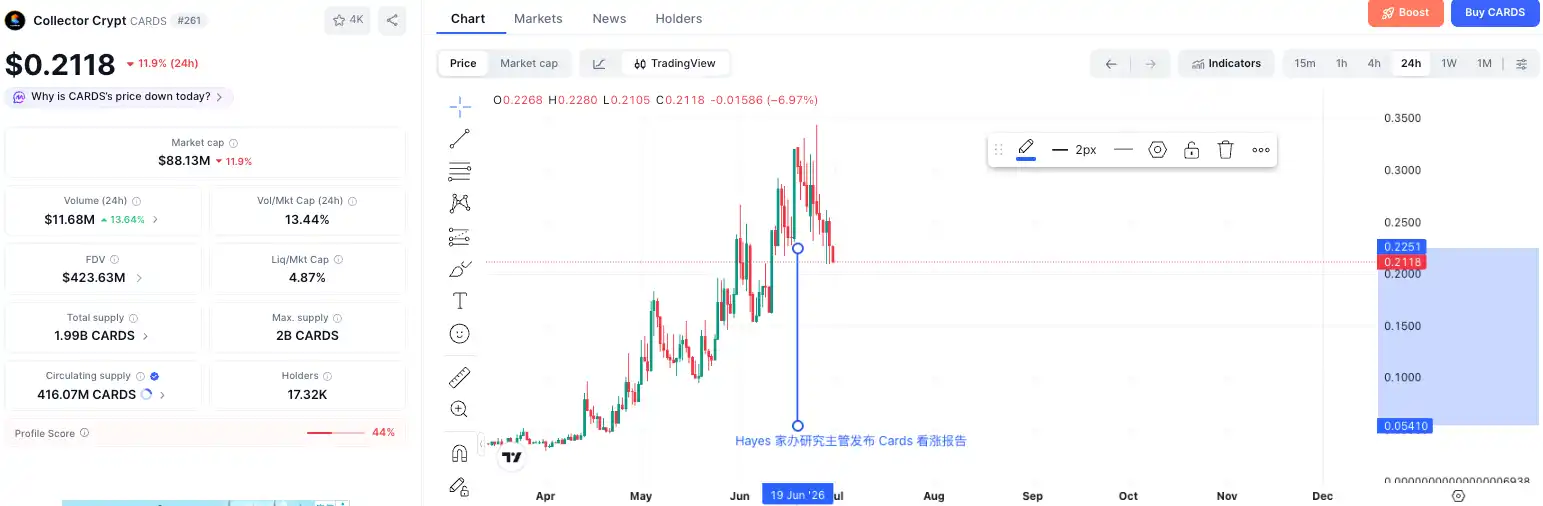
For example, last week, Maelstrom, the family office of BitMEX co-founder Arthur Hayes, also published an in-depth research report on Collector Crypt ($CARDS), giving it a target price of $4 for this summer.

After the news was released, $CARDS saw a significant rise.
And yesterday, Arthur Hayes himself provided another more representative example.

Hayes clearly expressed his bullish view on the Hyperliquid ecosystem, but he believed the main token HYPE no longer offered sufficient asymmetric opportunities. The market had been focusing on HYPE for a long time, so he needed to turn to other tokens within its ecosystem.

And $SYN within the Hyperliquid ecosystem, a project that is an options DEX supporting Hypercall, has the potential to challenge the centralized giant Deribit. This endorsement was interpreted by some KOLs as Hayes possibly having already bought approximately $2.2 million worth of $SYN via OTC.
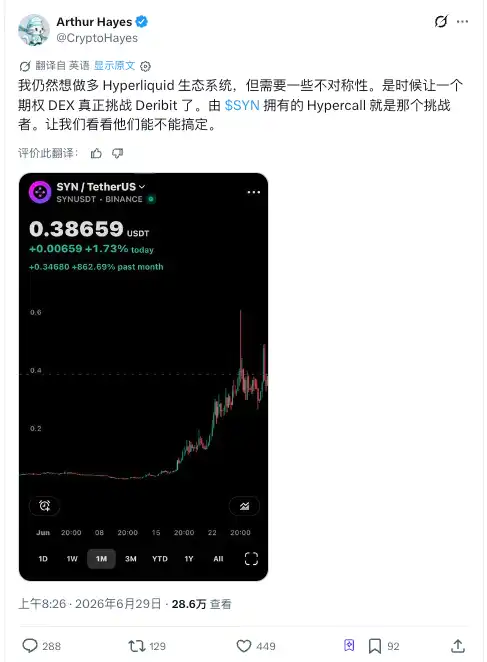
Based on on-chain data and market reaction, around the time of Hayes' post, $SYN gained nearly 40% within 24 hours, with trading volume also expanding simultaneously. Prior to this, $SYN had already recorded gains of over 10x in June.
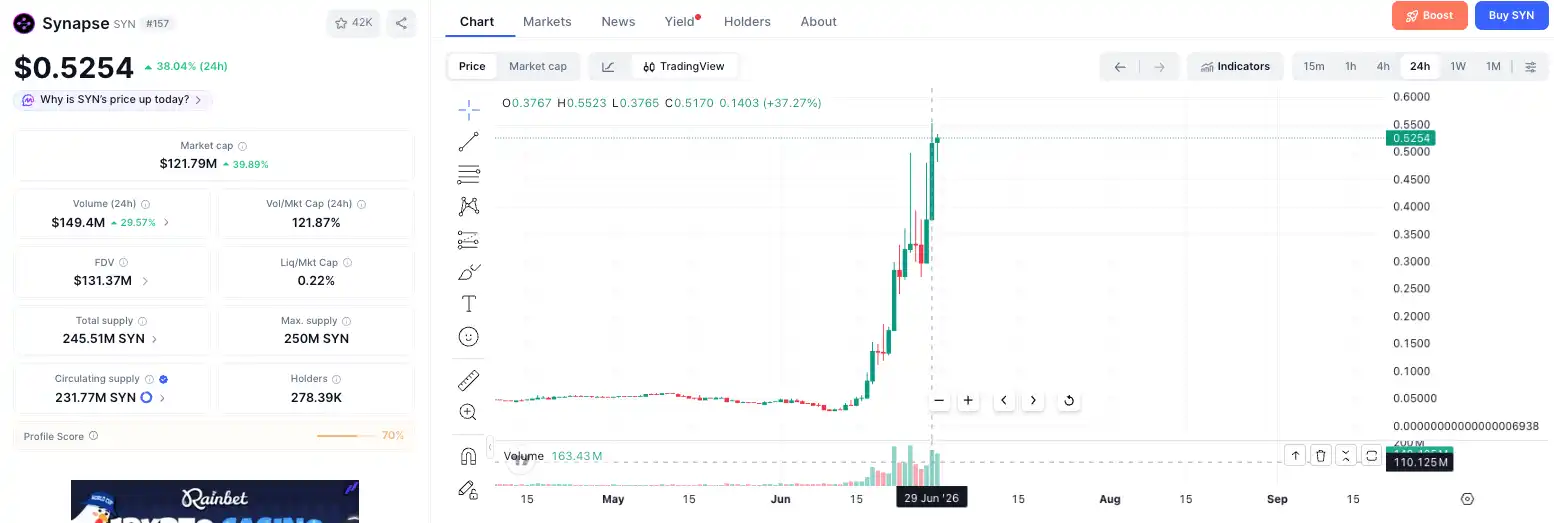
Ultimately, the market is truly sluggish right now. No new narratives, no incremental capital, the major indexes are stagnant with no clear direction. But the more this is the case, the more you have to pay attention to these localized celebrity-driven rallies... If you don't, there's genuinely nothing else to watch.

And don't underestimate these localized opportunities. $SYN had already quietly risen 10x before Hayes opened his mouth; there's certainly conspiracy involved, but if you pay no attention at all, you'll obviously miss one of the few opportunities.

In the past, we would always check on-chain to see if the endorser's wallet moved, look at how concentrated the top holdings were, scroll through social media to see if the sentiment was just starting or already peaking...

These old tools are still useful, and there might even be fewer competitors now. Opportunities and traps are always close neighbors in the crypto market. No matter what, you have to stay in the game.


Пов'язані питання

QWhat triggered the significant price surge of $ANSEM (The Black Bull) meme coin on Solana according to the article?

AThe significant price surge of $ANSEM was primarily triggered by a public announcement from the prominent trader Ansem. He stated on his social media platform that he would conduct an airdrop of $ANSEM tokens to his community. This announcement acted as a key catalyst, rapidly boosting market sentiment and trading activity.

QDescribe the mechanism of Ansem's $ANSEM airdrop as outlined in the article.

AAnsem's airdrop mechanism involved redistributing the creator fees he accumulated on the Pump.fun platform. Participation rules were based on social engagement: users needed to retweet the announcement, follow his Pump.fun profile (ansemconzimp), and comment with their Pump.fun wallet address. Winners were then selected randomly each week for the token distribution.

QWhat concern does the article raise regarding the distribution of the $ANSEM airdrop?

AThe article raises a concern about the concentration of the airdrop distribution. Data indicated that 7 wallets received approximately 75% of the total airdropped $ANSEM tokens. Some community members suggested this pattern resembled money laundering, speculating that the large recipients might be directly associated with Ansem or accomplices.

QBesides Ansem, which other influential figure is mentioned in the article for driving a 'localized narrative' in the crypto market, and what token did they promote?

ABesides Ansem, the article mentions Arthur Hayes, co-founder of BitMEX. His family office, Maelstrom, published an in-depth research report on Collector Crypt ($CARDS). Furthermore, Hayes personally expressed bullish sentiment on $SYN, a token in the Hyperliquid ecosystem, which was interpreted by some KOLs as a signal that he might have purchased around $2.2 million worth of $SYN.

QAccording to the article's conclusion, why are these 'celebrity shill' events particularly notable in the current crypto market environment?

AAccording to the article's conclusion, these 'celebrity shill' events are particularly notable because the broader crypto market lacks new narratives and incremental capital, resulting in a stagnant or sideways-trending大盘 (overall market). In this environment, these localized opportunities driven by influential figures become some of the few visible chances for price action and gains, making them important to watch despite their inherent risks.

Пов'язані матеріали

The 'Conference Circuit' for the Second Half of the Year Begins! A Complete Overview of the 2026 Web3 Global Summit Schedule

"Web3 Global Summit Calendar for the Second Half of 2026" provides a comprehensive list of major Web3 and blockchain conferences worldwide, focusing on events from July to December 2026. The schedule starts in July with IVS in Kyoto, WebX in Tokyo, Canada Crypto Week in Toronto, and Malaysia Blockchain Week in Kuala Lumpur. August features Conviction in Ho Chi Minh City, Coinfest Asia in Bali, and Bitcoin Hong Kong. September is the most intense month, with notable events like NFT NYC in New York, ETHRome in Rome, Money20/20 in Saudi Arabia, European Blockchain Convention in Barcelona, and Korea Blockchain Week in Seoul. The fourth quarter begins with the significant TOKEN2049 Singapore in October, which will be the sole TOKEN2049 event of the year following the cancellation of the Dubai edition. November includes Devcon 8 and Bitcoin Amsterdam in Amsterdam, Digital Asset Summit and Solana Breakpoint in London. The year concludes in December with Blockchain Life in Dubai and Bitcoin MENA in Abu Dhabi. The article also lists key events from the first half of the year (January to June, marked as concluded) for reference, including Consensus Hong Kong, ETHDenver, and Paris Blockchain Week. The guide serves as a resource for planning attendance at these industry gatherings across Asia, Europe, North America, and the Middle East.

Foresight News2 хв тому

The 'Conference Circuit' for the Second Half of the Year Begins! A Complete Overview of the 2026 Web3 Global Summit Schedule

Foresight News2 хв тому

Video Edition Nano Banana Arrives: Built-in Gemini World Knowledge, Original Banana Generates Images in Just 4 Seconds

Google has unveiled two new multimodal AI models: Gemini Omni Flash and Nano Banana 2 Lite. Gemini Omni Flash is a video generation and editing model that leverages Gemini's world knowledge. It allows for conversational video editing using natural language prompts, maintains scene consistency, and integrates text/graphics with video actions. Priced at $0.10 per second of output, its current limitations include a 10-second video cap. Nano Banana 2 Lite (gemini-3.1-flash-lite-image) is an optimized image generation model focused on speed and cost. It produces a 1K resolution image in about 4 seconds at a cost of roughly $0.034, making it significantly faster and cheaper than its predecessor. It retains strong text rendering capabilities. A key highlight is the combined workflow: users can rapidly generate images with Nano Banana 2 Lite and then seamlessly feed them into Gemini Omni Flash to create videos. Google demonstrated this with three application demos: "Anywhere" for creating travel videos from photos, "Space Lift" for generating interior design walkthroughs, and "Omni Product Studio" for automating e-commerce ad creation from product photos. The release underscores Google's strategic focus on advancing multimodal AI for practical, commercial applications in areas like marketing, design, and content creation, despite competitive pressures in other AI domains.

marsbit10 хв тому

Video Edition Nano Banana Arrives: Built-in Gemini World Knowledge, Original Banana Generates Images in Just 4 Seconds

marsbit10 хв тому

Just Now, Anthropic Released Sonnet 5, Performance Close to Opus 4.8, but Not Necessarily Cheaper

Anthropic has officially released Claude Sonnet 5, describing it as the most "agentic" Sonnet model to date. It can plan, use tools like browsers and terminals, and autonomously perform tasks at a level previously requiring larger, more expensive models. Performance in reasoning, tool use, programming, and knowledge work has significantly improved compared to Sonnet 4.6, now approaching that of Opus 4.8. Evaluation results indicate that Sonnet 5, at medium "effort" levels, offers better cost efficiency than its predecessor. At higher effort levels, its performance in some tasks can match Opus 4.8. In terms of safety, Sonnet 5 shows improved rates of refusing malicious requests and resisting prompt injection attacks compared to Sonnet 4.6, though it has a slightly higher rate of policy-violating behavior than Opus 4.8 and Mythos Preview. Its cybersecurity capabilities remain weaker than those models. Notably, Sonnet 5 uses a new tokenizer. The same text input now results in approximately 1.0 to 1.35 times more tokens, depending on content. To offset this, Anthropic offers a promotional launch price until August 31, 2026, at $2 per million input tokens and $10 per million output tokens. The standard pricing will be $3/$15 per million tokens thereafter. However, some external analysis suggests that due to increased token usage, the actual cost per task for Sonnet 5 may be higher than both Sonnet 4.6 and Opus 4.8.

marsbit1 год тому

Just Now, Anthropic Released Sonnet 5, Performance Close to Opus 4.8, but Not Necessarily Cheaper

marsbit1 год тому

Торгівля

Спот
活动图片