# Пов'язані статті щодо Trade War

Центр новин HTX надає останні статті та поглиблений аналіз на тему "Trade War", що охоплює ринкові тренди, оновлення проєктів, технологічні розробки та регуляторну політику в криптоіндустрії.

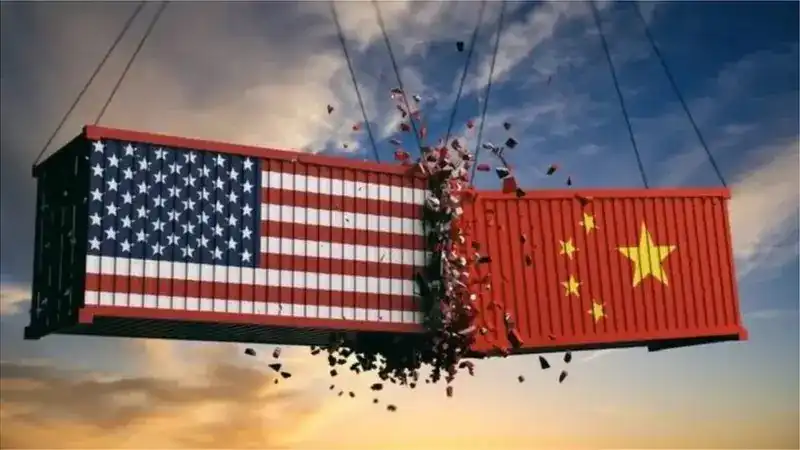
The New Cold War is a Tech Stock War

The New Cold War is a Tech Stock War The article argues that the contemporary geopolitical and economic rivalry between the US and China represents a "New Cold War," but one fundamentally fought through technology and financial markets, not physical barriers or conventional trade. Historically, US dominance was secured through financial systems. The Soviet Union, reliant on the rigid "Transferable Ruble," was ultimately undermined by its dependency on the US dollar for oil trade. Later, Japan's semiconductor challenge was countered not just by tariffs (e.g., Plaza Accord, 301 investigations) but by binding it to US Treasury bonds. China presents a more complex, "embedded" challenger. While it holds vast dollar reserves and US debt like Japan, its industrial base is stronger and more diversified than the Soviet Union's. Surviving the initial 2018 trade war phase, the conflict has evolved into a "tech-financial war." The core battlefield is now the stock market. US tech stocks (AI, semiconductors) are treated as sovereign assets, buoyed by bipartisan national will. China is pushing to strengthen its own financial markets to convert industrial strength into financial power and fund its tech ambitions. Companies like ChangXin (semiconductors), Moonshot AI, and DJI compete not just for market share but as financial proxies for their respective systems. The new paradigm is moving from globally efficient monopolies (Apple, Google) towards companies that achieve monopolistic profits within their respective geopolitical spheres. This competition over "pricing power" and financial valuation in segmented markets defines the current era, making the stock market the primary arena for this tech-centric struggle.

marsbitВчора 10:37

The New Cold War is a Tech Stock War

marsbitВчора 10:37

Low Probability, High Impact: Citi Issues Nine Extreme Risk Warnings for Commodities in H2 2026

Citigroup Global Research has released a commodity tail risk report focusing on low-probability, high-impact scenarios for late 2026. The report argues that traditional supply-demand frameworks are now regularly disrupted by geopolitical, climate, and technological shocks. Nine key "wildcard" risks are identified: 1. **U.S.-Iran conflict** escalating to a persistent, multi-year disruption of Gulf oil production, potentially pushing crude above $150/bbl and retail gasoline above $6/gallon. 2. **Russia-Ukraine war escalation** triggering new restrictions on Russian energy exports, particularly impacting global natural gas and refined products markets more than crude oil. 3. **Aggressive stockpiling of critical minerals**, such as copper, potentially driving prices above $20,000/ton. 4. **Gold prices** potentially falling another 15-20% in the near term before potentially doubling to around $6,000/oz in the longer term. 5. **A record-strength El Niño** severely disrupting agricultural supplies, possibly pushing cocoa back above $10,000/ton. 6. **AI boom or bust** creating a two-way risk: a boom would boost demand for power-related commodities (electricity, gas, uranium, copper, aluminum), while a bust could cause a deflationary demand shock, though gold could benefit in either scenario. 7. **Renewed U.S.-China trade war** impacting American farm exports, potentially pushing corn below $4.20/bushel and soybeans below $10/bushel. 8. **Finalization of the Russia-China "Power of Siberia 2" gas pipeline** deal, which would drastically reduce China's LNG import needs post-2030, exacerbating a looming global LNG glut and pressuring prices towards $5-6/MMBtu. 9. **An extreme "Monroe Doctrine" scenario** where the U.S. blocks all oil exports from the Americas, causing a severe benchmark dislocation (high global prices like Brent above $100/bbl, but a steep discount for trapped American crude). The report advises investors to stress-test portfolios against these poorly priced extreme scenarios, as "once-in-a-decade" shocks have become more frequent.

marsbit07/29 06:52
Low Probability, High Impact: Citi Issues Nine Extreme Risk Warnings for Commodities in H2 2026

marsbit07/29 06:52

A Hidden Financial War? Iran Collects Strait Passage Fees with Stablecoins

Iran has officially institutionalized a mandatory toll system for all large tankers passing through the Strait of Hormuz, rejecting dollar-denominated payments. Instead, fees must be paid either via yuan-denominated wire transfers or in USD-pegged stablecoins via decentralized networks. The move is designed to bypass U.S. financial sanctions and traditional banking channels like SWIFT system. The Islamic Revolutionary Guard Corps (IRGC) is implementing a tiered pricing model based on geopolitical alignment: allies like China and Russia pay the lowest rates, while U.S. allies and Israel are barred entirely. Vessels must display approved flags and are escorted through the strait after payment. This marks the first time a nation has integrated cryptocurrency into strategic-level payment infrastructure at commercial scale. The mechanism could channel over $20 billion annually in stablecoins through Iranian-controlled wallets, creating a grey liquidity pool shielded by sovereign power. However, risks remain. Compliance with sanctions from the EU and UK may void insurance coverage for vessels paying the IRGC, forcing shipowners to choose between longer routes or potential financial penalties. Russia is considering a similar model for the Northern Sea Route, signaling a broader shift toward using geographic chokepoints as financial leverage in a reordered global trade system.

marsbit04/07 03:51

A Hidden Financial War? Iran Collects Strait Passage Fees with Stablecoins

marsbit04/07 03:51

活动图片