# Пов'язані статті щодо Supplier

Центр новин HTX надає останні статті та поглиблений аналіз на тему "Supplier", що охоплює ринкові тренди, оновлення проєктів, технологічні розробки та регуляторну політику в криптоіндустрії.

Before Second Attempt to List on HKEX, Performance of Semiconductor 'Little Giant' Suddenly Deteriorates

Shenzhen Vanguard Semiconductor, a state-level "little giant" specializing in power semiconductor devices, has once again filed for a listing on the Hong Kong Stock Exchange main board, with GF Securities as the sole sponsor. This is its second attempt this year. Backed by prominent investors like Intel Asia-Pacific, OPPO, Xiaomi, and CATL, the company's post-investment valuation soared over 500% to approximately RMB 2.9 billion in just two and a half years. However, a month before its application, China's securities regulator raised six inquiries, focusing on the fairness of share prices for recent new shareholders and potential conflicts of interest related to two employee incentive platforms, suggesting concerns over improper benefit transfers. Financially, the company's performance shifted in the first five months of 2026, recording a net loss of RMB 510,000 compared to a profit of RMB 26.53 million a year earlier. Its overall gross margin also dropped from 22.4% to 17.9%. This was attributed to a decline in revenue share from its high-margin WLCSP products, driven by conservative smartphone maker procurement plans amid market adjustments, leading to a situation of increased revenue but decreased profitability. Furthermore, Vanguard Semiconductor's distribution network underwent a significant overhaul, with the number of authorized distributors plummeting from 658 to 103 within three years, mostly terminated for failing performance metrics. Sales remain heavily reliant on distributors, accounting for 84.1% of revenue in early 2026. Concurrently, customer and supplier concentration risks are rising, with the top five customers contributing 67.9% of revenue. While industry observers note that high customer concentration is common, attention is drawn to whether shareholder relationships, such as with Huaqin Technology's affiliate holding a 2.12% stake, extend to the client level.

marsbit07/17 12:10

Before Second Attempt to List on HKEX, Performance of Semiconductor 'Little Giant' Suddenly Deteriorates

marsbit07/17 12:10

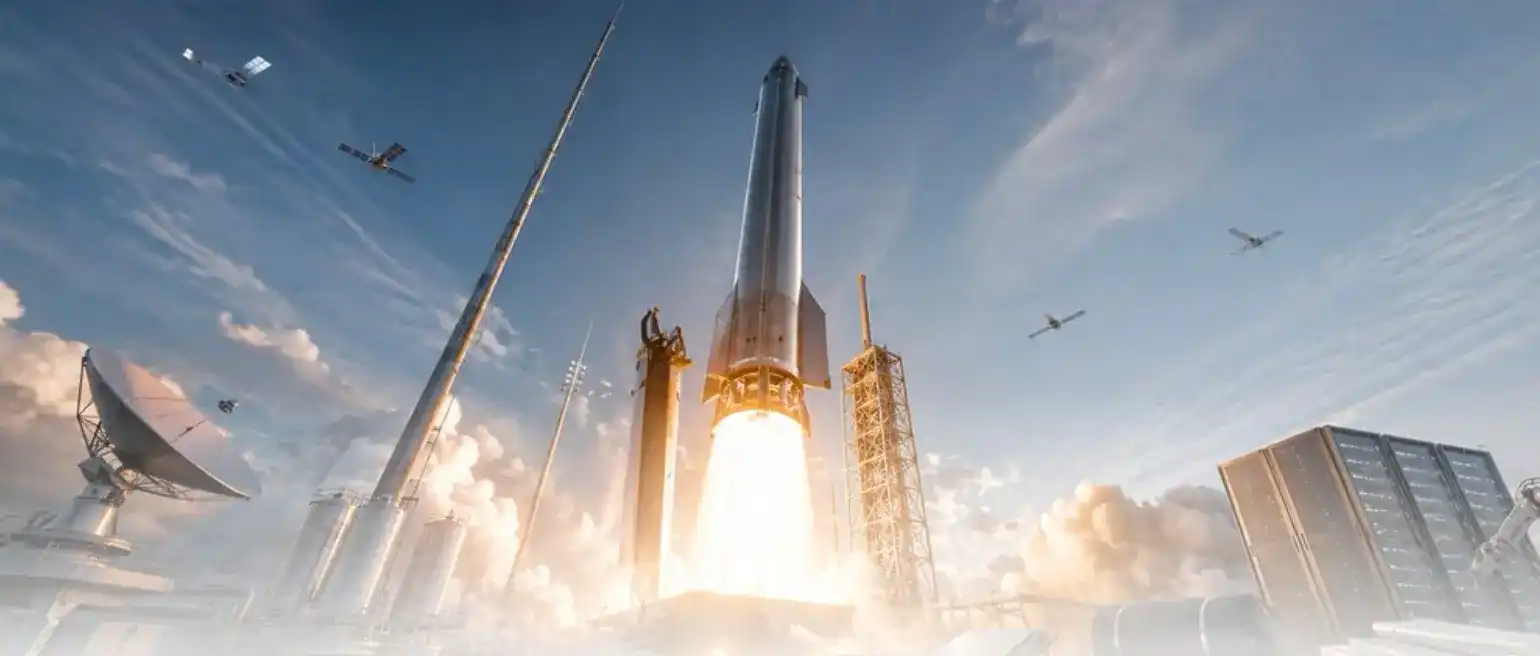
The Foundation of SpaceX's Trillion-Dollar Valuation: Who is Dividing Up Musk's Annual Tens of Billions in Capital Expenditure?

SpaceX's trillion-dollar valuation is built on its three core businesses: Starlink (profitable, 60% of revenue), rockets (driving down launch costs), and AI (a major investment area). This creates a financial cycle: Starlink funds rocket development, which enables low-cost launches for AI hardware, generating future revenue. This cycle fuels annual capital expenditures of tens of billions, flowing to a vast supply chain. Suppliers are categorized by their replaceability. The first group includes irreplaceable players like NVIDIA (GPU/CUDA ecosystem), Eutelsat (critical radio spectrum), Filtronic (specialized amplifiers), Materion (strategic beryllium), and STMicroelectronics (antenna chips). The second group consists of hard-to-replace suppliers due to high switching costs, such as Honeywell (flight control), Carpenter Technology (specialty alloys), Hexcel (carbon fiber), Broadcom (data exchange), and Linde (industrial gases). The third group comprises high-volume, cost-critical suppliers for mass-produced items like Starlink terminals. Key names include Wistron NeWeb (primary manufacturer) and several A-share companies like Shenzhen Sunway (connectors), Pies New Materials (forgings), Western Superconducting (alloys), and Yingliu (castings). Other niche players include Trimble (timing), Astronics (power distribution), and CTS (thermal management). The article argues that investing in these suppliers, rather than SpaceX stock directly, offers an alternative opportunity. The rationale is threefold: procurement is just beginning to scale, SpaceX's IPO brings new transparency to its supply chain, and the situation mirrors early stages of past "super terminal" ecosystems like Apple or Tesla. While risks exist (commodity cycles, geopolitical factors, technology shifts), the core thesis is that SpaceX's massive, ongoing procurement will translate into reliable revenue for its key suppliers, regardless of its own stock price volatility.

marsbit06/16 04:05
The Foundation of SpaceX's Trillion-Dollar Valuation: Who is Dividing Up Musk's Annual Tens of Billions in Capital Expenditure?

marsbit06/16 04:05

活动图片