# Пов'язані статті щодо Settlement

Центр новин HTX надає останні статті та поглиблений аналіз на тему "Settlement", що охоплює ринкові тренди, оновлення проєктів, технологічні розробки та регуляторну політику в криптоіндустрії.

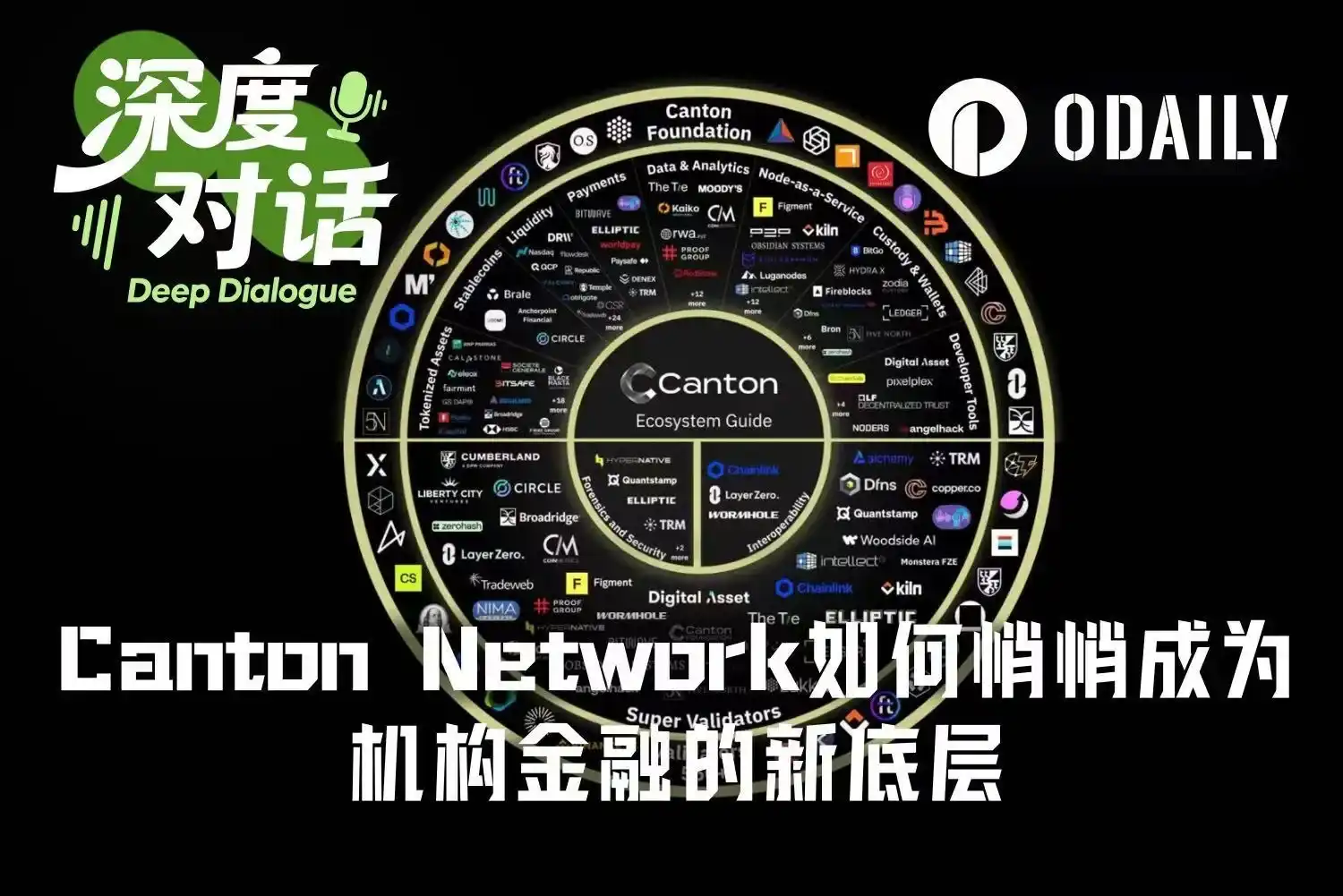
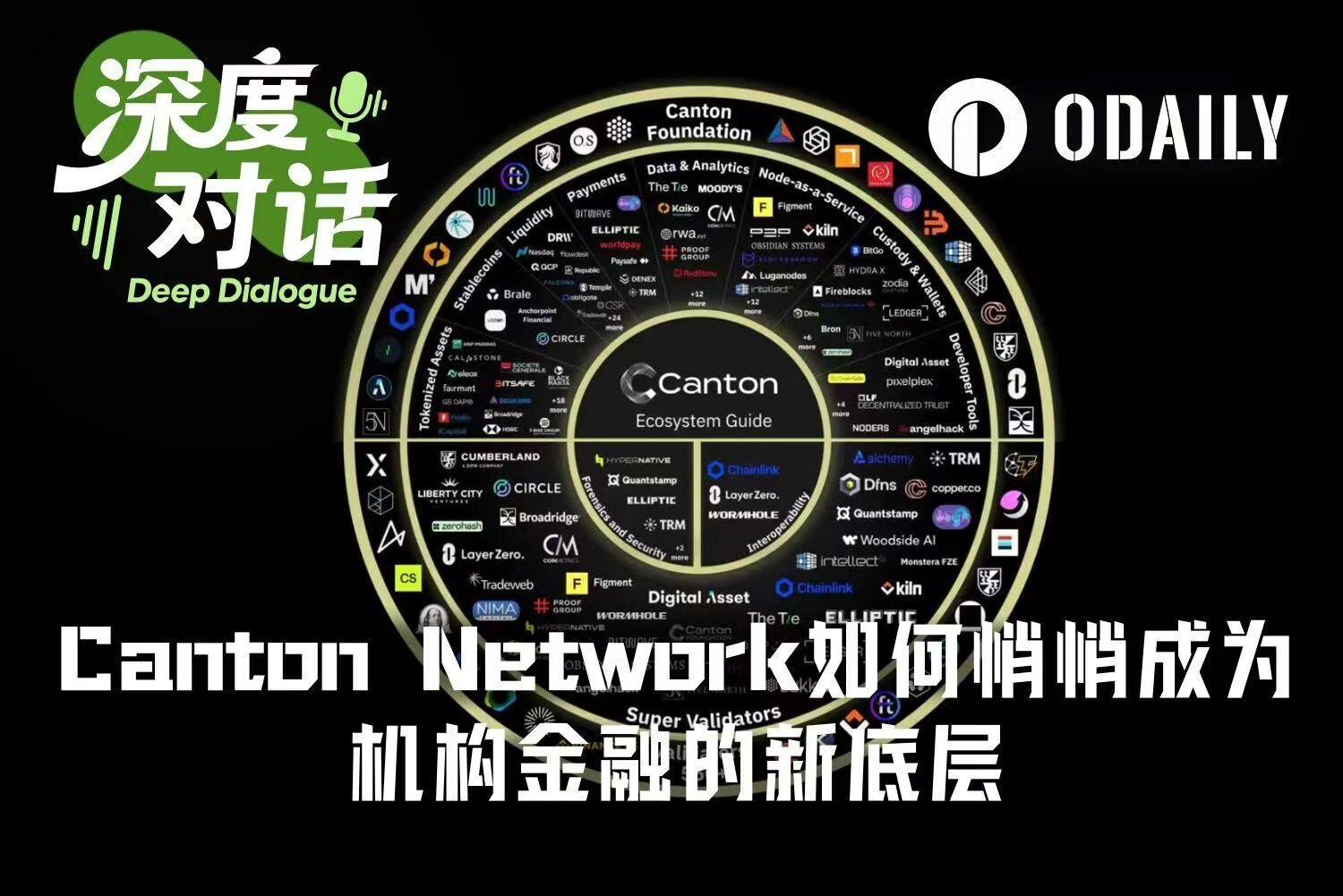
Putting Markets On-Chain: Canton Network Quietly Becoming the New Backbone for Institutional Finance

Canton Network: A New Institutional Financial Infrastructure Emerges Visa's rapid three-day approval as a super-validator on Canton Network in March 2026 marks a significant institutional endorsement. Unlike public blockchains like Ethereum, which prioritize transparency, Canton is designed for regulated financial institutions. Its core innovation is built-in data visibility control, where transaction details are only visible to direct participants. This enables institutions like Goldman Sachs, JPMorgan, and DTCC to conduct private, secure business on-chain without exposing sensitive strategies or positions. Canton, developed by Wall Street-focused Digital Asset, emphasizes slow, methodical development to meet stringent institutional requirements. Current on-chain activity, exceeding $9 trillion monthly, involves real balance-sheet operations like tokenized repos, treasury settlements, and collateral movement—not retail speculation. Key applications include JPMorgan's deposit token (JPM Coin), DTCC's U.S. Treasury tokenization, and Visa-enabled atomic settlement, aiming to synchronize asset delivery and payment instantly. The network's CC token is a utility asset, with value tied to real financial activity volume. It features no pre-mine or VC allocations, aligning with institutional preferences for transparency. Canton's 3–5 year vision is to become an "invisible" foundational layer for global finance—facilitating real-time cross-border capital flows, institutional stablecoin settlement, and native on-chain operations for major asset classes. While regulatory harmonization and legacy system integration remain challenges, Canton represents a pragmatic shift towards embedding markets themselves into blockchain infrastructure.

Odaily星球日报2 дні тому 17:50

Putting Markets On-Chain: Canton Network Quietly Becoming the New Backbone for Institutional Finance

Odaily星球日报2 дні тому 17:50

Putting Markets On-Chain: Canton Network Quietly Becomes the New Backbone of Institutional Finance

**Title: Letting the Market Itself Go On-Chain: Canton Network Quietly Becomes the New Backbone for Institutional Finance** **Summary:** The Canton Network, a blockchain platform designed for institutional finance, is gaining significant traction. A key sign of its maturity was Visa's recent entry as a super-validator, a proposal approved in just three days—highlighting prior, extensive collaboration between traditional finance and crypto. Unlike public chains like Ethereum that prioritize transparency and asset onboarding, Canton focuses on enabling confidential, compliant business operations for regulated institutions. Its core design features built-in **data visibility control**, meaning transaction details are only shared between direct counterparties. This privacy is fundamental, allowing competing institutions (like banks Goldman Sachs, JPMorgan, and BNP Paribas, all validators) to interact on the same network without exposing sensitive positions or strategies. Developed by Wall Street veterans at Digital Asset, Canton has taken a slow, deliberate approach to onboard real financial activity. It now handles over **$9 trillion monthly** in transaction volume, primarily from real-world institutional use cases like **tokenized repo agreements**, Treasury settlements, and collateral mobility. Major live applications include **JPM Coin** for institutional payments and **DTCC's tokenized U.S. Treasuries** project. Canton's native token, **CC**, is framed as a "network utility asset" with zero pre-mine or VC allocations. Its value is intended to be driven by the volume of real financial activity on the network. Looking ahead, Canton aims to become the invisible foundational layer for global finance—enabling atomic settlement (where payment and asset delivery occur simultaneously), 24/7 capital flows, and the native issuance and settlement of various asset classes, from corporate bonds to potentially equities. The main challenges are no longer technical but involve navigating fragmented global regulations and integrating with legacy financial systems.

marsbit2 дні тому 14:20

Putting Markets On-Chain: Canton Network Quietly Becomes the New Backbone of Institutional Finance

marsbit2 дні тому 14:20

VISA Steps Up Stablecoin Settlement Efforts, The Path for Crypto Payments Becomes Increasingly Clear

VISA continues to expand its global pilot for stablecoin settlement, adding support for five more blockchain networks (Arc, Base, Canton, Polygon, Tempo) to bring the total to nine. More significantly, the program's annualized settlement volume has grown 50% quarter-over-quarter to $7 billion. This move highlights a key shift: stablecoins are increasingly being integrated not as a front-end consumer novelty but as a foundational infrastructure for back-end settlement between issuers, acquirers, and the payment network itself. Against a backdrop where many Web3 narratives have lost momentum, crypto payments stand out due to their tangible utility. The core value proposition is clear: enabling faster, cheaper, and more accessible value transfer, especially for cross-border business, payroll, and B2B transactions. Stablecoins like USDC and USDT have evolved into a de facto on-chain dollar network, creating sustained demand for related payment, exchange, and compliance services. While major players like VISA are building the underlying networks, opportunities remain for specialized service providers in areas like cross-border payments for e-commerce, payroll for Web3 companies, or fiat on/off-ramps for exchanges. However, this growing legitimacy also raises the regulatory bar. Touching monetary flows inevitably attracts scrutiny regarding licensing, KYC/AML, and the precise classification of activities (e.g., custody, money transmission). Success in this increasingly defined sector will depend not just on technical execution but on building compliant business structures from the outset.

marsbit05/19 11:36

VISA Steps Up Stablecoin Settlement Efforts, The Path for Crypto Payments Becomes Increasingly Clear

marsbit05/19 11:36

Wall Street Capital Enters ARC, Circle Sparks a System-Level Competition for Stablecoins

Wall Street Capital Enters the ARC Arena as Circle Launches a System-Level Battle for Stablecoin Dominance On May 11, Circle successfully raised $222 million in a pre-sale funding round for its new blockchain and native token, ARC, giving the network a fully diluted valuation of $3 billion. The investor lineup, featuring Wall Street giants like BlackRock and Intercontinental Exchange alongside top-tier venture capital firms such as a16z and ARK Invest, signaled a collective strategic bet on future financial infrastructure. This move marks Circle's significant evolution from a stablecoin issuer (notably USDC) to a designer of financial systems. While USDC operates on external blockchains like Ethereum, making Circle dependent on their performance, ARC aims to create a dedicated infrastructure for the circulation, payment, and clearing of stablecoins. This would integrate currency issuance and circulation into one system, potentially shifting Circle's business model from asset management to infrastructure provision. The convergence of traditional finance and crypto-native capital in this funding round underscores a broader industry shift: stablecoins are transitioning from being mere trading tools to becoming core components of financial infrastructure. By controlling both the issuance (via USDC) and the流通 pathway (via ARC), Circle could establish a closed-loop system from issuance to settlement. If successful, this infrastructure could optimize costs, lower barriers for institutional adoption, and promote standardization in on-chain finance. Ultimately, it has the potential to challenge traditional systems like SWIFT in areas such as cross-border payments, representing a possible step toward the重构 of global financial infrastructure.

marsbit05/13 14:54

Wall Street Capital Enters ARC, Circle Sparks a System-Level Competition for Stablecoins

marsbit05/13 14:54

The Next Generation of Payments Lies Not in the Payment Layer

The Next-Generation of Payment is Not in the Payment Layer This is the second piece in a series analyzing Stripe's AI strategy. The series stems from Stripe's vision of becoming the economic infrastructure for the AI Agent era, announced at Stripe Sessions 2026. A key debate centers on whether Know Your Agent (KYA) is merely an upgrade to existing payment systems. The author argues the opposite: payment will become a subsystem of KYA, not the other way around. Historically, major payment innovations (online banking, mobile wallets, QR codes) emerged from new transaction scenarios that broke the underlying assumptions of old systems, not from optimization within the payment layer itself. Agent economy is that new scenario, and KYA is the foundational infrastructure growing to support it. KYA's proposed five layers—Agent Identity, Authorization Scope, Intent Signing, Liability Chain Auditing, and Credit Rating—extend far beyond payments. Only authorization and auditing directly touch the payment链路. Identity, intent, and credit layers serve broader needs like cross-platform calls, AI alignment, and permission management. Stripe's strategic moves validate this view. Its focus on "economic infrastructure for AI," investments in protocols like Agentic Commerce Protocol (an identity/session protocol), Shared Payment Tokens, stablecoin infrastructure, embedded wallets, and its own Tempo blockchain for settlement, all point to building the KYA layer, not just optimizing payments. Data shows the core challenge in AI commerce has shifted upstream: determining "who this is, what they intend to do, and if they deserve resources" happens long before checkout. This is why Stripe is moving its Radar fraud prevention from the transaction moment to the entire user lifecycle—a KYA-layer concern. Legally, ultimate responsibility will still fall on a human, as laws like AB 316 dictate. However, in a distributed,网状 liability chain involving users, Agent platforms, model providers, and payment protocols, KYA's role is to use cryptography to make every entity's actions and roles verifiable and traceable. This enables accountability where it was previously impossible to pinpoint evidence, fundamentally changing责任追溯, not just payment efficiency. The next-generation payment形态 will not be designed within the payment layer. It will emerge from the Agent economy scenario after the KYA infrastructure is established.

marsbit05/10 03:16
The Next Generation of Payments Lies Not in the Payment Layer

marsbit05/10 03:16

活动图片