# Пов'язані статті щодо Safe-Haven

Центр новин HTX надає останні статті та поглиблений аналіз на тему "Safe-Haven", що охоплює ринкові тренди, оновлення проєктів, технологічні розробки та регуляторну політику в криптоіндустрії.

Tensions in the Strait of Hormuz Escalate, Bitcoin Plunges to $61,700 Amid Safe-Haven Selling

Bitcoin fell sharply to around $61,700 on Monday, July 13th, as geopolitical tensions in the Strait of Hormuz triggered a broad shift toward risk-off sentiment across global markets. The decline of roughly 4% mirrored weaker performances in major U.S. stock indices. Market analysts attributed the sell-off to a confluence of factors stemming from the heightened U.S.-Iran tensions. These tensions reignited inflation concerns, reduced expectations for near-term Federal Reserve rate cuts, and prompted investors to reduce exposure to risk assets like Bitcoin. Additional pressure came from slowed institutional ETF inflows, Bitcoin's failure to breach a key resistance level, and a wave of liquidations for leveraged long positions. Despite the drop, analysts largely viewed the move as a typical macro-driven correction within a healthy long-term cycle. They emphasized that Bitcoin's underlying growth trajectory remains intact. The sell-off was seen more as a liquidation event targeting over-leveraged longs rather than a structural loss of confidence. Attention now turns to the upcoming U.S. Consumer Price Index (CPI) report. A higher-than-expected inflation reading could further delay Fed rate cuts, making safer assets like bonds more attractive and continuing to pressure volatile assets like Bitcoin. The consensus is that the current volatility reflects short-term macro and geopolitical shocks, not a fundamental breakdown in Bitcoin's long-term proposition.

Foresight News07/14 08:34

Tensions in the Strait of Hormuz Escalate, Bitcoin Plunges to $61,700 Amid Safe-Haven Selling

Foresight News07/14 08:34

Precious Metals Decline Alongside, What Signal is Gold Sending to the Market?

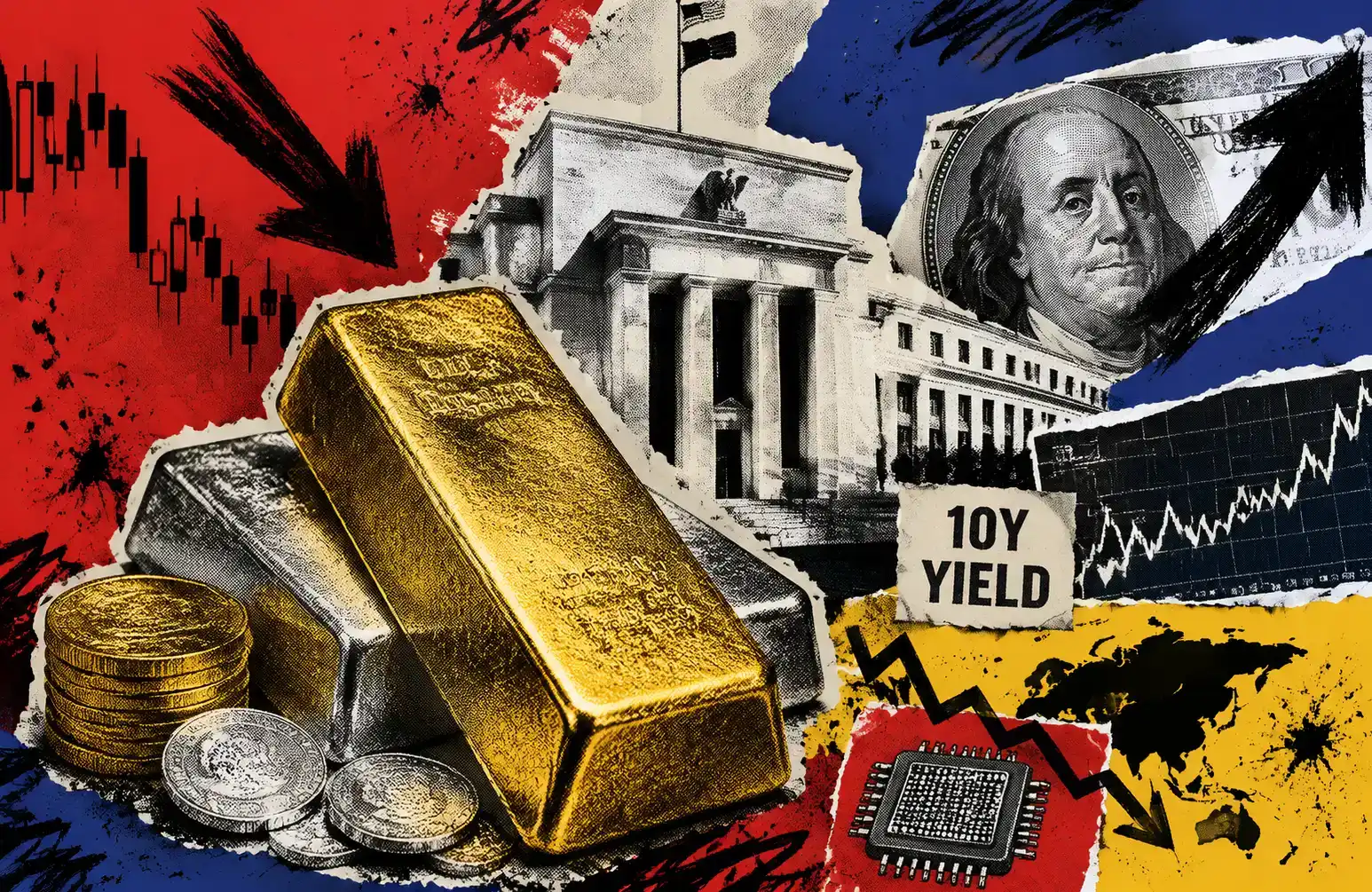
Gold and silver prices have declined recently, moving in tandem with a sell-off in risk assets like South Korean semiconductor stocks. This is unusual, as gold typically rises when equities fall due to its safe-haven status. The synchronized drop signals a shift in market focus: it's not about finding safety, but about the rising cost of holding assets that do not yield interest. This cost is the real interest rate. The key driver is a change in Federal Reserve policy expectations under new Chair Kevin Warsh. Despite holding rates steady, the Fed's rhetoric has turned more hawkish, emphasizing persistent inflation risks. This has led markets to price in a "higher for longer" rate environment, increasing the appeal of cash and bonds while pressuring zero-yield assets like gold and tech stocks with high future cash flow valuations. Technically, gold breached the $4,100/oz support level, approaching the critical $4,000 psychological and technical zone. A break below could trigger accelerated selling from momentum traders and ETFs. While long-term supportive factors like central bank buying and geopolitical risks remain, short-term price action is dominated by liquidity and opportunity cost dynamics. The South Korean market meltdown, driven by crowded AI-trade unwinding, is a symptom—not the cause—of this broader macro repricing. Both markets are reacting to the same pressures: higher real rates and a stronger US dollar. In summary, the concurrent decline in equities and precious metals highlights that diverse assets can share exposure to a common macro variable—the price of money. The near-term path for gold and silver depends primarily on the persistence of Fed hawkishness, dollar strength, and real yields, which currently override their traditional safe-haven narratives.

marsbit06/24 05:18

Precious Metals Decline Alongside, What Signal is Gold Sending to the Market?

marsbit06/24 05:18

Why Has Bitcoin Risen Against the Trend Amid Turmoil?

Title: Why Bitcoin Defies Market Turmoil and Rises Against the Odds? Amidst the recent Iran conflict, Bitcoin demonstrated unexpected strength, rising 12% while traditional risk assets like the S&P 500 fell 1% and gold dropped 10%. This challenges the conventional view of Bitcoin is a risk-on asset. Matt Hougan, Bitwise CIO, argues that Bitcoin’s surge is not due to ignorance of geopolitical tensions or long-term money printing expectations, but is directly driven by the conflict itself. Hougan proposes a dual-investment thesis for Bitcoin: it acts both as a "digital gold" competing in the $38 trillion store-of-value market, and as a speculative bet on becoming a genuine global currency. While the first narrative has dominated the past five years, the second—once a distant possibility—is gaining relevance as global financial systems become increasingly weaponized. The 2022 SWIFT sanctions against Russia marked a turning point, prompting nations to explore alternative financial networks. Iran’s recent move to demand Bitcoin payments for shipping tolls in the Strait of Hormuz exemplifies this shift. Such developments increase the probability of Bitcoin being used as a neutral, apolitical settlement medium and amplify global monetary system volatility. This dual role suggests Bitcoin’s potential market extends beyond gold’s $38 trillion valuation. Its pricing is now influenced not only by liquidity or tech stock trends but also by growing uncertainties in the international financial architecture. As geopolitical friction elevates Bitcoin’s monetary attributes, its upside potential may be significantly revalued.

marsbit04/15 20:31

Why Has Bitcoin Risen Against the Trend Amid Turmoil?

marsbit04/15 20:31

Why Did the War Safe-Haven Logic Suddenly Fail? Gold Fell, but Bitcoin Rose

In a surprising turn of events, the conventional "safe haven" logic during wartime appears to have broken down. When the US and Israel launched a military strike against Iran on February 28, gold—traditionally a go-to asset during crises—briefly spiked but then fell by nearly 10% over two weeks, dropping to around $5,020. Meanwhile, Bitcoin surged over 20%, rebounding from $63,000 to above $75,000, outperforming gold, the S&P 500, and Nasdaq. The divergence stems from differing underlying mechanisms. Gold was suppressed by rising inflation expectations triggered by the conflict. Soaring oil prices—due to the blockade of the Strait of Hormuz—led markets to anticipate prolonged high interest rates from the Fed, increasing the opportunity cost of holding non-yielding gold. Additionally, central banks potentially reducing gold reserves further weakened its support. Bitcoin’s rally, however, was driven by multiple factors: a technical rebound after a 50% drop from its peak, its 24/7 trading availability (allowing it to absorb panic selling and buying when traditional markets were closed), strong inflows into US Bitcoin ETFs, and its practical portability during conflict—enabling easy cross-border value transfer via memorized seed phrases, unlike physical gold. The episode highlights that gold’s safe-haven status isn’t unconditional—it falters when war-induced inflation keeps rates high. Bitcoin, while not yet a proven safe haven, demonstrated unique structural advantages in a crisis. The outcome challenges simplistic narratives and suggests "hedging risk" now depends on whether one is mitigating immediate dangers or betting on future monetary shifts.

比推03/17 12:32

Why Did the War Safe-Haven Logic Suddenly Fail? Gold Fell, but Bitcoin Rose

比推03/17 12:32

活动图片