# Пов'язані статті щодо SaaS

Центр новин HTX надає останні статті та поглиблений аналіз на тему "SaaS", що охоплює ринкові тренди, оновлення проєктів, технологічні розробки та регуляторну політику в криптоіндустрії.

Agent Race Ends, Super Workbench Takes Over

The era of fragmented AI agents is ending. Over the past month, China's tech giants—Tencent, Alibaba, and ByteDance—have simultaneously shifted strategy: instead of launching new, standalone AI agents, they are consolidating their various agent projects into unified "super workbenches." Tencent integrated its QClaw teams into WorkBuddy, a strategic product hailed as a potential third flagship after QQ and WeChat. Alibaba is merging its QoderWork, Wukong, and MuleRun agents into a new "Qianwen Office" platform under DingTalk's leadership. ByteDance rebranded its TRAE SOLO coding agent to TRAE Work, signaling a broader focus on workflow collaboration. This convergence marks a pivotal industry consensus. The initial exploration phase, where companies rapidly built numerous overlapping agents for different scenarios, proved costly and inefficient. With open-source tools eroding technical barriers, competition has shifted from agent creation to resource consolidation and cost control. Historically, platform wars are won not by creating more products, but by simplifying them—as seen with browsers unifying web access and super-apps consolidating services. Now, the "super workbench" aims to become the unified AI entry point for work. This reflects a deeper market realization: the primary audience for AI is no longer just programmers (a market in the tens of millions) but all knowledge workers (a market of billions). The real opportunity lies in augmenting everyday tasks—managing emails, documents, data, and meetings—across the entire workday. The core battleground is becoming control over the primary AI entry point that employees use daily. Tencent's WorkBuddy leverages WeChat and Tencent Docs; Alibaba's Qianwen Office taps into DingTalk's organizational data; ByteDance's TRAE Work integrates with Feishu's workflows. Whoever owns this "super workbench" gains strategic control over orchestrating enterprise data and APIs. This shift is redefining enterprise software. Traditional SaaS applications, valued for their user interfaces, will recede into the background. Their core functionalities will be exposed as standardized "Skills" or APIs for the super workbench's agents to invoke. Software value will shift from selling user seats to charging based on API calls and outcomes delivered. The evolution of agents is moving through clear stages: first as novel standalone products, then as consolidated primary work entry points, and finally as pervasive, invisible capabilities embedded into the digital fabric. The recent moves by major tech firms signal the transition from the first stage into the second, accelerating toward the third. In the end, the most successful agent technology may become invisible—like electricity or the HTTP protocol—a fundamental, unnamed infrastructure powering work itself.

marsbit07/22 00:22

Agent Race Ends, Super Workbench Takes Over

marsbit07/22 00:22

No Sales Team, $20 Million in Revenue: How Did AI Employee Viktor Win Over 30,000 Companies?

The AI employee Viktor, developed by a team with DeepMind background, has achieved $20 million in annual revenue without a traditional sales team, serving over 30,000 companies. Its core innovation lies in positioning itself as a "Tier 3 AI Coworker" capable of "end-to-end execution and delivery of results," moving beyond the "draft and wait for human completion" model of typical AI assistants. Users can simply mention Viktor in Slack or Microsoft Teams using natural language commands, and it autonomously performs tasks like pulling sales data from a CRM, generating reports, or even cross-tool operations like creating board meeting PPTs by aggregating data from six different sources. Key to its growth is a pure Product-Led Growth (PLG) model, eliminating complex implementation cycles and per-seat licensing. Instead, it charges based on task credits or consumption, lowering the trial barrier with a $100 free credit offer and no credit card required. This enabled viral, bottom-up adoption within organizations. Viktor's interaction paradigm removes the barrier of prompt engineering, allowing non-technical employees to delegate complex workflows seamlessly. It also features proactive, automated task execution (e.g., overnight bookkeeping, scheduled reports) based on triggers, effectively embedding AI as an automated "process layer" within business operations. However, its expansion into Microsoft Teams—a platform with 320 million users—highlights challenges. Large enterprises require stringent IT compliance, security reviews (e.g., SOC 2), and governance, potentially hindering the frictionless, user-driven adoption that succeeded in Slack. Additionally, the "black box" nature of its autonomous decision-making raises concerns about operational risks, data integrity, and the need for robust audit logs and permission controls. Balancing efficiency gains with security and trust remains a critical hurdle for Viktor and similar AI agents aiming to become core enterprise infrastructure.

marsbit06/19 10:55

No Sales Team, $20 Million in Revenue: How Did AI Employee Viktor Win Over 30,000 Companies?

marsbit06/19 10:55

Deconstructing Notion's Growth: From a Note-taking Tool to 100 Million Users—How Notion Built a Triple Growth Flywheel Through Product, Templates, and Community

Notion's growth from a niche note-taking tool to a platform with 100 million users is powered by three interconnected flywheels: Product-Led Growth (PLG), a Template Economy, and Community-Driven Growth. First, Notion's PLG strategy relies on a highly flexible, "plastic" product that users can adapt to countless personal and team workflows. Its freemium model lowers the barrier to entry, while features like page sharing and collaboration drive organic, usage-based viral growth as users naturally invite others. Second, the Template Economy solves the "blank page" problem. Templates, created by both Notion and its community, transform abstract product capabilities into concrete, copyable solutions for specific scenarios (e.g., project management, content calendars). This dramatically lowers activation costs for new users and fuels SEO-driven discovery. Third, a vibrant Community acts as a distributed growth engine. Users and official Ambassadors create tutorials, share use cases, and host local events. This community not only educates users but also fosters a sense of identity around pursuing "better ways of working," strengthening loyalty and enabling global, low-cost expansion. Together, these flywheels create a self-reinforcing ecosystem: a great product attracts users who create templates and community content, which in turn attracts more users and deepens engagement. This system allowed Notion to scale from individuals to teams and enterprises through a bottom-up adoption path. Looking ahead, AI integration promises to accelerate these flywheels further by making templates smarter and the platform a potential AI-native work operating system. Ultimately, Notion's defensible advantage is not just its features, but this deeply entrenched network of user assets, creators, and community trust.

marsbit06/18 12:03

Deconstructing Notion's Growth: From a Note-taking Tool to 100 Million Users—How Notion Built a Triple Growth Flywheel Through Product, Templates, and Community

marsbit06/18 12:03

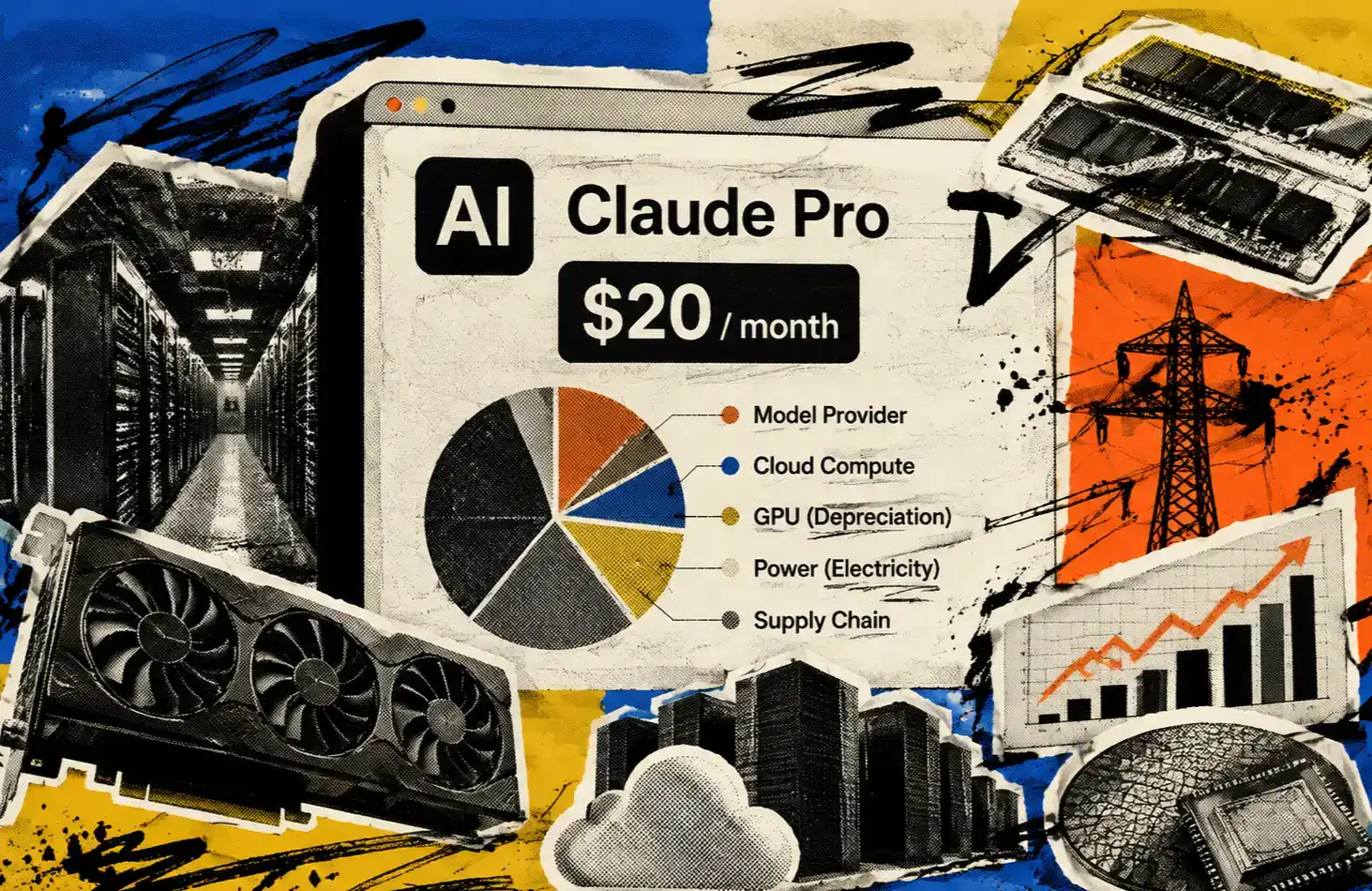
How Much of the Subscription Fee You Pay to Claude Can Optical Module Companies Get?

How much of your $20 Claude Pro subscription actually goes to AI model companies like Anthropic? A viral breakdown image highlights the fundamental valuation challenge for AI applications versus traditional SaaS. Unlike SaaS with high software margins, AI subscriptions face variable "inference costs": every user query consumes GPU time, power, and cloud resources. This creates a tension between fixed subscription fees and usage-driven expenses. While the specific dollar splits are illustrative, the core question is whether AI revenue can achieve SaaS-like margins as usage scales. Currently, infrastructure providers (cloud platforms, GPU makers like Nvidia, HBM suppliers, power/data centers) capture more certain revenue from growing AI usage. Their financials reflect pricing power and faster earnings validation. The bullish case hinges on efficiency improvements: model optimization, caching, smaller models, and custom chips could lower per-token costs over time. The key debate is whether cost declines can outpace increases in user workload complexity and volume. Ultimately, for AI companies to command high SaaS-like valuations, they must demonstrate not just user growth but also improving gross margins after accounting for inference costs. Investors will scrutinize not just subscriber numbers, but usage patterns, enterprise pricing tiers, and real efficiency gains.

marsbit06/17 03:43

How Much of the Subscription Fee You Pay to Claude Can Optical Module Companies Get?

marsbit06/17 03:43

SaaS Battle Royale: The Survivors Who Win All Share One Common Trait

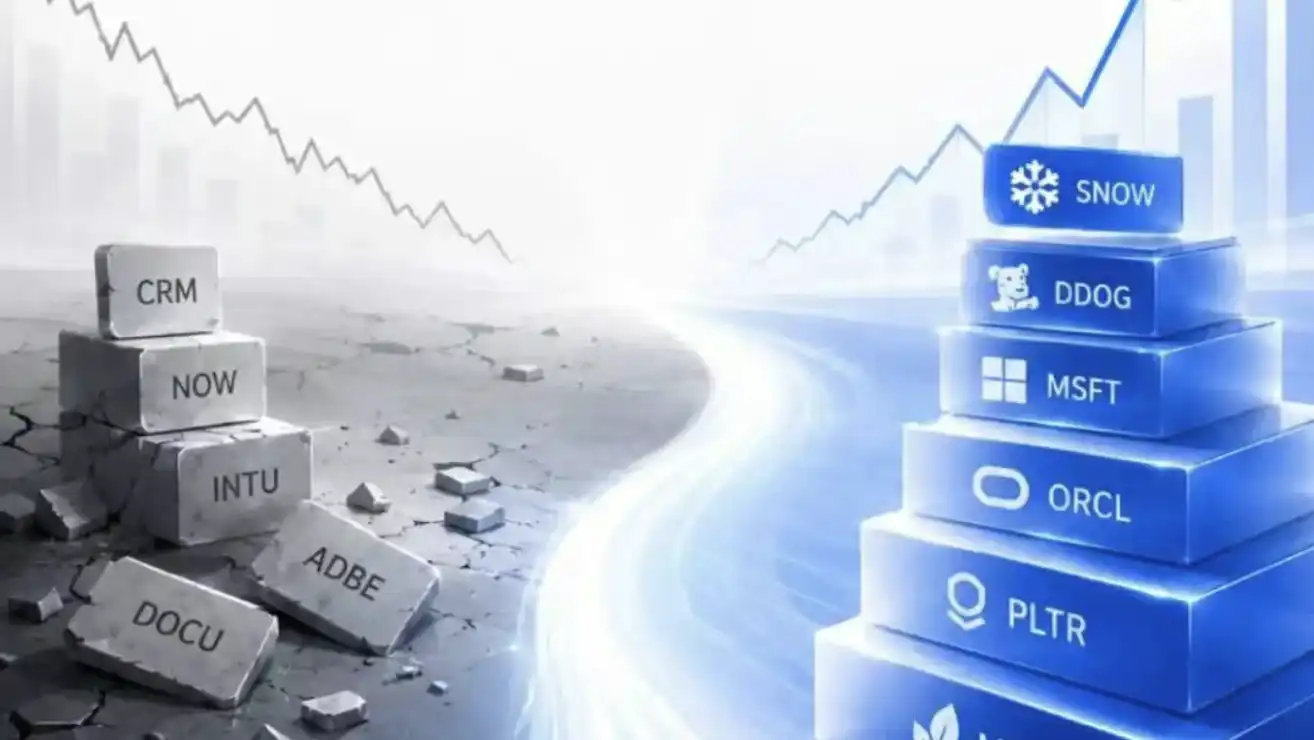
**Summary** The AI revolution has triggered a "SaaS apocalypse," forcing a brutal market shakeout. The key dividing line is the pricing model. Companies like Snowflake and Datadog, which charge based on consumption (e.g., data processed or compute used), are thriving. AI workloads actively *generate* more demand for their services, fueling growth. Datadog's accelerating revenue is a prime example. Microsoft and Palantir, as platform/ecosystem players, also benefit by acting as essential channels for AI deployment. In contrast, traditional SaaS firms built on per-seat or per-task licensing (e.g., Intuit, Adobe) face direct pressure, as AI threatens to automate the very human tasks their software supports. Companies like Salesforce, a per-seat giant, are caught in the middle. While showing strong AI monetization (e.g., its Agentforce platform) and experimenting with consumption-based "Flex Credits," its stock remains under pressure, illustrating that the market rewards *completed* transitions, not just the intent. The recent Microsoft Build conference underscored key trends: AI is evolving from an assistant to an autonomous "agent," and platform providers like Microsoft are consolidating their control. The market's recovery is highly selective, focused on identifying which companies are "fed by AI" versus "eaten by AI." Future focus will be on the diffusion of this recovery to transforming companies and the real-world adoption data of AI agents like Microsoft Copilot.

marsbit06/03 02:02

SaaS Battle Royale: The Survivors Who Win All Share One Common Trait

marsbit06/03 02:02

AI Impact on SaaS Software Stocks: Deconstructing the Bottom-Fishing Logic of Salesforce, ServiceNow, and Snowflake

"AI Nightmare for SaaS Stocks: Unpacking the Bottom-Fishing Logic for Salesforce, ServiceNow, and Snowflake" A deep dive analysis argues that the recent collapse in SaaS software stocks, dubbed the "SaaS Doom," presents a contrarian buying opportunity. The market panic, triggered by fears that AI will disrupt traditional per-user subscription models through "seat compression" and AI agents bypassing software UIs, has led to extreme selling in the software sector. The analysis evaluates three major players under a unified framework: 1. **Salesforce (CRM):** Positioned as a "margin of safety" play. Trading at historically low valuations (13-14x forward P/E), with strong cash flow and a massive buyback, it offers value. Its key challenge is transitioning from a "seat economy" to an AI-driven "task economy" with its Agentforce platform. 2. **ServiceNow (NOW):** The "clearest AI narrative" play. Its "AI Control Tower" strategy aims to become the governance and orchestration layer for enterprise AI agents, benefiting from AI proliferation. Backed by Nvidia's CEO, it trades at a relatively low valuation post-correction. 3. **Snowflake (SNOW):** The "high-risk, high-reward" bet. Its consumption-based model aligns with rising AI workloads, and its RPO growth is strong. However, it faces intense competition (e.g., Databricks), is not yet GAAP profitable, and carries the highest valuation. The conclusion counters the simplified "AI kills software" narrative. AI is eliminating software that sells only functional interfaces but rewarding platforms that provide essential infrastructure, data, and governance. The current sell-off may have created a buying opportunity for resilient software leaders positioned as future AI infrastructure platforms.

marsbit05/25 07:10

AI Impact on SaaS Software Stocks: Deconstructing the Bottom-Fishing Logic of Salesforce, ServiceNow, and Snowflake

marsbit05/25 07:10

活动图片