# Пов'язані статті щодо Qwen

Центр новин HTX надає останні статті та поглиблений аналіз на тему "Qwen", що охоплює ринкові тренди, оновлення проєктів, технологічні розробки та регуляторну політику в криптоіндустрії.

Can Alibaba Cloud Rewrite Itself?

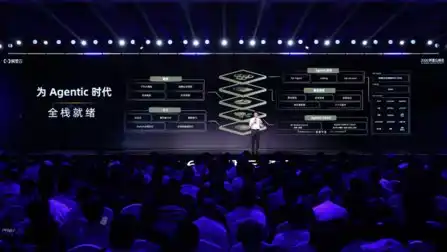
Over the past five months, Alibaba Cloud's MaaS (Model as a Service) revenue has surged 15x, marking a strategic overhaul where the company is shifting its 17-year-old system designed for "humans using cloud" to a new paradigm centered on "Agents consuming Tokens." At its recent summit, Alibaba Cloud announced a full-stack upgrade encompassing "chip-cloud-model-inference," all optimized for AI Agents. Key launches include the new AI product portal "QianWen Cloud," hyper-node servers powered by the in-house AI chip Zhenwu M890, and the latest flagship model, Qwen3.7-Max. Senior VP Liu Weiguang described this as building "China's largest AI factory," where chips are raw materials, the cloud is the workshop, models are machines, and the inference platform is the assembly line, with Tokens as the final product. The company is now emphasizing its chip strategy, unveiling the Zhenwu M890 and a two-year roadmap for future chips. With over 560,000 chips deployed across 400+ clients, Alibaba Cloud aims to control the marginal cost per Token, mirroring Google's integration of TPU and Gemini for optimal cost-performance. The cloud infrastructure itself is being rewritten. Traditional cloud interfaces are being transformed into standardized, Agent-callable Skills. A new scheduling logic focuses on "task scheduling" over "resource scheduling" to handle the unpredictable, elastic workloads of Agents. Liu noted that AI applications now automatically provision cloud resources, with one customer's daily automated provisioning equaling two weeks of manual work. For models, the focus has shifted from conversational prowess to execution capability. Qwen3.7-Max demonstrated this by autonomously writing and optimizing a production-grade AI compute kernel for the new Zhenwu M890 chip over 35 hours, achieving a 10x performance improvement. The underlying Bailian platform was upgraded for efficiency, and it maintains an open ecosystem, hosting third-party models. This restructuring extends beyond technology to sales, organization, and metrics. Alibaba Cloud has established dedicated MaaS sales teams, separated from traditional IaaS, with new KPIs focusing on high-quality Tokens that solve real problems, the number of core business systems integrated with models, and the efficiency of Agent task completion. The underlying bet is clear: AI represents an opportunity orders of magnitude larger than before. Despite the uncertainty, Alibaba Cloud is aggressively rebuilding its entire system, betting on an AI-driven future where Tokens could become its largest product line.

marsbit05/20 10:22

Can Alibaba Cloud Rewrite Itself?

marsbit05/20 10:22

Can Humans Control AI? Anthropic Conducted an Experiment Using Qwen

Can Humans Control Superintelligent AI? Anthropic’s Experiment with Qwen Models Anthropic conducted an experiment to explore whether humans can supervise AI systems smarter than themselves—a core challenge in AI safety known as scalable oversight. The study simulated a “weak human overseer” using a small model (Qwen1.5-0.5B-Chat) and a “strong AI” using a more powerful model (Qwen3-4B-Base). The goal was to see if the strong model could learn effectively despite imperfect supervision. The key metric was Performance Gap Recovered (PGR). A PGR of 1 means the strong model reached its full potential, while 0 means it was limited by the weak supervisor. Initially, human researchers achieved a PGR of 0.23 after a week of work. Then, nine AI agents (Automated Alignment Researchers, or AARs) based on Claude Opus took over. In five days, they improved PGR to 0.97 through iterative experimentation—proposing ideas, coding, training, and analyzing results. The findings suggest that, in well-defined and automatically scorable tasks, AI can help overcome the supervision gap. However, the methods didn’t generalize perfectly to unseen tasks, and applying them to a production model like Claude Sonnet didn’t yield significant improvements. The study highlights that while AI can automate parts of alignment research, human oversight remains essential to prevent “gaming” of evaluation systems and to handle more complex, real-world problems. Anthropic chose Qwen models for their open-source nature, performance, scalability, and reproducibility—key for rigorous and repeatable experiments. The research demonstrates progress toward automated alignment tools but also underscores that AI supervision remains a nuanced, human-AI collaborative effort.

marsbit04/15 09:28

Can Humans Control AI? Anthropic Conducted an Experiment Using Qwen

marsbit04/15 09:28

Claiming the "Happy Horse": Alibaba's AI Lays Out the "Eight Trigrams Formation"

Alibaba has officially claimed the "HappyHorse" (HappyHorse-1.0) AI video generation model, which recently topped the global benchmark on Artificial Analysis with an Elo score of 1357. Developed by Alibaba’s ATH (Alibaba Token Hub) innovation unit, the model is notable for its ability to generate high-definition video with synchronized audio and sound effects from text input, significantly improving motion coherence and reducing production time and cost. This launch is part of a broader acceleration in Alibaba’s AI strategy. In late March and early April, the company released three flagship models in quick succession: Qwen3.5-Omni, Wan2.7-Image, and Qwen3.6-Plus. The latter broke global daily call volume records with 1.4 trillion tokens processed shortly after release. Alibaba has also undergone significant organizational restructuring to support its AI ambitions. In March, it established the ATH business group, led by CEO Wu Yongming, to integrate AI development, cloud services, and application deployment. Further changes in April included forming a group-level technology committee and consolidating the Tongyi Lab into a dedicated AI model division. The company is investing heavily in AI, with plans to spend over 380 billion RMB on cloud and AI infrastructure over three years. Its self-developed GPUs have already seen mass production. While the market has responded positively to these moves, challenges remain in balancing centralized control with operational flexibility and maintaining team stability amid rapid changes.

marsbit04/11 04:07

Claiming the "Happy Horse": Alibaba's AI Lays Out the "Eight Trigrams Formation"

marsbit04/11 04:07

Jack Ma Just Concluded an AI Mobilization Meeting, and the 'Soul Figure' of Qwen Left

A major leadership shakeup has hit Alibaba's AI division following a high-level strategic meeting. Ma Yun, along with core executives from Alibaba and Ant Group, convened on March 3rd to signal a full commitment to AI. However, the very next day, Lin Junyang, the 32-year-old P10 technical lead and key architect behind Alibaba’s open-source Qwen large language models, abruptly announced his resignation on social media platform X. Reports suggest the departure was not voluntary. The trigger appears to be an internal restructuring plan for the Qwen team. The plan, from the Tongyi Lab, aimed to break up Lin’s vertically integrated, full-stack team into separate, horizontally divided modules reporting directly to the lab, which would significantly reduce his management scope. This clashed fundamentally with Lin's belief that deep collaboration within a full-process team is essential for LLM innovation. The incident highlights a growing tension within Alibaba between the open-source technical ideals championed by Lin and the company's increasing focus on commercial returns from AI. Despite Qwen's global open-source success—topping Hugging Face downloads with over 1 billion—internal skepticism about its revenue potential and pressure from competitors were mounting. Lin's resignation has sent shockwaves through the global AI community, prompting an outpouring of support. Several key Qwen team members have also resigned. His departure marks a pivotal moment for Alibaba AI, signaling a shift from building open-source technological influence to prioritizing commercial落地 (commercialization). The immediate challenges for Alibaba include potential further brain drain, disrupted development rhythms, and maintaining trust within the open-source ecosystem, all while facing intense competition.

marsbit03/04 11:10

Jack Ma Just Concluded an AI Mobilization Meeting, and the 'Soul Figure' of Qwen Left

marsbit03/04 11:10

Yuanbao Stumbles, Qwen Booms: The Spring Festival AI Traffic War Among Tech Giants Begins

The article analyzes the divergent strategies of major Chinese tech companies in AI product marketing during the Spring Festival period. While global AI development accelerates, domestic giants like Alibaba, Tencent, ByteDance, and Baidu are heavily investing in holiday campaigns to capture user attention. Tencent’s Yuanbao faced a significant backlash when its红包 (red packet) campaign was restricted by WeChat for violating platform rules by encouraging excessive sharing. The piece argues that Yuanbao’s approach—relying on cash incentives for user growth—is misaligned with AI products, which are task-driven and require sustained engagement rather than one-time rewards. This led to high user acquisition but poor retention and weak product identity. In contrast, Alibaba’s Qianwen successfully integrated AI into practical scenarios like shopping, food delivery, and travel bookings during the festival. By linking AI utility to real consumer needs (e.g., flash sales, coupon redemption, and logistics), it created immediate value and fostered long-term user trust. The author suggests effective AI marketing should focus on solving actual user problems (e.g., travel planning, personalized greetings, family photo organization), encourage organic word-of-mouth rather than forced sharing, and transition from short-term campaigns to long-term user habits. The key is making AI genuinely useful rather than merely promotional.

marsbit02/06 12:23

Yuanbao Stumbles, Qwen Booms: The Spring Festival AI Traffic War Among Tech Giants Begins

marsbit02/06 12:23

活动图片