# Пов'язані статті щодо Mystery

Центр новин HTX надає останні статті та поглиблений аналіз на тему "Mystery", що охоплює ринкові тренди, оновлення проєктів, технологічні розробки та регуляторну політику в криптоіндустрії.

China's No.1, Closing in on OpenAI, Mysterious "Sweeping Monk" Rises to Top Seven Globally

A mysterious Chinese AI project named "MopMonk" (meaning "Sweeping Monk") has achieved a top-ranking result on the globally recognized CyberGym cybersecurity benchmark. With a 73.1% success rate, it ranks seventh worldwide and first among Chinese entries, performing closely behind OpenAI. The significance lies in the benchmark itself. CyberGym, created by UC Berkeley, is considered a premier "Olympics" for AI security. It tests models on over 1500 real-world software vulnerabilities, requiring them to not just identify but actually generate working exploits (PoCs) in a complex, offline environment. This moves beyond simple knowledge to testing an AI's practical "execution" capabilities. MopMonk's approach is notable. It uses the open-source MiniMax M3 model from Shanghai as its powerful reasoning "brain," leveraging its strong coding skills and long context window. However, the key to its performance is a custom-built, multi-agent security framework—its "Harness." This system uses structured "vulnerability memory" to efficiently guide the search for exploits, allowing multiple agents to explore in parallel while sharing lessons learned from failures. This engineering layer effectively translates the model's intelligence into actionable, iterative testing steps. The project remains highly secretive, with no official website or team information, embodying the "dark horse" spirit of its literary namesake. Its success highlights a potential industry shift: beyond simply scaling model size, the engineering of specialized agent systems (the Harness) is becoming a critical differentiator for real-world AI application performance, especially in complex domains like cybersecurity.

marsbit06/30 08:09

China's No.1, Closing in on OpenAI, Mysterious "Sweeping Monk" Rises to Top Seven Globally

marsbit06/30 08:09

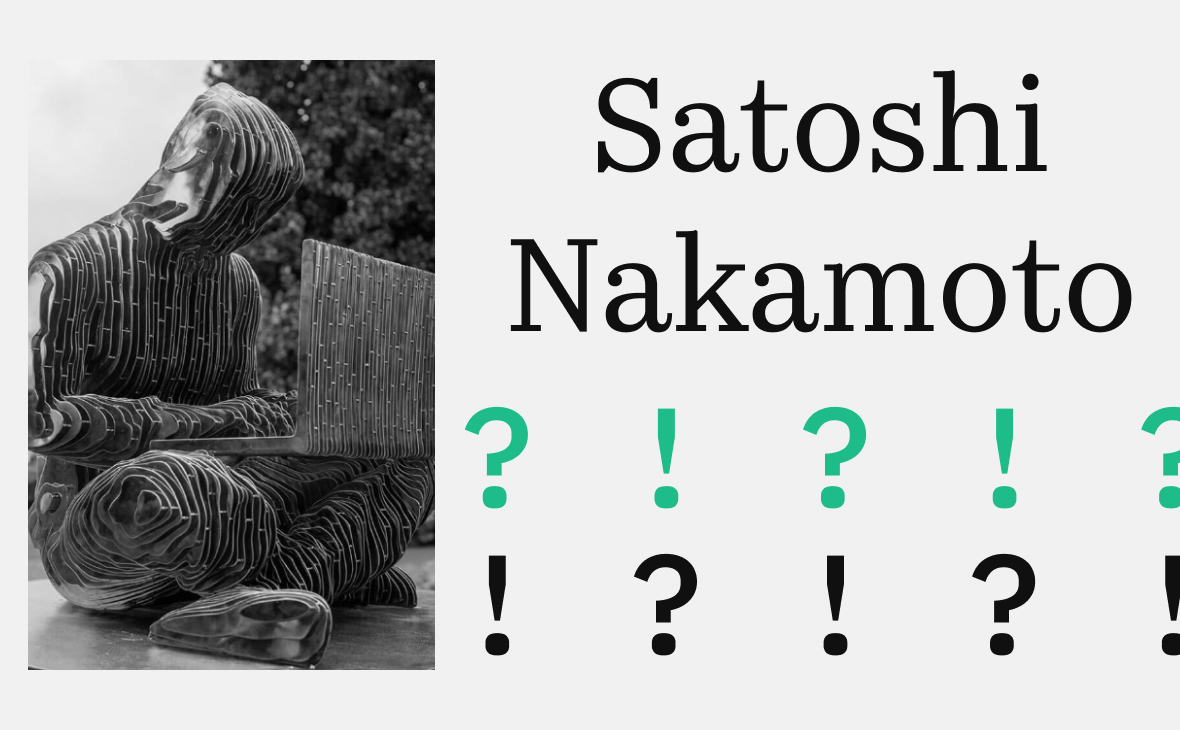
New York Times' Blockbuster Investigation Reignites Satoshi Nakamoto Identity Mystery, Adam Back Quickly Denies After Being Identified

The New York Times published an extensive investigation suggesting that Blockstream CEO and cryptographer Adam Back is the most plausible candidate for being Bitcoin’s pseudonymous creator, Satoshi Nakamoto. The report, by Pulitzer-winning journalist John Carreyrou, analyzed linguistic patterns, technical ideas, and historical context from decades of online archives and cryptographic mailing lists. It highlighted Back’s early work on Hashcash—a proof-of-work system used in Bitcoin—as well as his consistent advocacy for digital cash and privacy technologies since the 1990s. The investigation also pointed to stylistic similarities in writing and aligned ideological views between Back and Satoshi. However, Back quickly denied the claims, calling the evidence coincidental and statistically biased due to his high volume of posts in crypto circles. He reiterated that he is not Satoshi and argued that Satoshi’s anonymity benefits Bitcoin. The crypto community responded with skepticism; some developers criticized the report for relying on circumstantial evidence, while others accused Back of exaggerating his role in Bitcoin’s origins. Past attempts to identify Satoshi, including high-profile claims involving Dorian Nakamoto and Craig Wright, have all failed due to lack of conclusive proof. The mystery remains unsolved, and Bitcoin’s value continues to stem from global adoption rather than its creator’s identity.

marsbit04/09 10:34

New York Times' Blockbuster Investigation Reignites Satoshi Nakamoto Identity Mystery, Adam Back Quickly Denies After Being Identified

marsbit04/09 10:34

Bitcoin's Creator Has Not Appeared Publicly for Exactly 15 Years. Where Did Satoshi Disappear To?

Bitcoin's creator, Satoshi Nakamoto, has been absent from the public eye for exactly 15 years, with his last known communication dating back to April 26, 2011. His final public forum post on December 12, 2010, addressed a DoS attack on the Bitcoin network. Shortly before disappearing, he privately corresponded with early developers, informing them he had "moved on to other things" and that Bitcoin was in good hands, specifically naming Gavin Andresen as the lead developer. His withdrawal is speculated to be linked to Andresen's planned talk about Bitcoin at the CIA headquarters. Satoshi's true identity remains one of cryptocurrency's greatest mysteries. Numerous theories exist, ranging from him being an individual to a group, or even a project by the CIA. Several individuals, including cryptographers Hal Finney and Nick Szabo, have been proposed as candidates, but all have either denied it or remained silent. Some speculate he may be deceased. The mystery is fueled further by the immense wealth potentially held by Satoshi. Research based on a unique mining pattern, dubbed "Patoshi," suggests he may have mined approximately 1.1 million BTC, worth over $100 billion at current prices. This was possible due to minimal mining competition and a high coin emission rate in Bitcoin's early days, when it could be mined on a regular laptop. The network's computational power has since grown by over 10 billion times.

RBK-crypto12/12 12:55

Bitcoin's Creator Has Not Appeared Publicly for Exactly 15 Years. Where Did Satoshi Disappear To?

RBK-crypto12/12 12:55

活动图片