# Пов'язані статті щодо Miners

Центр новин HTX надає останні статті та поглиблений аналіз на тему "Miners", що охоплює ринкові тренди, оновлення проєктів, технологічні розробки та регуляторну політику в криптоіндустрії.

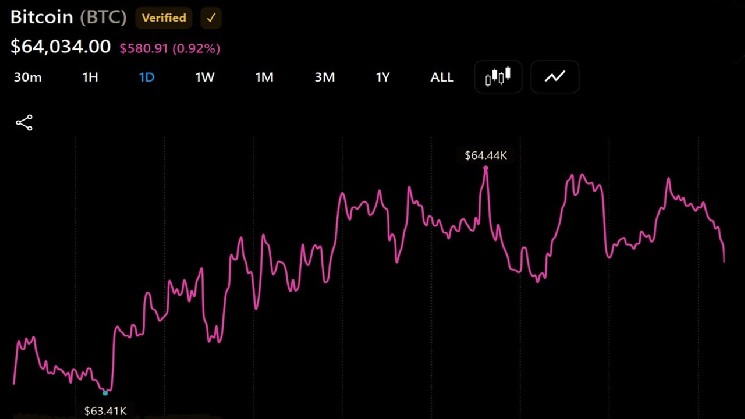
Bitcoin Price Fluctuates Around $64,000 as Coldcard Losses Exceed $116 Million

Bitcoin's price is holding around $64,000 despite significant negative pressure. Losses from a vulnerability in Coldcard hardware wallets have surpassed $116 million, with thefts continuing in waves. Michael Saylor's MicroStrategy sold another 1,638 BTC (its third sale this year), and wallets linked to the firm moved a further 1,030 BTC, raising fears of a fourth sale. In Washington, the "Clarity Act" bill faces likely failure after Democratic senators blocked negotiations. The Coldcard flaw, stemming from a March 2021 firmware bug, caused some devices to generate seeds with only ~40 bits of entropy instead of 128, exposing long-term holders to brute-force attacks. Developer James O'Beirn launched a public dashboard tracking the ongoing thefts in real-time; a test wallet with no added entropy was drained within an hour. Coinkite has halted shipments and urged affected users to move funds immediately, as firmware updates alone cannot eliminate the risk. For bulls, a potential floor is seen around Bitcoin's production cost, currently estimated at $54,000 (with an energy cost component of ~$40k). Historically, prices have bottomed below this cost in previous cycles. Meanwhile, exchange inflows have spiked as worried Coldcard users transfer coins, and with MicroStrategy still holding $5 billion in approved sales, alongside the potential collapse of the Clarity Act, further downward pressure looms.

cryptonews.ruВчора 19:02

Bitcoin Price Fluctuates Around $64,000 as Coldcard Losses Exceed $116 Million

cryptonews.ruВчора 19:02

Analyst Assesses Bitcoin's Prospects After Investor Selling Wave

The beginning of August saw Bitcoin under significant selling pressure, with retail investors offloading around 32,000 BTC at a loss over several days, according to Bitbanker analyst Andrey Poroshin. He noted that while short-term investors are selling emotionally, long-term holders are accumulating, potentially laying the groundwork for the next upward cycle. The crypto market's focus this week is on key U.S. macroeconomic data, including the ISM Manufacturing PMI and the Non-Farm Payrolls report. Strong data could indicate economic resilience but might also reduce expectations for a near-term Federal Reserve rate cut, acting as a headwind for risk assets like Bitcoin. Poroshin stated Bitcoin's fundamental backdrop remains mixed, pressured by high U.S. interest rates and retail sales. The cryptocurrency is currently trading below the estimated $73,000–$75,000 production cost for most U.S. miners, a rare situation that historically attracts long-term buyers. Technically, sellers maintain control. The analyst's base case for the near term is a decline towards the $60,000–$61,500 range, a strong demand zone from which a technical rebound could form. Separately, a Russian deputy finance minister announced that unqualified investors in Russia will soon be permitted to legally purchase Bitcoin, Ethereum, and major stablecoins, with an annual limit of 300,000 rubles per intermediary.

cryptonews.ru08/03 09:35

Analyst Assesses Bitcoin's Prospects After Investor Selling Wave

cryptonews.ru08/03 09:35

Research: Bitcoin Miner Capitulation Has Dragged On for 287 Days

Research indicates that the capitulation phase for Bitcoin miners has extended for 287 consecutive days, marking one of the longest periods of declining network hash rate. This has led to a 19.9% drop in mining difficulty from its peak. Typically, miner stocks are highly correlated with Bitcoin's price, but recently they have diverged. While Bitcoin lost about 46% of its value over the past year, stocks of major public mining companies like Hut 8, Riot Platforms, and HIVE Digital saw significant gains. Analysts attribute this to the industry's pivot towards providing computing infrastructure for artificial intelligence, shifting investor focus away from pure Bitcoin exposure. Miners' revenue is under pressure. The daily block reward revenue has hit a historic low, partly due to the hash rate decline delaying block times. The Puell Multiple indicator shows daily revenues around $30 million, below the yearly average of ~$40 million. Transaction fees remain minimal, contributing only about $200,000 daily. Currently, fees collected over 28 days do not cover the reward for a single block, meaning fees fund only about ten minutes of the network's daily operation. This is a stark contrast to past cycles where fee revenue occasionally spiked to significant levels. The report concludes that the current mining downturn lacks a clear, singular cause like past events, such as China's mining ban.

cryptonews.ru08/01 19:25

Research: Bitcoin Miner Capitulation Has Dragged On for 287 Days

cryptonews.ru08/01 19:25

Miners Advised Not to Buy GPUs for AI and to Focus on Infrastructure

A founder at an energy investment forum advises bitcoin miners not to purchase GPUs for AI themselves, but to instead focus on infrastructure like power and data center space. Mike Alfred of Alpine Fox stated that while AI infrastructure demand is a long-term, 20-30 year trend, it presents a key choice for miners. The first, riskier model involves owning and operating GPUs, which requires financing expensive hardware that quickly becomes obsolete. The second, more conservative model is akin to real estate: providing colocation services where clients bring their own servers, and the miner sells space, power, cooling, and water. Alfred noted this model is easier to finance. Most existing bitcoin mining sites are difficult and expensive to convert for AI, as AI data centers require far higher construction costs, redundant fiber connections, backup power, complex cooling, and near 100% uptime. A hybrid model, where mining acts as a flexible load to use excess power during AI data center construction or from generation facilities, was discussed. However, participants concluded this is only viable with very cheap power; otherwise, developers are better off focusing solely on AI. Miners are increasingly being evaluated for their available power capacity and project portfolios rather than just bitcoin output. Panelists also warned of risks in the AI sector, predicting at least one major default or contract breach among AI tenants, lenders, or landlords before bitcoin's next halving in 2028.

cryptonews.ru07/28 11:26

Miners Advised Not to Buy GPUs for AI and to Focus on Infrastructure

cryptonews.ru07/28 11:26

Journalists Point to a Shift of Crypto-Treasury Companies Towards AI

At least a dozen companies previously focused on acquiring digital assets for their treasuries have pivoted toward AI-related businesses in recent months, according to a Bloomberg report. This strategic shift, however, has failed to revive investor interest. The stocks of these US and Canadian data-asset treasury (DAT) firms have fallen a median 43% year-to-date, with many trading below their net asset value as management teams exit. Examples of this transformation include K Wave Media Ltd., which switched from accumulating Bitcoin to developing data centers, seeing its shares drop 71% since its May relaunch. Lixte Biotechnology Holdings Inc. and AlphaTON Capital (rebranded as Alpha Compute) also saw significant declines after strategic shifts. Analysts link the sector's weakness directly to the poor performance of the digital assets themselves. Legal experts note the term "crypto treasury" has become a "dirty word" for investors. The pivot to AI is seen as a logical move to attract the large capital flowing into tech infrastructure, driven by spending from giants like Alphabet and Microsoft and startups like OpenAI. While attempts to capitalize on the AI boom extend beyond crypto—exemplified by shoe maker Allbirds rebranding as Smartbird—bitcoin miners like CoreWeave, Hut 8, Iren, and TeraWulf have seen more success by repurposing their data centers for high-performance computing. Investors remain interested in other blockchain applications but have largely abandoned the current digital treasury model. Notably, Coinbase CEO Brian Armstrong has criticized this pivot toward AI as a mistake for crypto projects.

cryptonews.ru07/27 16:36

Journalists Point to a Shift of Crypto-Treasury Companies Towards AI

cryptonews.ru07/27 16:36

Who Decides the Rules of Bitcoin? BIP-110 Ignites Governance Debate

Bitcoin's governance is once again at the center of a heated debate, this time ignited by BIP-110, the "Reduced Data Temporary Softfork." This proposal aims to curb non-monetary data (like inscriptions and Runes) by introducing seven new consensus-layer restrictions over a year, such as limiting new output scripts to 34 bytes and restoring the OP_RETURN cap to 83 bytes. The controversy stems from BIP-110's fundamental shift: it moves the battle against "spam" from node relay and miner policies to the consensus layer, rendering currently valid transactions invalid. Supporters, arguing that default policy governance has failed (highlighted by Bitcoin Core v30's relaxation of OP_RETURN limits), see this as necessary to protect node resources and Bitcoin's monetary focus. Opponents, led by figures like Michael Saylor and Adam Back, warn it dangerously centralizes governance. Saylor listed 110 reasons against it, criticizing its low 55% miner activation threshold and potential for chain splits. Back emphasized Bitcoin's "permissionless" ethos, arguing no single group should impose value judgments via consensus rules. Further complicating matters, technical critiques suggest BIP-110 may be technically circumventable, and a "BlockSlop" vulnerability in its upgrade path poses a consensus risk. The debate has drawn in diverse stakeholders: miners (with pools like Ocean signaling support and Foundry polling clients), node operators (like Bitcoin Knots), and new players like corporate treasury holder MicroStrategy (Saylor), whose market influence adds a novel dimension. Ultimately, BIP-110 acts as a governance stress test, exposing the unresolved question: who decides Bitcoin's rules? It pits the authority of miners, node operators, developers, and capital holders against each other, with each side claiming to defend Bitcoin's core principles of neutrality and security.

marsbit07/21 06:41

Who Decides the Rules of Bitcoin? BIP-110 Ignites Governance Debate

marsbit07/21 06:41

Who Decides Bitcoin's Rules? BIP-110 Ignites Governance Debate

Title: Who Decides Bitcoin's Rules? BIP-110 Ignites Governance Debate A new technical proposal, BIP-110 (Reduced Data Temporary Softfork), has sparked a fundamental governance debate within the Bitcoin community. It aims to impose new consensus rules for one year to limit non-financial data (like inscriptions and Runes) on-chain, moving beyond simple node and miner policy filters to invalidate currently valid transactions. Supporters argue that default policies have failed due to workarounds, necessitating consensus-layer changes to protect Bitcoin's core monetary function from data spam. Critics, including Michael Saylor and Adam Back, contend this dangerously centralizes judgment, undermines permissionlessness, and sets a risky governance precedent. They advocate for market-based solutions like fees or Layer 2s instead. The debate exposes deeper tensions: miners are divided on activation; node operators assert their sovereignty; Bitcoin Core developers influence defaults without direct accountability; and large corporate holders like MicroStrategy now wield narrative influence. Technically, BIP-110 may not fully block data and carries a disclosed consensus bug risk. Ultimately, BIP-110 acts as a stress test, forcing the community to confront the unresolved question: who legitimately decides what Bitcoin is and how it evolves, amidst competing claims from miners, nodes, developers, and capital holders.

链捕手07/21 06:30

Who Decides Bitcoin's Rules? BIP-110 Ignites Governance Debate

链捕手07/21 06:30

活动图片