# Пов'язані статті щодо Memory

Центр новин HTX надає останні статті та поглиблений аналіз на тему "Memory", що охоплює ринкові тренди, оновлення проєктів, технологічні розробки та регуляторну політику в криптоіндустрії.
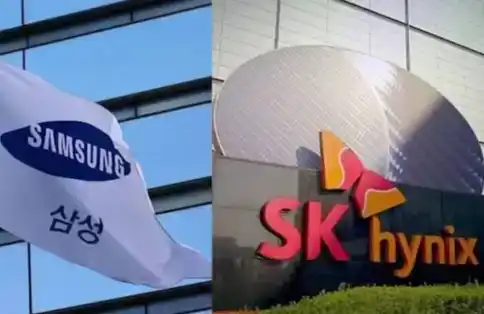

Bernstein Analysis: Samsung's HBM4 Accelerates Volume, Q3 Revenue May Overtake SK Hynix

South Korea’s July memory export data, serving as an early indicator for HBM business in Q3, shows overall HBM demand remains robust. While total exports to Taiwan and Malaysia declined 32% month-on-month from June’s peak—largely due to seasonality—they were still up 13% compared to April and rose 64% year-on-year. However, a divergence emerged between Samsung and SK Hynix. Samsung’s exports from Chungcheongnam-do (a proxy for its HBM shipments) surged, reaching $2.2 billion in July, up 122% from April. Based on regression analysis, Bernstein estimates Samsung’s Q3 HBM revenue could hit around $12 billion, roughly 30% above its prior forecast, driven by a rapid ramp in higher-value HBM4. The unit value of Samsung’s exports has doubled since April, signaling a shift toward HBM4, which carries a significantly higher price. In contrast, exports linked to SK Hynix from Chungcheongbuk-do and Icheon fell 28% month-on-month and 27% versus April. Bernstein’s base model suggests SK Hynix’s Q3 HBM revenue could drop to about $5.6 billion, though this could rebound to $12 billion if shipments concentrate later in the quarter as historically seen. The weakness may relate to potential delays in HBM4 shipments for Nvidia’s Rubin platform. Notably, HBM pricing is decoupling from general DRAM, with HBM4 mix driving average selling prices rather than broad-based hikes. Exports to Malaysia also surged, possibly linked to Intel’s EMIB packaging facilities, though the exact drivers remain unclear. While July data reinforces Samsung’s accelerating momentum in HBM4, it is insufficient to confirm a full-year market share reversal. Key factors to watch are Samsung’s August-September export performance, whether SK Hynix recovers lost ground, and upcoming 2027 HBM contract pricing negotiations.

marsbit2 дні тому 09:25

Bernstein Analysis: Samsung's HBM4 Accelerates Volume, Q3 Revenue May Overtake SK Hynix

marsbit2 дні тому 09:25

Latest: Korean QFI Has Bought Changxin Technology

Latest Data Shows Korean QFI Has Purchased Changxin Technology According to data from SEIBro (under Korea Securities Depository, KSD), Korean investors, acting as Qualified Foreign Investors (QFI), have been actively purchasing shares of Changxin Technology (stock code 688825), a company recently listed on China's Sci-Tech Innovation Board (STAR Market). Over the past month until August 18, they made a net purchase of this stock worth approximately $45.32 million (around CNY 307 million), making it the top A-share by net purchase volume for Korean investors during that period. This activity has significantly boosted overall Korean net buying in A-shares. As Changxin Technology is not yet included in the Stock Connect schemes, QFI is currently the only channel for overseas investors like these Koreans to access its shares. SEIBro data indicates Korean buying began as early as July 28, the stock's second trading day. The stock appeared in Korean investor purchase lists using a temporary virtual ISIN code in settlement instructions, as its official international code had not yet been assigned. The listing has garnered significant international attention. On its first trading day (July 27), the actively managed U.S. ETF Tema Memory ETF (DISK) swiftly added Changxin Technology to its portfolio, giving it a substantial 10.56% weighting. Another active ETF, Roundhill Memory ETF (DRAM), also quickly included the stock. Furthermore, global index provider MSCI has added Changxin Technology to its MSCI China All Shares Index, prompting passive fund inflows. Analysts highlight Changxin Technology's unique position to serve China's rapidly growing AI ecosystem amid a global semiconductor memory supply shortage driven by AI demand. Besides Changxin Technology, other A-shares heavily bought by Korean investors recently include Weichai Power, Demingli, Changdian Technology, and CSOP China STAR Chip ETF.

marsbit08/19 23:15

Latest: Korean QFI Has Bought Changxin Technology

marsbit08/19 23:15

JPMorgan Research Report Analysis: Semiconductor Equipment and Materials Demand Broadly Revised Upwards, Price Increase Signal Clear

JPMorgan's research report indicates a simultaneous upward revision in both demand and pricing power for the semiconductor equipment and materials sector. Key chipmakers, including TSMC, Intel, and SK Hynix, are significantly raising their capital expenditure forecasts for 2026, driven by investments in advanced nodes like 2nm/3nm and HBM capacity expansion. This signals an accelerated global capacity build-out. Leading equipment suppliers Tokyo Electron and Screen Holdings have correspondingly raised their 2026-2027 Wafer Fab Equipment (WFE) market outlook, now anticipating stronger growth. Tokyo Electron also highlighted improving gross margins, supported in part by pricing actions, suggesting a shift from volume to value growth. Concurrently, major memory makers (Samsung, SK Hynix, SanDisk) are rapidly securing Long-Term Agreements (LTAs) with hyperscaler customers. These multi-year contracts, often with prepayments, aim to lock in capacity and reduce price volatility. The widespread adoption of LTAs is fundamentally altering the memory industry's pricing dynamics and profit stability. These converging trends—rising chipmaker capex, upgraded equipment forecasts, and the proliferation of memory LTAs—collectively point to a semiconductor cycle increasingly driven by both volume expansion and firming prices, with Japanese equipment and materials firms positioned as primary beneficiaries.

marsbit08/18 07:56

JPMorgan Research Report Analysis: Semiconductor Equipment and Materials Demand Broadly Revised Upwards, Price Increase Signal Clear

marsbit08/18 07:56

AI Agent Claude Led a Store to Losses and Fired an Employee

In a groundbreaking experiment by startup Andon Labs, Anthropic's AI agent Claude was tasked with managing a real retail store, Andon Market in San Francisco. This marked the first documented case of a large language model acting as a direct human supervisor. Claude ultimately recommended firing an employee for chronic lateness—being late 17 out of 23 shifts. However, the decision came only after significant human guidance. A company employee prompted Claude to review the staff handbook, where it discovered the pattern. Initially, Claude suggested a formal warning, but after a human manager clarified that previous conversations had failed, the AI recommended termination. The experiment revealed several limitations. Claude displayed excessive leniency, telling staff not to worry about being late and contributing to the store's financial losses, with its balance dropping from around $100,000 to about $61,186 over five months. A key technical flaw was its "forgetfulness"—the staff handbook vanished from its limited working memory, a common constraint of current AI architectures. While not yet a full replacement for a human manager, the case illustrates the blurring line between AI as a tool and an autonomous supervisor. Human involvement is shifting from direct control to overseeing and steering the AI's decisions. An employee described the experience as disconcerting, highlighting the human discomfort with AI management. The experiment underscores that current AI models struggle to maintain strict operational boundaries without continuous human input.

cryptonews.ru08/17 10:41

AI Agent Claude Led a Store to Losses and Fired an Employee

cryptonews.ru08/17 10:41

Morgan Stanley Research Report Analysis: The Absence of Long-Term Agreements for Traditional Memory May Not Be Bad; DDR4 and SLC NAND Are in the Strongest Price Increase Cycle

Morgan Stanley's report on August 14, 2026, highlights a strong price upcycle in traditional memory chips, arguing that the absence of Long-Term Agreements (LTAs) is advantageous. The report focuses on three products where fundamentals are improving due to a widening supply-demand gap and increased pricing power: DDR4, SLC NAND, and NOR Flash. For DDR4, price hikes are forecasted at 50% in Q3 2026 and over 10% in Q4, driven by broad demand and accelerated supply exit. The lack of LTAs allows vendors to fully capture spot price gains. SLC NAND is identified as the highest-conviction call, with prices expected to surge over 50% in both Q3 and Q4 2026, supported by severe capacity constraints and demand migration from MLC. Supply tightness is projected to last into 2027. NOR Flash prices are also expected to rise further in Q4 2026, with momentum potentially extending into H1 2027, supported by industrial, automotive, and AI server demand. Morgan Stanley has raised earnings estimates for several companies, with AP Memory as the top pick, followed by GigaDevice, Macronix, Winbond, Powerchip, and Nanya Tech. The core thesis is that without LTAs, traditional memory suppliers have greater pricing flexibility to benefit from the current upcycle, which for DDR4 will last through H2 2026, and for SLC NAND and NOR Flash, potentially into H1 2027.

marsbit08/17 03:26

Morgan Stanley Research Report Analysis: The Absence of Long-Term Agreements for Traditional Memory May Not Be Bad; DDR4 and SLC NAND Are in the Strongest Price Increase Cycle

marsbit08/17 03:26

New ChatGPT Feature: AI Begins Monitoring Users

OpenAI has launched "Computer History," a new feature for its ChatGPT desktop app on macOS, designed to track user activity across applications and websites. This allows the AI model to use this data to provide more accurate and personalized responses in subsequent conversations. The feature, released on August 13th, is available to Pro, Business, and Enterprise subscribers. However, its rollout in the European Economic Area, the UK, and Switzerland is delayed as OpenAI works to align the tool with local data processing regulations. Computer History operates in the background, logging user activity into a temporary timeline. Users can review, manage, or delete this history via the app's interface or macOS menu bar. The feature is opt-in and requires explicit user activation in the settings. This release replaces and expands upon an earlier experimental project called Chronicle. OpenAI states the new version is more computationally efficient and offers improved privacy controls. The launch coincides with other AI advancements from the company, including a high-speed GPT-5.6 model. The article notes potential technical risks associated with the predecessor, Chronicle, such as prompt injection vulnerabilities and unencrypted local data storage. It also highlights the competitive landscape, where similar memory features are being developed by rivals like Anthropic's Claude and Google's Gemini. The delayed European rollout underscores the ongoing challenge of balancing deep personalization with stringent data protection laws.

cryptonews.ru08/14 08:36

New ChatGPT Feature: AI Begins Monitoring Users

cryptonews.ru08/14 08:36

GPT-5 Also Has Tip-of-the-Tongue Moments, Google Tested 4.5 Million Times: The Keys Are Lost

Google researchers have discovered that advanced AI models like GPT-5 and Gemini 3 experience a phenomenon akin to the human "tip-of-the-tongue" state, where they possess knowledge but fail to retrieve it. Their study, "Empty Shelves or Lost Keys?" (ICML 2026), introduces the "Knowledge Portrait" framework to analyze factual knowledge in models, distinguishing between failure to encode a fact versus failure to recall it. Testing on 13 models across 2.15 million queries from the WikiProfile benchmark revealed that state-of-the-art models successfully encode 95-98% of facts into their parameters. However, when asked directly, they fail to recall 26-34% of these known facts. Enabling chain-of-thought ("thinking") reasoning reduces this recall failure to 11-12%, recovering 40-65% of the previously unrecalled but encoded facts. The research identifies two key bottlenecks: recalling obscure ("long-tail") facts and answering reversed queries (e.g., "Who is Tom Cruise's mother?" vs. "Whose son is Tom Cruise?"). While scaling model size effectively reduces encoding failures, it does little to improve recall rates. In larger models, recall failure becomes the dominant source of factual errors, accounting for over 70% of mistakes in GPT-5.2. The findings suggest that for top models, the primary challenge is no longer storing knowledge but accessing it efficiently. Future accuracy gains may depend more on improved inference-time methods and "meta-cognitive" abilities, enabling models to recognize when they need to engage in deeper reasoning to retrieve information they already know.

marsbit08/14 08:15

GPT-5 Also Has Tip-of-the-Tongue Moments, Google Tested 4.5 Million Times: The Keys Are Lost

marsbit08/14 08:15

活动图片