From Somersaults to Working 24/7: We Saw the ‘Working-Class’ Aura in Robots at WAIC
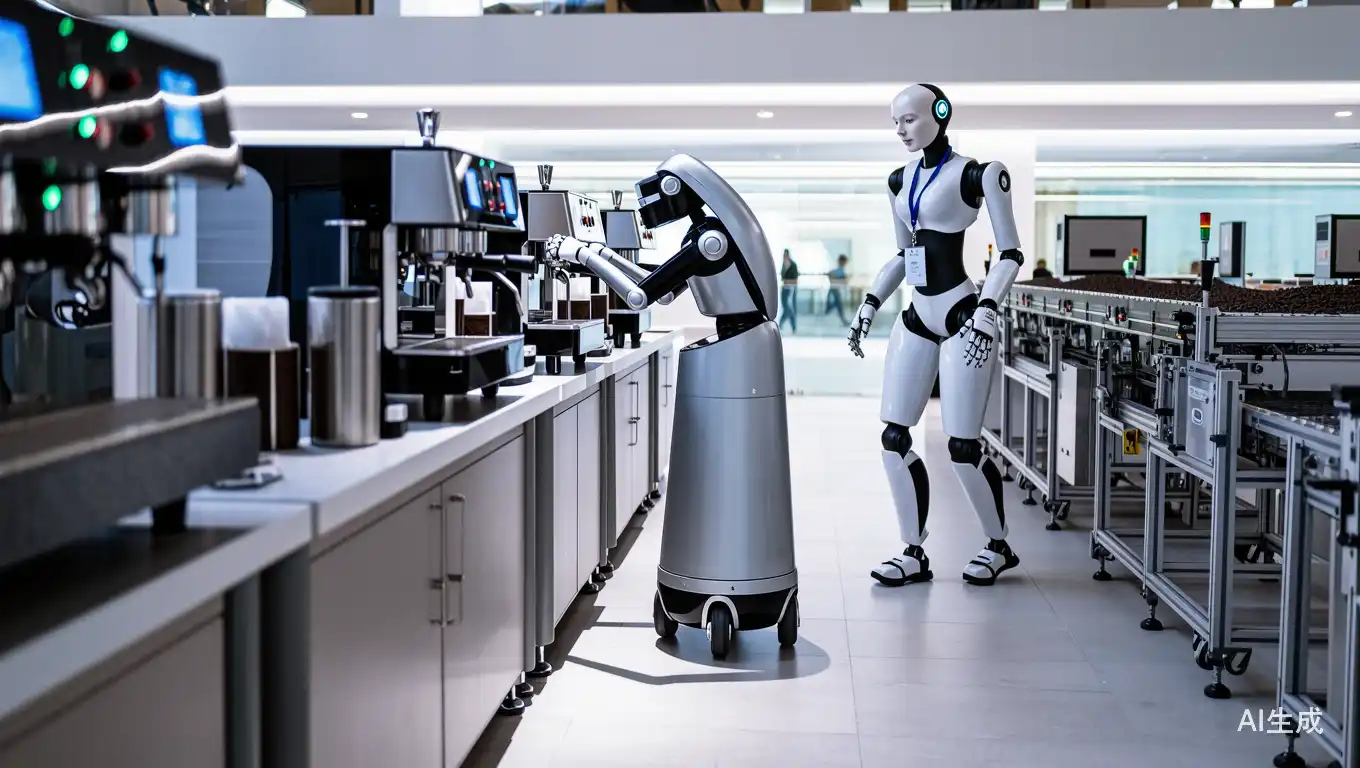
From performing acrobatics to working 24/7: Robots at WAIC are getting down to business. This year's World Artificial Intelligence Conference (WAIC) in Shanghai showcased a significant shift in the robotics industry. While "show-off" robots that dance, play music, or compete in sports are still present, the dominant trend is now practical, task-oriented machines.
Hundreds of wheeled and humanoid robots were deployed as guides, baristas, factory workers, and even traffic controllers, moving beyond mere demonstrations to highlight real-world "work capabilities." The focus has pivoted from showcasing technical parameters to pursuing mass production and industrial落地 (landing/implementation).
This transition presents major challenges. First, deploying powerful AI models onto robots requires overcoming hardware limitations in computing power and latency. Second, robots demand complex, integrated systems for real-time perception and control. Third, achieving reliable mass production necessitates unprecedented industry-wide collaboration on standards and supply chains.
A key bottleneck identified by industry leaders is the robot's "brain"—its AI and cognitive capabilities. While hardware and basic movement ("little brain") have advanced rapidly, the higher-level intelligence for understanding complex instructions and adapting to unstructured environments is progressing more slowly. Companies are investing heavily in developing more advanced "brain" systems, but fully autonomous operation in dynamic settings remains a work in progress.
Cost is another critical hurdle. While some consumer-oriented humanoid robots are now priced under $15,000, capable industrial models often cost $50,000 or more. The industry consensus is that bringing robots into unstructured home environments for tasks like comprehensive cleaning is still at least five years away due to technical, safety, and cost barriers.
Therefore, 2026 is being called the "first year of mass production," but primarily for industrial and specific commercial applications. WAIC 2026 served less as a stage for spectacular tricks and more as a serious examination of robots' commercial viability, marking their transition from laboratory prototypes to real-world products that must prove their value through stable, repetitive work.
marsbit07/17 14:11