# Пов'язані статті щодо License

Центр новин HTX надає останні статті та поглиблений аналіз на тему "License", що охоплює ринкові тренди, оновлення проєктів, технологічні розробки та регуляторну політику в криптоіндустрії.

In the Era of MiCA, Why is the EU CASP License Becoming Increasingly Important?

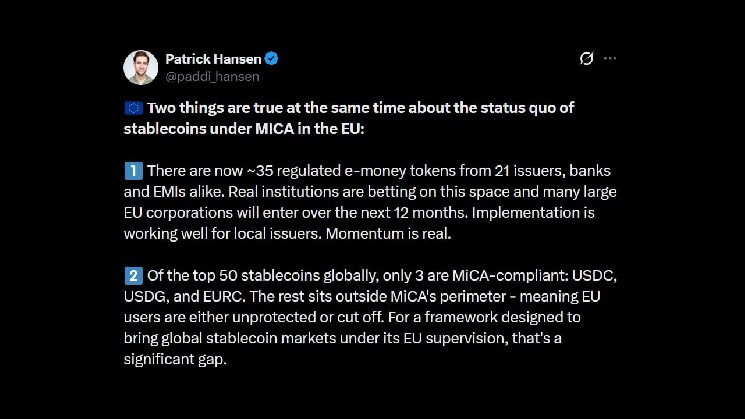
In the MiCA era, the EU's Crypto-Asset Service Provider (CASP) license is becoming increasingly crucial, especially after the transitional period ends on July 1, 2026. Post-deadline, crypto service providers operating under old national frameworks must either secure MiCA authorization or exit the EU market, rendering the previous model of using a single member state's VASP registration for pan-European operations obsolete. The CASP license fundamentally changes the regulatory landscape by shifting from a fragmented, nation-by-nation registration system to a unified "passporting" regime. Authorized in one member state, a CASP can provide its licensed services across the EU, offering greater legal clarity and operational efficiency compared to the past. MiCA defines CASP authorization based on specific service types, such as custody, trading platform operation, exchange, and transfer of crypto-assets. The scope of authorization is determined by actual business functions, not self-selection, with corresponding prudential requirements like capital adequacy. Banks and institutional clients increasingly value CASP status as it provides a verifiable, standardized framework for due diligence, accessible through ESMA's public registers. The regulation significantly limits the "reverse solicitation" exception for non-EU firms. Active marketing or outreach to EU clients generally necessitates a CASP license, moving away from reliance on offshore entities. It's important to note that a CASP license is not a universal permit; it covers crypto-asset services but does not automatically authorize traditional financial activities like payment services (governed by PSD2) or dealing in financial instruments (governed by MiFID II). A complete crypto-fiat payment solution often requires both a CASP and a licensed payment institution. Priority candidates for pursuing a CASP license include: 1) Platforms with the EU as a primary long-term market; 2) Projects seeking partnerships with EU banks or large institutions; and 3) Groups aiming to consolidate cross-border operations under one regulated entity. In contrast, early-stage projects without concrete EU plans may find the process premature. Ultimately, the growing importance of the CASP stems from the end of regulatory ambiguity in Europe. It has evolved from a consideration to a fundamental requirement for market access, client trust, and sustainable operations within the EU's now-harmonized crypto regulatory framework.

marsbit08/13 02:15

In the Era of MiCA, Why is the EU CASP License Becoming Increasingly Important?

marsbit08/13 02:15

Coinbase Secures Key License in Abu Dhabi as the Middle East Becomes a New Hub for Tokenized Assets

Coinbase has secured a key Financial Services Permission (FSP) from Abu Dhabi's Financial Services Regulatory Authority (FSRA), enabling it to establish an International Tokenization Hub within the Abu Dhabi Global Market (ADGM). This license permits Coinbase to conduct investment trading arrangements and offer custody services, with the core aim of launching tokenized securities. This move is positioned as a significant step toward building a more open and accessible global financial system, particularly for the estimated 4 billion individuals currently excluded from traditional capital markets. Tokenized securities issued on this platform will be fully backed by underlying stocks and regulated by the FSRA. Verified token holders will possess full shareholder rights, including dividends and voting rights, requiring only a digital wallet for participation—eliminating the need for traditional securities accounts. The framework incorporates ongoing sanctions screening and allows for asset freezing at the wallet level, aiming to reconcile DeFi functionalities with regulatory compliance. Coinbase executives and ADGM officials highlighted the pioneering nature of ADGM's virtual asset regulatory framework, established in 2018, which treats tokenized assets simultaneously as securities, blockchain-native tokens, and composable DeFi assets. This development in Abu Dhabi, alongside Coinbase's investments in Dubai, underscores the company's commitment to establishing the UAE as a hub for next-generation financial infrastructure, specifically for tokenized securities and on-chain capital markets.

marsbit08/12 07:41

Coinbase Secures Key License in Abu Dhabi as the Middle East Becomes a New Hub for Tokenized Assets

marsbit08/12 07:41

Moscow Exchange to Launch Its Own Digital Depository for Cryptocurrencies

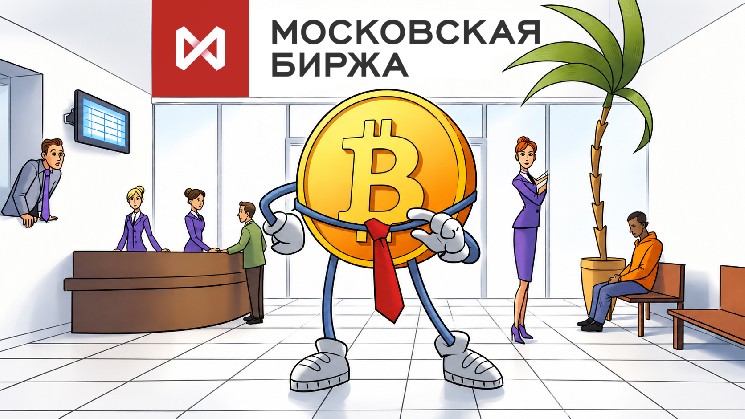
Moscow Exchange is preparing to launch its own digital depository for cryptocurrency operations, independent from the National Settlement Depository, with a planned launch by late 2026 or early 2027. Several liquidity hubs are emerging, and brokers will choose between connecting to this new depository or developing their own infrastructure. The Bank of Russia has published draft requirements for digital depositories, outlining a structure similar to securities depositories and establishing minimum capital levels: 50 million rubles for basic asset accounting, 100 million for managing blockchain addresses/foreign custodian accounts, and 250 million for a settlement depository. Several major financial institutions are building their own infrastructure. Sberbank aims to launch its depository and trading platform by December 1, 2026. Alfa-Bank has begun test trading and plans a full launch and its own depository in Q4. VTB and the T-Technologies Group (using the "Atomize" platform) are also developing depositories, while SPB Exchange is ready to start operations once regulations are in place. The law "On Digital Currency and Digital Rights" comes into force on September 1, 2026, with a transition period until July 1, 2027. This sets the stage for a market with multiple independent depository infrastructures competing for licenses, creating a distributed architecture. This model spreads risk but may complicate client asset transfers, contrasting with the centralized approach seen in Kazakhstan where the National Bank acts as the primary market arbiter.

cryptonews.ru08/06 09:41

Moscow Exchange to Launch Its Own Digital Depository for Cryptocurrencies

cryptonews.ru08/06 09:41

活动图片