# Пов'язані статті щодо Intervention

Центр новин HTX надає останні статті та поглиблений аналіз на тему "Intervention", що охоплює ринкові тренди, оновлення проєктів, технологічні розробки та регуляторну політику в криптоіндустрії.

Yen Hits 40-Year Low, What Will Japan Use to Price in Shorts?

The Japanese yen is hovering near a 40-year low against the U.S. dollar, with the USD/JPY pair approaching 164 in July. Japanese Finance Minister Shunichi Suzuki has issued stern warnings of potential "bold" action to counter disorderly market movements, placing the 163-165 range in focus as a key policy test zone for authorities. The yen's weakness extends beyond dollar strength, as evidenced by its low trade-weighted index, which pressures import costs and inflation—particularly with elevated oil prices. This dynamic increases the likelihood of further Bank of Japan (BoJ) rate hikes. The Ministry of Finance is first aiming to raise the cost for yen short-sellers through verbal intervention and the threat of action, rather than immediately altering fundamentals. While direct FX intervention remains a high-barrier option, slower-moving factors like potential BoJ rate hikes and asset rebalancing by Japan's Government Pension Investment Fund (GPIF) could provide more sustained support for the yen. The core risk for carry trades—which involve borrowing low-yielding yen to invest in higher-yielding assets—is not an imminent unwind but a sudden spike in yen volatility. As policymakers deploy a mix of warnings, rate hike expectations, and potential fund flows, the cost and risk of shorting the yen are increasing. The 163-165 zone is becoming an area where policy responses could trigger a broader repricing, making the yen a more critical variable for global risk asset leverage.

marsbit07/24 08:17

Yen Hits 40-Year Low, What Will Japan Use to Price in Shorts?

marsbit07/24 08:17

A New 'Ghost Story' in Storage: Is the US Going to Grab Money?

The article discusses a potential new phase in US-Korea semiconductor relations, shifting from pressure to build factories in the US to demands for profit-sharing. Citing the *Korea Times*, it reports that a US trade official allegedly claimed the US has a right to share in the massive profits of South Korean chipmakers Samsung and SK Hynix, arguing that purchases by American companies directly drive their earnings. While unconfirmed by US authorities, the claim has caused concern in Korea. The context is Korea's surging semiconductor exports to the US and the dominant profitability of its memory chipmakers in the global AI supply chain. Analysis from CITIC Securities draws historical parallels, noting that sustained high profits or market share by foreign firms in key industries have often triggered US political intervention to redistribute global industrial benefits, as seen with Japanese semiconductors in the 1980s and Taiwanese panels in the 2000s. Currently, the primary US focus remains securing AI-related memory supply and encouraging Korean investment in US manufacturing. Systemic political pressure to curb Korean profits is not yet evident. However, the report warns the risk could materialize if continued price increases start squeezing the profits and competitiveness of American companies. Key signals to watch would be if US tech giants publicly oppose price hikes or if US policymakers reframe the issue around anti-competitive practices. The official's reported remarks are seen as an early sign that the battleground in US-Korea chip rivalry may be extending to the division of profits.

marsbit07/19 01:10

A New 'Ghost Story' in Storage: Is the US Going to Grab Money?

marsbit07/19 01:10

Why Should We Pay Attention to Japanese Government Bond Yields for Their Impact on Gold and Bitcoin?

This article explores the unusual divergence between gold and Bitcoin in response to rising Japanese Government Bond (JGB) yields. Typically, rising long-term yields suppress gold by increasing the opportunity cost of holding non-yielding assets. However, gold has recently moved in tandem with Japan’s 10-year yield, indicating a shift in market dynamics. This positive correlation suggests that markets are interpreting yield increases not as mere monetary tightening, but as a signal of credit risk and financial system stress—making gold a hedge against balance sheet vulnerabilities. In contrast, Bitcoin has maintained a negative correlation with JGB yields, underperforming as yields rise. This divergence highlights that Bitcoin is still reacting to yield increases as a tightening shock rather than a risk signal. Japan is a critical pressure point because its financial system is structurally exposed to rapid yield increases. Japanese banks hold significant long-duration JGBs, and a sharp, volatile rise in yields could strain the system, potentially triggering intervention by the Bank of Japan (BOJ). If the BOJ intervenes to stabilize yields, the article suggests gold may enter a consolidation phase as one of its key catalysts fades. Bitcoin, relieved of macro pressure, could see a rebound. The core insight is that JGB yields have become a barometer for global risk sentiment, with gold absorbing stress and Bitcoin reacting to it. Until Japanese yields stabilize, this divergence is likely to persist.

marsbit01/23 07:53
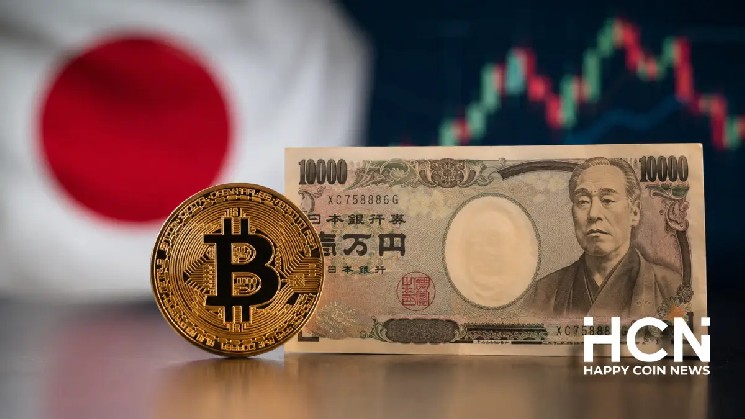
Why Should We Pay Attention to Japanese Government Bond Yields for Their Impact on Gold and Bitcoin?

marsbit01/23 07:53

活动图片