# Пов'язані статті щодо Foundation

Центр новин HTX надає останні статті та поглиблений аналіз на тему "Foundation", що охоплює ринкові тренди, оновлення проєктів, технологічні розробки та регуляторну політику в криптоіндустрії.

Ethereum Foundation adds pcaversaccio to its board

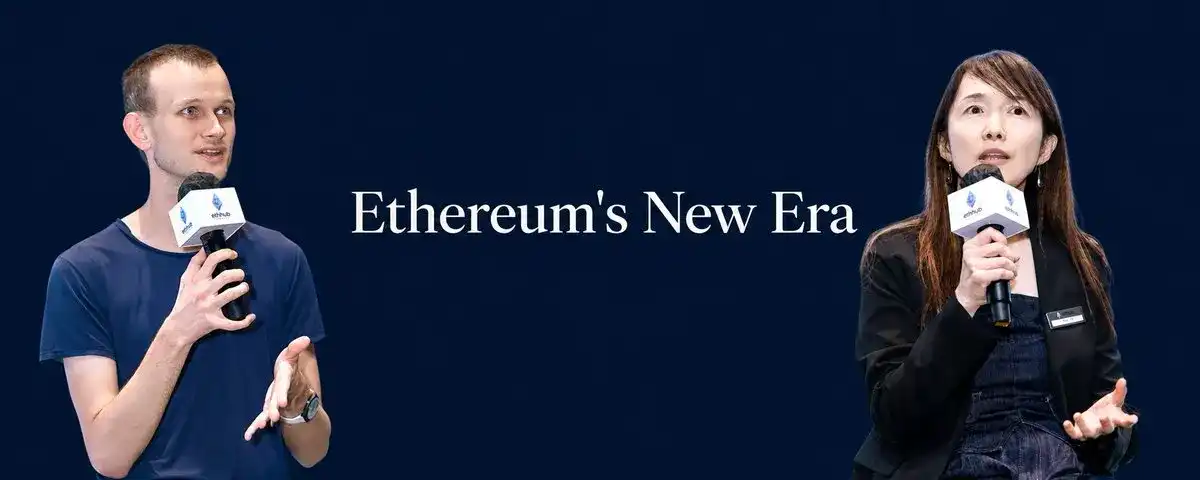
The Ethereum Foundation (EF) has appointed long-time ecosystem contributor pcaversaccio (pc) to its board of directors, further refining the governance of the organization behind the world's second-largest blockchain. A security researcher and co-founder of the SEAL 911 emergency response initiative, pcaversaccio joins the board for an initial voluntary one-year term. He has previously served on the EF's Silviculture Society, an advisory group providing informal guidance on upholding the foundation's core principles, including censorship resistance, open-source development, privacy, and security. With this appointment, the EF board now consists of four members: President Aya Miyaguchi, Ethereum co-founder Vitalik Buterin, Swiss legal counsel Patrick Storchenegger, and pcaversaccio. The board is responsible for setting the EF's strategic vision, ensuring leadership decisions align with its values, and acting as a "security council" to safeguard the foundation's mission and ensure compliance with Swiss law, where it is based. This move comes during a period of significant change for the Ethereum Foundation. In recent months, several senior researchers and executives have departed, with some launching new Ethereum-focused ventures outside the foundation. The EF is shifting its role toward long-term stewardship rather than acting as the central hub for ecosystem development. The foundation expressed its enthusiasm for pcaversaccio's appointment, stating it looks forward to collaborating to help steward Ethereum's long-term future.

cryptonews.ru12 хв тому

Ethereum Foundation adds pcaversaccio to its board

cryptonews.ru12 хв тому

Founder of Baixing.com: The Notion That Large Language Models Will Devour Everything, I Believe Half of It

Founder of Baixing.com: I Only Half-Believe the Saying “Large Language Models Will Devour Everything” Author: Wang Jianshuo, Founder of Baixing.com Many proclaim that large models are everything, but the author is skeptical. He argues that such sweeping claims often stem from a limited understanding of the future. Drawing parallels to past technologies like electricity and the internet—which were predicted to “devour everything” but didn’t—he suggests that large language models (LLMs) are better seen as a foundational base. Like electricity, this base is essential for modern development, but its real value emerges only when applied to specific scenarios through various “machines” or “tools” (e.g., Claude Code for programming, Claude Design for design). The author acknowledges that LLMs may indeed replace many existing software systems built on rigid rules, workflows, and forms (e.g., CRMs, SaaS tools), as these are precisely what LLMs excel at processing. However, he emphasizes that beyond software, elements like customer data, execution capabilities (e.g., booking a flight), trust, and physical-world interactions will not be “devoured.” Instead, he foresees that after streamlining existing software, LLMs will open up a larger space for innovative, next-generation applications. These new tools will likely feature fluid interfaces and rely less on fixed rules, unleashing greater creativity. The author cautions against short-sightedness, recalling how in 2004 many believed internet giants like Sina, Sohu, and NetEase would monopolize the market—only to be proven wrong by subsequent disruptions. In conclusion, while LLMs are a crucial foundation and a current focal point, the true mainstream of this wave lies in the diverse applications built atop them to solve concrete problems. The phrase “devour everything” is imprecise; the real opportunity lies in identifying and leveraging the areas where LLMs do bring transformative change.

marsbit07/07 13:54

Founder of Baixing.com: The Notion That Large Language Models Will Devour Everything, I Believe Half of It

marsbit07/07 13:54

Founder of Baixing.com: I Only Half Believe in the Notion that Large Language Models Devour Everything

The founder of Baixing Wang states that while large language models (LLMs) are an extremely important foundational technology—akin to electricity or the internet—he only "half believes" the notion that they will "consume everything." He argues that LLMs provide a base layer of intelligence, but real-world value and transformation come from integrating this intelligence into specific applications and devices designed for particular scenarios—like how electricity powers various appliances from washing machines to TVs. He agrees LLMs will likely consume or replace a significant portion of existing rule-based, workflow-driven software (e.g., many SaaS systems, CRMs), as these are precisely what LLMs excel at handling. However, numerous other elements—such as customer data, execution capabilities (e.g., booking a flight), trust, and physical-world interactions—will not be consumed. Wang emphasizes that after LLMs absorb certain software layers, they will open up a much larger space for innovation: new types of "streaming" software with less rigid interfaces, where fixed rules are managed by AI. This next wave of applications built on top of the stable LLM foundation is where the true mainstream opportunity lies. He cautions against the short-sightedness of declaring any technology as all-consuming, drawing parallels to past premature predictions about internet giants monopolizing the web. The key is to find opportunities within the areas LLMs do transform.

链捕手07/07 13:48

Founder of Baixing.com: I Only Half Believe in the Notion that Large Language Models Devour Everything

链捕手07/07 13:48

Interpreting the Latest Report from the Ethereum Foundation: Why Are Governments and Giants Focusing on Ethereum?

Decoding the Ethereum Foundation's Latest Report: Why Governments and Giants Are Eyeing Ethereum? Authored by Lanhu Notes, this piece unpacks a key report from the Ethereum Foundation's global policy team. The report, released on July 2, makes a case for why governments and institutions should view Ethereum as the optimal platform for deployment. It highlights Ethereum's unique position as the closest existing platform to a "digital public infrastructure" – a neutral, open, and uncontrolled protocol for handling value, contracts, and coordination, akin to TCP/IP for the internet. The core arguments are: 1. **Maximal Neutrality & No Single Control Point**: Ethereum has no central owner, backdoor, or kill switch. It's maintained by thousands of independent nodes and hundreds of thousands of validators globally, making it resistant to unilateral control by any single entity—a critical feature for sovereign and institutional users. 2. **Proven Resilience & Unmatched Security**: Since its 2015 launch, Ethereum has maintained a perfect uptime record. Its security is backed by approximately $76 billion in staked ETH (as of March 2026), making any attack economically irrational and prohibitively expensive (estimated over $50 billion). 3. **Large-Scale Real-World Adoption**: The network hosts over $159 billion in stablecoins. Major financial institutions like BlackRock and JPMorgan are already using it for real-world asset (RWA) tokenization. Governments, including Bhutan and India, are deploying it for applications like national digital identity and tamper-proof land registries. 4. **Comparative Advantages**: Ethereum offers greater transparency and lower costs than traditional intermediaries. It is more open and neutral than permissioned/private chains. Compared to other public blockchains, it boasts superior maturity, the largest developer ecosystem, the biggest economy, and the highest proven security. In summary, the report positions Ethereum, backed by data, real-world use cases, and clear comparisons, as the emerging neutral public layer for global value settlement and coordination.

marsbit07/03 06:07

Interpreting the Latest Report from the Ethereum Foundation: Why Are Governments and Giants Focusing on Ethereum?

marsbit07/03 06:07

ENS Founder Seeks to 'Seize Power' from DAO

On June 29th, the ENS community entered the on-chain voting phase for a proposal to renew the ENS DAO Security Council's veto power for two more years. Shortly after voting began, ENS founder Nick Johnson used his substantial ENS holdings to cast over 3.55 million votes against the proposal, swinging the outcome despite initial strong support. The Security Council was established in July 2024 with a 4/8 multisig veto power to protect the DAO's treasury (valued over $350 million) from malicious proposals during a period of low voter participation. Its powers were limited to vetoing only harmful proposals, not normal ones. Nick Johnson's opposition stems from broader concerns about ENS DAO's governance. In late 2025, he and others expressed frustration that the DAO had become mired in political gamesmanship, with capable contributors leaving and leadership falling to less experienced or misaligned parties. This context set the stage for a major restructuring proposal by ENS COO Katherine Wu on June 19th, titled "Next Era of ENS DAO: Empowering the ENS Foundation." The controversial proposal aims to transfer daily operations, treasury management, and long-term strategy to a restructured ENS Foundation with a professional board, while the DAO would retain core protocol governance powers. Critics, including original ENS constitution author Brantly Millegan, argue this effectively transfers treasury control from token holders to ENS Labs (the core development team), undermining the DAO's original decentralized design. Nick's massive "no" vote on the Security Council renewal is seen as the first move in this power struggle. He explained his vote was due to concerns about insufficient checks on the Council's power and the potential for its veto to be used politically. In response, Katherine Wu submitted a revised proposal with higher execution thresholds (5/8 instead of 4/8) and stricter limits. The push for change comes as ENS's annual revenue has declined significantly, from over $10 million in 2023 to under $2 million in 2025, increasing pressure to manage the treasury more effectively. Nick Johnson now faces the challenge of proving that a more structured foundation can steer ENS better than the current DAO model.

Foresight News07/02 02:13

ENS Founder Seeks to 'Seize Power' from DAO

Foresight News07/02 02:13

Foundation Steps Back, Ethlabs Steps Forward: Ethereum Undergoes Its Largest Restructuring in History

On June 23rd, the Ethereum ecosystem witnessed two major shifts, signaling a significant governance realignment. First, former Ethereum Foundation researchers established Ethlabs, a new independent non-profit. Backed by major ETH holders like Bitmine and SharpLink, Ethlabs aims to address practical needs for institutional adoption, including faster settlement, native asset issuance, cross-chain transactions, and mainnet scaling. Secondly, the Ethereum Foundation announced a major restructuring, laying off 54 employees (20% of its staff) to become a leaner entity focused on protocol governance and maintenance rather than being the primary builder. This move represents a pivotal correction. Criticisms had mounted over the Foundation's perceived slowness, lack of clear strategy, and over-reliance on Vitalik Buterin's influence. Ethlabs emerges as a more execution-oriented, "industrialized" layer focused on market adoption—bridging the gap between research and real-world use. Notably, Vitalik Buterin is absent from its list of supporters, interpreted as an intentional step to avoid excessive personal endorsement and allow the organization to build independent credibility. The Ethereum Foundation's downsizing and redefinition mark a retreat from its former central coordinating role. It now aims to share the "privilege of stewarding Ethereum" with other emerging groups like Ethlabs, the Ethereum Applications Guild, and The Ethereum Economic Zone. Analysts frame this dual shift as the Foundation ensuring Ethereum remains "correct" (credibly neutral), while Ethlabs must prove it remains "effective" (competitive and attractive for capital and adoption). This addresses community "shareholder-like anxiety" about ETH's market performance. While risks exist—such as concerns over shifting from Foundation centrality to large-holder influence—the consensus is that the greater risk for Ethereum was inaction, caught between technical idealism and organizational inertia. These steps aim to create a more multi-stakeholder, execution-driven future for the network.

链捕手06/23 15:50

Foundation Steps Back, Ethlabs Steps Forward: Ethereum Undergoes Its Largest Restructuring in History

链捕手06/23 15:50

活动图片