# Пов'язані статті щодо Exit Strategy

Центр новин HTX надає останні статті та поглиблений аналіз на тему "Exit Strategy", що охоплює ринкові тренди, оновлення проєктів, технологічні розробки та регуляторну політику в криптоіндустрії.

Investors Begin 'Switching Tables'

Investors Begin to “Change Tables” A notable shift is occurring in China's venture capital landscape. While the hard tech sector, especially AI, experiences a funding frenzy with record-breaking investment rounds, many investors are opting to leave traditional investment firms to join portfolio companies. This movement, termed "changing tables," marks a departure from past downturns where such moves were often a last resort. Currently, the trend is driven by proactive choice. Seasoned investors, including partners and managing directors, are being lured by attractive salaries, equity incentives, and core roles like VP, General Manager, or even co-founder at fast-growing startups in hot sectors like AI, embodied intelligence, and aerospace. This "going ashore" to companies is seen as a strategic career move. The shift is a two-way street. Booming fundraising and feverish investment activity have created intense competition among VCs for a narrow set of "star projects." Simultaneously, these high-flying tech companies, engaged in rapid, multi-round financing, urgently need talent with deep capital market expertise and institutional connections to manage their complex funding needs. Companies like Zhiyuan Robot, MoonDark AI, and MiniMax are actively recruiting from investment firms. For investors, the move also reflects concerns about the sustainability of the current market. Risks like valuation inversion between primary and secondary markets, high IPO破发 rates, increased regulatory scrutiny, and the uncertainty of eventual exits are prompting a reevaluation of the traditional VC path. While this transition offers new opportunities, it is not without challenges. Success requires adapting from evaluating companies to operating within one, focusing on execution over analysis. Nevertheless, this trend underscores the expanding career boundaries and fluidity within China's innovation ecosystem.

marsbit15 год тому

Investors Begin 'Switching Tables'

marsbit15 год тому

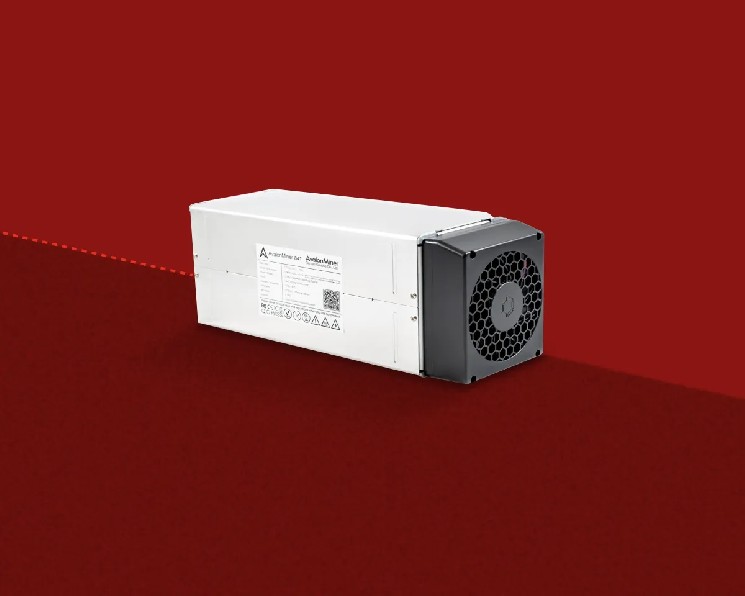
Core Scientific Writes Off $41.9 Million to Accelerate Exit from Bitcoin Mining

Core Scientific reported a $41.9 million payment to terminate a contract with Block and its subsidiary Proto for the supply of Bitcoin mining chips. This move finalizes its exit from plans to grow its hash rate, shifting its business model entirely towards AI colocation. The agreement, announced in July 2024, was for 3nm chips providing roughly 15 EH/s of hash rate. Following the cancellation, Core Scientific stated it will no longer invest in new mining hardware to maintain or expand its cryptocurrency mining capacity. Instead, it will generate cash flow from its existing mining fleet while repurposing its data centers, potentially selling or decommissioning ASIC miners. In Q2 2026, revenue from AI colocation surged to $136.7 million from $10.6 million a year earlier, representing 83% of total revenue. In contrast, its own Bitcoin mining revenue fell 66% to $21.5 million. Quarterly Bitcoin production dropped 53% year-over-year. AI colocation capacity reached 437 MW by mid-July 2026, with CoreWeave accounting for all current hosting revenue and approximately 77% of Core Scientific's total revenue in H1 2026. The company also announced a partnership with AMD for up to 2.5 GW of potential data center capacity, with initial 15-year agreements for about 530 MW estimated to bring in over $14 billion in contract revenue. Total Q2 revenue grew to $164.2 million, while capital expenditures jumped to $797.5 million. As of June 30, 2026, the company reported long-term debt of $4.3 billion and free liquidity of $1.82 billion. The shift aligns with a broader industry trend of major Bitcoin miners accelerating a pivot to AI amid pressure on Bitcoin mining profitability.

cryptonews.ru07/29 13:41

Core Scientific Writes Off $41.9 Million to Accelerate Exit from Bitcoin Mining

cryptonews.ru07/29 13:41

M&A Deals in the Crypto Market Are Unusually Active

Title: M&A Activity in Crypto Market Becomes Unusually Active A rare signal is emerging in the crypto primary market: mergers and acquisitions (M&A) are nearing half of all financing deals. According to RootData, this month, M&A cases in the crypto industry reached 10, while financing rounds numbered only 14, meaning M&A accounts for approximately 42% of primary market transactions—the highest level in history. This does not signal a sudden industry boom. Instead, the rapid rise in M&A share primarily reflects the continued downturn in the financing market. Since November 2024, monthly crypto M&A deals have remained between 10-20, while financing deals have plummeted from around 100 to about 50, possibly hitting a new low this month. For project teams, this means the traditional path of relying on narratives, token expectations, and ecosystem subsidies to maintain valuations is narrowing. For leading companies, it presents a rare window to acquire teams, licenses, technology, liquidity, and market access at lower prices, with less competition and stronger bargaining power. Key active buyers include Coinbase, Kraken, Ripple, MoonPay, Polymarket, Kaiko, Sol Strategies, GSR, Keyrock, Jupiter, Paxos, and Ondo Finance. Their M&A logic is consistent: acquiring key capabilities at lower costs during the industry downturn. This is driven by more attractive valuations, reduced time and trial-and-error costs, the acquisition of licenses and compliance resources, and the integration of industry upstream and downstream segments. Current M&A focuses are concentrated in four areas: trading infrastructure (e.g., Coinbase acquiring Deribit, Kraken acquiring NinjaTrader), payments and stablecoins (e.g., MoonPay, Ripple expanding payment networks), compliance licenses, and asset issuance/distribution (e.g., acquisitions related to RWA and token issuance platforms like Coinbase's purchases of Liquifi and Echo). The rise in M&A is altering the primary market's exit logic. It provides an alternative path to the token-dependent model, encouraging teams to build tangible products, revenue, and strategic value that can be integrated. This could inject confidence into the market, showing that asset buyers and exit possibilities still exist, albeit with a stricter focus on real utility. However, this trend also indicates the crypto industry is becoming more centralized. As asset issuance, trading, market-making, custody, payments, and data gradually consolidate in the hands of a few major players, the industry's initial emphasis on openness and anti-monopoly is being reshaped by commercial realities. Coupled with rising compliance barriers, this signals the end of the low-barrier era for crypto entrepreneurship.

链捕手06/16 11:20

M&A Deals in the Crypto Market Are Unusually Active

链捕手06/16 11:20

M&A Deals Are Exceptionally Active in the Crypto Market

Mergers and acquisitions (M&A) activity in the cryptocurrency primary market has reached a historic high, accounting for approximately 42% of total deals in the current month, nearly matching the number of financing rounds. This shift does not signal a new boom cycle but rather reflects a severe contraction in the venture capital funding environment. As financing dwindles, established industry giants—including major exchanges, payment firms, and infrastructure providers—are seizing the opportunity to acquire strategic assets at lower valuations. Key drivers behind the surge in M&A include depressed project valuations, the need to quickly acquire talent and technology to capture short market windows, the pursuit of crucial regulatory licenses, and the strategic expansion into adjacent business verticals such as derivatives, payments, stablecoins, and real-world asset (RWA) issuance. Major acquisitions, like Coinbase's purchase of Deribit and Kraken's acquisition of NinjaTrader, exemplify the push to expand into high-margin areas like derivatives and multi-asset trading. This trend is reshaping the industry's exit landscape, offering an alternative to token-based exits and incentivizing startups to build tangible products and revenue streams with inherent strategic value for acquisition. However, it also points toward increasing centralization, as critical functions—trading, custody, payments, compliance—become concentrated within a few large, well-capitalized platforms, potentially raising barriers to entry for new ventures.

marsbit06/16 11:19

M&A Deals Are Exceptionally Active in the Crypto Market

marsbit06/16 11:19

The Real AI Bubble, You Can't Buy It

The article argues that the real "bubble" in the current AI boom is largely invisible and inaccessible to the average investor. Unlike the 2000 dot-com bubble, where overvalued companies were publicly traded, the most significant value surges and financial risks are occurring in private markets. Core AI companies like OpenAI, Anthropic, xAI, and Databricks have seen valuations skyrocket (e.g., OpenAI's from $157B to $852B in 18 months), but these transactions happen through private secondary sales, not public stock exchanges. These opaque markets create an "anxiety exposure," leading public investors to chase indirect proxies like memory chip or utility stocks. The author highlights how AI wealth extraction has been radically front-loaded. Employees and founders can cash out years before a potential IPO through structured secondary sales, "founder-led secondary" deals, and collateralized loans against private equity. Major tech firms also use "acqui-hires" or technology licensing deals (like Google/Character.AI, Microsoft/Inflection AI) to secure talent and tech without full acquisitions, allowing early exits outside of regulatory scrutiny. Furthermore, the AI infrastructure build-out is compared to the 2008 real estate bubble. Massive data center projects are financed through complex, off-balance-sheet structures involving private credit, joint ventures, and asset-backed securities using GPUs as collateral (e.g., CoreWeave's deals). This creates a "shadow borrowing" system where the stability of future AI demand underpins trillions in debt, posing systemic risks if expectations falter. The recent collapse of SaaS company Pluralsight, financed by major private credit firms, is cited as a warning. The conclusion is that the most dangerous part of the AI bubble isn't in plain sight on public markets; by the time the average investor sees it, the critical wealth transfers have already occurred in private, unregulated spaces.

marsbit05/14 07:10

The Real AI Bubble, You Can't Buy It

marsbit05/14 07:10

$500 to Buy OpenAI Stock: Silicon Valley's Most Respectable Liquidity Invitation

Silicon Valley's largest venture capital platform, AngelList, has launched a new fund called USVC, allowing U.S. retail investors to buy into high-profile AI companies like OpenAI, Anthropic, and xAI with a minimum investment of $500—no accredited investor status required. Promoted by AngelList co-founder Naval Ravikant, the fund is framed as an opportunity for ordinary people to access high-growth private tech investments traditionally reserved for VCs. However, critics argue it functions more like an exit vehicle for early insiders. USVC acquires shares not through primary rounds but largely via secondary transactions—purchasing stakes from early investors, VC funds, and employees looking to cash out at peak valuations. With companies like xAI heavily weighted in the portfolio, the fund effectively channels retail money into providing liquidity for insiders who entered at much lower valuations. The fund’s structure raises concerns: shares are illiquid, with no secondary market, and buybacks are limited and discretionary. The actual annual fee reaches 3.61%, far above the advertised 1% management fee. This model parallels the "low float, high fully diluted valuation" strategy seen in crypto, where early investors profit by selling to latecomers at inflated prices. The timing—alongside similar moves by platforms like Robinhood—suggests that Silicon Valley’s sudden interest in retail inclusion may be less about democratizing access and more about securing exits for insiders.

marsbit04/23 05:31

$500 to Buy OpenAI Stock: Silicon Valley's Most Respectable Liquidity Invitation

marsbit04/23 05:31

活动图片