# Пов'язані статті щодо Digital Assets

Центр новин HTX надає останні статті та поглиблений аналіз на тему "Digital Assets", що охоплює ринкові тренди, оновлення проєктів, технологічні розробки та регуляторну політику в криптоіндустрії.

A7 to Provide Unique Expertise on Stablecoin Settlement to the Market

Beginning September 1, 2026, Russia's "On Digital Currencies and Digital Rights" law will establish rules for cryptocurrency circulation, significantly expanding tools for importers and exporters. Company A7, a user of the largest ruble-pegged stablecoin A7A5, has announced its readiness to share its unique expertise in digital asset operations with foreign trade participants. According to Oleg Ogienko, Director of Government Relations and International Ties for the A7A5 project, the company's specialists have developed significant expertise in legally formalizing such transactions, compliance, currency control, and interacting with infrastructure participants. Following the law's enactment, A7 will continue applying this expertise for client operations and plans to adapt its business processes as the Bank of Russia issues related regulatory acts. The Bank of Russia clarified that exporters and importers will be able to conduct cross-border settlements in digital currency either through intermediaries or directly, though domestic use of such assets will remain restricted. All requirements for operators and settlement participants will be detailed in the regulator's subordinate acts. A7 had previously highlighted the high degree of transaction freedom in foreign trade as a key advantage of Russia's developing crypto-asset regulation model, while noting limitations for individuals and a banking-centric system that could hinder market growth.

cryptonews.ru21 год тому

A7 to Provide Unique Expertise on Stablecoin Settlement to the Market

cryptonews.ru21 год тому

Russia Establishes New Rules for Digital Depository Ahead of Cryptocurrency System Deployment

Russia is creating new rules for digital depositaries ahead of the launch of its cryptocurrency system. The proposals will extend existing securities market regulations—covering trading, custody, record-keeping, and disclosure—to digital assets. Within this framework, regulated "digital depositaries" will be established to register holdings of cryptocurrency and other digital assets. Their capital requirements will range from 50 million rubles ($570,000) to 250 million rubles ($2.8 million), depending on services provided. Settlement depositaries require the highest capital (250 million rubles), with lower thresholds for firms controlling crypto addresses or using foreign depositaries (100 million rubles) and for other digital depositaries (50 million rubles). Assets counted toward capital must be liquid and meet the central bank's credit quality standards. These rules will also apply to operators of electronic platforms trading digital financial assets. The Bank of Russia will maintain registers for these depositaries, crypto exchange operators, and issuers of digital financial assets. The regulations are based on a digital assets bill passed by parliament in July, with the full crypto system expected by September. The proposals are currently open for public feedback. This announcement follows the European Union's latest sanctions package targeting 14 crypto firms.

cryptonews.ruВчора 10:11

Russia Establishes New Rules for Digital Depository Ahead of Cryptocurrency System Deployment

cryptonews.ruВчора 10:11

Ten European Banks Launch Blockchain Initiative RL1

On July 28, 2026, ten European financial institutions launched the Regulated Layer One (RL1) initiative. This open, neutral, and compliance-focused blockchain network is specialized for institutional digital asset operations. The founding members include ABN AMRO, Cecabank, Chartered Investment, Crédit Mutuel Alliance Fédérale, DekaBank, DZ BANK, LBBW, Natixis CIB, SC Ventures, and Seturion, formed as a European cooperative society (SCE) and led by Henning Voelkel, former head of SWIAT. The network is open to new participants, with NatWest currently in discussions to join. RL1 is built on the SWIAT blockchain, which will remain its software and services provider. The underlying SWIAT network, operational for three years, has processed 50 transactions totaling €700 million. The initiative is described as a collective European effort to create a foundation for a shared, openly and trustworthily managed distributed ledger. Its primary goal is to overcome fragmentation in the regulated financial sector by establishing a neutral, participant-owned, pan-European DLT infrastructure for tokenized assets, digital money, and next-generation financial services. The move responds to growing EU demand for scalable real-world asset (RWA) infrastructure, evidenced by projects like Pontes and Appia. This launch aligns with broader sector growth expectations, including Standard Chartered's forecast for DeFi and RWA market capitalization to reach $2 trillion.

cryptonews.ruВчора 07:41

Ten European Banks Launch Blockchain Initiative RL1

cryptonews.ruВчора 07:41

Nexo States That MiCAR Provides Customers With a Clear Standard of Trust in Platforms

Crypto asset management platform Nexo has restructured its European Economic Area (EEA) operations to comply with the EU's Markets in Crypto-Assets Regulation (MiCAR). Instead of directly obtaining a MiCAR license, Nexo has partnered with two regulated German firms: Tangany and DLT Finance. Tangany, a MiCAR-licensed custodian, provides segregated digital asset storage, while DLT Finance, licensed under MiCAR and MiFID II, offers brokerage and trade execution infrastructure. This collaboration allows Nexo to maintain all its EEA services without disruption. Nexo leadership views MiCAR as the most significant regulatory framework for digital assets in Europe, providing a clear standard that builds institutional trust and long-term stability. They argue that clear regulations benefit the industry's credibility and give clients a benchmark to evaluate platforms. While some criticize EU rules as over-regulation, Nexo believes companies that build operational models around MiCAR can operate confidently across the EEA. Nexo anticipates industry consolidation as users migrate to platforms prioritizing verified compliance and asset protection. The partnership is presented as a model for institutions operating in the post-MiCAR European market, strengthening Nexo's position as a major player in shaping the next phase of regulated digital asset management.

cryptonews.ruВчора 07:31

Nexo States That MiCAR Provides Customers With a Clear Standard of Trust in Platforms

cryptonews.ruВчора 07:31

Uncertainty persists regarding cryptocurrency regulation, and there is a possibility of delay in passing the Clarity Act! Here are the details

The U.S. Senate's vote on the CLARITY Act, which aims to establish a legal framework for the crypto market, faces a potential delay. Priority on the Senate agenda is being given to a Russia sanctions bill and confirmations of federal officials, making a vote on the crypto bill after next week increasingly likely. Senate tradition of handling only one contentious bill at a time further complicates early consideration of the CLARITY Act. Key political disagreements persist, notably over provisions to restrict cryptocurrency trading by senior government officials and elected representatives, including potentially former President Donald Trump. A bipartisan consensus has not been reached. This uncertainty raises doubts about whether a vote can occur before the Senate's August recess. If disputes intensify, the bill's passage could be jeopardized not only for this year but potentially until 2026. Even if the Senate approves the bill, it would still require a revote in the House of Representatives and the President's signature to become law, potentially prolonging the establishment of a comprehensive regulatory framework long awaited by the crypto industry. The Clarity Act is considered crucial for clarifying which agencies will oversee digital assets, defining their legal status, and setting operational principles. Industry advocates argue its passage would boost institutional investor confidence and strengthen the U.S. position in the global digital asset market.

cryptonews.ru2 дні тому 07:51

Uncertainty persists regarding cryptocurrency regulation, and there is a possibility of delay in passing the Clarity Act! Here are the details

cryptonews.ru2 дні тому 07:51

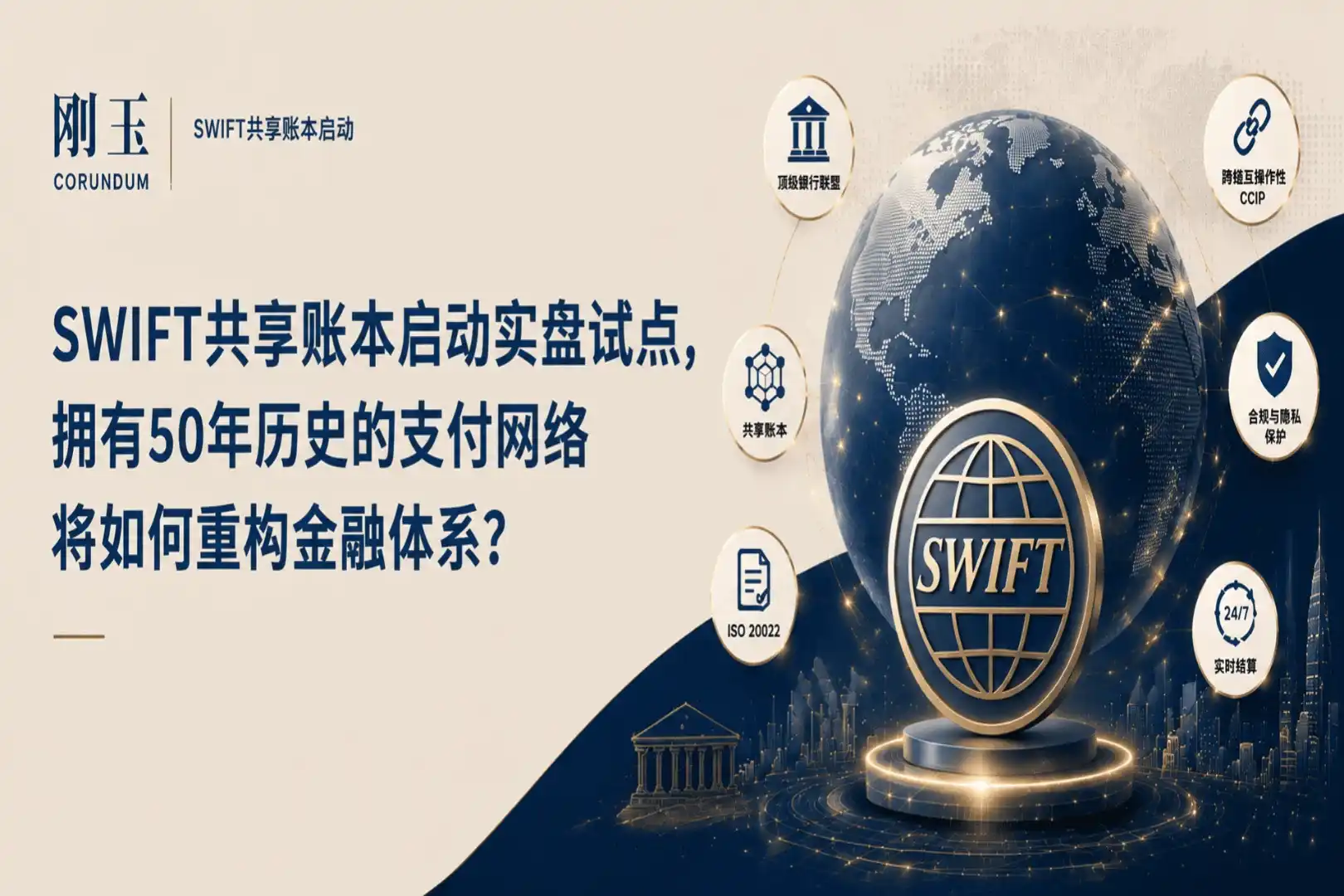
SWIFT Shared Ledger Launches Live Pilot, How Will the 50-Year-Old Payment Network Reconstruct the Financial System?

SWIFT, a global financial messaging provider with a 50-year history, has launched a live pilot of a blockchain-based "shared ledger" in July 2026, involving 17 major banks. This marks a direct move by traditional finance to upgrade its core payment infrastructure using blockchain technology, transforming SWIFT's role from a messaging channel to a "value orchestration layer" for digital payments. The system is built on Hyperledger Besu (EVM-compatible) and integrates Chainlink's CCIP for cross-chain interoperability. It deepens the fusion of the ISO 20022 messaging standard with smart contracts to automate compliance (KYC/AML). The primary settlement medium in this network is "tokenized deposits"—digital representations of traditional bank deposits, not independent stablecoins—preserving the existing two-tier banking system. The move introduces "atomic settlement" (24/7, instant) but requires banks to adopt "pre-funding" models, increasing demands on liquidity management. It presents direct competitive pressure on native blockchain payment tokens (e.g., XRP) by offering an efficient, bank-backed alternative for cross-border settlement. Significant regulatory hurdles remain, including legal jurisdiction over cross-border digital assets, legal definitions of "settlement finality" for smart contracts, and balancing blockchain transparency with data privacy/localization laws. Technologies like zero-knowledge proofs may be needed to resolve privacy-compliance conflicts. Industry views are mixed: participating banks and SWIFT emphasize extending trusted, compliant finance into the digital realm with real-time efficiency, while crypto analysts warn of potential "liquidity backlash" as capital flows back to the traditional, now-tech-enhanced banking system. This pilot signifies that traditional finance and crypto are entering a phase of direct competition and fusion at the infrastructure level, likely leading to a future of interconnected, highly regulated financial networks rather than a fully decentralized system.

marsbit2 дні тому 07:41

SWIFT Shared Ledger Launches Live Pilot, How Will the 50-Year-Old Payment Network Reconstruct the Financial System?

marsbit2 дні тому 07:41

Crypto.com, Backed by Citadel Securities, Transfers XYO and XL1 into Regulated Custody

Crypto.com, with backing from Citadel Securities, has placed XYO and XL1 tokens into regulated custody. This move provides eligible institutions and high-net-worth clients with a regulated mechanism for storing, managing, and exchanging these tokens without first having to transfer assets onto an exchange. The custody structure utilizes segregated MPC wallets managed by a bankruptcy-remote entity, with private keys secured via multi-party computation. Clients benefit from cold storage, audit trails, and direct access to Crypto.com's institutional liquidity while their assets are custodied, removing the operational step of pre-trade transfers. Company leadership positioned this as a strategic step to provide "unmatched security and seamless liquidity" for digital asset organizations, and to protect and scale the XYO ecosystem. The partnership builds on an existing relationship since XYO's initial listing on the exchange. This development follows Citadel Securities' $400 million investment in Crypto.com and comes as the company expands its regulatory standing, having received conditional approval to establish a national trust bank. For institutional investors, this custody agreement addresses a key barrier by demonstrating that smaller market-cap assets like XYO and XL1 can be held under the same regulatory and security standards as larger tokens. XYO operates a large DePIN network generating real-world data for AI and robotics, with XL1 handling its blockchain transactions and infrastructure.

cryptonews.ru2 дні тому 21:18

Crypto.com, Backed by Citadel Securities, Transfers XYO and XL1 into Regulated Custody

cryptonews.ru2 дні тому 21:18

活动图片