# Пов'язані статті щодо Davos

Центр новин HTX надає останні статті та поглиблений аналіз на тему "Davos", що охоплює ринкові тренди, оновлення проєктів, технологічні розробки та регуляторну політику в криптоіндустрії.


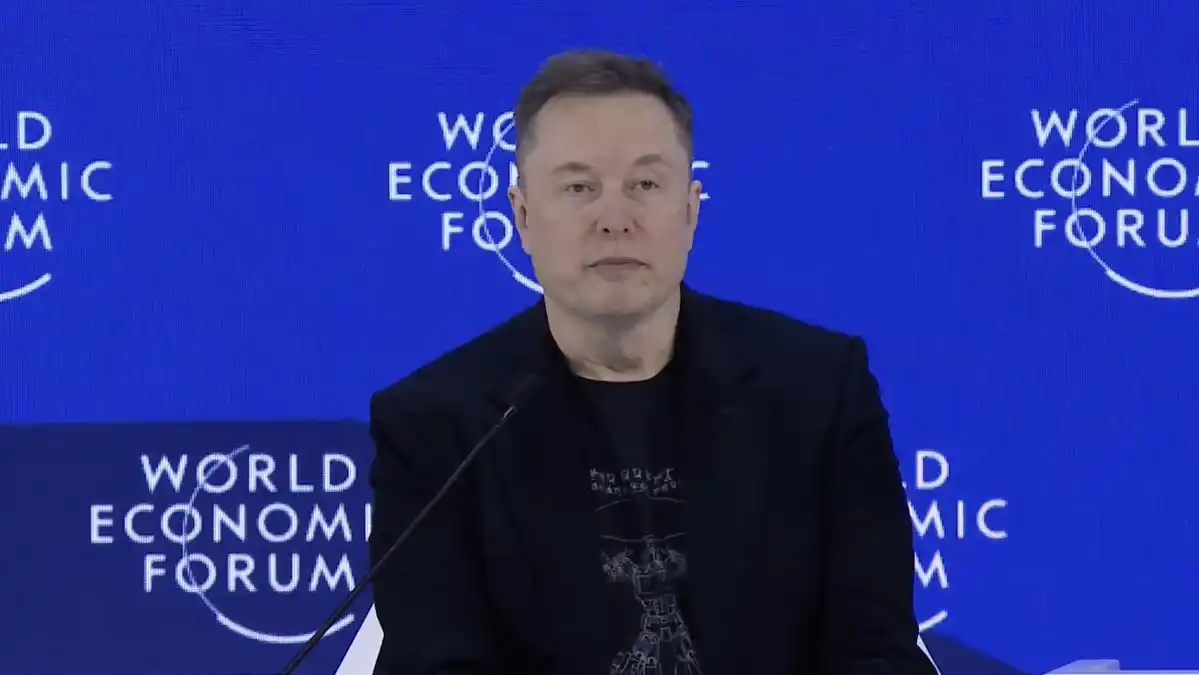
From Davos Confrontation to Capitol Hill: How Coinbase Became the Banking Industry's 'Legislative Enemy'

The article details the escalating conflict between Coinbase, the largest U.S. cryptocurrency exchange, and major Wall Street banks, as exemplified by a confrontation between Coinbase CEO Brian Armstrong and JPMorgan Chase CEO Jamie Dimon at the World Economic Forum in Davos. The core dispute centers on whether crypto exchanges should be allowed to pay yields, around 3.5%, to stablecoin holders—a practice banks argue is equivalent to paying interest on deposits and threatens to draw trillions of dollars away from traditional banking. Armstrong and the crypto industry advocate for free market principles, arguing banks could compete by raising their own deposit rates or entering the stablecoin market. This clash is playing out in Washington over the proposed Clarity Act, which could reshape financial regulations. Armstrong has become a powerful advocate, leveraging Coinbase's significant lobbying efforts and political donations to influence legislation. After he withdrew support for a Senate version of the bill that would have effectively banned such yields, a key vote was abruptly postponed, demonstrating his considerable influence. The article explores Armstrong's journey from a soft-spoken tech founder to a central figure in the policy debate, outlining Coinbase's ambition to become a "super app" that replaces traditional banks. With a new administration open to crypto, Armstrong is pushing for a compromise, such as creating a new category of regulated stablecoin issuers permitted to pay yields, as both sides vie to shape the future of American finance.

比推01/30 13:24

From Davos Confrontation to Capitol Hill: How Coinbase Became the Banking Industry's 'Legislative Enemy'

比推01/30 13:24

Understanding Jensen Huang's Physical AI: Why Is Crypto's Opportunity Also Hidden in the 'Nooks and Crannies'?

Jensen Huang's recent speech at Davos signals a pivotal shift in AI: the transition from the training-focused "brute force" era of AI 1.0 to the new paradigm of "Physical AI" and inference. This marks the next phase after Generative AI, focusing on real-world application and embodiment. Physical AI aims to solve the "last-mile" problem of AI: moving from digital intelligence to physical action. While LLMs have consumed vast digital data, they lack understanding of the physical world—like how to twist open a bottle cap. Physical AI requires three core capabilities: 1. Spatial Intelligence: AI must perceive and interpret 3D environments in real-time, understanding object properties, depth, and interaction dynamics. 2. Virtual Training Grounds: Systems like NVIDIA’s Omniverse enable simulation-to-real (Sim-to-Real) training, allowing robots to learn through vast virtual iterations without costly physical failures. 3. Electronic Skin and Touch Data: Sensors that capture tactile feedback—temperature, pressure, texture—are critical. This data is a new, untapped asset class. This shift opens significant opportunities for Crypto and Web3 ecosystems. DePIN networks can crowdsource hyperlocal spatial data from "every corner" of the world through token incentives. Distributed computing networks can provide edge-based rendering and inference power for low-latency physical responses. Tokenized data ownership and privacy-preserving sharing mechanisms can enable the scalable, ethical collection of sensitive tactile data. In short, Physical AI isn’t just the next chapter for Web2—it’s a catalyst for Web3 domains like DePIN, DeData, and decentralized AI.

marsbit01/23 00:35

Understanding Jensen Huang's Physical AI: Why Is Crypto's Opportunity Also Hidden in the 'Nooks and Crannies'?

marsbit01/23 00:35

活动图片