# Пов'язані статті щодо Crypto Trading

Центр новин HTX надає останні статті та поглиблений аналіз на тему "Crypto Trading", що охоплює ринкові тренди, оновлення проєктів, технологічні розробки та регуляторну політику в криптоіндустрії.

Is WEEX TradFi Reliable? What You Should Know Before Your First Trade of U.S. Stock Tokens

In recent years, cryptocurrency users have expanded their focus beyond Bitcoin and Ethereum to include popular traditional financial (TradFi) assets like Nvidia, Apple, and Tesla stocks. This shift raises key questions: What do these TradFi assets represent on crypto trading platforms? How do they differ from traditional stock ownership? And how can users assess the reliability of platforms offering such products? TradFi products, such as those offered by WEEX TradFi (including NVDA, MSFT, AAPL, TSLA, and QQQ tokens), are blurring the lines between crypto and traditional markets. They allow users to trade based on the price movements of traditional assets within a familiar digital asset trading environment. However, it's crucial to understand that trading a "stock token" is not equivalent to owning the actual stock. Users are participating in price speculation, not gaining shareholder rights like dividends or voting. A key feature of these products is 7x24 trading, offering flexibility beyond traditional market hours. While convenient, this also introduces unique risks, such as potential liquidity gaps and volatility when underlying markets are closed. For users evaluating TradFi products, reliability hinges on transparency and risk management. Critical factors include understanding the product mechanism, how prices track the underlying assets, and the associated risks—especially when using leverage. Popular stocks and indices are still subject to company performance, macroeconomic shifts, and sector trends. Ultimately, TradFi represents a new gateway connecting crypto users to global markets. The future points toward integrated trading environments where the distinction between "crypto investor" and "traditional investor" fades. For newcomers, a platform's reliability stems not from promises, but from a clear understanding of the product, a comprehensive view of risks, and informed judgment of the platform's capabilities.

marsbit07/19 05:14

Is WEEX TradFi Reliable? What You Should Know Before Your First Trade of U.S. Stock Tokens

marsbit07/19 05:14

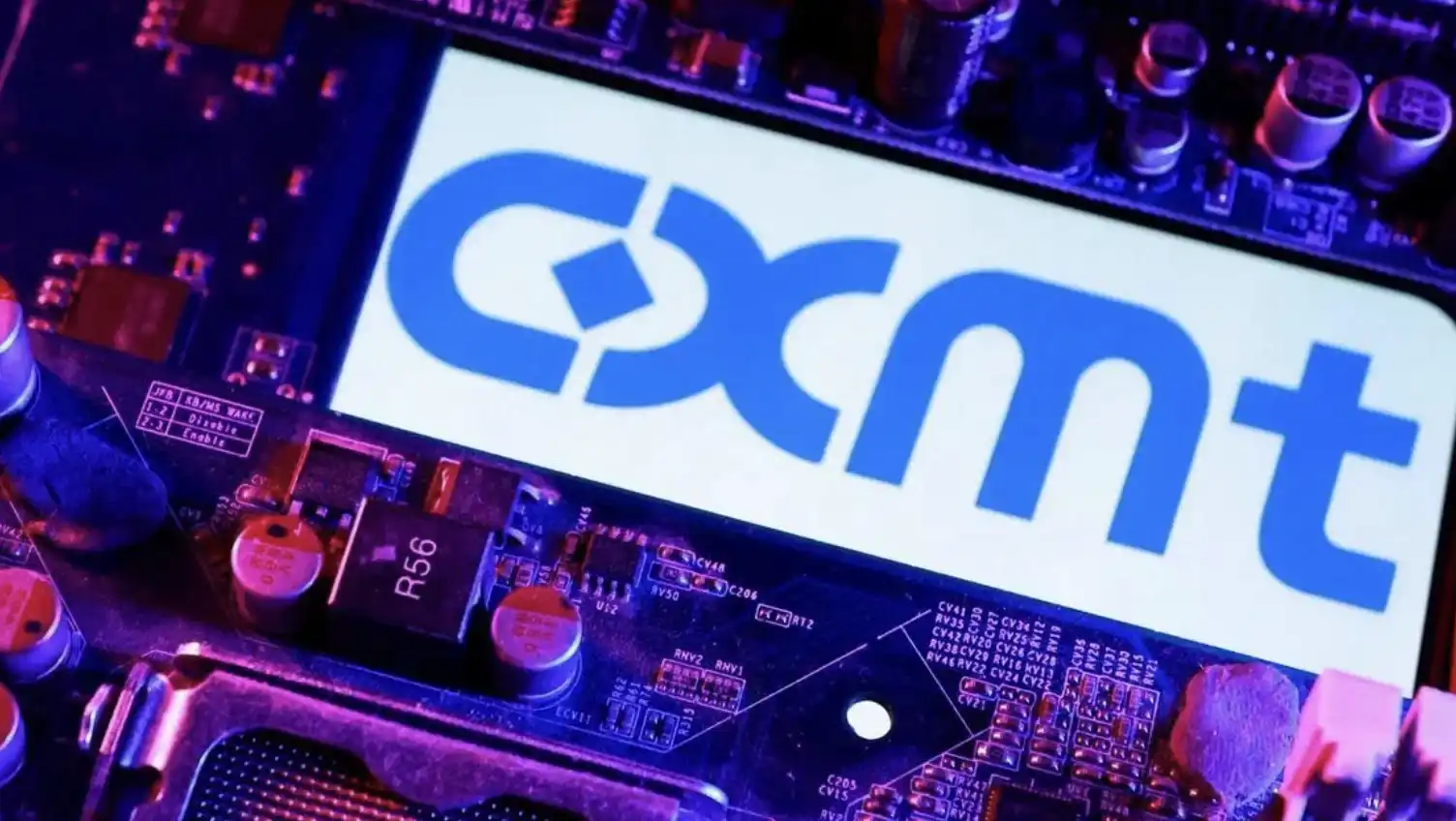
Hyperliquid Pre-IPO Contract Priced at $7.2 for CXMT, Foreign Capital Intervenes in Chinese Storage Narrative via DeFi

On the eve of Changxin Technologies' (CXMT) highly anticipated STAR Market IPO, a novel DeFi platform is enabling a pre-market price discovery. Trade.xyz has deployed a CXMT perpetual contract on the Hyperliquid blockchain, currently trading around $7.2 USDC (implying a market cap of ~$482B). This marks the first time such a "pre-IPO" derivative has targeted a Chinese A-share company. The article highlights several key drivers: overseas investors, restricted by China's 500,000 yuan (~$69,000) STAR Market access threshold, are using this contract as a direct entry point to bet on the "China storage substitution" narrative. Changxin, the world's fourth-largest DRAM supplier, is seen as a major beneficiary of the current AI-driven memory chip shortage. Furthermore, the 24/7, leveraged, and shortable nature of the perpetual contract contrasts with A-shares' T+1 settlement and lack of short-selling mechanisms for such stocks, potentially offering a hedging tool. While the $3.5 trillion implied valuation aligns with optimistic analyst projections, the article notes a critical divergence from similar contracts for U.S. listings like SpaceX: due to capital controls, direct arbitrage between the A-share and the on-chain contract is virtually impossible, meaning a price gap may persist. Nonetheless, the very existence of this parallel market underscores intense global investor interest in China's semiconductor rise, complementing the landmark IPO itself, which aims to raise up to $92 billion.

marsbit07/16 00:22

Hyperliquid Pre-IPO Contract Priced at $7.2 for CXMT, Foreign Capital Intervenes in Chinese Storage Narrative via DeFi

marsbit07/16 00:22

The United States Finally Gets Perpetual Futures Contracts

The U.S. has finally entered the era of regulated perpetual futures contracts, a transformative development for the crypto derivatives market. On May 29, the CFTC approved Kalshi to list the first-ever regulated Bitcoin perpetual futures contract in the U.S. and allowed Coinbase to route its customers to global perpetual and options trading via Deribit. This approval acknowledges the critical role of perpetuals, which have grown to a staggering $90 trillion in annual trading volume, surpassing the combined GDP of the world's ten largest economies. Perpetual contracts, pioneered by BitMEX in 2016, eliminate expiration dates and use a funding rate mechanism to track the underlying asset's price, offering traders efficient, high-leverage exposure without the need for periodic rollovers. While this legitimizes the product category dominated by offshore and decentralized exchanges like Hyperliquid, U.S.-regulated offerings remain distinct. They are limited to Bitcoin, offer lower leverage caps (around 10x vs. 50-100x offshore), and provide CFTC-mandated protections. This creates separate markets for regulated U.S. institutions and the global, high-leverage retail traders. The significance extends far beyond crypto. Perpetuals are rapidly expanding to trade a wide array of assets like commodities (silver, oil), equities (Nvidia, Tesla), and even prediction markets. Their 24/7, digital-native structure challenges traditional time-bound derivatives. Hyperliquid, a leading decentralized exchange, exemplifies this shift, with daily volumes sometimes exceeding Bitcoin for assets like silver and attracting attention from traditional financial giants like ICE. This regulatory shift intensifies competition, potentially compressing fees and profits for established players like Coinbase as traders seek lower-cost venues. While perpetuals won't fully replace options or traditional futures—which offer unique risk profiles—they represent a superior, more economical vehicle for the vast majority of purely directional, leveraged trading activity. The $90 trillion annual volume is a testament to their overwhelming success and enduring appeal.

marsbit06/10 08:45

The United States Finally Gets Perpetual Futures Contracts

marsbit06/10 08:45

活动图片