# Пов'язані статті щодо Binary Options

Центр новин HTX надає останні статті та поглиблений аналіз на тему "Binary Options", що охоплює ринкові тренди, оновлення проєктів, технологічні розробки та регуляторну політику в криптоіндустрії.

Tiger Research: Zuckerberg Begins Betting on Prediction Markets, While Asian Nations Still View Them as Gambling

This article examines the rise of prediction markets, contrasting their growing institutional acceptance in the West with their restrictive regulation in Asia. It details how prediction markets, which originated from informal political betting and academic experiments like the Iowa Electronic Market, aggregate crowd wisdom into probabilistic prices through binary contracts. Their growth accelerated around 2020, reaching over $14 billion in monthly volume. A key driver is the "skin in the game" principle, where users risk their own capital, leading to high accuracy in predicting events like Fed rate decisions and elections, as demonstrated by platforms like Polymarket. Meta's entry, with Mark Zuckerberg reportedly leading the development of the Arena app, signals the market's maturation. In the U.S., court rulings have distinguished prediction markets from gambling, facilitating entry by traditional financial institutions. However, most Asian jurisdictions still classify them as gambling, focusing on social control rather than financial innovation. The article argues this stance creates three problems for Asia: 1) regulatory arbitrage pushes users to riskier offshore platforms, 2) loss of sovereign information infrastructure as valuable social sentiment data accumulates abroad, and 3) abandonment of user protection. It concludes that Asia needs a policy shift from prohibition to constructive regulation, integrating these markets into the formal system to harness their data as a national asset, as initiatives like Limitless Research are beginning to do.

marsbit07/11 10:43

Tiger Research: Zuckerberg Begins Betting on Prediction Markets, While Asian Nations Still View Them as Gambling

marsbit07/11 10:43

Zuckerberg Begins Betting on Prediction Markets, While Asian Countries Still View Them as Gambling

Mark Zuckerberg is backing prediction markets, with Meta developing its own app "Arena," signaling major tech validation. This industry now sees over $14 billion in monthly volume. These markets function as binary contracts (payout $1 if an event occurs, $0 if not), with trading prices reflecting real-time event probabilities. Results are settled by oracles. Prediction markets originated from informal political betting and academic experiments like the Iowa Electronic Markets. Their core mechanism relies on "skin in the game"—participants risk their own money, making aggregated information more reliable than polls or expert opinions. They have proven accurate in forecasting areas like monetary policy, elections, and market events. While Western markets are integrating them into regulated financial systems, many Asian jurisdictions still classify them as gambling, leading to regulatory divergence. This stance creates three major issues for Asia: regulatory arbitrage and capital outflow, loss of informational sovereignty as valuable social data accumulates offshore, and a lack of user protection within a formal framework. The article argues that Asia's focus should shift from blocking these markets to responsibly harnessing the data they generate within a regulated system. The current avoidance of discussion cedes leadership and advantages to foreign entities.

Foresight News07/09 11:47

Zuckerberg Begins Betting on Prediction Markets, While Asian Countries Still View Them as Gambling

Foresight News07/09 11:47

How Much Money Has Kalshi Actually Made? Deconstructing the Prediction Market Business Behind 200 Million Trades

In this analysis of Kalshi, a leading prediction market platform, the author examines its business model, transaction data, and regulatory landscape. By accessing Kalshi’s public API, the study reveals that the platform has processed over 203 million transactions with a total volume exceeding $41.7 billion. More than 82% of this volume comes from sports betting, positioning Kalshi as a de facto sports gambling platform accessible to users as young as 18. The platform operates a central limit order book (CLOB) where users trade binary contracts that settle at either $1 (if the event occurs) or $0 (if it does not). Kalshi generates revenue through a variable fee structure: Takers pay a fee based on the formula 0.07 × C × P × (1-P), where C is the number of contracts and P is the price, while Makers pay a quarter of that rate. Total fee income amounts to $545.6 million. Kalshi ecosystem includes markets, events, and series, with major volumes driven by events like the 2024 U.S. presidential election and Super Bowl outcomes. The platform’s fee model is compared to traditional sportsbooks, highlighting how its variable structure adapts to implied probability. Regulatory oversight falls under the CFTC, though enforcement remains limited, creating a grey area that allows Kalshi to operate with fewer restrictions than conventional gambling platforms. The analysis also touches on market结算 practices, liquidity incentives, and the broader context of prediction markets, including competitors like Polymarket and regulatory cases such as PredictIt’s legal battle with the CFTC.

marsbit03/13 04:30

How Much Money Has Kalshi Actually Made? Deconstructing the Prediction Market Business Behind 200 Million Trades

marsbit03/13 04:30

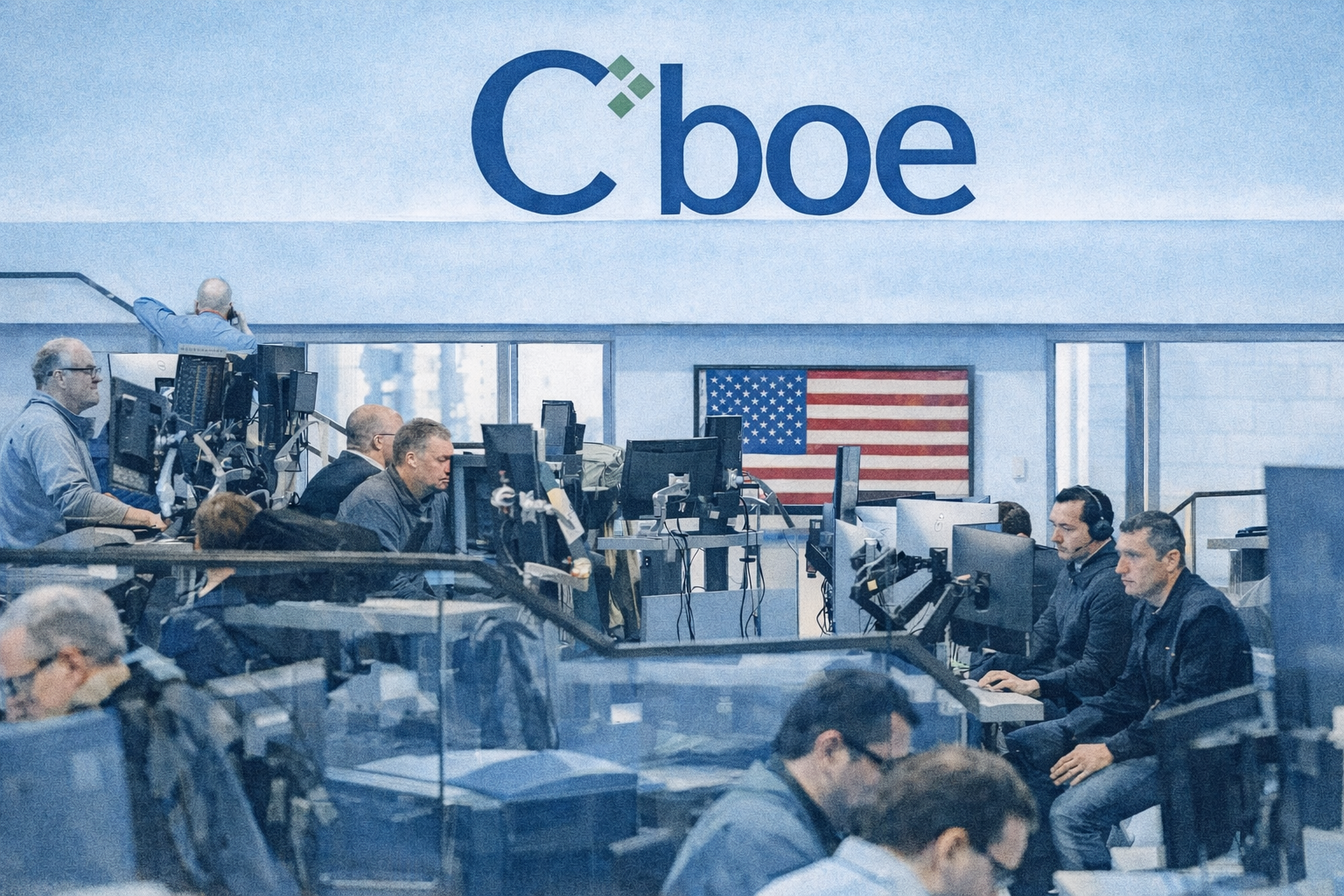
From Quiet Exit to Relaunch: Traditional Options Exchange Cboe Competes with Prediction Markets for Entry

Cboe Global Markets is considering reintroducing "all-or-nothing" binary options to attract retail investors, as prediction markets like Kalshi and Polymarket surge in popularity. These contracts offer fixed payouts if specific conditions are met, such as an index reaching a certain level, otherwise expiring worthless. Cboe had previously launched similar products tied to the S&P 500 and VIX in 2008 but failed due to low liquidity and limited retail participation at the time. The current move is driven by the explosive growth in event-based trading and retail derivative activity, fueled by mobile apps and social media. Unlike the earlier institutional-focused offering, the new binary options are explicitly targeted at散户, with simpler, event-driven contracts designed to compete directly with prediction markets. Cboe emphasizes strict regulatory oversight by the SEC or CFTC and clearing via the OCC to distinguish its products from unregulated platforms. This relaunch represents a strategic effort by traditional exchanges to reclaim retail interest in outcome-based trading, leveraging today’s mature distribution channels and heightened investor appetite for straightforward, short-term derivatives. Success hinges on delivering an intuitive, low-friction experience that can effectively rival prediction markets while operating within a clear regulatory framework.

marsbit02/05 06:27

From Quiet Exit to Relaunch: Traditional Options Exchange Cboe Competes with Prediction Markets for Entry

marsbit02/05 06:27

Prediction Markets: An Extended Form of Binary Options?

After observing prediction markets, it is increasingly evident that they share significant similarities with binary options. In many respects, prediction markets can be viewed as an extended form of binary options. Both utilize binary (yes/no) contracts where the price fluctuates between 0 and 1, reflecting the market's consensus probability of an event occurring. For instance, a price of 0.7 indicates a perceived 70% likelihood. At expiration, the contract settles at 1 if the event occurs and 0 otherwise—mirroring the payoff structure of binary options. The core of both systems lies in forecasting binary outcomes and using market prices to estimate event probabilities. They aggregate collective intelligence, allow speculation, and enable risk management. However, differences exist: prediction markets cover a broader range of verifiable events (e.g., weather, elections, or box office results) with flexible timeframes, while binary options are primarily focused on short-term financial asset movements (e.g., stocks or currencies). Additionally, binary options are often more speculative and face stricter financial regulations in regions like the EU and the US. Prediction markets, though currently less regulated (especially in crypto), emphasize accuracy and may eventually come under regulatory scrutiny due to concerns like market manipulation. These distinctions could lead to divergent regulatory and developmental paths in the future.

marsbit12/22 12:05

Prediction Markets: An Extended Form of Binary Options?

marsbit12/22 12:05

活动图片