# Пов'язані статті щодо AI Boom

Центр новин HTX надає останні статті та поглиблений аналіз на тему "AI Boom", що охоплює ринкові тренди, оновлення проєктів, технологічні розробки та регуляторну політику в криптоіндустрії.

From Sand to Chips: Hefei's Semiconductor Alchemy

From Sand to Chips: Hefei's Semiconductor "Alchemy" On July 27, 2026, a memory chip maker from Hefei made history by surpassing the market capitalization of Industrial and Commercial Bank of China on its Shanghai Stock Exchange debut. This marks the culmination of Hefei's two-decade industrial transformation, often summarized in three strategic leaps: "Screen, Chip, Vehicle." The journey began in 2008 with a bold investment in BOE, establishing China's first 6th-generation LCD panel line. The second leap was the "Project 506" in 2016, which gave birth to ChangXin Memory Technologies (CXMT). With initial backing of 14.4 billion RMB from Hefei's state-owned investment platform, CXMT aimed to break into the global DRAM market, then over 95% controlled by three overseas giants. CXMT achieved a breakthrough in 2019 by producing China's first 8GB DDR4 DRAM chip, employing "generational leapfrog" R&D to catch up. After years of significant losses, the company turned profitable in 2025. A dramatic surge followed in 2026, driven by AI-driven demand and full capacity utilization, propelling CXMT to become the world's fourth-largest DRAM manufacturer. CXMT's success is not isolated. It anchors a dense, localized semiconductor ecosystem in Hefei. Within its vicinity are numerous supporting companies for equipment, materials, and packaging & testing. This cluster has fueled the regional economy, with Hefei's integrated circuit industry output growing over sevenfold between 2016 and 2025. The ripple effects extend beyond high-tech, revitalizing local communities with new businesses and services catering to the influx of workers. For individuals, Hefei offers competitive tech salaries at a significantly lower cost of living compared to major coastal cities, along with improved amenities and shorter commutes. Hefei's story demonstrates two decades of focused, long-term industrial policy, transforming the city from a provincial capital into a trillion-RMB GDP "Double Ten-Thousand" city (10 million people, 1 trillion RMB GDP). It shows how persistence in strategic sectors—turning sand into chips—can redefine a city's economic destiny.

marsbit07/28 08:26

From Sand to Chips: Hefei's Semiconductor Alchemy

marsbit07/28 08:26

How Long Will the Memory Boom Last?

"The semiconductor storage market is currently experiencing an unprecedented, explosive boom, primarily driven by DRAM and NAND flash. This growth, characterized by a near-vertical surge since 2024, is not due to a massive increase in shipment volume but rather an abnormal spike in prices—approximately a tenfold increase from 2025 to 2026 for both DRAM and NAND. This price surge stems from a severe supply-demand imbalance caused by massive capital investments from hyperscale data center operators (Amazon, Google, Microsoft, Meta) building AI data centers, which act like a "black hole" consuming high-performance memory, particularly HBM. This redirects production capacity away from consumer electronics (PCs, smartphones), creating critical shortages and driving up prices further. The AI-driven boom has rendered previous market forecasts obsolete, with the global semiconductor market now projected to exceed $1.5 trillion by 2026, largely propelled by memory and logic (including GPUs). However, historical analysis of the memory market reveals a consistent pattern: periods of positive annual growth have never lasted more than five consecutive years, inevitably followed by a downturn due to the "silicon cycle" of overinvestment and subsequent oversupply. Given that the current upswing began around 2023, history suggests a peak is likely by 2027-2028. Furthermore, the higher the peak, the deeper the subsequent trough. The current 285% annual growth rate is a historical anomaly, implying the coming recession could be exceptionally severe. While memory manufacturers' stock prices and profits are currently soaring, the author urges the industry to prepare practically for the inevitable downturn while the boom continues."

链捕手07/14 14:50

How Long Will the Memory Boom Last?

链捕手07/14 14:50

Earning Six Figures and Still Struggling to Rent in San Francisco

A couple in San Francisco with a combined tech income over $360,000 struggled for months to find a one-bedroom apartment under $5,000 per month. Their story highlights how the AI wealth boom, driven by upcoming IPOs from companies like OpenAI and Anthropic, is dramatically escalating the city's cost of living. Even six-figure salaries are becoming insufficient for a comfortable lifestyle. The article details the financial reality for tech workers earning around $180,000 annually. After taxes, retirement contributions, and healthcare, take-home pay is roughly $7,000 per month. With average rents exceeding $3,800 and one-bedrooms often costing $4,500-$5,200, discretionary income shrinks to $1,500-$2,500. This contrasts sharply with reported median total compensations of $640,000 at OpenAI and $420,000 at Anthropic. The AI gold rush is identified as the primary driver. The scale of potential wealth from these IPOs, far surpassing previous tech booms, is flooding the housing market. Data shows San Francisco's average rent is now the highest in the U.S., with vacancy rates in desirable neighborhoods plummeting to around 3%. The overall cost of living is 65.6% above the national average. The piece features multiple professionals, including a 25-year-old with a $250,000 salary, facing housing instability, fierce competition for rentals, and a persistent, low-grade financial anxiety despite high earnings. It concludes that the rapid concentration of AI wealth is redefining what constitutes a "high salary" in San Francisco, pushing out mid-tier tech talent and creating a stark divide between those in the AI sector and everyone else.

marsbit06/30 10:23

Earning Six Figures and Still Struggling to Rent in San Francisco

marsbit06/30 10:23

Earning 1000 Trillion in Half a Year, 'Pocketing' 20 Million per Capita: This Round of Wealth Creation in the Korean Stock Market is Unprecedented in Scale

The South Korean stock market is experiencing an unprecedented wealth surge in 2026, with household equity and fund asset values soaring by over 1,000 trillion KRW (~$730bn) year-to-date. This translates to an average per capita wealth increase of roughly 20 million KRW, fueled by a historic 109% rally in the KOSPI index. The boom is driven by three converging forces: an AI-driven semiconductor supercycle boosting giants like Samsung and SK Hynix; the government's "Value-Up" market reforms addressing long-standing corporate governance issues; and aggressive real estate regulations that have locked capital within financial markets, preventing profits from flowing back into property. This has triggered a wealth effect, boosting high-end consumption significantly. However, the gains are highly concentrated. The two semiconductor behemoths account for over half the index's value, but retail investors own relatively low stakes in them, systematically missing the biggest rallies. Wealth and consumption benefits are skewed towards luxury goods and imported cars, bypassing mainstream retail. Further risks stem from excessive leverage, with high trading volume in leveraged ETFs, and a market sentiment heavily reliant on the AI sector's fortunes and speculative rumors. While this cycle marks a potential shift from real estate to equities as a primary wealth generator for Koreans, its sustainability, amid structural imbalances and leverage, remains a critical test.

marsbit06/05 06:53

Earning 1000 Trillion in Half a Year, 'Pocketing' 20 Million per Capita: This Round of Wealth Creation in the Korean Stock Market is Unprecedented in Scale

marsbit06/05 06:53

Samsung Leverages Technology Cycles, SK Hynix Relies on HBM, What Enabled Micron to Win a Trillion-Dollar Market Cap?

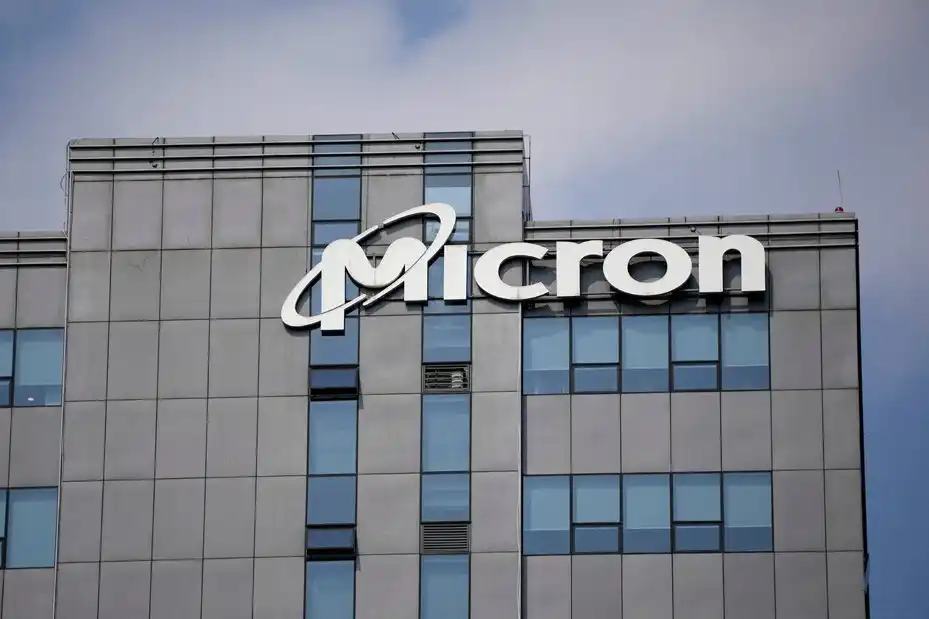
Micron Technology, the Idaho-based memory chip maker, recently saw its market cap surpass $1 trillion, securing its position as one of the top three DRAM manufacturers alongside Samsung and SK Hynix. Its survival and growth story is marked by a unique combination of political maneuvering and hard-won manufacturing efficiency, but also strategic missteps that now challenge its future. Founded in 1978 in Boise without significant government or capital backing, Micron repeatedly turned to Washington for survival during critical junctures. In the 1980s, it filed anti-dumping complaints against Japanese firms, leading to the U.S.-Japan Semiconductor Agreement. Ironically, this created an opening for Samsung, which Micron had earlier licensed its 64K DRAM technology to. In 2002, Micron avoided heavy fines in a price-fixing investigation by acting as a whistleblower against its competitors, cementing its reputation as a "political opportunist." A major strategic error occurred in 2013 with its $2.5 billion acquisition of bankrupt Japanese firm Elpida. This deal burdened Micron with integrating incompatible manufacturing processes just as the industry was pivoting toward HBM (High Bandwidth Memory), a critical technology for AI. SK Hynix had launched its first HBM chip that same year. By the time AI demand exploded with ChatGPT in 2022, SK Hynix commanded about 85% of the HBM3 market, while Micron, playing catch-up, held only around 3%. In 2017, Micron employed similar tactics against a new competitor, Chinese startup Fujian Jinhua, by alleging intellectual property theft, which led to U.S. sanctions effectively crippling the firm. However, this strategy backfired in 2023 when China banned Micron's products from its critical infrastructure, causing its revenue share from China to plummet from 14% in FY2023 to just 7.1% by FY2025. Today, Micron faces a triple squeeze: it lags in the high-margin HBM race, faces pricing pressure in low-end DRAM from Chinese manufacturers like CXMT, and has lost crucial access to the booming Chinese AI server market. Despite its political strategies, Micron's core strength is its exceptional manufacturing cost control, achieved through decades of engineering. Its DRAM chips have a smaller cell area than its rivals, yielding more chips per wafer. This efficiency has been vital for weathering industry downturns. However, this advantage cannot compensate for the decade lost in HBM development. Micron is now racing to ramp up production of its HBM3E, certified by NVIDIA, and develop HBM4. Its future hinges on whether it can close this technological "time debt" through relentless R&D and execution, in a marathon where its competitors, having started earlier, are not slowing down.

marsbit05/28 07:28
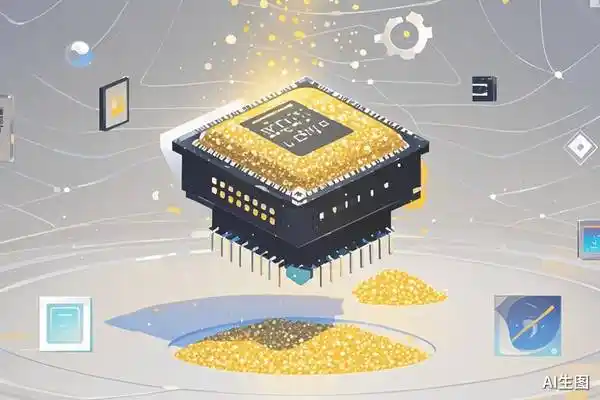
Samsung Leverages Technology Cycles, SK Hynix Relies on HBM, What Enabled Micron to Win a Trillion-Dollar Market Cap?

marsbit05/28 07:28

“Why Didn’t You Buy 2x Long SK Hynix?”

The article discusses the immense popularity of the "2x Long SK Hynix ETF" (07709.HK) in Hong Kong, which became the world's largest single-stock leveraged ETF by May 2026. Launched in October 2025, the ETF's net value soared over 1000% in seven months, significantly outperforming the 324% gain of SK Hynix's underlying stock, driven by the AI boom and a critical shift in industry demand from computing power to memory. It highlights the mechanics and risks of daily-rebalanced leveraged ETFs. In a smooth bullish market, they generate amplified returns, but during volatile periods—exemplified by market swings during geopolitical tensions in the Strait of Hormuz in March-April 2026—they suffer severe "volatility decay," where choppy price action can cause losses far exceeding twice the drop of the underlying asset. The piece frames SK Hynix, as NVIDIA's primary HBM supplier, within the classic cycle of the memory chip industry—a commoditized sector prone to boom-and-bust cycles of shortage, price hikes, overcapacity, and crashes. While current AI-driven demand and high margins (Q1 2026毛利率~79%) create a "super cycle," the article questions its sustainability. It warns that extreme profits will inevitably tempt competitors like Samsung and Micron to ramp up HBM production, potentially eroding scarcity. Furthermore, the entire narrative remains tethered to the massive AI capital expenditure of tech giants. In conclusion, the ETF's trajectory symbolizes the accelerated, all-in nature of the current AI revolution, where timeframes are compressed and market moves are extreme. However, it also underscores that while industry trends define ultimate returns, macro-geopolitical risks dictate the volatile and uncertain path to get there.

marsbit05/16 05:06

“Why Didn’t You Buy 2x Long SK Hynix?”

marsbit05/16 05:06

活动图片