Michael Saylor's company, Strategy, sold 1,638 bitcoins — its second-largest sale volume this year. The proceeds were used to pay dividends on its preferred stock, STRC, and to repurchase those same shares from the market.
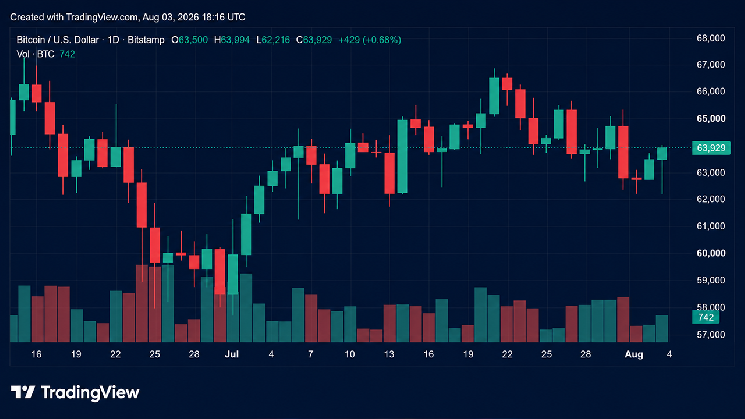
According to an 8-K form filed with the Securities and Exchange Commission (SEC), the bitcoins were sold between July 27 and August 2 at an average price of $63,957 per coin. The total transaction amounted to $104.7 million. Of this amount, $52.4 million was allocated for dividend payments to STRC holders, and another $52.3 million was used for the buyback of the preferred shares themselves.
After the sale, the company still holds 842,138 BTC, with a total purchase cost estimated at $63.5 billion.
Dollar Reserve Grows to $4 Billion
In addition to selling bitcoin, Strategy raised $290.6 million through an offering of MSTR shares. Of this amount, $250 million was used to replenish its dollar reserve, which reached $4 billion; another $28.9 million was allocated to repurchasing STRC; and $11.7 million remained on the company's balance sheet.
In a post on social media X, Saylor stated that the company repurchased $81.2 million worth of STRC shares and extended its dollar liquidity cushion by 57 days — it is now sufficient for 2.3 years.
During pre-market trading on August 3, STRC preferred shares traded at $89.40 — 10.6% below the target level of $100, according to Yahoo Finance data. MSTR shares also declined by 0.9% in pre-market trading on the same day, as indicated by exchange data.
Why the Company Uses This Scheme
STRC is one of the instruments through which Strategy finances its bitcoin purchases. Trading of the paper below par limits the company's ability to raise funds through STRC offerings. Furthermore, this may push Strategy to further increase the dividend rate to maintain buyer interest and support the share price closer to the target level.
Earlier, on June 24, CryptoQuant head Ki Young Ju stated that the company should pause bitcoin purchases and replenish its cash reserves after the dividend coverage ratio shrank from seven years to 14 months.
In an 8-K form filed on June 29, Strategy presented a new capital strategy that allows for the sale of bitcoin to fund dividends, increased the annual dividend rate on STRC to 12%, and reported that its dollar reserve at that time had grown to $2.55 billion.
The sale of 1,638 bitcoins marks Strategy's second-largest reduction of its reserve this year — while the company has preserved the main portion of its holdings, exceeding 842 thousand coins. At the same time, the company's dollar reserve is growing, and the repurchase of STRC continues, reflecting an attempt to keep the price of the preferred shares closer to par.
The performance of STRC and MSTR in the coming weeks will show how effective the chosen scheme of funding dividends through the sale of part of the bitcoin reserves is.
AI Perspective
From a macroeconomic analysis standpoint, the situation echoes an episode when Strategy's mNAV multiplier fell below one — a moment analysts have already compared to the dynamics of 2022, which preceded a rise in volatility. A technical aspect not covered in the article is STRC's dependence on the market's willingness to buy the paper above par: if the discount persists, the company will have to rely either on new MSTR offerings or further coin sales, not just on raising the dividend rate. Particular attention should be paid to the threshold outlined by analyst Willy Woo: according to his calculations, forced bitcoin sales would be required by Strategy only in the event of a significant and prolonged drop in the stock's market capitalization. For now, the current deal appears more as a targeted balance sheet adjustment rather than a sign of reserve depletion.
The question is different: how long will the market tolerate the discount of STRC to par before it affects the company's ability to attract new capital?