"Total investment of 1.6 billion yuan, PUE as low as 1.15, over 95% direct green power supply, saving 61 million kWh of electricity annually. The world's first offshore wind power direct-connected subsea data center begins operations in the East China Sea off Shanghai's Lingang."
The year is 2026. Everyone's happily using AI, but the people building computing power centers are going crazy. The demand for computing power is skyrocketing too fast, and cooling and power supply can't keep up. The industry has reached a stage where imagination is key. Some time ago, there was even talk of the concept of space-based computing power—launching data centers into outer space. And now, someone has actually thrown servers into the sea.
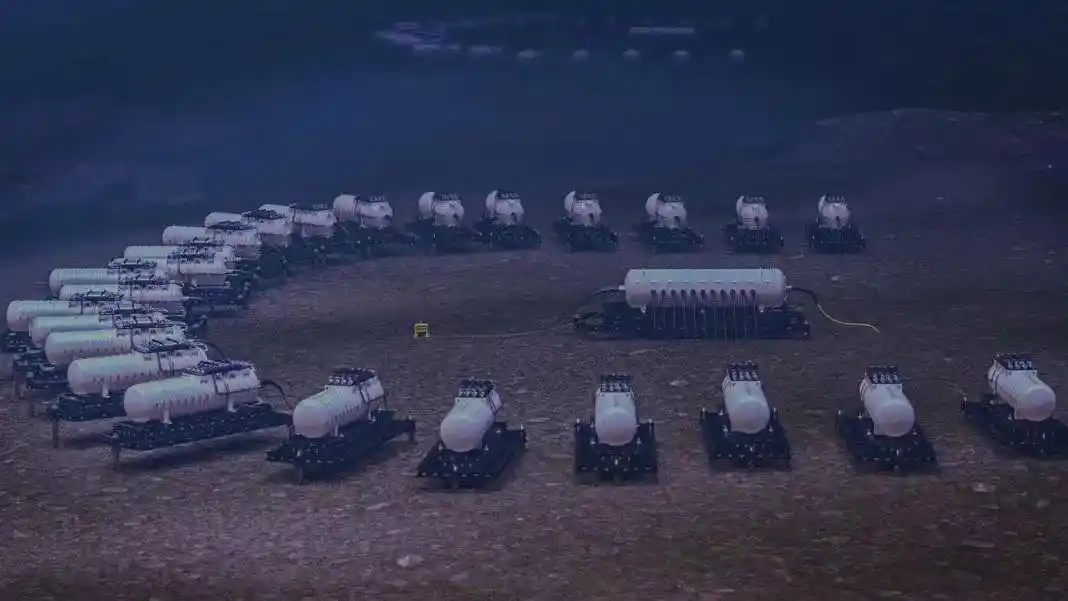
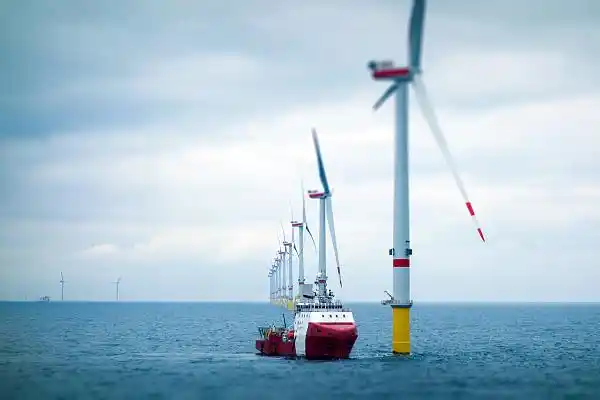
This isn't some futuristic concept we're introducing. It's already happened—an investment of 1.6 billion yuan, throwing over 2000 servers into the sea. Right now, in the East China Sea off Shanghai's Lingang, east of Xiaoyangshan Island, 10 meters underwater beneath an offshore platform, 192 cabinets are packed into a four-level underwater data hall, running computing power non-stop. The whole structure weighs 1950 tons, roughly equivalent to 1300 family cars. About 500 meters away, over 50 wind turbines are spinning, with wind power fed directly in—the green power supply rate exceeds 95%.
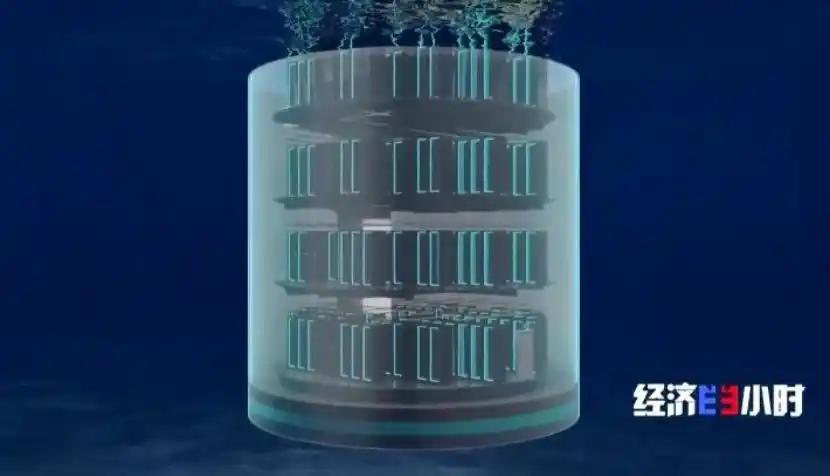
Let's look at a few figures first. PUE (Power Usage Effectiveness, a data center energy efficiency metric, closer to 1 is better): this subsea data center is 1.15 (this number is impressive, we'll come back to it later). The national average is 1.48. Freshwater consumption: Zero. Land area: 200 square meters. A land-based facility of the same scale would need 2000 square meters. After full-scale operation, it is expected to save 61 million kWh of electricity annually.
In other words, dunking servers in the sea not only didn't ruin them but also made them more energy-efficient, water-saving, land-saving, and even lowered the failure rate compared to being on land.
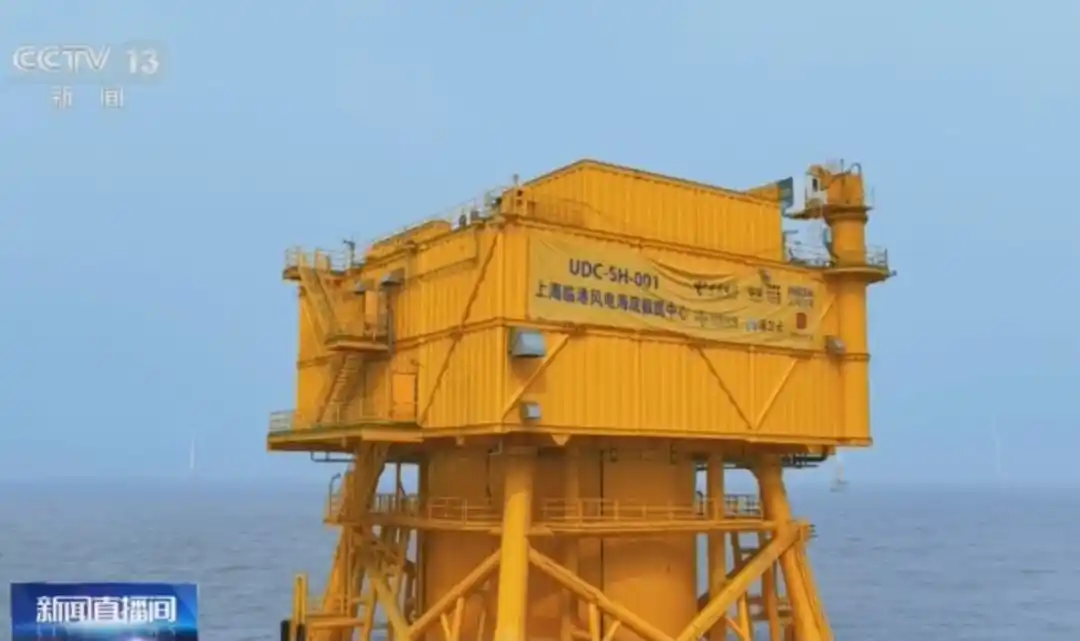
Recently, CCTV broadcast this news. After watching it, I dug into the backstory and found it far more interesting than what was reported.
Looking back, this is a path that has been explored and validated for years. Repeated verification was needed to ultimately ensure computing power could be safely thrown into the water. Looking forward, the grand endeavors of computing power centers and green energy happen to converge on this path—a major strategic move taking a crucial step.
It's worth telling from the beginning.
01: Why on Earth Sink Servers into the Sea?
Data centers can be complex or simple. Simplifying it, they need to solve two core problems: power supply and cooling.
Everyone knows servers need electricity. But many don't realize that the electricity used to cool servers might be almost as much as what the servers themselves consume.
The industry has a core metric for measuring data center energy efficiency called PUE, Power Usage Effectiveness. The calculation is straightforward: the total electricity used by the entire data center divided by the electricity used by IT equipment (servers, storage, networking). If the PUE is 2, it means for every 1 kWh the server burns to compute, the air conditioning and other supporting facilities burn another 1 kWh to cool it and keep it running.
Ideally, PUE should be 1, meaning all electricity goes into computing, with none wasted on cooling. But in reality, it can never reach 1, only approach it infinitely.
The average PUE for data centers across China is roughly 1.48. In other words, for every 3 kWh of electricity burned in Chinese data centers, about 1 kWh is used for air conditioning.
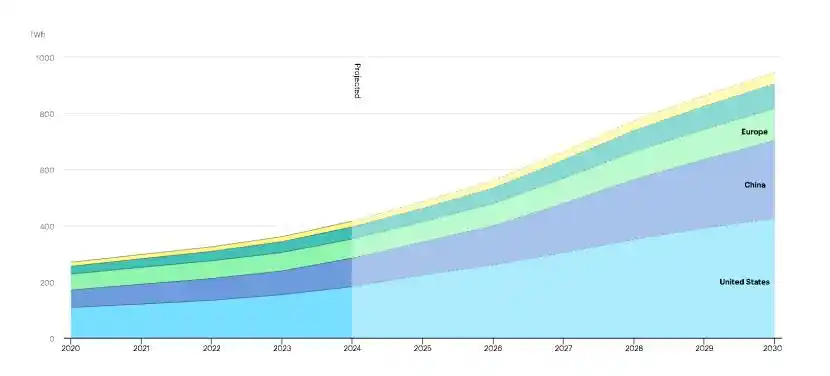
In 2024, global data center electricity consumption was approximately 415 terawatt-hours, accounting for 1.5% of total global electricity use. The IEA (International Energy Agency) predicts this number will more than double to 945 TWh by 2030. And that's just the energy consumption of traditional data centers. With the advent of AI, things have gotten even more exaggerated.
A standard CPU server used to consume about 300 watts. Replaced by a GPU server for AI training, the same rack might consume 3000 watts—a tenfold increase. The IEA report states that electricity consumption for AI-specific servers is expected to grow by 30% annually.
Someone with 20 years in the data center industry gave me a vivid picture: For an office building, the air conditioning units on the roof are sufficient for the whole building. But if you convert that building into a data center, cooling requirements increase exponentially. The area occupied by air conditioning and power equipment could even surpass that of the servers themselves. Eventually, filling the roof and the square below with AC outdoor units might still not be enough to dissipate the heat.
That's why the global data center industry has been pondering the same thing for years: how to find cheaper cooling sources. The answers are surprisingly consistent: go to nature.
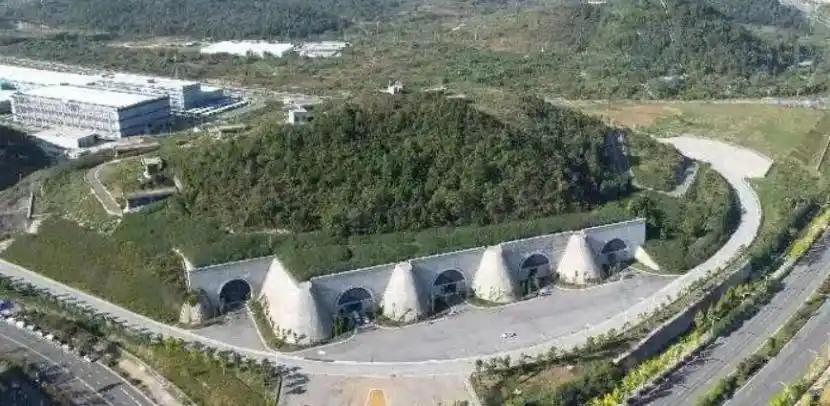
Facebook once tried building data centers in high-latitude North America, as close to the Arctic Circle as possible, leveraging naturally low temperatures. A few years ago, Tencent built a data center inside a cave in Guizhou, where temperatures are constant year-round. In this matter, the primary siting criterion for big companies isn't transportation or talent; it's wherever it's cool.
China's "East Data West Computing" project follows the same logic: building data centers in Inner Mongolia, Guizhou, Gansu, etc. The west has electricity—cheap coal power and abundant new energy; the weather is cold—places like Ulanqab are below zero most of the year, offering strong natural cooling. The eight computing hubs and ten data center clusters essentially chase cheap electricity and free cooling westward.
But what about eastern cities?
Places like Shanghai, Shenzhen, and Beijing are precisely where computing power demand is strongest. Financial transactions, AI inference, cross-border data processing—many services are extremely latency-sensitive. Data can't always be routed to a cave 2000 kilometers away in Guizhou, computed, and sent back. Yet these cities happen to have the most expensive land, the tightest energy consumption quotas, and scorching hot summers.
Hence, the sea.
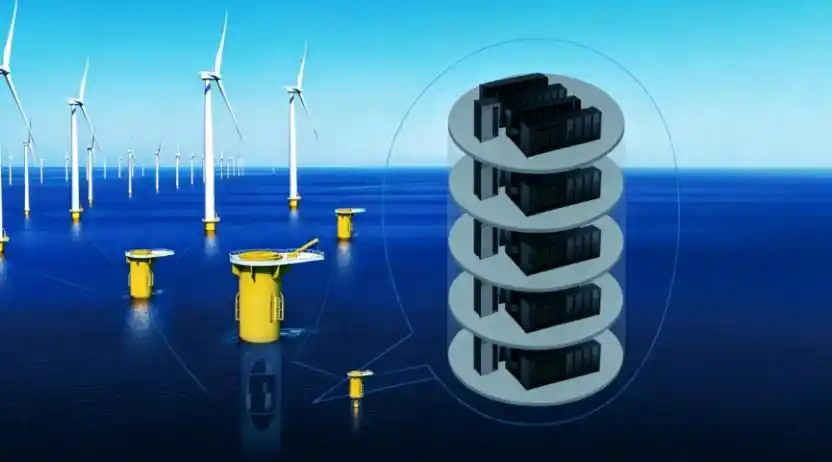
Seawater has an average annual temperature of only about 15 degrees Celsius, with extremely strong fluidity, offering cooling capacity dozens of times greater than lake water. Moreover, offshore wind power is undergoing large-scale construction, placing electricity right next door. Cooling source and power source—the two things data centers need most—are both available offshore.
Logically speaking, sinking servers into the sea is actually the most natural answer.
02: How Many Steps to Get Computing Power into the Sea?
Putting data centers on the seabed wasn't a Chinese idea first.
In 2015, Microsoft launched a project called Project Natick. The first experiment was quite simple: throw one down and see if it breaks. They sank a cylindrical sealed capsule about 2.4 meters in diameter to the Pacific seabed, containing servers, and ran it for 105 days to see if servers would actually work underwater.
The conclusion: yes.
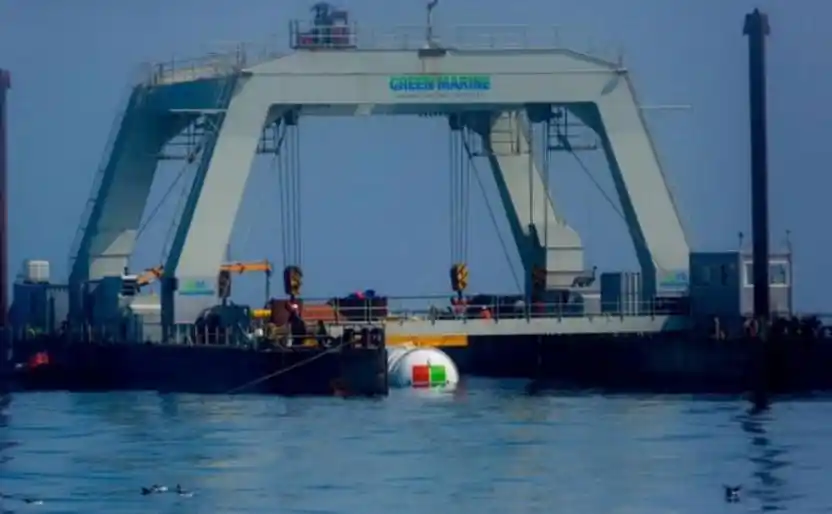
In 2018, Microsoft moved to a second round with a formal deployment. Off the coast of Scotland's Orkney Islands, they sank a sealed container holding 864 servers to about 35 meters deep in the North Sea. Powered by local tidal and wind energy, cooled naturally by seawater, and then left alone.
Two years later, in 2020, Microsoft retrieved the unit from the seabed. Upon opening it, the data was astonishing.
Of the 800-plus underwater servers, only 6 had failed—a failure rate of about 0.7%. Meanwhile, Microsoft had a control group on land—135 servers running for the same two years. Eight failed, a failure rate of nearly 6%. The underwater failure rate was about one-eighth of that on land.
This was a counterintuitive result. Microsoft's explanation: The sealed capsule was filled with dry nitrogen—no oxygen, no humidity, no dust, no vibrations or temperature fluctuations from people entering and leaving. The servers operated in an almost sterile environment, significantly slowing hardware aging.
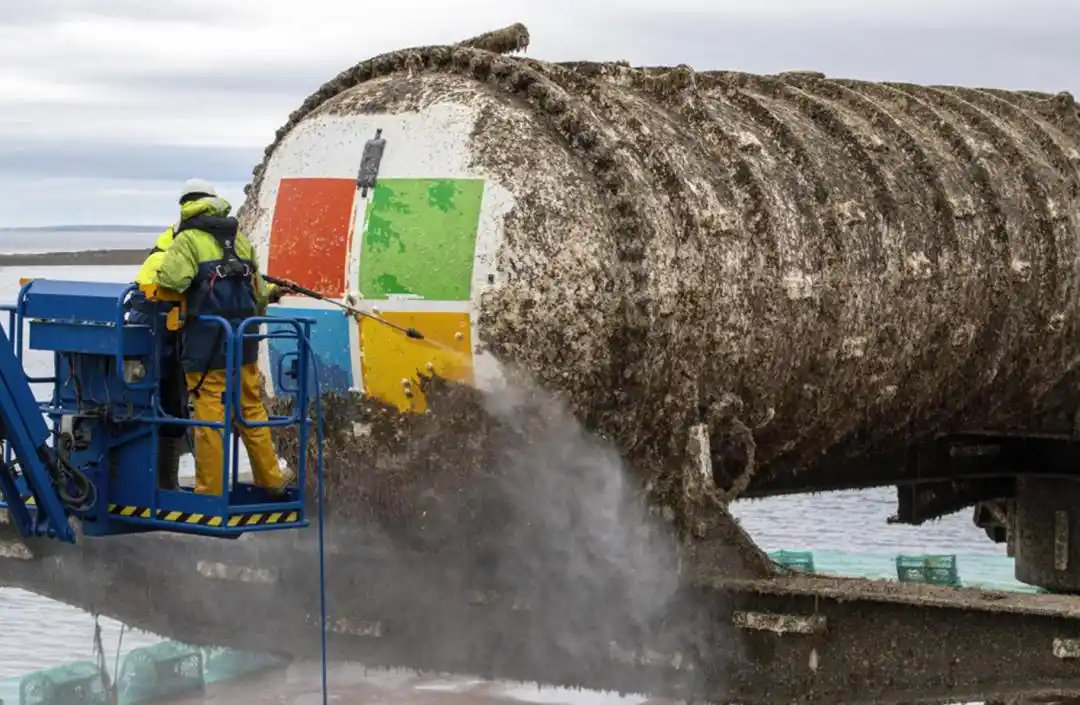
No one touching, no one looking, no dust, no one opening the door and walking in—instead, nothing went wrong. A place completely devoid of humans might just be the servers' ideal working environment.
Microsoft's experiment proved one thing: seabed cooling is feasible. What followed next was done by the Chinese.
In 2020, Hi-Target, a domestic listed company specializing in marine equipment, acquired a Canadian deep-sea equipment team. This team had previously been involved in the engineering work for Microsoft's Natick project. More importantly, they had over 20 years of experience in deep-sea fields. The know-how accumulated through that experience was crucial: what microorganisms grow where, the flow and geological conditions of different sea areas, how to design joints to last 20 years underwater without problems.
With this technical foundation, the first commercial subsea data center landed in Hainan.
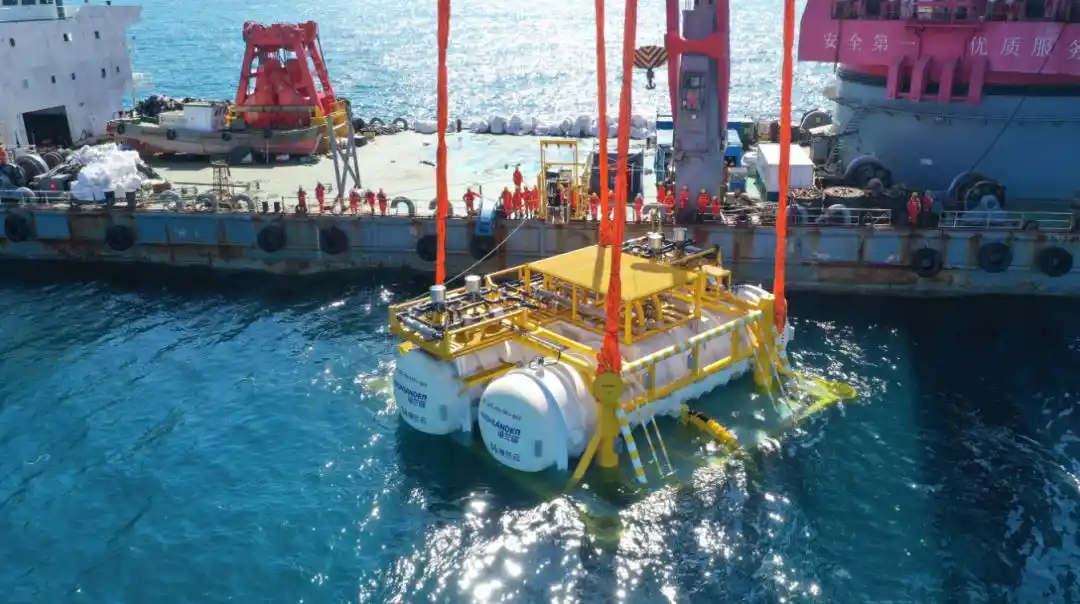
Located in Lingshui's Qingshui Bay, Hainan, about 3 kilometers offshore at a depth of 40 meters. The design involved sinking a sealed canister to the seabed, connected to an onshore control station via submarine cable, using natural seawater cooling. Trial operations began in 2022.
After running for over three years, several key figures emerged. PUE less than 1.2, far better than the national average of 1.48. Cooling energy consumption saved over 90%, meaning annual electricity savings of about 3 million kWh, freshwater savings of about 15,000 tons, and an onshore footprint of only 400-500 square meters—roughly one-fifth of a land-based facility of the same scale.
It might sound like moving data centers underwater solves everything, but it's far from that.
For the Hainan generation, the cooling source problem was solved, and costs were validated, but the power source remained a短板. Over 70% of Hainan's grid relies on thermal power. The subsea data center uses municipal power from shore, requiring a submarine cable costing tens of millions of yuan. Daily operating costs are indeed low, but factoring in the heavy upfront capital investment during construction, the economics weren't great. Moreover, relying on thermal power wasn't green enough in the long run.
How to secure both cooling source and power source simultaneously? That's where the next step, Shanghai, comes in.
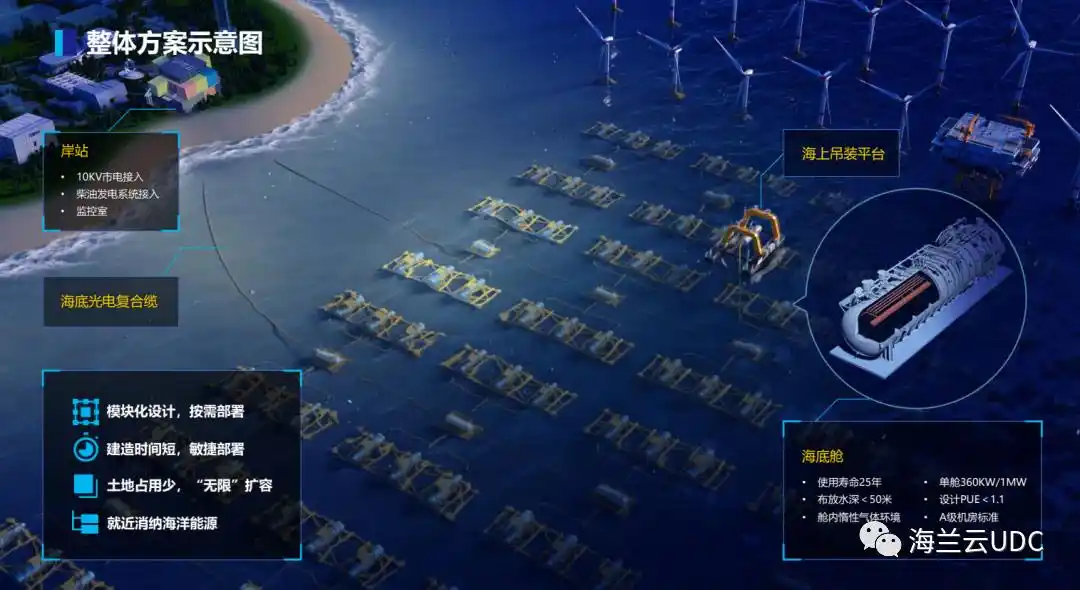
The Shanghai project follows a completely different approach: Located in the East China Sea off Lingang, east of Xiaoyangshan Island, just 500 meters from an existing 200-megawatt offshore wind farm. Wind power is directly fed into the data center via submarine cable, bypassing the land grid entirely, using genuine green power. Both cooling source and power source are finally solved together.
The crucial change lies in the cost structure. The Hainan generation required building its own shore station, laying cables, pulling networks—these infrastructure components accounted for a large proportion of the total investment. For the Shanghai generation, the shore station, cables, network, even some electrical equipment already existed at the wind farm site and were directly repurposed. This alone reduced investment by tens of percent.
The reason this journey took so long involves difficulties beyond technology, because this is something almost no one has done before, requiring the establishment of many standards from scratch.
First, environmental protection. A little-known fact: environmental standards for marine projects are much stricter than on land.
When you put a continuously heat-emitting object in the sea, effective heat dissipation is called cooling; ineffective dissipation turns it into an underwater heater. Someone previously tried using lake water to cool a data center, pumping cold lake water up for cooling and discharging it back. The result was a rise in lake temperature. While it didn't boil the fish, fish growth rates noticeably accelerated, disrupting the ecological balance—environmental standards were not met.


Marine standards are even stricter. Practitioners tell us that on this detail, environmental regulations require that the seawater temperature change around the data center (roughly within 1 meter) cannot exceed 0.1 degrees Celsius. 0.1 degrees—that precision is already demanding. But just meeting the standard isn't enough; you also need continuous monitoring capability and contingency plans for extreme situations. Not everyone possesses these capabilities.
Hailan Cloud, the company behind this project, is a subsidiary of Hi-Target, a listed company in the marine technology field. The parent company has years of experience in marine observation, subsea equipment, and maritime communications. If a company without marine engineering background attempted this, they might be stuck at the environmental hurdle alone.
Then there's the server side. Those willing to throw expensive servers into the water must truly trust the solution. This equipment isn't cheap; ruining it would be genuinely painful. Moreover, such projects inherently require every hardware component to be highly reliable. You can't expect to send someone down frequently to replace cards; it's very troublesome.
For various reasons, this project ultimately brought together major players from different fields across the chain. For instance, Shenergy, operating the wind farm, a major player in East China's energy sector; Shanghai Electric, the established industrial group, responsible for servers here; telecommunications handled by Shanghai Telecom, self-explanatory. In summary, marine engineering, energy supply, computing operations, server manufacturing—all assembled here. If one link fails, the whole endeavor falls apart.
03: Wind + Computing Power, How Big Is the Potential?
Looking further ahead, even the Shanghai project is just a beginning. What truly makes this path seem to have vast potential is its future integration with large-scale, far-offshore wind farms.
Shanghai is planning a deep-sea offshore wind farm with a total capacity of 4300 megawatts. Currently, a medium-to-large data center in Shanghai typically has a capacity around 20 megawatts. This means the generating capacity of this single wind farm could theoretically power over 200 medium-to-large data centers.
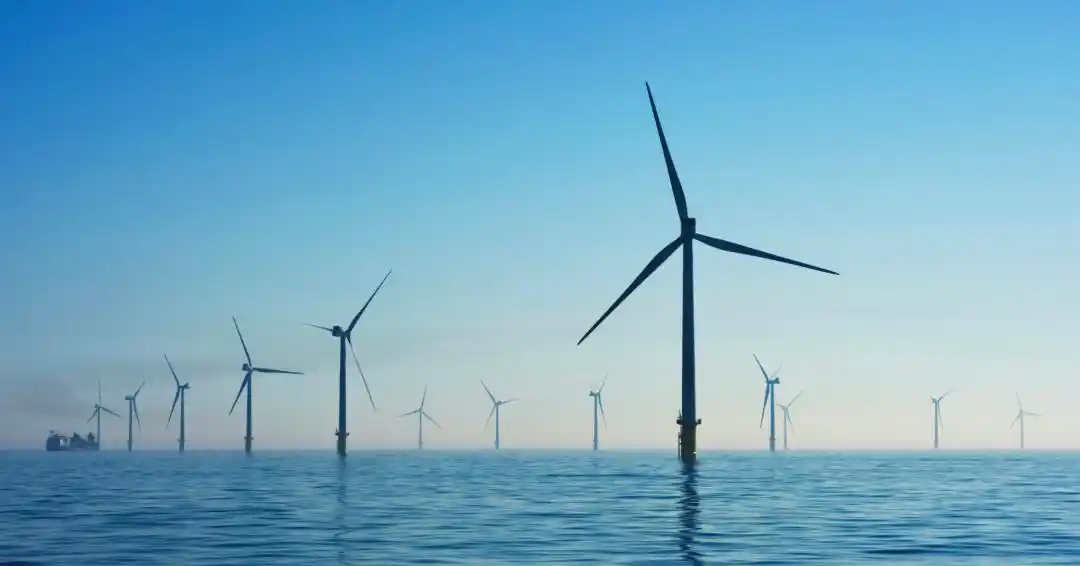
Of course, not all would go to data centers. But a relatively conservative proportion has been calculated: taking about 15% of the wind farm's maximum generating capacity is sufficient to supply a large-scale offshore computing cluster. What does 15% mean? Even when the minimum number of turbines are spinning, this portion of electricity is stable—no need for additional energy storage, no worry about fluctuations. It's the best kind of power.
Calculating based on this proportion, 15% of 4300 MW is approximately 600 MW. A 600 MW computing center, located offshore, directly supplied by green power, naturally cooled by seawater.
There's an important economic calculation here: Far-offshore wind farms are over a hundred kilometers from shore. Transmitting electricity from sea to land incurs transmission losses exceeding 10%. But computing power doesn't require transmitting electricity. Converting electricity directly into computing power at sea and sending the computed results back via fiber optics involves almost zero transmission loss. Electricity loss is over 10%, data loss is nearly zero. Both involve bringing something back from the sea; sending bits is far more economical than sending electrons.
Thinking even further. The foundation of an offshore wind turbine is called the tower or monopile—the large cylinder inserted into the seabed. Offshore wind turbines are getting bigger, with a single turbine's power increasing from 2-3 MW on land to 12 to 20 MW offshore. The tower diameter has also grown, now around 18 to 20 meters.
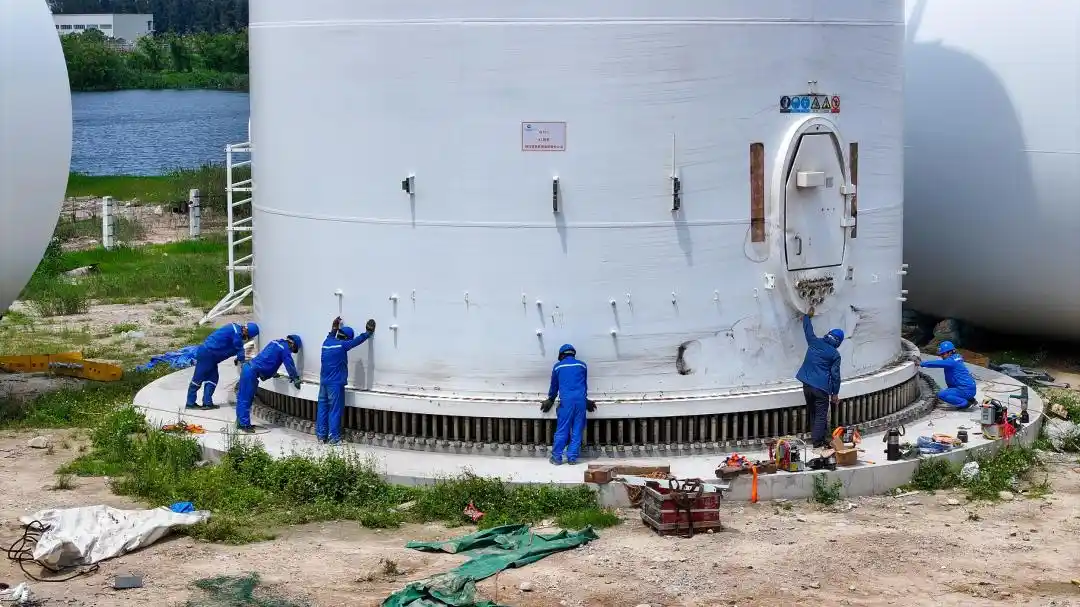
An 18 to 20 meter diameter cylinder, hollow inside, offers considerable space, but no one previously thought about what could be done inside.
What if, when constructing the wind farm, space was reserved inside to place servers? No need to build additional structures, lay extra cables. The wind farm's power supply facilities, submarine cables, network connections already exist. It's like building the server room while constructing the house.
Calculated this way, overall construction costs could drop by tens of percent compared to land-based facilities, not even counting electricity prices. If the cost of power consumed locally at the far-offshore site could be negotiated down to around three or four cents per kWh, overall operating costs could drop another notch.
A single wind turbine: blades spinning above generating electricity, servers running inside the column below. Each turbine scattered across the sea surface becomes a mini computing factory—no grid power, no freshwater, no human maintenance required. Perfect.
This sounds like science fiction, but the underlying logic holds at every step. Reaching this point, you realize the grand undertakings of energy and computing power interlock seamlessly. Wind power needs local consumption to improve economics; computing power needs cheap green electricity and free cooling. Two endeavors, originally on separate paths, converge at sea.
China has a significant advantage in pursuing this: offshore wind power. China possesses the world's largest installed offshore wind capacity, the lowest power generation costs, and the most mature construction supply chain. If anyone can pioneer the integration of computing centers with offshore wind, it's highly likely to be in China.
"East Data West Computing" goes west, chasing coal and cold. Now, someone is heading east, chasing wind and sea. Two routes, solving the same problem: letting computing power use the cheapest electricity and the freest cooling.
This article is from the WeChat public account "Cool Play Lab," author: Cool Play Lab