Silent Payments: A New Era of Bitcoin Privacy

marsbitОпубліковано о 2026-01-20Востаннє оновлено о 2026-01-20

Анотація

Silent Payments: A New Era for Bitcoin Privacy Silent Payments, as proposed in BIP 352, offer a method for receiving Bitcoin without revealing private information like balance or transaction history to anyone viewing a public address. This innovation addresses the privacy drawbacks of address reuse, a common practice that exposes all transaction details on the public blockchain. The concept, evolving from earlier ideas like "stealth addresses" and BIP 47, provides a more efficient and private solution. Unlike stealth addresses, which require adding data to the blockchain for every transaction, or BIP 47, which needs an initial on-chain notification transaction, Silent Payments generate a unique, one-time address for each payment using cryptographic techniques. This allows a single, reusable public address to be shared, while ensuring only the sender and receiver know the transaction details. For users, the process is simple: generate and share a Silent Payment code (e.g., as a QR code). The receiver's wallet must scan new Taproot transactions to detect payments, a process optimized for efficiency. The address structure uses bech32m encoding with an "sp1" prefix and contains two public keys to generate a Taproot script. Early adopters include Cake Wallet and BitBox, which have implemented support. A feature called "labeling" allows users to distinguish between different senders or purposes (e.g., donations from different platforms) without sacrificing privacy, adding flexi...

Author: Area Bitcoin

Compiled by: Felix, PANews

Summary: Silent Payments can reduce address reuse and enhance overall privacy.

The privacy of Bitcoin transactions is receiving increasing attention. As the demand for more secure and private ways to conduct on-chain transactions grows, a new proposal has emerged: Silent Payments.

This article will explore what Silent Payments are, their importance to the Bitcoin network, and the structure of Silent Payment addresses, among other topics.

What are Silent Payments?

Silent Payments are a method of receiving Bitcoin that does not leak private information, such as your balance or transaction history, to anyone who can see your public address.

This concept originates from a proposal called BIP 352, which suggests using reusable addresses in Bitcoin.

Imagine you want to accept Bitcoin donations or need to receive payments multiple times throughout the year. Currently, you would either need to create a new address for each transaction or reuse the same address, sacrificing privacy and allowing anyone to track all incoming and outgoing records of that address via a blockchain explorer.

However, with Silent Payments, you simply provide a public key address that can be reused without worrying about privacy leaks.

The concept of Silent Payments was first proposed in March 2022. Recently, this BIP was integrated into the official codebase, marking a significant milestone in the development of this technology.

This integration indicates that the technology has undergone sufficient review, and wallet developers can begin implementation, although some minor adjustments may still be needed.

Why is this important?

Bitcoin addresses are currently similar to bank account numbers. However, because the blockchain is completely transparent, anyone can view all transactions associated with an address through a block explorer.

If you reuse the same address, every payment you receive will be public.

Silent Payments change this: you only need to share a public address, and the transaction details are visible only to the sender and receiver. This is achieved through a cryptographic technique that allows the receiver to receive funds to a completely different, unique address each time, and only the receiver can identify and access these funds.

"Silent Payments" is not a completely new idea; it evolved from the concept of "stealth addresses" proposed in 2012.

However, until now, this idea had not been effectively implemented in Bitcoin.

Stealth addresses were mentioned earlier, but what exactly are they?

Stealth Addresses and BIP 47: The Challenges and Limitations in the Pursuit of Privacy

Bitcoin transaction privacy has been a core concern since the network's inception. Over time, various proposals to enhance privacy have emerged, with stealth addresses and BIP 47 being notable, initially proposed by Peter Todd.

The following explores the limitations and challenges these methods face in the pursuit of greater anonymity and transaction efficiency.

Stealth Addresses

Stealth addresses were one of the earliest attempts to improve Bitcoin transaction privacy.

The idea is simple: allow the recipient to generate a unique and private address that only they can access through encryption.

But there was a major obstacle: for the system to work, an additional key needed to be added to the blockchain, typically using the OP_RETURN field.

This presented two serious drawbacks:

  • Loss of Anonymity: Adding extra data to the blockchain makes it obvious that this is a transaction using a stealth address. Any observer can identify this technique, compromising anonymity.

  • Inefficiency and High Cost: Increasing the blockchain data volume makes transactions bulkier, less efficient, and more expensive, contradicting Bitcoin's principle of being lightweight and easily accessible.

An alternative emerged at the time: utilizing an existing key in the transaction to avoid adding extra data.

But due to technical complexity and the lack of efficient tools at the time (e.g., libraries like Lipsack P that simplify these calculations today), this idea was shelved.

BIP 47

Over time, another proposal aimed at solving these issues emerged: BIP 47.

BIP 47 introduced the concept of a notification system instead of adding data to the blockchain with every payment. In this approach, the sender only needs to upload data to the blockchain once, and the receiver can identify this data and use this "key" to simplify future payment processes.

Advantages of BIP 47:

  • Clear Identification for Receiver: The receiver can easily identify which part of the on-chain data is intended for them, making the verification process simpler.

  • Reduced Extra Data: Notification data is only added the first time, saving more space and resources compared to stealth addresses adding data every time.

Disadvantages of BIP 47:

  • More Complex for Sender: Each payment requires the sender to first send an on-chain notification, equivalent to an extra transaction, which becomes very cumbersome at scale.

  • Inefficient Blockchain Usage: The data added for notification is unrelated to the actual payment, considered inefficient.

  • Payment Linkability: If paying the same person multiple times, the receiver might discover the funds come from the same source, compromising anonymity (whereas in Silent Payments the sender is completely anonymous).

  • Identity Exposure: In the notification transaction, the sender's payment code is exposed to the receiver, which can be problematic in situations requiring high anonymity (e.g., donations to sensitive causes).

Although BIP 47 has its advantages (like clarity for the receiver), significant drawbacks such as extra transactions and lack of full anonymity limited its adoption.

Silent Payments aim to address these issues, offering a more intuitive and private user experience. The only disadvantage compared to BIP 47 is the need to scan the blockchain, but this might be a worthwhile trade-off for a significant privacy boost.

In summary, both stealth addresses and BIP 47 contributed to Bitcoin privacy, but their respective limitations hindered widespread adoption.

Silent Payments now emerge as a promising solution, trying to combine the best of both:

  • Strong Privacy

  • High Efficiency

  • Simplified User Experience

How do Silent Payments work?

For the user, the operation is very simple.

Suppose you have a Bitcoin wallet connected to your own node. You generate an SP (Silent Payment) code, which can be shared as a QR code. Anyone who supports Silent Payments can scan the QR code or enter the code to make a payment... it's that simple.

For receivers running a full node, the cost is almost zero due to optimizations that make the process efficient.

However, the recipient has to do a bit more work. The recipient must check every new Taproot transaction on the network to determine if it contains a payment to their Silent Payment address, which requires more processing by the wallet software.
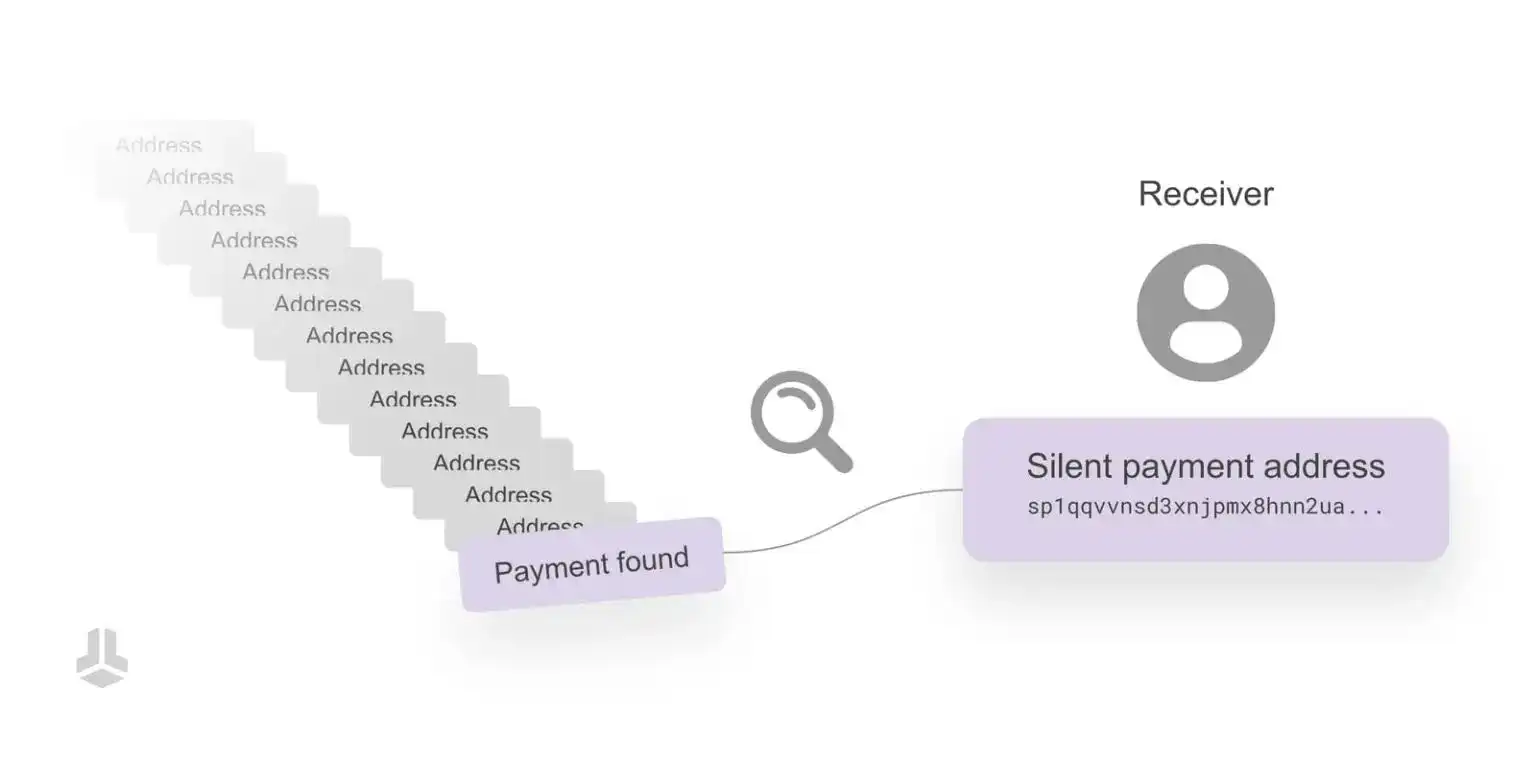
What does a Silent Payment address look like?

The structure of a Silent Payment address is the same as a Taproot address. Taproot addresses use the "bc" prefix, indicating a Bitcoin address, followed by a "1" and a version number, with the rest using bech32m encoding.

Silent Payments also use bech32m encoding, but with the prefix "sp1" (indicating it is a Silent Payment address), and this address contains two public keys. These two public keys do not directly show the destination of the Bitcoin but provide instructions for generating a Taproot public key script.

In practice, users can generate, share, and securely reuse Silent Payment addresses just like a regular Bitcoin address, without sacrificing privacy, which is its core advantage.

Which wallets support this address?

Currently, wallets that support Silent Payment addresses include Cake Wallet and BitBox.

As the Silent Payment feature is still under development and not yet widely adopted, Cake Wallet is one of the first wallets to implement Bitcoin Silent Payments. The wallet is already available in public beta on Android and iOS.

Here's how to use Silent Payments in Cake Wallet:

Click the "Silent Payments" button on the card/box on the wallet's main page to start scanning the blockchain for these transactions.

It is important to note that because Silent Payment transactions are anonymous, the wallet must actively scan the blockchain to search for transactions.
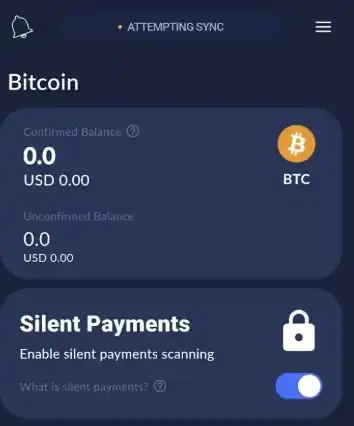
Once the scan is complete, Silent Payment verification automatically turns off upon reaching the latest block.

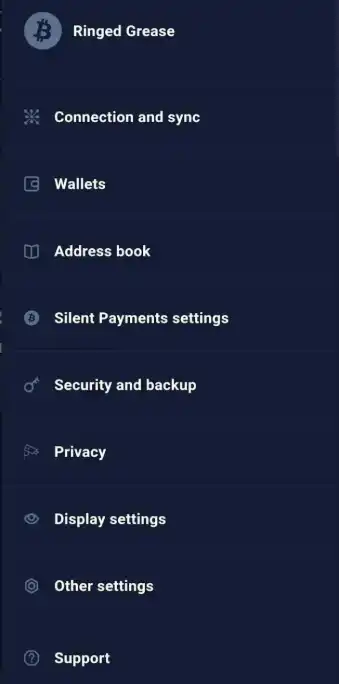
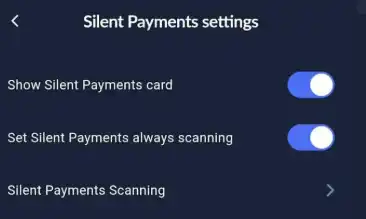
If you want the wallet to continue automatically checking new blocks for Silent Payments, go to "Menu" -> "Silent Payment Settings" and enable the "Always Scan for Silent Payments" option.
BitBox

Like the hot wallet Cake Wallet, BitBox is one of the first hardware wallets to support Silent Payments, greatly enhancing user privacy protection.

Through Silent Payments, the sender can generate a unique address from the receiver's fixed public key. This is particularly useful for activists, NGOs, and charities: they can share a reusable address to receive donations without exposing the identity of the donor or the amount received.

This integration allows BitBox users to support various causes and make payments while avoiding exposing financial activities to unnecessary third parties.

The Role of Labeling

An initial challenge with Silent Payments was how to identify who sent the payment. The solution was the introduction of Labeling.

So, what is Labeling?

Labeling allows you to distinguish between different senders when using a single Silent Payment address, without sacrificing privacy or significantly increasing scanning costs.

This technology allows adding additional information to a Silent Payment address without compromising user privacy. It works by deterministically tweaking the spending key.

Simply put, the spending key is like a digital signature authorizing the use of funds in the address. By tweaking this key slightly, different payment sources can be identified.

For example, suppose you have two Silent Payment addresses:

  • One for activity on X

  • Another for activity on Nostr

With labeling, the first half of these two addresses is the same (indicating they both belong to you), but the second half is slightly different, helping you identify the source of the payment.

This way, when viewing your funds, you can see that some payments came from X users and some from Nostr.

This flexibility strikes a balance between protecting privacy and collecting useful transaction information.

Of course, if you want complete anonymity, you can also just use a standard Silent Payment address without labels, ensuring the sender has no identifiable information. But if you need to track the source of payments, labeling provides an efficient way.

This technology can be applied to various scenarios such as exchanges, social media platforms, personal use, allowing you to manage multiple online identities without creating obvious links, or simply to get more payment information when needed.

Exchange Silent Payment Example

Interesting application scenarios would emerge if exchanges adopted this technology.

Suppose you deposit funds into an exchange. With Silent Payments, instead of giving you a reusable deposit address, the exchange generates a Silent Payment address for you.

Every time you send a payment to this address, the exchange can automatically identify it as yours (through the labeling mechanism), without you having to manage multiple addresses. Furthermore, this technology is also very useful for automatic withdrawals.

You can reuse the same Silent Payment address across platforms without managing different extended public keys (xPubs) for each platform, greatly simplifying the process.

Conclusion

Silent Payments have the potential to revolutionize the way Bitcoin is used, offering a simpler, more intuitive experience while significantly enhancing privacy.

If this technology is widely adopted, the rate of on-chain address reuse could drop significantly, thereby creating a safer and more private environment for everyone.

Silent Payments provide a great opportunity to align user incentives with best privacy practices, making future Bitcoin payments more covert and secure than ever before.

Related reading: Over 1.7 million BTC potentially under direct attack? Bitcoin faces quantum controversy again, public chains begin defense battle


Пов'язані питання

QWhat are Silent Payments and how do they improve privacy in Bitcoin transactions?

ASilent Payments are a method for receiving Bitcoin that allows users to reuse a single public address without revealing transaction history or balance information to third parties. They generate unique, one-time addresses for each transaction using cryptographic techniques, ensuring that only the sender and receiver can see the transaction details, thereby reducing address reuse and enhancing overall privacy.

QHow do Silent Payments differ from previous privacy solutions like Stealth Addresses and BIP 47?

ASilent Payments address limitations of earlier solutions: Stealth Addresses required adding extra data to the blockchain (e.g., via OP_RETURN), reducing anonymity and efficiency. BIP 47 introduced a notification system but required additional on-chain transactions for each sender, complicating the process and exposing sender identities. Silent Payments eliminate these issues by leveraging Taproot transactions and deterministic key adjustments, offering stronger privacy, efficiency, and simpler user experience without extra on-chain data or notifications.

QWhat is the structure of a Silent Payment address and how is it used?

AA Silent Payment address uses the same structure as a Taproot address, with a 'bc' prefix for Bitcoin, followed by '1' and a version number, encoded in bech32m. However, it specifically uses the prefix 'sp1' and includes two public keys that provide instructions for generating a Taproot script. Users can generate, share, and reuse this address securely without privacy compromises, as each payment derives a unique on-chain address.

QWhich wallets currently support Silent Payments, and how do they implement the feature?

ACake Wallet and BitBox are among the first wallets to support Silent Payments. Cake Wallet (available on Android and iOS) allows users to scan blocks for Silent Payment transactions through a dedicated interface, with options for continuous scanning. BitBox, a hardware wallet, integrates Silent Payments to enable private donations and transactions, particularly useful for activists and organizations. Both wallets require scanning the blockchain to detect incoming Silent Payments due to their anonymous nature.

QWhat is the role of 'labeling' in Silent Payments, and how does it enhance functionality?

ALabeling in Silent Payments allows recipients to distinguish between different senders or contexts (e.g., donations from Twitter vs. Nostr) while maintaining privacy. It works by deterministically tweaking the spending key, creating slight variations in the address that identify the payment source without revealing sensitive information. This enables users to manage multiple identities or track transactions efficiently, balancing privacy with practical needs like exchange deposits or automated withdrawals.

Пов'язані матеріали

Торгівля

Спот
Ф'ючерси

Популярні статті

Що таке BITCOIN

Розуміння HarryPotterObamaSonic10Inu (ERC-20) та його позиції у крипто-просторі Останніми роками ринок криптовалют спостерігав за зростанням популярності мем-коінів, які привертають інтерес не тільки трейдерів, але й тих, хто шукає спілкування та розважальну цінність. Серед цих унікальних токенів є HarryPotterObamaSonic10Inu (ERC-20), інтригуючий проект, що поєднує культурні посилання з тканинами криптовалюти. Ця стаття досліджує ключові аспекти HarryPotterObamaSonic10Inu, вивчаючи його механізми, спільноту та його взаємодію з ширшим крипто-ландшафтом. Що таке HarryPotterObamaSonic10Inu (ERC-20)? Як випливає з його назви, HarryPotterObamaSonic10Inu є мем-коіном, побудованим на блокчейні Ethereum, класифікованим за стандартом ERC-20. На відміну від традиційних криптовалют, які можуть підкреслювати практичну корисність або інвестиційний потенціал, цей токен процвітає завдяки розважальній цінності та силі своєї спільноти. Проект спрямований на створення середовища, де зацікавлені користувачі можуть об'єднуватися, ділитися ідеями та брати участь у заходах, натхненних різноманітними культурними явищами. Однією з примітних особливостей HarryPotterObamaSonic10Inu є нульовий податок на транзакції. Цей привабливий елемент має на меті заохочувати торгівлю та участь у спільноті, позбавлену додаткових витрат, які можуть відлякувати дрібних трейдерів. Загальна пропозиція монет становить один мільярд токенів, що позначає намір підтримувати суттєву циркуляцію в межах спільноти. Творець HarryPotterObamaSonic10Inu (ERC-20) Походження HarryPotterObamaSonic10Inu дещо окутане таємницею; деталі про творця залишаються невідомими. Розвиток цього токена позбавлений впізнаваної команди або чіткої стратегії, що не є рідкістю в секторі мем-коінів. Натомість проект виник органічно, а його розвиток значною мірою залежить від ентузіазму та участі його спільноти. Інвестори HarryPotterObamaSonic10Inu (ERC-20) Щодо зовнішніх інвестицій та підтримки, HarryPotterObamaSonic10Inu також залишається невизначеним. Токен не зазначає жодних відомих інвестиційних фондів або значної організаційної підтримки. Натомість життєва сила проекту полягає в його базовій спільноті, яка інформує про його зростання та стійкість через колективні дії та залученість у крипто-просторі. Як працює HarryPotterObamaSonic10Inu (ERC-20)? Як мем-коін, HarryPotterObamaSonic10Inu функціонує передусім поза традиційними рамками, що часто регулюють вартість активів. Є кілька відмінних аспектів, що визначають, як працює проект: Транзакції без податку: Завдяки відсутності податкових зборів на транзакції, користувачі можуть вільно купувати та продавати токен, не турбуючись про приховані витрати. Залучення спільноти: Проект процвітає завдяки взаємодії спільноти, використовуючи соціальні медіа для створення шуму та сприяння залученню. Обговорення, обмін контентом та залученість є ключовими елементами, що допомагають розширити його охоплення та зміцнити лояльність серед прихильників. Відсутність практичної корисності: Слід зазначити, що HarryPotterObamaSonic10Inu не пропонує конкретної корисності в рамках фінансової екосистеми. Натомість він класифікується як токен, що призначений в основному для розваги та спільнотних активностей. Культурне посилання: Токен кмітливо вплітає елементи популярної культури, щоб привернути інтерес, зв'язуючи з ентузіастами мемів та крипто-стежками. HarryPotterObamaSonic10Inu ілюструє, як мем-коіни функціонують інакше, ніж традиційні криптовалютні проекти, увійшовши на ринок як інноваційні соціальні конструкти, а не утилітарні активи. Хронологія HarryPotterObamaSonic10Inu (ERC-20) Історія HarryPotterObamaSonic10Inu відзначена кількома значними етапами: Створення: Токен виник з вірусного мему, захопивши уяву багатьох крипто-ентузіастів. Конкретні дати створення недоступні, що підкреслює його органічний розвиток. Лістинг на біржах: HarryPotterObamaSonic10Inu з'явився на різних біржах, дозволяючи зручніший доступ і торгівлю спільноти. Ініціативи залучення спільноти: Ведення діяльності, спрямованої на покращення взаємодії спільноти, включаючи конкурси, кампанії в соціальних мережах та створення контенту від фанатів та прихильників. Плани на майбутнє: Дорожня карта проекту включає запуск колекції NFT, мерчандайзинг та електронну комерцію, пов'язану з його культурними темами, що далі залучає спільноту та намагається додати більше вимірів до його екосистеми. Ключові моменти про HarryPotterObamaSonic10Inu (ERC-20) Спільнотний підхід: Проект надає пріоритет колективному внеску та креативності, забезпечуючи, щоб участь користувачів була в центрі його розвитку. Класифікація як мем-коін: Це є його епігенез розважальної криптовалюти, що відрізняється від традиційних інвестиційних інструментів. Жодного прямого відношення до Bitcoin: Незважаючи на схожість у назві, HarryPotterObamaSonic10Inu є відмінним і не має жодного зв’язку з Bitcoin або іншими усталеними криптовалютами. Зосередженість на співпраці: HarryPotterObamaSonic10Inu створено для того, щоб надати простір для співпраці та обміну історіями серед його власників, забезпечуючи шлях для творчості та спільного зв'язку. Перспективи на майбутнє: Амбіція розширитися за межі початкової концепції в NFT та мерчандайз відкриває шлях для проекту потенційно потрапити в більш мейнстрімні сфери цифрової культури. Оскільки мем-коіни продовжують захоплювати уяву спільноти криптовалют, HarryPotterObamaSonic10Inu (ERC-20) вирізняється своїми культурними зв'язками та орієнтованим на спільноту підходом. Хоча він може не відповідати типовій моделі утилітарного токена, його суть полягає в радощах і товариськості, що підтримуються серед його прихильників, підкреслюючи еволюційну природу криптовалют в усе більш цифрову епоху. Оскільки проект продовжує розвиватися, важливо спостерігати за тим, як динаміка спільноти вплине на його траєкторію в постійно змінюваному ландшафті технології блокчейн.

1.7k переглядів усьогоОпубліковано 2024.04.01Оновлено 2024.12.03

Що таке BITCOIN

Як купити BTC

Ласкаво просимо до HTX.com! Ми зробили покупку Bitcoin (BTC) простою та зручною. Дотримуйтесь нашої покрокової інструкції, щоб розпочати свою криптовалютну подорож.Крок 1: Створіть обліковий запис на HTXВикористовуйте свою електронну пошту або номер телефону, щоб зареєструвати обліковий запис на HTX безплатно. Пройдіть безпроблемну реєстрацію й отримайте доступ до всіх функцій.ЗареєструватисьКрок 2: Перейдіть до розділу Купити крипту і виберіть спосіб оплатиКредитна/дебетова картка: використовуйте вашу картку Visa або Mastercard, щоб миттєво купити Bitcoin (BTC).Баланс: використовуйте кошти з балансу вашого рахунку HTX для безперешкодної торгівлі.Треті особи: ми додали популярні способи оплати, такі як Google Pay та Apple Pay, щоб підвищити зручність.P2P: Торгуйте безпосередньо з іншими користувачами на HTX.Позабіржова торгівля (OTC): ми пропонуємо індивідуальні послуги та конкурентні обмінні курси для трейдерів.Крок 3: Зберігайте свої Bitcoin (BTC)Після придбання Bitcoin (BTC) збережіть його у своєму обліковому записі на HTX. Крім того, ви можете відправити його в інше місце за допомогою блокчейн-переказу або використовувати його для торгівлі іншими криптовалютами.Крок 4: Торгівля Bitcoin (BTC)Легко торгуйте Bitcoin (BTC) на спотовому ринку HTX. Просто увійдіть до свого облікового запису, виберіть торгову пару, укладайте угоди та спостерігайте за ними в режимі реального часу. Ми пропонуємо зручний досвід як для початківців, так і для досвідчених трейдерів.

4.4k переглядів усьогоОпубліковано 2024.12.12Оновлено 2025.03.21

Як купити BTC

Що таке $BITCOIN

ЦИФРОВЕ ЗОЛОТО ($BITCOIN): Комплексний аналіз Вступ до ЦИФРОВОГО ЗОЛОТА ($BITCOIN) ЦИФРОВЕ ЗОЛОТО ($BITCOIN) — це проект на основі блокчейну, що працює в мережі Solana, який має на меті поєднати характеристики традиційних дорогоцінних металів з інноваціями децентралізованих технологій. Хоча він має таку ж назву, як і Bitcoin, який часто називають “цифровим золотом” через його сприйняття як засобу збереження вартості, ЦИФРОВЕ ЗОЛОТО є окремим токеном, розробленим для створення унікальної екосистеми в ландшафті Web3. Його мета — позиціонувати себе як життєздатний альтернативний цифровий актив, хоча деталі щодо його застосувань і функціональностей все ще розробляються. Що таке ЦИФРОВЕ ЗОЛОТО ($BITCOIN)? ЦИФРОВЕ ЗОЛОТО ($BITCOIN) — це токен криптовалюти, спеціально розроблений для використання в блокчейні Solana. На відміну від Bitcoin, який виконує широко визнану роль зберігання вартості, цей токен, здається, зосереджується на більш широких застосуваннях і характеристиках. Помітні аспекти включають: Інфраструктура блокчейну: Токен побудований на блокчейні Solana, відомому своєю здатністю обробляти швидкі та низьковартісні транзакції. Динаміка постачання: ЦИФРОВЕ ЗОЛОТО має максимальне постачання, обмежене 100 квадрильйонами токенів (100P $BITCOIN), хоча деталі щодо його обігового постачання наразі не розголошуються. Утиліта: Хоча точні функціональності не викладені, є вказівки на те, що токен може бути використаний для різних застосувань, потенційно пов'язаних з децентралізованими додатками (dApps) або стратегіями токенізації активів. Хто є творцем ЦИФРОВОГО ЗОЛОТА ($BITCOIN)? На даний момент особа творців і команди розробників, що стоять за ЦИФРОВИМ ЗОЛОТОМ ($BITCOIN), залишається невідомою. Ця ситуація є типовою для багатьох інноваційних проектів у сфері блокчейну, особливо тих, що пов'язані з децентралізованими фінансами та феноменом мем-коінів. Хоча така анонімність може сприяти культурі, орієнтованій на спільноту, вона посилює занепокоєння щодо управління та підзвітності. Хто є інвесторами ЦИФРОВОГО ЗОЛОТА ($BITCOIN)? Доступна інформація вказує на те, що ЦИФРОВЕ ЗОЛОТО ($BITCOIN) не має жодних відомих інституційних спонсорів або помітних венчурних капіталовкладень. Проект, здається, працює за моделлю “рівний до рівного”, зосереджуючись на підтримці та прийнятті спільноти, а не на традиційних шляхах фінансування. Його активність і ліквідність переважно розташовані на децентралізованих біржах (DEX), таких як PumpSwap, а не на встановлених централізованих торгових платформах, що ще більше підкреслює його підхід знизу вгору. Як працює ЦИФРОВЕ ЗОЛОТО ($BITCOIN) Операційні механізми ЦИФРОВОГО ЗОЛОТА ($BITCOIN) можна детальніше розглянути на основі його дизайну блокчейну та характеристик мережі: Механізм консенсусу: Використовуючи унікальний proof-of-history (PoH) Solana в поєднанні з моделлю proof-of-stake (PoS), проект забезпечує ефективну валідацію транзакцій, що сприяє високій продуктивності мережі. Токеноміка: Хоча конкретні дефляційні механізми не були детально описані, велике максимальне постачання токенів вказує на те, що воно може задовольняти мікротранзакції або нішеві випадки використання, які ще потрібно визначити. Інтероперабельність: Існує потенціал для інтеграції з більш широкою екосистемою Solana, включаючи різні платформи децентралізованих фінансів (DeFi). Однак деталі щодо конкретних інтеграцій залишаються невизначеними. Хронологія ключових подій Ось хронологія, яка підкреслює значні віхи, пов'язані з ЦИФРОВИМ ЗОЛОТОМ ($BITCOIN): 2023: Початкове розгортання токена відбувається на блокчейні Solana, позначене його адресою контракту. 2024: ЦИФРОВЕ ЗОЛОТО набуває видимості, оскільки стає доступним для торгівлі на децентралізованих біржах, таких як PumpSwap, що дозволяє користувачам торгувати ним проти SOL. 2025: Проект спостерігає спорадичну торгову активність і потенційний інтерес до ініціатив, очолюваних спільнотою, хоча на даний момент не зафіксовано жодних значних партнерств або технічних досягнень. Критичний аналіз Сильні сторони Масштабованість: Основна інфраструктура Solana підтримує високі обсяги транзакцій, що може підвищити утиліту $BITCOIN у різних сценаріях транзакцій. Доступність: Потенційно низька торгова ціна за токен може привабити роздрібних інвесторів, сприяючи більш широкій участі завдяки можливостям дробового володіння. Ризики Відсутність прозорості: Відсутність публічно відомих спонсорів, розробників або процесу аудиту може викликати скептицизм щодо стійкості та надійності проекту. Волатильність ринку: Торгова активність сильно залежить від спекулятивної поведінки, що може призвести до значної волатильності цін і невизначеності для інвесторів. Висновок ЦИФРОВЕ ЗОЛОТО ($BITCOIN) постає як цікавій, але неоднозначний проект у швидко розвиваючійся екосистемі Solana. Хоча він намагається використати наратив “цифрового золота”, його відхід від встановленої ролі Bitcoin як засобу збереження вартості підкреслює необхідність чіткішого розмежування його передбачуваної утиліти та структури управління. Майбутнє прийняття та адаптація, ймовірно, залежатиме від вирішення поточної непрозорості та більш чіткого визначення його операційних та економічних стратегій. Примітка: Цей звіт охоплює синтезовану інформацію, доступну станом на жовтень 2023 року, і можуть відбутися події, що виходять за межі дослідницького періоду.

75 переглядів усьогоОпубліковано 2025.05.13Оновлено 2025.05.13

Що таке $BITCOIN

Обговорення

Ласкаво просимо до спільноти HTX. Тут ви можете бути в курсі останніх подій розвитку платформи та отримати доступ до професійної ринкової інформації. Нижче представлені думки користувачів щодо ціни BTC (BTC).

活动图片













